17 Boho Decor Ideas: Rugs, Mirrors, Walls & More
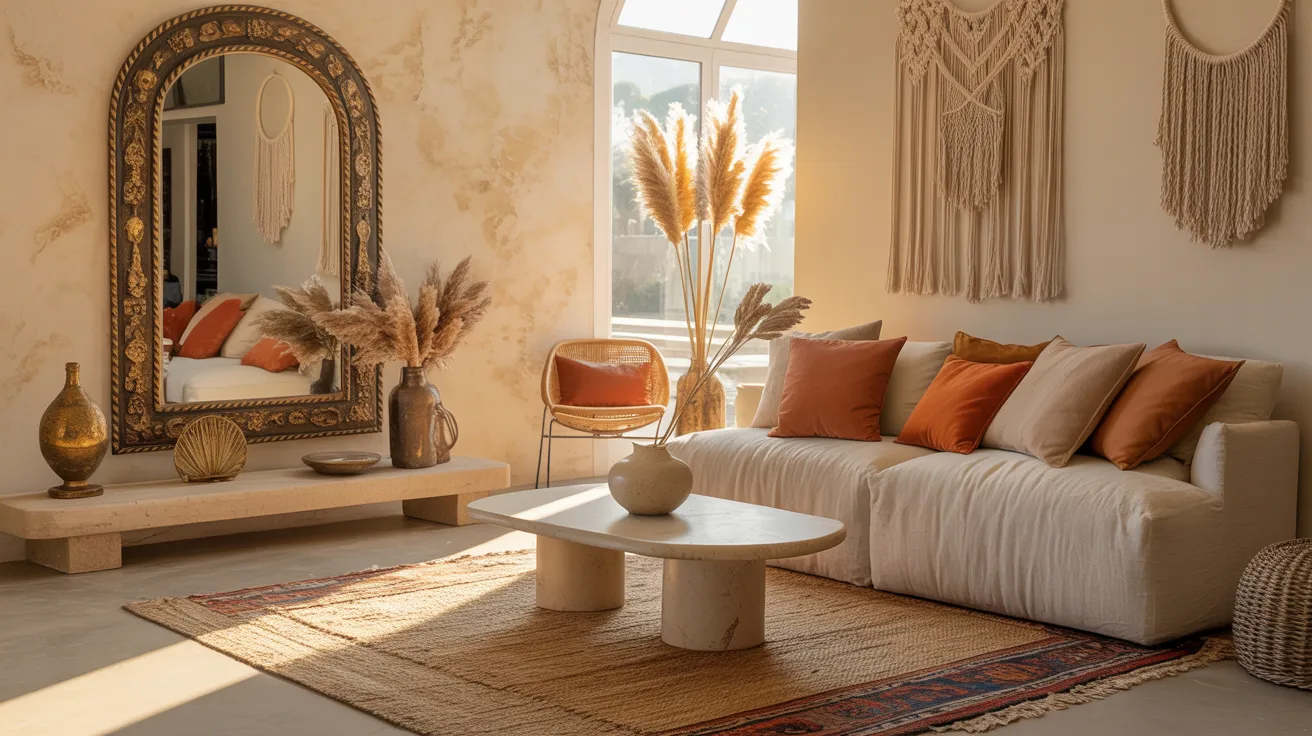
Bohemian interior design is an eclectic, free-spirited approach that layers global textiles, natural materials, and handcrafted objects to build spaces that feel richly personal rather than showroom-polished. This article gives you 17 specific bohemian home decor ideas spanning rugs, mirrors, wall decor, pillows, the kitchen, the bedroom, chairs, and more — each with a visual prompt and exact products to shop.
Imagine late-afternoon light catching the fringe of a Moroccan rug. A cluster of rattan mirrors catching every angle of a room. Macramé softening a bare wall while a trailing pothos does the rest. This is bohemian style at its most lived-in and layered — warm, textured, and entirely yours. Here are 17 ideas worth saving — and stealing.
ALSO HERE: 19 Farmhouse Kitchen Ideas That Feel Warm & Stylish
Why Boho Decor Ideas Work So Well
Bohemian design traces its roots to 19th-century European artist communities who rejected rigid Victorian interiors in favour of globally inspired, intentionally collected spaces. It draws from Moroccan, Indian, and Southwestern influences, overlapping with maximalism and folk art traditions. Unlike minimalism, which curates down to essentials, bohemian interior design curates up — every object tells a story, and the overall composition is the art.
The material palette for boho decor ideas is what gives bohemian spaces their warmth. Expect unbleached cotton and chunky hand-knotted wool in natural ivory and terracotta blush. Rattan and jute bring organic structure. Brass and hammered copper add warmth without edge. Wall surfaces lean toward warm white and dusty sand rather than stark bright white, allowing layered textiles and art to read clearly against them. Terracotta, dusty sage, saffron, and earthy rust are the accent palette.
1. Terracotta & Ivory Layered Rug Stack
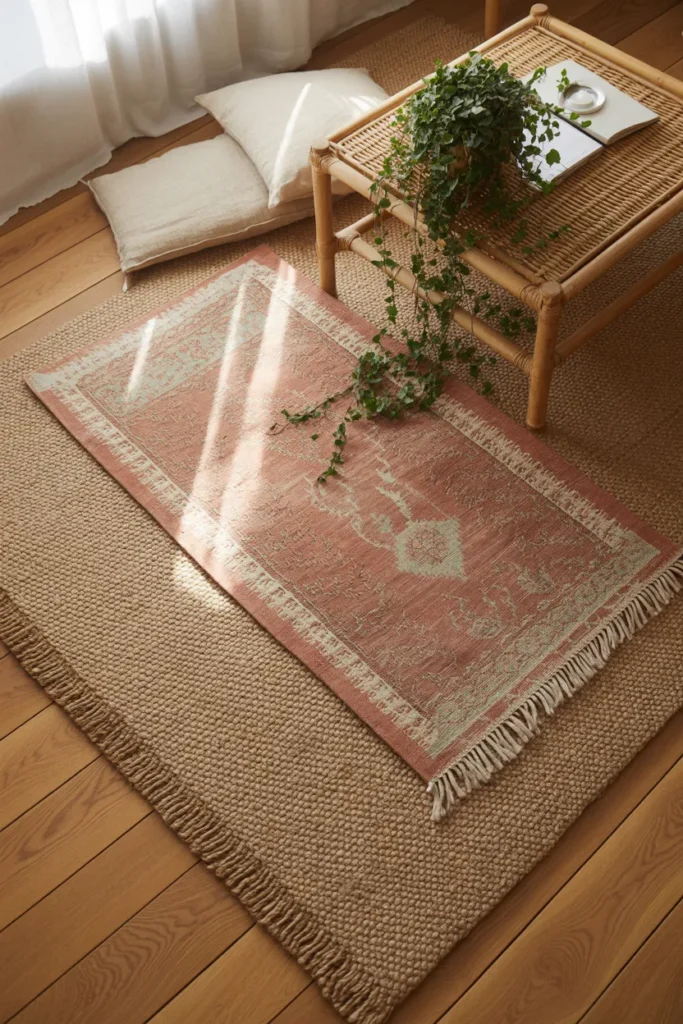
Vibe: Sun-warmed — the room feels like it has been lived in for years in the best possible way.
The rug-stacking technique works by playing tonal contrast against shared warmth — the neutral jute base anchors the floor while the kilim’s terracotta creates a focal layer that draws the eye downward and inward. This is the design principle of visual grounding: heaviest color at floor level creates psychological stability. Natural jute has enough texture variation that it doesn’t compete with a patterned kilim placed on top; they coexist through material contrast rather than color clash.
Start with a jute base rug at least 8×10 — it needs to extend beyond your seating arrangement. Layer a Moroccan or Turkish kilim in the 4×6 to 5×8 range on top, positioned slightly off-center toward the main sofa. The offset placement is intentional: symmetry reads as conventional; a subtle shift reads as collected.
2. Cluster of Rattan & Carved Wood Bohemian Mirrors
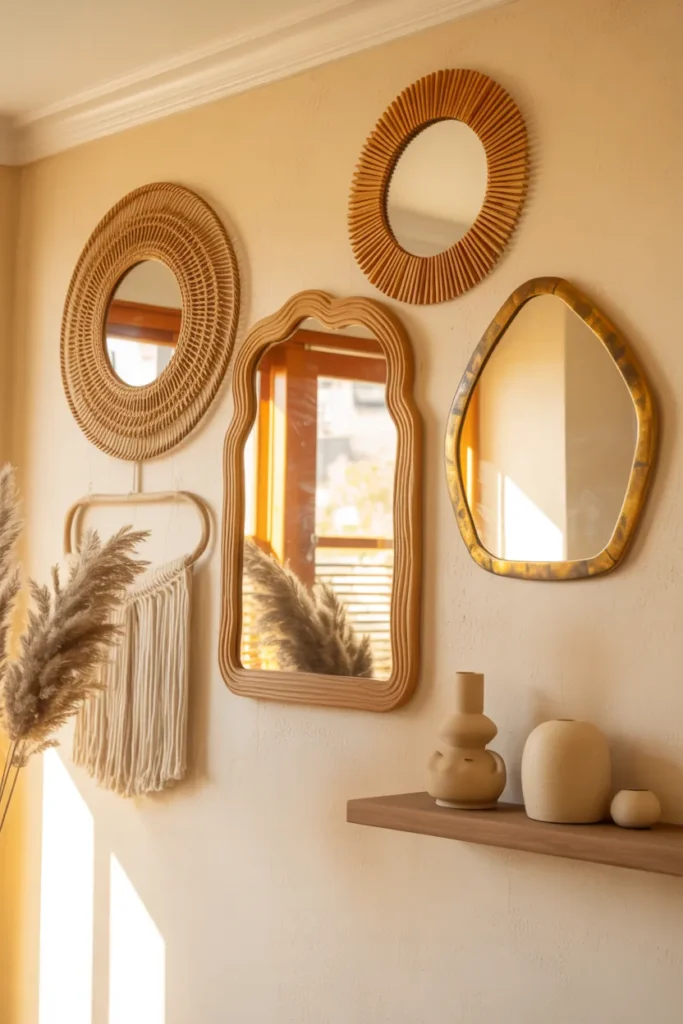
Vibe: Layered — every reflection in the cluster catches a slightly different angle of light.
A grouped bohemian mirror arrangement uses the design principle of varied repetition: the same object (mirror) in different shapes, scales, and materials reads as intentional rather than mismatched. The rattan frame introduces organic texture, the carved wood brings depth, and the brass provides light-catching warmth. When mirrors are staggered in size — one large anchor, two medium, two small — the arrangement has natural visual hierarchy without feeling rigid or gallery-formal.
Arrange on the floor first before hanging. The largest mirror should sit slightly off-center in the grouping, not dead center. Keep outer edges of the arrangement within an imaginary rectangle no larger than 36″ wide × 48″ tall so the cluster reads as a cohesive unit, not random scatter. Gap between mirrors: 2–4 inches consistently
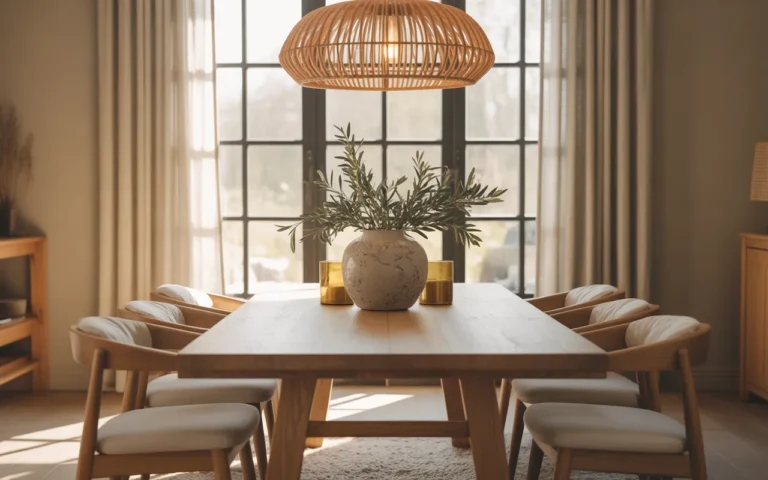
3. Woven Pendant & Edison Bulb Bohemian Lighting
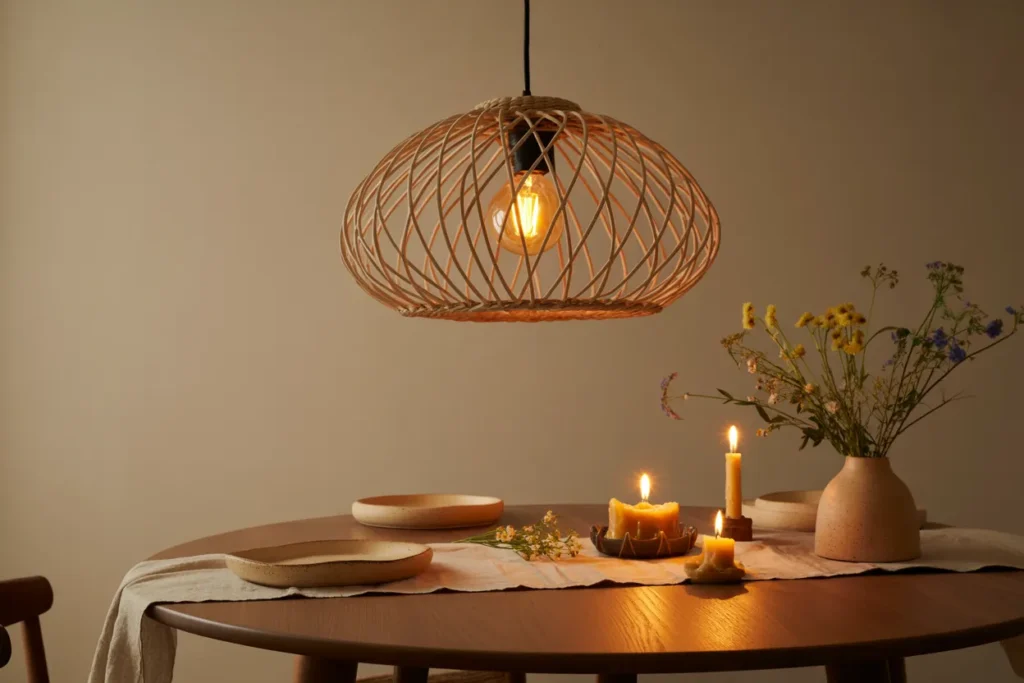
Vibe: Still — the way a room feels right before dinner guests arrive.
Woven pendant lights exploit the principle of transmitted texture: the fixture itself is decorative in daylight, but at night the real display is the shadow pattern it casts across walls and ceiling. A tight rattan weave creates a dappled lantern-like effect; a loose macramé shade creates bold directional shadows. Neither effect is possible with a solid shade. The warm filament of an Edison-style bulb (2200K color temperature) amplifies the amber-organic palette that defines bohemian interior design.
Hang the pendant so the bottom of the shade sits 30–36 inches above the tabletop — lower than you think looks right. The closer to the table, the more intimate the pool of light. For rooms without a center fixture, a swag-style pendant with a long cord draped over a ceiling hook works beautifully and requires no electrician.
4. Macramé & Woven Tapestry Bohemian Wall Decor
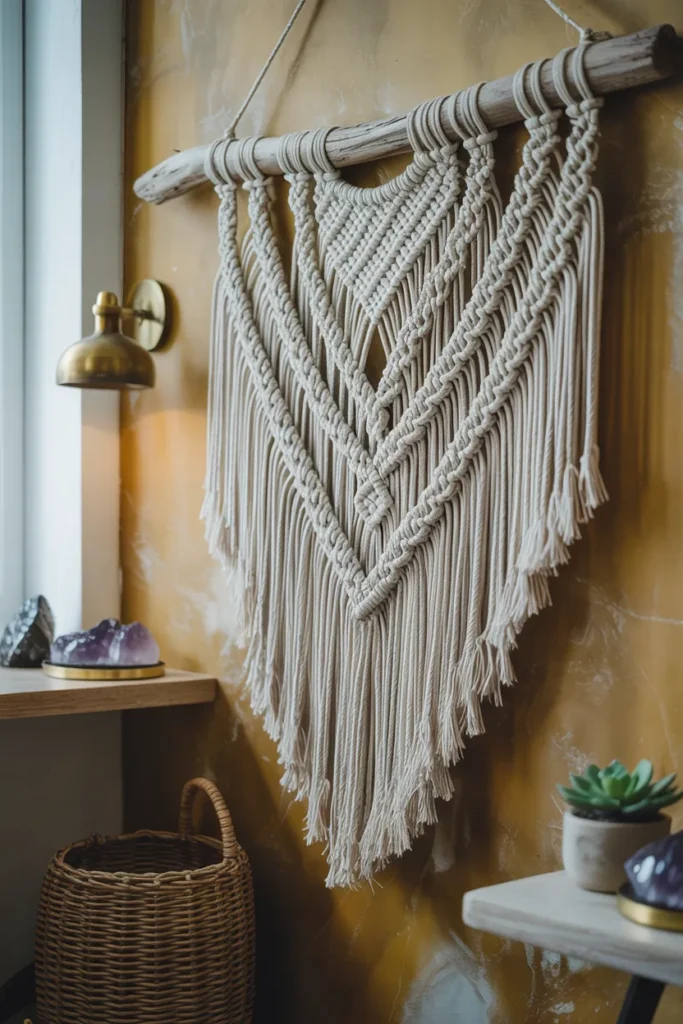
Macramé wall decor is effective not only as visual art but as an acoustic softener: the three-dimensional rope structure scatters sound waves much the way an upholstered wall panel would, making rooms feel quieter and more intimate. This is texture as function — a design principle the bohemian interior naturally embodies. The driftwood dowel from which most macramé pieces hang introduces a horizontal natural element that bridges the wall and the textile.
Hang a large macramé piece on the wall that starts your eye when you enter the room — typically the wall directly opposite the door or the one behind a sofa. The piece should be approximately two-thirds the width of the furniture below it. A piece that’s too narrow floats awkwardly; one that’s too wide overwhelms. Natural undyed cotton rope aged in cream or warm white works in virtually every bohemian interior regardless of accent color.
5. Low Platform Bohemian Bed With Linen Layers
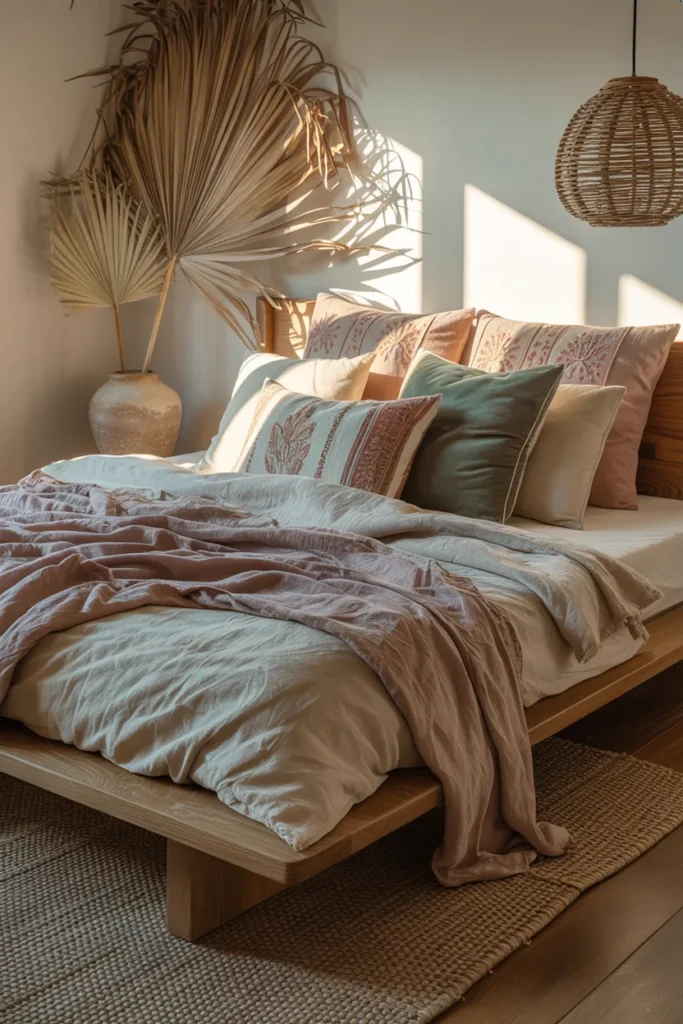
A low-profile platform bed is structurally central to the bohemian bedroom because it flattens the visual horizon of the room, making the ceiling feel higher and the space feel more expansive. The design principle is lowered visual weight: furniture that sits closer to the floor creates breathing room above and allows textiles and wall decor to read clearly without competition. The platform itself — ideally solid acacia, mango wood, or unfinished walnut — provides warmth without bulk.
Layer bedding in three: a fitted sheet, a stonewashed linen duvet, and a lighter cotton or gauze blanket folded at the foot. Keep the pillow arrangement odd-numbered and asymmetrical — three sleeping pillows plus two accent pillows of different sizes and textures. Embroidered or block-printed pillow covers in dusty sage, deep rust, and warm ivory are the standard bohemian bed combination.
6. Bohemian Pillow Wall — Floor Seating Zone
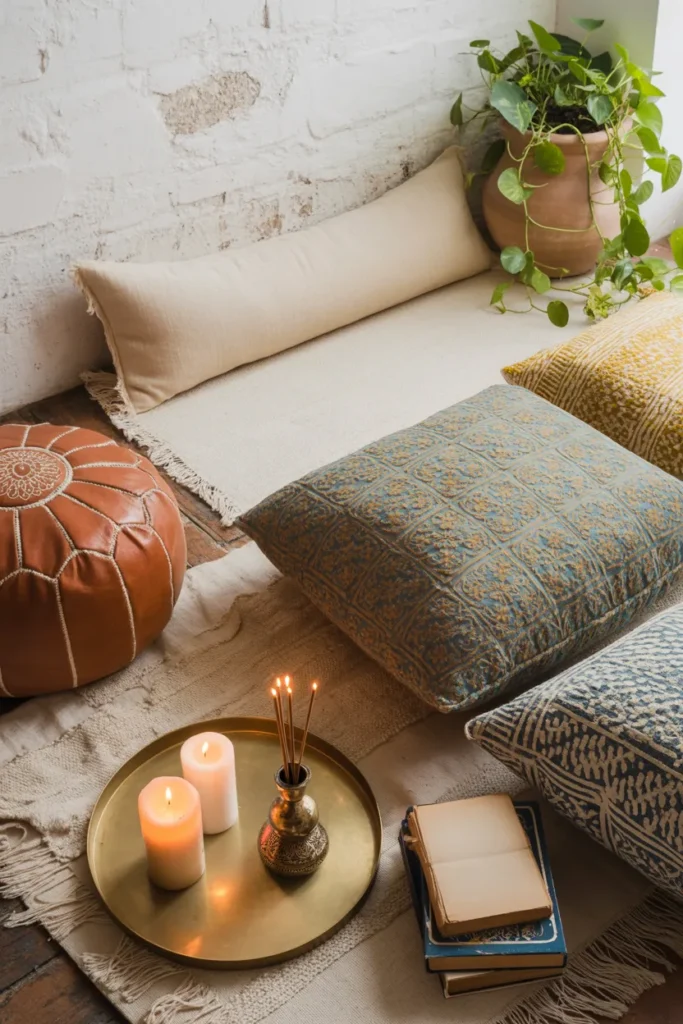
Vibe: Grounded — intimacy at floor level that no conventional sofa replicates.
A floor seating zone built from bohemian pillows is the most space-efficient entertaining solution in a small bohemian living room. The absence of sofa legs opens the visual field significantly — a 10×12 room gains perceived square footage when you remove 6–8 inches of elevated furniture and replace it with floor-hugging elements. Moroccan-style poufs in hand-stitched leather or kilim fabric serve as both seating and footrests, and they stack or tuck under a side table when not in use.
Group cushions in a U-shape around a low brass tray table, which functions as the anchor. Vary the pillow cover fabrics deliberately: one velvet, one block-printed cotton, one plain linen, one kilim-patterned — each adds a different tactile layer. Keep the color range within three tones (terracotta + indigo + ivory works seamlessly) to prevent the arrangement from reading as chaotic.
7. Rattan & Cane Bohemian Chair as Statement Piece
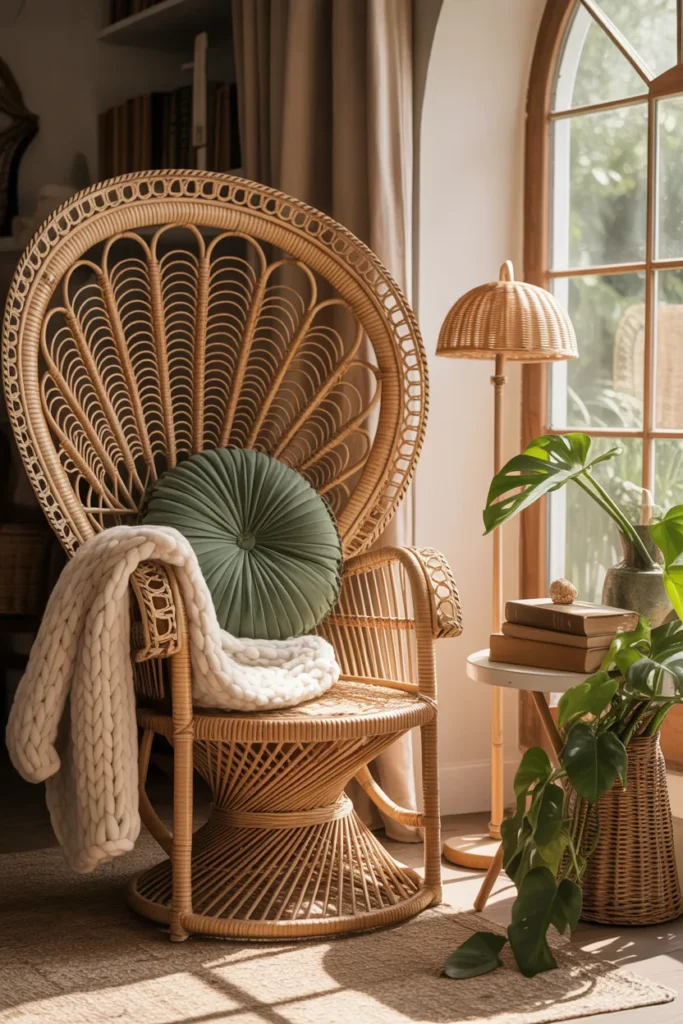
Vibe: Still — a corner that asks you to slow down.
A rattan or cane bohemian chair earns its place as a statement piece because it contributes both material character and sculptural silhouette in one object. The wide peacock-fan back creates a strong vertical presence without visual weight — it’s open, light-permeable, and inherently decorative. This is the principle of airy structure: furniture that has a strong shape without blocking light or visual flow. The cane weave seat adds tactile authenticity that a solid upholstered chair cannot replicate.
Position the rattan chair at a 45-degree angle to the room’s main axis — not straight forward, not perpendicular to the wall, but slightly turned inward as if someone just stood up from reading. This creates a sense of habitation. Add a chunky natural cotton throw draped casually over one arm and a single patterned lumbar cushion in the seat. Resist the urge to over-style it.
8. Indigo & Saffron Bohemian Living Room Palette
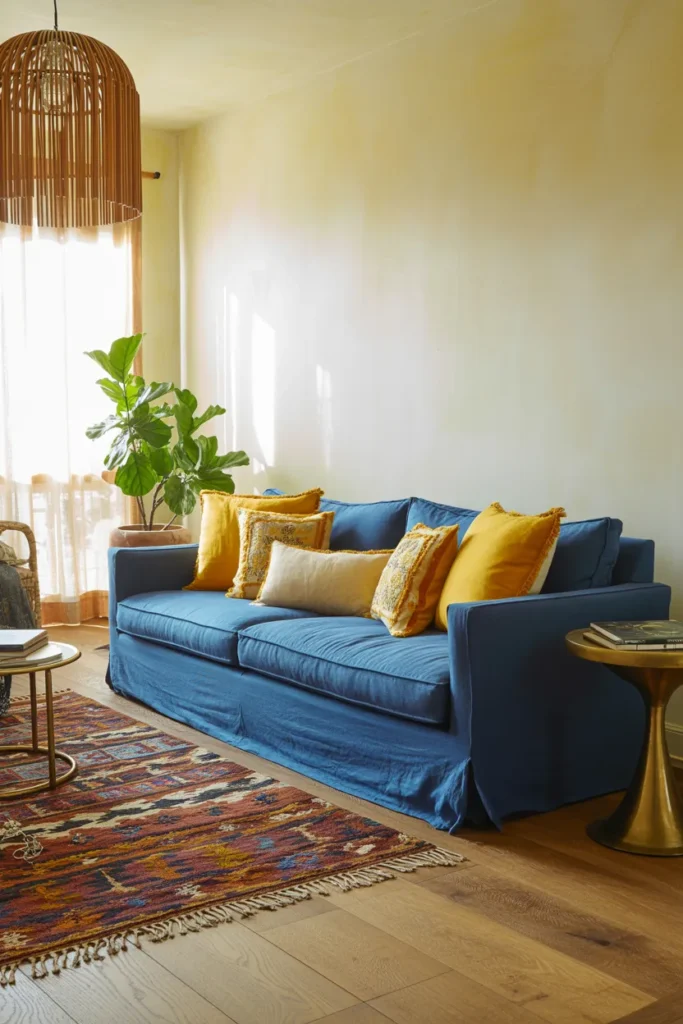
Vibe: Luminous — the room holds color the way old cloth holds dye, deeply and unevenly.
The indigo-and-saffron combination is one of the most historically grounded bohemian palettes, rooted in South Asian and North African textile traditions where natural dyes produced these exact hues. In interior terms, the pairing works through complementary warmth contrast: deep cool indigo recedes visually while warm saffron advances, creating depth and energy on the same surface. Neither color dominates — the balance is the effect. Limewash walls in warm white (not bright white) prevent the palette from feeling overwrought.
Apply indigo and saffron through textiles, not wall paint — this allows you to adjust the ratio as your eye tires of one tone. An indigo sofa with saffron throw pillows can become a saffron-weighted arrangement simply by adding more yellow pillows; no renovation required. Keep the rug in a third neutral — kilim patterns that include both tones tie the room together.
9. Bohemian Living Room Arranged Around a Central Rug
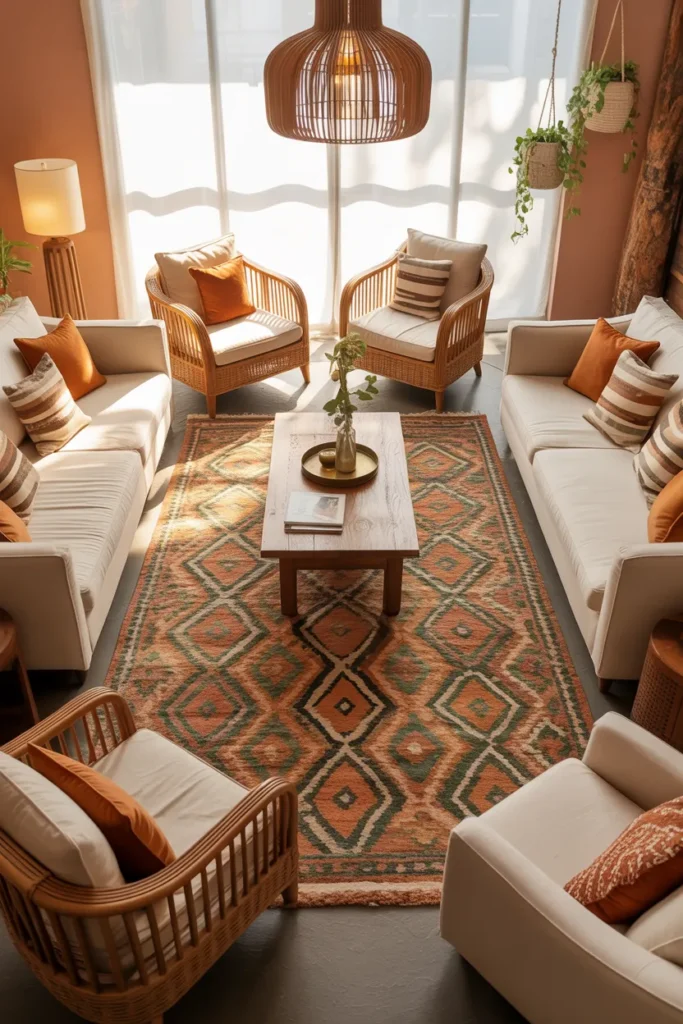
Vibe: Gathered — the room orients itself around a single warm center.
Zone definition through rug placement is the most underused layout tool in bohemian interior design. In an open-plan space, a single large rug defines a conversation zone more effectively than any furniture arrangement alone. The critical rule is that at minimum the front legs of all seating should rest on the rug — this visually connects the furniture to the rug rather than letting them float independently. A rug that’s too small sits like an island that nobody belongs to.
For a standard living room seating group, size the rug to at least 8×10. If the room allows it, a 9×12 creates the most anchored, layered feel. Moroccan diamond-patterned rugs in warm ivory with rust and black geometric detail are particularly effective because their pattern scale works well under most furniture arrangements without competing with upholstery patterns.
10. Bohemian Wall of Woven Baskets & Ceramic Plates
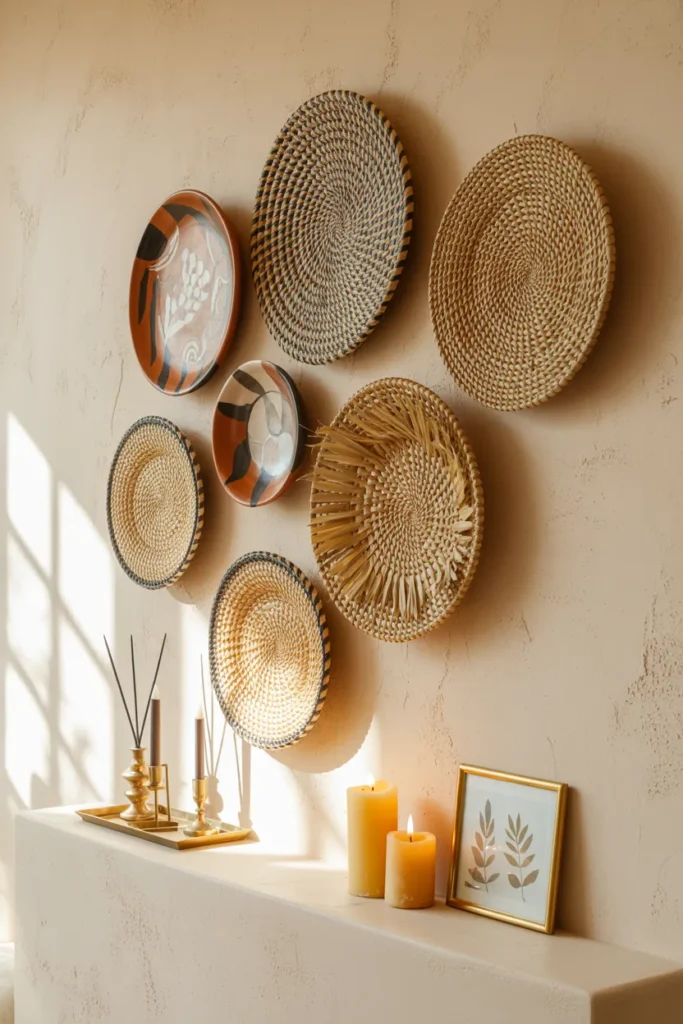
Vibe: Raw — the wall feels like a market stall in the best possible way.
The bohemian wall gallery that combines woven baskets and handcrafted ceramics exploits three-dimensional texture contrast: flat ceramic plates create a hard-edged visual plane while the woven baskets project 2–4 inches from the wall, casting shadows that shift through the day as light changes. This dynamic quality is what separates this arrangement from a conventional picture gallery — it’s as much a light installation as a decor choice. Both basket-weave and hand-painted ceramics share the visual language of artisanal process, which makes them naturally cohesive regardless of their size or color differences.
Hang baskets using the sawtooth hardware on their backs or a simple picture hook. Space elements 3–5 inches apart and vary sizes from 8-inch ceramics to 20-inch baskets for scale contrast. Arrange on the floor first, photograph it, then transfer to the wall from the center outward.
11. Bohemian Kitchen With Open Shelving & Ceramic Vessels
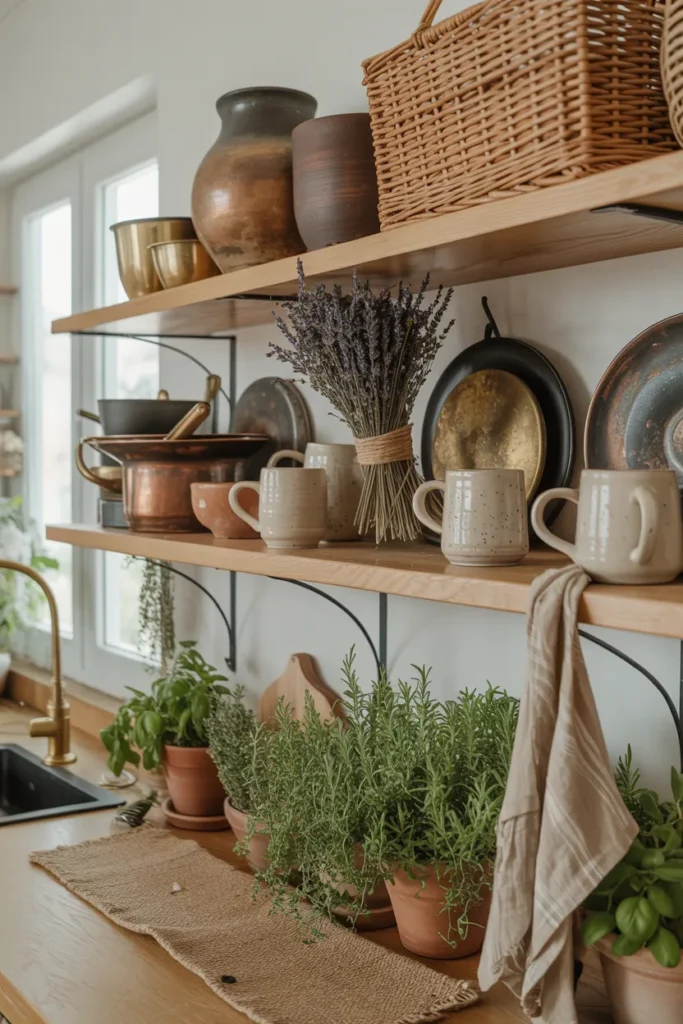
Vibe: Warm — kitchens that feel like the heart of the house rather than a function zone.
Open shelving is the primary tool for creating a bohemian kitchen because it exposes the collection of objects that makes a kitchen feel inhabited — handmade ceramics, vintage copper, woven baskets, herb bundles. The design principle is curated transparency: what you choose to display becomes part of the room’s decor. Imperfect, handcrafted, and mismatched objects read better on open shelves than matching sets, which tend to look sterile. Solid pine or unfinished oak floating shelves provide the warm, organic base that allows ceramics and copper to read clearly.
Style open shelves in rows of three visual layers: tall objects at the back (a large ceramic pitcher, a stack of cookbooks), medium objects in the middle (mugs, small plants, glass jars), and small decorative objects at the front edge (a single crystal, a tied herb bundle, a miniature ceramic). This depth-layering prevents shelves from reading as flat and two-dimensional.
12. Draped String Lights & Canopy in the Bohemian Bedroom
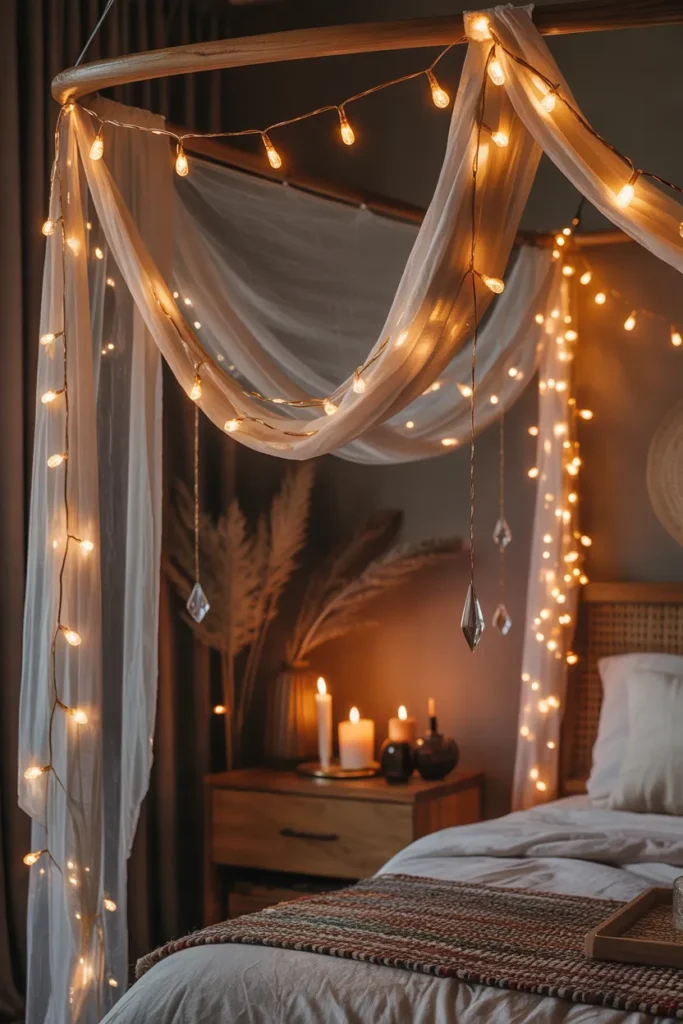
Vibe: Romantic — the ceiling becomes part of the room rather than a blank fifth wall.
String lights and fabric canopies in the bohemian bedroom use the design principle of overhead intimacy: bringing visual interest down from the ceiling level creates a sense of enclosure and warmth that standard overhead fixtures completely deny. A ceiling draped with warm copper lights at 2200K color temperature activates the upper register of the room without requiring any electrical work — plug-in string lights routed to a single outlet through a cord clip are sufficient. The sheer fabric canopy layered within the lights adds movement and softens the grid of the light strings.
Mount a 10-inch brass ceiling ring or a simple wooden dowel horizontally above the headboard and thread four panels of sheer ivory or gauze fabric through it. Let the panels fall loosely to the floor rather than pulling them taut. Drape warm copper string lights within the canopy and over the surrounding ceiling area, using removable adhesive hooks at the corners.
13. Eclectic Bohemian Furniture Mix— Wood, Brass & Cane
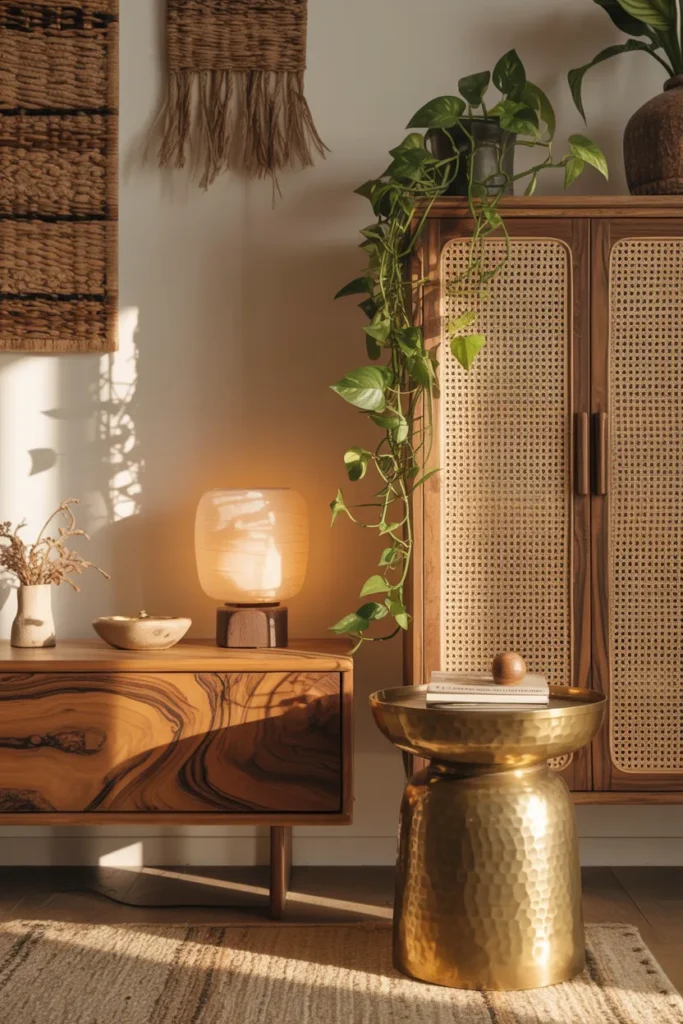
Mixing wood species and furniture materials is one of the defining features of authentic bohemian furniture styling, but the principle that holds it together is tonal unity: all materials must share a warm undertone. Mango wood, unfinished rattan, aged brass, and natural cane all sit in the warm amber-to-honey range — their different textures read as variety while their shared warmth reads as cohesion. Introducing a cool-toned material (chrome, grey-washed oak) breaks the palette and makes the eclectic mix read as random rather than curated.
The practical rule: when adding a new piece of furniture, hold it (physically or in a photo) next to your existing pieces. If the wood tones all read warm under the same light source, they’ll work together. If one reads grey or cool beside the others, it will always look like it doesn’t belong, regardless of how beautiful it is in isolation.
14. Dusty Sage & Warm White Bohemian Interior Palette
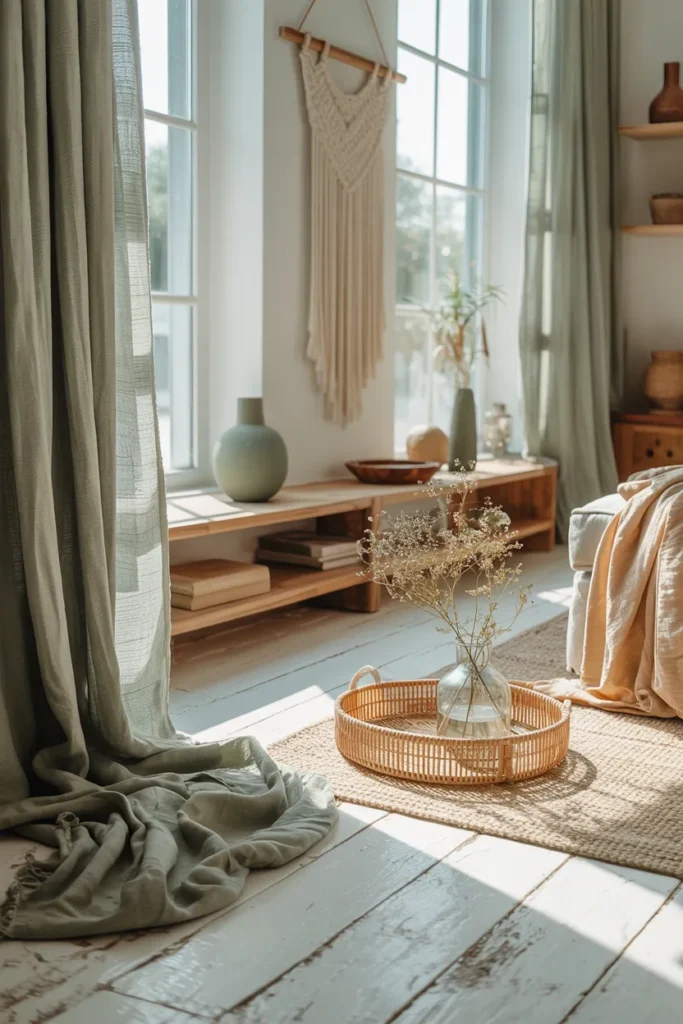
Vibe: Serene — the visual equivalent of an exhaled breath.
Dusty sage is one of the most versatile accent colors in the bohemian interior palette because it reads simultaneously as both natural and intentional — it evokes eucalyptus, aged olive, and dried lavender at once. The key is ensuring the sage you choose leans warm rather than cool. Warm sage carries yellow or grey undertones (like Benjamin Moore HC-116 Misted Fern); cool sage carries blue undertones and will look spa-like and clinical rather than bohemian. Against warm white walls, warm sage has the quiet complexity that makes a room feel thoughtfully considered.
Introduce sage through curtains first — they occupy a large visual plane without dominating the way a painted wall does. Look for stonewashed or washed linen in sage, which adds natural texture variation to the color. Layer in ceramic vessels, a single sage-toned cushion, and a sage cotton throw. The layering of the same tone across different materials (fabric, ceramic, plant life) is what makes a color palette feel immersive.
15. Arched Rattan Headboard as Bohemian Bed Focal Point
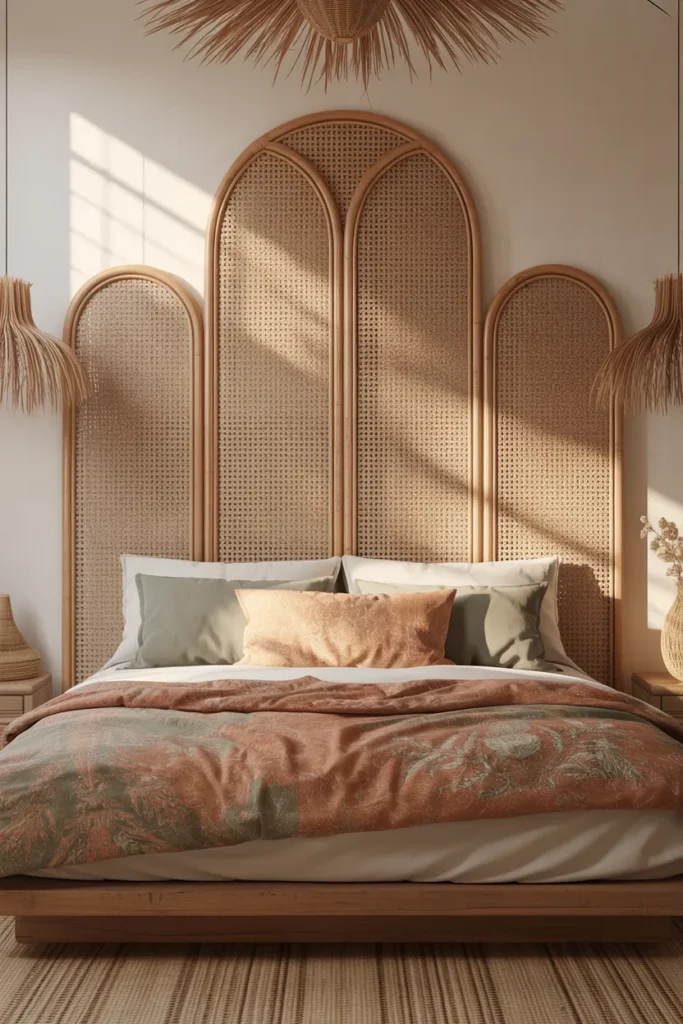
Vibe: Still — the arch creates a frame for rest that feels both personal and permanent.
An arched rattan headboard introduces the design principles of architecturally scaled texture and framing simultaneously: its vertical height draws the eye upward and establishes the bed as the architectural centerpiece of the room, while the arch shape creates a visual frame around the sleeping area. Unlike a flat upholstered headboard, the rattan weave has inherent shadow-depth — the lattice pattern creates micro-shadows throughout the day as light changes, making it a living element rather than a static one.
Pair the headboard with bedside pendant lights hung from the ceiling on either side rather than traditional table lamps. This keeps the side tables clear and allows the headboard to breathe visually without being flanked by competing vertical elements. Hang a single woven basket or small botanical print above the arch to extend the vertical composition to the ceiling without overcrowding it.
16. Bohemian Entryway With a Vintage Mirror & Woven Console
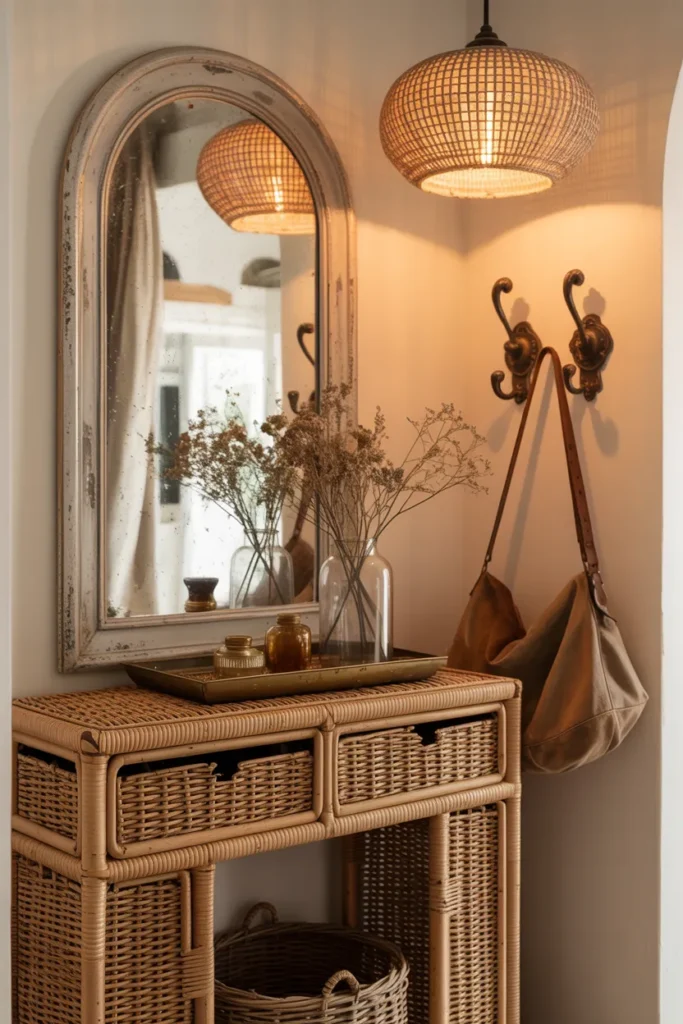
Vibe: Welcome — the kind of entryway that tells you exactly who lives here before you’ve entered the house.
A bohemian entryway works through the principle of compressed layering: a small space is given maximum personality through tight vertical stacking — console table, mirror, pendant light, and wall hooks all operating within 36 inches of linear wall space. The bohemian mirror above the console is essential rather than decorative; it doubles the perceived depth of a narrow entry and reflects the warm light from the pendant downward, making the space feel larger and more luminous. A rattan or woven console keeps the entry feeling light rather than heavy in a constrained corridor.
Use the entry console tray as the landing zone for keys, mail, and small daily objects — this keeps the styling intentional rather than cluttered. A single large textured candle, a dried botanical stem, and a ceramic catchall bowl are sufficient. The space below the console is prime storage: a deep woven basket for bags, umbrellas, or shoes keeps the floor clear while adding another texture layer.
17. Maximalist Plant Wall in a Bohemian Interior
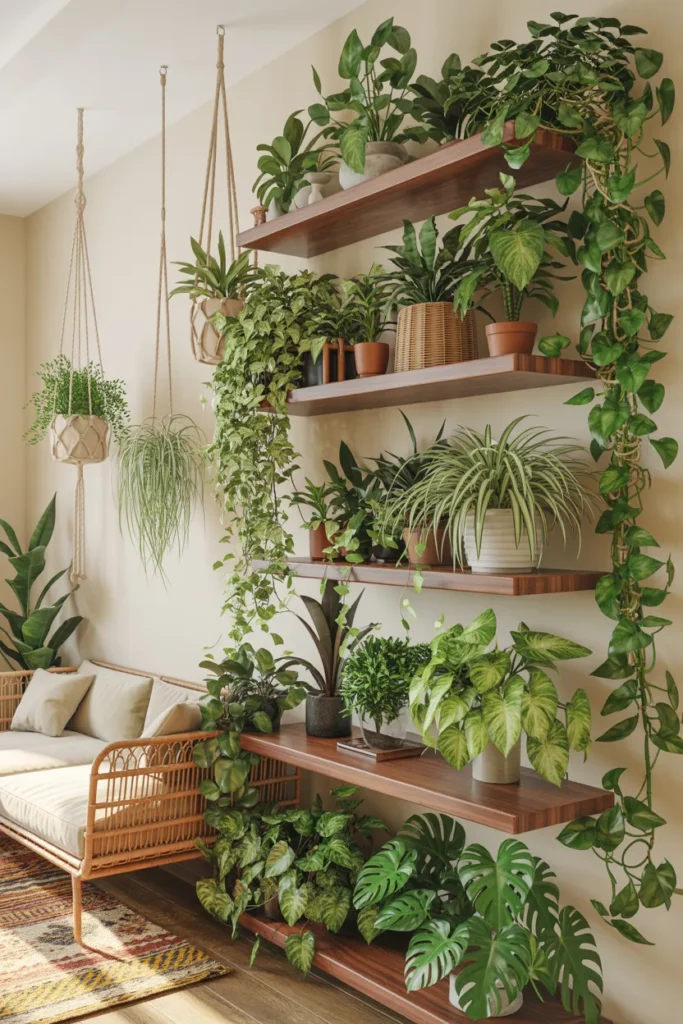
Vibe: Alive — the wall breathes, literally.
A maximalist plant wall in a bohemian interior leverages the design principle of vertical organic rhythm: multiple plants at staggered heights create a visual movement that no static object can replicate. The trailing vine of a pothos at shelf height, the broad horizontal spread of a monstera below it, and the arching forms of a spider plant above introduce three distinct directional movements simultaneously. This is layered bohemian interior design at its most dynamic — the composition changes as plants grow, extend, and shift toward light.
Build the wall display on staggered floating shelves at three heights: 24 inches, 48 inches, and 64 inches from the floor. Combine trailing varieties (pothos, string of hearts) with upright ones (snake plant, monstera) and compact ones (succulents, small ferns). All pots should share a material family — matte terracotta with the occasional woven basket — to prevent the display from reading as a garden center rather than a curated living element. Water regularly and accept asymmetry; the plants will self-design as they grow
Ready to Create Your Dream Bohemian Home?
These 17 ideas span every dimension of bohemian home decor — from the earthy color palettes and organic materials that define the style, to the specific furniture profiles, lighting choices, and layout principles that make it feel genuinely inhabited. Transformation in this style is always incremental, and that’s not a limitation — it’s how the best bohemian interiors are built, one considered layer at a time. Today, pick up a bundle of dried pampas grass and a matte terracotta vase: place them on your most bare surface and notice what happens to the room’s warmth. The bohemian interior is designed to make a space feel like it has a long story — and yours starts now. Save your favourite ideas here, especially the rug-stacking and plant-wall combinations, and come back to them each time you’re ready to add the next layer.
One Comment