
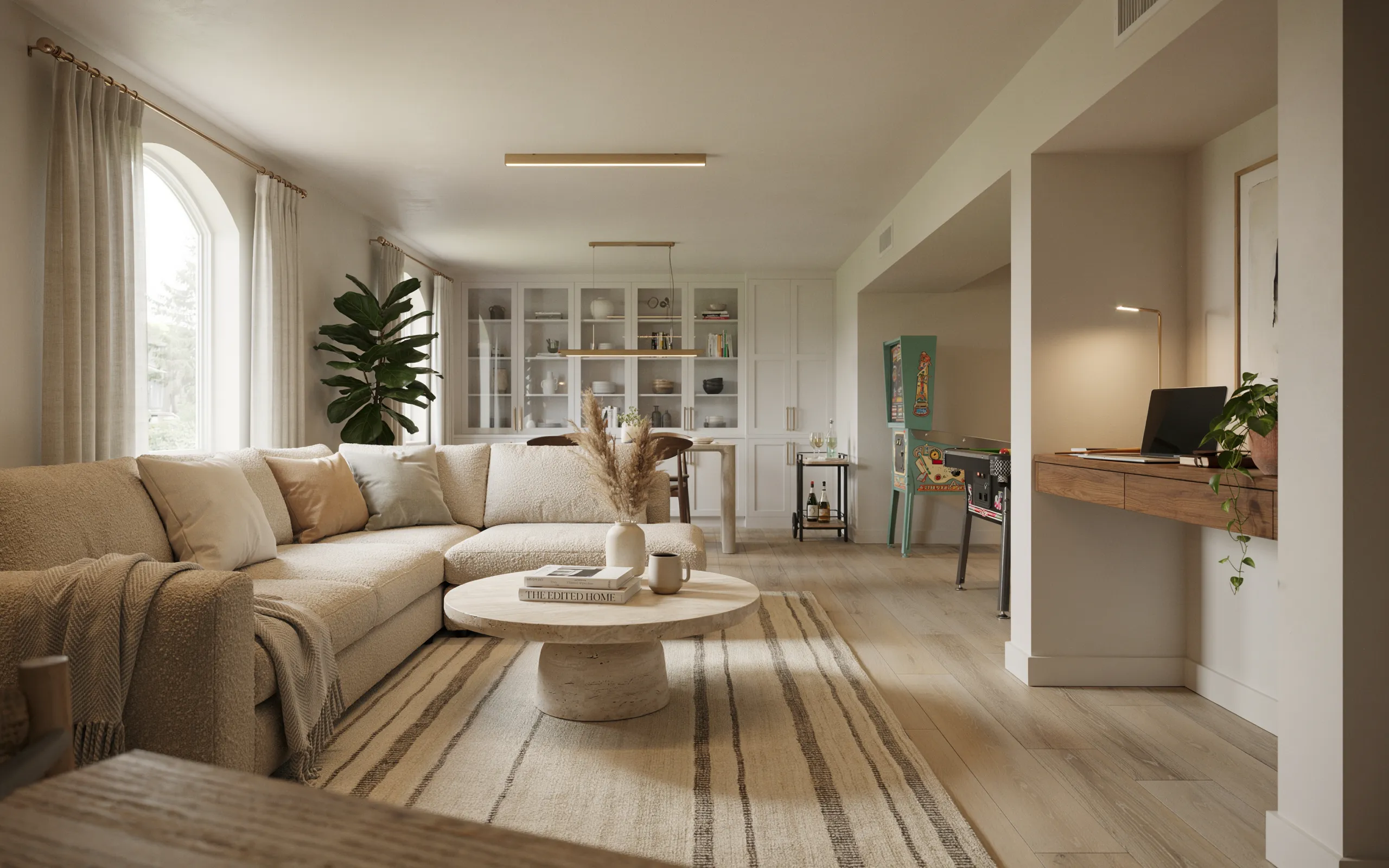
18 Finished Basement Ideas Packed With Style & Comfort
A finished basement is no longer a dark storage dungeon; it is a layered extension of your home designed for genuine living. This article delivers finished basement ideas that blend structural intelligence with high-comfort design so you never waste a single square foot.
Imagine stepping down into warm, diffused light instead of harsh fluorescents. Feel the shift in air quality—less damp, more still. Hear the difference when sound-absorbing textiles replace hollow echoes. This is the new standard: a basement that feels intentional, not incidental. Here are ideas worth saving—and stealing.
Why Finished Basement Design Works So Well
The modern finished basement functions as a pressure-release valve for the main floor. Instead of forcing every activity into open-plan living, you offload high-energy zones (media, gaming, wet bars, guest quarters) downward. This division of labor keeps upstairs spaces serene while downstairs thrives on purposeful density.
Core materials anchor the look: warm white, dried eelgrass, brushed nickel, fumed oak, and charcoal bouclé. Colors shift from cave-like to cozy by using 60% light neutral (warm greige), 30% mid-tone wood, and 10% deep accent (navy, forest, or rust). The palette must combat low natural light without feeling cold.
Pinterest searches for “cozy basement on a budget” jumped 240% year-over-year as homeowners prioritize usable square footage over moving. Post-pandemic, people want dedicated recreation zones that feel nothing like a sterile “bonus room.” The trend is toward warm industrial—concrete floors softened with wool, ductwork left exposed but painted black.
Small basements absolutely succeed with this style when you prioritize vertical storage and glossy ceiling paint. Avoid chunky sectionals; use modular seating and wall-mounted sconces instead. The limit? Ceilings under 7 feet feel oppressive—lean into a “snug” aesthetic there, not a home theater.
Style at a Glance
| Element | Core Trait 1 | Core Trait 2 |
|---|---|---|
| Philosophy | Purposeful density | Quiet upstairs / active downstairs |
| Materials | Fumed oak, bouclé, black iron | Acoustic panels, wool, ceramic |
| Color palette | Warm greige (60%) | Deep navy or rust (10%) |
1. Acoustic Cloud Ceiling
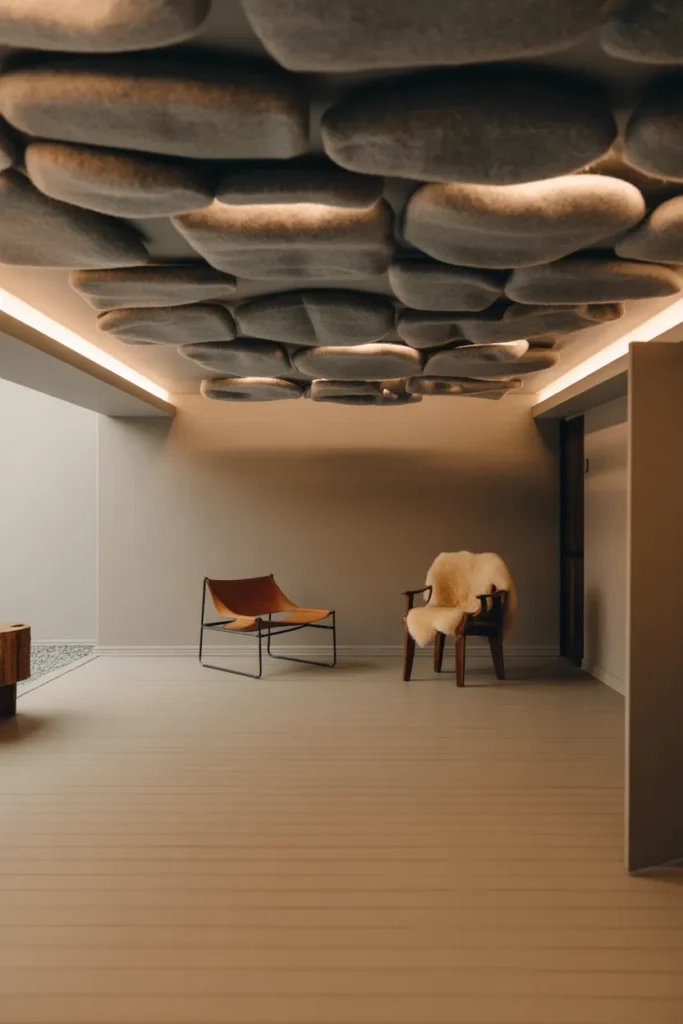
Vibe: Softened, silent, enveloping.
Why it works: Low basement ceilings amplify every footstep and echo. Acoustic clouds absorb mid-to-high frequencies while leaving the visual plane open. The 4-inch drop creates a shadow line that makes the ceiling feel higher than a flat drywall lid ever could.
How to get it: Order 2-inch-thick felt panels in charcoal. Suspend them using aircraft cable and hook anchors, leaving 4 inches of air gap. Space clouds 12 inches apart over seating zones only.
Quick Win: Use stick-on felt hexagons in a random scatter pattern. No drilling, zero echo.
Shop The Look
- Felt acoustic cloud panels – charcoal, 2×4 ft
- Aircraft cable suspension kit – ceiling mount
- Leather sling lounge chair – walnut frame
- Natural sheepskin throw – off-white
- Flangeless LED disc lights – 3000K warm dim
2. Media Wall Fluting
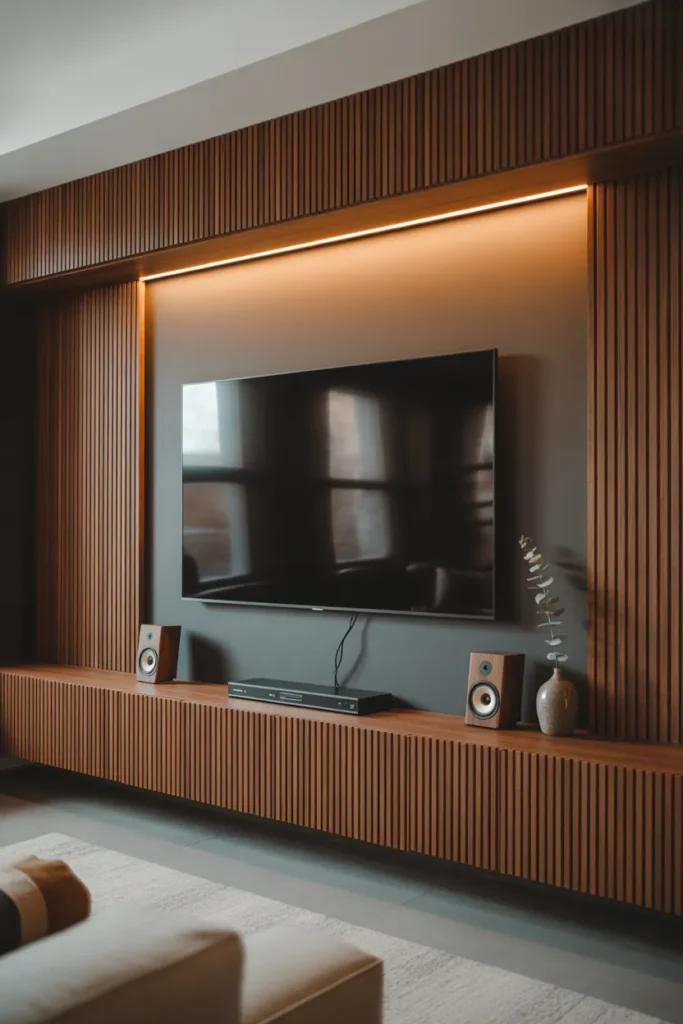
Vibe: Cinematic, calm, textured.
Why it works: Fluted panels break up the black mirror effect of a large TV. The vertical lines draw the eye up, countering a low basement ceiling. Fluted shapes scatter sound reflections, improving dialogue clarity.
How to get it: Attach 1×2 poplar battens 16 inches on center. Buy pre-finished fluted MDF panels. Cut with a track saw and attach using panel adhesive and 18-gauge pin nails. Caulk seams with dark wax filler.
Quick Win: Use peel-and-stick fluted wall planks applied directly over painted drywall. No nail gun required.
Shop The Look
- Fluted walnut wall panels – 4×8 ft, pre-finished
- Panel adhesive – heavy duty
- Floating media console – 72 inch, matte black
- LED bias light strip – USB, 6500K
- Ceramic bookshelf speakers – walnut veneer
3. Coved Lighting Zone
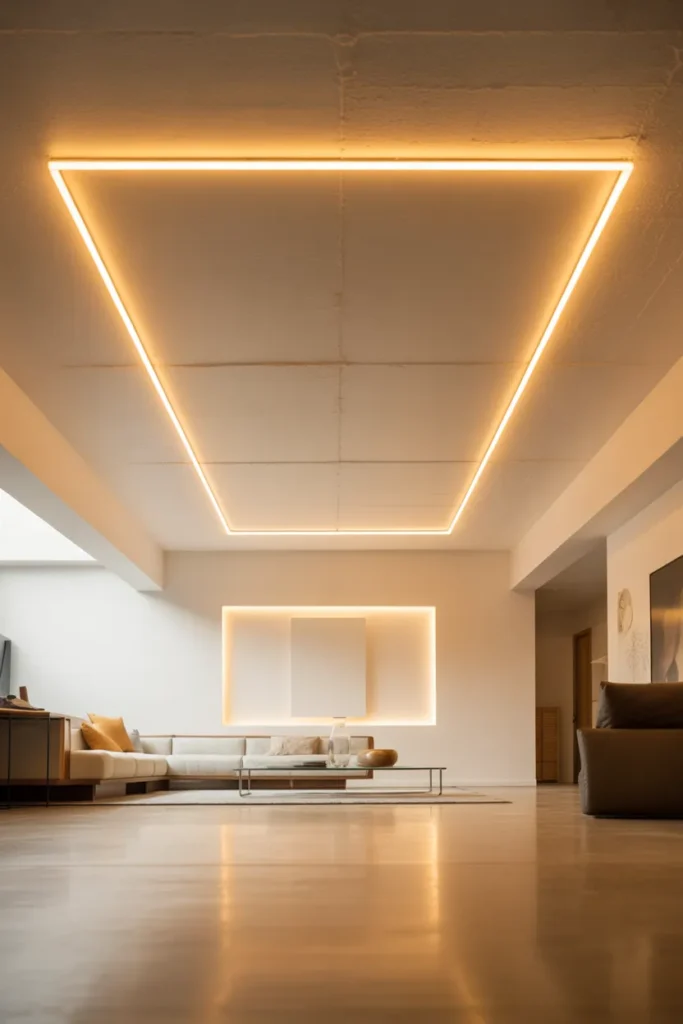
Vibe: Serene, spacious, indirect.
Why it works: Basements have no windows. Coved lighting bounces illumination off the ceiling and wall, eliminating harsh shadows. The lack of visible fixture makes the ceiling feel vaulted, adding perceived height.
READ MORE; 20 Kitchen Cabinet Color Ideas That Look Expensive
How to get it: Frame a 4-inch-deep, 8-inch-wide chase 12 inches down from the ceiling. Install 2700K dimmable LED tape inside. Return the drywall edge with a tear-away bead. Wire to a dedicated dimmer.
Shop The Look
- High CRI LED strip
- Tear-away drywall bead – 8 ft length
- Dimmable LED driver – 96 watt, magnetic
- Low-profile modular sectional – charcoal bouclé
- Glass coffee table – smoked tempered, round
4. Deep Navy Accent Zone
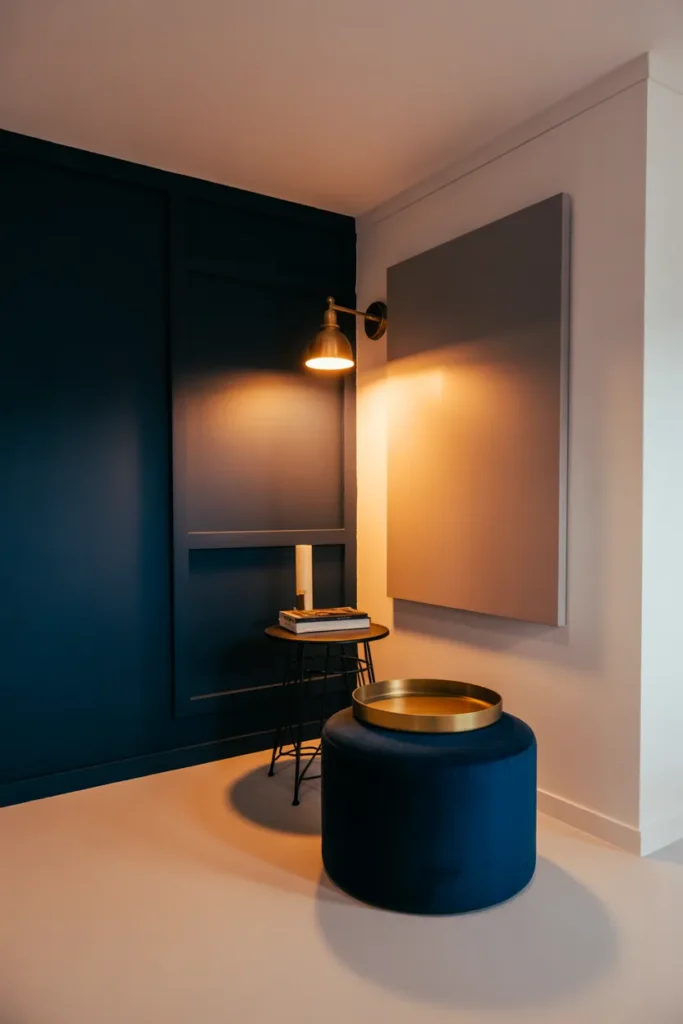
Vibe: Cocooning, dramatic, focused.
Why it works: Dark walls absorb light, which makes the light you do have feel intimate rather than inadequate. One accent wall creates depth without cave effect. Navy reads as neutral in low light.
How to get it: Choose the wall that faces the entry stairs. Use matte navy paint. Cut in edges first, roll with a micro-velour sleeve. No primer needed over white.
Quick Win: Use peel-and-stick navy grasscloth on just one wall. Installs in minutes, removable for renters.
Shop The Look
- Matte navy paint – 1 gallon
- Micro-velour roller sleeve – 3/8 inch nap
- Brass picture light – battery operated, dimmable
- Velvet ottoman cube – navy, 18 inch
- Brass catchall tray – 6 inch, hammered
5. Floating Corner Bar
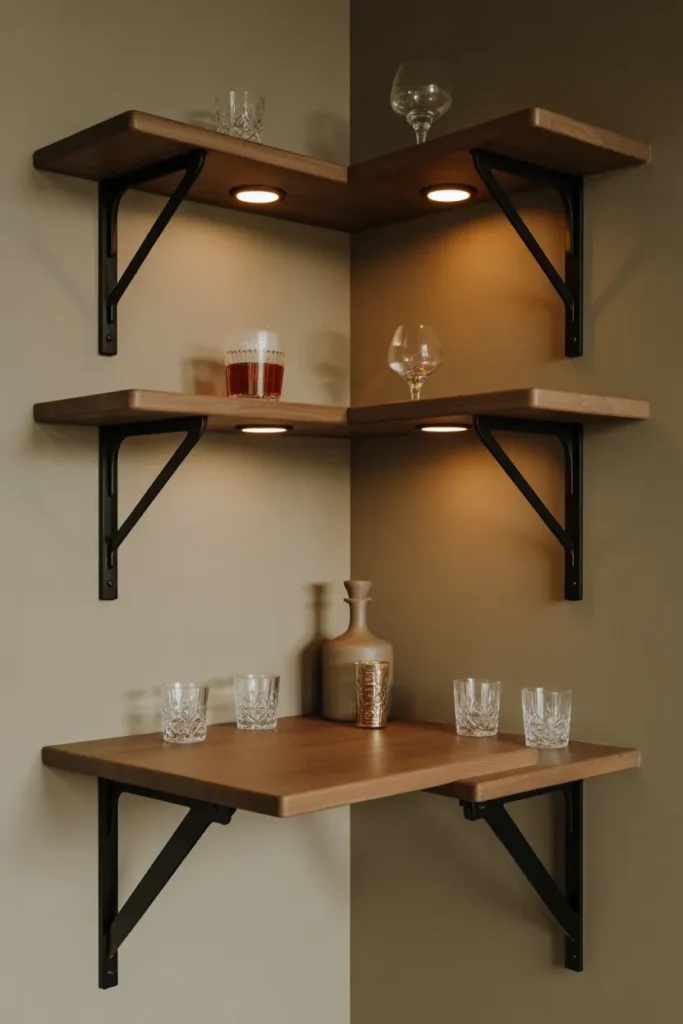
Vibe: Clever, compact, elevated.
Why it works: A full wet bar requires plumbing and space. A floating corner bar uses dead space and folds away when not in use. The fold-down surface doubles as a desk or buffet. Zero footprint.
How to get it: Mount heavy-duty folding shelf brackets rated for 200 lbs. Attach a 16×24-inch walnut cutting board as the surface. Install 8-inch deep floating shelves 18 inches above. Add motion-sensor puck lights.
Shop The Look
- Fold-down shelf brackets – 200 lb capacity, pair
- Walnut cutting board slab – 16x24x1.5 inch
- Floating shelf – fumed oak, 24 inch
- Motion sensor puck lights – battery, warm white
- Crystal lowball glasses – set of 4, lead-free
6. Reclaimed Wood Plank Wall
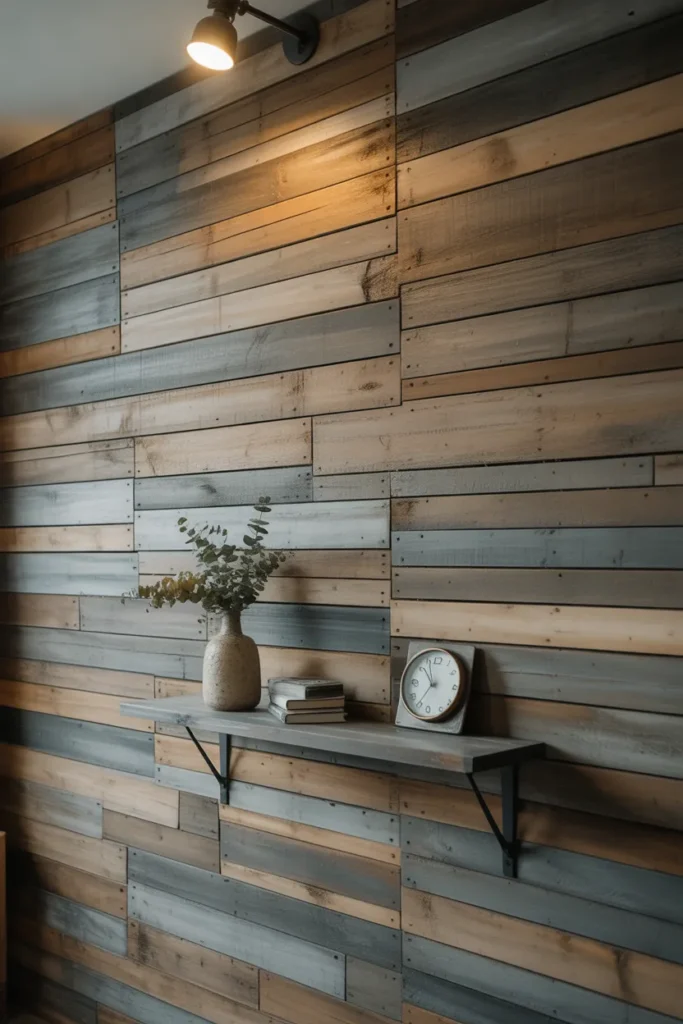
Vibe: Weathered, warm, textured.
Why it works: One wall of reclaimed wood introduces grain variation and color shifts that fight the sterile box feeling of new construction. The irregular plank widths hide unlevel basement walls. Wood also regulates humidity slightly.
How to get it: Source weathered barn wood from a local dismantler. Attach 1×3 furring strips horizontally to wall. Nail planks vertically using a finish nailer, leaving 1/16-inch gaps for expansion. Seal with matte polyurethane.
Quick Win: Use peel-and-stick real wood veneer planks. Cut with scissors. Zero nail holes.
Shop The Look
- Reclaimed barn wood planks – mixed widths, 50 sq ft
- Finish nailer – 18 gauge, pneumatic
- Flat matte polyurethane – 1 quart
- Floating TV mount – over plank wall
- Industrial pipe shelf – black iron, 36 inch
7. Egress Window Seat
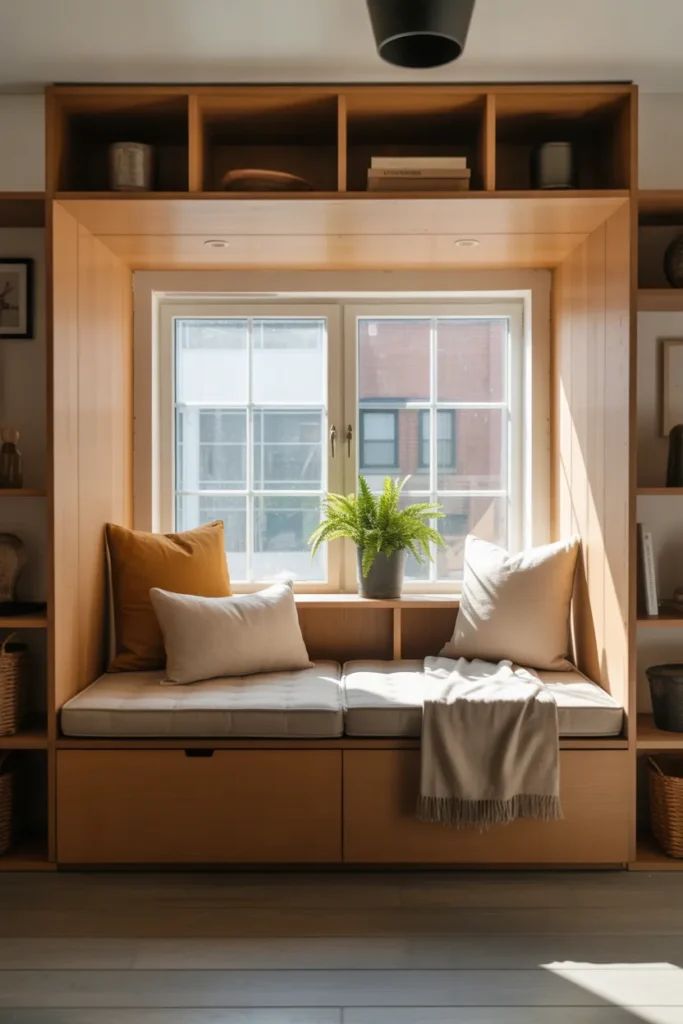
Vibe: Bright, unexpected, cozy.
Why it works: Egress windows are mandatory but usually ugly. Building a seat around them turns a code requirement into a destination. The deep well provides perfect legroom, and the hinged lid hides emergency escape ladder access.
How to get it: Frame a bench 18 inches high using kiln-dried white oak. Install heavy-duty drawer slides on a false front. Cut a separate hinged top over the window well using gas struts to hold it open. Cushion with 4-inch foam.
Quick Win: Buy a ready-made storage bench and cut a hole in the top. Add a piano hinge. No carpentry required.
Shop The Look
- White oak bench frame – custom cut, pre-finished
- Heavy duty drawer slides – 36 inch, 500 lb capacity
- 4-inch foam cushion – high density, cut to size
- Linen pillow covers – undyed, 20×20, set of 2
- Gas strut hinges – 20 lb lift, pair
8. Concrete Polish + Sealer
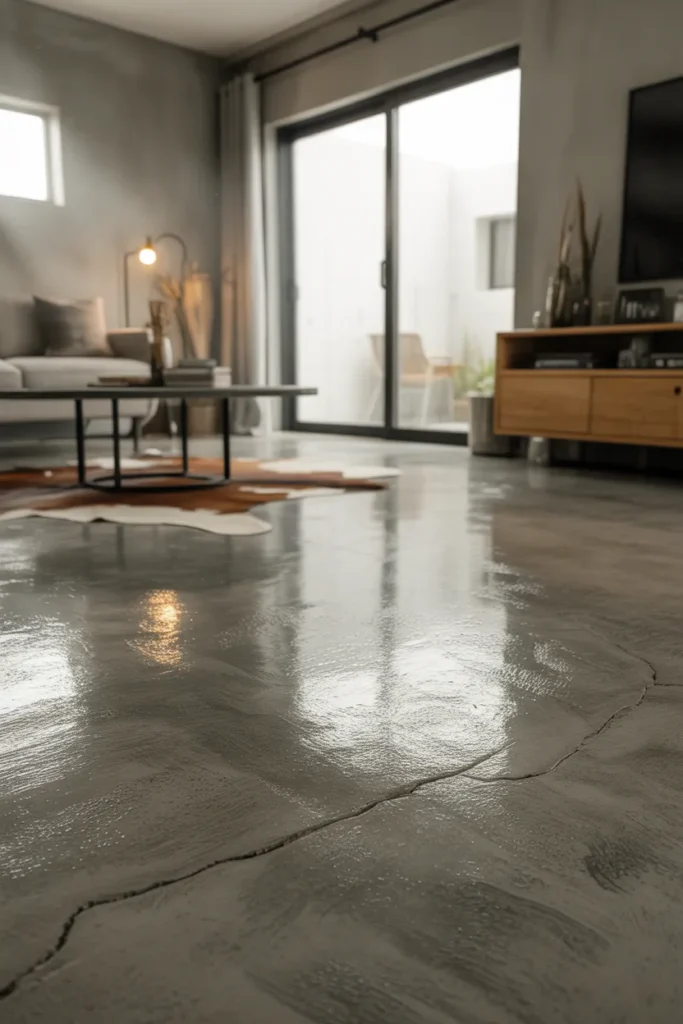
Vibe: Raw, refined, durable.
Why it works: Basement concrete is already there. Polishing it eliminates future mold risk from carpet while adding industrial warmth. A matte sealer prevents dusting and stains without the slippery gloss of epoxy.
How to get it: Diamond grind with 30-grit metal bond, then 80-grit, then 200-grit resin. Apply penetrating lithium densifier. Burnish with 800-grit and 1500-grit pads. Seal with matte acrylic guard.
Shop The Look
- Diamond grinding pads – 30 to 1500 grit set
- Lithium densifier – 1 gallon
- Matte concrete sealer – 1 gallon
- Cowhide area rug – black and white, 5×7
- Black iron tripod floor lamp – 60 inch
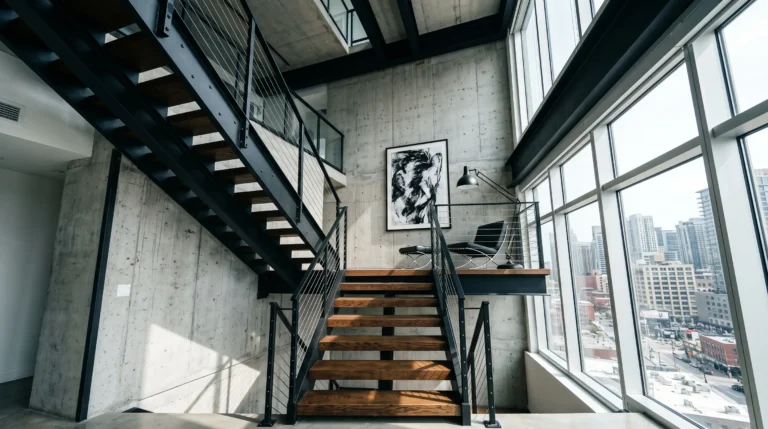
9. Gloss Black Ductwork
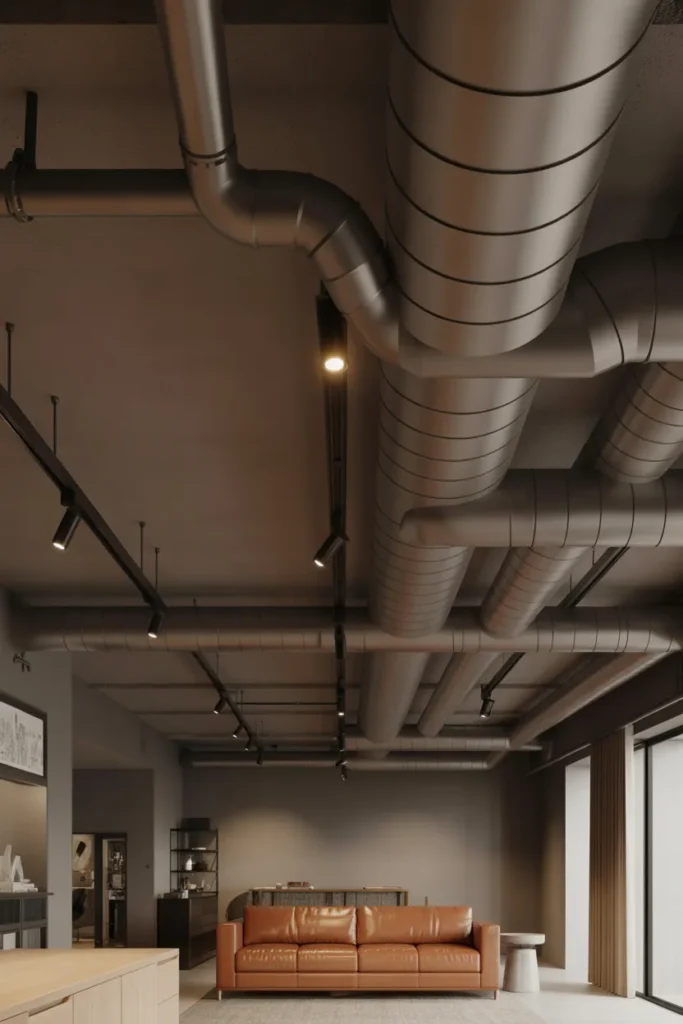
Vibe: Moody, intentional, industrial.
Why it works: Hiding ducts costs thousands in soffits and lowers ceilings. Painting them gloss black makes them recede optically while the gloss reflects track lighting. White drywall above creates a sky effect between ducts.
How to get it: Degrease metal ducts with TSP substitute. Prime with bonding primer. Spray two coats of high-gloss black enamel using an HVLP sprayer. Mask all sprinkler heads first.
Shop The Look
- High-gloss black enamel spray – professional grade
- Bonding primer – 1 gallon
- HVLP spray gun – electric, handheld
- Cognac leather sofa – 3-seat, tufted back
- Concrete side table – round, 16 inch
10. Tension Rod Curtain Divider
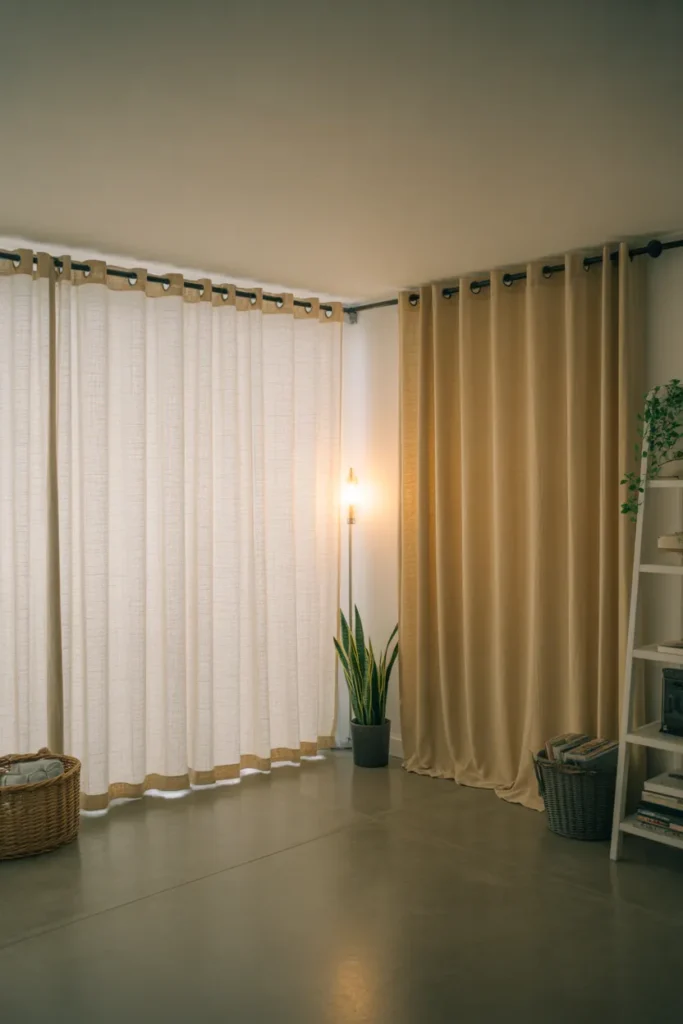
Vibe: Soft, temporary, budget.
Why it works: Finished basements often have utility zones next to living zones. A tension rod with floor-length curtains hides eyesores without building walls. The fabric adds sound absorption where drywall doesn’t exist.
How to get it: Measure wall-to-wall distance. Buy a heavy-duty tension rod rated for 50 pounds. Use commercial-grade grommet curtains that touch the floor. Open the hem and add a chain for weight.
Shop The Look
- Heavy-duty tension rod – 3/4 inch steel, 48-84 inch
- Grommet blackout curtains – cream linen look, 95 inch
- Curtain weight chain – lead-free, 10 ft
- Ceiling mount rod holder – for added stability
- Magnetic curtain holdback – bronze, pair
11. Wall-Mounted Desk Pod
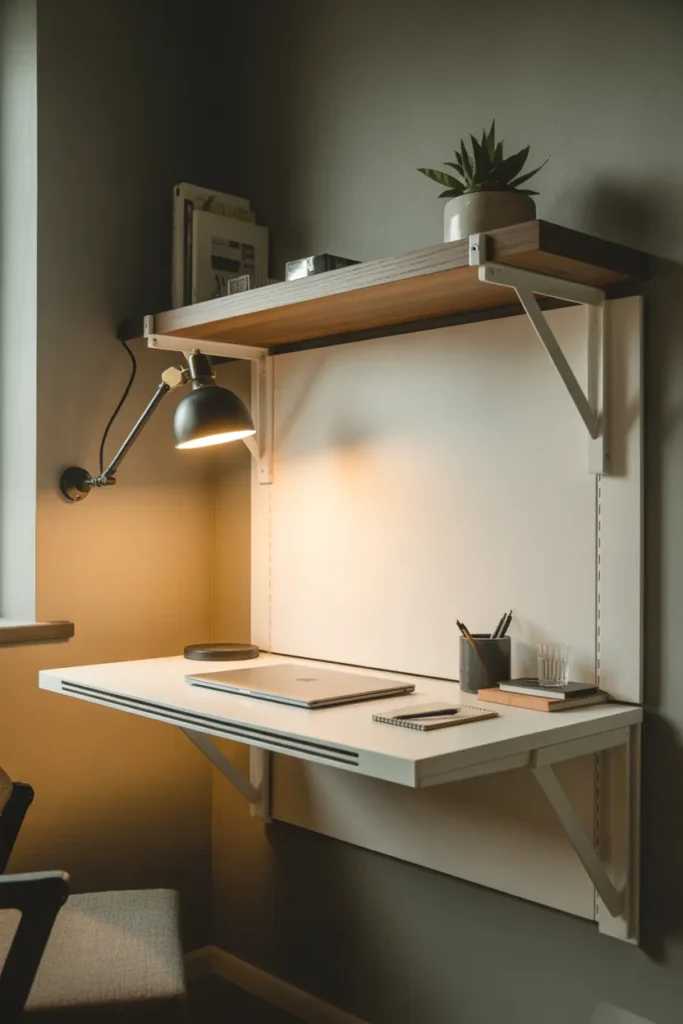
Vibe: Efficient, floating, organized.
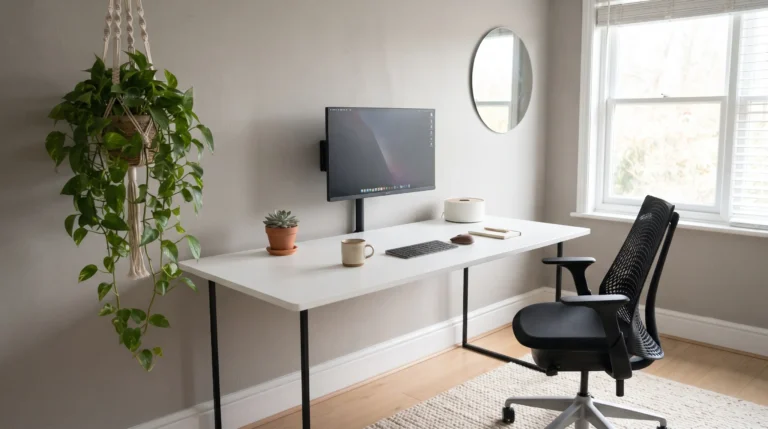
Why it works: A basement office often fails because the desk takes up too much floor. Wall-mounted drop-leaf desks use vertical dead space. When closed, it’s 4 inches deep. When open, it’s a full workstation.
How to get it: Mount a 42-inch drop-leaf desk at 29 inches high. Install a 4-inch deep floating shelf 12 inches above. Drill a grommet hole behind a monitor arm. Run cables inside adhesive raceways.
Quick Win: Use a wall-mounted laptop tray that folds flat. Holds one laptop and a mouse.
Shop The Look
- Drop-leaf wall desk – white, 42 inch
- Cord cover raceway – white, 5 ft
- Monitor arm – gas spring, clamp mount
- Wall-mounted task light – black, swing arm
- Floating shelf – walnut, 36 inch
12. Wet Bar Nook
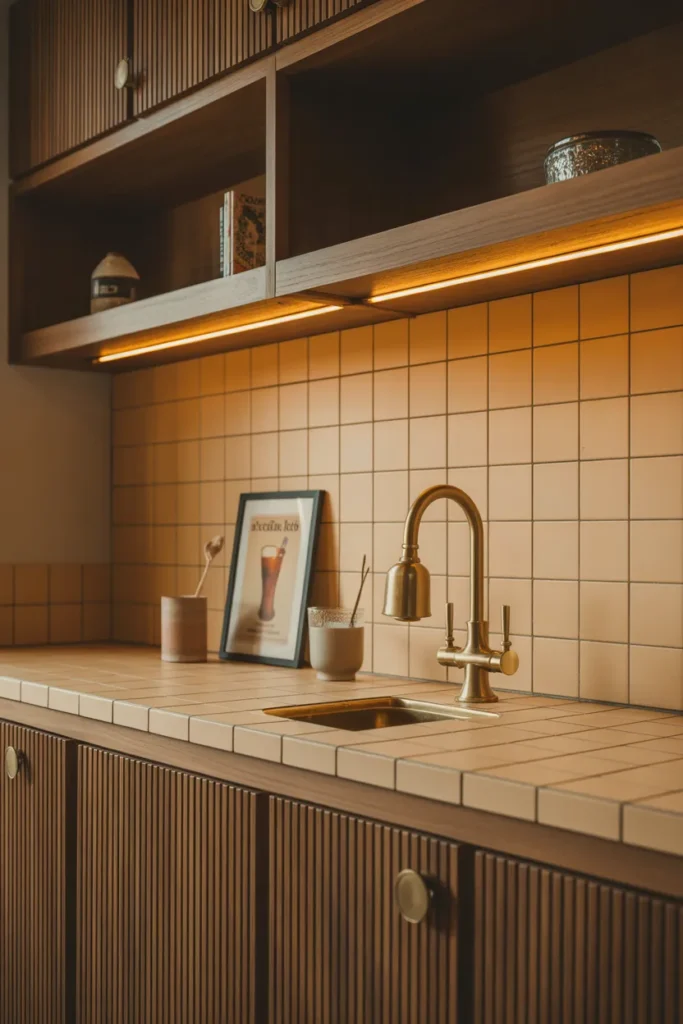
Vibe: Dim, polished, convivial.
Why it works: A wet bar adds perceived home value while containing mess downstairs. Fluted walnut adds texture without visual clutter. Unlacquered brass will patina over time—a deliberate aging that fits a basement’s slightly moody environment.
How to get it: Use a 24-inch cabinet frame, then order aftermarket fluted walnut veneer doors. Install a 15-inch prep sink. Backsplash with 2×4 zellige tiles in cream with 1/16-inch grout lines.
Shop The Look
- Fluted walnut veneer door fronts – 24 inch
- Zellige tile backsplash – cream, 2×4 inch
- Unlacquered brass gooseneck faucet – wall mount
- Under-cabinet strip light – 2700K, dimmable
- Ceramic bar spoon holder – matte sandstone
13. Layered Rugs
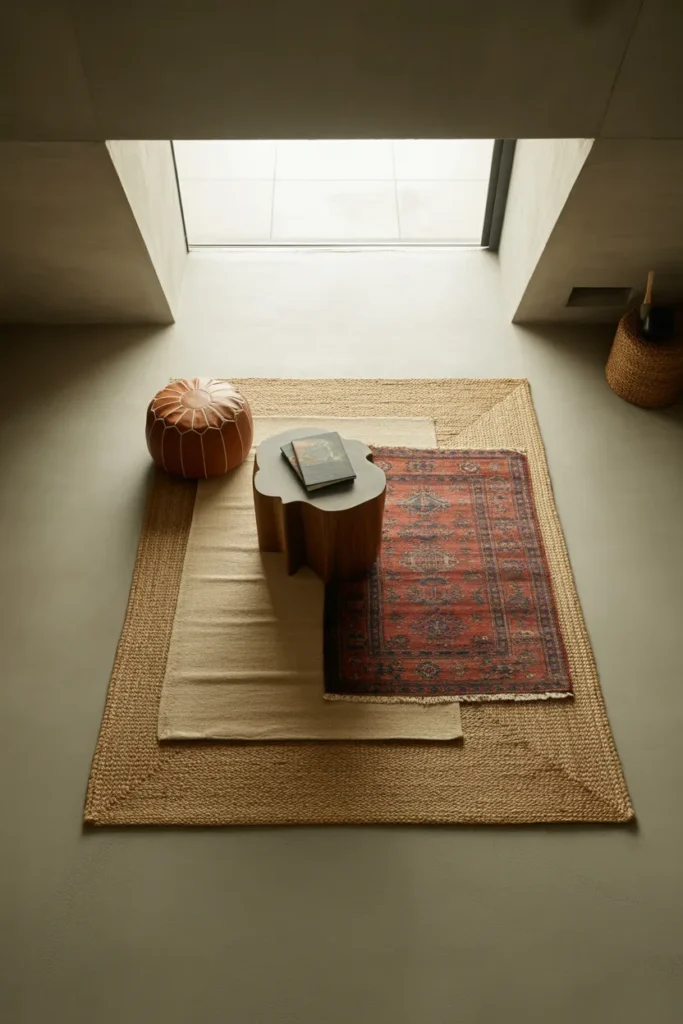
Vibe: Grounded, layered, textural.
Why it works: A single rug on concrete feels temporary. Layering a flatweave under a plush wool rug creates visual weight and sound absorption. The top rug anchors seating; the bottom rug defines the entire zone.
How to get it: Start with an 8×10 natural jute rug. Offset a 5×7 faded Moroccan wool rug on top, angled slightly. Keep the top rug’s fringe contained within the jute border. Vacuum both as one unit.
Quick Win: Buy a 6×9 wool patchwork rug and layer it over a 9×12 painter’s drop cloth stenciled with geometric shapes.
Shop The Look
- Natural jute rug – 8×10, undyed
- Faded Oushak wool rug – 5×7, brick/indigo
- Leather pouf ottoman – cognac, hand-stitched
- Raw edge coffee table – live-edge walnut
- Rug gripper corners – no-slip, 8 pack
14. Bunk Room with Sconces
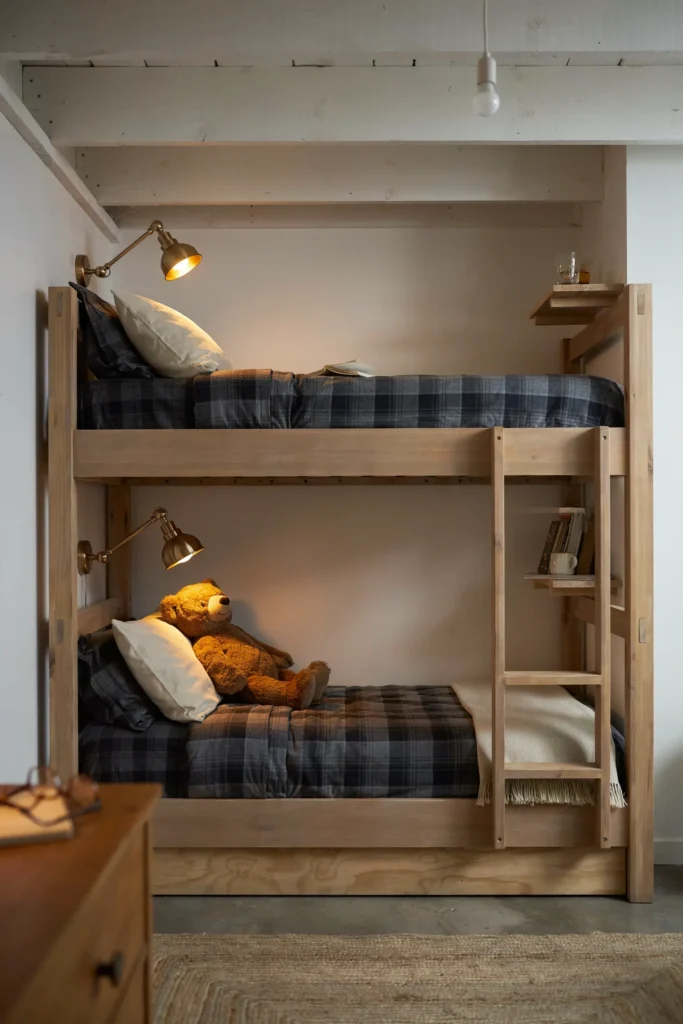
Vibe: Sleepover, efficient, cozy.
Why it works: A basement guest room is wasted space most of the year. Built-in bunks turn it into high-density sleeping for kids, guests, or movie marathons. Individual sconces give each bunk autonomy without overhead glare.
How to get it: Frame a double-stack bunk using 2×12 for side rails. Install plywood decking. Wire a swing-arm sconce for each bunk at 40 inches high. Use 5-inch foam mattresses.
Shop The Look
- Swing arm sconce – brass, hardwired, pair
- 5-inch foam mattress – twin, gel-infused
- 2×12 lumber – kiln-dried, 8 ft, 2 pieces
- Bunk ladder – angled, 36 inch wide
- Flannel sheet set – twin, charcoal plaid
15. Moody Wallpapered Ceiling
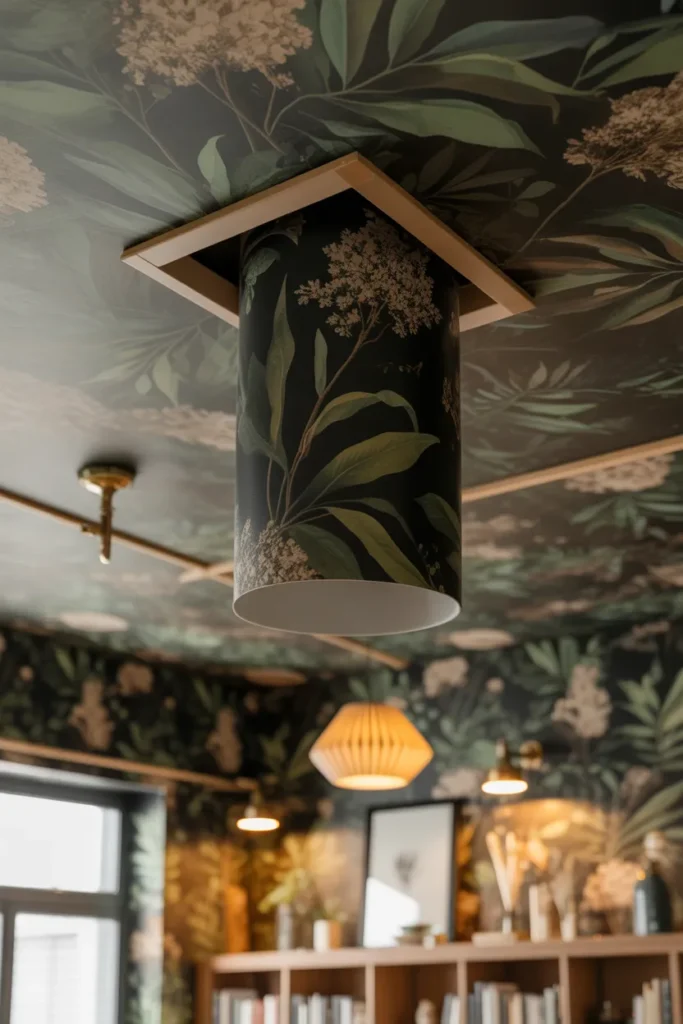
Vibe: Unexpected, jewel-toned, intimate.
Why it works: Everyone does walls. Nobody does ceilings. A dark, patterned wallpaper on the ceiling makes a low basement ceiling feel like a designed feature. The pattern distracts from ductwork bumps.
How to get it: Hang non-pasted vinyl wallpaper. Use a sharp utility knife to cut around ductwork. Paste the ceiling with heavy-duty clear adhesive. Smooth with a plastic squeegee.
Shop The Look
- Vinyl wallpaper – dark botanical pattern, 2 rolls
- Clear heavy-duty adhesive – 1 gallon
- Plastic wallpaper squeegee – 12 inch
- Laser level – cross line, ceiling use
- Sharp utility knife – 50 blades
16. Pull-Out Pantry Tower
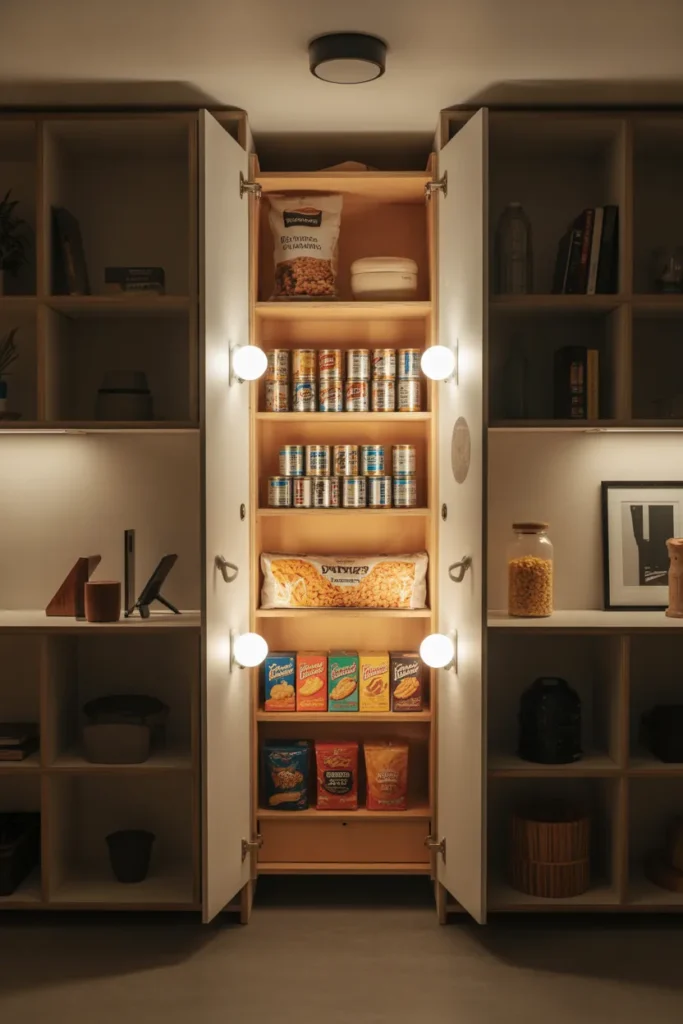
Vibe: Hidden, dense, snack-ready.
Why it works: A basement without a snack zone is a basement people leave. A 12-inch deep pull-out tower fits between studs and holds 50+ items. It uses wasted cavity space. No floor footprint.
How to get it: Cut out drywall between two studs. Install heavy-duty 12-inch full-extension slides. Build a 10-inch deep plywood box with adjustable shelves. Add a back panel.
Quick Win: Buy a 12-inch wide rolling cart and just set it next to the sofa. No construction.
Shop The Look
- Full-extension drawer slides – 12 inch, 100 lb pair
- Baltic birch plywood – 1/2 inch, 2×4 ft
- Slim rolling storage cart – 12 inch wide, 3 shelf
- Clear can organizers – stackable, set of 6
- Push-to-open latch – magnetic, soft close
17. Cork Flooring Tiles
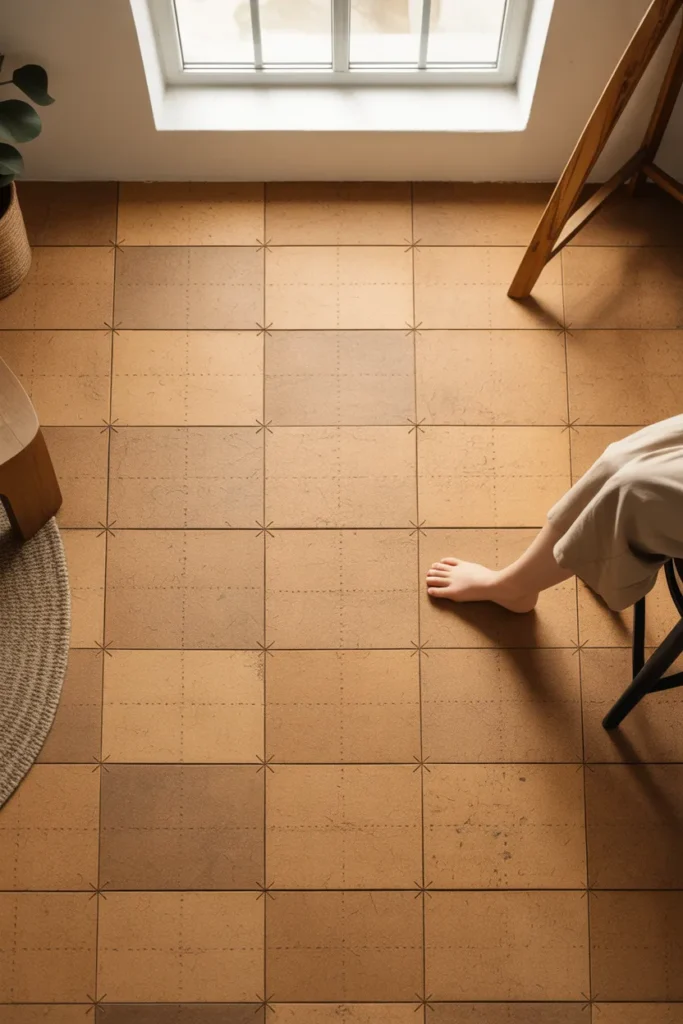
Vibe: Soft, warm, quiet.
Why it works: Concrete is cold and loud. Cork is naturally thermal and absorbs impact noise. It’s also antimicrobial—mildew hates it. No underlayment needed.
How to get it: Ensure concrete is dry. Use pressure-sensitive adhesive and roll with a 100lb floor roller. Seal with two coats of water-based polyurethane.
Shop The Look
- Cork tile floor – natural honey, 12×12, 20 sq ft box
- Pressure-sensitive adhesive – 1 gallon
- Floor roller – 100 lb, rental
- Water-based polyurethane – matte
- Cork underlayment tape – for seams
18. Single Oversized Pendant
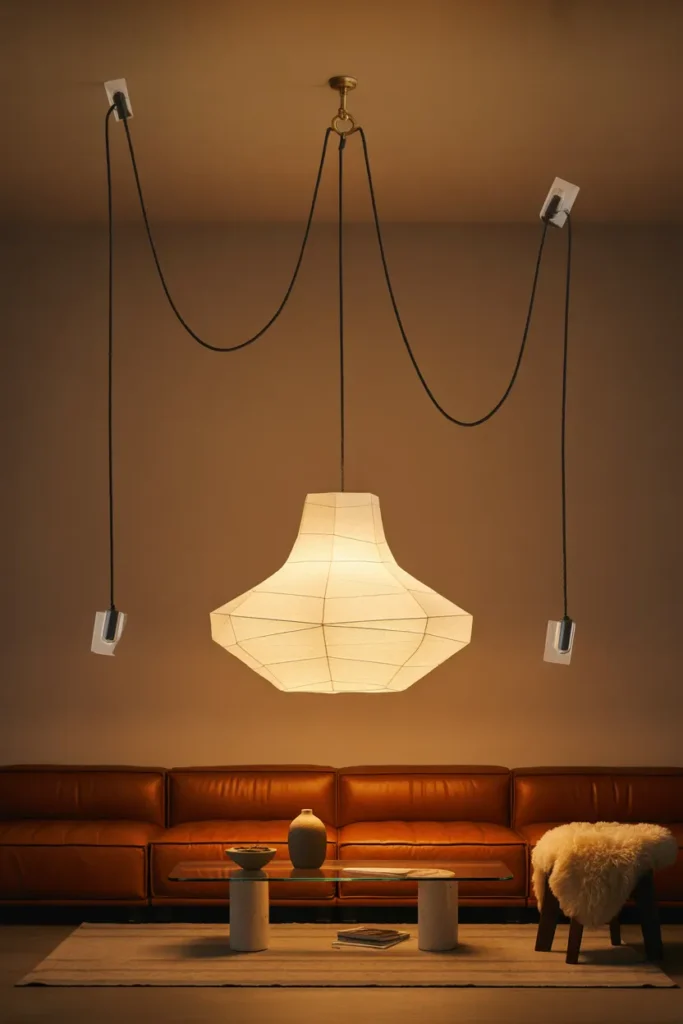
Vibe: Sculptural, focal, warm.
Why it works: A single large pendant in a basement reads as intentional sculpture, not leftover lighting. It pulls the eye up and anchors the seating zone without floor lamps. The large scale looks expensive but isn’t.
How to get it: Swag a plug-in pendant with a 24-inch paper shade from a ceiling hook. Run the cord along the ceiling using clear adhesive clips. Plug into a smart outlet for voice control.
Shop The Look
- Large paper pendant shade – 24 inch, off-white
- Plug-in cord kit – black cloth, 15 ft
- Ceiling hook – brass, screw-in
- Smart plug outlet – wifi, voice controlled
- Adhesive cord clips – clear, 20 pack
How to Start Your Finished Basement Transformation
Start with light temperature, not furniture. Buy one 2700K dimmable LED bulb and put it in an existing socket. If you hate the warm glow, you’ll hate every design decision after it. Basements need warmer light than upstairs to fight the lack of natural blue spectrum.
The most common mistake is buying oversized furniture. Beginners measure the room’s perimeter but ignore the path from the stairs. A sectional that fits the wall will block the walkway. Fix it by taping the floor plan with painter’s tape first.
Three budget entry points under fifty dollars. First, a 6×9 jute rug to kill echo. Second, three 8-foot lengths of adhesive-backed LED tape. Third, a 4-pack of rust-colored velvet throw pillows to add the one warm accent color basements need.
Realistic timeline: A weekend gets you painted ducts, one rug layer, and a tension rod curtain divider. A full transformation takes 6-8 weeks with permits. Budget two to four thousand dollars for a starter 300-square-foot basement. Double that for electrical and plumbing.
Frequently Asked Questions About Finished Basement Design
How do you make a finished basement feel cozy not creepy?
Use 2700K light bulbs everywhere. Add fabric at three heights: rug on the floor, curtains in the middle, and upholstered pieces at eye level. Avoid any single exposed concrete wall—paint it the same warm greige as the ceiling.
What is the best flooring for a basement that floods occasionally?
Luxury vinyl plank with a rigid core and attached pad. Look for a product with a fiberglass-reinforced core that won’t wick water. Never use laminate or solid hardwood. Carpet tiles can be individually replaced.
How much does it cost to finish a 500 square foot basement?
DIY runs seven to twelve thousand dollars for materials only. Professional installation runs eighteen to thirty thousand dollars. The biggest hidden cost is egress windows and adding HVAC returns.
Can you finish a basement with 7-foot ceilings without it feeling like a cave?
Yes, but never install a dropped ceiling. Paint everything above head height matte white. Use only surface-mount LED discs that are 1-inch thick. Avoid ceiling fans. Furniture must be lower than 32 inches tall.
What’s the single best soundproofing trick for a basement ceiling?
Rockwool friction-fit between joists, plus two layers of 5/8-inch drywall with Green Glue compound sandwiched between. That assembly makes normal conversation inaudible upstairs.
Ready to Create Your Dream Finished Basement?
You’ve seen finished basement ideas spanning color, materials, and layout tricks. No single basement needs all of them—pick three that solve your specific pain points. Today, change one light bulb to 2700K and tape a rug outline on the floor. Once the space feels warm rather than raw, you’ll wonder why you waited so long. Save this guide to your Pinterest board so your future drywaller and electrician have a visual to work from.

One Comment