
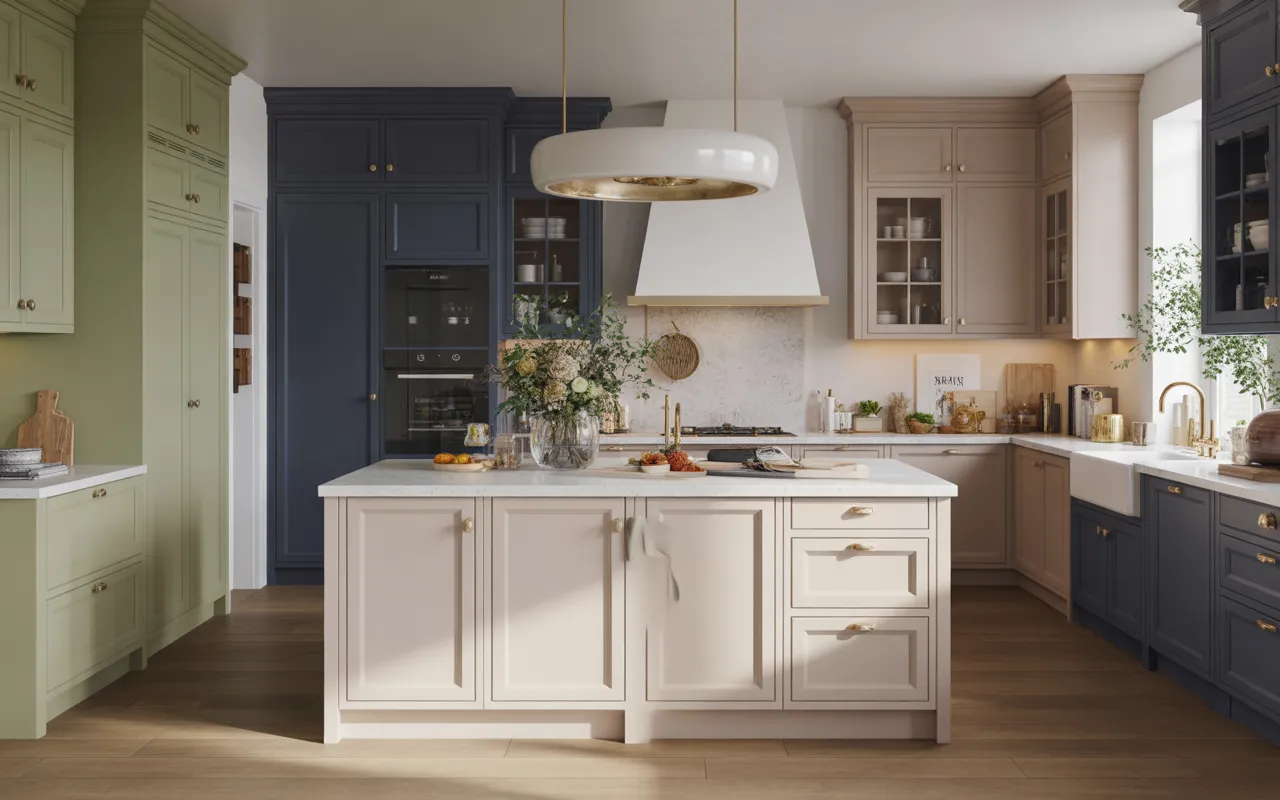
20 Kitchen Cabinet Color Ideas That Look Expensive
A deep, muted cabinet color with complex undertones instantly elevates an ordinary kitchen to custom-level luxury without a full renovation budget. This article delivers 20 kitchen cabinet color ideas that look expensive, each with exact paint matches, designer application techniques, and shoppable hardware and finishes you can install this weekend.
The most expensive kitchens aren’t loud. They hum. They hold light like a held breath. Richness lives in depth — a green so deep it’s almost black, a blue that drinks the afternoon sun, a greige that shifts from warm to cool as the day passes. These colors don’t shout wealth. They claim it in stillness. Here are 20 ideas worth saving — and stealing.
Why Deep, Muted Cabinet Colors Work So Well
Deep, muted cabinet colors carry the visual weight of natural pigments rather than synthetic dyes. Unlike the stark whites and primary brights of early 2000s kitchens, today’s expensive-looking palettes borrow from mineral pigments, dried botanicals, and aged patinas — colors that feel like they’ve always existed rather than being applied last week.
The core palette centers on complex neutrals: warm putty, deep taupe, ink blue, charcoal with green undertones, and blackened olive. Materials lean toward natural wood grain showing through paint, unlacquered brass that tarnishes beautifully, and honed marble that doesn’t compete for attention. Specific paint matches include Benjamin Moore’s Revere Pewter HC-172, Farrow & Ball’s Calke Green No. 34, Sherwin-Williams’ Naval SW 6244, and Benjamin Moore’s Black Forest Green HC-187.
This shift responds directly to post-pandemic nesting — homeowners spending more time in kitchens want spaces that calm rather than stimulate. Pinterest’s 2024 trend report shows “quiet luxury kitchen” searches up 340% year over year. The cultural move away from open-concept chaos toward defined, intentional rooms means cabinet colors now anchor entire zones rather than blending into background noise.
Small spaces absolutely achieve this look — but with one critical rule: choose depth over darkness. A 10×10 kitchen can wear Farrow & Ball’s Hague Blue No. 30 beautifully because the green undertone reflects available light rather than swallowing it. What fails? Flat black or pure navy without undertones. Small-space priority: high-gloss finish on lower cabinets to bounce light upward; matte uppers to recede visually.
Style at a Glance
| Element | Core Trait |
|---|---|
| Philosophy | Quiet luxury through pigment depth |
| Key Materials | Natural wood grain, unlacquered brass, honed stone |
| Key Colors | Putty, deep taupe, ink blue, charcoal green, blackened olive |
═══════════════════════════════════════════════════════════
1. Warm Putty
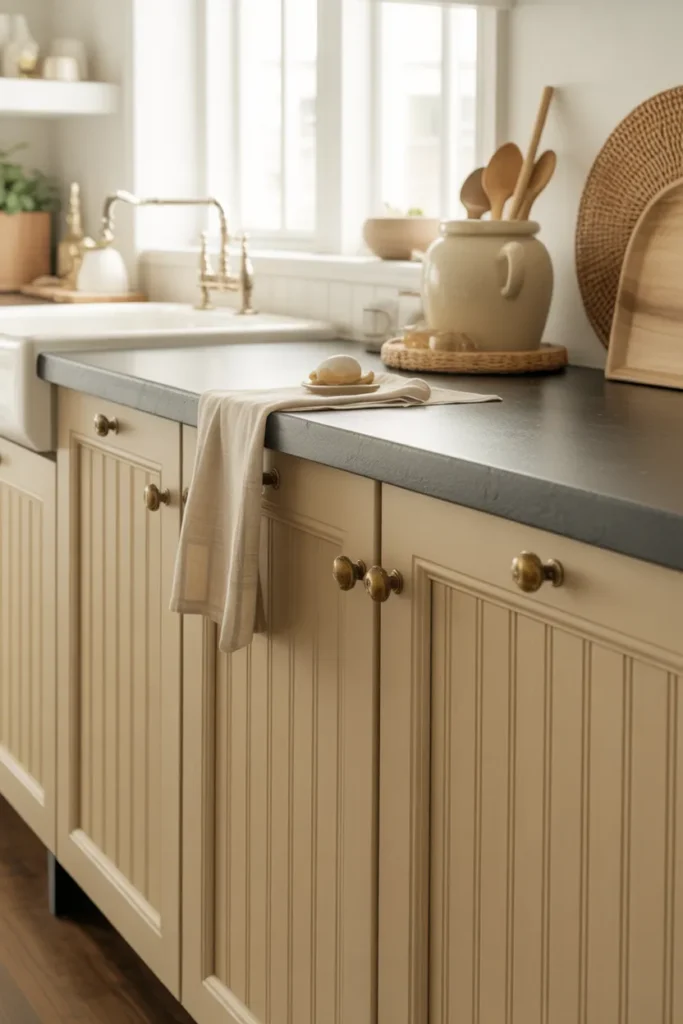
Vibe: Serene and enveloping
Why it works: Warm putty sits exactly at the intersection of gray, beige, and cream — too complex to read as builder-grade neutral. The pink undertone (unlike yellow in standard beige) reflects flesh tones warmly, making the kitchen feel inhabited rather than staged. Photographs as expensive custom plaster.
How to get it: Benjamin Moore’s Manchester Tan HC-81 applied in limewash technique — thin first coat, heavier second coat brushed in figure-eight motions. The irregular absorption mimics natural plaster. Skip primer entirely; the color needs raw drywall’s slight grayness underneath to achieve the putty effect.
Quick Win: Portola Paints’ Lime Wash in “Parchment” — apply with a Roman clay trowel for a mottled, old-world finish that hides every existing ding and scratch.
Shop The Look
| Product | Category |
|---|---|
| Aged brass knob | Hardware |
| Soapstone remnant cutting board | Accessory |
| Cream linen kitchen towel | Textile |
| Woven trivet | Decor |
| Stoneware utensil crock | Storage |
2. Slate Blue
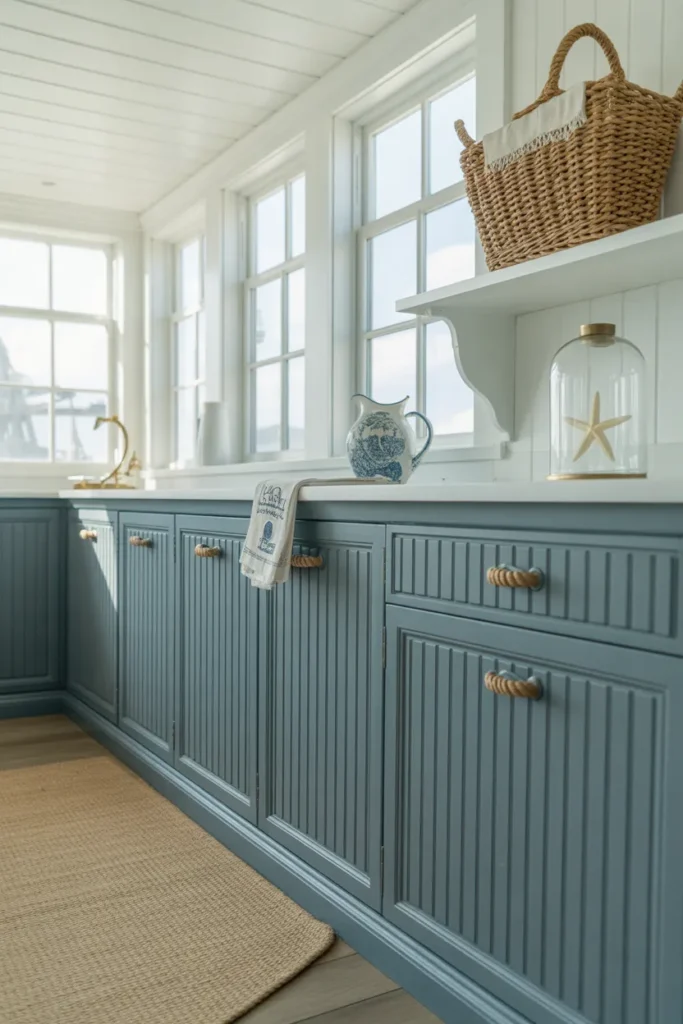
Vibe: Breezy and expansive
Why it works: Slate blue’s gray undertone mimics the color of distant ocean — it recedes visually, making cabinet walls feel further away than they actually are. The blue reflects white light from windows back into the room, increasing perceived brightness compared to warm neutrals.
How to get it: Farrow & Ball’s Pigeon No. 25 mixed with 10% extra white. Standard Pigeon reads too green in north light. The added white shifts it toward stormy sky rather than pigeon feathers. Apply in full gloss on islands for light reflection, matte on perimeter cabinets for recession.
Read More; 16 Vinyl Siding Ideas to Refresh Your Home’s Look
Quick Win: Clare Paint’s “Current Mood” in sample size — it’s a pre-mixed slate blue that requires no undertone adjustment. Test before committing to gallons; it shifts dramatically from morning to evening light.
Shop The Look
| Product | Category |
|---|---|
| Rope-pull brass hardware | Hardware |
| Blue and white ceramic pitcher | Decor |
| Woven seagrass basket | Storage |
| Cream linen runner | Textile |
| Glass cloche with wood base | Display |
3. Espresso Stain
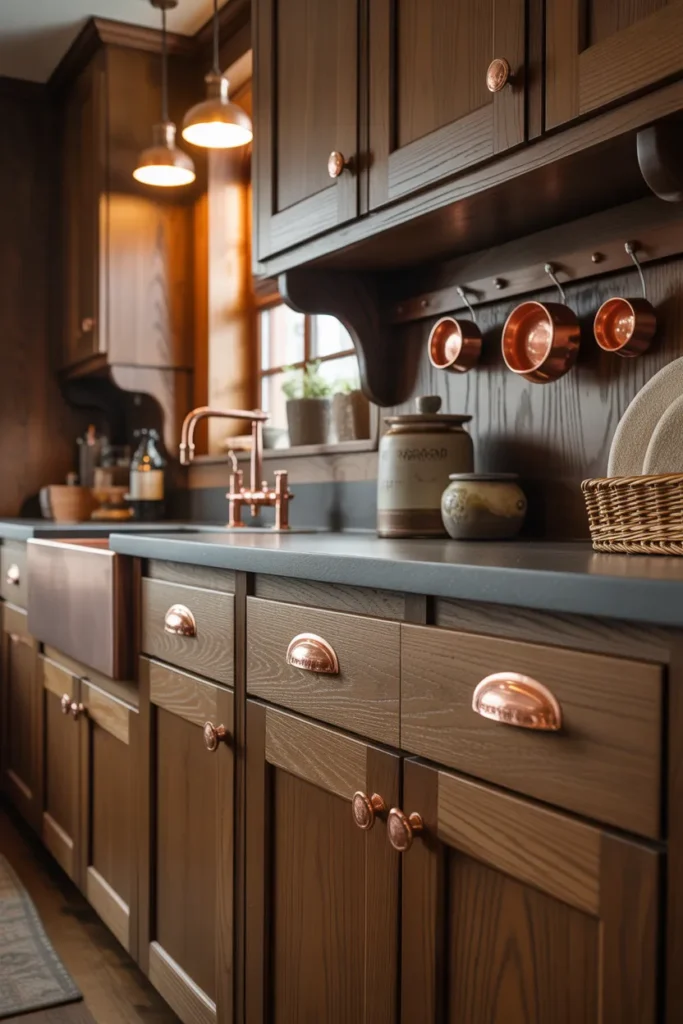
Vibe: Rich and masculine
Why it works: Espresso stain reveals rather than hides wood grain — the deep brown emphasizes the medullary rays in quartersawn oak, creating natural visual texture that paint can’t replicate. The warmth comes from the wood itself, not added pigment, which reads as materially expensive rather than color-expensively.
How to get it: General Finishes’ Java Gel Stain in two coats. First coat sits for 5 minutes then wiped aggressively, leaving color only in open grain. Second coat sits for 10 minutes then wiped lightly, building depth on flat surfaces. The two-step process creates the multi-dimensional look of aged mahogany on oak.
Quick Win: Varathane’s “Espresso” Premium Wood Stain — apply with a rag, not a brush. Wipe on, wait 3 minutes, wipe off. The result on birch plywood mimics quartersawn oak for less cost. Seal with matte polyurethane.
Shop The Look
| Product | Category |
|---|---|
| Hammered copper bin pull | Hardware |
| Copper measuring cups set | Accessory |
| Stoneware crock | Storage |
| Woven bread basket | Decor |
| Matte polyurethane sealer | Finish |
4. Deep Aubergine
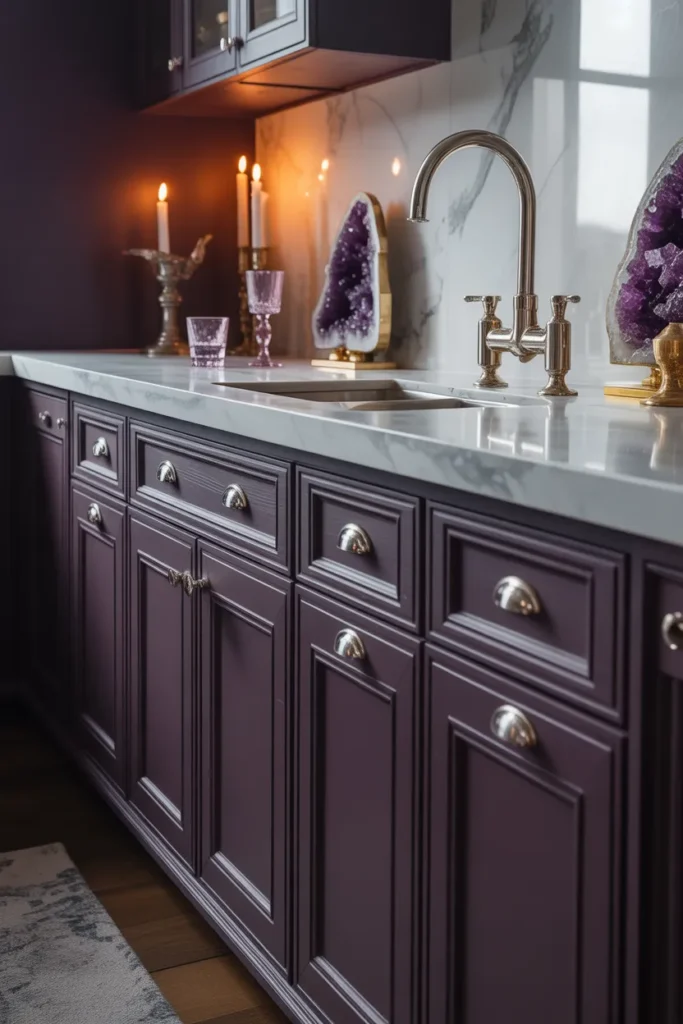
Vibe: Dramatic and jewel-like
Why it works: Deep aubergine’s purple-blue undertone makes it read as a dark neutral in most light — only direct sun reveals the color’s true hue. The pigment sits so deep that it absorbs most light, which makes white countertops and brass hardware appear to glow in contrast. Pure drama.
How to get it: Sherwin-Williams’ Blackberry SW 7577 with 10% aubergine pigment added. Standard Blackberry runs too brown. The extra aubergine shifts it toward eggplant flesh rather than dried berry. Use only on islands or lower cabinets — full kitchens in this color feel like a cave. Matte finish only.
Shop The Look
| Product | Category |
|---|---|
| Polished nickel cup pull | Hardware |
| Amethyst geode bookend | Decor |
| Polished nickel bridge faucet | Plumbing |
| Silver candlestick holder pair | Accessory |
| Crystal drinking glass set | Tabletop |
5. Charcoal Greige
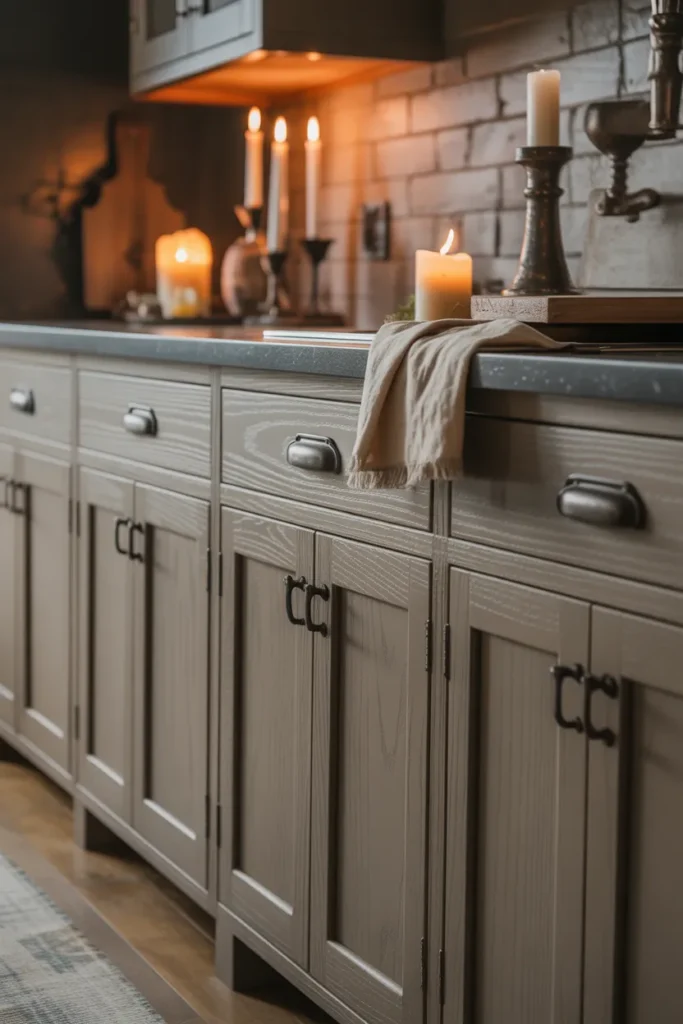
Vibe: Hushed and intimate
Why it works: Charcoal greige absorbs 70% of ambient light while reflecting just enough to define door profiles — the sweet spot where cabinets read as a single monolithic surface rather than individual boxes. The 30% reflection prevents the “black hole” effect of true charcoal in evening hours.
How to get it: Sherwin-Williams’ Peppercorn SW 7674 with 20% more gray pigment added. Standard formula runs too brown. Request “gray bias” from the tint machine — the extra gray oxide shifts the greige toward architectural stone rather than muddy brown. Test on a large panel first.
Quick Win: Rubio Monocoat’s “Charcoal” in Oil Plus 2C — originally a floor finish, but wipe it onto raw oak cabinet fronts for a stained greige that shows grain through color. No topcoat needed.
Shop The Look
| Product | Category |
|---|---|
| Wrought iron bin pull | Hardware |
| Honed black granite remnant | Countertop |
| Black iron candlestick holder pair | Decor |
| Cream pillar candle | Accessory |
| Rough linen napkin set | Textile |
6. Pale Eucalyptus
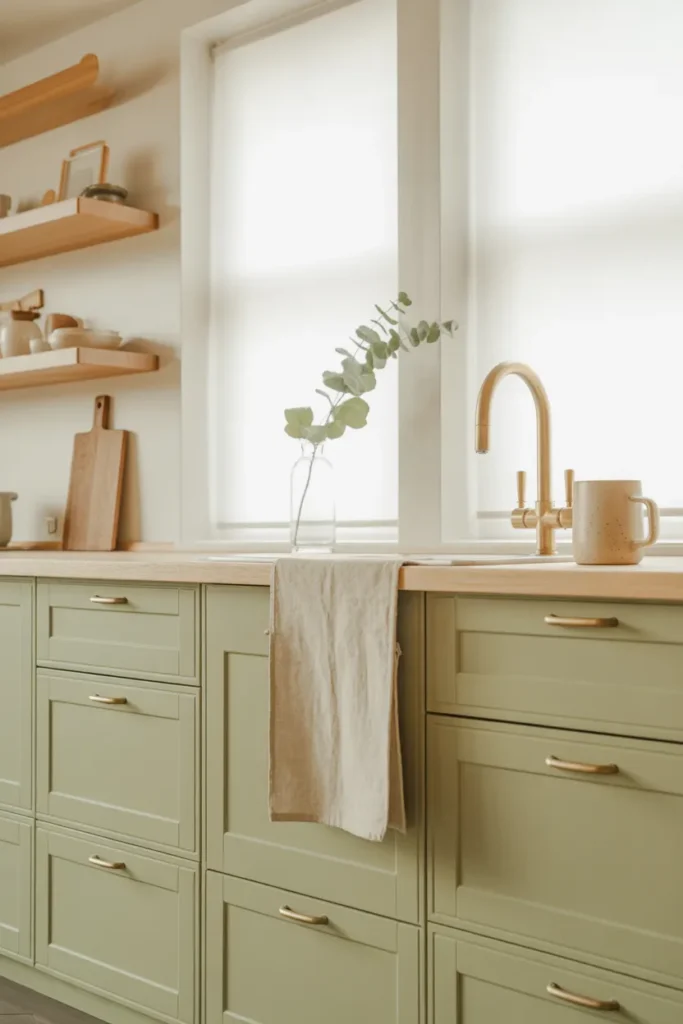
Vibe: Airy and restorative
Why it works: Pale eucalyptus contains equal parts blue, green, and gray — a trinary neutral that shifts dominance based on time of day. Morning light emphasizes the green; afternoon brings out blue; evening dims to gray. The color changes enough to feel alive but never surprises.
How to get it: Benjamin Moore’s Gray Cashmere 2136-60 applied in matte finish on upper cabinets only. The pale value needs white countertops to ground it — pair with Carrara marble or white quartz. Never pair with cream; the warm undertone fights the green and creates muddy visual noise.
Shop The Look
| Product | Category |
|---|---|
| Matte brass bar pull | Hardware |
| White oak floating shelf | Shelving |
| Matte brass bridge faucet | Plumbing |
| Hand-thrown stoneware mug | Tabletop |
| Wood cutting board | Accessory |
7. Midnight Blue-Black
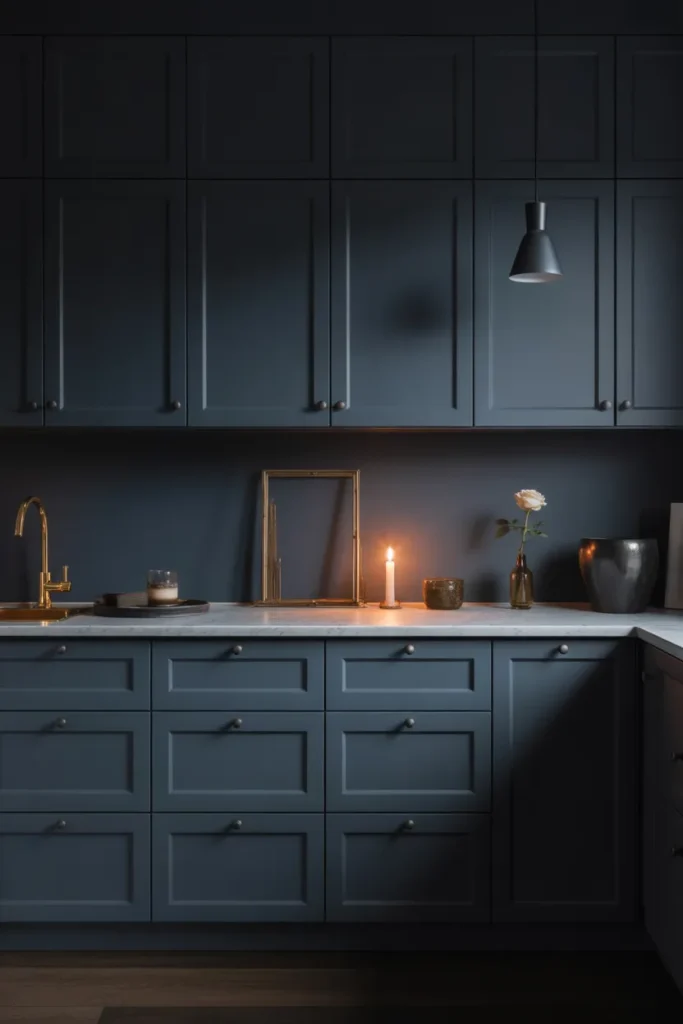
Vibe: Mysterious and luxe
Why it works: Midnight blue-black reads as black until a blue light source (window, pendant with blue bulb) reveals the undertone. This chameleon quality creates a cabinet that changes throughout the day without ever feeling inconsistent. The blue undertone keeps the color from reading as flat charcoal or muddy brown.
How to get it: Farrow & Ball’s Railings No. 31 in full gloss. It’s a blue-black straight from the can. The full gloss finish is critical — matte would absorb so much light the color would read as black paint on drywall. Gloss reflects just enough to reveal the blue undertone at the edges of doors.
Shop The Look
| Product | Category |
|---|---|
| Matte black bar pull | Hardware |
| Brass picture frame | Decor |
| Black ceramic bowl | Accessory |
| Brass vase | Vase |
| White marble remnant coaster set | Tabletop |
8. Fawn Beige
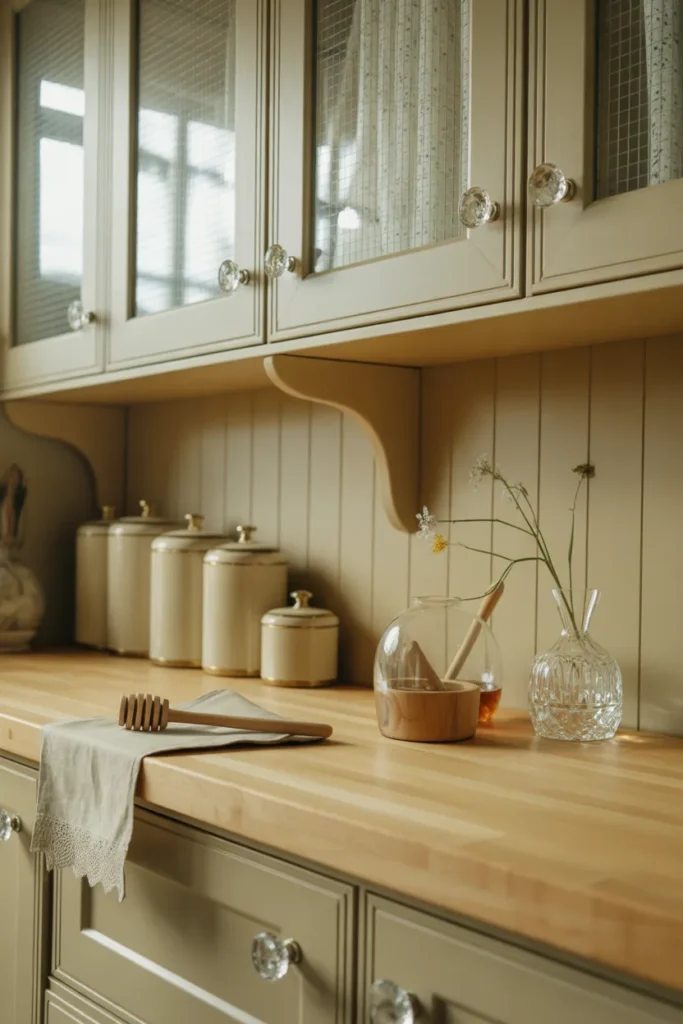
Vibe: Gentle and welcoming
Why it works: Fawn beige contains a pink undertone that’s invisible until placed next to true beige — then it reads as warm blush. The subtlety keeps the color from feeling precious. Pink-beige reflects light more evenly than yellow-beige, reducing hot spots and shadows across cabinet fronts.
How to get it: Sherwin-Williams’ Intuitive SW 6017 with 5% red pigment added. Standard Intuitive runs too yellow-gray. The extra red shifts it toward fawn rather than oatmeal. Use satin finish — gloss would read as pink, matte would read as beige. Satin sits exactly between and preserves the ambiguity.
Quick Win: Valspar’s “Cream in My Coffee” in satin finish — it’s a pre-mixed fawn beige with enough pink undertone to work without adjustment. Apply with a foam roller for a smooth, spray-like finish.
Shop The Look
| Product | Category |
|---|---|
| Crystal glass knob | Hardware |
| Butcher block maple cutting board | Accessory |
| Lace-edge linen dish towel | Textile |
| Wooden honey dipper | Utensil |
| Crystal bud vase | Vase |
9. Oxblood Base
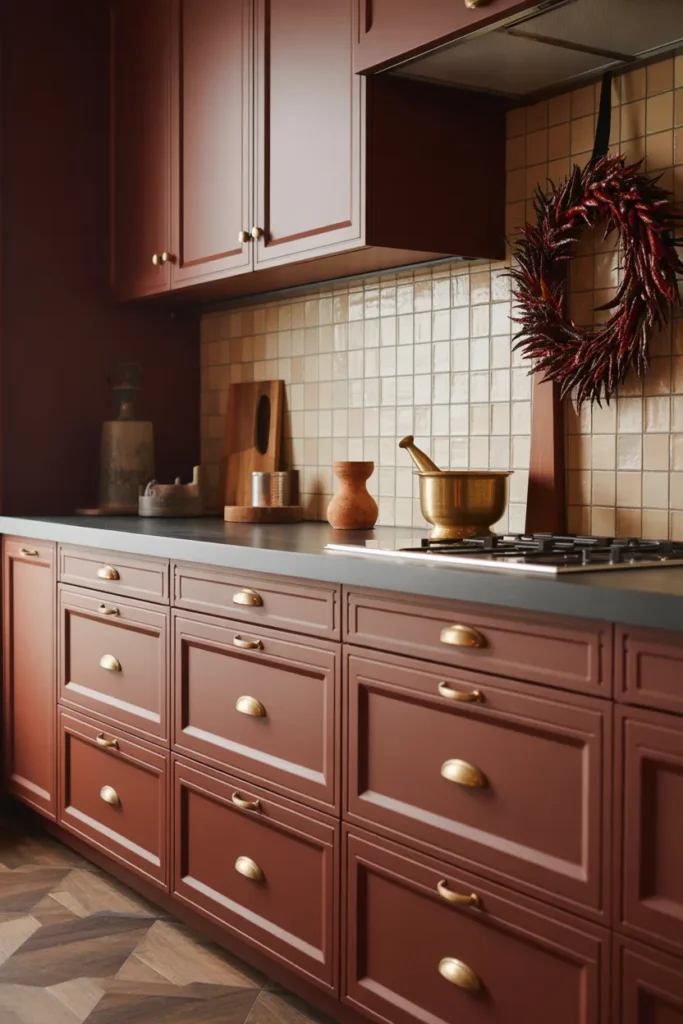
Vibe: Warm and unexpected
Why it works: Oxblood reads as an earth tone, not a primary red, because its brown base references natural clay rather than artificial pigments. The color only works on lower cabinets — uppers would pull the ceiling down visually. The weight sits exactly where human sight naturally rests.
How to get it: Farrow & Ball’s Incarnadine No. 295 mixed with 10% black oxide. Standard formula runs too bright. The added black kills the Christmas-red effect and shifts toward dried blood — a natural, organic red that feels like aged leather rather than painted wood. Use on island only for smaller kitchens.
Quick Win: General Finishes’ “Brick Red” Milk Paint — no primer needed on raw wood. Apply two thin coats with a foam brush for a matte, chalky finish that looks intentionally distressed after light sanding.
Shop The Look
| Product | Category |
|---|---|
| Unlacquered brass cup pull | Hardware |
| Cream zellige tile sample | Tile |
| Brass mortar and pestle | Decor |
| Terracotta pinch pot | Accessory |
| Dried chili pepper wreath | Wall decor |
10. Misty Gray
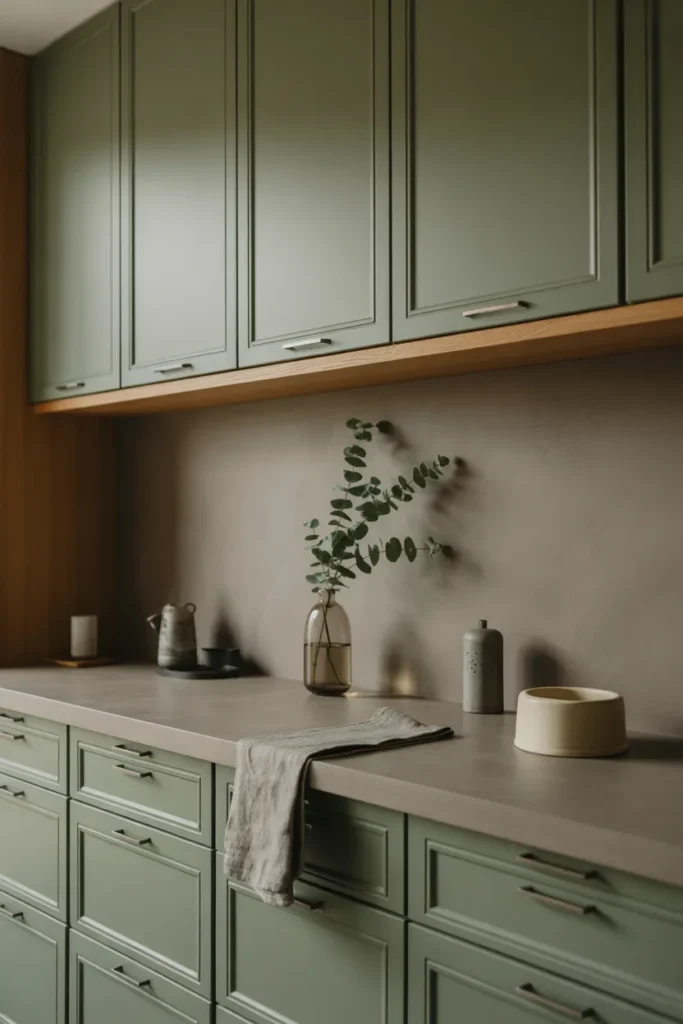
Vibe: Quiet and meditative
Why it works: Misty gray’s green undertone is only visible at the edge of the color — from straight on, it reads as pure gray. This subtlety rewards close looking without demanding attention. The color lowers heart rate according to color psychology studies — exactly what a busy kitchen needs from its backdrop.
How to get it: Farrow & Ball’s Blackened No. 31 mixed with 20% white. Standard Blackened runs too dark. The added white lifts it to mist rather than storm cloud. Apply in full gloss for light reflection — the sheen adds a second layer of complexity to an intentionally quiet color.
Quick Win: Clare Paint’s “Grayson” in sample size — it’s a pre-mixed misty gray. The brand’s “Wall Paint” formula works on cabinets if you add their Clear Cabinet Topcoat.
Shop The Look
| Product | Category |
|---|---|
| Brushed steel bar pull | Hardware |
| Gray linen napkin set | Textile |
| Matte black salt cellar | Accessory |
| Cream ceramic bowl | Decor |
| Clear vase | Vase |
11. Creamy Mushroom
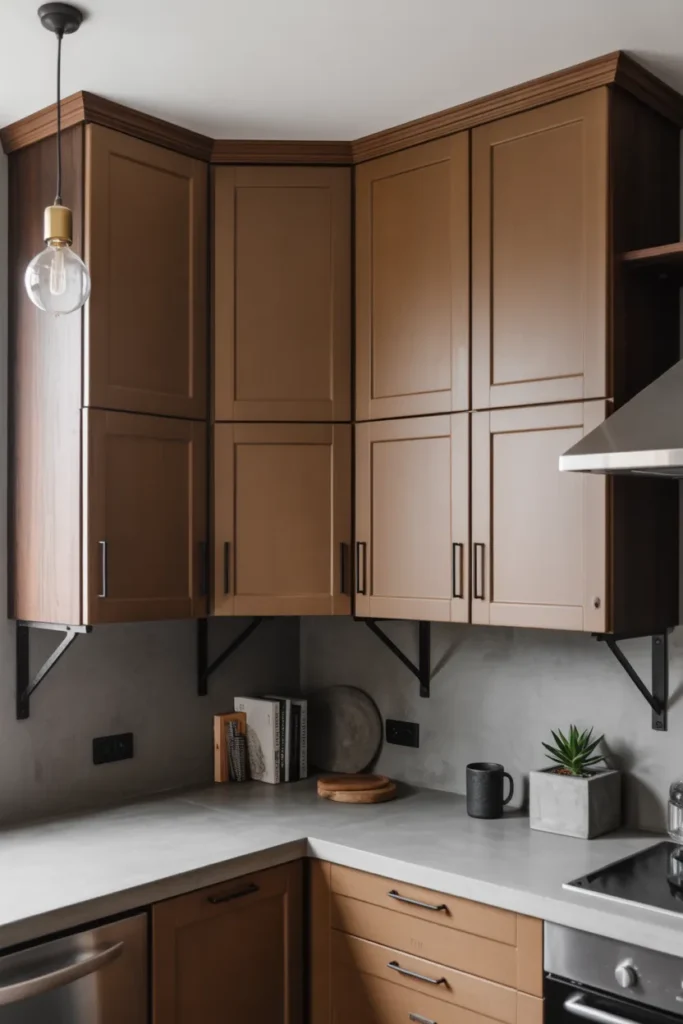
Vibe: Earthy and calm
Why it works: Creamy mushroom lives in the narrow band between beige and greige — too warm to read as gray, too cool to read as yellow-beige. The neutrality allows natural wood, stone, and leather to provide all the color in the room. Cabinets become background, which is exactly where they belong.
How to get it: Benjamin Moore’s Shaker Beige HC-45 with 20% white pigment added. Standard Shaker Beige runs too yellow. The extra white shifts it toward raw linen rather than oatmeal. Test near white trim — the contrast should be barely perceptible, about two values apart on a paint deck.
Quick Win: Backdrop’s “Sunday” in sample size — it’s a pre-mixed creamy mushroom that requires no adjustment. The brand’s flat finish is specifically formulated for cabinets — it self-levels better than standard wall paint.
Shop The Look
| Product | Category |
|---|---|
| Leather pull tab | Hardware |
| Raw ceramic bowl | Decor |
| Beige linen napkin set | Textile |
| Olive wood spoon rest | Accessory |
| Travertine tile sample | Tile |
12. Ink Blue Depth
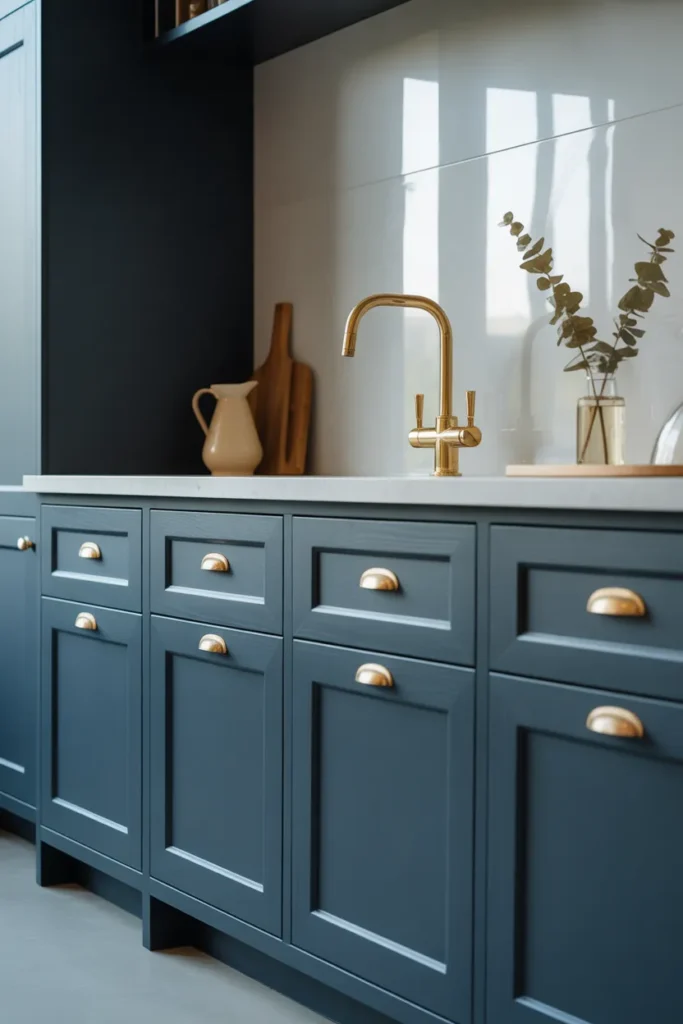
Vibe: Calm yet substantial
Why it works: Ink blue reads as a true neutral because its pigment sits equally between warm and cool. Unlike navy’s red undertone or cobalt’s yellow shift, ink blue recedes visually, making cabinets feel like architecture rather than furniture. The depth absorbs light scatter, reducing visual noise.
How to get it: Benjamin Moore’s Hale Navy HC-154 with a 30% sheen reduction — full gloss reads too reflective; matte flattens depth. Apply three thin coats over gray primer. Pair with unlacquered brass that darkens naturally within six months, never polished brass.
Quick Win: Farrow & Ball’s Inchyra Blue No. 289 in Estate Emulsion finish. One coat over existing white cabinets reads as a soft smoky blue-gray that looks intentionally aged rather than freshly painted.
Shop The Look
| Product | Category |
|---|---|
| Unlacquered brass cabinet pull | Hardware |
| Honed white quartz remnant | Countertop |
| Cream ceramic pitcher | Decor |
| Dried eucalyptus bunch | Botanical |
| Clear glass bud vase | Vase |
13. Silver Sage
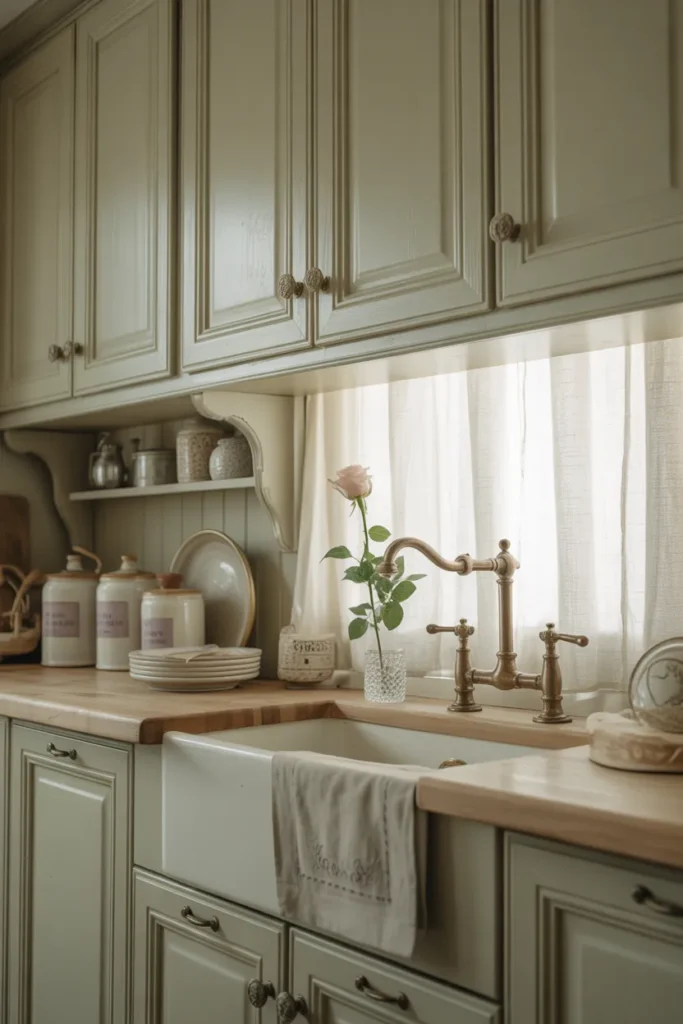
Vibe: Romantic and faded
Why it works: Silver sage’s gray undertone mutes the green enough to read as a neutral rather than a color statement. The undertone pulls blue from natural light and green from incandescent bulbs — it harmonizes with both without fighting. This adaptability makes it the safest “risky” color choice.
How to get it: Sherwin-Williams’ Sea Salt SW 6204 with 5% black pigment added. Standard Sea Salt runs too minty; the extra black shifts it toward French limestone patina. Apply with a dry brush technique — load the brush lightly and drag across surface for a worn, time-aged finish that hides fingerprints.
Shop The Look
| Product | Category |
|---|---|
| Aged bronze cup pull | Hardware |
| Honed limestone remnant cutting board | Accessory |
| Aged bronze bridge faucet | Plumbing |
| White ceramic canister set | Storage |
| Crystal bud vase | Vase |
14. Burnt Sienna
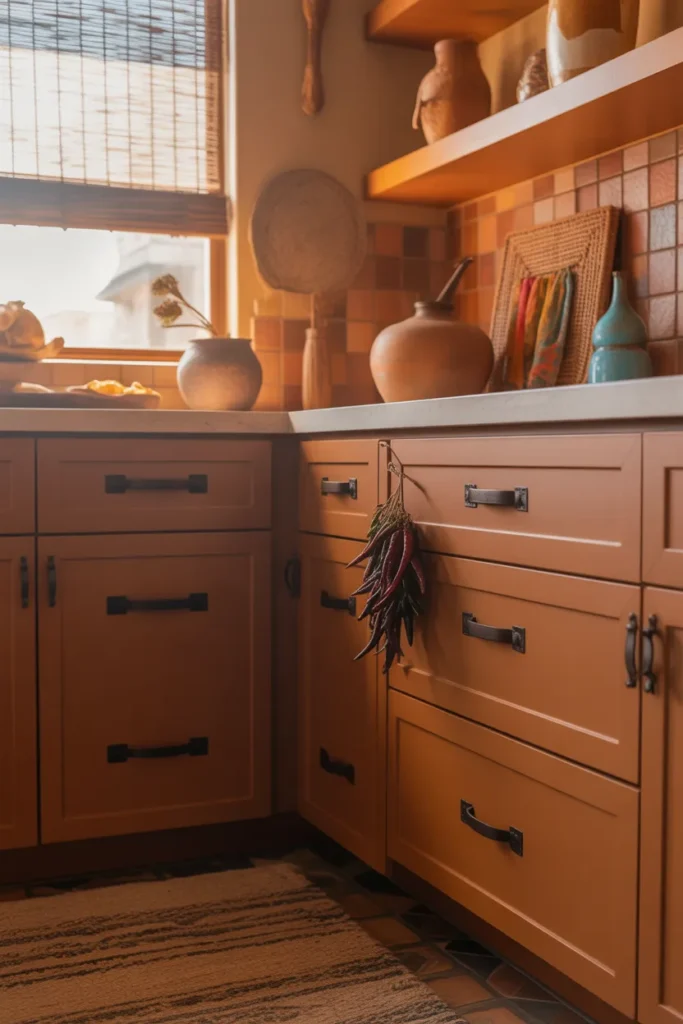
Vibe: Warm and earthy
Why it works: Burnt sienna is calcined natural clay — the color comes from iron oxide that’s been heated, not synthetic pigment. The warmth feels geological rather than decorative, which grounds the kitchen in place rather than trend. Reads as expensive adobe, not orange paint.
How to get it: Portland’s “Burnt Sienna” Lime Paint — mix with water to yogurt consistency. Apply with a wide brush in random strokes — the lime binder creates natural color variation as it dries. No topcoat needed; the lime carbonates to a waterproof finish over time.
Shop The Look
| Product | Category |
|---|---|
| Wrought iron T-bar pull | Hardware |
| Terracotta tile sample | Tile |
| Clay pinch pot | Decor |
| Woven basket | Storage |
| Turquoise accent vase | Vase |
15. Teal Depth
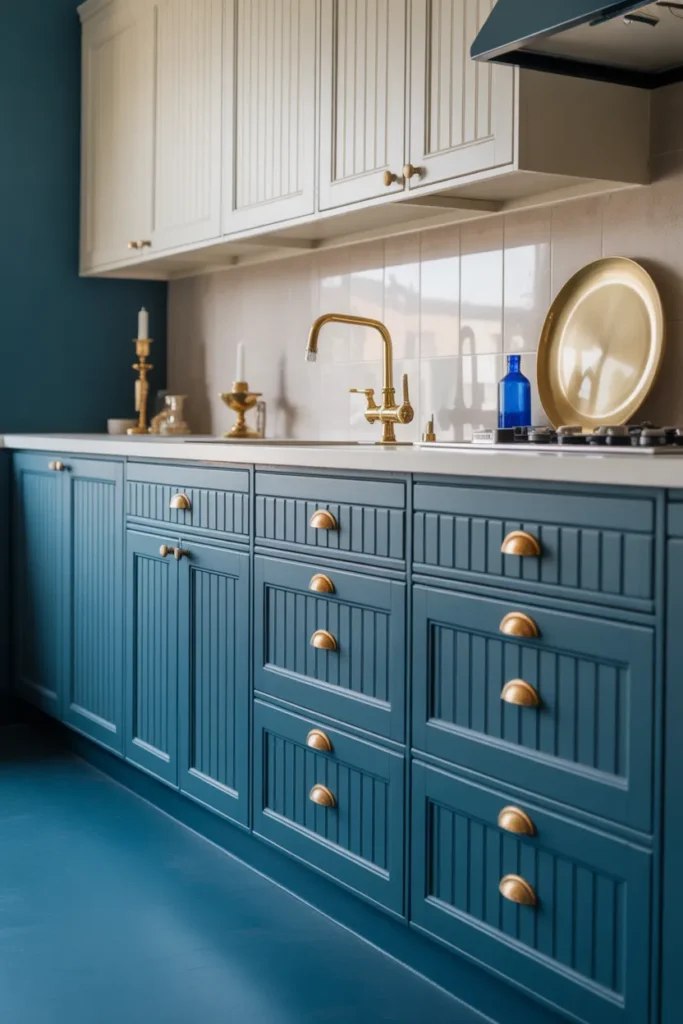
Vibe: Bold yet grounded
Why it works: Deep teal contains enough black pigment to read as a dark neutral from across the room — only up close does the blue-green reveal itself. This distance-dependent color shift rewards movement through the space. The color works specifically because it doesn’t demand to be noticed immediately.
How to get it: Benjamin Moore’s Hale Navy HC-154 mixed with 15% green pigment. Adding green to a navy creates teal that leans architectural rather than tropical — it’s teal for people who hate teal. Test under your actual kitchen lighting; the green undertone amplifies under LED and disappears under halogen.
Shop The Look
| Product | Category |
|---|---|
| Brass cup pull | Hardware |
| Unlacquered brass faucet | Plumbing |
| Brass candlestick | Decor |
| Blue glass bottle | Accessory |
| Cream ceramic plate | Tabletop |
16. Dusty Rose
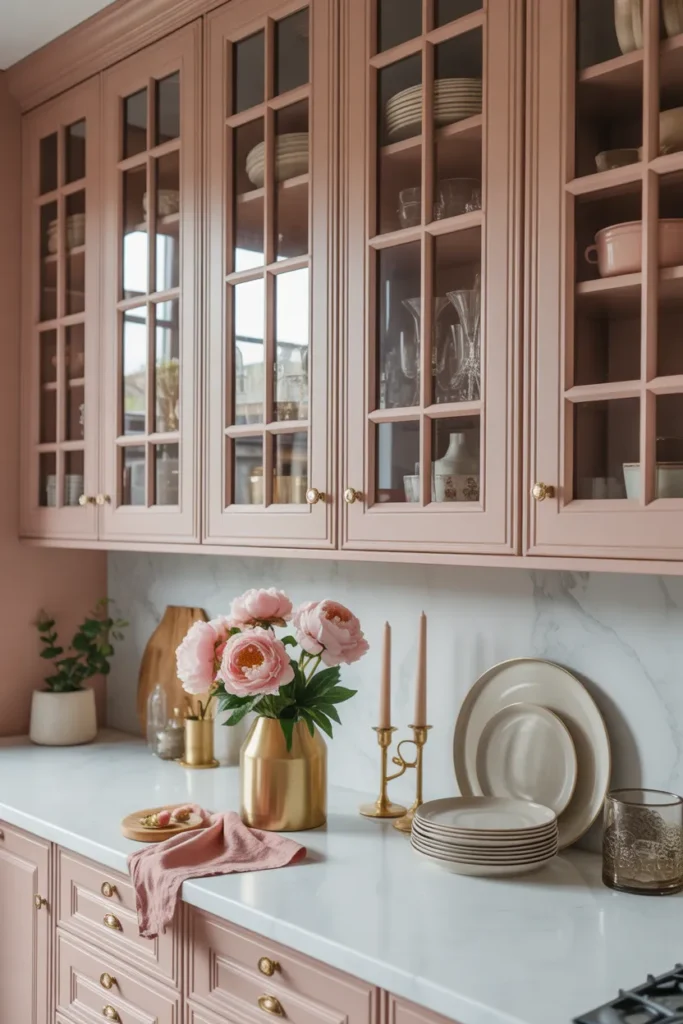
Vibe: Soft and joyful
Why it works: Dusty rose contains gray and brown undertones that mute the pink into a neutral — unlike bubblegum or blush, which read as childish. The gray content makes the color recede despite being warm, so cabinets don’t dominate the room. It’s pink for people who don’t like pink.
How to get it: Benjamin Moore’s First Light 2102-70 mixed with 15% gray pigment. Standard First Light runs too pastel. Request “mute base” at the paint desk — the extra gray shifts it toward dried rose petals rather than cotton candy. Use on upper cabinets only for best effect.
Shop The Look
| Product | Category |
|---|---|
| Unlacquered brass knob | Hardware |
| Honed white marble remnant | Countertop |
| Brass bud vase | Vase |
| Pink linen dish towel | Textile |
| Brass candle snuffer | Accessory |
17. Raw Umber
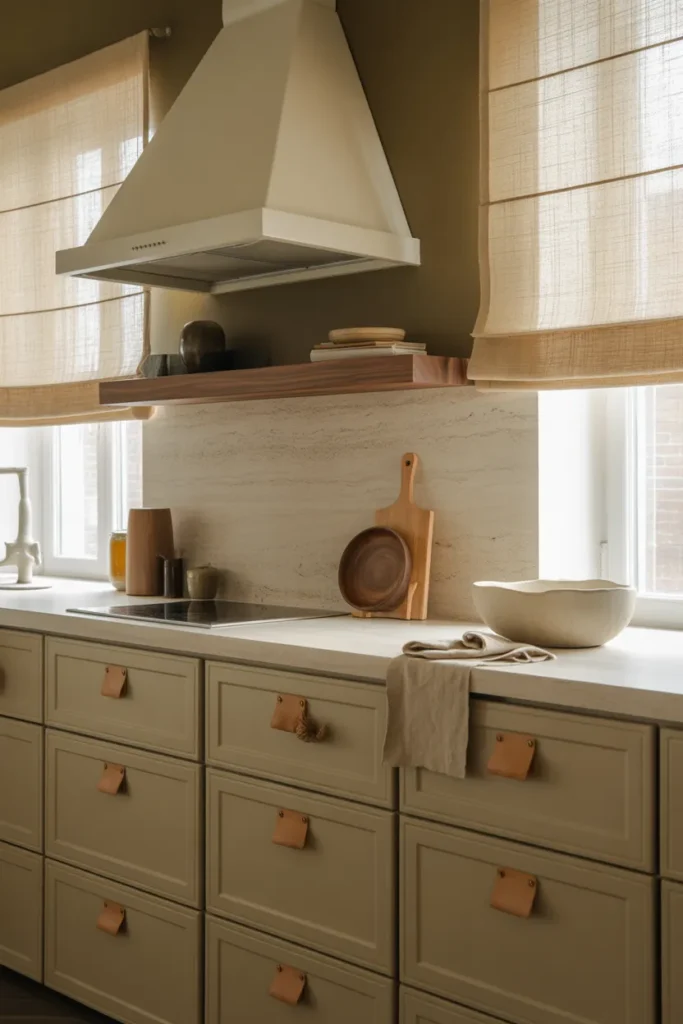
Vibe: Raw and honest
Why it works: Raw umber is a natural earth pigment — not a mixed color. The brown contains iron oxide and manganese, which create subtle temperature shifts across the cabinet surface. No two doors look identical, which reads as intentionally artisanal rather than mass-produced. Expensive without trying.
How to get it: Real Milk Paint’s “Raw Umber” powder mixed with water. The powder formula leaves pigment variation naturally because iron oxide doesn’t dissolve uniformly. Apply with a chip brush in one direction only — back-brushing creates muddy patches. No primer needed on raw wood.
Shop The Look
| Product | Category |
|---|---|
| Black pipe handle | Hardware |
| Concrete coaster set | Decor |
| Black ceramic mug | Tabletop |
| Succulent in concrete planter | Botanical |
| Black iron shelf bracket | Hardware |
18. Deep Taupe
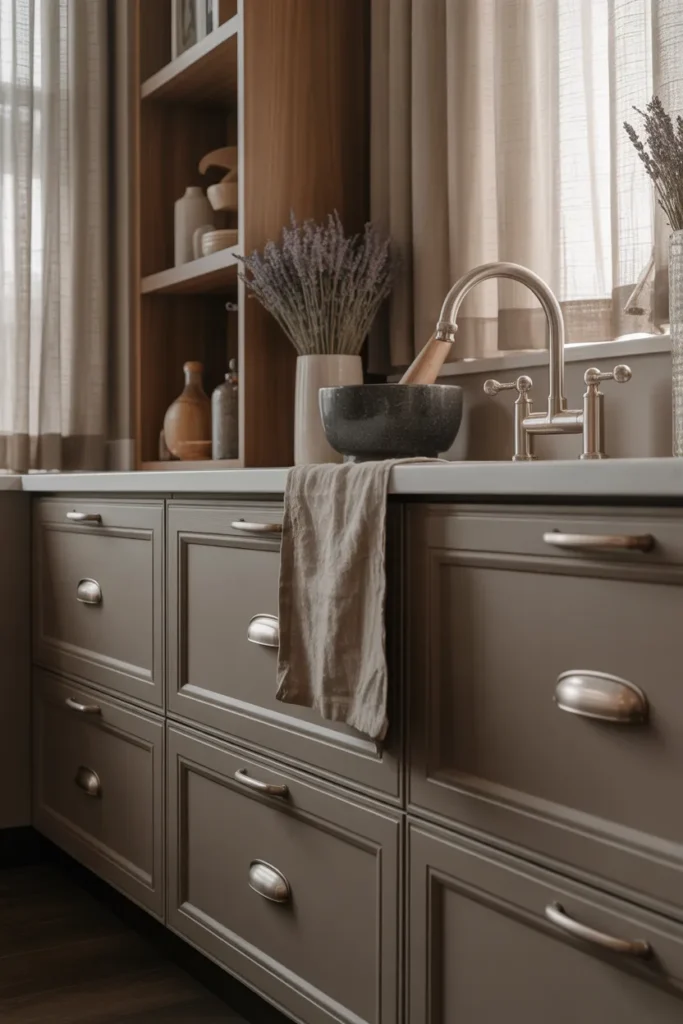
Vibe: Moody and sophisticated
Why it works: Deep taupe’s purple undertone (unexpected in a brown-gray) creates tension that reads as intentional design rather than accidental neutral. The undertone pulls warmth from brass fixtures while the gray base recedes, giving cabinets presence without visual shouting. Works equally in morning and evening light.
How to get it: Farrow & Ball’s Mouse’s Back No. 40 in Modern Eggshell. The purple undertone only activates near blue-toned light sources — test near your refrigerator and windows separately. Apply to perimeter cabinets only; islands in this color feel too heavy without negative space around them.
Shop The Look
| Product | Category |
|---|---|
| Brushed nickel bar pull | Hardware |
| Taupe linen runner | Textile |
| Polished nickel bridge faucet | Plumbing |
| Black stone mortar and pestle | Decor |
| Dried lavender bunch | Botanical |
19. Warm White
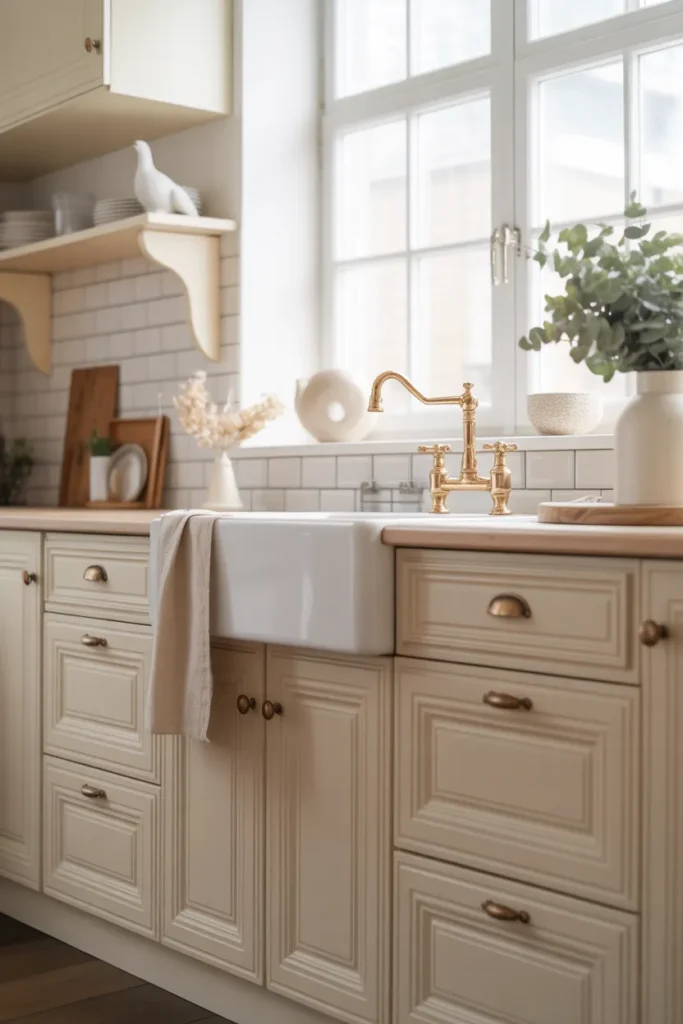
Vibe: Classic and clean
Why it works: Warm white contains yellow ochre pigment (unlike cool white’s blue or pure white’s nothing). The ochre reflects golden light that makes skin tones look healthy and food look appetizing — the two things a kitchen should do. White cabinets are common; warm white cabinets are intentional.
How to get it: Benjamin Moore’s White Dove OC-17 in satin finish. It’s the perfect warm white straight from the can — no adjustment needed. The yellow content is precisely measured to read as “warm” without entering “cream” territory. Pair with bright white trim for contrast or same-white trim for monochromatic.
Quick Win: Pre-mixed cabinet paint in “Warm White” in semi-gloss — comes with self-leveling additive already mixed. No primer needed over existing white or light gray.
Shop The Look
| Product | Category |
|---|---|
| Aged brass bin pull | Hardware |
| White ceramic dove | Decor |
| Cream linen towel | Textile |
| White vase | Vase |
| Fresh eucalyptus bunch | Botanical |
20. Blackened Olive
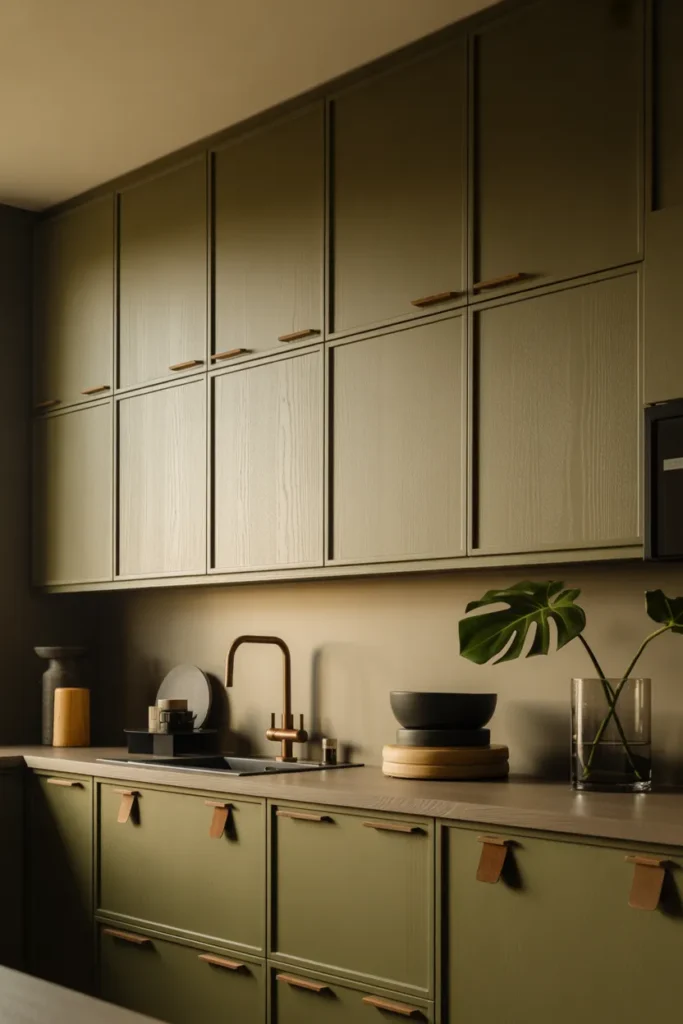
Vibe: Grounded and earthy
Why it works: Blackened olive holds green’s organic warmth plus black’s architectural weight. The combination tricks the eye into reading the color as shadow rather than paint, which makes cabinets feel recessed and room-expanding. Yellow undertones in the olive cancel out kitchen’s typical orange reflections.
How to get it: Mix Sherwin-Williams’ Rosemary SW 6187 with 15% black oxide pigment added at the store. The added black kills the green’s brightness without flattening depth entirely. Use on lower cabinets only — uppers in this color feel oppressive in rooms under 9-foot ceilings.
Shop The Look
| Product | Category |
|---|---|
| Matte black edge pull | Hardware |
| Oil-rubbed bronze faucet | Plumbing |
| Leather bar pull for drawers | Hardware |
| Stacked matte black ceramic bowls | Decor |
| Clear cylinder vase | Vase |
═══════════════════════════════════════════════════════════
How to Start Your Expensive Cabinet Color Transformation
Start with one zone, not the whole kitchen. Paint your kitchen island or a single bank of lower cabinets in your chosen deep color while leaving surrounding cabinets white or cream. This creates an intentional “feature zone” that looks designed rather than half-finished. The island becomes an anchor that makes the whole kitchen feel considered.
The most common mistake is choosing a color based on a photo without testing it in your actual light. A deep olive that looks expensive in a bright California kitchen will read as muddy swamp in a dark Minnesota galley. Fix it by painting foam core boards with your top three contenders and moving them around the kitchen at different times of day for one full week.
Three under-$50 entry points that create immediate impact: sample jars of premium paint to test on foam boards, a single cabinet hardware sample pack to change perception of existing color, and a small container of milk paint for one accent door.
A full cabinet kitchen transformation takes three weekends: first for cleaning and sanding, second for priming and first coat, third for second coat and hardware installation. Budget $200-$400 for paint and supplies for a DIY job, $2,500-$4,500 for professional spray finishing. The starter version (one island or lower bank only) costs $75-$150 and takes one weekend.
═══════════════════════════════════════════════════════════
Frequently Asked Questions About Expensive Kitchen Cabinet Colors
What are the most expensive-looking kitchen cabinet colors for 2024?
Deep ink blue, blackened olive, warm putty, and charcoal greige lead the quiet luxury trend. These colors share three traits: gray undertones that mute brightness, depth that absorbs rather than reflects harshly, and complexity that shifts subtly throughout the day. Benjamin Moore’s Hale Navy, Farrow & Ball’s Calke Green, and Sherwin-Williams’ Peppercorn are the specific shades designers specify most.
How do I choose a cabinet color that looks expensive in a dark kitchen?
Avoid pure black, charcoal, or deep navy — these will disappear into shadows. Instead choose dark colors with visible undertones: deep teal (blue-green), blackened olive (green-brown), or warm putty (pink-gray). Add under-cabinet lighting at 3000K to graze light across door fronts, revealing depth rather than flattening it. High-gloss finishes also help by reflecting available light.
How much does it cost to paint kitchen cabinets a high-end color?
DIY costs $200-$400 for paint, primer, brushes, and sanding supplies for a standard kitchen. Professional spray finishing runs $2,500-$4,500 depending on location and door count. The premium colors mentioned cost $80-$120 per gallon versus $40-$60 for builder-grade paint — an upcharge worth taking because premium paint contains more pigment and self-levels better.
Can I paint laminate or thermofoil cabinets expensive colors?
Yes, but you need bonding primer first. Skip sanding laminate — it creates scratches that show through paint. Apply two primer coats, then your color. Thermofoil requires deglossing with liquid sandpaper first. Without these steps, paint will peel within six months regardless of color quality.
Which cabinet color has the highest resale value?
Warm white or soft greige. Real estate data shows kitchens with warm white cabinets sell for more than comparable homes with colored cabinets. Deep blues and greens appeal to buyers under 40 but alienate older buyers. Paint a neutral if selling within two years; paint your joy if staying.
═══════════════════════════════════════════════════════════
Ready to Create Your Dream Expensive Kitchen?
You’ve seen 20 directions — from ink blue depth to midnight blue-black, from earthy olive to creamy mushroom, and every complex neutral in between. Some ideas asked for paint and patience; others delivered impact through hardware or a single stained door. A full transformation isn’t the only path forward — and it shouldn’t be. Choose one action today: order three sample jars of your top contender colors and paint foam boards tonight. The kitchen you’re imagining — the one where the cabinets don’t just hold dishes but hold a mood, a quiet confidence, a richness that doesn’t need to announce itself — that kitchen starts with a single decision about depth over brightness. Save this article to your “Kitchen Color” board on Pinterest, then tag the one color you’re brave enough to try.
This article contains product recommendations for reader convenience. As an Amazon Associate, we earn from qualifying purchases at no additional cost to you.
One Comment