
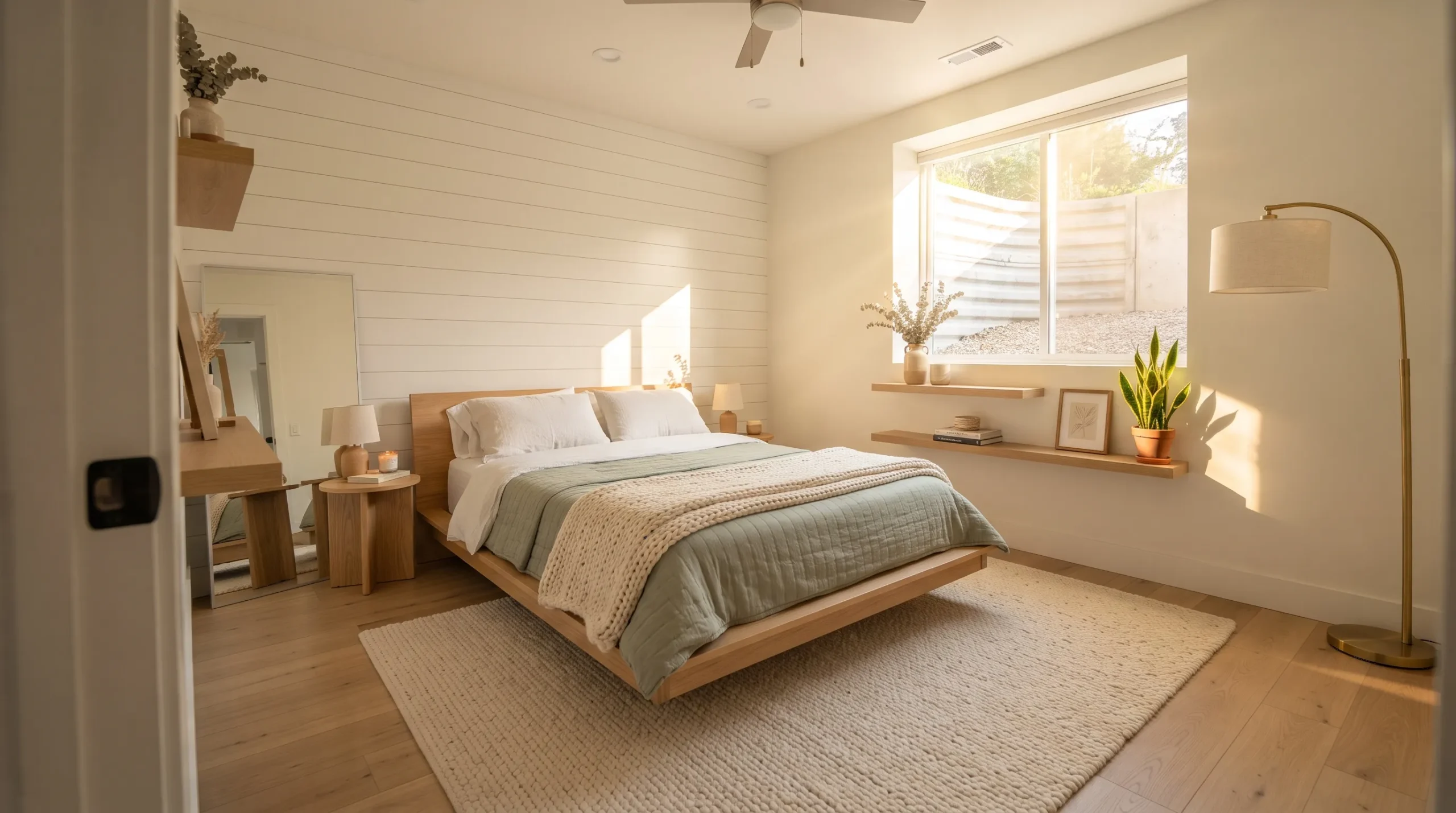
16 Smart Basement Bedroom Ideas That Maximize Space
A basement bedroom is a below-grade sleeping space that transforms underutilized square footage into a private, quiet retreat away from the main living areas. This article delivers 16 smart, space-maximizing ideas that turn dark, cramped basements into light-filled, functional bedrooms worth sleeping in.
There’s something unexpectedly comforting about descending into a basement bedroom. The air feels cooler, the quiet deeper, the outside world suddenly muted. What could feel like a cave becomes a sanctuary when you get the design right — a cocoon of calm where natural light is cherished, every inch serves a purpose, and the lack of street noise becomes a luxury. Whether you’re carving out a guest suite, a teen hideaway, or a primary bedroom escape, these basement bedroom ideas will show you how to work with the space, not against it. Here are 16 ideas worth saving — and stealing.
Why Basement Bedroom Design Works So Well
Basement bedrooms have evolved from forgotten afterthoughts into some of the most creative spaces in modern homes. Originally conceived as utilitarian sleeping quarters for live-in staff in Victorian-era homes, basement bedrooms gained popularity during the post-WWII housing boom when families sought to maximize every square foot. Today, with home prices climbing and multigenerational living becoming increasingly common, homeowners are recognizing that below-grade square footage offers untapped potential far beyond storage and laundry.
The core materials and colors that define successful basement bedroom design revolve around intentional choices. Warm whites like Sherwin-Williams “Alabaster” and “Greek Villa” reflect available light beautifully, while deeper tones like Benjamin Moore “Chelsea Gray” or “Hale Navy” create sophisticated cocooning effects. Materials matter enormously: natural wood flooring or luxury vinyl plank warms concrete slabs, wool or jute area rugs add texture underfoot, and linen or velvet upholstery brings softness. Brushed brass or matte black hardware adds contrast, while shiplap or board-and-batten wall treatments add architectural interest.
This trend is surging now because of a cultural shift toward maximizing existing home space rather than moving. Pinterest searches for “basement bedroom ideas” and “basement transformation” have steadily climbed as homeowners realize that finishing a basement costs significantly less than building an addition. People are also craving more dedicated private spaces within their homes — quiet retreats for remote work, guest quarters for visiting family, and independent spaces for growing teenagers.
Small spaces can absolutely achieve this style, though with strategic priorities. If your basement bedroom is under 150 square feet, focus first on light-reflective paint colors, then on multi-functional furniture like platform beds with storage drawers, and finally on vertical storage solutions that keep the floor clear. The key is accepting that low ceilings and limited windows aren’t flaws — they’re opportunities to create an intimate, enveloping atmosphere that upstairs bedrooms simply cannot replicate.
Style at a Glance
| Element | Core Trait |
|---|---|
| Philosophy | Maximize every square foot; embrace the intimacy of below-grade spaces |
| Key Materials | Engineered hardwood, LVP flooring, shiplap, area rugs, linen, velvet, brass, matte black metal |
| Key Colors | Warm white, soft sage, greige, charcoal navy, warm cream, earthy terracotta |
1. Light-Reflecting White
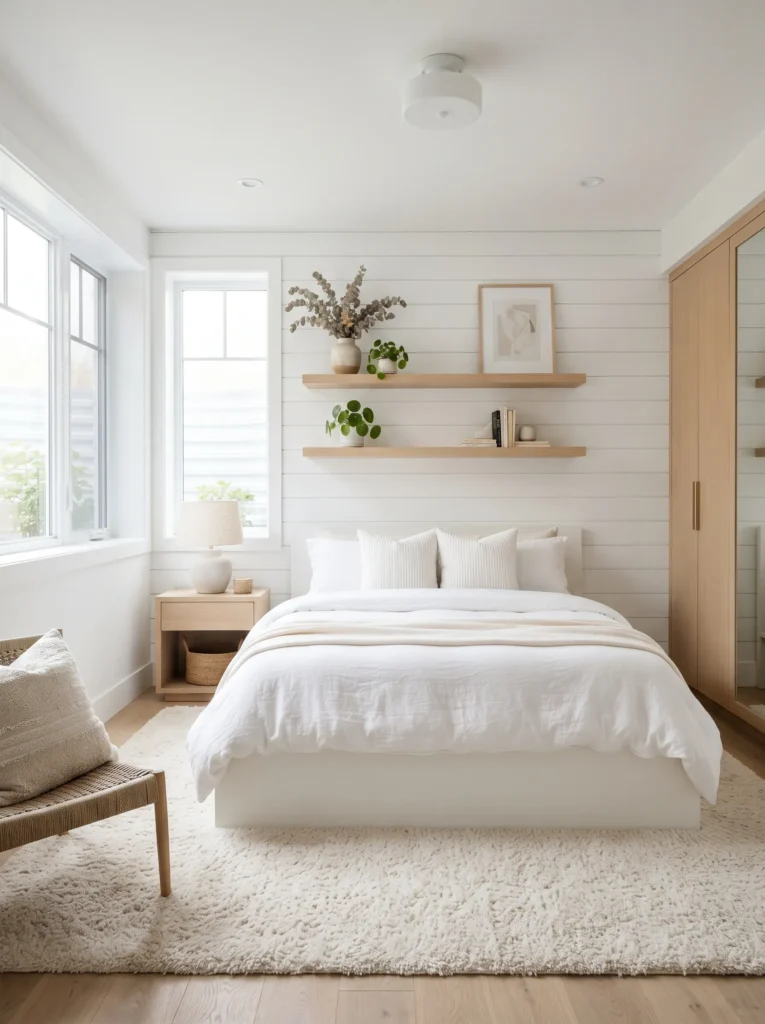
Vibe: Fresh and open
Why it works: White walls with a high Light Reflective Value bounce every bit of available light around the room, making even windowless basements feel brighter. Light colors also help low ceilings feel higher by eliminating visual weight at the top of the room. The reflective quality transforms dark corners into usable, welcoming space.
How to get it: Paint walls, ceiling, and trim the exact same white to blur boundaries and create the illusion of taller walls. Avoid stark bright white in favor of warm whites with subtle yellow or greige undertones. Use semi-gloss on trim for extra light reflection and matte on walls to reduce glare.
Quick Win: Try Sherwin-Williams “Greek Villa” — it’s a warm white that reads bright without feeling cold, perfect for dark basements.
| Product | Style |
|---|---|
| White linen blackout curtain panel set | Modern |
| Cream shag area rug 8×10 | Cozy |
| White wood bed frame with storage | Space-saving |
| Brushed nickel floor lamp | Modern |
| White oak floating shelves | Rustic |
VIEW AND READ ABOUT>>>14 Luxury Living Room Design Ideas to Elevate Your Space
2. Dark and Dramatic
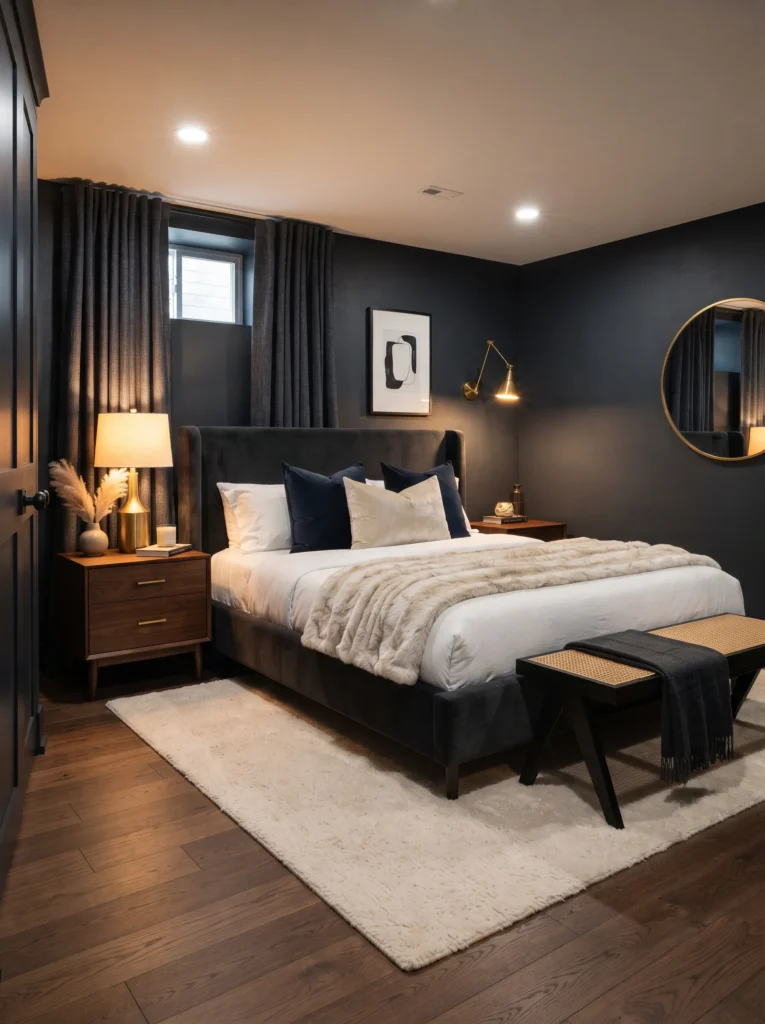
Vibe: Cozy and enveloping
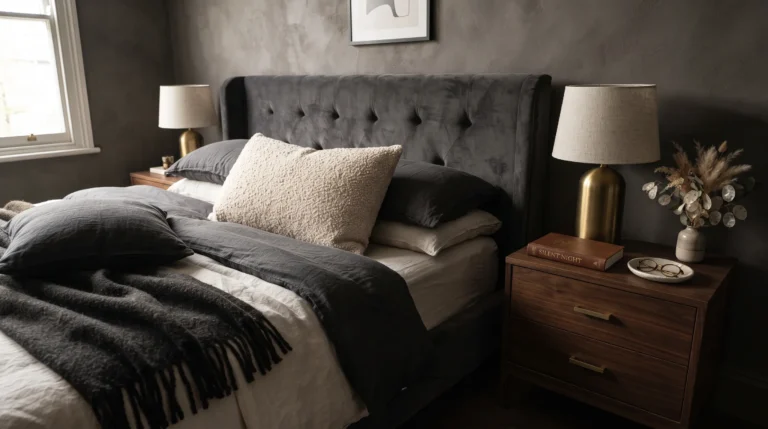
Why it works: Instead of fighting the natural darkness of a basement, leaning into deep charcoal, navy, or forest green creates an intimate, cocooning atmosphere that feels intentional rather than compromised. Dark walls actually make low ceilings feel less claustrophobic because they eliminate the stark contrast between walls and ceiling that emphasizes height limitations.
How to get it: Paint walls in Benjamin Moore “Chelsea Gray” or “Hale Navy” and keep the ceiling white or a shade lighter to maintain some contrast. Layer in warm brass fixtures and rich fabrics like velvet or boucle to prevent the space from feeling cold. Use dimmable lighting — recessed cans, wall sconces, and table lamps — to control the mood.
| Product | Style |
|---|---|
| Charcoal velvet upholstered bed frame | Luxury |
| Warm brass table lamp set | Glam |
| Navy blue linen bedding set | Modern |
| Dark wood nightstand with drawer | Rustic |
| Blackout velvet curtain panels | Dramatic |
3. Low-Slung Furniture
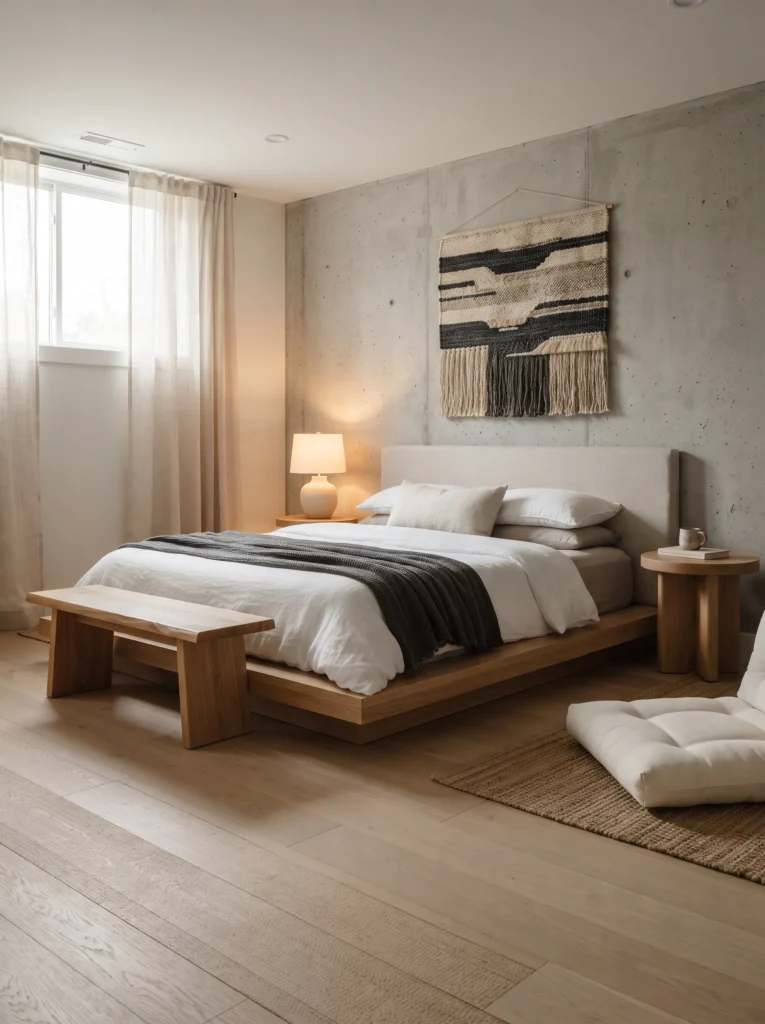
Vibe: Grounded and spacious
Why it works: Low-profile furniture — platform beds, floor-level nightstands, and low sofas — keeps sightlines open and makes low ceilings feel taller. When furniture sits closer to the floor, the space above it feels more expansive, drawing the eye horizontally rather than vertically. This principle is especially effective in basements with seven-foot ceilings or less.
How to get it: Choose a low platform bed frame paired with floor-level nightstands or wall-mounted shelves. Skip chunky headboards in favor of slim upholstered or wood-slat designs. Keep all furniture proportional — nothing should feel oversized or bulky. The goal is to let the open space above furnishings dominate the visual impression.
| Product | Style |
|---|---|
| Low platform bed frame with wood slats | Modern |
| Floor-level nightstand set | Minimalist |
| Tufted low-profile headboard | Upholstered |
| Japanese floor cushion seating | Boho |
| Low wooden bench at foot of bed | Rustic |
4. Statement Wallpaper
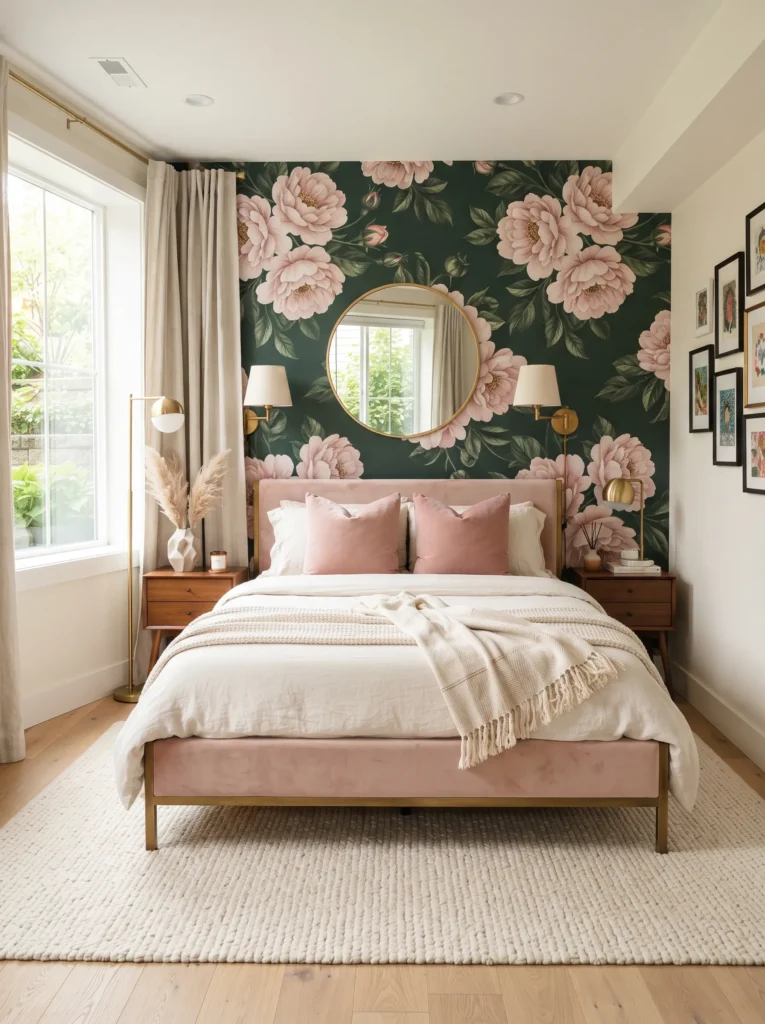
Vibe: Bold and personal
Why it works: A single wall of bold wallpaper creates a striking focal point that draws attention away from low ceilings or awkward architectural elements. In a basement bedroom, wallpaper adds pattern and depth where plain drywall might feel flat. The contrast between patterned wallpaper and solid-colored walls also helps define zones in open layouts.
How to get it: Choose the wall behind the bed or the wall opposite the door as your feature wall. Opt for peel-and-stick wallpaper for a renter-friendly option or paste-backed for permanence. Consider large-scale florals, geometric patterns, or subtle textured designs like grasscloth. Keep the rest of the room’s palette simple so the wallpaper remains the star.
| Product | Style |
|---|---|
| Peel-and-stick floral wallpaper roll | Bohemian |
| Geometric pattern peel-and-stick wallpaper | Modern |
| Grasscloth textured wallpaper roll | Natural |
| Abstract mural peel-and-stick wall art | Contemporary |
| Wood wall paneling planks | Rustic |
5. Recessed Lighting
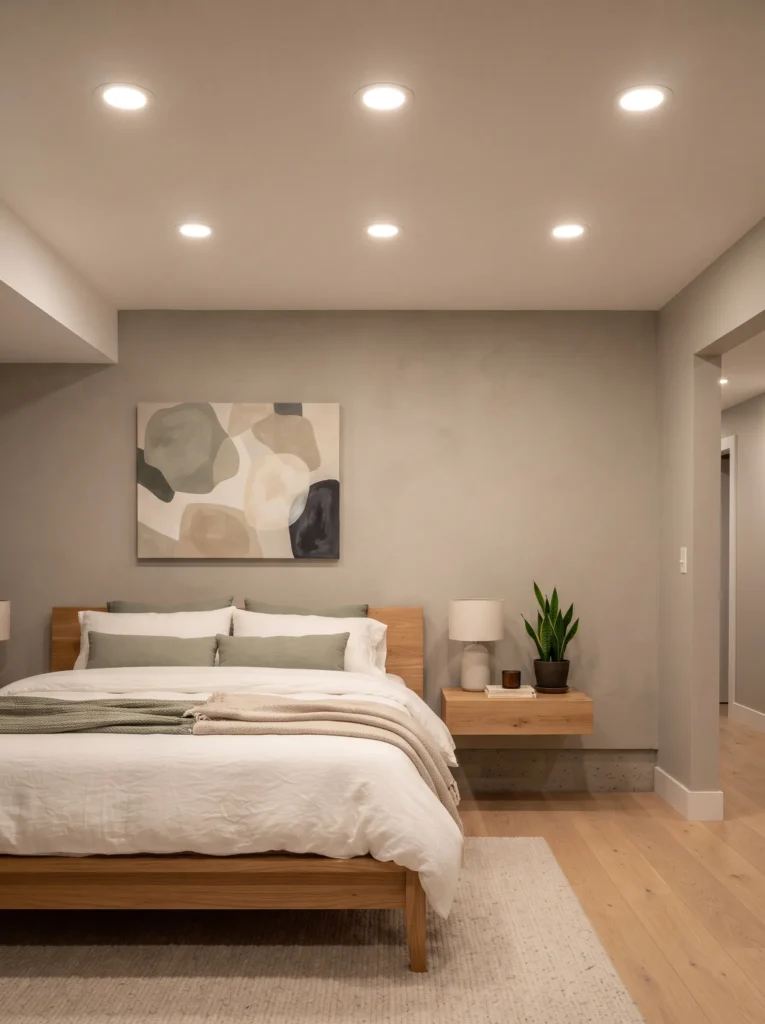
Vibe: Clean and unobtrusive
Why it works: Recessed lighting eliminates the visual clutter of hanging fixtures, keeping the ceiling plane clean and making the room feel taller. In basements with low ceilings, any hanging pendant or chandelier risks feeling cramped or hazardous. Well-spaced recessed lights provide even, shadow-free illumination that makes the space feel more open and intentional.
How to get it: Use 4- or 6-inch LED recessed lights spaced about 4 feet apart for even coverage. Install dimmer switches so you can adjust the mood from bright task lighting to soft ambient glow. Choose 2700K–3000K warm bulbs for a cozy feel rather than cool daylight bulbs. Use adjustable trim for lights near walls to wash the wall with light and make the room feel larger.
| Product | Style |
|---|---|
| LED recessed light kit 6-pack | Modern |
| Dimmable LED wafer lights | Contemporary |
| Brushed nickel recessed trim | Transitional |
| Smart dimmer switch | Tech-forward |
| Warm LED retrofit bulbs 3000K | Energy-efficient |
6. Mirrored Wall
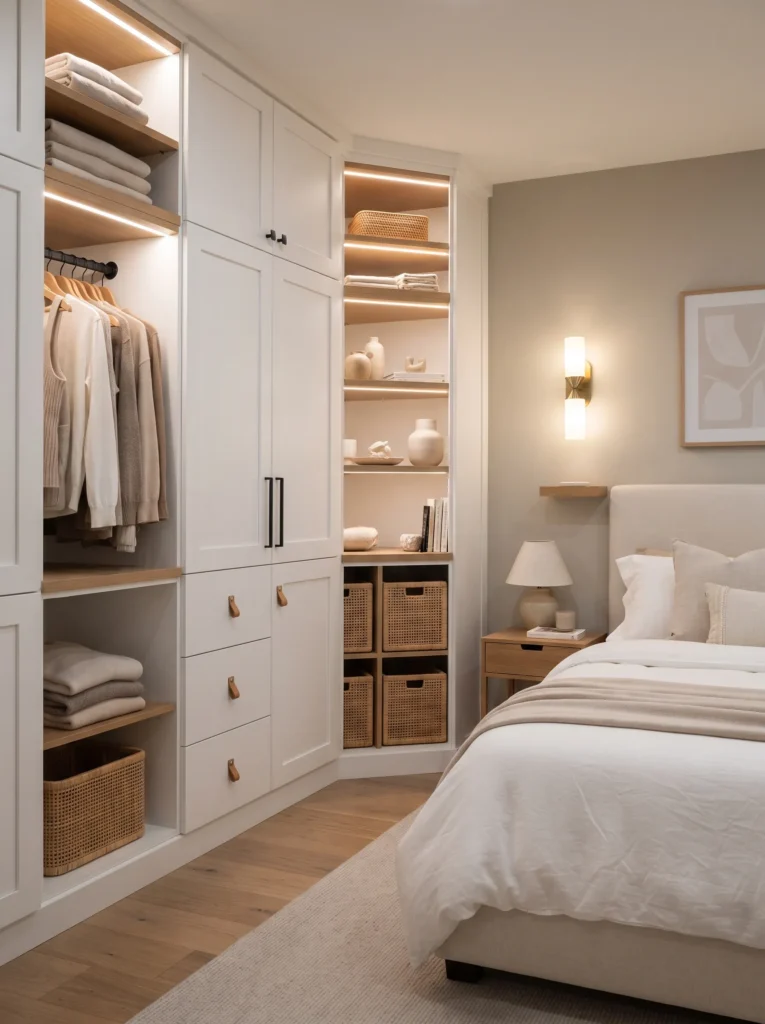
Vibe: Expansive and luminous
Why it works: A mirrored wall or large mirrors strategically placed opposite light sources effectively double the perceived space and light in a basement bedroom. Mirrors reflect both natural and artificial light, bouncing it deeper into the room and illuminating dark corners. This visual trick creates the illusion of depth and width, making even narrow basement rooms feel generous.
How to get it: Install a full-length mirror on the wall opposite a window or light source. Consider a wall of mirrored wardrobe doors to combine storage with light reflection. For a more subtle approach, lean a large floor mirror against the wall or create a gallery of smaller mirrors in varied shapes. Ensure mirrors are securely mounted and properly framed to match your style.
| Product | Style |
|---|---|
| Full-length leaning floor mirror | Modern |
| Arched floor-length mirror | Glam |
| Wall-mounted mirror set of 3 | Contemporary |
| Mirrored wardrobe sliding doors | Functional |
| Round decorative wall mirror | Boho |
7. Built-In Storage
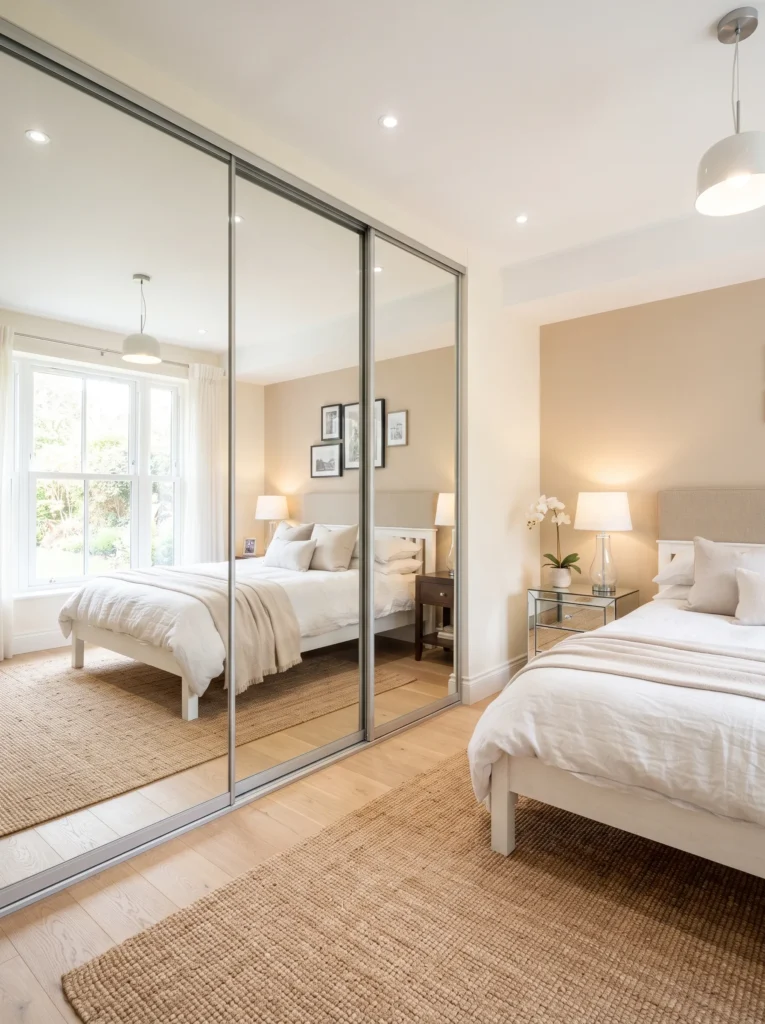
Vibe: Streamlined and organized
Why it works: Built-in wardrobes, shelving, and storage beds eliminate the visual clutter of freestanding furniture while maximizing every inch of available space. Custom or semi-custom built-ins can fit awkward alcoves, under slopes, and around support beams that standard furniture can’t accommodate. This approach makes a small basement bedroom feel more spacious by keeping the floor clear.
How to get it: Measure your space carefully and consider floor-to-ceiling wardrobes along one wall. Include a mix of hanging space, drawers, and open shelving. Choose a platform bed with built-in drawers underneath for additional storage. For awkward nooks, consider custom bookshelves that turn a dead space into a feature. Use organizers and baskets within the storage to keep everything tidy.
| Product | Style |
|---|---|
| Platform storage bed with drawers | Space-saving |
| Floor-to-ceiling bookcase | Rustic |
| Under-bed storage bins set | Practical |
| Wall-mounted clothing rack | Industrial |
| Modular cube storage unit | Modern |
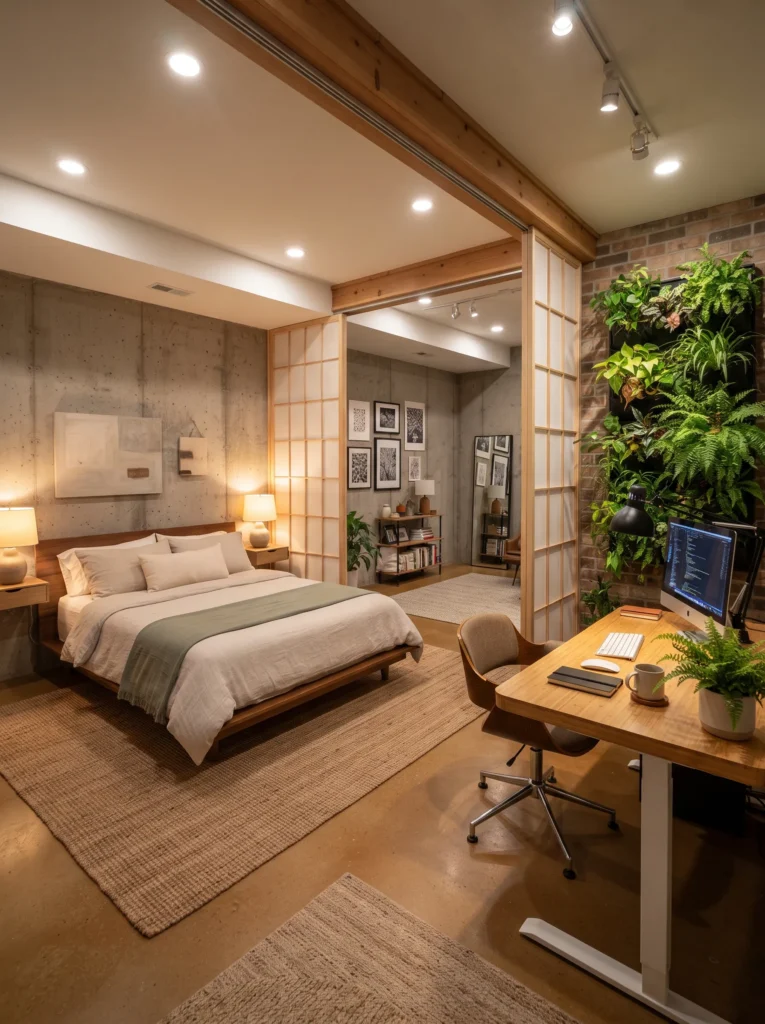
8. Zone Creation
Vibe: Layered and intentional
Why it works: In open-plan basements or larger bedrooms, defining distinct zones for sleeping, lounging, and working makes the space feel more functional and thought-out. Room dividers, area rugs, and furniture placement create visual separation without closing off the space, maintaining an airy feel while adding purpose to every corner.
How to get it: Use a large area rug under the bed to anchor the sleeping zone. Position a bookshelf or folding screen to separate the bed from a desk or seating area. For renters, tension rod curtains can create flexible zones that can be changed as needs evolve. Keep each zone’s furniture scaled appropriately — oversize pieces can overwhelm smaller spaces.
| Product | Style |
|---|---|
| Room divider folding screen | Bohemian |
| Floor-to-ceiling curtain divider | Modern |
| Bookshelf room divider | Rustic |
| Indoor plant divider set | Natural |
| Folding privacy screen | Contemporary |
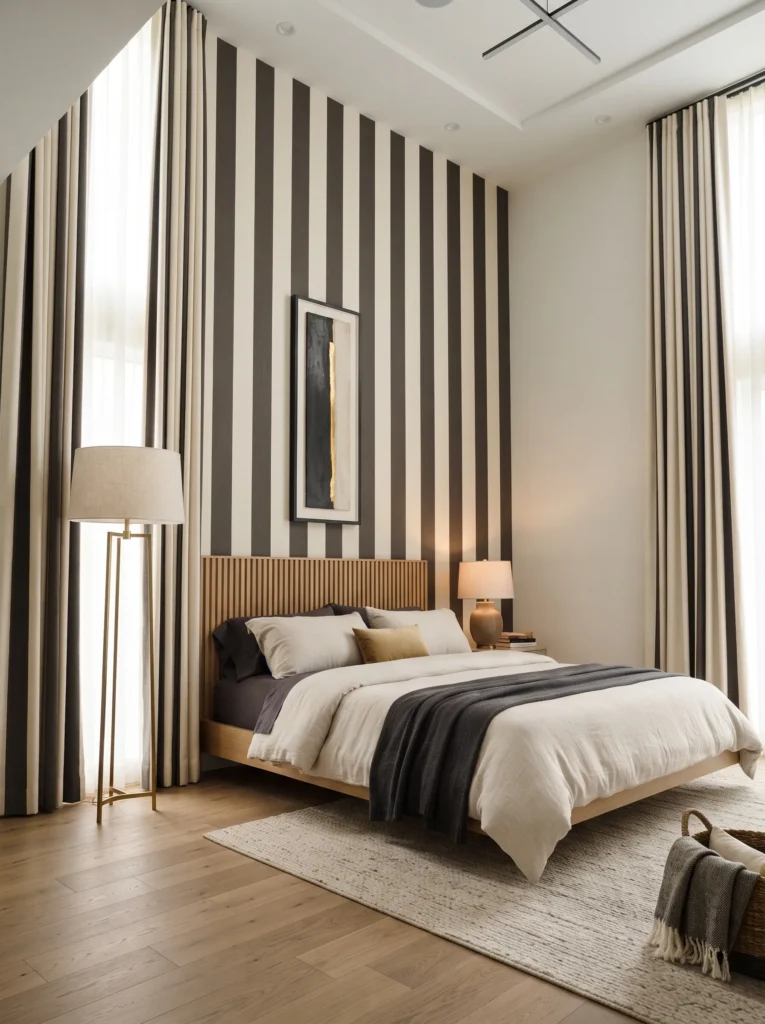
9. Vertical Stripes
Vibe: Tall and spacious
Why it works: Vertical stripes on walls or curtains draw the eye upward, creating the illusion of higher ceilings. This visual trick is particularly effective in basements with low ceilings or bulkheads. Stripes add pattern and interest without overwhelming the space, and they can be used on a single feature wall or throughout the room for maximum impact.
How to get it: Use wallpaper with vertical stripes, paint alternating stripes, or hang floor-to-ceiling striped curtains. Keep stripes proportional — too narrow can feel busy, too wide can feel overwhelming. Use the stripe color as inspiration for your bedding and accessories to create a cohesive look. Choose vertical shiplap or board-and-batten for a more textured approach.
| Product | Style |
|---|---|
| Vertical striped peel-and-stick wallpaper | Classic |
| Floor-to-ceiling stripe curtain panels | Modern |
| Shiplap wall planks | Farmhouse |
| Board-and-batten wall molding kit | Traditional |
| Tall slim headboard | Contemporary |
10. Egress Window Emphasis
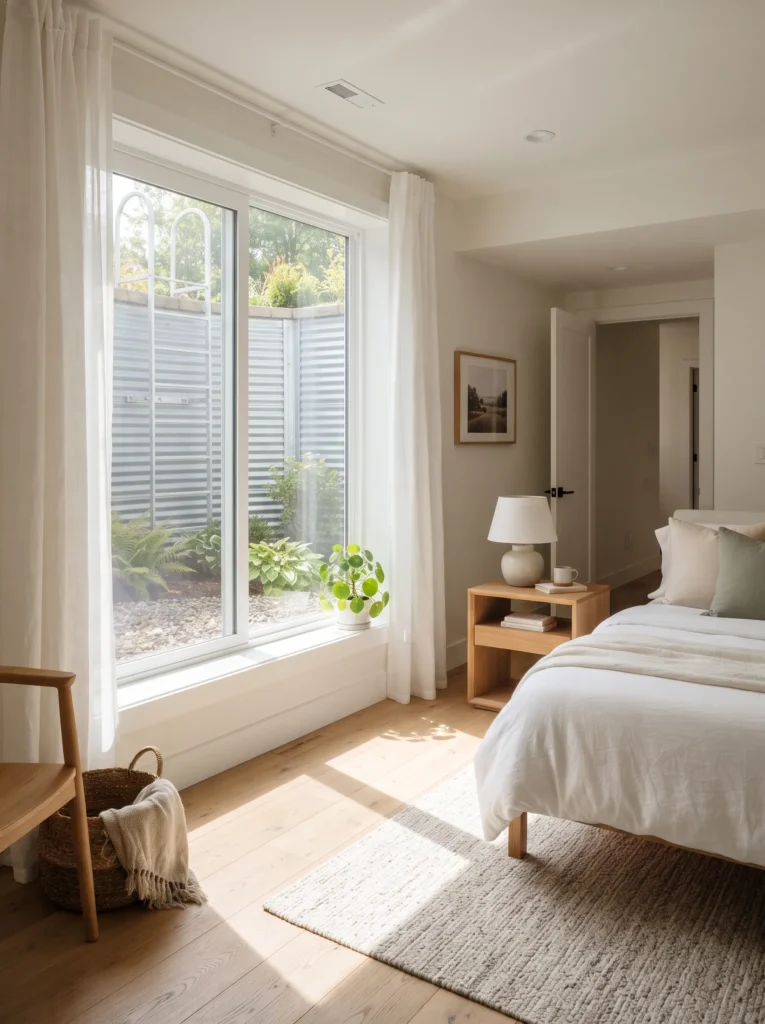
Vibe: Bright and safe
Why it works: Egress windows are legally required for basement bedrooms and provide emergency escape routes, but they also flood the space with precious natural light. A properly installed egress window can transform a dark basement bedroom into a light-filled retreat that doesn’t feel like a basement at all. The window also adds significant resale value and makes the space code-compliant.
How to get it: Ensure your egress window meets local building codes — typically minimum 5.7 square feet opening, 20 inches wide, 24 inches high, and sill no more than 44 inches from the floor. Frame the window with light-colored trim to maximize brightness. Add sheer curtains for privacy while maintaining light flow, and consider a window well with a ladder or steps for safe exit.
| Product | Style |
|---|---|
| Egress window well cover | Safety |
| Window well ladder | Functional |
| Sheer white curtain panels | Light |
| Blackout curtain liner | Practical |
| Window well drainage gravel | Landscape |
11. Layered Textures
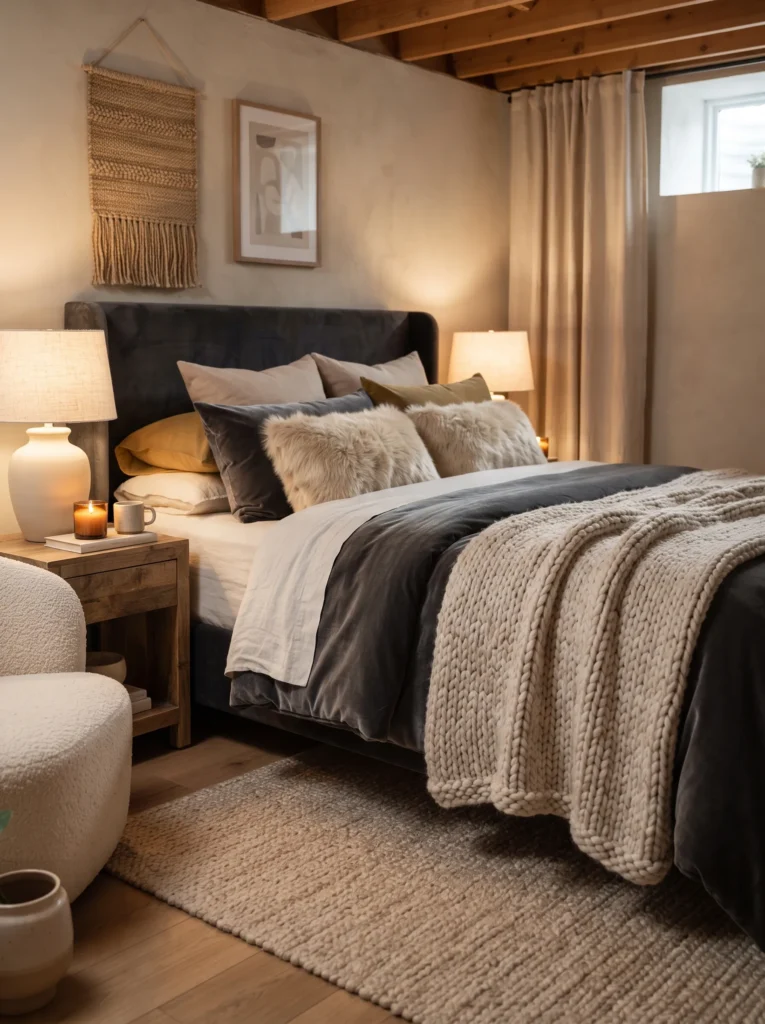
Vibe: Warm and tactile
Why it works: Layering different textures — wool, velvet, linen, faux fur, and chunky knits — creates visual and physical warmth in basement bedrooms where concrete walls and floors can feel cold. Texture adds depth and interest to neutral color palettes and makes the space feel cozy and inviting. In windowless or dim spaces, texture becomes a primary source of visual interest.
How to get it: Start with a plush area rug underfoot, add a linen or velvet duvet, then layer with a chunky knit throw and faux fur or boucle pillows. Use different weave patterns and fabric weights for maximum depth. For walls, consider wood paneling, shiplap, or textured wallpaper to add another layer. Don’t forget window treatments — heavy curtains add texture and help with insulation.
| Product | Style |
|---|---|
| Chunky knit throw blanket | Cozy |
| Faux fur accent pillows | Glam |
| Boucle upholstered chair | Modern |
| Linen duvet cover set | Natural |
| Wool blend area rug | Warm |
12. Pocket Doors
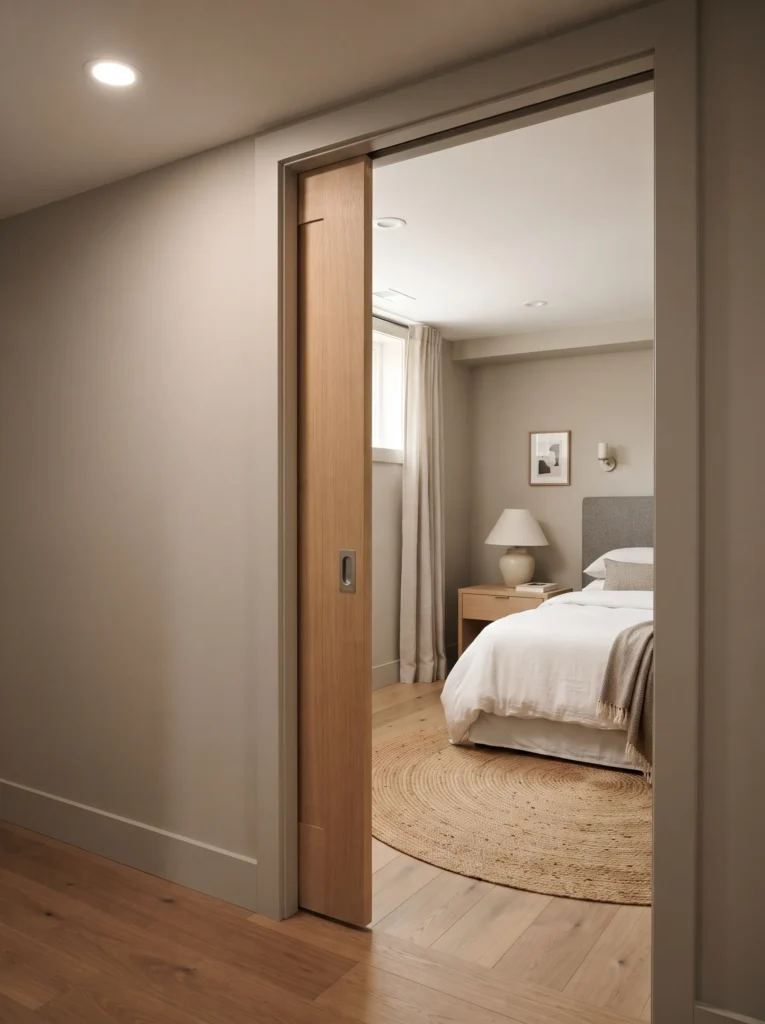
Vibe: Streamlined and spacious
Why it works: Pocket doors slide into the wall cavity rather than swinging open, saving precious floor space in small basement bedrooms. They allow full use of wall space without the clearance needed for traditional swinging doors. This is especially valuable in tight layouts where every square inch matters — just a few feet of clearance saved can make the difference between cramped and comfortable.
How to get it: Install a pocket door kit for the bedroom entry or bathroom entrance if space is at a premium. Choose solid-core doors for better sound insulation and privacy. Consider frosted glass panels for bathrooms to allow light flow while maintaining privacy. For a less permanent option, consider sliding barn doors that mount on the wall surface but still save swing clearance.
| Product | Style |
|---|---|
| Pocket door hardware kit | Modern |
| Solid-core interior door | Classic |
| Sliding barn door hardware | Rustic |
| Frosted glass panel door | Contemporary |
| Barn door with black hardware | Industrial |
13. Green Accent
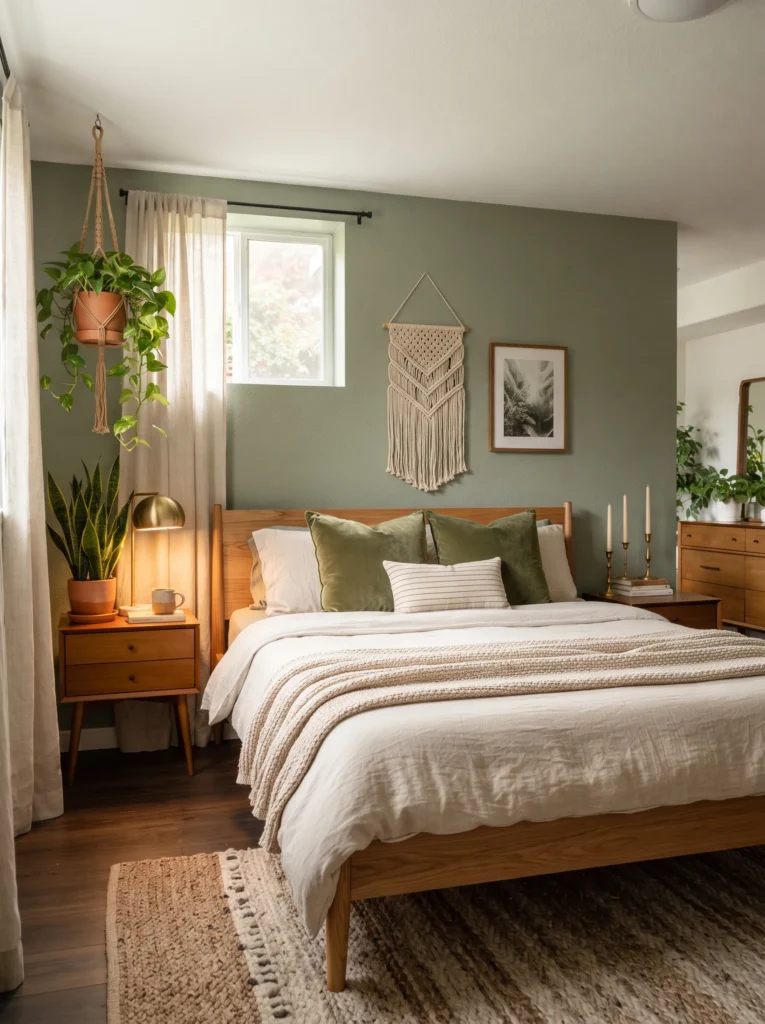
Vibe: Calm and nature-inspired
Why it works: Sage green, olive, or forest green brings a sense of nature and tranquility to basement bedrooms, counteracting the “underground” feeling with organic warmth. Green is consistently shown to reduce stress and promote relaxation, making it ideal for sleep spaces. In dim basements, softer greens like sage reflect available light better than darker hues while adding more character than plain beige.
How to get it: Paint a feature wall in sage green like Benjamin Moore “October Mist” or use green bedding and accessories for a lower-commitment approach. Pair green with warm wood tones, cream, and brass for a cohesive, nature-inspired palette. Add low-light plants like snake plants or pothos to bring actual greenery into the space.
| Product | Style |
|---|---|
| Sage green duvet cover set | Natural |
| Olive green velvet throw pillows | Modern |
| Snake plant in ceramic pot | Bohemian |
| Green accent wall paint | Tranquil |
| Pothos hanging plant | Natural |
14. Multi-Functional Furniture
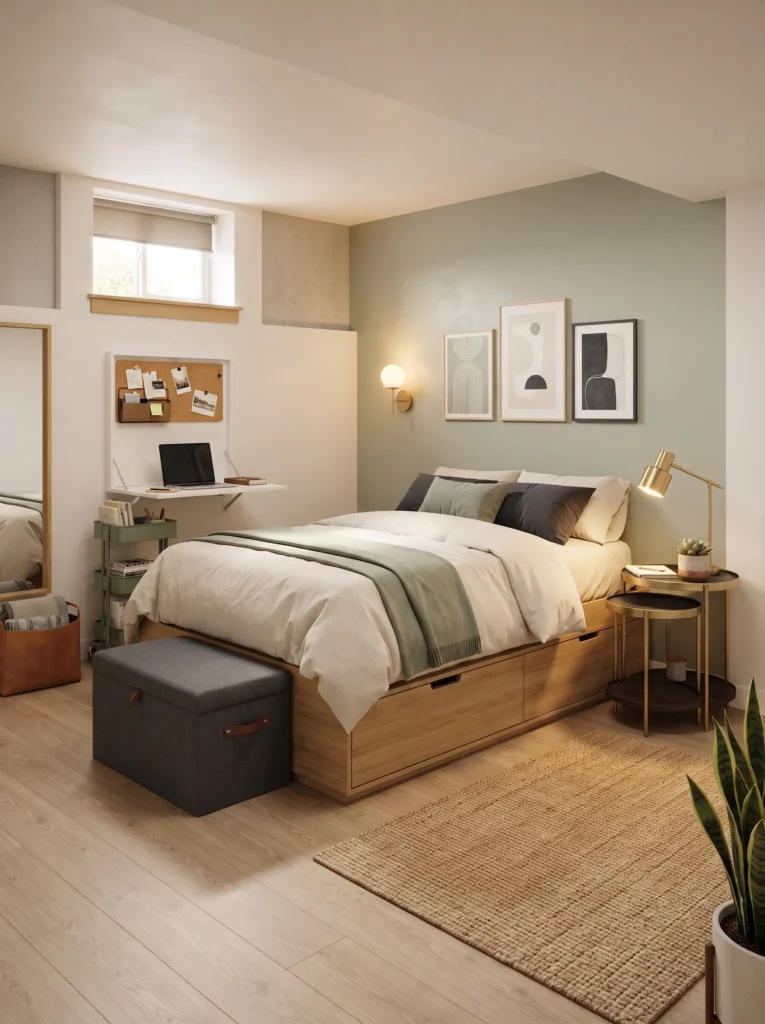
Vibe: Practical and versatile
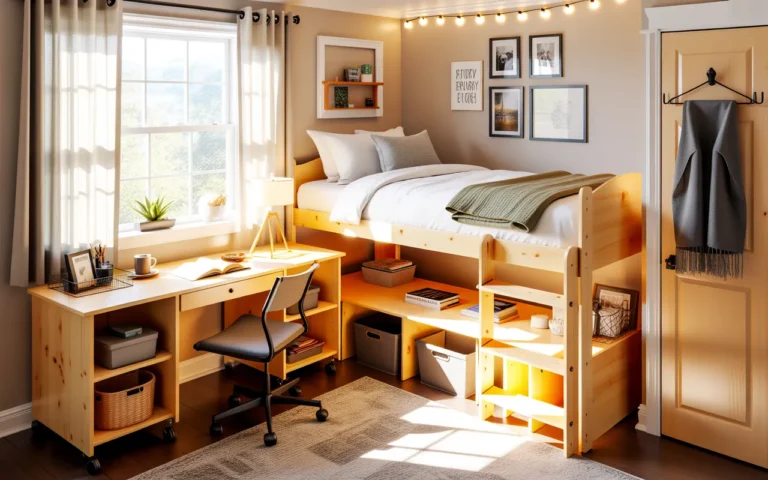
Why it works: In a small basement bedroom, every piece of furniture should serve at least two purposes. A sofa bed accommodates guests without requiring a dedicated guest room. An ottoman with storage hides blankets and pillows. A desk that doubles as a vanity makes the most of limited floor space. This approach maximizes functionality without overcrowding the room.
How to get it: Choose a platform bed with built-in storage drawers. Add a storage ottoman at the foot of the bed. Consider a murphy bed or wall bed for spaces that need to serve multiple functions. Use nesting tables for flexible surface space. Look for nightstands with drawers or shelves instead of open bases. Prioritize pieces that hide clutter while providing necessary surfaces.
| Product | Style |
|---|---|
| Storage ottoman bench | Functional |
| Sofa bed with memory foam | Versatile |
| Murphy bed hardware kit | Space-saving |
| Nesting coffee table set | Modern |
| Storage bed with headboard | Practical |
15. Curtain Wall Illusion
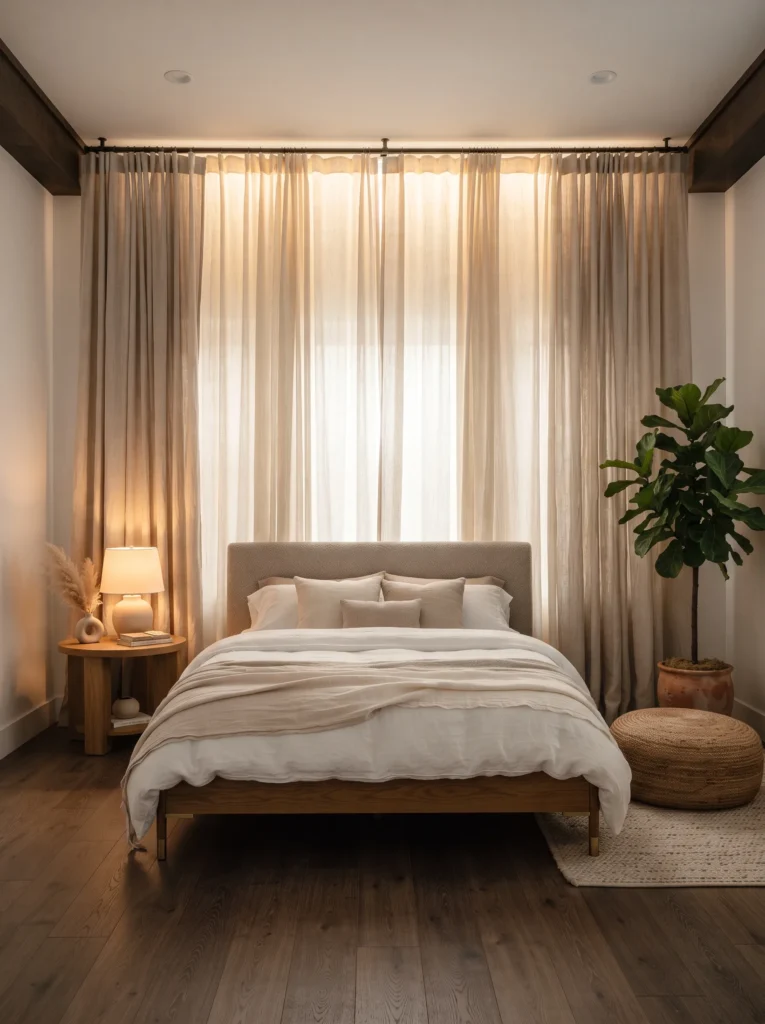
Vibe: Soft and deceptive
Why it works: Floor-to-ceiling curtains on a full wall create the illusion of a window where none exists. This visual trick draws the eye upward, making the room feel taller, and adds softness to what might otherwise be an unbroken expanse of drywall. The curtain wall also provides an opportunity to introduce color, pattern, and texture to the room.
How to get it: Install a curtain rod high near the ceiling and extend it slightly beyond the wall width for maximum drama. Hang full-length curtain panels that just brush the floor. Place a lamp behind the curtains to create a “window” glow effect. Choose lightweight linen for a breezy feel or velvet for added warmth and insulation. This works especially well on the wall behind the bed.
| Product | Style |
|---|---|
| Floor-to-ceiling curtain rod | Modern |
| Linen sheer curtain panels | Airy |
| Velvet blackout curtain panels | Dramatic |
| Ceiling-mounted curtain track | Sleek |
| Curtain tie-backs set | Traditional |
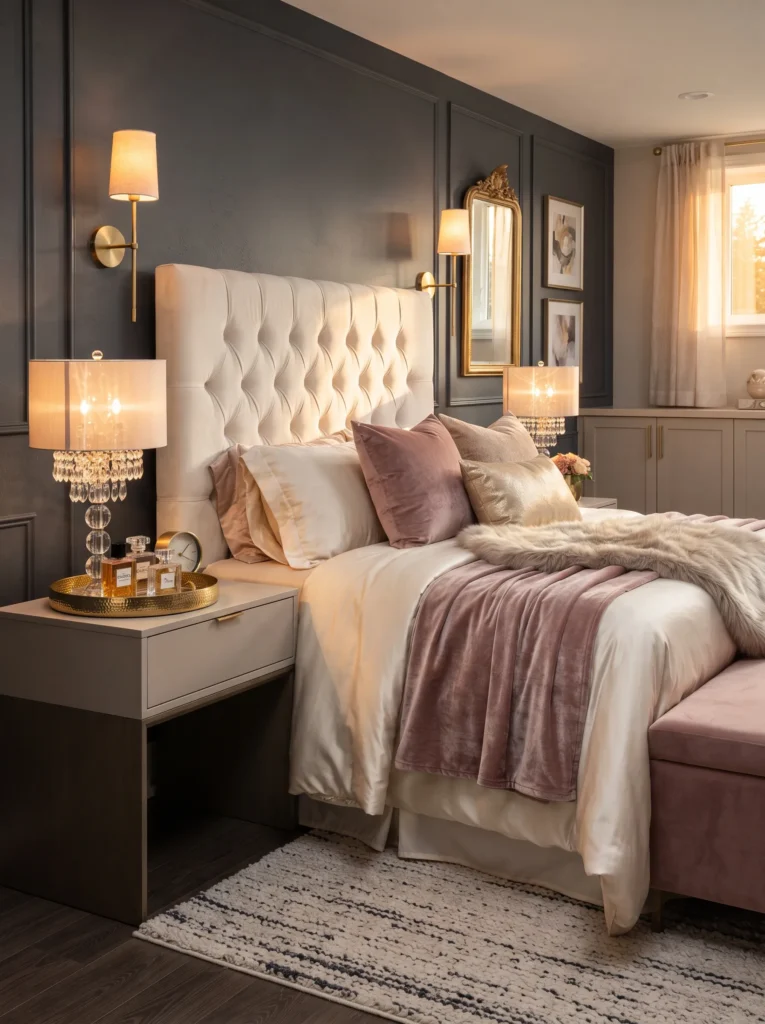
16. Glam Accents
Vibe: Luxurious and intentional
Why it works: Adding luxury touches — gold fixtures, velvet upholstery, crystal lamps, and plush bedding — signals that the basement bedroom was designed with care rather than treated as an afterthought. These elements elevate the room from utilitarian to aspirational, making guests feel pampered and owners feel proud of the space.
How to get it: Swap basic hardware for brushed brass or gold. Add a crystal or glass table lamp for sparkle. Choose velvet or faux fur throw pillows for texture and luxury. Use a tufted or upholstered headboard as a statement piece. Incorporate a small tray on the nightstand with a candle and a few books. Remember that even small glam touches can transform the overall feel of the room.
| Product | Style |
|---|---|
| Brushed brass wall sconces | Glam |
| Velvet throw pillow covers | Luxury |
| Crystal table lamp set | Sparkling |
| Tufted headboard | Elegant |
| Gold decorative tray | Sophisticated |
How to Start Your Basement Bedroom Transformation
THE ONE FIRST MOVE: Before you buy any furniture or paint, assess your basement’s ceiling height and egress situation. Measure the ceiling — most building codes require at least 7 feet of clearance for a legal bedroom. If you’re under that, you’ll need to consider whether structural changes are possible or if you’re designing a “flex room” rather than a true bedroom. Next, check for egress windows or exterior doors — these are legally required and non-negotiable for safety. If your basement lacks them, budget for installation before anything else; this is the foundation everything else rests on.
THE MOST COMMON MISTAKE: Choosing the wrong paint color undertone. In basements with limited natural light, cool-toned grays and blues can look flat, dull, or even institutional — what looked beautiful in the hardware store can feel depressing underground. The fix is to choose warm neutrals with yellow, pink, or beige undertones like Sherwin-Williams “Greek Villa” or Benjamin Moore “Edgecomb Gray” that reflect whatever light exists in a flattering way. Test paint samples on all walls and observe how they look morning and evening before committing.
BUDGET ENTRY POINTS: A faux shearling throw in cream instantly adds warmth and texture to any bed. A six-pack of under-bed storage bins solves the basement’s perpetual “where to put things” problem. A set of stick-on wall sconces adds ambient lighting without electrical work — battery-operated with a remote control, they make any dark corner feel intentional. These three items cost under $100 combined and transform the feel of a basement bedroom immediately.
REALISTIC EXPECTATIONS: A full basement bedroom transformation typically takes 4–8 weeks for professionals, longer if you’re DIYing. Budget ranges from $3,000–5,000 for a DIY-friendly refresh with paint, lighting, and new furniture to $15,000–30,000 for a professional finish with new windows, electrical work, and built-ins. You can achieve a “good enough” guest room in a weekend with fresh paint, new bedding, and a large mirror, but code compliance and major structural work require patience and proper planning.
Frequently Asked Questions About Basement Bedroom Ideas
What is the minimum ceiling height for a basement bedroom?
Most building codes require at least 7 feet of ceiling height for a room to legally qualify as a bedroom. Some areas allow exceptions for small areas under beams or ductwork, but the majority of the space must meet this standard. If your basement has lower ceilings, you may need to consider it a “flex room” or “guest room” rather than a legal bedroom when listing your home.
What are the best paint colors for a dark basement bedroom?
Warm whites with high LRV like Sherwin-Williams “Greek Villa” and Benjamin Moore “White Dove” work well to bounce light around. Sage greens like “October Mist” and warm grays like “Edgecomb Gray” add personality while still reflecting available light. Avoid cool grays and blues with blue undertones as they can look flat and institutional in limited light.
How much does a basement bedroom conversion cost?
A DIY-focused conversion with paint, lighting, and new furniture typically costs $3,000–$5,000. A professional full conversion with new windows, electrical, insulation, and built-ins ranges from $15,000–$30,000. Egress window installation alone can cost $2,500–$5,000 depending on excavation needs. Costs vary significantly by region, with urban areas generally more expensive.
Can a basement bedroom be legally considered a bedroom without a window?
No. Legal requirements for a bedroom include an egress window or exterior door that opens directly to the outside. The window must meet specific size requirements — typically at least 5.7 square feet, 20 inches wide, 24 inches high, and with a sill no more than 44 inches from the floor. Without proper egress, a room cannot be marketed or legally considered a bedroom.
How do you make a basement bedroom feel cozy rather than cramped?
Focus on layered lighting — combine recessed lights, wall sconces, and table lamps with warm bulbs. Use area rugs to add softness underfoot. Choose warm paint colors rather than stark whites. Layer textures with chunky knits, velvet pillows, and linen bedding. Add plants for life and oxygen. Keep furniture proportional to the space — oversized pieces make small rooms feel smaller.
Ready to Create Your Dream Basement Bedroom?
You’ve now explored 16 diverse basement bedroom ideas, from light-reflecting whites and dark dramatic palettes to clever zone creation and pocket doors. Whether your focus is on color psychology, smart storage, lighting strategies, or flexible layouts, there’s a path forward that fits your space and budget.
Transformation happens incrementally — you don’t need to do everything at once. Tackle the most impactful change first: proper lighting and a fresh coat of paint in the right undertone will transform the feel more than any single furniture purchase.
Today, grab a paint fan deck and test a few warm white and sage green samples on your basement walls. See how they look at different times of day.
Once you get the light and color right, your basement bedroom will stop feeling like a cave and start feeling like the sanctuary you never knew you had — a quiet, private retreat that you actually look forward to descending into at the end of the day.
Save your favorite ideas to a Pinterest board or bookmark this article for reference. Trust your instincts, start small, and watch your basement transform from forgotten storage into the bedroom you’ve always wanted.
One Comment