15 Ideas to Connect Living and Dining Room seamlessly
Open concept living and dining rooms are spaces where flow, flexibility, and visual connection create one cohesive living area. This article shares 15 distinct design approaches that transform how living room and dining room spaces work together, from material choices to layout strategies and furniture arrangements. Whether you are drawn to minimalist transitions or layered bohemian blending, every idea here addresses how to make these connected spaces feel intentional rather than chaotic. Here are 15 ideas worth saving and stealing.
Also here: Cozy Minimalist Living Room Ideas for Apartments
Why Open Concept Living and Dining Rooms Work So Well
The modern open concept floor plan emerged from mid-century design philosophy—the belief that removing walls creates psychological and physical freedom. Unlike traditional separated rooms, open living and dining spaces encourage connection, natural light flow, and flexible use. When done well, they feel expansive and integrated; when done poorly, they feel unfinished and noisy.
Open concept spaces to connect living and dining room thrive on specific materials that define zones without dividing them. Think warm oak hardwood floors that anchor both areas, natural linen upholstery that speaks the same visual language across both spaces, brushed brass or matte black hardware that repeats throughout, and natural stone or ceramic accents that ground specific zones. These materials work because they are durable, warm, and speak a unified visual language.
Open Concept Living and Dining Rooms at a Glance
| Element | Trait 1 | Trait 2 |
| Philosophy | Flexible spatial flow | Unified visual language |
| Key Materials | Hardwood, linen, natural stone | Brass, ceramic, wool |
| Key Colors | Warm neutrals (greige, taupe) | Accent through textiles |
1.Rug Layering as Zone Definition
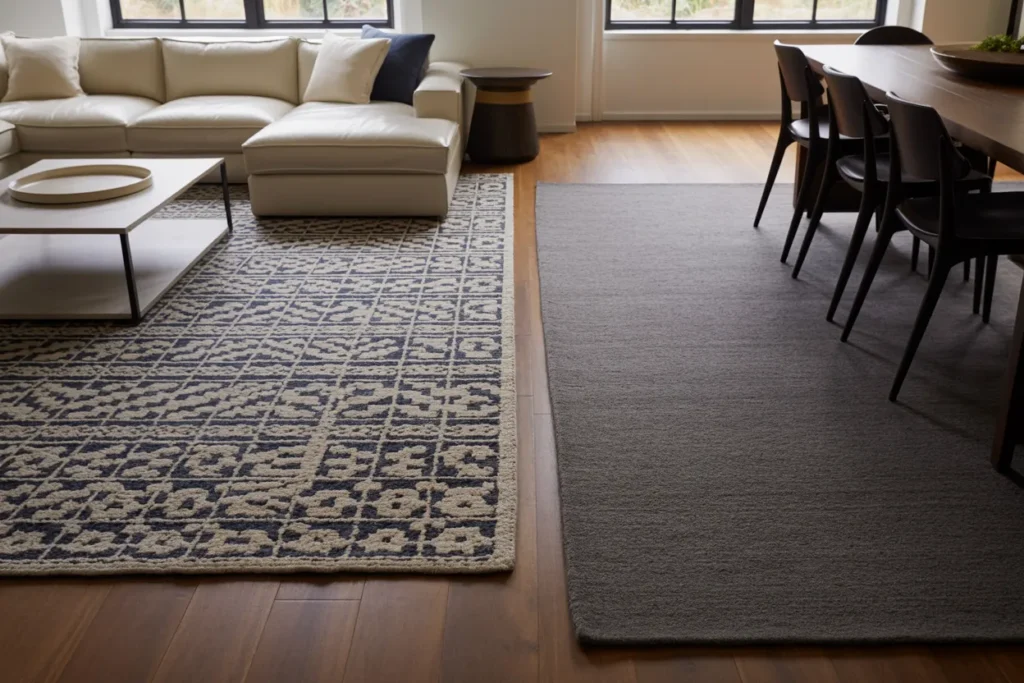
Vibe: Curated and intentional.
Why it works: Rugs define zones through texture, color, and scale. An 8×10 wool rug under living room seating and a 5×8 or 6×9 natural jute rug under dining chairs create two distinct anchor points. The slight overlap at the boundary feels intentional rather than haphazard. Layering different materials (wool under seating for softness, jute under dining for durability) reflects how each space functions.
How to get it: Invest in one quality wool rug for the living area (natural light tones wear better than dark). Choose a jute or sisal rug for the dining zone—it masks crumbs and doesn’t require padding under a dining table. Position dining rug so at least two dining chair legs sit on it when pulled in; this anchors the table visually.
💡 Quick Win: A quality 5×8 jute rug ($80–150) is significantly less expensive than an 8×10 wool rug and pairs visually with nearly any living room palette.
2. Color Blocking Between Zones
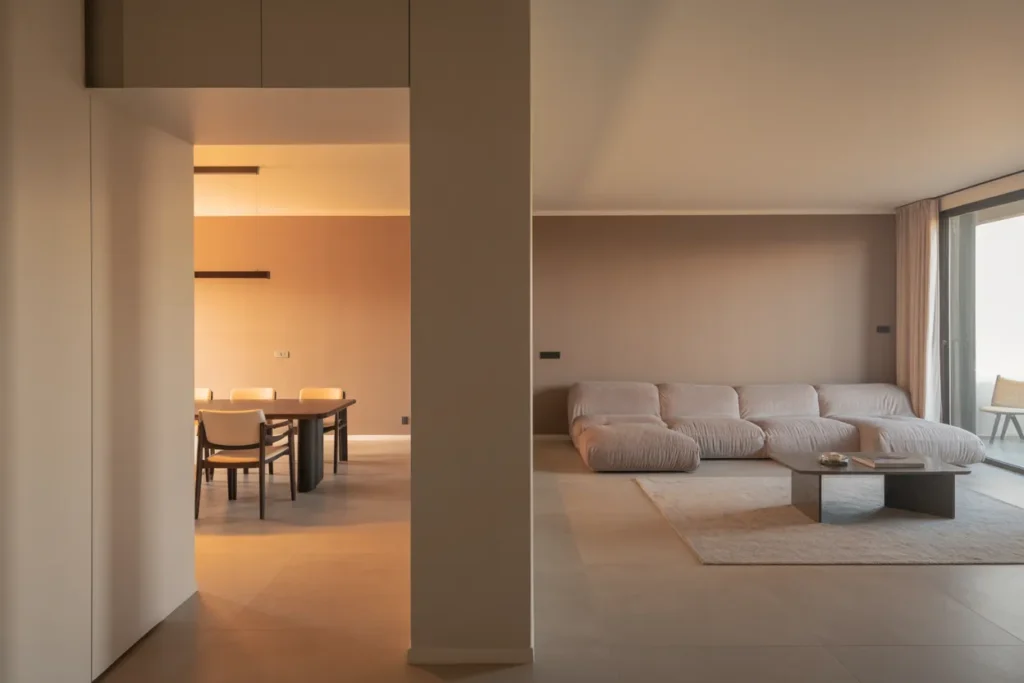
Vibe: Layered and intentional.
Why it works: Color creates psychological boundaries. The human eye reads color shifts as zone breaks. Unlike structural walls, paint changes preserve sightlines and light flow while giving each area its own identity. This works best with analogous or closely related tones (greige next to warm taupe, not greige next to navy) to keep the overall feeling cohesive rather than jarring.
How to get it: Paint the dining wall a single tone warmer than your living room. Test large swatches in both morning and evening light—the same color reads differently depending on window direction. Keep trim and ceiling consistent across both spaces to prevent visual fragmentation. Add textiles and lighting that echo both colors to create transition
3. Floating Island Dining in Warm Oak
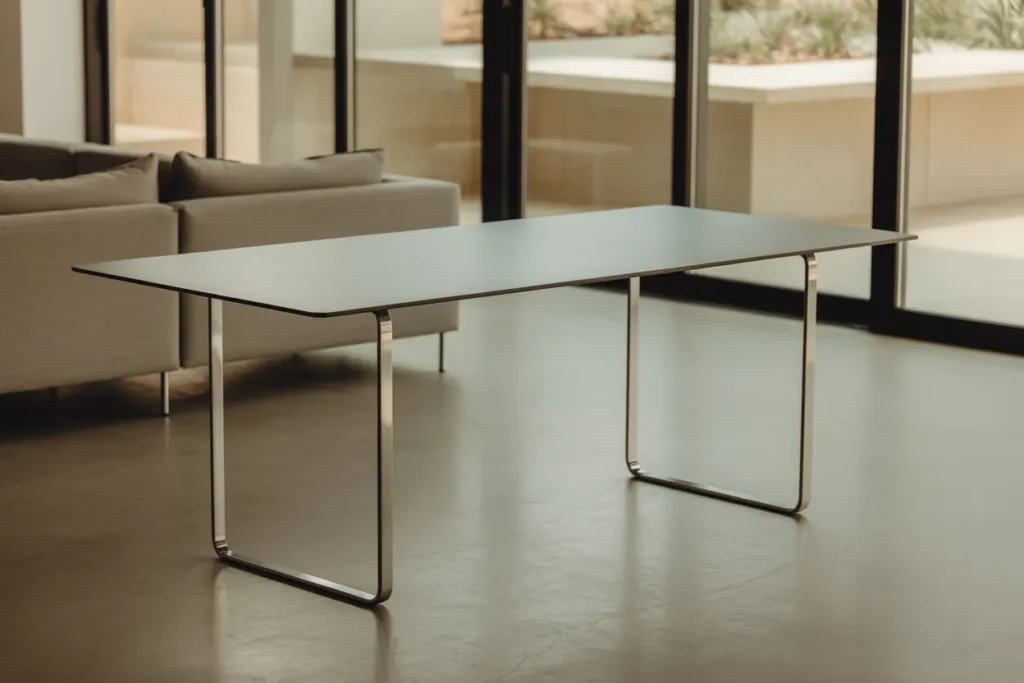
Vibe: Grounded and intentional.
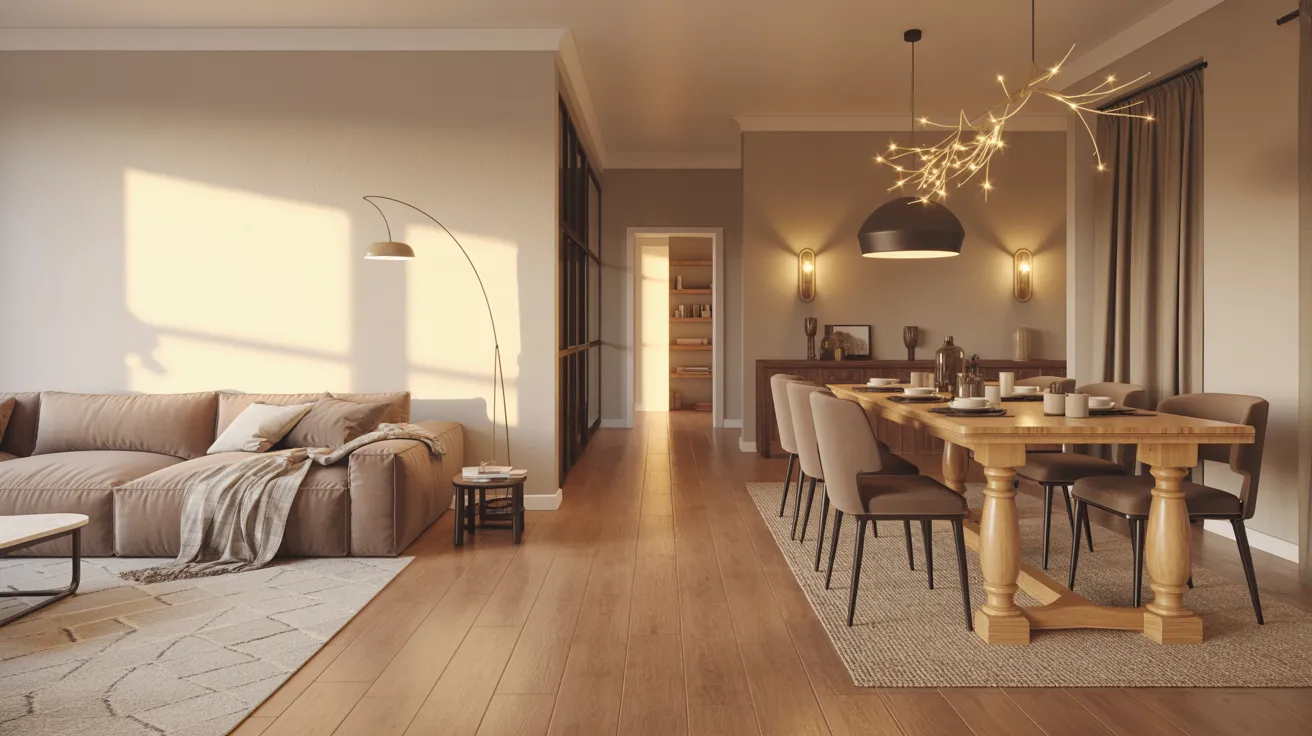
Why it works: A floating table uses negative space as a design tool. The visible floor underneath prevents the furniture from visually consuming the room. Warm white oak or natural walnut creates material continuity with living room hardwood, while the dining chairs (upholstered in taupe linen) bridge the two zones. The table becomes a subtle divider that suggests—rather than enforces—separation.
How to get it: Choose a dining table with turned wooden legs or simple block legs rather than a pedestal or apron base. Keep the visual weight light by using upholstered chairs in a neutral tone that echoes your sofa color. A natural wood finish (not stained dark) maintains warmth and connection to the living space.
💡 Quick Win: If budget is tight, a simple pine or birch table ($200–400) with a natural finish and two upholstered benches on long sides cost significantly less than a full set of matching chairs while maintaining the same visual openness
4. Overhead Statement Lighting Over Both Zones
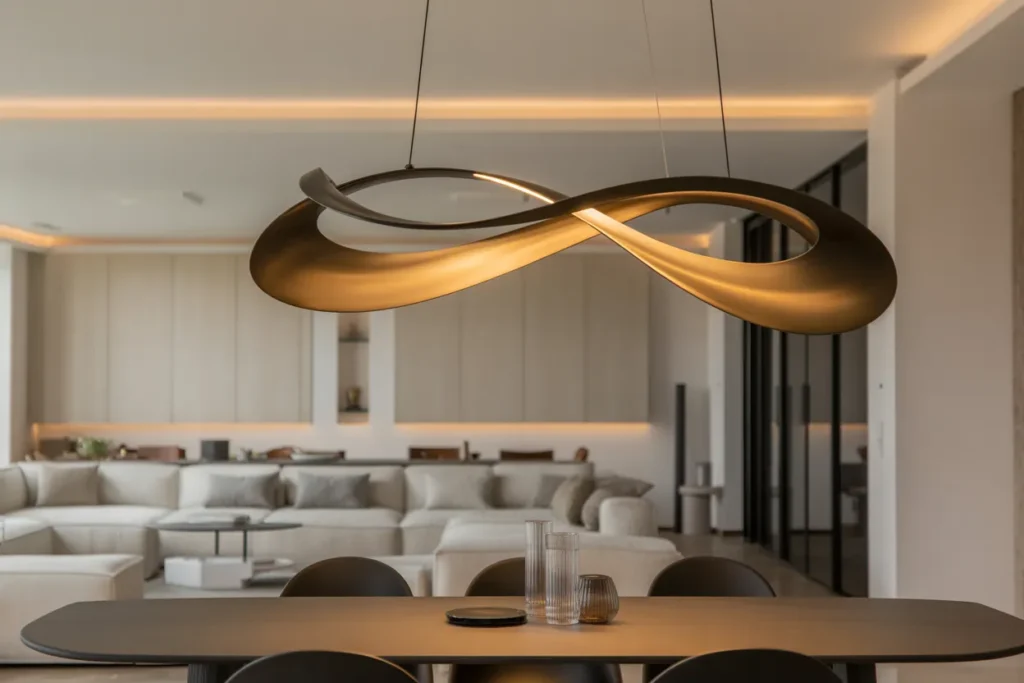
Vibe: Warm and gathered.
Why it works: Lighting draws the eye upward and outward. A single overarching light source creates psychological continuity—people sense they are in one space, not two separate rooms. Matte black or brushed brass fixtures work in both modern and rustic schemes. The height matters: 36–42 inches above the dining table and 60–66 inches above seating height in the living area allows both zones their own visual space while maintaining connection.
How to get it: Choose one substantial fixture (a 30–36 inch diameter pendant, a branching mobile-style chandelier, or a wide-arc floor lamp) that makes a statement without crowding the ceiling. Avoid multiple small fixtures or recessed lighting, which fragments the visual field. If ceiling height allows, hang the fixture 8–10 inches lower than code minimum; this increases intimacy and visual impact.
5. Material Shift at Furniture Boundary
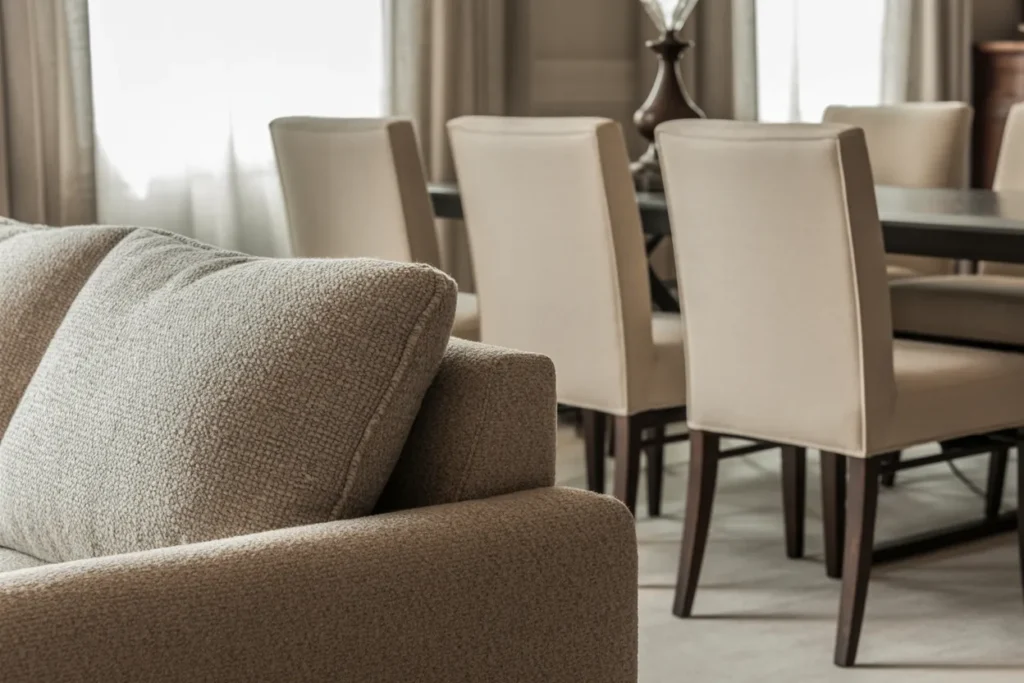
Vibe: Understated and functional.
Why it works: Materials speak to function. A sofa in natural linen invites lounging; dining chairs in performance fabric or leather communicate a specific activity zone. Choosing materials in the same color family (warm white, taupe, greige) keeps the transition smooth. The eye registers “new zone” through texture rather than color break, which is subtler and more sophisticated.
How to get it: Use natural linen, wool, or cotton on the sofa. Choose dining chair upholstery from a different material but the same neutral tone—cognac leather, woven rattan, or performance linen in the same greige tone. Keep hardware consistent (brass or matte black) to tie both zones together despite material variation.
Shop The Look
- Natural linen sofa (comfort-forward style) Boho
- Leather or performance fabric dining chairs (4 or 6) Modern Farmhouse
- Rattan woven chair back detail or woven seat Contemporary
- Wool throw blanket (sofa side) matching dining chair tone Rustic
- Brass or matte black dining chair legs Modern
6. Arched Doorway or Archway Detail
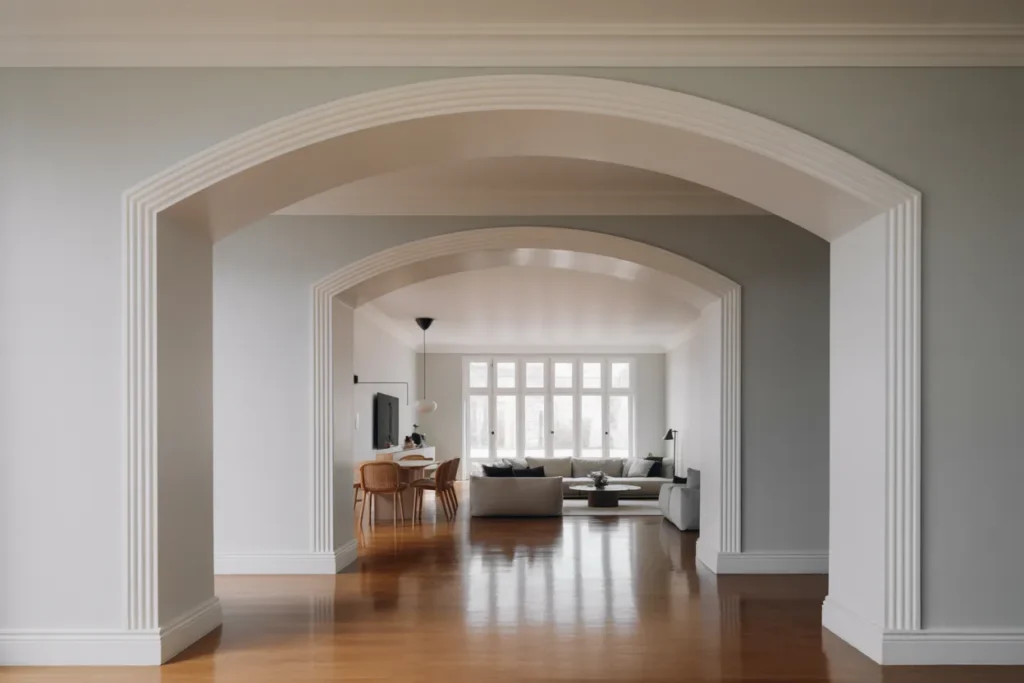
Vibe: Formal yet flowing.
Why it works: The arch is an ancient architectural gesture signaling transition and importance. In modern open spaces, a painted or trim-based arch overhead—whether a full semicircle or a simple curved trim detail—creates visual interest and suggests intentional zoning without functional separation. Lighting inside the arch or cast-shadow play enhances the effect.
How to get it: Install curved crown molding or paint an arch shape on the ceiling between zones. This requires some planning and may benefit from professional installation. Alternatively, add recessed lighting inside the archway outline to create a subtle glow that emphasizes the threshold at night.
7. Kitchen Island Extending Into Living Space
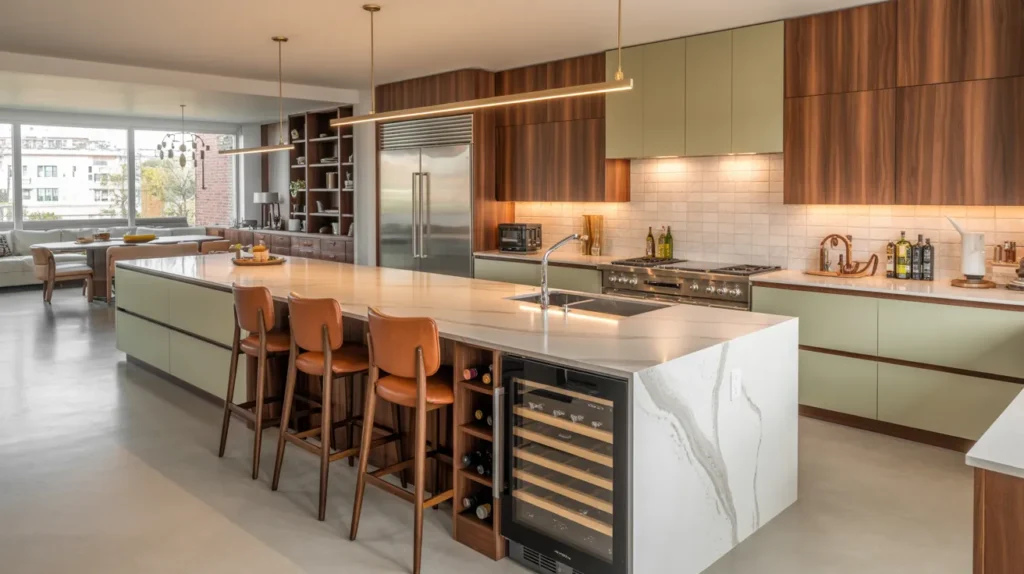
Vibe: Warm and gathered.
Why it works: Islands act as informal dividers and gathering points simultaneously. A 3×6 foot island with seating on one or both sides creates a subtle boundary between kitchen and living areas while encouraging conversation. Finishing the island in a different material (warm oak base with white quartz or marble top) creates material interest. Styling the perimeter with bar stools and the top with wooden serving pieces, bowls, and candles makes it feel as much part of the living zone as the kitchen.
How to get it: Position the island at the natural threshold between zones rather than deep within the kitchen. Size it to allow passage on both sides (minimum 36 inches of walkway). Use warm wood or natural stone for the base and a contrasting (but unified) finish for the top to create material play.
💡 Quick Win: A butcher-block cart island ($200–400) with a 24-inch depth and seating for two or three achieves the same visual effect as a built-in at a fraction of the cost and can be repositioned if plans change.
8. Continuous Hardwood Flow
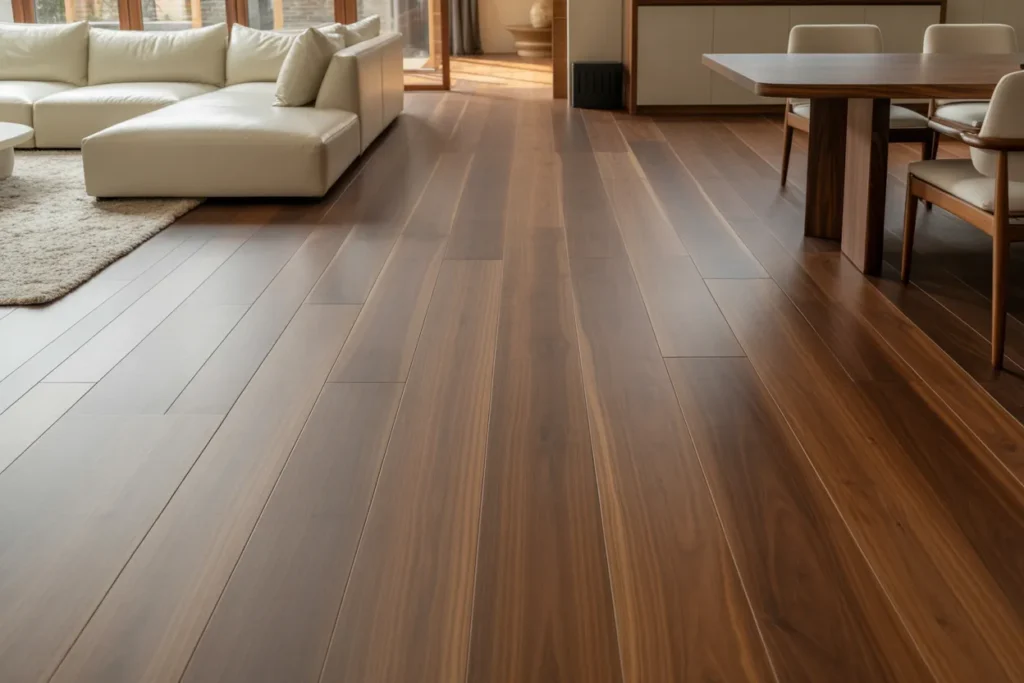
Vibe: Warm and grounded.
Why it works: Flooring is the largest visual plane in any room. Continuous hardwood—whether 3-inch oak, 4-inch walnut, or wide-plank reclaimed—creates subconscious unity. The eye follows continuous material across space, perceiving it as one room rather than two. Matte or satin finishes feel warmer and less institutional than high-gloss, making the wood feel lived-in rather than pristine.
How to get it: Select one wood species and finish for both zones. If renovation is not possible, use large area rugs to suggest continuity over existing flooring. If flooring differs (existing hardwood in living room, tile in dining), lay a transitional rug that bridges both to suggest connection.
9. Layered Lighting Strategy
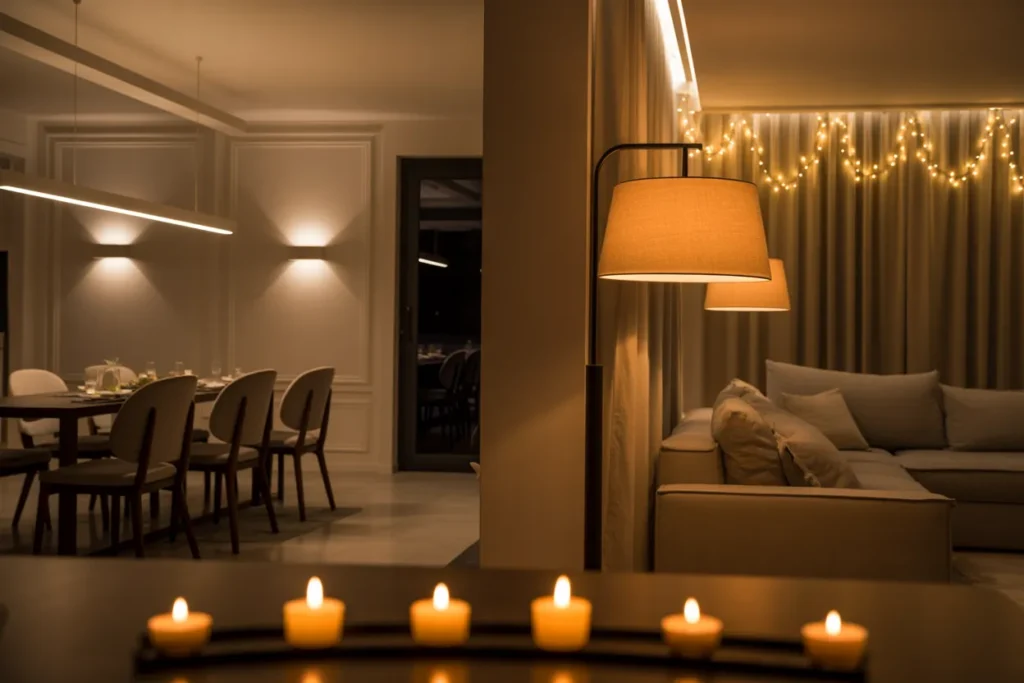
Vibe: Intimate and layered.
Why it works: Lighting is the most underrated tool for zone definition and atmosphere. Three to four distinct light sources at different heights and intensities allow both the living and dining areas to function independently while remaining visually connected. Dimmable fixtures allow tone adjustment—bright for entertaining, warm and low for evening relaxation.
How to get it: Install overhead statement lighting (dimmable), add a pair of brass wall sconces above dining chairs, position a floor lamp with a 40-50 inch height beside seating, and incorporate candles or a low-wattage table lamp on the dining table. Choose fixtures in coordinated finishes (all brass, all matte black, or warm wood) to create cohesion despite varied heights and styles.
10. Defined Texture Palette
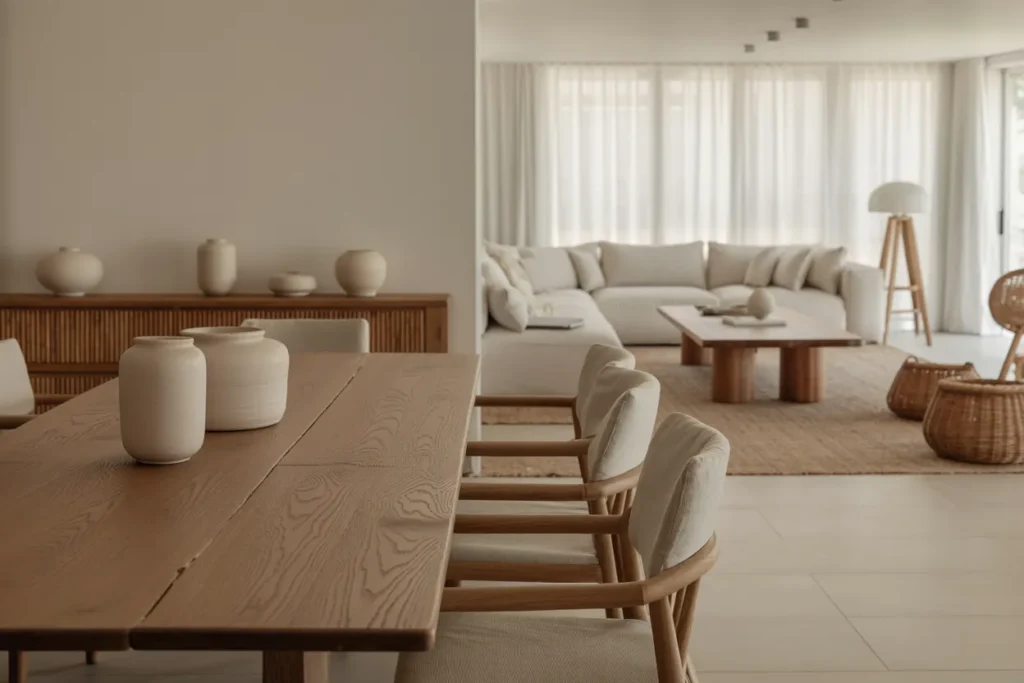
Vibe: Refined and intentional.
Why it works: Texture variation without color variation feels cohesive rather than chaotic. When living and dining zones use the same texture vocabulary, the eye perceives unity even if furniture styles differ. This is especially effective in neutral palettes where color cannot create connection.
How to get it: Inventory furniture and decor in both zones and identify the three textures already present. Commit to repeating these across both areas—natural wood, linen or wool, ceramic or stone. Introduce one accent texture (brass, leather, rattan) in both zones to create sophistication.
11. Organic Shape Contrast
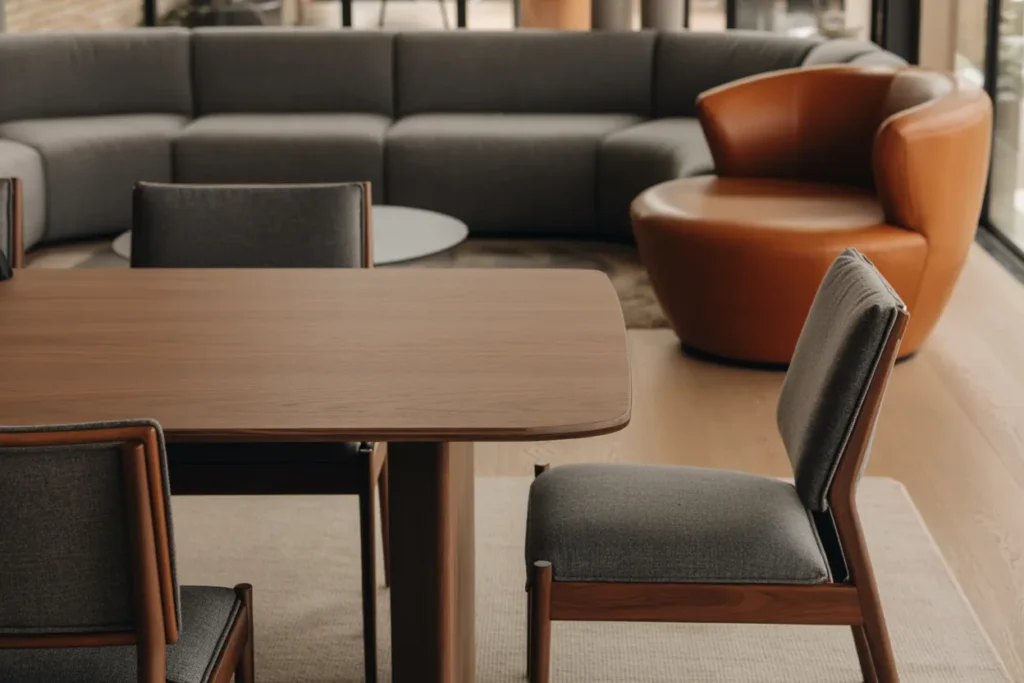
Vibe: Dynamic and intentional.
Why it works: Shape contrast prevents visual monotony in open spaces. If living room seating is all rounded and soft, introducing rectangular dining furniture creates visual tension that feels resolved by unified materials and colors. The contrast signals functional zones while shared materials and finishes maintain visual family.
How to get it: Identify the dominant shape in your living room (curved sectional, angular sofa, roundtable). Choose opposite shapes for dining furniture. Maintain neutral tones and similar materials across both—the shape difference creates enough visual interest without requiring color variation.
💡 Quick Win: A curved accent chair in the living zone ($300–600) placed at the edge toward the dining area serves both zones visually—its rounded form contrasts the angular dining table, but its neutral fabric ties both areas together.
12. Botanical Focal Points as Zone Anchors
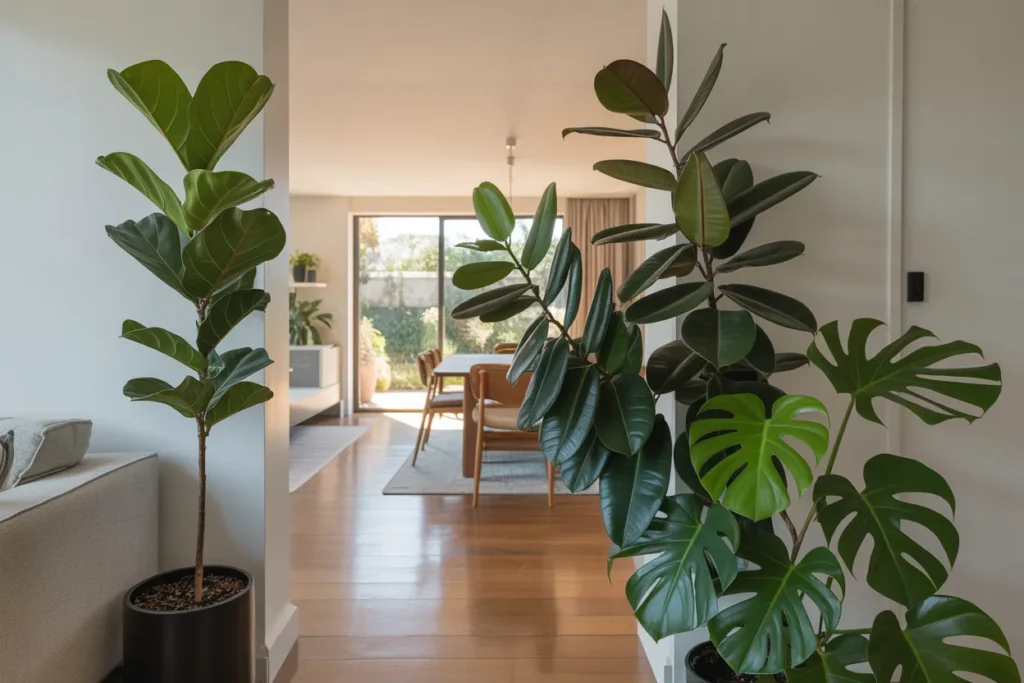
Vibe: Living and organic.
Why it works: Tall, structured plants create visual boundaries through form rather than mass. A 5-foot fiddle leaf fig at the dining area edge and a smaller cluster of 2–3 foot plants in the living zone create a botanical rhythm that guides the eye and defines territory without blocking sightlines. Plants also improve air quality, add texture variety, and humanize open spaces.
How to get it: Choose one tall architectural plant (6+ feet) for a key corner or threshold, and cluster smaller plants (18–36 inches) in groups of three on side tables or the floor. Use simple ceramic, concrete, or terra cotta pots in neutral tones that complement both zones.
Shop The Look
- Tall fiddle leaf fig or rubber plant (6-7 feet) Boho
- Ceramic plant pots in neutral tones (3–5 vessels) Modern Minimalist
- Medium pothos or monstera (3–4 feet tall) Farmhouse
- Wooden plant stand for tiered display (living area) Rustic
- Plant food or care products (biweekly feeding) Contemporary
13. Low Visual Weight Dining Seating
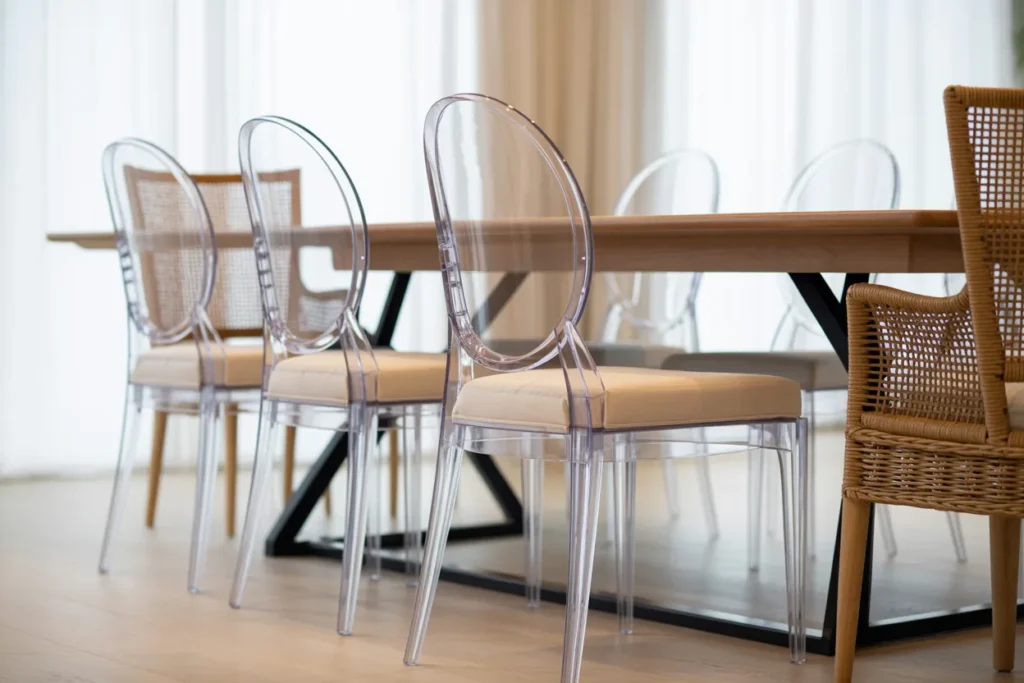
Vibe: Airy and intentional.
Why it works: Visual weight matters in open spaces. Heavy, enclosed furniture (wingback chairs, upholstered dining chairs with full backs) consumes visual space and creates a sense of enclosure. Open-back chairs, transparent or delicate frame styles, and rattan woven seats allow sightlines through and reduce perceived bulk. This is especially critical in smaller combined living-dining spaces.
How to get it: Choose dining chairs with open backs, thin or tapered legs, and lightweight frames. Upholstered seats in neutral tones provide comfort and style without bulk. Alternatively, bentwood (like Thonet-style café chairs) or rattan woven chairs offer visual lightness with appropriate formality for dining.
Shop The Look
- Open-back dining chairs (wood or rattan) Modern Boho
- Upholstered seat cushion (ties or snap fasteners) Farmhouse
- Bentwood café-style dining chairs (light profile) Minimalist
- Rattan or woven seat dining chairs (warm aesthetic) Rustic
- Thin-leg dining table base (avoids heaviness) Contemporary
14. Cohesive Hardware & Finishes Story
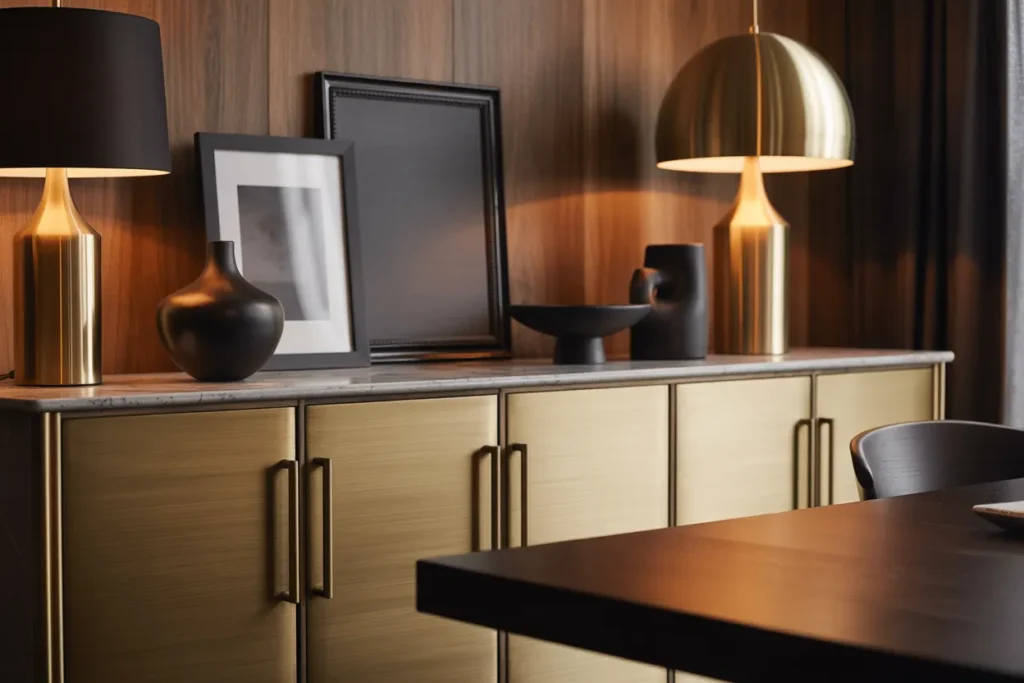
Vibe: Refined and collected.
Why it works: Hardware and metal finishes are the jewelry of interior design. Inconsistent finishes (mixing bright brass, satin nickel, matte black, and oil-rubbed bronze) fragment open spaces visually. Committing to two complementary finishes—say, warm brushed brass and matte black—creates a sense of intentional curation and cohesion. This works across living room furniture, dining seating legs, lighting, and decorative objects.
How to get it: Choose two metal finishes that feel natural together (warm brass + matte black; warm brass + natural wood; matte black + natural wood). Commit to these across all hardware, fixtures, and accents. Replace any existing hardware that conflicts. Choose furniture with legs and accents in these finishes rather than introducing new metals
15. Semi-Transparent Room Divider (Optional Flexibility)
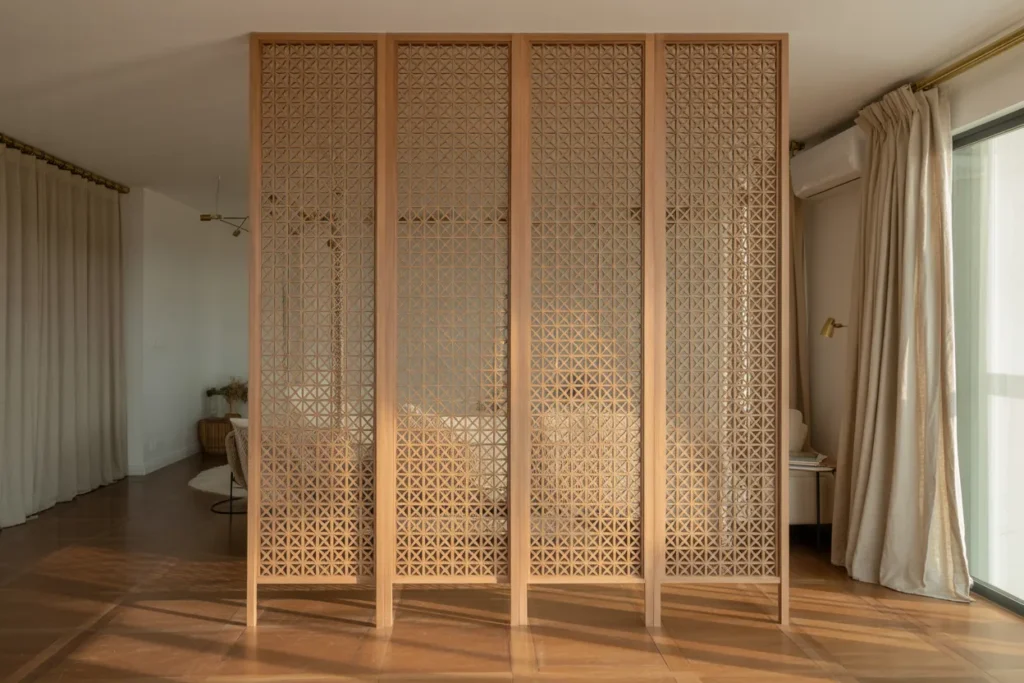
Vibe: Flexible and intentional.
Why it works: Some open concept spaces benefit from occasional division—reducing noise when someone is working, creating visual separation during entertaining, or defining sleeping zones in studios. Lightweight, semi-transparent dividers maintain light and sightlines while offering functional flexibility. The key is choosing designs that feel intentional rather than institutional (avoid heavy-duty rolling screens or hospital-style curtains).
How to get it: Invest in one movable divider that matches your aesthetic—a wooden lattice screen, a tension-rod curtain with linen panels, or a sliding barn door in natural wood. Position it at the natural threshold between zones but keep it light enough to move, fold, or tie back completely when not in use.
💡 Quick Win: A tall wooden room divider screen ($150–350) offers flexible privacy without installation and can be repositioned or removed as needs change.
How to Start Your Open Concept Living and Dining Room Transformation
The most common mistake in open concept design is failing to create visual continuity while attempting to define zones. Homeowners often choose a vibrant accent color for the dining wall, then select entirely different furniture styles for living and dining, resulting in a space that feels fragmented rather than cohesive. Fix this by maintaining neutral base tones across both zones and letting shape, texture, and material variation do the work of definition. A soft greige living room wall with dining chairs in cognac leather and a natural oak table feels far more integrated than a greige living room next to a navy dining wall with industrial metal dining chairs. Keep color quiet. Let materials tell the story.
Three specific items under fifty dollars create immediate impact: (1) a natural jute rug for the dining area (five-by-eight foot quality jute runs eighty to one hundred fifty dollars), (2) a set of neutral linen chair cushion covers for existing dining chairs (thirty to fifty dollars for a set of four), and (3) a collection of ceramic serving pieces, bowls, or vases in neutral tones to place on dining table and living room shelves (grouping three to five pieces from thrift stores or discount retailers runs thirty to sixty dollars total). These three categories address flooring, seating, and styling—the core elements of open concept definition