
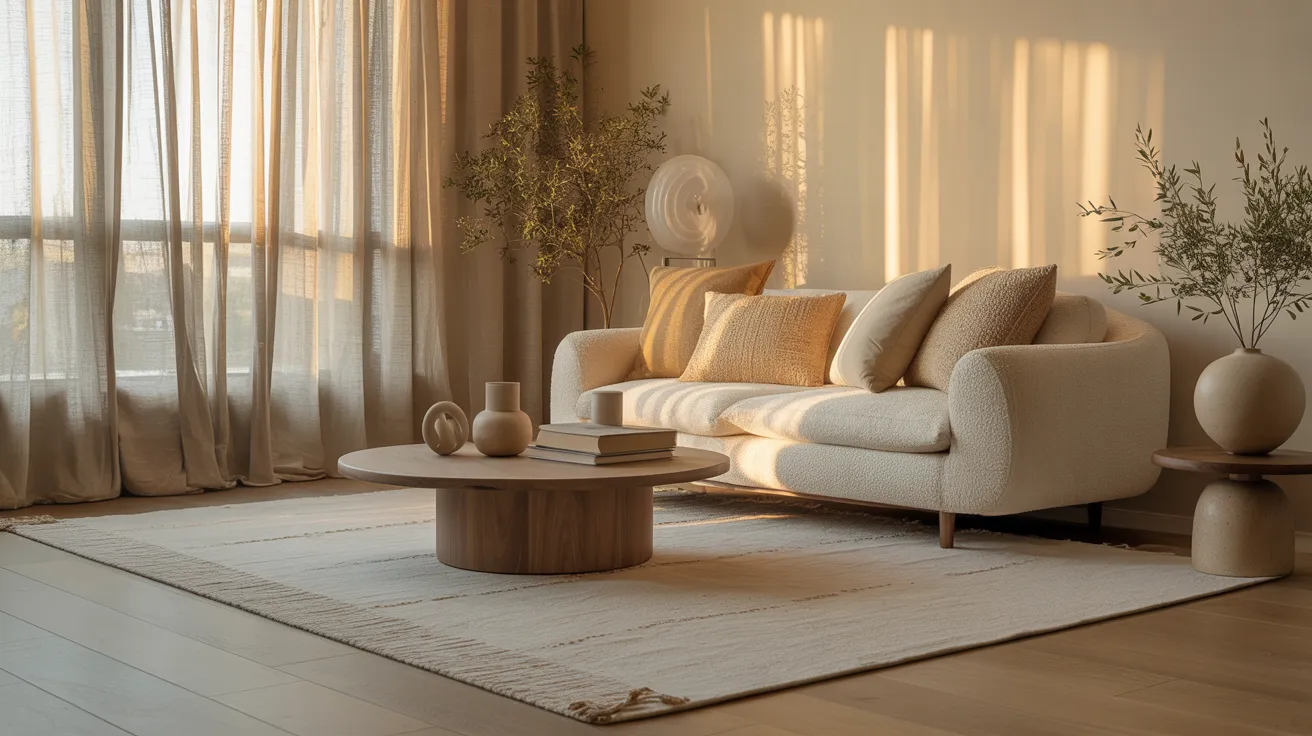
21 Cozy Minimalist Living Room Ideas for Apartments
A cozy minimalist living room blends clean lines and uncluttered design with warmth, texture, and comfort. These 21 cozy minimalist living room ideas for apartments will show you how to create a calm, stylish space that feels soft instead of stark.The best cozy minimalist interiors feel quiet in the best possible way.
Explore More: 15 Independence Day Wreath Ideas Full of Charm
Why Cozy Minimalist Living Room Style Works So Well
Cozy minimalism evolved from Scandinavian and Japandi interiors, combining functional simplicity with warmth and emotional comfort. Unlike strict minimalism that can feel cold or overly sparse, cozy minimalist living rooms focus on softness, livability, and tactile design. The look balances negative space with layered textures so the room feels restful rather than empty.
The palette centers around warm white, greige, oatmeal, mushroom taupe, soft charcoal, and muted clay tones. Materials matter just as much as color. Think unfinished oak, boucle upholstery, brushed brass, linen drapery, matte ceramics, wool rugs, and woven rattan accents. These materials absorb light softly and add dimension without visual clutter.
1. A Low Modular Sofa for Small Apartments
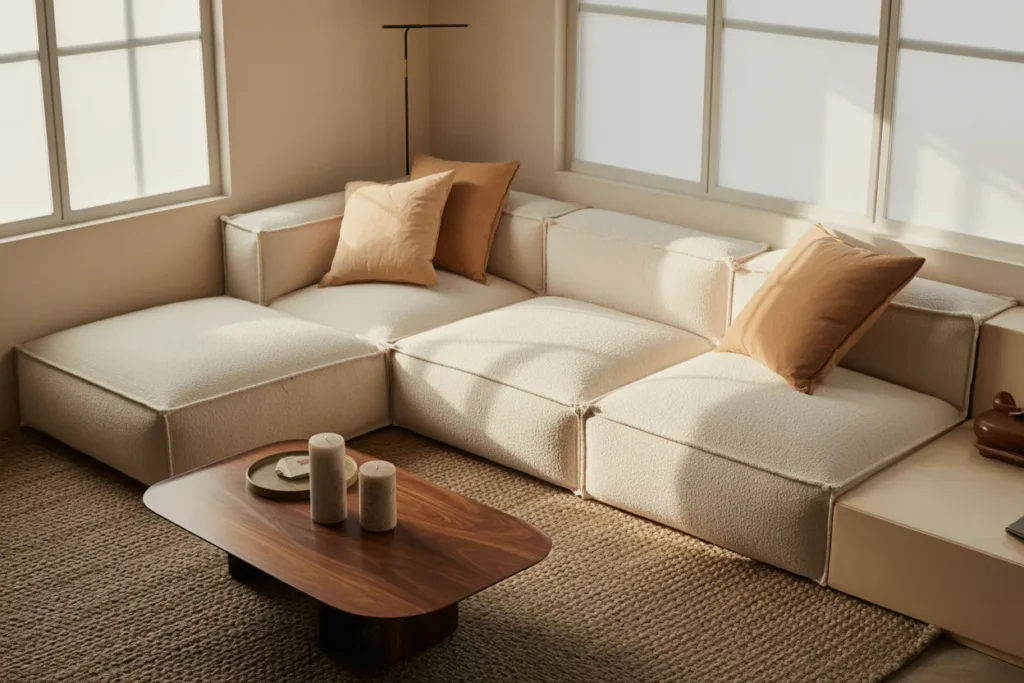
Vibe: The space feels grounded and deeply restful.
Why it works: Low-profile furniture visually expands ceiling height in compact apartments. Modular sofas also create flexibility without bulky visual mass. Boucle fabric introduces texture that keeps decor minimalist spaces from appearing flat or sterile.
How to get it: Choose sofas with exposed legs and seat heights under 18 inches. Keep at least 12 inches of visible floor around the sofa perimeter to maintain openness.
💡 Quick Win: Swap bulky recliners for one streamlined accent chair to instantly improve apartment.
2. Floating Oak Shelves for Minimalist Room Decor
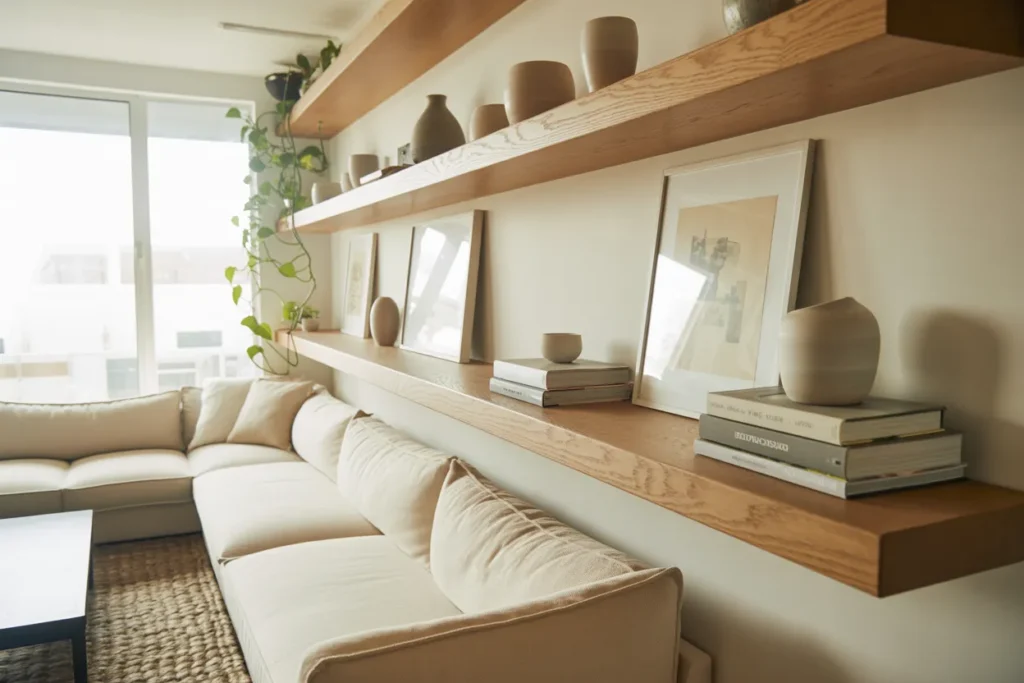
Vibe: The atmosphere feels airy yet grounded with controlled visual rhythm.
Why it works: Floating shelves keep floor space visually open, which matters in minimalist living room small spaces. White oak adds organic warmth while the negative space between decor objects prevents visual crowding. Minimalist cozy interiors rely on controlled styling rather than empty surfaces.
How to get it: Style shelves using the rule of thirds — one tall object, one stacked horizontal object, and one sculptural piece per shelf section. Limit decor to neutral ceramics and natural material is for cohesion.
3. Warm Greige Walls With Soft Linen Layers
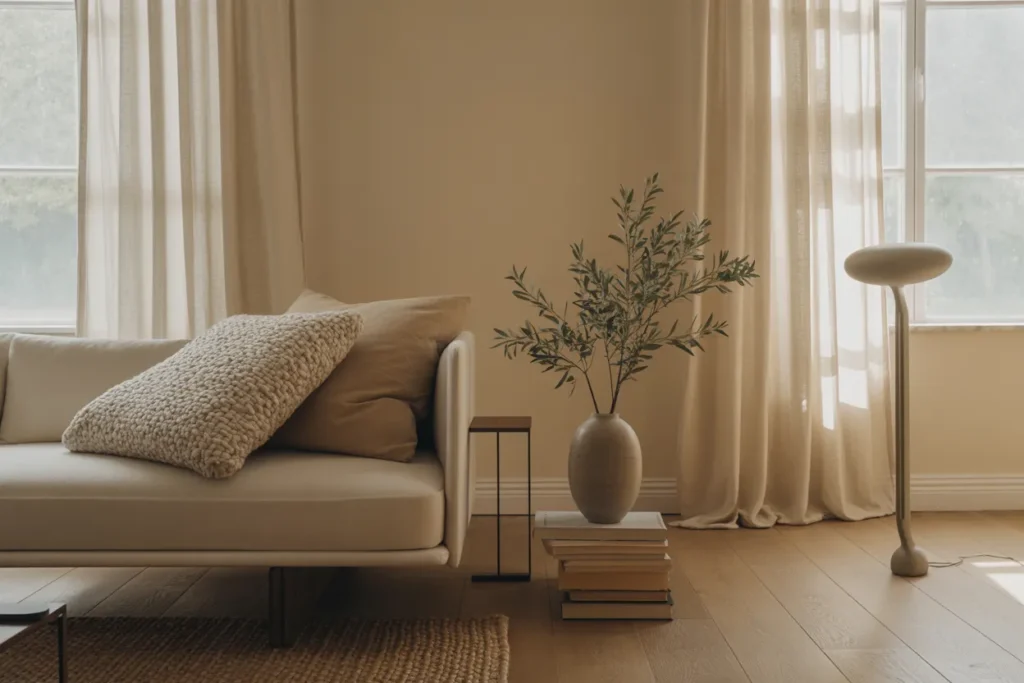
Vibe: The room feels hushed and sun-warmed without looking overly styled.
Why it works: Warm greige acts as a bridge between beige and gray, making minimalist room decor feel softer and more livable. Linen curtains diffuse daylight instead of blocking it sharply, while layered textiles add dimension through texture rather than color contrast. The visual weight stays low because the furniture profile remains clean and understated.
How to get it: Use a paint shade close to Sherwin-Williams Accessible Beige or a muted mushroom greige. Pair it with ivory linen drapes mounted close to the ceiling to visually elongate apartment walls. Stick to tonal layering instead of adding bold accent colors.
💡 Quick Win: Replace bright white curtains with natural flax linen panels for an instant cozy minimalist upgrade.
4. Oversized Rugs to Expand Small Living Rooms
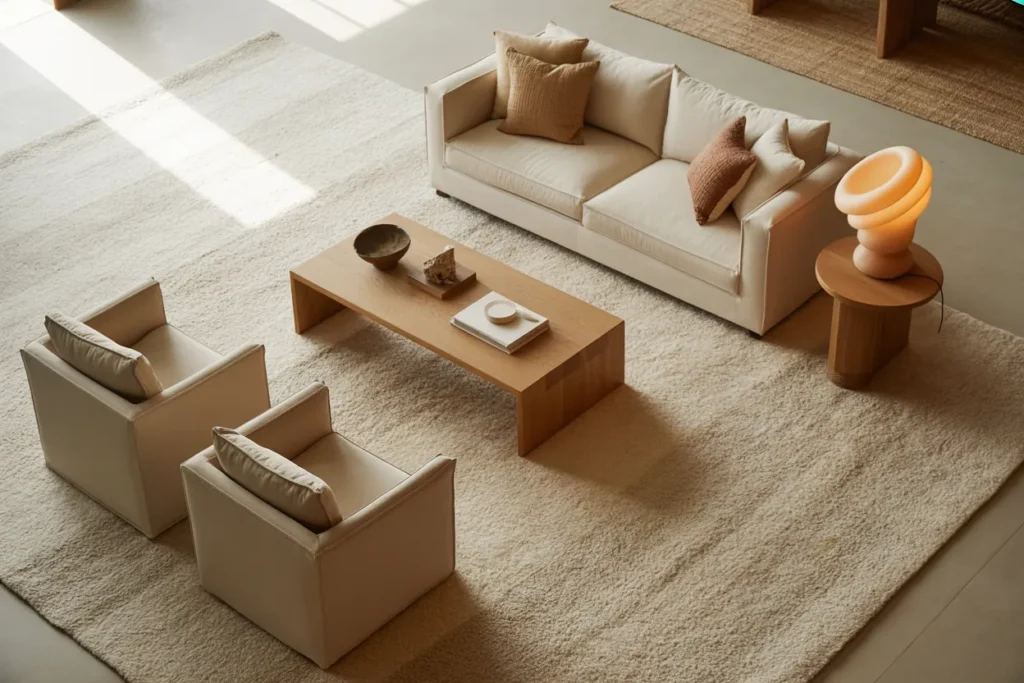
Vibe: The room feels cohesive and visually larger.
Why it works: Small rugs visually chop up apartment layouts. An oversized area rug unifies the seating zone and creates a larger visual footprint. Cozy minimalist living rooms benefit from continuous surfaces that reduce visual fragmentation.
How to get it: Your rug should extend at least 8 inches beyond each major furniture piece. Choose low-pile wool or flatwoven textures in tonal neutrals.
5. Soft Ambient Lighting Instead of Harsh Overheads
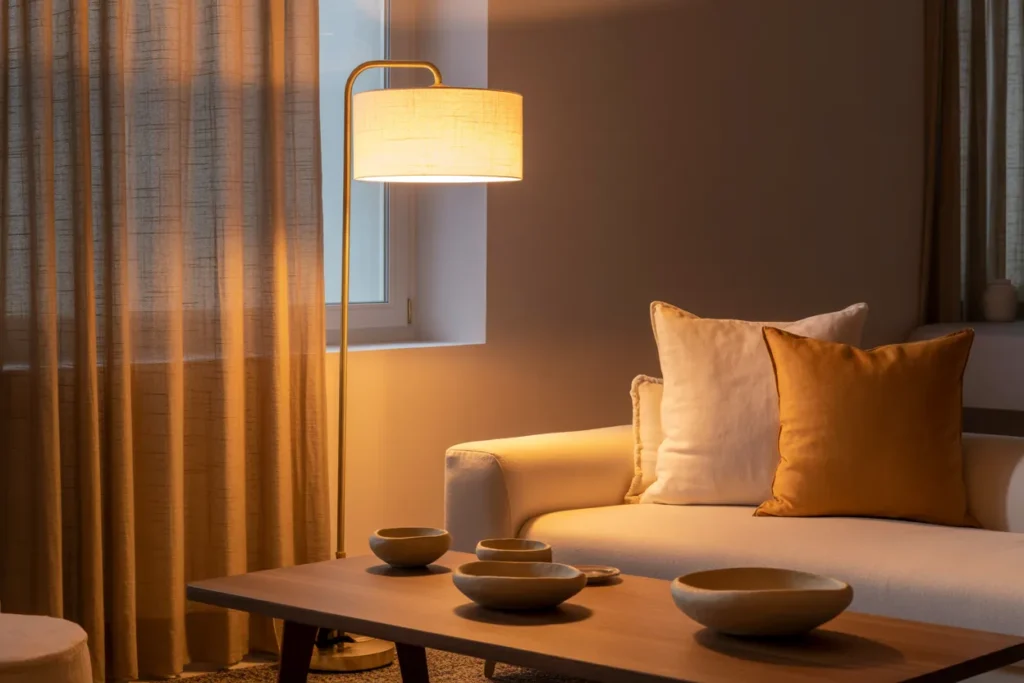
Vibe: The space feels luminous and deeply calming at night.
Why it works: Overhead apartment lighting often flattens texture and creates harsh contrast. Cozy minimalist living room styling depends on soft light pools that highlight natural materials gently. Warm-toned bulbs around 2700K create a more relaxed emotional atmosphere.
How to get it: Use at least three light sources at varying heights — a floor lamp, table lamp, and wall sconce. Avoid cool LED bulbs that make beige tones appear gray.
💡 Quick Win: Install plug-in wall sconces instead of relying solely on ceiling fixtures.
6. Slim Furniture Layouts for Better Apartment Flow
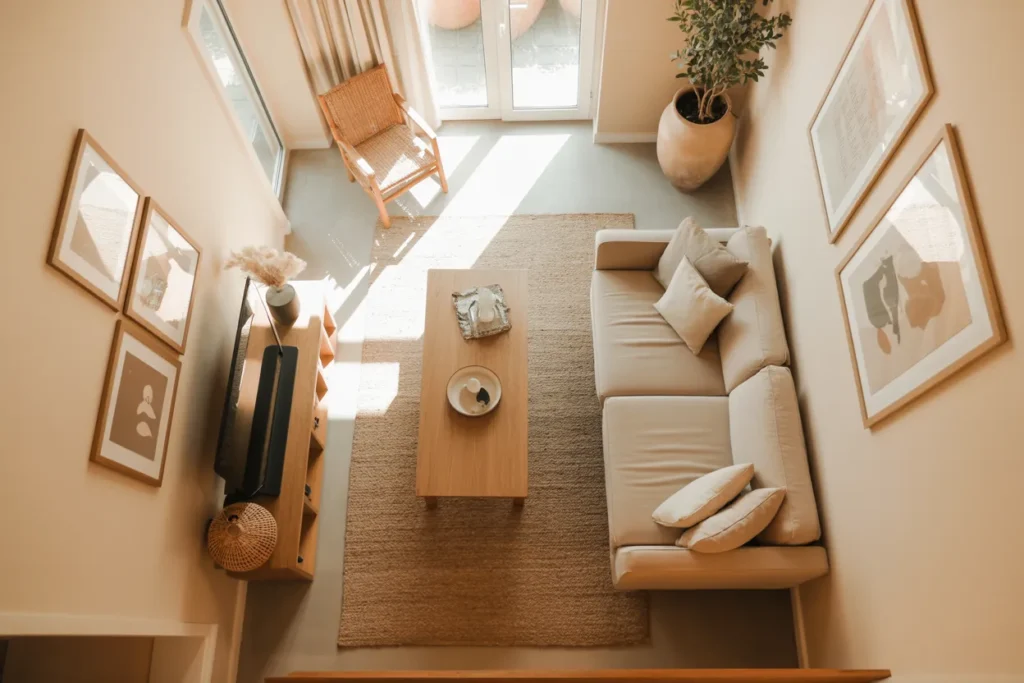
Vibe: The room feels open and breathable despite limited square footage.
Why it works: Minimalist living room small spaces succeed when traffic flow stays uninterrupted. Slim furniture legs and open bases reduce visual heaviness while creating the illusion of more floor area. Strategic spacing matters more than room size.
How to get it: Leave at least 30 inches for walking paths between major furniture pieces. Avoid oversized sectionals that consume too much negative space.
7. Dark Accent Detail
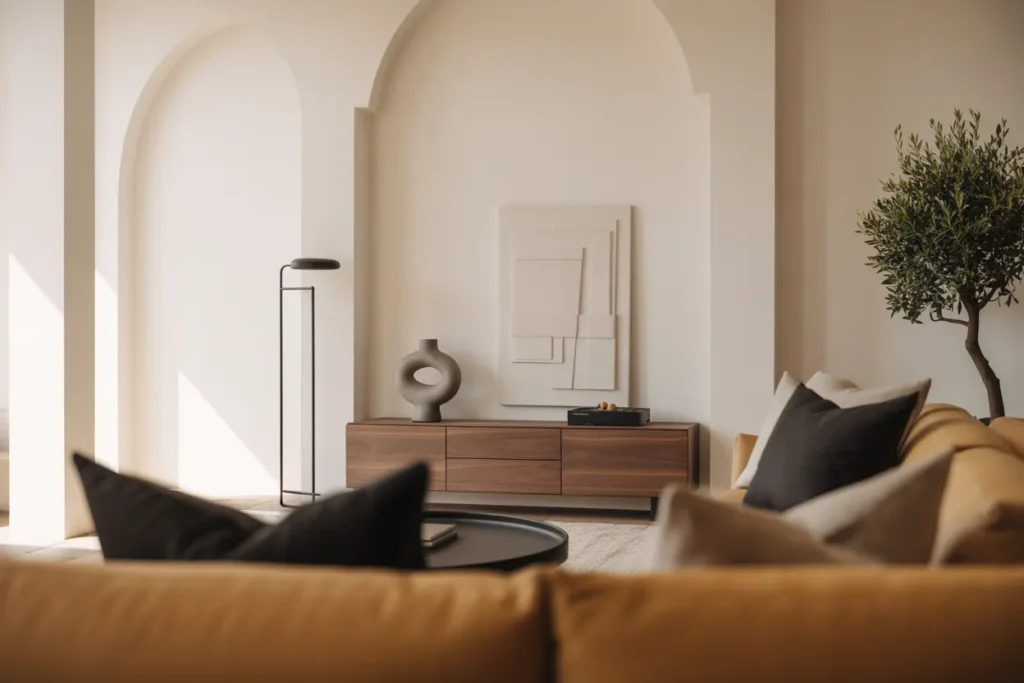
Vibe: The atmosphere feels balanced and quietly dramatic
Why it works: Dark accents anchor light minimalist rooms and create visual contrast without clutter. Black metal and charcoal textiles add definition while warm whites keep the space soft. This balance prevents minimalism from feeling washed out.
How to get it: Use black sparingly in only two or three focal points. Repeating dark accents consistently helps create rhythm throughout the room.
8. Natural Wood Tones That Warm Minimalist Spaces
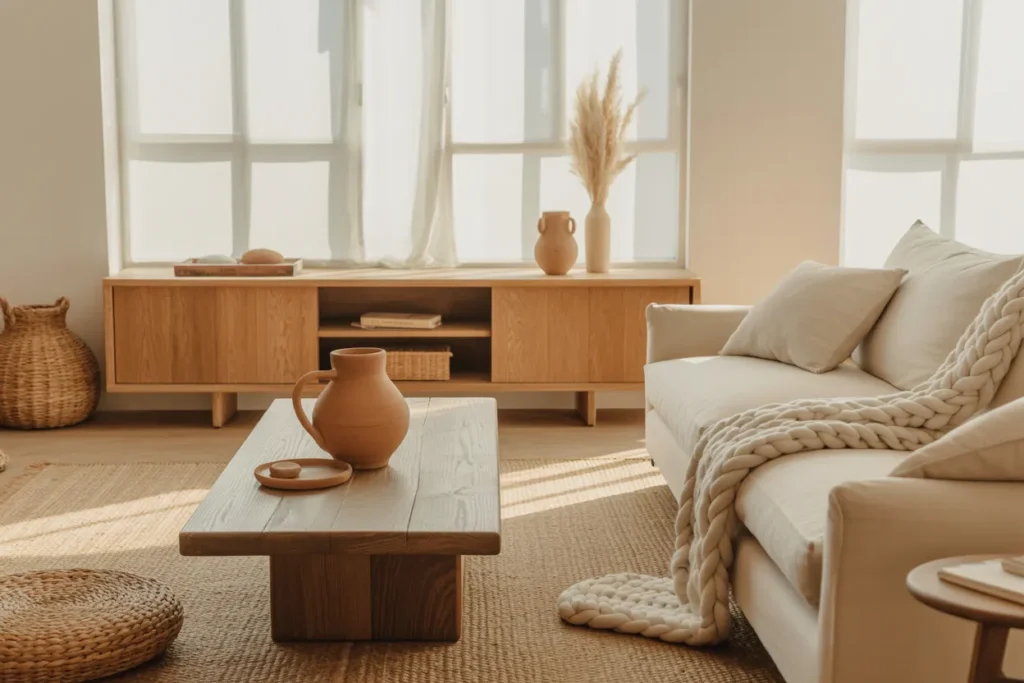
Vibe: The room feels grounded and softly organic.
Why it works: Natural wood introduces warmth and subtle variation into minimalist room decor. Unfinished oak reflects light softly compared to glossy dark woods, making apartment spaces feel larger and more inviting. Organic grain patterns also add movement without visual noise.
How to get it: Choose one dominant wood tone and repeat it consistently across furniture pieces. Avoid mixing orange-toned oak with cool gray woods.
💡 Quick Win: Add a light oak tray or stool to soften a room filled with white surfaces
9. Layered Neutral Textiles for a Cozy Minimalist Look
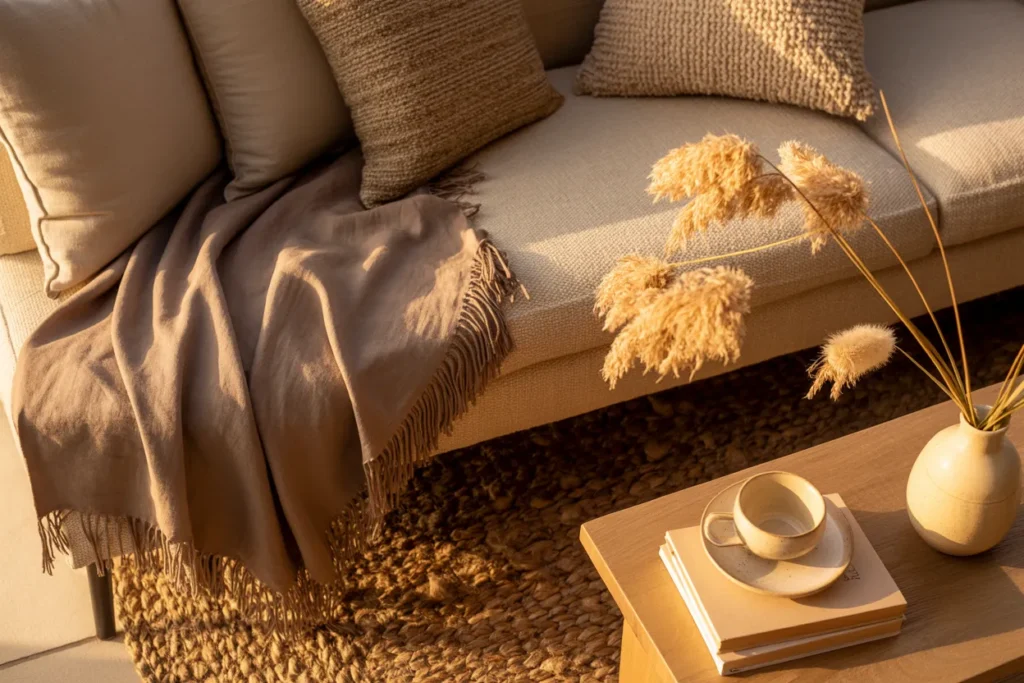
Vibe: The room feels layered and quietly comforting.
Why it works: Texture layering replaces the need for excessive decor in cozy minimalist interiors. Combining matte linen with plush boucle and woven wool creates depth through tactile contrast. The limited palette keeps the room visually cohesive even with multiple fabrics present.
How to get it: Stick to three core textures maximum so the room feels intentional rather than busy. Use one woven element, one soft upholstery fabric, and one lightweight textile like linen.
10. Sculptural Decor Instead of Cluttered Accessories
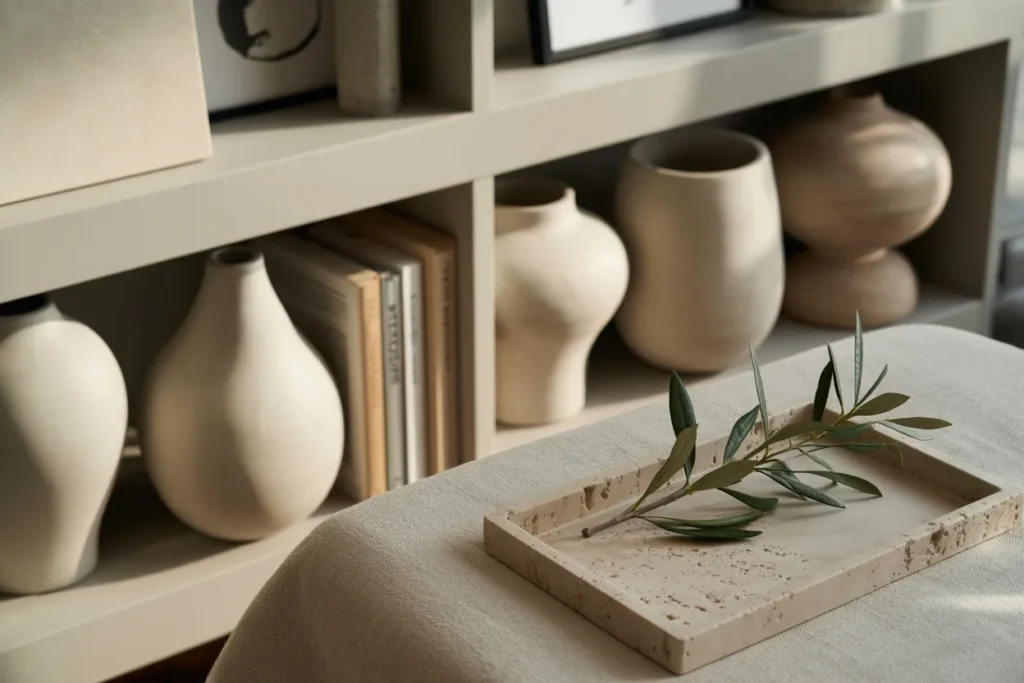
Vibe: The styling feels intentional and quietly refined.
Why it works: Minimalist room decor relies on fewer but more impactful objects. Sculptural shapes create interest through form and silhouette rather than excess quantity. Matte finishes prevent reflective glare that can make small rooms feel busy.
How to get it: Style surfaces using odd-number groupings and vary object heights slightly. Leave visible empty space around every accessory cluster
11. Sheer Curtains That Maximize Apartment Light
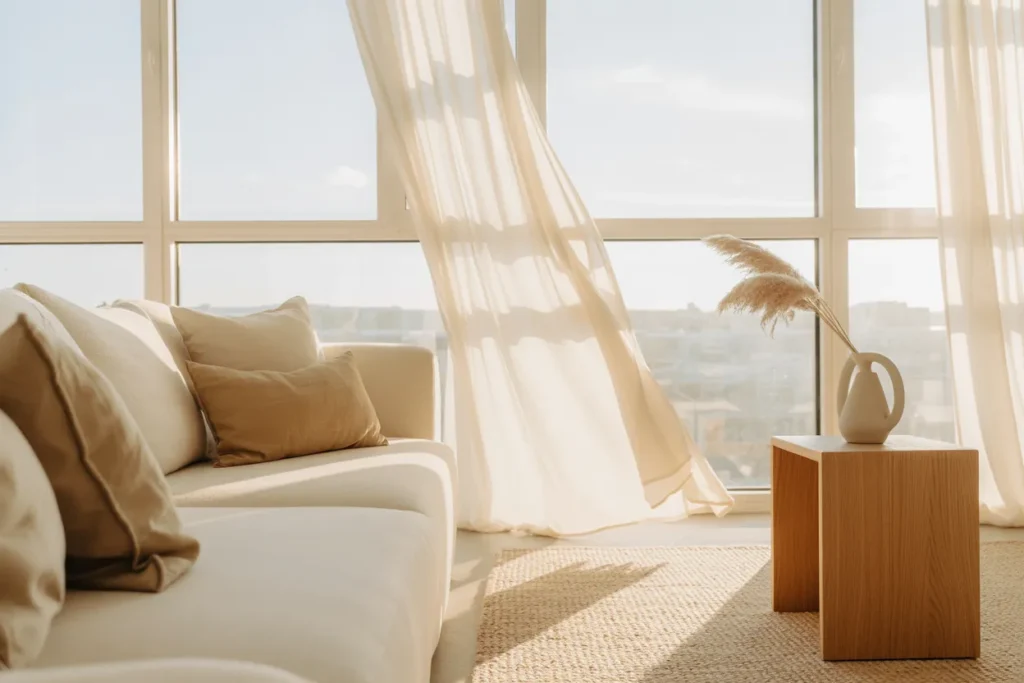
Vibe: The room feels luminous and quietly open.
Why it works: Sheer curtains diffuse harsh apartment lighting while maintaining brightness. This softens shadows and helps minimalist spaces feel warmer. Vertical drapery lines also visually increase ceiling height in compact rentals.
How to get it: Hang curtain rods 6–8 inches above the window frame and extend them wider than the window itself for a fuller effect.
Shop The Look
- White sheer curtain panels
- Oak side table
- Linen throw pillows
- Woven jute rug
- Ceramic table vase
12. Compact Round
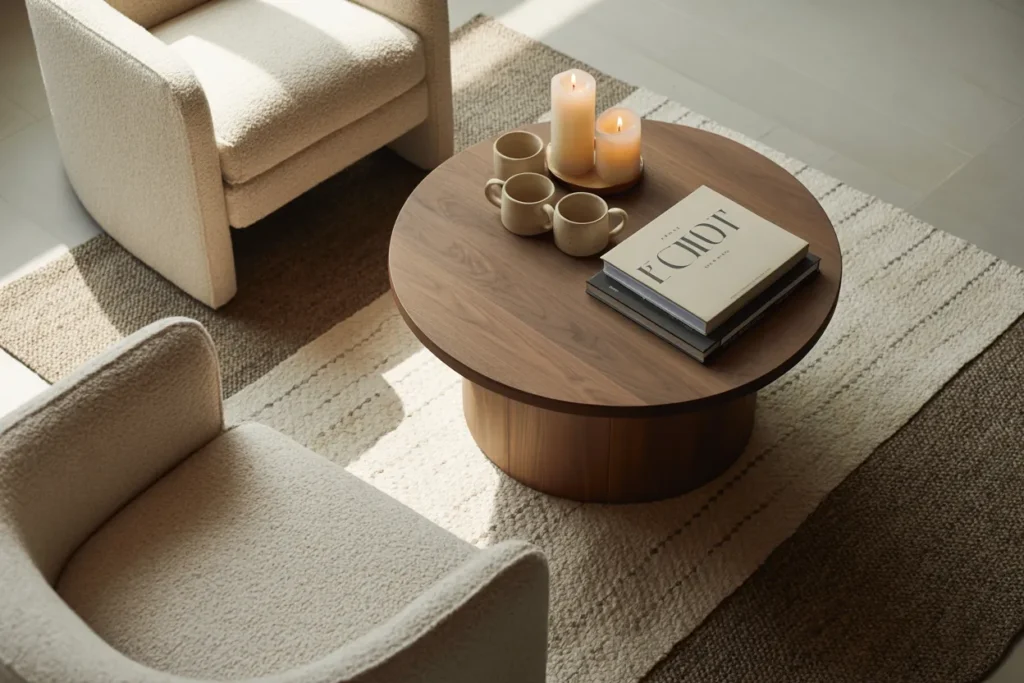
Vibe: The room feels fluid and easy to move through.
Why it works: Rounded furniture edges improve movement in small apartment layouts while softening rigid minimalist lines. Circular forms also distribute visual weight more evenly than boxy furniture.
How to get it: Choose a coffee table around 30–36 inches wide for compact spaces. Leave enough room around it for easy circulation.
💡 Quick Win: Replace sharp-edged side tables with rounded silhouettes for an instant softer look.
13. Tonal Beige Layering for a Soft Minimalist Home
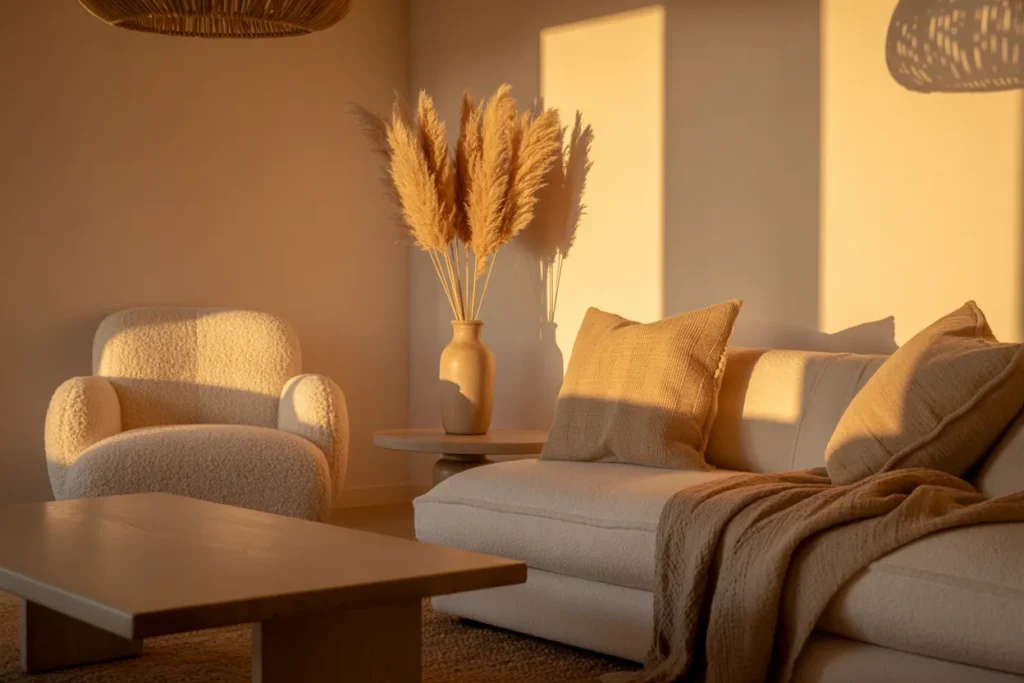
Vibe: The room feels cocooning without feeling heavy.
Why it works: Tonal layering creates depth through subtle shifts in hue instead of bold contrast. This keeps minimalist cozy interiors visually soft while still feeling dimensional.
How to get it: Combine at least three beige variations — one warm cream, one camel tone, and one taupe shade — across upholstery and textiles.
14. Hidden Storage That Keeps Surfaces Calm
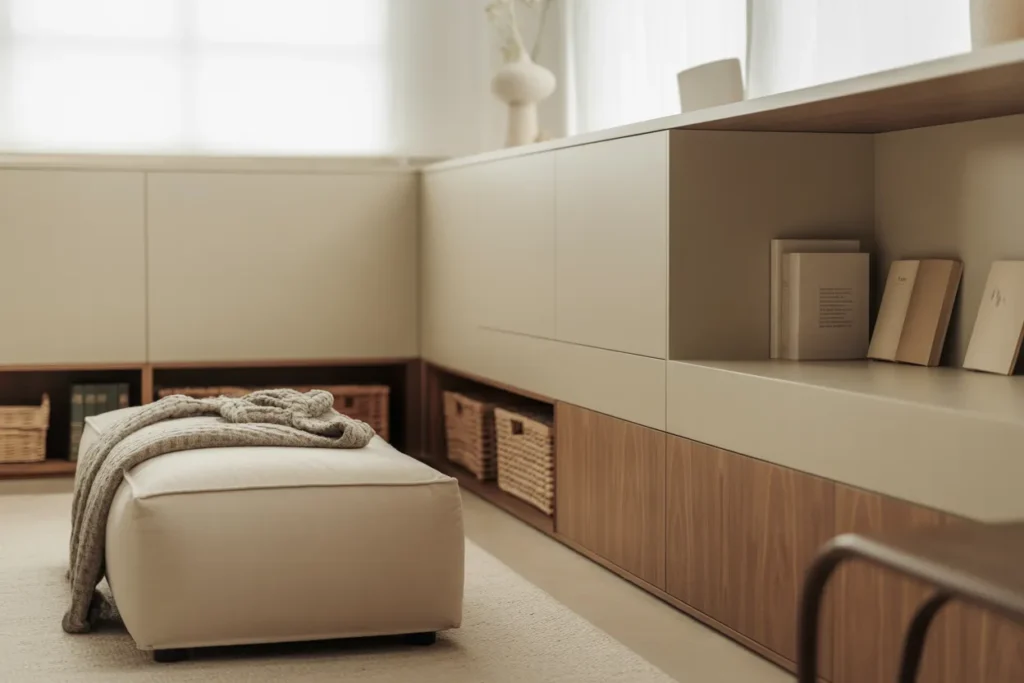
Vibe: The room feels orderly and mentally restful.
Why it works: Visual clutter disrupts the calm rhythm essential to minimalist room decor. Hidden storage maintains clean sightlines while still supporting real apartment living needs.
How to get it: Prioritize furniture that performs double duty, like lift-top coffee tables or storage benches. Keep open shelving minimal
15. Black-Framed Artwork for Subtle Contrast
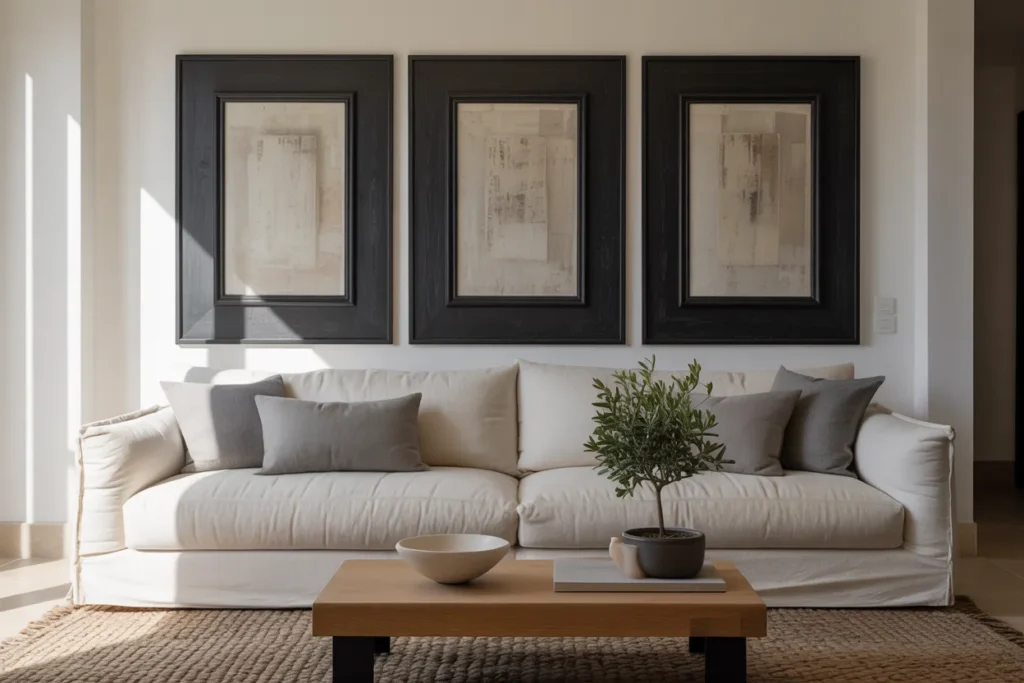
Vibe: The space feels structured yet relaxed.
Why it works: Thin black frames introduce definition without overwhelming minimalist interiors. Large-scale artwork also prevents walls from feeling visually empty while maintaining simplicity.
How to get it: Choose one oversized print instead of multiple small frames. Abstract texture art works especially well in cozy minimalist homes.
Shop The Look
- Oversized framed neutral artwork
- Black metal picture frame
- Cream linen sofa
16. Warm Wood Slat Details for Texture
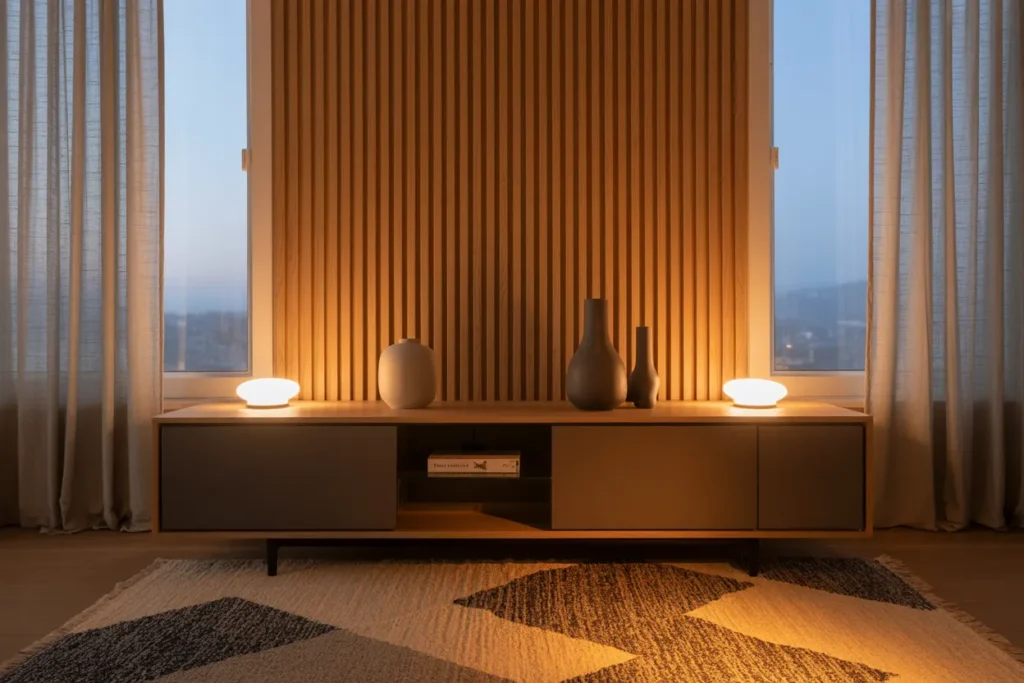
Vibe: The room feels architectural and warmly layered.
Why it works: Vertical slat details add texture without cluttering minimalist spaces. The repetitive linear pattern creates rhythm while warm oak tones soften modern architecture.
How to get it: Use peel-and-stick slat panels in rental apartments for a low-commitment upgrade. Keep surrounding decor restrained.
💡 Quick Win: Install slat panels only behind the TV wall for maximum impact on a budget.
17. Soft Green Accents for Organic Warmth
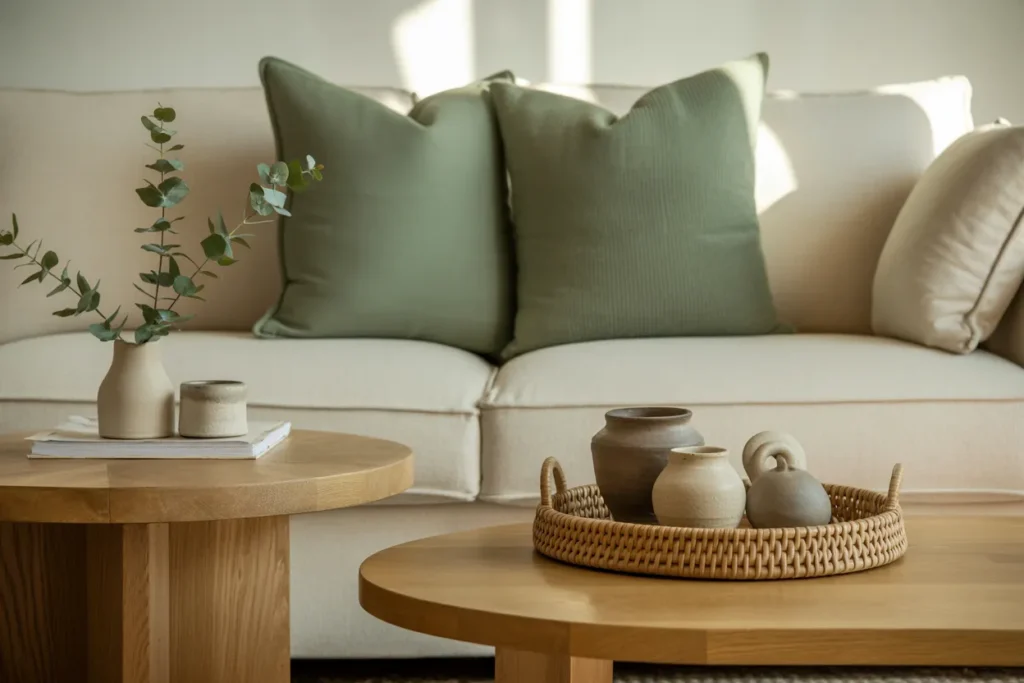
Vibe: The room feels fresh and quietly restorative.
Why it works: Muted green tones connect minimalist interiors to nature without overpowering the palette. Sage works particularly well with warm woods and cream upholstery because the undertones remain soft.
How to get it: Limit green accents to textiles and botanicals so the palette remains balanced. Choose muted eucalyptus or sage instead of bright emerald tones
18. A Single Statement Floor Lamp
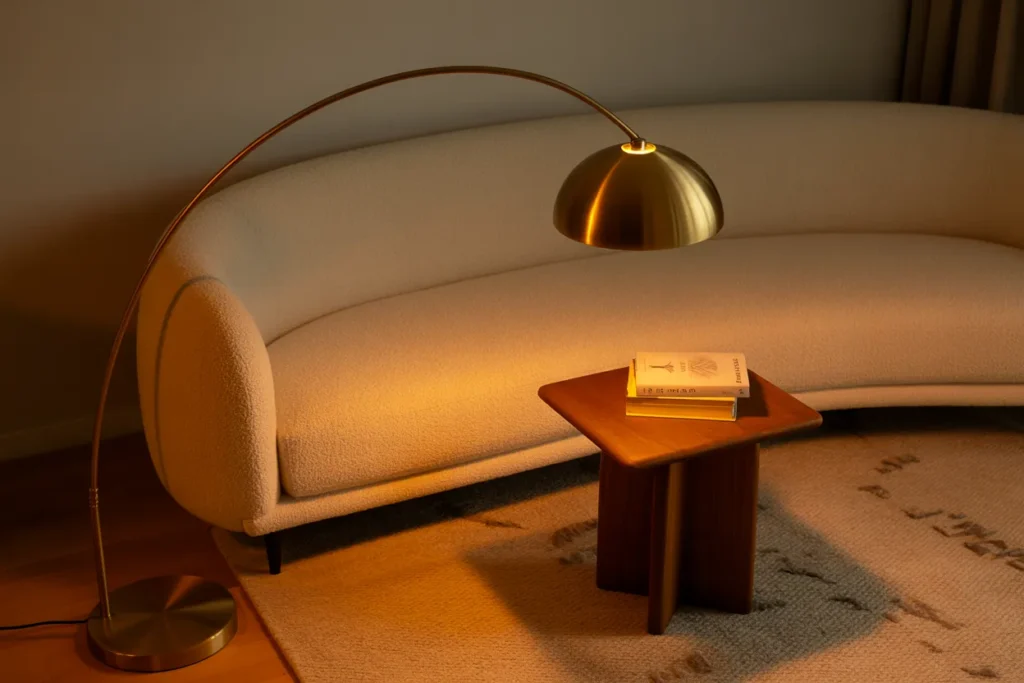
Vibe: The room feels intimate and softly dramatic.
Why it works: One sculptural light fixture can replace multiple smaller decorative pieces in decor minimalist interiors. Curved silhouettes soften angular furniture while layered light improves atmosphere.
How to get it: Choose warm brass or matte black finishes with fabric shades rather than exposed cool-toned bulbs.
Shop The Look
- Brass arc floor lamp
- Boucle accent chair
- Walnut side table
- Neutral textured rug
- Minimalist coffee table books
19. Monochrome Cream Styling for Calm Visual Flow
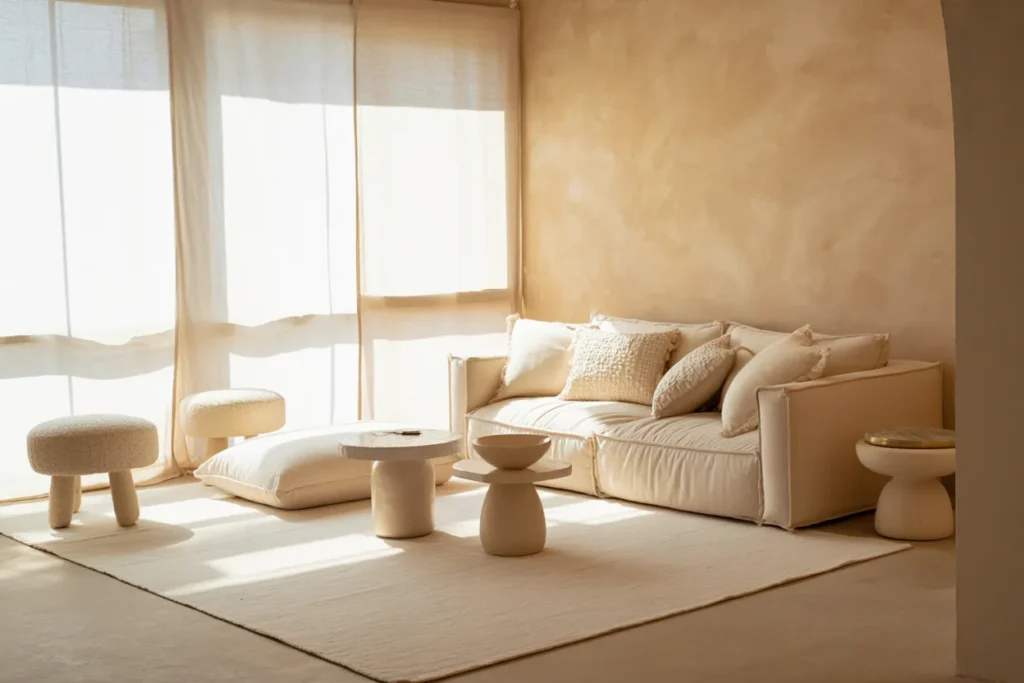
Vibe: The space feels still and meditative.
Why it works: Monochrome palettes reduce visual interruption, which makes small apartments feel larger. Texture variation becomes more important when color contrast is minimal.
How to get it: Use matte finishes and woven textiles to prevent monochrome rooms from feeling flat. Introduce subtle tonal shifts every few feet.
Shop The Look
- Cream area rug
- Ivory boucle stools
- Linen curtain panels
- Ceramic bowl decor set
- Textured plaster wall art
20. Cozy Reading Corners in Tiny Apartments
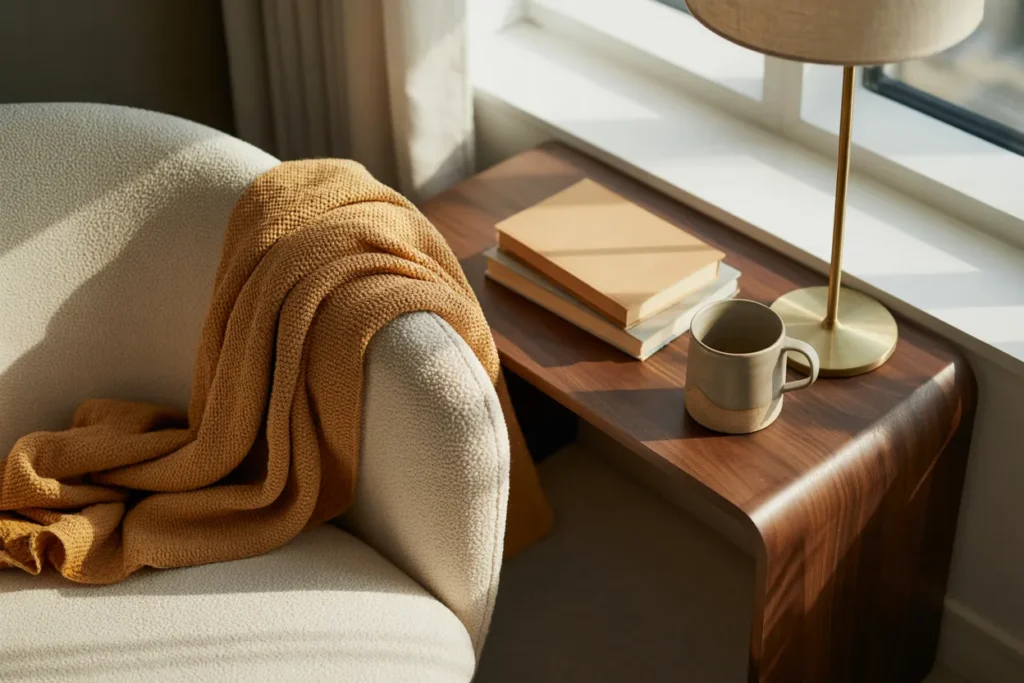
Vibe: The corner feels quiet and deeply personal.
Why it works: Small dedicated zones make studio apartments feel more intentional and functional. A reading nook creates emotional warmth without requiring major square footage.
How to get it: Use one compact accent chair with a slim floor lamp and a small drink table near natural light for an easy apartment setup.
💡 Quick Win: Add a battery-powered wall sconce beside a reading chair if outlets are limited.
21. Minimalist Cozy Living Rooms With Natural Stone Accents
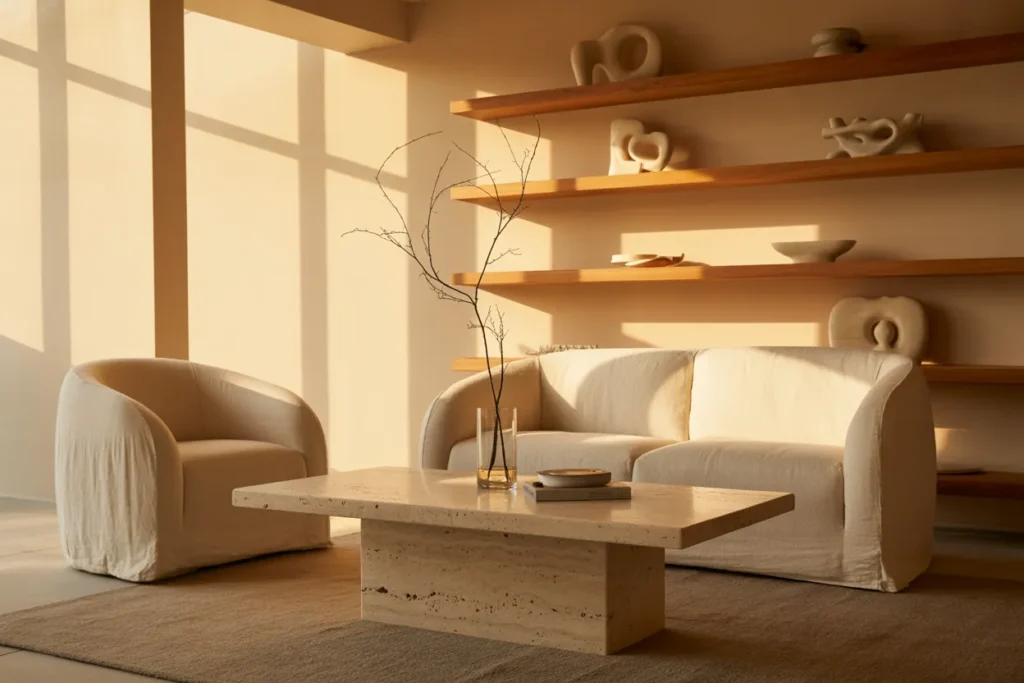
Vibe: The room feels grounded with subtle luxury.
Why it works: Natural stone introduces texture and permanence into minimalist living rooms without adding clutter. Travertine’s matte surface and soft movement pair naturally with warm woods and neutral textiles.
How to get it: Incorporate stone through one statement piece only, like a side table or tray, to avoid making apartment spaces feel heavy
How to Start Your Cozy Minimalist Living Room Transformation
Start with your wall color first. A warm neutral paint like Swiss Coffee, Accessible Beige, or a soft mushroom greige instantly changes how light behaves in the room and creates the foundation for every furniture and textile choice afterward.
The most common mistake is choosing cool gray furniture and pairing it with warm beige decor. The undertones fight each other and make minimalist rooms feel disconnected instead of calming. Stick to either consistently warm undertones or intentionally balanced neutrals.
Three affordable upgrades under $50 can dramatically shift the mood of a minimalist home: an oversized linen-look pillow cover set, a matte ceramic vase with eucalyptus stems, and a warm LED paper lantern table lamp. Each adds texture without cluttering the room.
A realistic apartment transformation usually happens in layers over several months. A weekend refresh with paint, lighting, and textiles may cost $300–$700, while a fully redesigned cozy minimalist living room with new furniture and rugs can range from $2,000–$6,000 depending on quality and square footage
3 Comments