
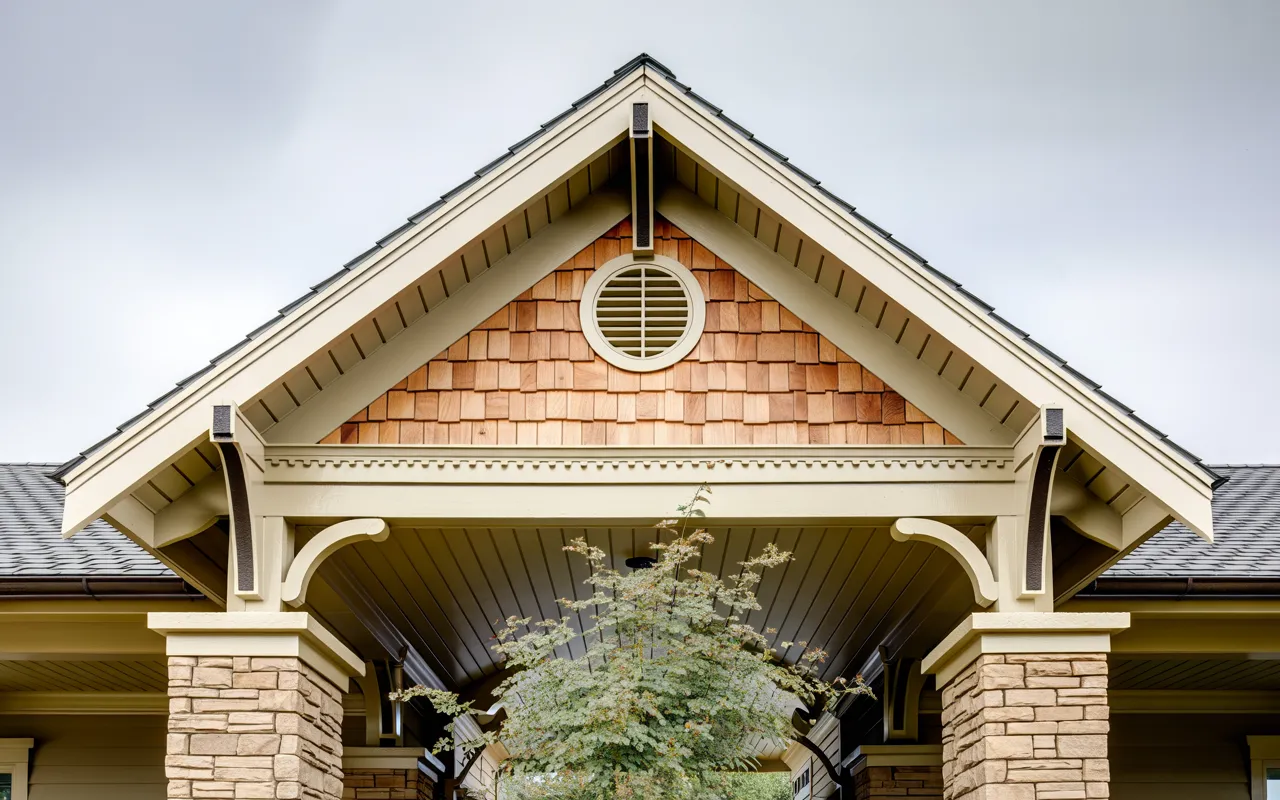
15 Breathtaking Craftsman Exterior Ideas with Classic Charm
Craftsman exteriors celebrate handcrafted details, natural materials, and a philosophy that quality outlasts trends, creating homes that feel grounded and welcoming. This article delivers fifteen distinct Craftsman exterior ideas that honor this heritage while offering fresh inspiration for your home’s transformation.
The signature warmth of a Craftsman home feels like an invitation—porch light spilling onto stone steps, wood grain catching the afternoon sun, and deep eaves offering shelter from the elements. There’s an honesty to the architecture, where structural details become decoration and every material tells a story of craftsmanship. Here are fifteen ideas worth saving—and stealing.
Why Craftsman Style Works So Well
The Craftsman movement emerged as a deliberate rebellion against the mass-produced ornamentation of the Victorian era. Rooted in the Arts and Crafts philosophy championed by Gustav Stickley and the Greene brothers, it prioritized handcrafted quality over industrial quantity, celebrating the skill of artisans in an age of assembly lines. This architectural style was never just about aesthetics—it was a cultural statement that the homes we build should reflect the values we hold.
The material palette anchors the style in nature. Colors draw from the landscape: sage green, russet brown, warm greige, deep navy, and soft taupes that shift with the light. Textures layer across the facade—horizontal siding, cedar shakes, stacked stone foundations, and brick piers. Tapered columns, exposed rafter tails, and decorative knee brackets provide the architectural punctuation that makes the style instantly recognizable.
This resurgence aligns with a cultural shift toward authenticity and permanence. Post-pandemic homeowners are investing in spaces that feel stable, grounded, and built to last. Pinterest searches for Craftsman exterior and Arts and Crafts home have climbed steadily as people reject disposable trends in favor of heritage design. The style offers what modern life craves: a visual anchor to something real and enduring.
Small spaces don’t just accommodate Craftsman style—they often embody its best expression. The classic bungalow, modest in footprint but rich in detail, proves that character doesn’t require square footage. For compact homes, prioritize the porch and front entry—the two elements that make the biggest curb appeal impact—and let the roof lines and column proportions tell the story.
Style at a Glance
| Element | Core Trait |
|---|---|
| Philosophy | Honest craftsmanship, nature connection, quality over quantity |
| Key Materials | Wood siding, cedar shakes, stone, brick, exposed rafters |
| Color Palette | Sage green, warm greige, deep navy, russet brown, soft taupe |
1. Tapered Porch Columns
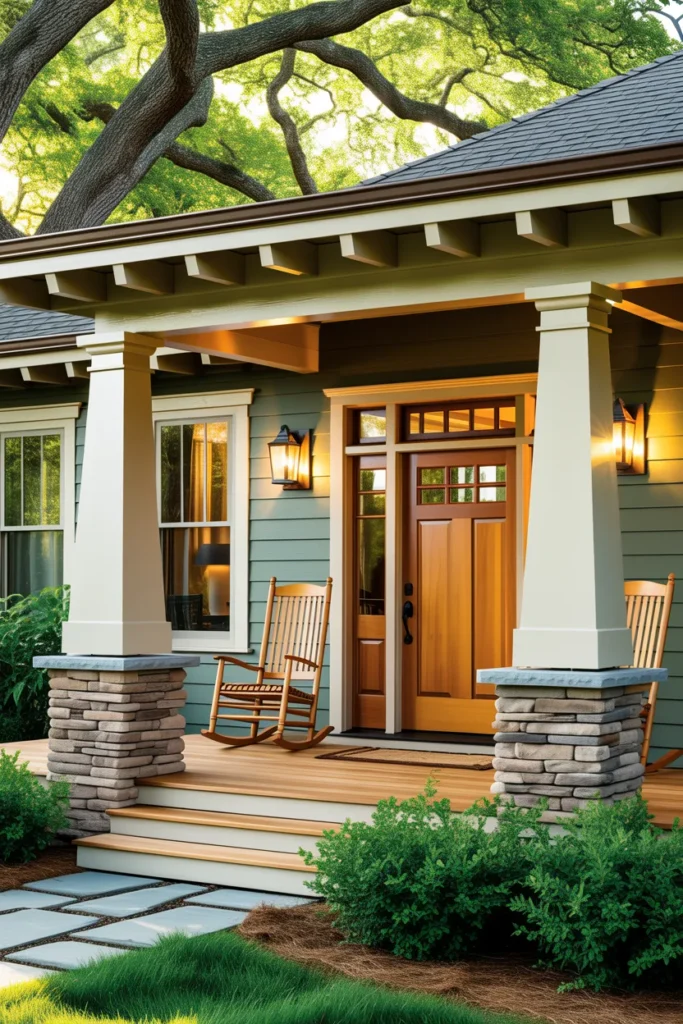
Vibe: Solid, grounded, and reassuring.
Why it works: Tapered columns are the defining feature of any Craftsman exterior, providing visual stability and architectural character that instantly signals the style. Their wider base and narrower top create a sense of grounded permanence while balancing the weight of the roof above.
How to get it: Ensure your porch columns are square, not round, and visibly taper from a broader base to a narrower top. Set them on raised stone or brick piers that elevate the columns above the porch floor for an authentic craftsman look.
💡 Quick Win: If replacing columns isn’t in the budget, add decorative knee brackets beneath the eaves—they provide a classic Craftsman detail for under fifty dollars per bracket.
Shop The Look
| Product | Description |
|---|---|
| Square tapered porch column set | Fiberglass or wood square columns with tapering design |
| Stone veneer pier base kit | Stacked stone panels for column bases |
| Wood exterior front door | Stained wood door with multi-pane glass insert |
| Bronze mission-style wall lantern | Arts and Crafts outdoor wall sconce |
| Cedar rocking chair porch set | Classic wooden rocking chairs with slatted backs |
2. Exposed Rafter Tails
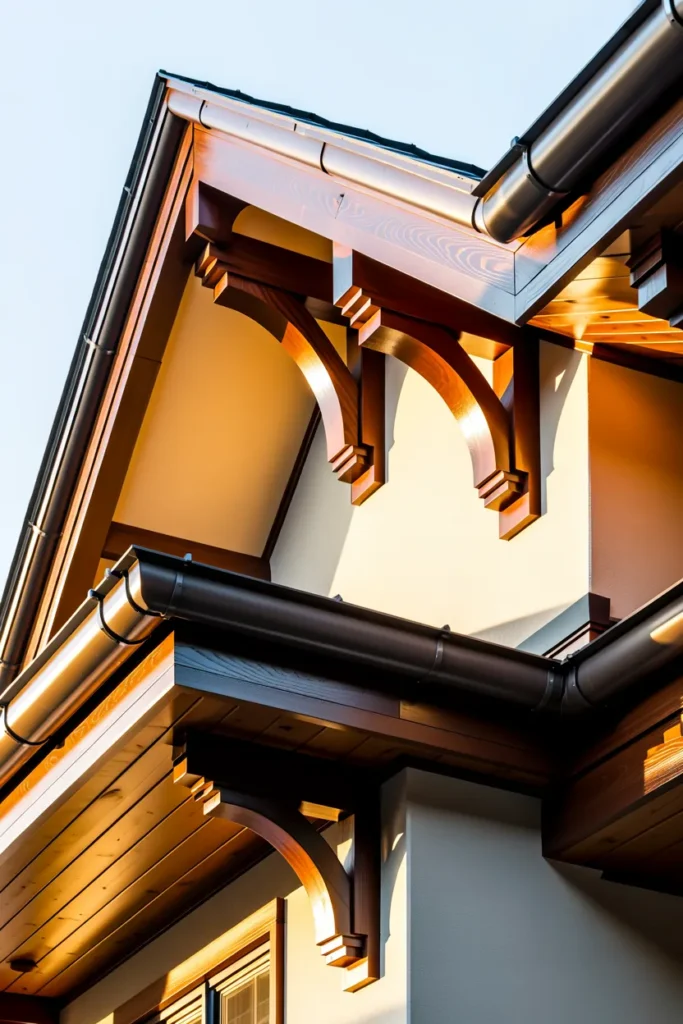
Vibe: Handcrafted, intricate, and honest.
Why it works: Exposed rafter tails celebrate structural honesty—a core Arts and Crafts principle where functional elements become visible decoration. This architectural detail adds depth to the roofline, creating visual interest through rhythm and repetition.
How to get it: If building or renovating, specify that rafters extend beyond the exterior wall and remain exposed rather than being covered with a soffit. Choose a contrasting paint color—darker than the siding—to make the rafter tails pop.
💡 Quick Win: For an existing home, add decorative corbels or knee braces beneath the eaves to simulate the look of exposed rafter tails without a full roofline renovation. Prices start around forty dollars for quality wood or composite options.
Shop The Look
| Product | Description |
|---|---|
| Decorative corbel bracket set | Wooden decorative brackets for under eaves |
| Dark exterior paint for rafters | Bronze or charcoal exterior paint for exposed tails |
| Mission-style gable vent | Decorative gable vent with Craftsman detailing |
| Paint sprayer for exterior details | Electric sprayer for precise rafter painting |
| Wood stain for rafter tails | Semi-transparent stain for natural wood rafters |
3. Sage Green Siding
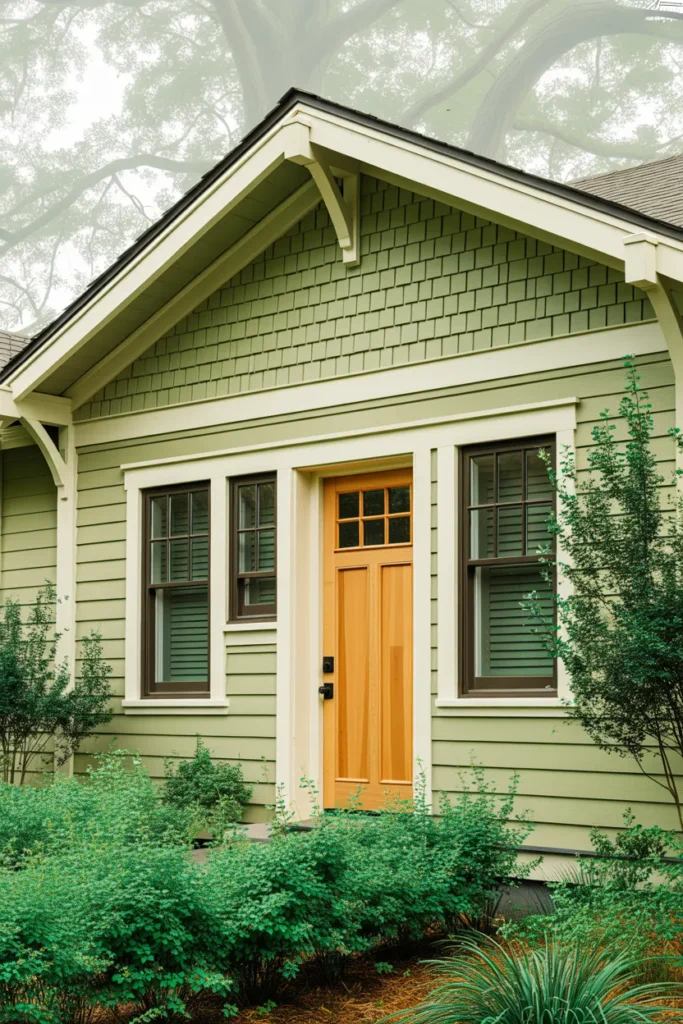
Vibe: Calm, organic, and timeless.
Why it works: Sage green connects the home to its natural surroundings, reflecting the Arts and Crafts reverence for landscape. This nature-inspired hue is historically accurate to the movement and remains one of the most popular Craftsman exterior colors.
How to get it: Choose a sage green with warm undertones rather than cool grays. Benjamin Moore’s Sage or a similar earth-toned green creates an authentic feel. Paint the body one shade and use a lighter or darker green for the trim to create subtle contrast.
💡 Quick Win: If a full siding repaint isn’t possible, consider painting just the front door and window trim in sage green accents—this gives the flavor of the style at minimal cost under one hundred dollars.
Shop The Look
| Product | Description |
|---|---|
| Sage green exterior paint | Warm olive-green paint for siding (Benjamin Moore) |
| White exterior trim paint | Crisp white for window casings and corner boards |
| Exterior paint brushes and rollers | Professional set for siding application |
| Wood front door in natural cedar | Unfinished cedar door for staining |
| Paint color samples | Sample sizes for testing sage greens |
4. Stone Foundation Accents
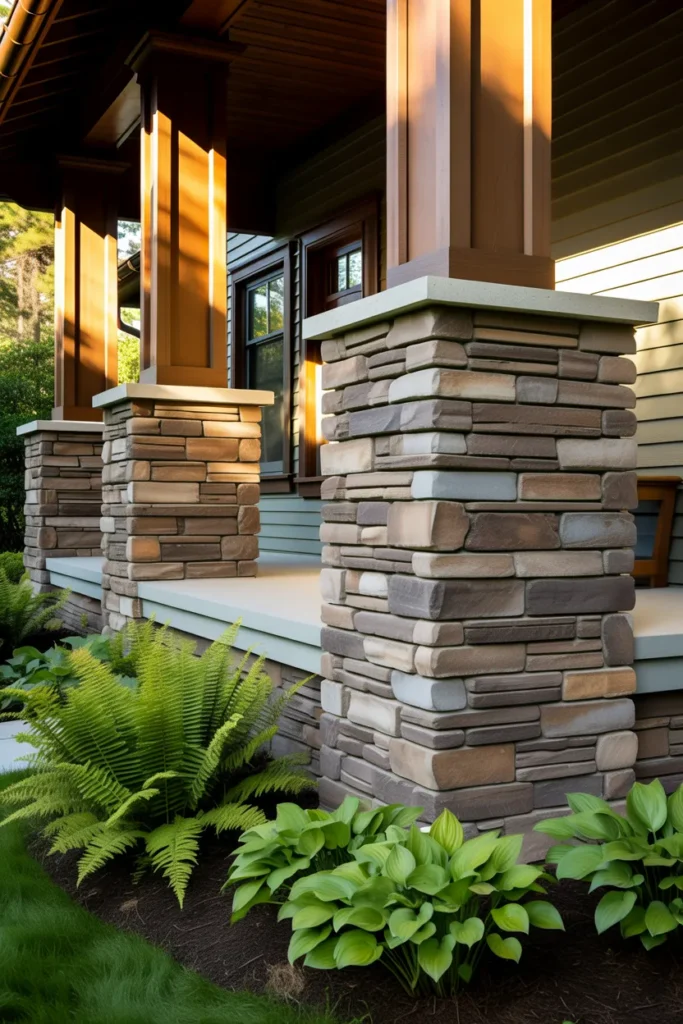
Vibe: Solid, earthy, and permanent.
READ MORE ABOUT: 18 Kitchen Banquette Seating Ideas for Modern Homes
Why it works: Stone foundations and piers root the home to the site, visually anchoring the structure while providing textural contrast to wood siding. This layering of materials—heavier at the base, lighter above—is fundamental to craftsman composition.
How to get it: Install stone veneer on the foundation walls and as the base of porch columns. Choose irregular natural stone in varied earth tones rather than uniform manufactured stone for the most authentic look.
💡 Quick Win: Stone veneer panels are available at home improvement stores starting around fifty dollars per sheet—you can add them to just the column bases or a small section of foundation for significant visual impact.
Shop The Look
| Product | Description |
|---|---|
| Stacked stone veneer panels | Natural-looking stone panels for foundations |
| Stone adhesive mortar | Construction adhesive for stone installation |
| Brick pier caps | Precast concrete caps for column bases |
| Exterior stone sealant | Waterproofing for stone surfaces |
| Masonry drill bits | For stone and brick installation |
5. Dark Window Sashes
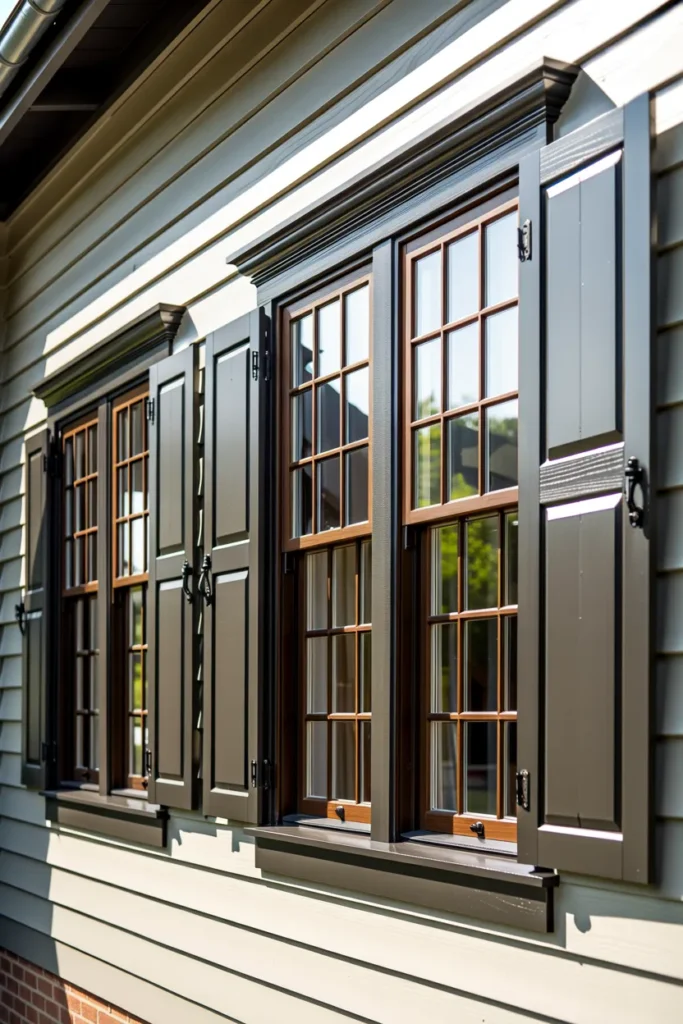
Vibe: Crisp, confident, and architectural.
Why it works: Contrasting window sashes are a signature Craftsman exterior feature, with dark frames against light siding creating visual definition and highlighting the windows as architectural elements. The divided upper sash adds traditional character.
How to get it: When selecting windows, specify dark bronze or black frames with a contrasting trim color. Choose multi-pane divided lites on the upper sash only—this keeps the traditional look without feeling busy.
💡 Quick Win: Replace just the front-facing windows—usually three to five windows—with dark-sashed windows to achieve this look with a budget-friendly investment.
Shop The Look
| Product | Description |
|---|---|
| Dark bronze window frames | Double-hung windows with dark sashes (Andersen or Pella) |
| Exterior window trim kit | Craftsman-style flat casing for window surrounds |
| Divided lite window grids | Grid inserts for existing windows |
| Exterior window paint | Dark bronze paint for window sash repainting |
| Window installation kit | Flashing and sealing materials |
6. Deep Front Porch
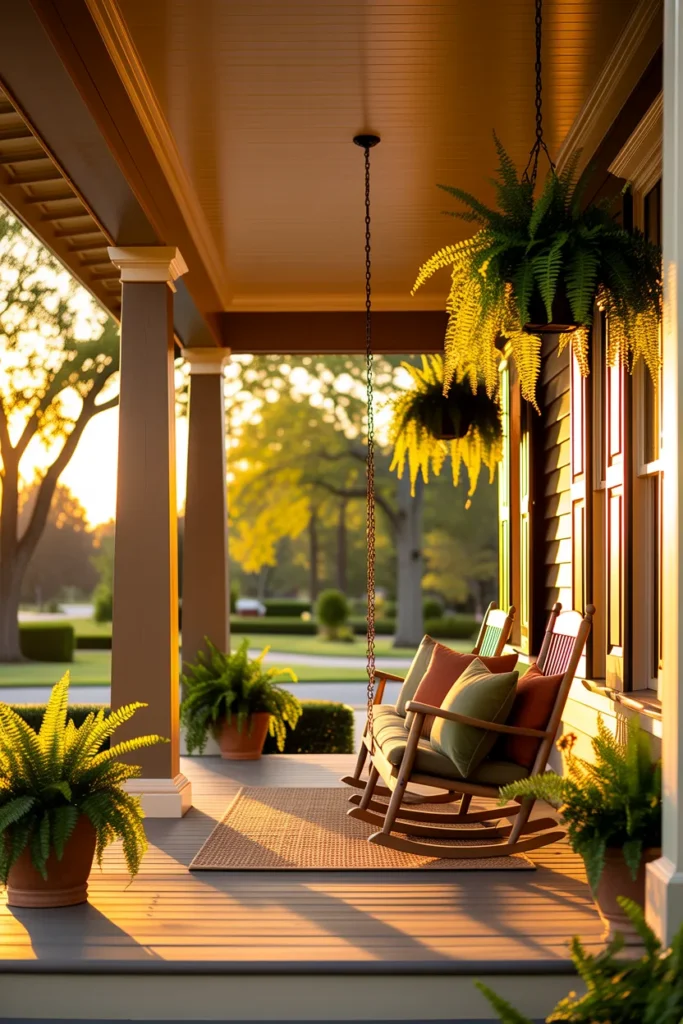
Vibe: Welcoming, leisurely, and sociable.
Why it works: The front porch serves as the social heart of a craftsman home, extending the living space outdoors and creating the signature welcome that defines the style. Its depth and proportion signal hospitality.
How to get it: Your porch should be at least six feet deep to accommodate furniture comfortably. If building new, extend the porch across the full front facade—this horizontal emphasis is a key craftsman design principle.
💡 Quick Win: If adding a full porch isn’t feasible, create a small porch vignette with a pair of rocking chairs, a small side table, and a lantern-style light by the front door—this establishes the same welcoming spirit on a smaller scale.
Shop The Look
| Product | Description |
|---|---|
| Cedar porch swing | Hanging wooden porch swing with chains |
| Outdoor rocking chair set | Classic wooden rocking chairs for porch seating |
| Porch furniture cushion set | Outdoor cushions in warm neutral tones |
| Weatherproof outdoor rug | Jute or polypropylene rug for porch |
| Mission-style porch lantern | Arts and Crafts hanging lantern |
7. Board and Batten Gable
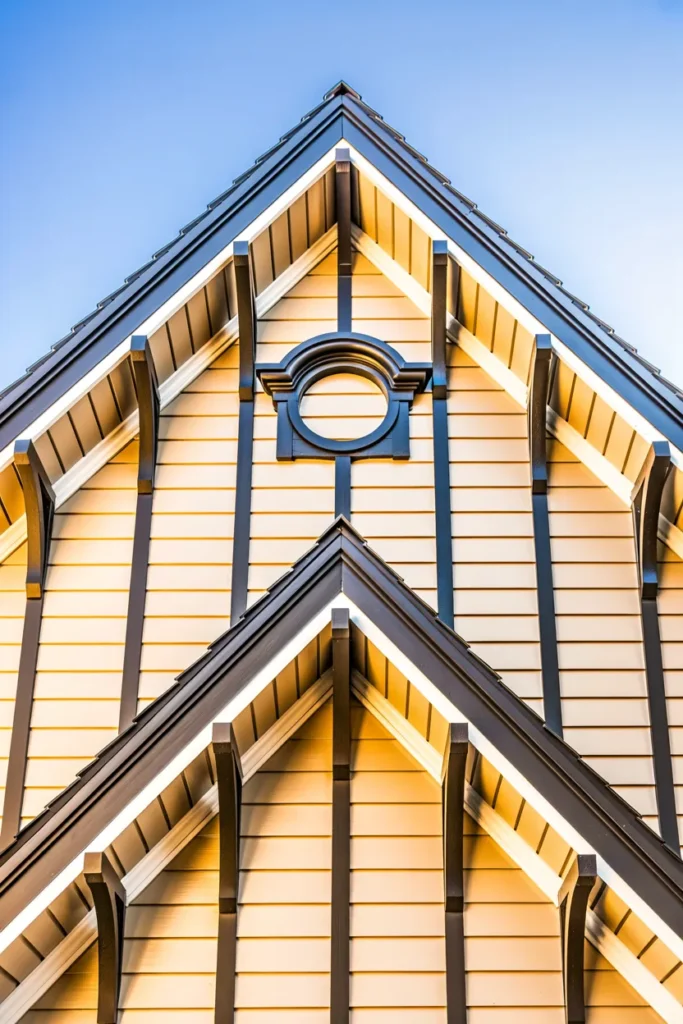
Vibe: Vertical, sculptural, and textural.
Why it works: Board-and-batten siding in the gable adds vertical texture that contrasts with the horizontal emphasis of the porch and roofline. This creates visual rhythm across the facade.
How to get it: Use board-and-batten siding specifically in the front-facing gable, keeping the main body in horizontal siding. Paint the battens a contrasting color to the boards for added definition—dark bronze against off-white works beautifully.
💡 Quick Win: Create a board-and-batten look in just the gable using plywood panels with applied battens—an affordable weekend project under two hundred dollars that delivers significant architectural impact.
Shop The Look
| Product | Description |
|---|---|
| Board-and-batten siding panels | Vertical siding boards with batten strips |
| Exterior paint for siding | Two contrasting colors for boards and battens |
| Decorative gable vent | Craftsman-style circular or rectangular vent |
| Exterior siding nails | Galvanized nails for board attachment |
| Paint sprayer for gable | Lightweight sprayer for high gable access |
8. Warm Wood Front Door
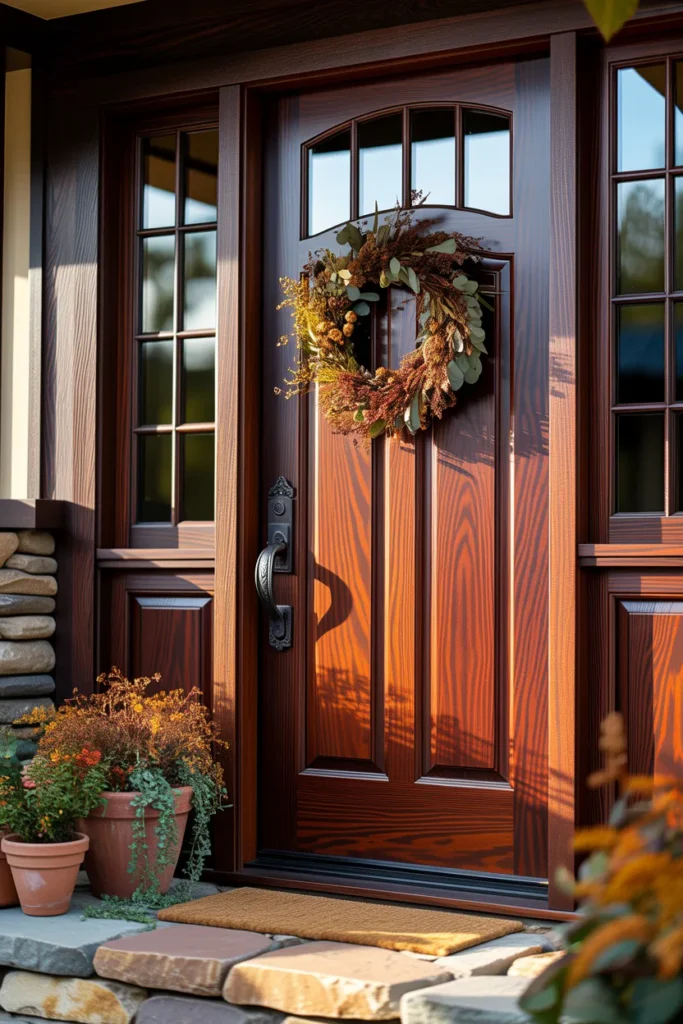
Vibe: Rich, crafted, and inviting.
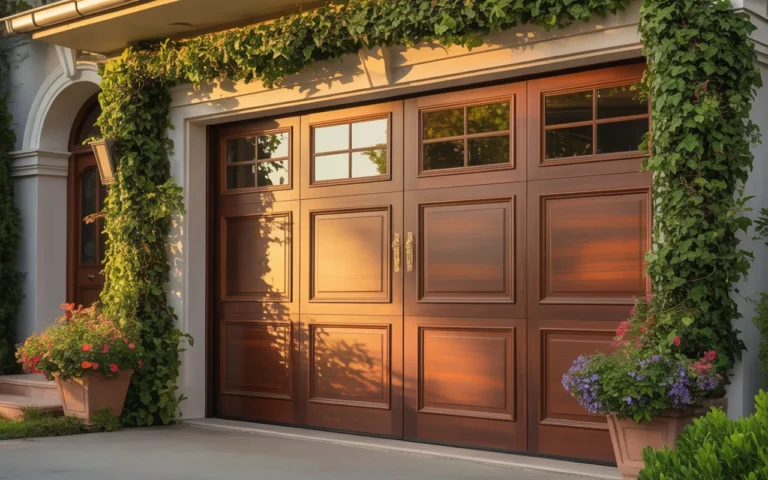
Why it works: The front door serves as the focal point of any craftsman exterior, with wood grain and decorative glass announcing the artisanal quality of the home. The warmth of the wood provides a natural counterpoint to the surrounding paint colors.
How to get it: Choose a solid wood door with a rich stain—mahogany, cherry, or walnut tones—rather than paint. Look for doors with multi-pane glass featuring decorative mullions and pair them with hand-forged iron hinges and handles.
💡 Quick Win: If a new door isn’t in the budget, consider painting or staining your existing door a rich wood tone and upgrading the hardware—wrought iron hinges and a new handle set cost under eighty dollars but transform the entry.
Shop The Look
| Product | Description |
|---|---|
| Solid mahogany front door | Pre-hung wood entry door with glass |
| Wrought iron door hinges | Decorative iron hinges with aged finish |
| Craftsman door handle set | Mission-style lever or knob hardware |
| Exterior door threshold | Bronze or wood threshold for weather seal |
| Exterior door stain/sealer | Oil-based finish for wood door protection |
9. Craftsman Lighting
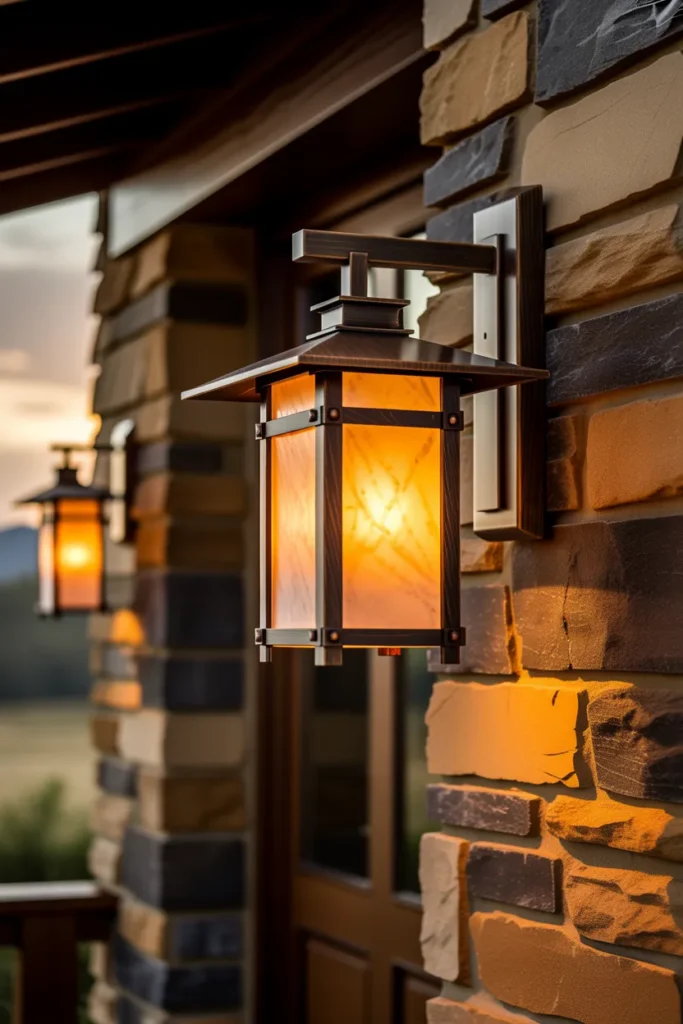
Vibe: Atmospheric, warm, and inviting.
Why it works: Craftsman lighting fixtures embody the style’s commitment to handcrafted detail, with mission-style designs featuring clean lines, durable materials, and warm illumination that enhances the home’s welcoming character.
How to get it: Look for mission or Arts and Crafts-style outdoor fixtures in bronze or copper with mica, frosted, or amber glass. Choose fixtures with squared profiles and visible hardware rather than ornate Victorian styling.
💡 Quick Win: Replace your existing porch light with a mission-style lantern—prices start around forty dollars—and immediately add Craftsman character to your home’s exterior.
Shop The Look
| Product | Description |
|---|---|
| Mission-style porch lantern | Bronze wall sconce with seeded glass |
| Craftsman driveway lamp | Post-mounted lantern with copper top |
| Outdoor LED bulb warm | Amber warm bulb for lanterns |
| Copper weatherproof switch cover | Mission-style electrical cover plate |
| Exterior light timer | Smart plug for automatic evening lighting |
10. Wide Eaves and Overhangs
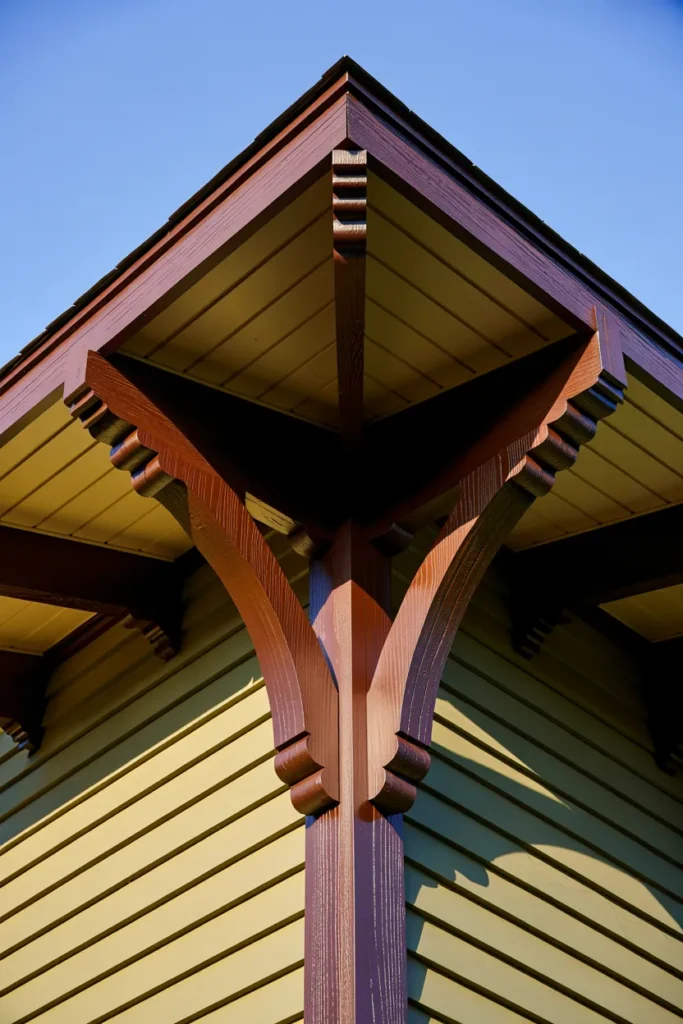
Vibe: Protective, sheltering, and substantial.
Why it works: Wide overhanging eaves are a defining feature of the American Craftsman bungalow, providing weather protection while creating a low, horizontal profile that anchors the home. The shadow lines add drama and depth to the facade.
How to get it: Ensure your roof extends at least two feet beyond the exterior walls—deeper if your climate requires more rain or sun protection. Extend the eaves consistently around the entire house for a cohesive look.
💡 Quick Win: If you can’t extend your roof structure, paint your existing eaves and soffits a dark color that creates the illusion of deeper shadow and overhang. This costs under one hundred dollars in paint and provides immediate visual impact.
Shop The Look
| Product | Description |
|---|---|
| Eave extension framing kit | Structural brackets for overhang extension |
| Roof edge drip edge | Metal flashing for extended roof edges |
| Soffit and fascia paint | Dark exterior paint for shadow illusion |
| Exterior caulk/sealant | Weather seal for overhang details |
| Roof ventilation vents | Hidden vents for extended eaves |
11. Mixed Materials Facade
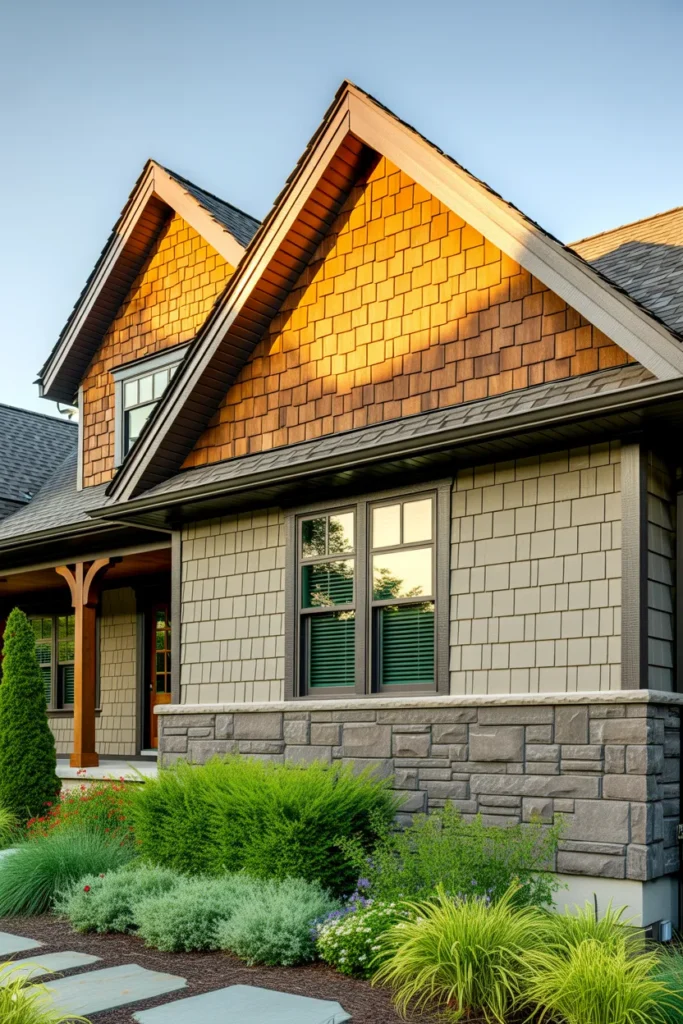
Vibe: Layered, textured, and complex.
Why it works: Craftsman exteriors layer materials—siding on the main body, cedar shakes or shingles in the gables, and stone at the foundation—creating visual interest through texture variety. This material honesty reflects the Arts and Crafts philosophy of celebrating natural materials.
How to get it: Plan your facade in three horizontal bands: stone or brick at the base, horizontal lap siding on the main body, and cedar shakes or shingles in the gable areas. Transition between materials with trim or shadow lines.
💡 Quick Win: Add cedar shake panels to just the front gable of an existing home—pre-finished panels are available for under two hundred dollars each—to achieve this layered look without a full exterior renovation.
Shop The Look
| Product | Description |
|---|---|
| Cedar shake shingle panels | Pre-assembled cedar panels for gables |
| Horizontal lap siding | Traditional lap siding for body of home |
| Stone veneer foundation panels | Stacked stone for base of home |
| Transition trim | Wood or PVC trim for material transitions |
| Exterior paint sampler set | Sample colors for coordinating materials |
12. Gable Decorative Details
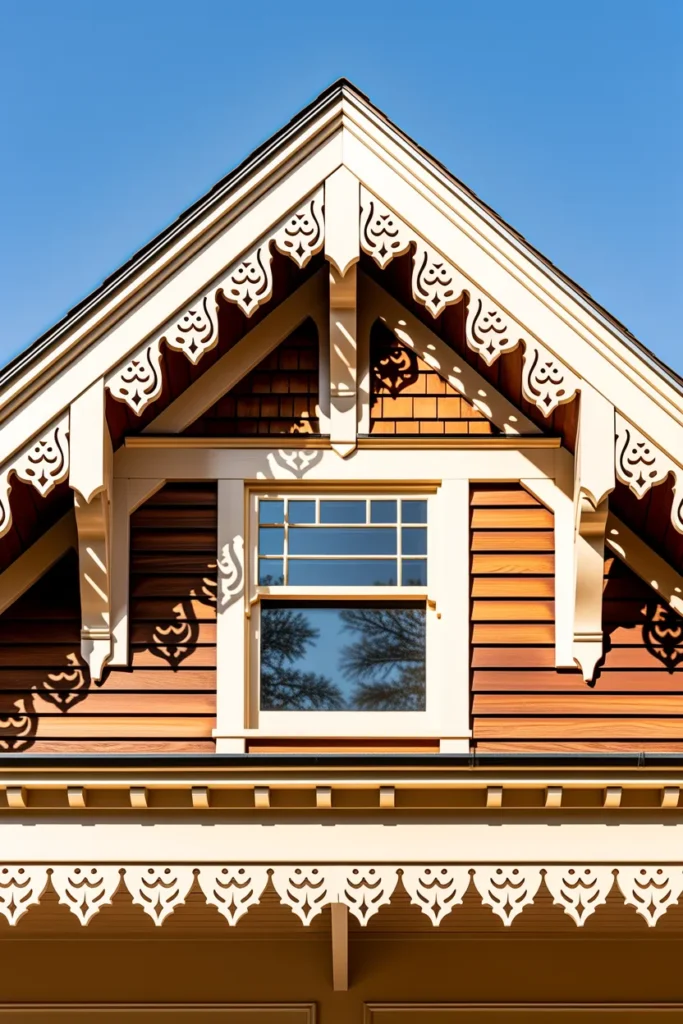
Vibe: Crafted, decorative, and original.
Why it works: Decorative gable treatments—including bargeboards, knee braces, and gable vents—add the handcrafted detail that defines the style. These elements demonstrate the care invested in the home’s design.
How to get it: Add decorative bargeboards along the peak of the gable, painted a contrasting color. Include a gable vent with a decorative grille design—often geometric or stick-style patterns inspired by Arts and Crafts design.
💡 Quick Win: A decorative gable vent insert costs under seventy dollars and can be installed by a handy homeowner in an afternoon—it’s one of the easiest ways to add authentic Craftsman exterior detail.
Shop The Look
| Product | Description |
|---|---|
| Decorative gable vent | Geometric grille vent for gable |
| Bargeboard trim kit | Pre-cut shaped trim for gable edges |
| Decorative knee braces | Corbels for gable corners |
| Exterior paint for details | Contrast color for gable trim |
| Gable installation hardware | Weatherproof screws and anchors |
13. Low-Pitched Roof Lines
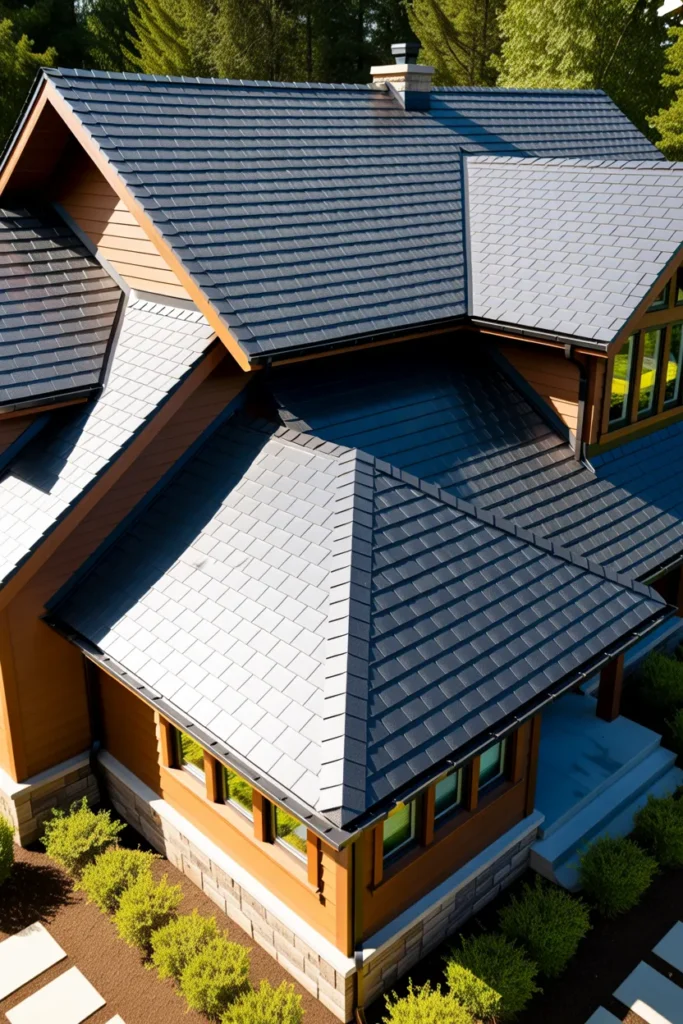
Vibe: Broad, sheltering, and horizontal.
Why it works: The low-pitched roof is the defining silhouette of Craftsman architecture, creating a horizontal emphasis that distinguishes the style from vertical Victorian forms. Its shallow pitch looks grounded and visually restful.
How to get it: If building or re-roofing, specify a pitch between 4:12 and 6:12 with a dark shingle color. The roof should feel low and wide, hugging the home rather than soaring above it.
💡 Quick Win: For an existing home, paint the roof a dark color and add exposed rafter details beneath the eaves—this enhances the craftsman feel without changing the roof structure.
Shop The Look
| Product | Description |
|---|---|
| Dark asphalt shingles | Architectural shingles in charcoal or dark brown |
| Roof pitch modification | Structural consultation for pitch alteration |
| Exposed rafter installation | Decorative rafters under existing eaves |
| Roof ventilation system | Ridge vent for low-pitch roofs |
| Roofing contractor consultation | Professional evaluation for roof style change |
14. Brick Accent Details
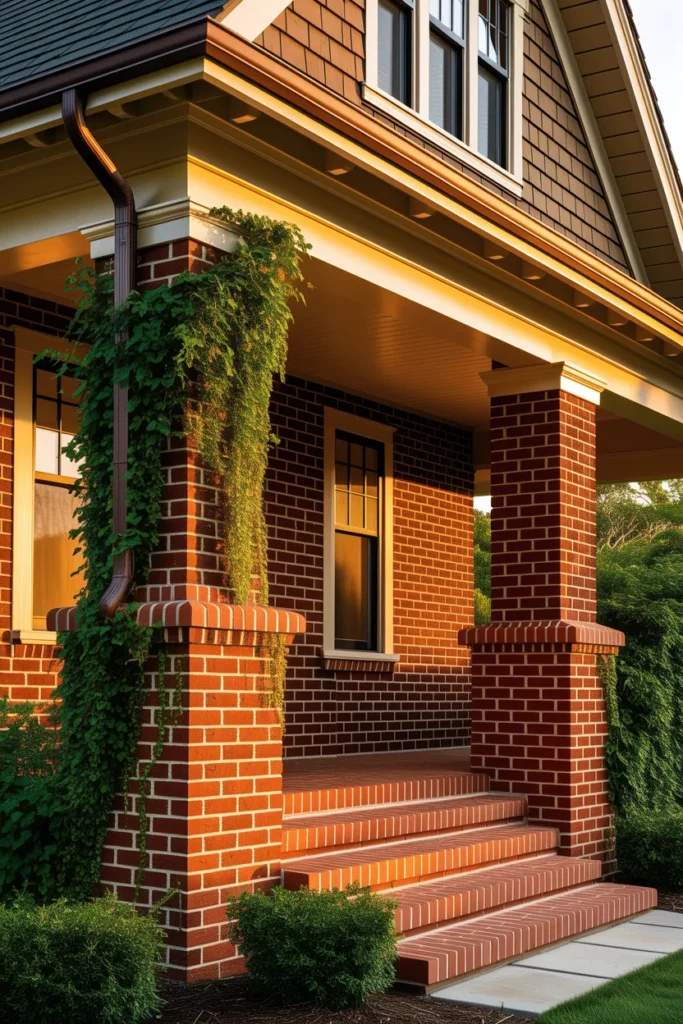
Vibe: Historic, substantial, and enduring.
Why it works: Brick was commonly used in early Craftsman homes for foundations, chimneys, and porch piers, providing warmth and permanence that complements wood and stone. Its color adds richness to the natural material palette.
How to get it: Use brick for the foundation and column bases, leaving the upper portions in siding. Choose a warm brick with varied tones rather than uniform color for the most authentic look.
💡 Quick Win: Add brick veneer to just the front porch column bases for under two hundred dollars—this provides a high-impact craftsman detail at minimal cost.
Shop The Look
| Product | Description |
|---|---|
| Brick veneer panels | Thin brick panels for foundations and piers |
| Brick mortar mix | Type N mortar for brick installation |
| Brick column cap | Precast concrete or stone column caps |
| Brick cleaning solution | Acid wash for final brick cleanup |
| Exterior brick sealer | Waterproof seal for brick surfaces |
15. Landscaped Craftsman Setting
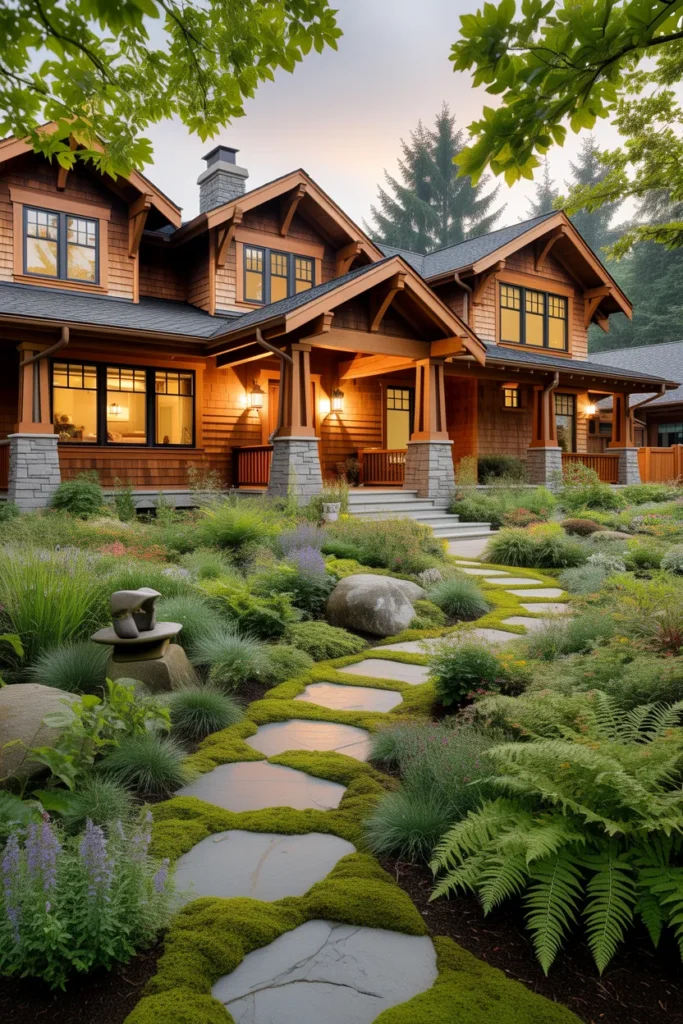
Vibe: Integrated, organic, and tranquil.
Why it works: The Craftsman philosophy extends beyond the house to the landscape, with gardens that soften the transition from home to nature. Foundation plantings, stone pathways, and layered gardens create a seamless integration with the site.
How to get it: Plant foundation shrubs that soften the transition from ground to wall, use stone or brick pathways that complement the home’s materials, and include native perennials that require minimal maintenance while providing seasonal interest.
💡 Quick Win: Foundation planting—a row of shrubs or perennials along the front of the house—costs under one hundred fifty dollars and immediately makes your craftsman exterior feel more complete and connected to its site.
Shop The Look
| Product | Description |
|---|---|
| Foundation shrub package | Pre-selected native shrubs for front planting |
| Stone pathway pavers | Natural stone for garden path |
| Outdoor garden art | Craftsman-inspired metal sculpture or birdbath |
| Garden border edging | Stone or metal edging for garden beds |
| Cedar planter boxes | Window boxes and porch planters |
How to Start Your Craftsman Exterior Transformation
Your first move should be the front door—specifically, upgrading or painting it in a warm, rich hue that anchors the entire facade. Choose a dark wood stain or a deep, nature-inspired color like russet or forest green. This single change establishes the craftsman palette and creates a focal point that guides every subsequent decision.
The most common mistake is selecting the wrong undertone for exterior paint. Craftsman colors need warmth—avoid cool grays or stark whites. A warm greige or cream is far more authentic than a cold white or cool gray. Test colors on your actual siding in morning and afternoon light before committing—the undertone shift can make or break the look.
Three budget entry points under fifty dollars each: a mission-style porch lantern, a decorative gable vent, and a pair of wrought iron house numbers. These small details read as intentional Craftsman elements and immediately signal the style without requiring major investment.
A full Craftsman exterior transformation typically takes three to six months from planning to completion. A starter version—paint, porch details, and lighting—can be achieved in a weekend. The full vision, including column work, roofing, or siding changes, often requires professional help and a budget ranging from five thousand to thirty thousand dollars depending on scope.
Frequently Asked Questions About Craftsman Exterior Ideas
What colors are authentic for Craftsman exterior homes?
Authentic Craftsman exterior colors come from nature—sage green, warm greige, russet brown, deep olive, and soft taupe. Benjamin Moore’s Craftsman palette includes sage, russet brown, greige, two off-white hues, and an alluring blue-green. Window sashes and trim should contrast with the body color, typically in darker tones like bronze or dark brown.
How much does a Craftsman exterior makeover cost?
A basic paint-and-details update typically runs two thousand to five thousand dollars, while a full renovation including siding, roof modifications, and porch work ranges from fifteen thousand to fifty thousand dollars. Weekend projects like lighting or house numbers cost under two hundred dollars total.
Can I add Craftsman style to a non-Craftsman house?
Absolutely—focus on the signature details that define the style: a deep front porch, tapered square columns, exposed rafters or decorative brackets, and natural materials like wood and stone. Even a colonial or ranch home can gain craftsman character through the addition of these exterior elements.
Is Craftsman style more expensive to build than other styles?
The initial cost is comparable to other styles, but craftsman homes often involve higher-quality materials and more labor-intensive details like exposed rafters and custom woodwork. These investments add value and durability that pay off long-term. Some elements, like decorative brackets, are budget-friendly additions under one hundred dollars.
What roof pitch defines a true Craftsman home?
A true craftsman roof uses a low pitch between 4:12 and 6:12—shallow enough to create that signature broad profile but still providing adequate drainage. Dark shingles in charcoal or brown complete the look. Avoid steep roof pitches, which read as Victorian rather than craftsman.
Ready to Create Your Dream Craftsman Exterior?
These fifteen ideas span color, materials, architectural details, and landscaping, offering a complete toolkit for your craftsman exterior transformation. Starting small is not just acceptable—it’s the right approach, allowing you to live with each change and make thoughtful decisions about what comes next. Today, take a photo of your home’s exterior and identify one detail you can add or enhance this weekend—a new front door color, a mission-style lantern, or perhaps a decorative gable vent. Once complete, your home will feel more grounded, more welcoming, and more genuinely you—a place where quality craftsmanship meets daily life in the most beautiful way. Save your favorites from these fifteen ideas, pin this article for inspiration, and start crafting a home exterior that honors the best of Arts and Crafts philosophy.
One Comment