
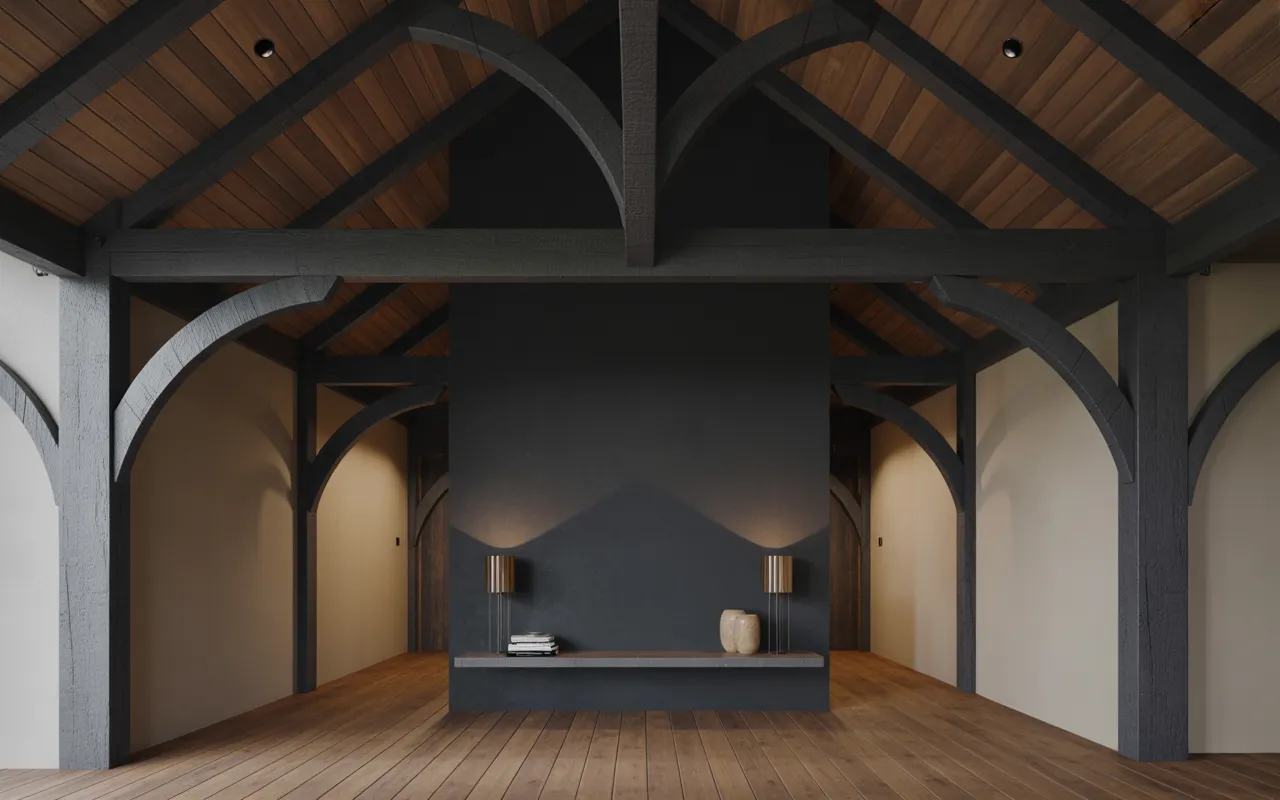
16 Barndominium Ideas for Modern Rustic Living
A barndominium blends the raw, generous bones of agricultural architecture with contemporary comfort—high ceilings, open floor plans, and honest materials meet modern warmth and refinement. In this article, you’ll discover exactly 16 barndominium ideas spanning color, materials, lighting, and layout, each one designed to help you transform your space into something that feels both grounded and intentional.
There’s something stillness-inducing about a barndominium. The exposed beams feel like weight and shelter. The scale feels honest. Light moves differently through all that vertical space, and that quality of light changes how you move through the room. It invites you to slow down, to arrange things with intention, to resist overcrowding. This is what modern rustic living delivers—a visual quiet, textured and layered, that lets you breathe. Here are 16 barndominium ideas worth saving — and stealing.
Why Modern Rustic Barndominium Ideas work So Well
Modern rustic design evolved from a cultural rejection of polished minimalism and mass-produced farmhouse clichés. It draws authenticity from agricultural architecture—real barns, their structural logic visible—and marries that skeleton to contemporary design principles: negative space, material honesty, restrained color, and intentional layering. Unlike pure rustic (which can feel heavy and dated), modern rustic strips away decoration and leans into proportion, light behavior, and the integrity of materials themselves.
The material language is specific: reclaimed or authentic-looking wood in gray, weathered, or warm honey tones; matte black or brushed steel fixtures; natural concrete; undyed linen; raw leather; unfinished plaster. Colors stay warm but muted—warm whites (ivory, cream, soft greige), warm grays, earthy charcoal, and deep taupes. There’s texture everywhere—shiplap, rough-hewn beams, woven jute, linen upholstery—but it’s balanced by clean lines and breathing room.
Barndominiums are trending as post-pandemic sanctuaries. People crave square footage, light, and psychological room to move. Sustainability appeals too: repurposing actual farm buildings, using reclaimed timber, or building new spaces that honor agricultural vernacular without kitsch. Younger designers are choosing barndominiums over suburban subdivisions because they feel honest and unconventional—and because Instagram and Pinterest have normalized this aesthetic from fringe to mainstream.
Yes. Small barndominiums absolutely achieve this look. Prioritize: one focal point (fireplace, statement wall, or dramatic ceiling beam), negative space over decoration, and a tight material palette. In compact layouts, layering textiles and lighting becomes even more crucial to create depth without clutter. Go vertical with lighting and wall decor; keep the floor plan open and furnishings minimal and scaled-down. The bones of a small barn are still beautiful—work with them, not against them.
| Element | Core Trait 1 | Core Trait 2 |
|---|---|---|
| Philosophy | Authentic structural honesty | Contemporary restraint |
| Key Materials | Weathered wood, matte black metal, concrete, linen | Raw leather, brushed brass, undyed textiles |
| Key Colors | Warm white, soft greige, deep charcoal, honey wood | Taupe, cream, warm gray, natural sienna |
1. Authentic Weathered Wood Walls
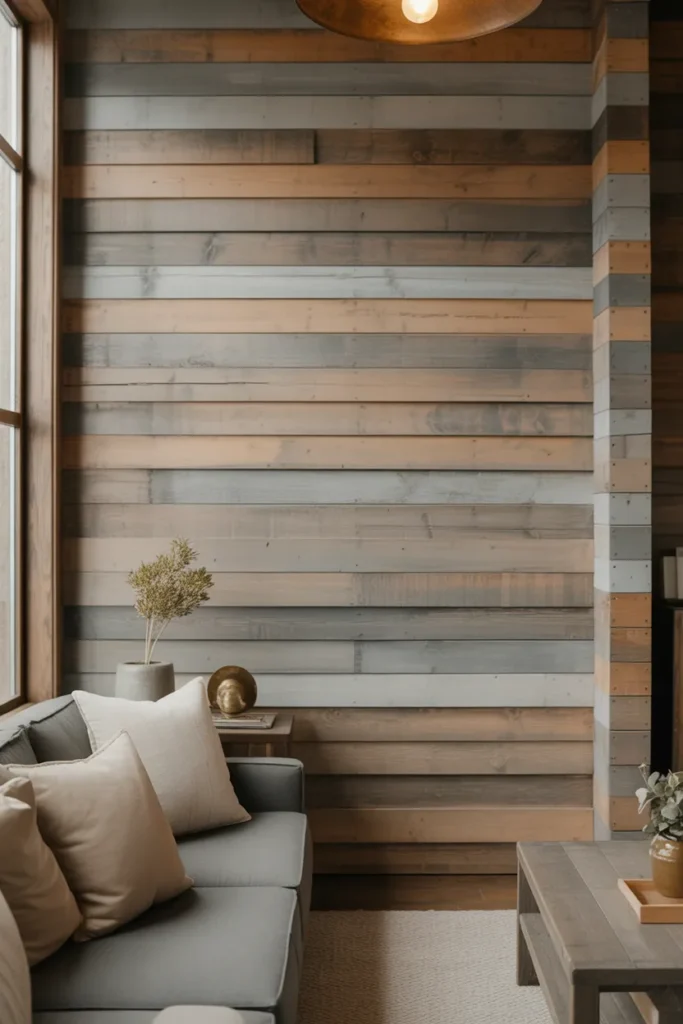
Vibe: Raw, warm, grounded.
Why It Works
Authentic weathered wood reads as a focal point without decoration. The natural color variation—grays, golds, soft browns all in one wall—creates visual interest through material alone. Texture at this scale (full wall coverage) anchors the entire room and gives permission for everything else to be quieter. The grain pattern catches light differently throughout the day, so the space feels alive rather than static.
How to Get It
Source reclaimed shiplap from barn deconstruction companies, salvage yards, or suppliers like Elmwood Reclaimed Timber. If authentic reclaimed isn’t feasible, new hardwood shiplap from brands like Stikwood (real wood veneer) or Reclaimed Lumber Liquidators mimics that patina convincingly. Install vertically to elongate the wall and amplify shadows. Leave natural finishes—no stain, no paint—to preserve the honest color variation that makes this work.
💡 Quick Win: A single wall of shiplap makes impact. You don’t need to cover the whole room. One accent wall in an open layout anchors the seating area and costs a fraction of full coverage.
| Shop the Look |
|---|
| Soft gray shiplap wall boards 1×6 authentic reclaimed |
| Warm brass adjustable library sconce |
| Charcoal linen track arm sofa |
| Low profile weathered oak coffee table |
| Matte ceramic bud vase cream |
2. Natural Light Through Large Windows
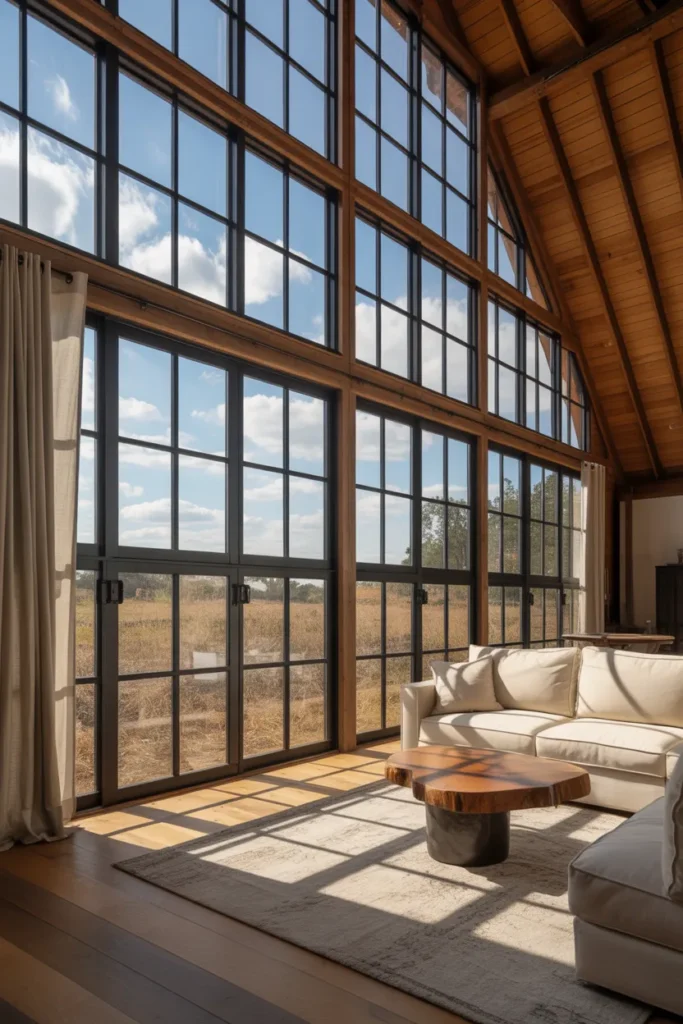
Vibe: Airy, luminous, alive.
Read More; 15 Breezy-Fresh Summer House Interior Design Ideas
Why It Works
Light is the primary material in modern rustic barndominiums. Large windows showcase the exterior landscape and fill interiors with clean, changing light throughout the day. Natural light on warm wood and cream textiles creates a glow that artificial lighting can’t replicate. Light also reveals texture—it grazes wood grain, shows concrete depth, and emphasizes the honesty of materials. Maximizing natural light is the most important decision in a barndominium; it affects every other design choice.
How to Get It
Install large windows on the sides that receive the most favorable light (south and west in Northern Hemisphere). Black-framed industrial or barn-style windows are aesthetically appropriate. Keep window treatments minimal—cream linen curtains that can be drawn but are light-filtering when closed. Use skylights or clerestory windows if ceiling height allows. Position furniture to maximize views and light rather than turning your back to windows. The goal is “lit from within,” not “lit by lamps.”
💡 Quick Win: Replace small windows with one large picture window (if your barn allows). It changes the entire experience and costs less than a major renovation.
| Shop the Look |
|---|
| Large black-framed industrial window panes |
| Cream linen curtain panels light filtering |
| Adjustable window treatment brackets matte |
| Thermal cellular blackout shade lining |
| Brushed brass window hardware fixtures |
3. Warm Neutral Palette Strategy
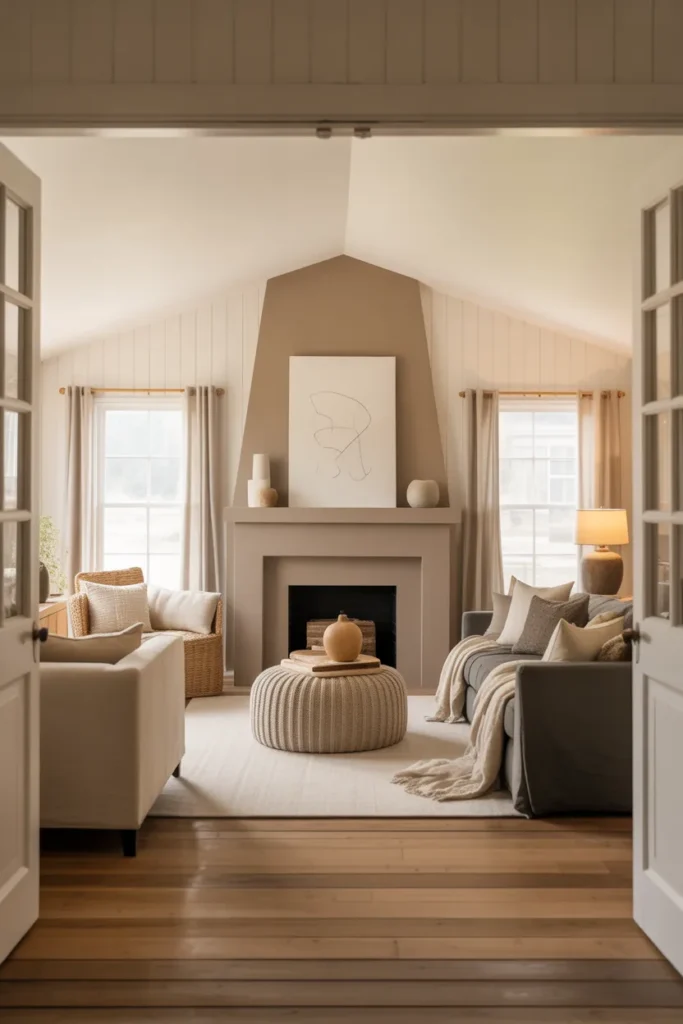
Vibe: Serene, cohesive, breathable.
Why It Works
A warm neutral palette creates visual calm in large, volume-heavy spaces. When walls, soft goods, and key furniture stay within a tight color family—creams, warm grays, taupes, soft tans—the eye rests. This restraint lets structural elements (beams, texture, light) become the “color.” Warm neutrals don’t read as cold or sterile like cool grays do; they feel embracing. Depth comes from material variation, not color jumps.
How to Get It
Paint walls in warm whites or soft greige (Benjamin Moore’s “Accessible Beige” or “Natural Cream” are classics). Choose upholstery in warm taupe or cream linen. Bring in honey or warm-gray wood tones through flooring and furniture. Every color decision should ask: “Does this shift toward warmth?” If a color reads cool or vibrant, it breaks the spell. Layer neutral textiles in different weaves to create visual interest through texture alone.
| Shop the Look |
|---|
| Warm cream linen upholstered sectional sofa |
| Soft greige textured throw pillow covers |
| Honey-tone wide plank oak flooring |
| Cream linen curtain panels grommet top |
| Warm taupe wool area rug 8×10 |
4. Oversized Leather & Oak Mix
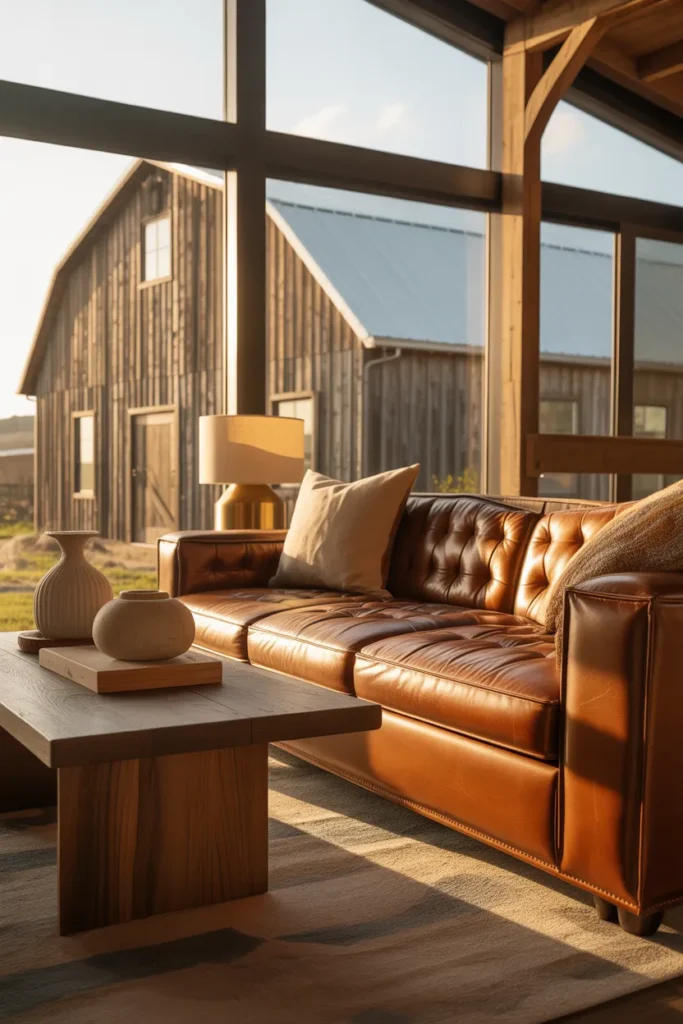
Vibe: Warm, substantial, tactile.
Why It Works
Pairing soft, aged leather with raw wood creates maximum textural interest while staying within a warm, earthy palette. Leather develops character and patina over time—it feels collected and lived-in. Oak’s grain pattern and honey undertone complement cognac leather perfectly. Oversized pieces (a large sofa, a long table) anchor open layouts and read as intentional rather than sparse. The combination signals both comfort and craft.
How to Get It
Source a cognac or caramel leather sofa with a low profile and minimal button detailing (brands like Room & Board, Restoration Hardware, and vintage finds offer substantial options). Pair with a weathered oak dining or coffee table with a hand-finished surface that shows wood movement and grain. If new, ask for “hand-distressed” or look for pieces with visible knots, cracks, and color variation. Avoid perfectly uniform stain—authenticity reads in irregularity.
💡 Quick Win: A single cognac leather vintage sofa + a weathered wood side table + warm lighting transforms a room overnight. These two hero pieces do most of the heavy lifting.
| Shop the Look |
|---|
| Cognac leather low profile sofa modern |
| Weathered oak dining table hand finished |
| Warm brass pharmacy floor lamp |
| Cream chunky knit throw blanket |
| Taupe linen ottoman storage cube |
5. Vintage Barn Door Accents
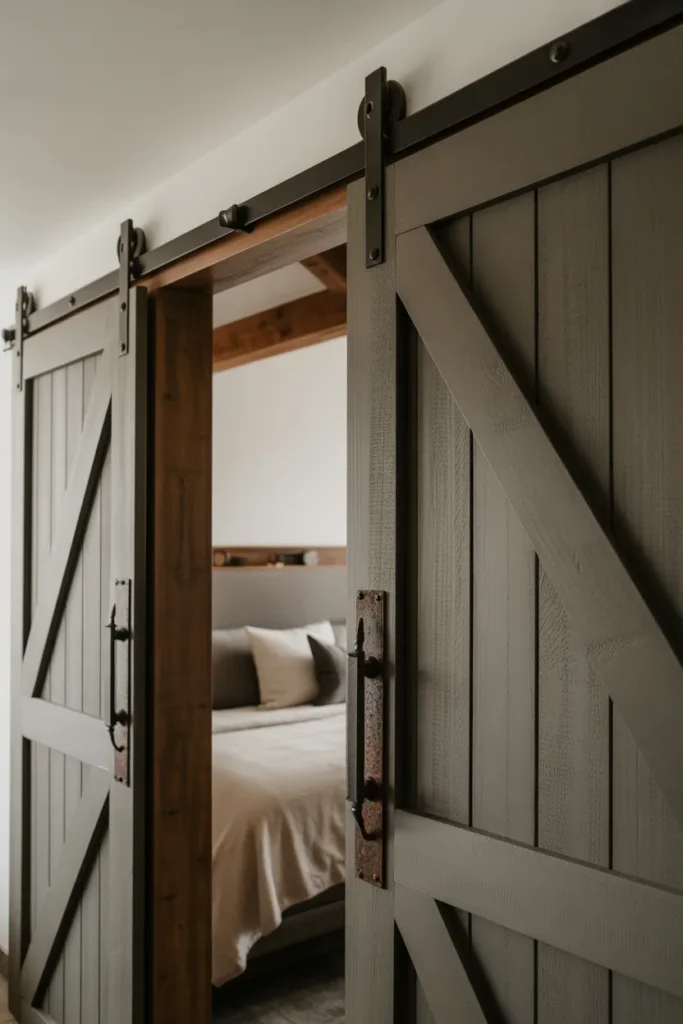
Vibe: Moody, functional, collected.
Why It Works
Barn doors serve function (room division, closet access) while delivering instant visual impact. A weathered door with authentic black iron hardware reads as found, not designed. The contrast between rough reclaimed wood and smooth modern minimalism is exactly what modern rustic does best. A single statement door justifies the whole aesthetic—it says “this space is intentional,” not “I followed a trend.”
How to Get It
Source authentic reclaimed barn doors through salvage companies or online markets like Etsy (search “reclaimed barn door”). Or commission new doors that mimic authenticity from makers like Vintage Sliding Door Hardware or Wayfair’s artisan sellers. Black wrought-iron hardware is essential—anything polished or shiny undermines the look. Install on a simple heavy-duty steel track. Mount at the threshold or slightly above to show the door’s full height and movement.
| Shop the Look |
|---|
| Reclaimed weathered barn door 36×84 charcoal |
| Heavy-duty black wrought iron sliding track system |
| Cast iron roller hardware set vintage style |
| Black steel cable guide hardware antique |
| Matte black L-bracket door stopper |
6. Ambient Sconce & Beam Integration
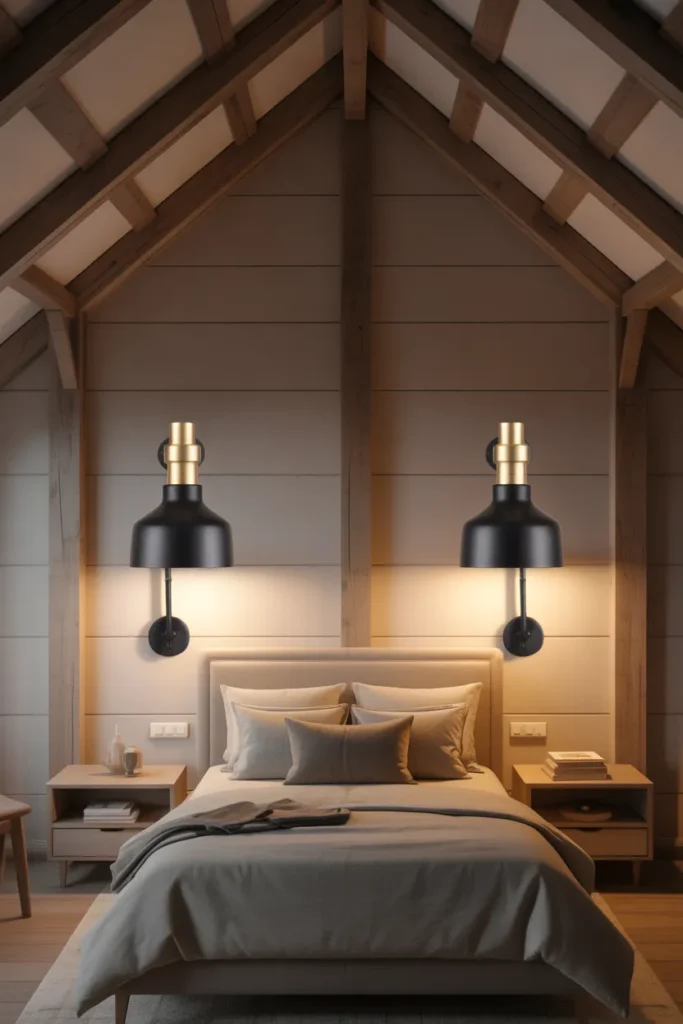
Vibe: Intimate, warm, intentional.
Why It Works
Sconces flanking a bed or seating anchor that zone and create visual symmetry without needing to turn on overhead lights. Matte black sconces disappear visually into shadow, so they don’t feel like clutter. When positioned to align with beam lines or architectural features, they feel integrated rather than added-on. Ambient sconce light is warmer and more inviting than ceiling-mounted fixtures, especially in modern rustic spaces where intimacy matters.
How to Get It
Choose sconces with simple, geometric bases—box or dome shapes work best. Mount at eye level when seated (roughly 60–66 inches from the floor) and ensure both fixtures are at exactly the same height. Space them 3–4 feet apart if flanking a bed. Use warm-white (2700K) bulbs and dimmable switches. Brands like Cedar & Moss, Rejuvenation, and Muuto make modern rustic sconces in matte black and brushed brass.
💡 Quick Win: Pair of simple black box sconces + dimmer switches transform a bedroom into a sanctuary. Move away from overhead lighting immediately.
| Shop the Look |
|---|
| Matte black geometric wall sconce pair |
| Warm 2700K dimmable LED sconce bulbs |
| Brushed brass sconce mounting hardware |
| Simple white ceramic or linen sconce shades |
| Black cloth-covered sconce cord kit |
7. Textured Textile Layering
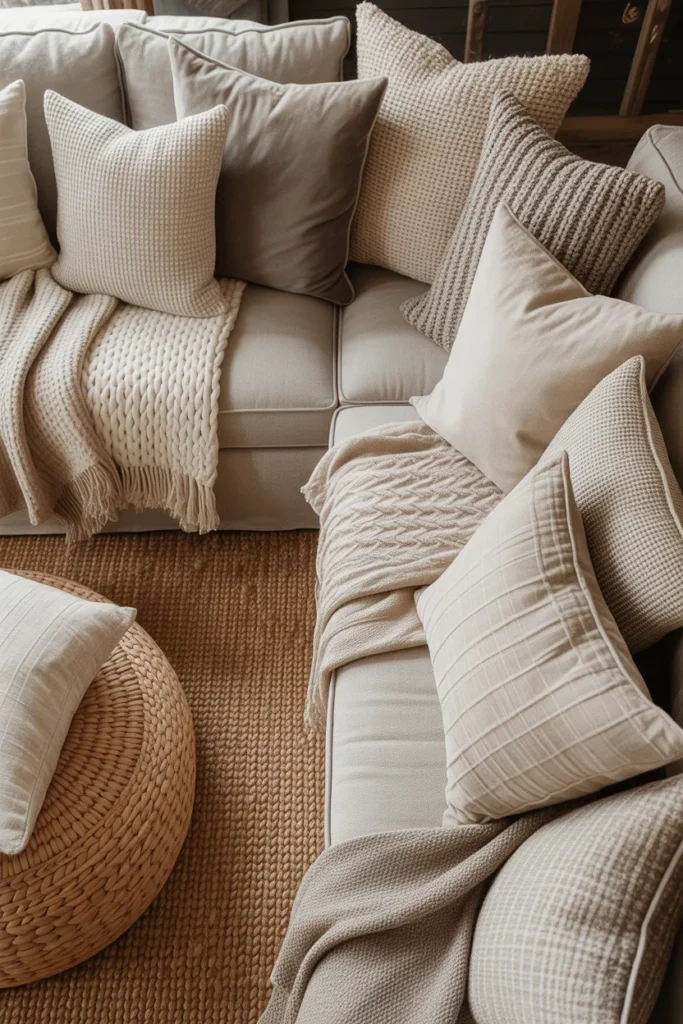
Vibe: Cozy, layered, inviting.
Why It Works
Textiles are the soft landing in a modern rustic space filled with hard materials (wood, stone, metal). Layering different weaves and weights in a tight warm-neutral palette creates richness without color. Cable knits, chunky linens, and smooth wool read as curated and intentional. Texture creates visual depth and tangible comfort. Layering also solves the “empty sofa” problem—it justifies multiple pillows and throws without looking overcrowded. Texture is depth when color is restrained.
How to Get It
Start with a base textile (linen sofa or jute rug). Layer 2–3 throw pillows in different materials but the same color family. Add a chunky knit throw. Mix linen, wool, cable knit, and smooth weaves in creams, taupes, and warm grays. Buy from brands that specialize in natural fibers: Schoolhouse Electric, Rejuvenation, Parachute, or Cultiver. If budget is tight, the rule: bases expensive (good sofa, quality rug), accents can be affordable (throw from a fast retailer, pillows mixed price points).
| Shop the Look |
|---|
| Cream chunky cable knit throw blanket |
| Warm taupe linen throw pillow covers set |
| Warm gray wool lumbar pillow modern |
| Natural jute woven area rug 8×10 |
| Cream chunky texture knit pouf ottoman |
8. Open Concept Living Canvas
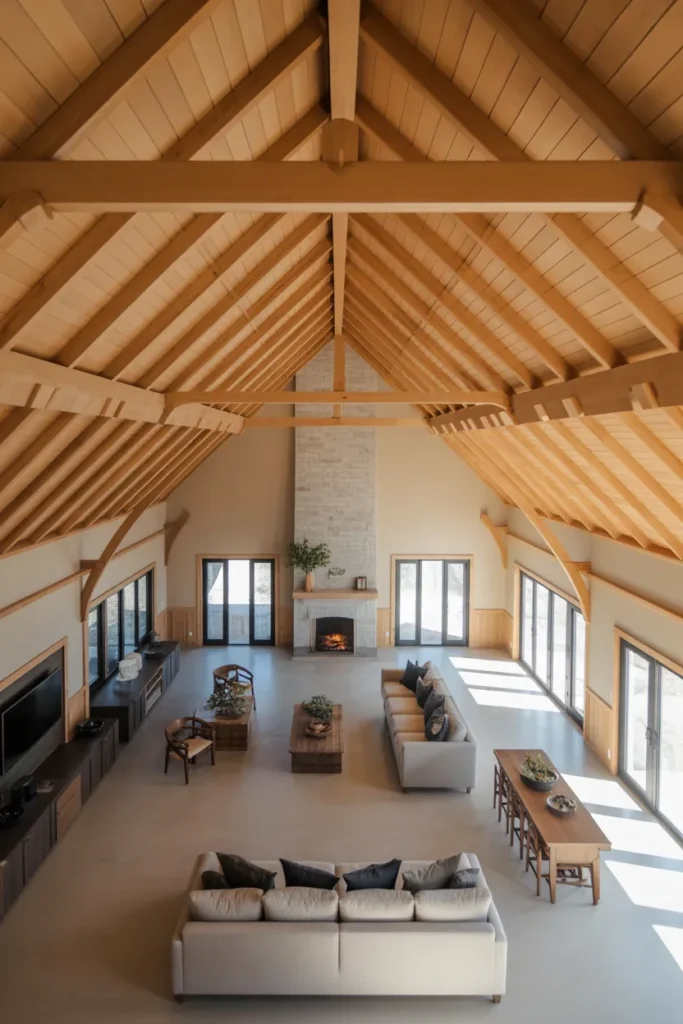
Vibe: Open, breathable, purposeful.
Why It Works
Open concept in a true barn structure works because the bones are dramatic enough to divide space without walls. Exposed beams, floor material changes, or subtle ceiling height shifts create natural zones. Large spaces need visual “breathing room”—sparse, intentional furniture placement rather than wall-to-wall decoration. The openness lets light and air move, which in a large volume feels essential. Open layout also showcases the architectural shell, which is usually the hero.
How to Get It
Resist the urge to fill empty space. Use furniture clusters to suggest boundaries: a sofa facing a fireplace defines the living zone; a dining table marks the eating zone. Let negative space be part of the design. Keep wall decor minimal and high (so sightlines stay clear). Use consistent flooring or subtle rugs to define zones. Position tall pieces (bookcases, lighting) to suggest edges without blocking views or light.
💡 Quick Win: Arrange furniture floating in the room (not pushed to walls) and watch the space feel intentional and designed rather than empty.
| Shop the Look |
|---|
| Low profile linen sectional sofa cream |
| Weathered wood dining table extends seating |
| Warm brass tripod floor lamp |
| Neutral jute area rug 9×12 |
| Minimal floating wooden wall shelves |
9. Exposed Beam Ceilings & Drama
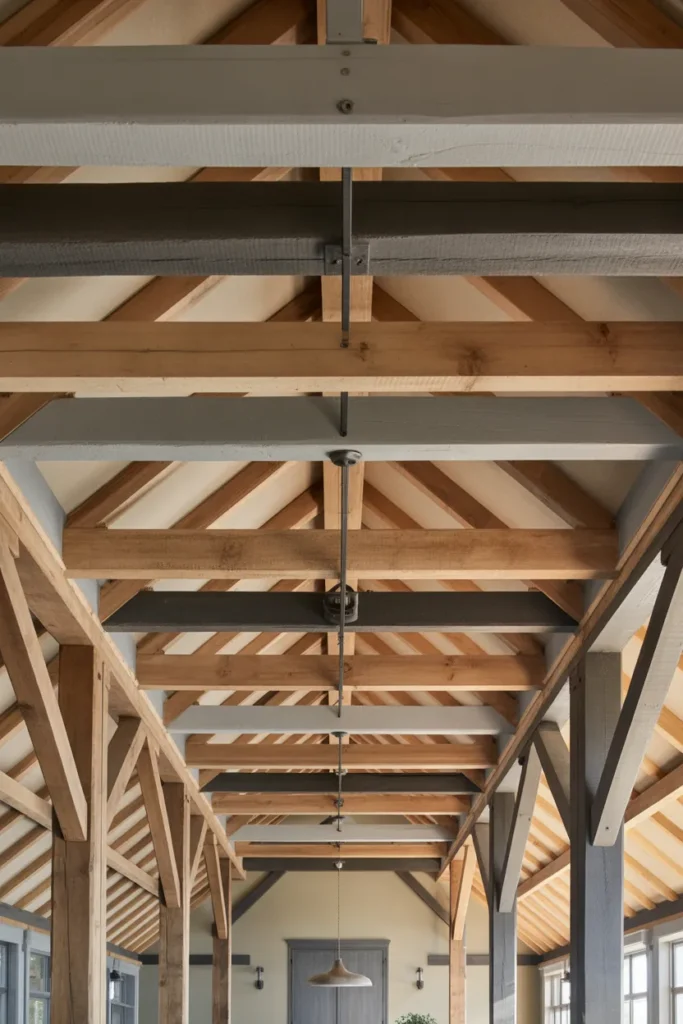
Vibe: Dramatic, sculptural, grounded.
Why It Works
Exposed beams read as architectural honesty—they frame the entire room and draw the eye upward, making ceilings feel higher. Hand-hewn or reclaimed beams show age, character, and weight. A single strong horizontal line across a ceiling can anchor an entire aesthetic. Beams also break up large blank ceiling planes, adding visual interest without decoration. When paired with restraint everywhere else, dramatic beams become the story.
How to Get It
If true structural beams exist, expose them—remove drywall or drop ceilings. If not, faux beams in reclaimed-look material (brands like BalticBeams or BlendedUK offer hand-finished faux beams) are convincing and cost far less. Mount them at regular intervals (8–10 feet apart) and ensure the finish has depth—hand-planing marks, knots, color variation. Paint the ceiling white or cream behind them to increase contrast and emphasize the beam geometry.
| Shop the Look |
|---|
| Hand-hewn reclaimed wooden ceiling beams |
| Matte black metal beam corbel supports |
| Cream or white ceiling paint semi-gloss |
| Black steel I-beam structural hardware visible |
| Warm brass uplighting fixtures for beams |
10. Industrial Edison Pendant Clusters
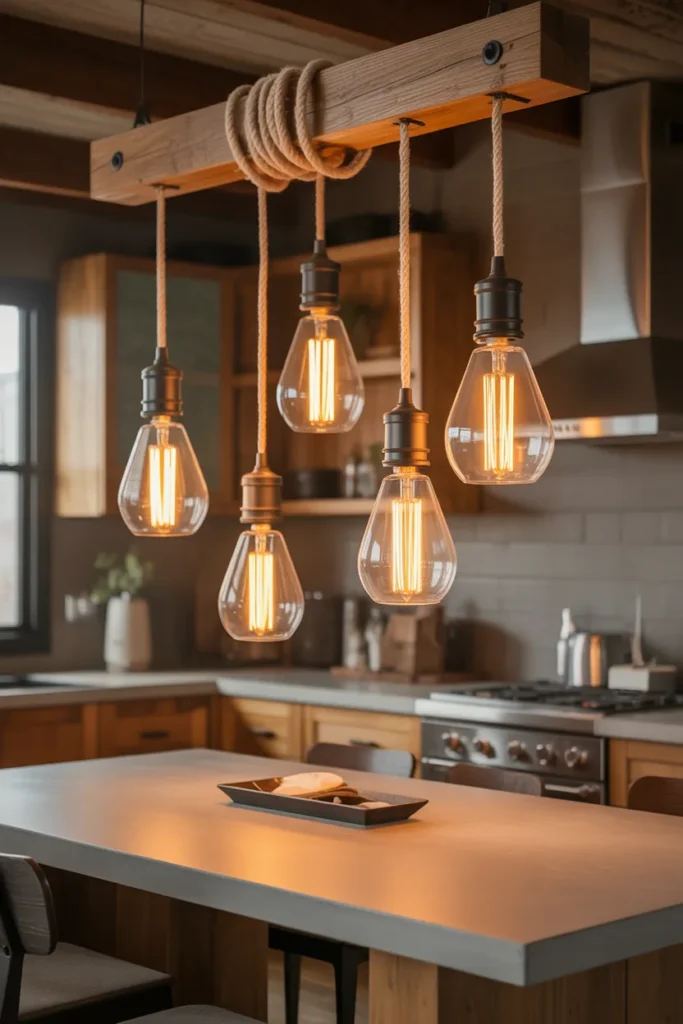
Vibe: Warm, luminous, collected.
Why It Works
Hanging multiple pendant lights at varied heights creates visual rhythm and breaks up the monotony of a straight line. Edison-style bulbs emit warm (2700K) light that mimics candlelight—essential in barndominiums where clean-lined fixtures can read as cold. The cluster also addresses light distribution across large open spaces; multiple sources are better than one overhead fixture. Clustering also signals intentionality—curated, not just “one light.”
How to Get It
Choose warm-white LED Edison bulbs (look for 2700K color temperature, dimmable). Hang from 60–70 inches above a dining or island surface. Stagger heights by 3–6 inches so the eye moves through the fixture visually. Mount to an exposed beam or a custom-installed black-painted wood beam for authenticity. Brands like Rejuvenation and Schoolhouse Electric have excellent period-appropriate fixtures under $200 each.
💡 Quick Win: Swap your existing overhead light for a single Edison pendant over a dining table. It changes the entire mood and costs less than a weekend getaway.
| Shop the Look |
|---|
| Vintage Edison filament pendant light brass |
| Warm 2700K LED dimmable bulb set |
| Cloth-covered electrical cord brown |
| Heavy-duty ceiling hook and mounting hardware |
| Black iron ceiling canopy fixture |
11. Deep Charcoal & Cream Drama
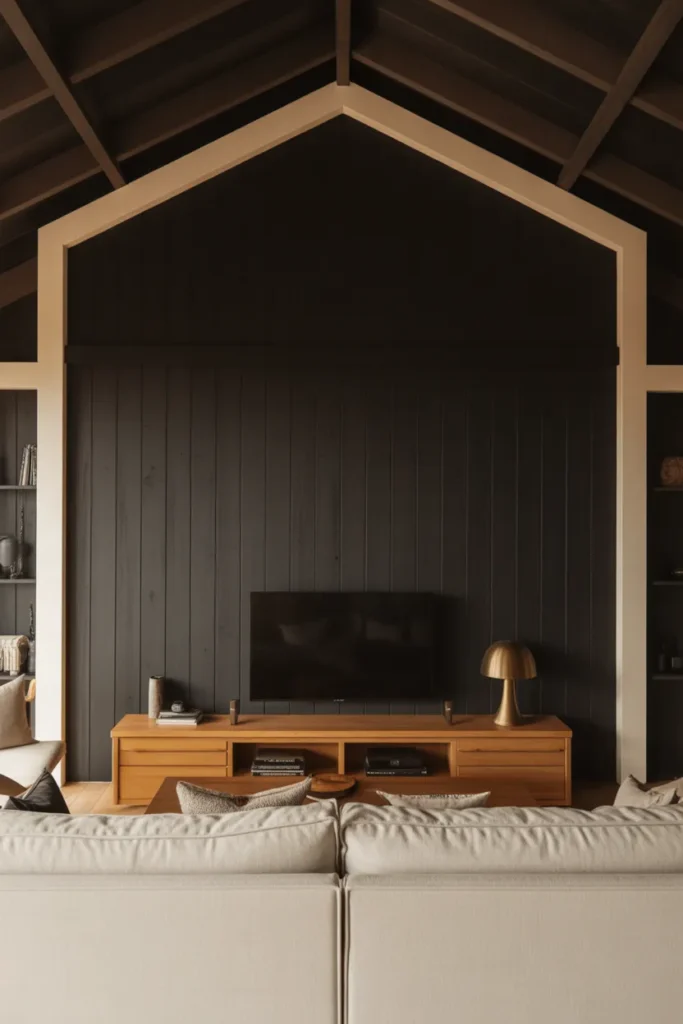
Vibe: Moody, sophisticated, grounded.
Why It Works
A single deep charcoal wall creates drama without feeling heavy if balanced with cream, warm wood, and adequate lighting. Dark walls recede visually, which can make a large space feel more intimate. The contrast between deep charcoal and cream reads as intentional, high-design color blocking. Charcoal also grounds warm wood tones (prevents them from feeling too honey-bright). This palette is sophisticated without being cold or trendy.
How to Get It
Choose a matte finish (Benjamin Moore “Wrought Iron” or “Off Black”) on one accent wall. Paint adjacent walls or trim in cream or soft white for maximum contrast. Keep furniture and textiles in warm neutrals to prevent the room from reading as dour. Add warm lighting (2700K) to prevent shadows from becoming oppressive. Charcoal works best on walls opposite windows (they receive natural light) or in seating areas where warm furniture provides visual relief.
| Shop the Look |
|---|
| Deep charcoal matte paint 1 gallon |
| Cream semi-gloss trim paint 1 quart |
| Warm brass picture rail lighting |
| Cream linen upholstered low profile sofa |
| Warm wood floating shelves for contrast |
12. Statement Fireplace Wall Creation
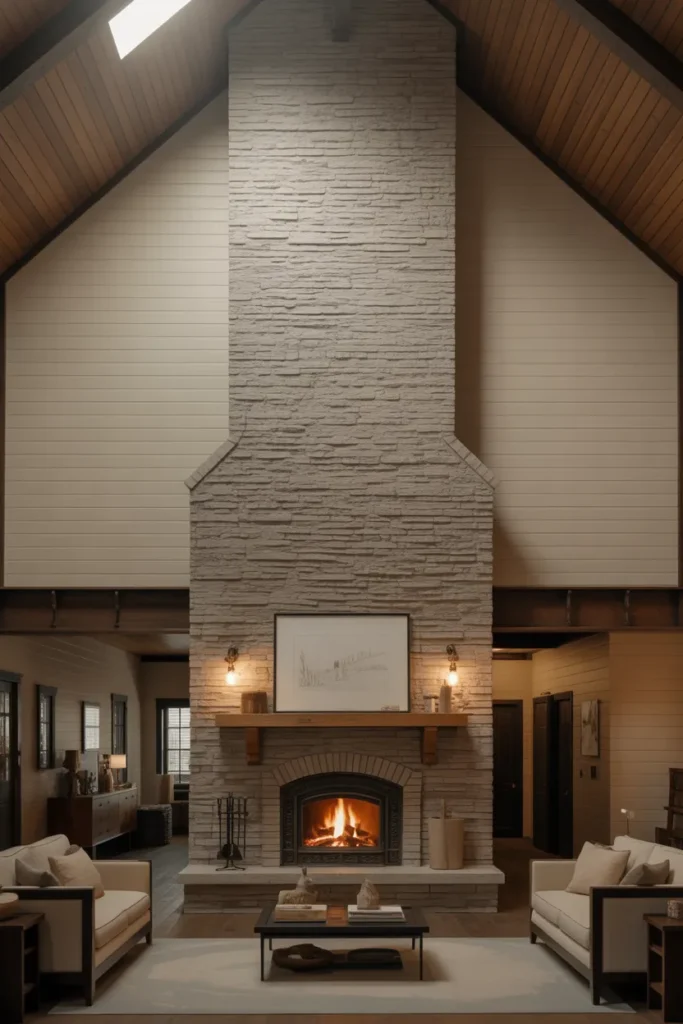
Vibe: Warm, anchoring, magnetic.
Why It Works
A dramatic fireplace wall gives permission for everything else to be quiet. It’s a built-in focal point that doesn’t require decoration. Textured materials (stacked stone, shiplap) add visual interest at scale. Firelight is warm, flickering, and gathers people—psychologically, it grounds large open spaces. A statement fireplace also legitimizes the rustic portion of modern rustic (barns didn’t have minimalist fireplace surrounds, but stone hearths are authentic). Minimal mantel styling (resist the urge to decorate) keeps the focus on the architecture.
How to Get It
If building new, choose stacked stone in warm grays and creams, or shiplap in similar tones. Keep the fireplace opening itself simple and symmetrical—a black metal frame or cast-iron insert. Resist ornamental mantels; a simple flat shelf or no mantel at all is more modern. Paint surrounding walls in soft white or cream to make the textured wall pop. Light the surround softly with sconces flanking the opening. The firelight itself becomes the primary decoration.
💡 Quick Win: Reface an existing fireplace with stacked stone or shiplap veneers and a new black metal surround. It’s a day-long project that resets the entire room.
| Shop the Look |
|---|
| Stacked stone veneer panels warm gray |
| Black cast iron fireplace surround insert |
| Simple wood floating mantel shelf |
| Matte black andirons and fireplace tools |
| Cream ceramic vessel for mantel styling |
13. Defined Zones Without Walls
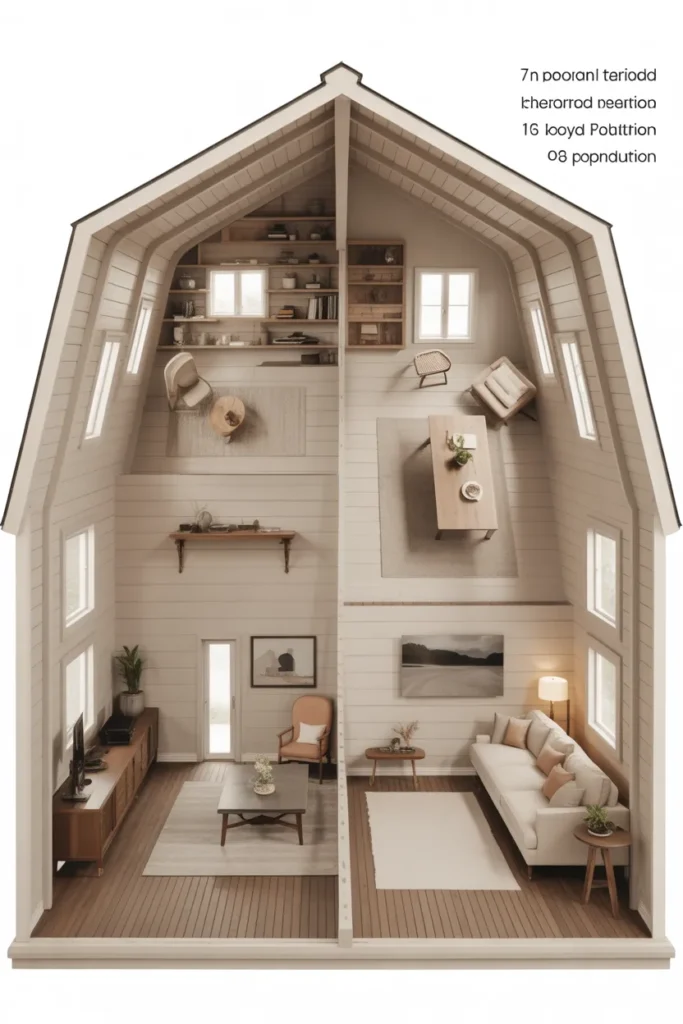
Vibe: Organized, flowing, intentional.
Why It Works
Large barndominiums need definition without claustrophobia. Furniture placement creates invisible boundaries—a sofa defines the back of a living zone; a table and chairs anchor a dining zone. Rugs, subtle floor material changes, or lighting clusters suggest zones to the eye without blocking views or light flow. This approach is more sophisticated than “two couches facing each other”; it shows intentional spatial planning. Each zone can have slightly different lighting or textural emphasis while remaining visually connected.
How to Get It
Map the major activity zones (sleeping, living, dining, working). Position furniture to face into those zones, not walls. Use area rugs to subtly delineate space—a 8×10 rug under living furniture, a smaller 5×8 under a dining table. Anchor each zone with a lighting fixture (pendant, floor lamp, sconce pair). Keep sightlines clear—avoid blocking windows or creating dead-ends. Layer textures and heights so the eye moves through the space naturally without needing walls.
| Shop the Look |
|---|
| Low profile linen sofa 2-piece sectional |
| Natural jute area rug 9×12 |
| Weathered wood coffee table with storage |
| Warm brass tripod standing lamp |
| Simple wooden dining table extends seating |
14. Concrete & Steel Elements
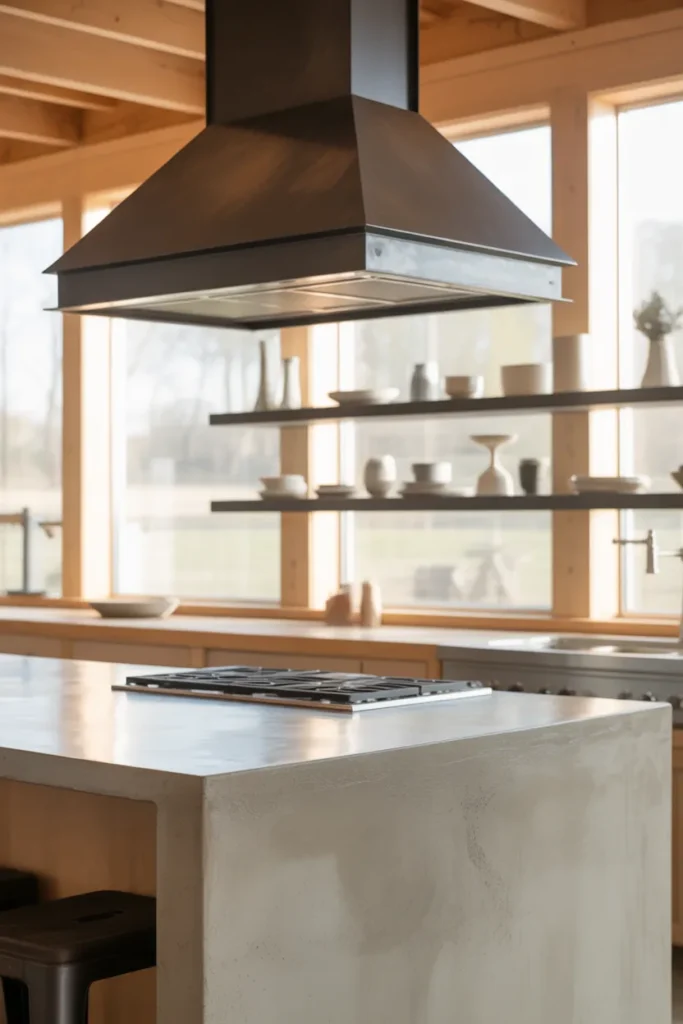
Vibe: Industrial, refined, contemporary.
Why It Works
Concrete and steel bridge the rustic and modern in barndominiums. Polished concrete is honest, durable, and has subtle visual depth. Matte black or brushed steel hardware reads as contemporary craft rather than farmhouse decoration. These materials also work functionally in kitchens and utility areas. Concrete especially—with its soft gray tones—complements warm wood without competing. The combination says “designed, not inherited.”
How to Get It
Polished concrete floors or countertops are best installed by professionals (cost varies widely, $8–15/sq ft for flooring). If budget is tight, concrete-look tile or self-leveling concrete countertop coatings are affordable alternatives. Pair with matte black steel shelving (Schoolhouse Electric, Rejuvenation, or Etsy makers) or a brushed stainless range hood. Avoid polished chrome or shiny finishes—matte is essential. Keep styling minimal on concrete surfaces to let the material be the hero.
| Shop the Look |
|---|
| Polished concrete floor or countertop finish |
| Matte black steel open shelving system |
| Brushed stainless steel range hood |
| Black metal shelf brackets heavy duty |
| Light gray concrete countertop sealer finish |
15. Warm Wood Tone Mastery
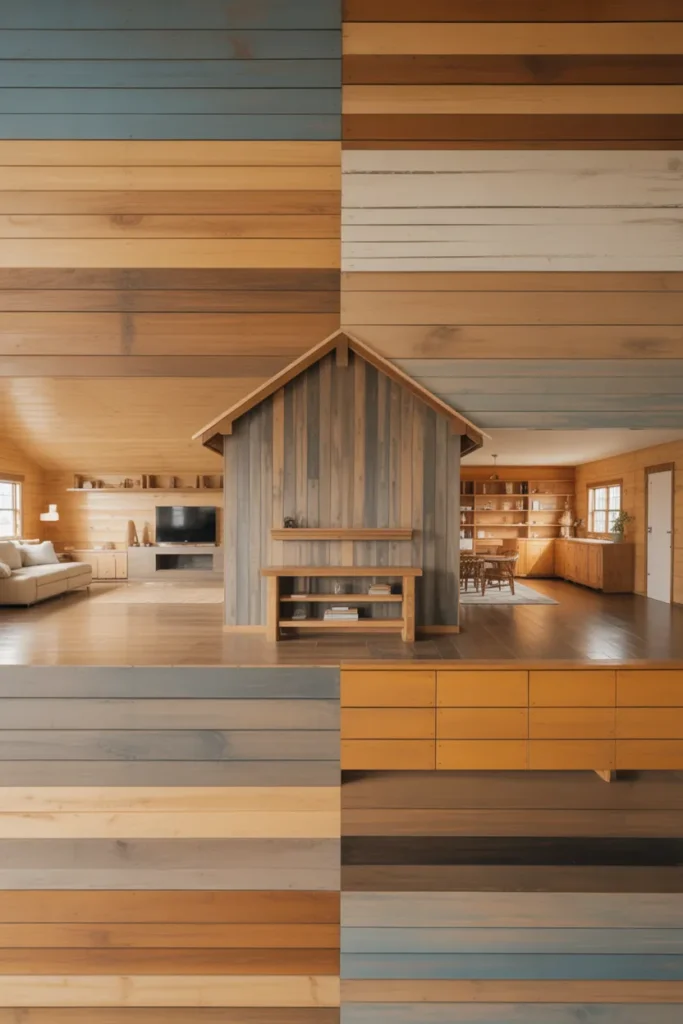
Vibe: Warm, cohesive, grounded.
Why It Works
Warm wood tones naturally coexist. Oak, walnut, cherry, and reclaimed timber all share warm undertones (golds, honeys, taupes) and can layer beautifully if you avoid cooler gray-toned woods or matte black finishes that cut the warmth. Multiple wood tones read as collected and authentic—not a design choice, but an accumulation over time. Wood also has inherent variation (grain, knots, natural color shifts), which modern designs often suppress but modern rustic celebrates.
How to Get It
Don’t match wood tones exactly—variety is the point. If flooring is honey oak, go weathered gray-brown on a feature wall, caramel on cabinetry. Ensure every wood choice leans warm. Avoid cool gray-brown or ash-toned woods. Embrace wood movement—knots, cracks, and color variation are features, not flaws. Finish woods naturally (oil, matte varnish) rather than heavily staining to honor the wood’s natural tone. Let wood be wood, not a canvas for dark stain.
| Shop the Look |
|---|
| Honey oak wide plank hardwood flooring |
| Weathered wood feature wall shiplap boards |
| Warm walnut kitchen cabinetry doors |
| Caramel-tone wood dining table solid |
| Natural oil finish wood protective sealant |
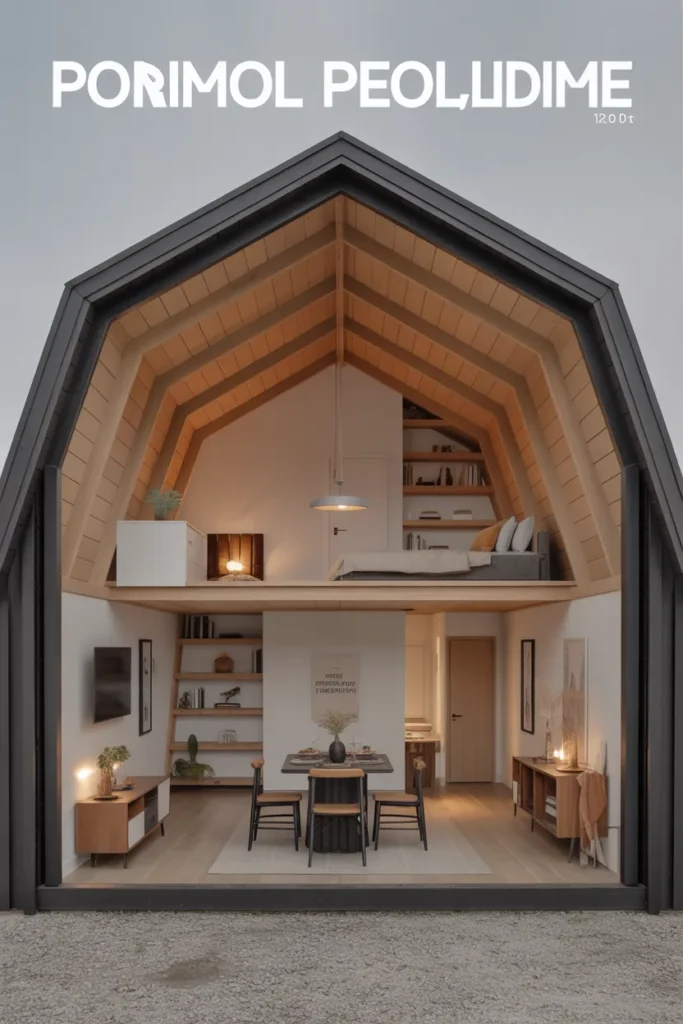
16. Compact Barndominium Strategies
Vibe: Cozy, efficient, intentional.
Why It Works
Smaller barndominiums rely on visual breathing room, not decoration. Low-profile furniture (sofa without arms, minimal tables) keeps sightlines open. Vertical organization (tall shelving, wall-mounted elements) makes small spaces feel larger. A single architectural focal point (exposed beams, fireplace, large window) grounds the space and prevents it from feeling fragmented. Open concept is essential in small barndominiums—no closed rooms that interrupt flow.
How to Get It
Choose furniture at human scale, not oversized. A 72-inch sofa, not an 90-inch sectional. A round or oval table, not a massive rectangular one. Mount shelving at the highest wall height to draw the eye up. Use a muted palette so the eye isn’t distracted. Keep the floor clear of visual clutter—minimal rugs, no many small tables. Position one strong piece (large window, fireplace, or feature wall) as the focal point, then build the rest around it.
| Shop the Look |
|---|
| Low-profile linen sofa 72 inches |
| Compact floating wood dining table |
| Tall black metal open shelving system |
| Warm brass pendant light single |
| Natural jute area rug 6×9 smaller |
How to Start Your Modern Rustic Barndominium Transformation
The One First Move: Commit to the Bones
Don’t paint. Don’t furnish. Don’t accessorize. First, expose or repair your structural elements. If beams exist above drywall, open them. If there’s original shiplap or boards, uncover them. If your barn shell is sound but interior walls are dated, demo the inauthentic—return to the original structure. This single move—returning to honest bones—anchors every decision that follows. Everything else builds from structural authenticity. Modern rustic that ignores the actual architecture it’s built on feels like a costume, not a home.
The Most Common Mistake: Mixing Wood Tones Without Intention
Beginners bring in cool-gray woods, modern gray paint, and sleek chrome fixtures, then wonder why the space feels disjointed. Modern rustic requires warm wood cohesion. A honey oak floor paired with a cool gray or ash-toned accent wall reads as disconnected. Or: oversized décor and heavy drapes that scale wrong to barn proportions, making rooms feel cramped despite volume. Fix this by choosing ONE warm wood tone family and staying committed. If your floor is honey oak, every other wood leans toward caramel, warm walnut, or weathered browns—never cool grays.
Budget Entry Points (Under $50 Each)
A single large cream linen throw pillow for an existing sofa. A matte black geometric wall sconce (installed yourself, with basic tools). A warm brass farmhouse-style pendant light with a cloth cord to replace an existing overhead fixture. These three moves alone—adding one quality textile, swapping one wall element, and changing one light fixture—signal a cohesive shift without full renovation.
Realistic Expectations
A full barndominium transformation takes 6–12 months if DIY (longer if waiting for contractors). A starter version—one accent wall, updated flooring, exposed beams, new lighting, core furniture—can happen in 3–4 months. A weekend makeover might look like: paint one wall, install new sconces, arrange furniture differently, and add textiles. Budget $5,000–10,000 for a starter room (flooring, paint, key furniture, lighting). Full multi-room transformation: $30,000–100,000+ depending on structural needs and finishes. Expose bones gradually; furnish incrementally. There’s no rush.
Frequently Asked Questions About Modern Rustic Barndominium Living
What is a barndominium and how is it different from farmhouse design?
A barndominium is an actual converted agricultural building—a real barn, stable, grain storage, or similar structure—renovated for residential living. It retains the building’s bones: high ceilings, open floor plans, large timber framing, and original materials. Modern rustic barndominium design honors that authentic architecture. Farmhouse design, by contrast, is a style applied to any home—it can be new construction or a ranch house styled to look like a farm. The difference: barndominiums ARE the architecture; farmhouse is applied aesthetics. Barndominiums feel collected and honest because they literally are structures with history.
What warm paint colors work best for barndominium walls?
Warm whites (Benjamin Moore “Natural Cream,” “Accessible Beige”), soft greiges (Benjamin Moore “Revere Pewter,” “Chelsea Gray”), and warm grays (Sherwin-Williams “Urbane Bronze,” “Agreeable Gray”) all complement warm wood tones. Avoid cool grays like Benjamin Moore “Classic Gray” or anything with blue undertones. Test paint samples on your actual walls in different lights; warm wood reflects warm undertones differently than drywall. Most successful barndominium walls use either a warm white (letting wood tones do the color work) or a greige/warm gray that echoes wood tones without competing.
How much does it cost to convert a real barn into a livable barndominium?
Conversion costs range $150–$300+ per square foot depending on the barn’s condition, local permits, and desired finishes. A 1,200 sq ft barn might cost $180,000–$360,000 to fully convert, including structural repairs, electrical, plumbing, insulation, and HVAC. Foundation work, roof repair, and beam treatment are expensive wild cards. Renovation timelines stretch to 12–24 months. If buying a pre-converted barndominium, prices reflect this work; you’re paying for the structure-to-livable transformation, not buying raw land.
Can you achieve modern rustic in an apartment or condo, or do you need an actual barn?
Yes. The principles—exposed wood or shiplap accent walls, simple black fixtures, warm textiles, layered lighting, minimal décor—apply to any space. You won’t have 20-foot ceilings or original beams, but you can build a modern rustic aesthetic in a 1-bedroom apartment. Focus on what you CAN control: paint color, lighting, textiles, and a single focal point (a feature wall, artwork, or fireplace surround). Barndominiums have structural advantage (the bones are already there), but modern rustic philosophy—warmth, honesty, intentionality—transcends building type.
What’s the best way to add color accents to a warm-neutral modern rustic palette?
Introduce color sparingly through textiles, art, or ceramics rather than paint or large furniture. A single warm terracotta or rust-toned canvas, a burnt orange throw blanket, or a set of warm ochre ceramic vessels gives personality without disrupting calm. Keep accent colors in the warm family (terracotta, ochre, rust, warm teal) rather than cool or vibrant tones. Limit accent color to roughly 5–10% of the visible room—textiles and accessories, not walls or major furniture. The power of modern rustic is restraint; color is punctuation, not narrative.
Ready to Create Your Dream Modern Rustic Barndominium?
These 16 barndominium ideas span everything from color and materials to lighting, furniture, and spatial planning—enough to guide a full transformation or a focused single room. The beauty of modern rustic is that each idea stands alone; you don’t need to do all 16. Start with one element that resonates, and build from there.
Transformation doesn’t happen overnight, and it doesn’t need to. Starting with exposed beams or a single feature wall is not just okay—it’s the right way. Let each decision inform the next. That’s how a space becomes genuinely yours rather than a recreation of someone else’s barn.
Pick one barndominium idea this week—maybe it’s swapping a light fixture, painting one wall, or sourcing one statement piece. That single move is the beginning. Once you sit in a modern rustic space you’ve intentionally designed, you’ll feel the difference: the light moving differently, the quiet, the sense of home.
Save and pin your favorites. Build a personal mood board of what resonates. The barndominium you create will reflect not a trend, but how you actually want to live—with intention, warmth, and authentic style.

One Comment