
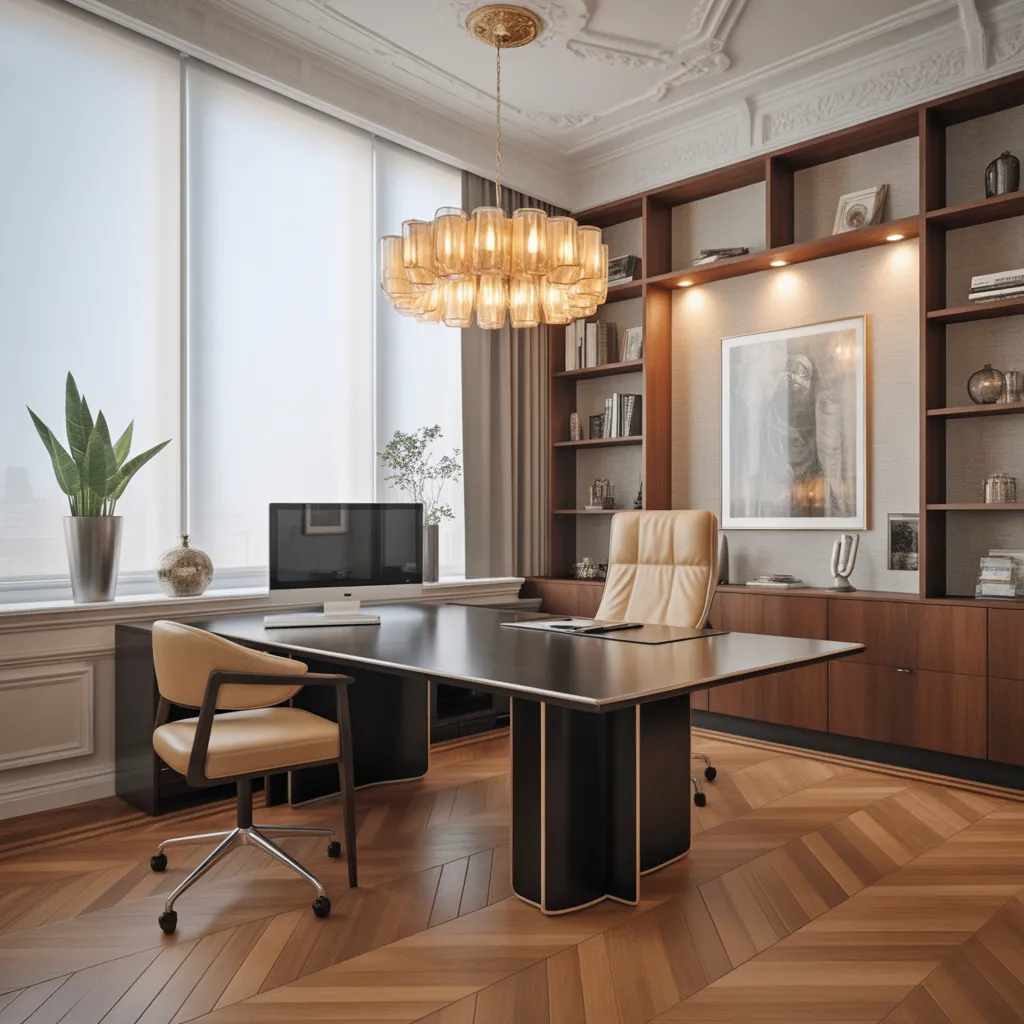
20 Inspiring Home Office Aesthetic Ideas
Searching for inspiring home office aesthetic ideas that make your workspace feel beautiful, cozy, and motivating? A thoughtfully designed office can instantly improve focus, creativity, and daily productivity while making your home feel more organized and inspiring. Whether you have a dedicated office room or a small corner setup, the right design details can completely transform the atmosphere.
In this article, you’ll find creative and practical ideas that combine comfort, style, and functionality for a workspace you’ll genuinely enjoy using every day. From soft neutral palettes and modern desk styling to cozy lighting and clever storage solutions, these ideas are designed to help you create a space that feels both productive and visually calming. In my experience, even small upgrades like adding layered textures, wall art, or better desk organization can make working from home feel far more enjoyable. I’ve also noticed that a personalized workspace often helps people stay more focused and inspired throughout the day. These aesthetic ideas will help you design a home office that feels stylish, welcoming, and uniquely yours.
Do Read out: 14 Exterior Window Trim Ideas That Add Instant Charm
1. Warm Neutral Desk Setup
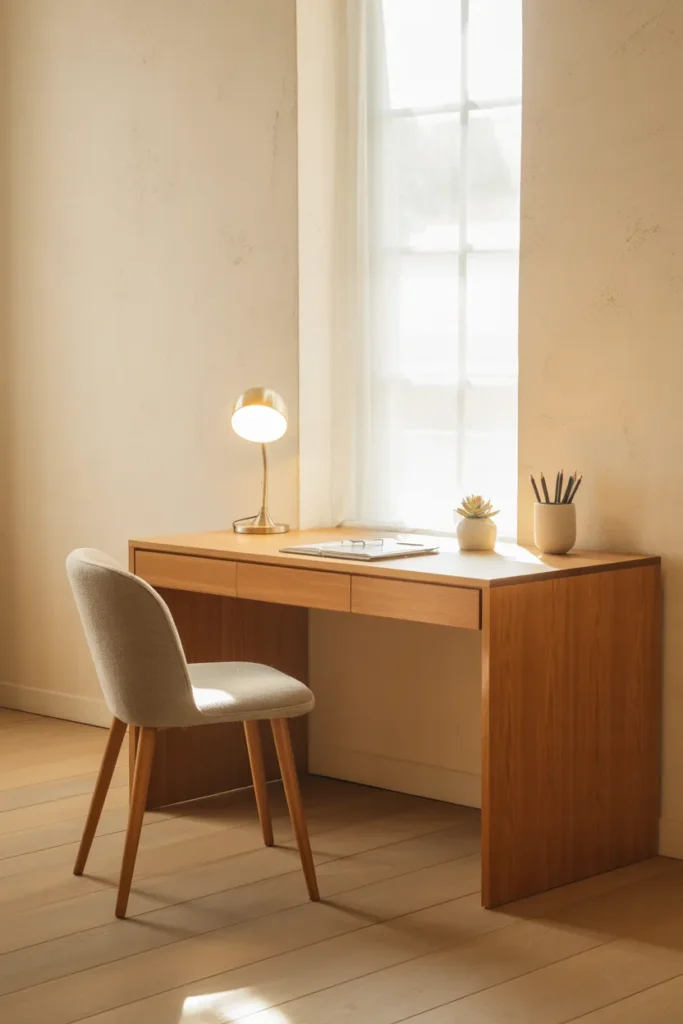
When you sit down at a desk surrounded by warm neutrals, something shifts. The brain naturally relaxes, focus sharpens, and productivity flows more easily. In my experience, warm neutral home office aesthetic ideas work because they create a visual foundation that doesn’t compete for your attention—your work does. Cream walls, natural wood desks, and soft beige chairs blend together seamlessly, making the space feel both professional and welcoming. This palette isn’t boring; it’s intentional. The warmth comes from sunlight hitting natural materials, creating subtle shadows and depth. Real homes with this setup report fewer distractions and longer, more focused work sessions.
What makes this approach powerful is how it transforms any room into a productivity zone without feeling sterile or cold. Unlike stark white or gray spaces that can feel corporate, warm neutrals feel like home while maintaining professionalism. I’ve seen this work beautifully in small apartments and large dedicated offices alike. The key is layering different textures—smooth wood, soft fabrics, natural fibers—within the same warm color family. Your eye moves smoothly across the space, settling naturally on your work. This visual harmony also makes it easier to add accent colors later, whether it’s a green plant or a single piece of artwork, without disrupting the calming effect.
2. Floating Shelf Display
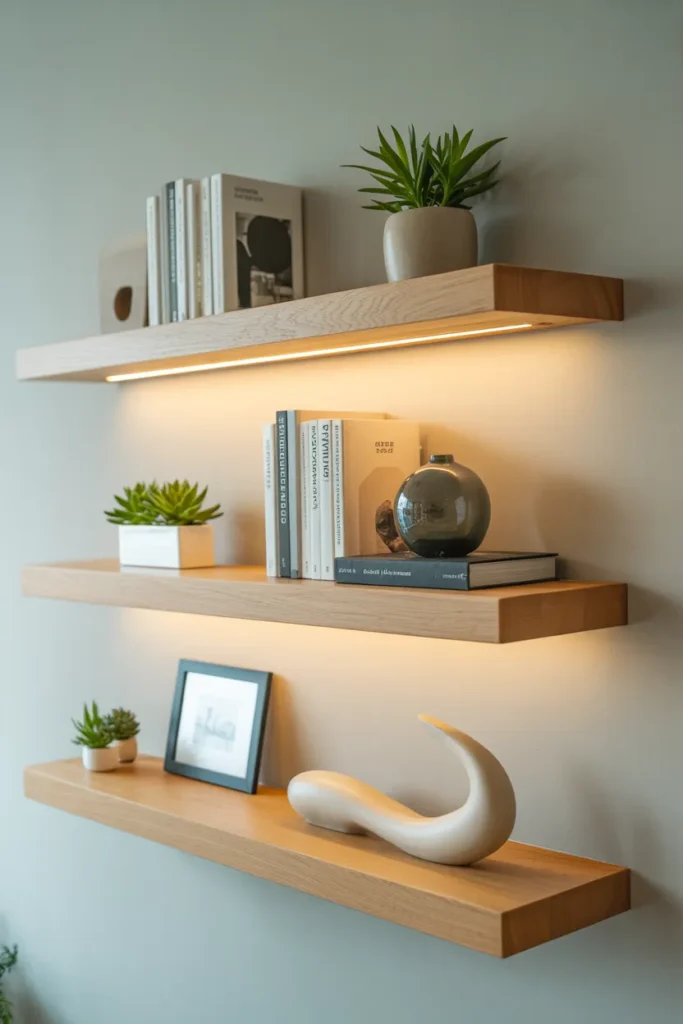
Floating shelves transform empty wall space into purposeful, beautiful storage that actually enhances your workspace. Instead of keeping everything hidden in drawers, you curate a small collection of items that inspire and support your work—reference books, meaningful objects, small plants. That’s why many designers recommend using floating shelves as a key element in home office aesthetic designs. They add dimension without making the space feel cramped or cluttered. The key is restraint: each shelf should feel intentional, not stuffed. Three or four items per shelf, with breathing room between them, creates visual calm while keeping your most-used resources within arm’s reach. This approach works in tight spaces and sprawling offices equally well.
I’ve noticed that floating shelves serve a dual purpose that desk storage simply can’t match. They’re functional and decorative simultaneously, creating a professional backdrop that also tells your story. A few design books, a small plant, perhaps a meaningful photo—these become part of your office’s visual identity. The styling matters enormously. Light wood shelves against soft gray walls create a Scandinavian vibe that feels both creative and grounded. Dark shelves on white walls feel more contemporary and bold. Either way, the floating effect adds architectural interest that makes the room feel designed, not just furnished. People notice these details, whether they’re visiting for a video call or you’re simply enjoying your own space daily.
3. Task Lighting Accent
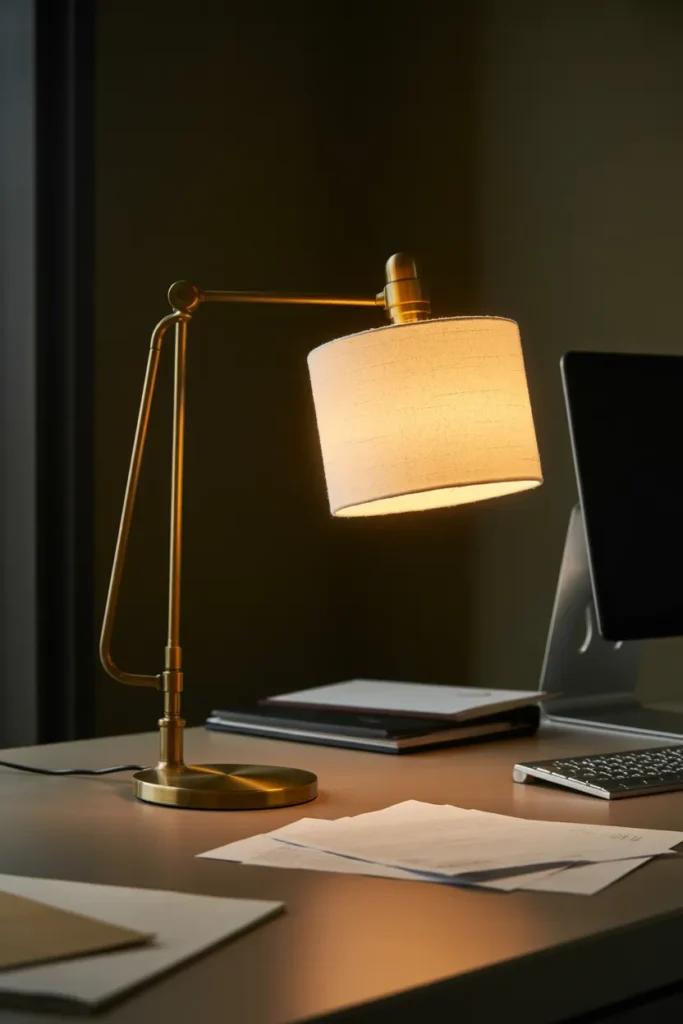
Good lighting isn’t a luxury in a home office—it’s essential, and the right task lamp becomes both functional tool and design statement. When you place a warm brass or gold lamp on your desk, it does two things at once: eliminates shadows on your work surface and adds an aesthetic element that elevates the entire room. In my experience, the difference between overhead lighting and targeted task lighting is remarkable. Your eyes feel less strained, your focus sharpens, and the warm glow creates a professional yet intimate atmosphere that makes working from home actually enjoyable. The best home office aesthetic ideas always include thoughtful lighting because it affects everything—mood, energy, visual clarity, and how you feel during those long afternoons at your desk.
Task lighting works because it creates visual hierarchy in your workspace. Instead of harsh overhead lights flooding the entire room, a focused beam draws attention to your work while creating ambient warmth around it. I’ve seen people transform their offices simply by switching to a quality brass lamp with warm LED bulbs. The color temperature matters enormously—aim for 2700K for warm light that doesn’t create blue-light strain. Modern adjustable lamps give you flexibility: bright enough for detailed work, dimmable for calls or creative thinking. The lamp itself becomes a design element, whether it’s minimalist and modern or has vintage character. This single addition signals that your workspace is intentional, professional, and designed for you to do your best work.
4. Plant Corner Greenery
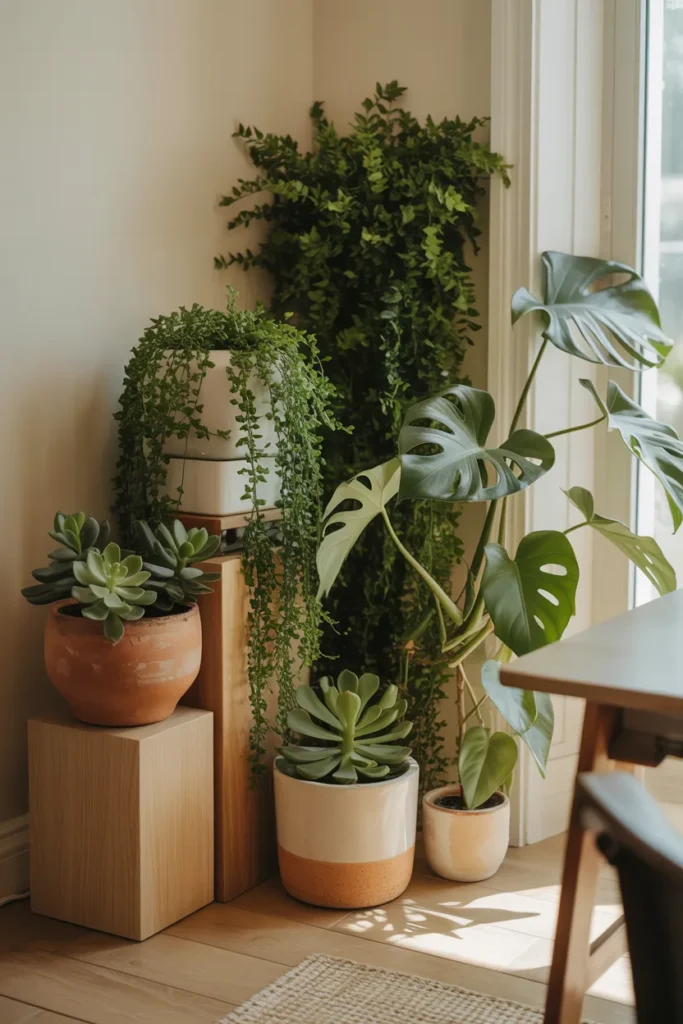
There’s something about real green plants that changes a room’s entire energy. When you add a small corner of greenery to your home office, you’re not just adding decoration—you’re creating a living element that makes the space feel fresher, calmer, and more human. In my experience, offices with plants feel less sterile and more inviting, whether you’re working solo or on video calls with others. The inspiring home office aesthetic ideas that stand the test of time almost always include greenery because it works on multiple levels: psychologically, plants reduce stress and boost focus; visually, they break up neutral palettes and add organic shape; functionally, they improve air quality. A simple pothos trailing from a shelf or a large monstera anchoring a corner transforms how the entire room feels without requiring much maintenance or investment.
I’ve noticed that plant corners work especially well in offices that feel too minimal or corporate. A cluster of plants in one area creates a breathing space—literally and figuratively. You don’t need a jungle; three or four plants of different heights in neutral-toned pots create impact without feeling chaotic. The best approach is choosing plants that tolerate indoor office conditions: pothos, snake plants, monstera, or peace lilies thrive with indirect light and occasional watering. Position them where you’ll see them naturally as you work, perhaps in a corner visible from your desk or by a window. The natural light filtering through their leaves creates moving shadows and subtle color variation throughout the day, making your workspace feel dynamic and alive rather than static.
5. Minimalist Desk Organization
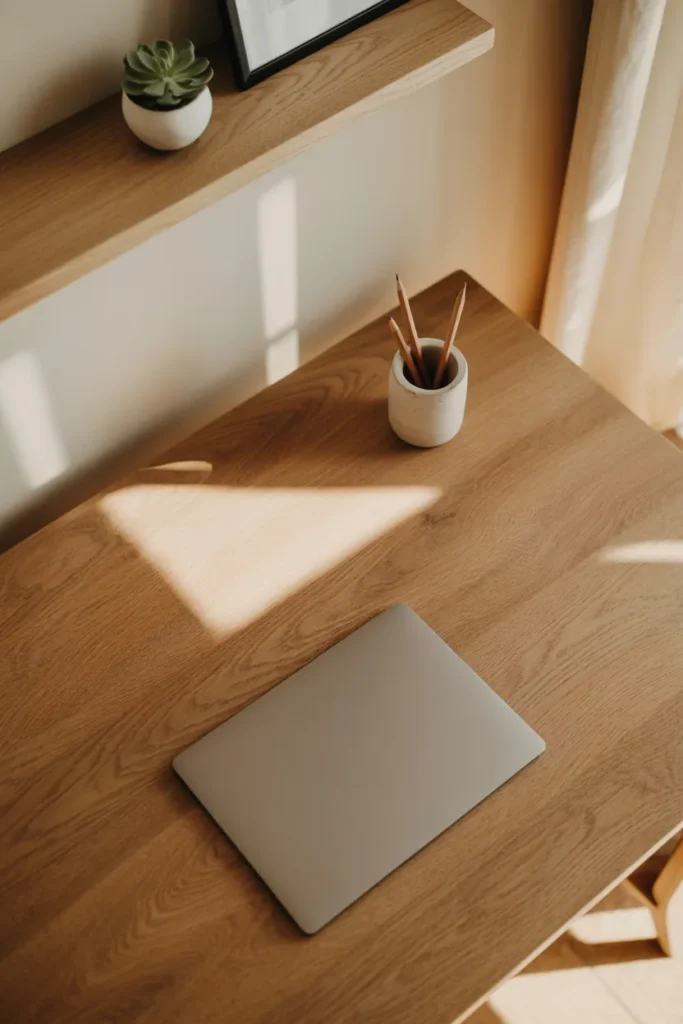
A clear desk isn’t just about aesthetics—it’s a powerful productivity tool that directly affects how your brain functions. When your workspace contains only what you absolutely need for today’s work, your mind isn’t processing visual noise in the background. That’s why minimalist desk organization is central to any truly inspiring home office aesthetic. A single pen holder, a desk pad, perhaps your monitor or laptop—that’s genuinely enough. Everything else lives in drawers or on shelves, organized and out of sight. This approach works because it removes friction from your workday. You’re not searching through clutter for a pen; you’re not visually distracted by three days’ worth of papers. The psychological effect is real: people with minimalist desks report better focus, less anxiety, and a greater sense of control over their space.
I’ve seen countless home offices transform simply by removing unnecessary items from the desktop. The clearing process itself becomes clarifying—you realize what you actually use daily versus what’s just taking up space. Once you establish this minimal baseline, maintaining it becomes easier because everything has an assigned home. A single drawer for supplies, a shelf for reference materials, a small tray for current projects—these hidden storage solutions keep your desk surface pristine while keeping tools accessible. The visual result is striking: your desk becomes a calm launching point for focused work rather than a stress-inducing pile. When you sit down to a clear, organized workspace, you immediately feel more capable and centered. This foundation of visual simplicity is what allows other aesthetic elements—a beautiful lamp, a small plant, quality stationery—to truly shine without creating clutter.
6. Statement Wall Color
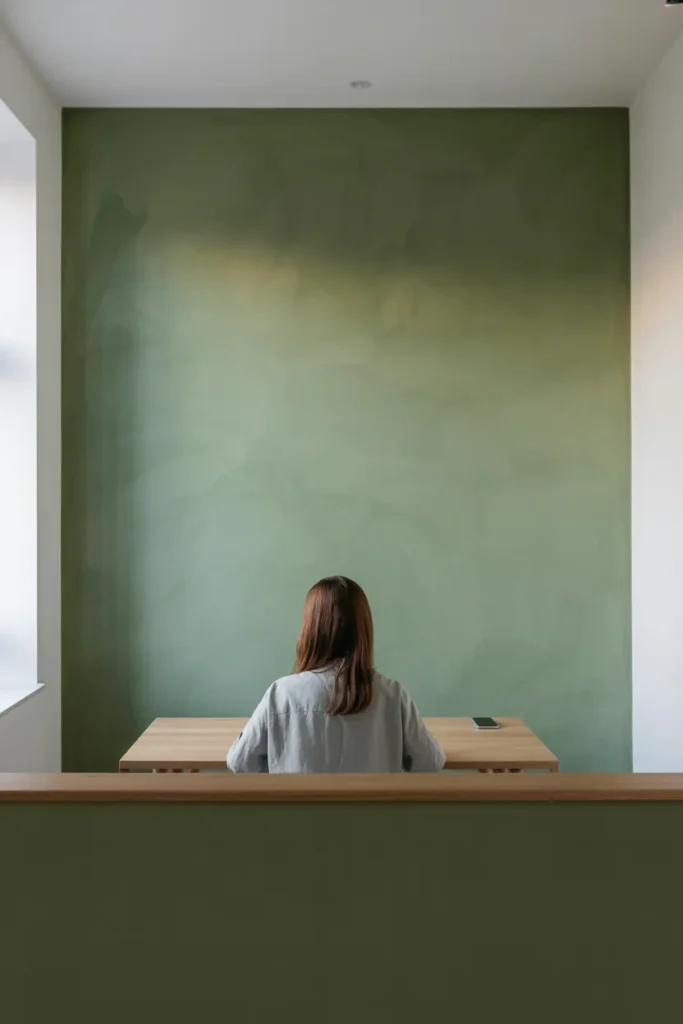
One painted wall can completely transform how a home office feels and how you feel working in it. Instead of four neutral walls that feel generic, a single statement wall in a sophisticated color—soft sage, muted blue, or warm terracotta—creates immediate visual interest and personality. This is a smart design move because it allows you to add color without overwhelming the space or making it feel unprofessional. In my experience, the best home office aesthetic ideas often include a subtle accent wall because it affects your mood and energy throughout the day. A soft blue wall promotes calm and focus; sage green brings natural serenity; warm terracotta adds energy and creativity. The color you choose should reflect what you need most in your work: grounding, inspiration, or calm focus. Position this wall where you’ll see it constantly—ideally behind your desk.
I’ve noticed that an accent wall also serves a practical purpose in the age of video calls and Zoom meetings. Instead of generic white walls, your background becomes intentional and professional, showing colleagues and clients that you’ve created a thoughtful workspace. The key is choosing a color that reads well on camera and complements your skin tone if you’re often visible in the frame. Soft colors work better than bold ones; they add sophistication without distraction. The psychological effect is significant: research shows that surrounding yourself with color that resonates with you boosts creativity and reduces stress. You don’t need to commit to painting your entire office; one wall delivers maximum impact with minimal investment. This single choice transforms your space from basic to intentional, making your home office aesthetic feel curated and professional while still feeling personal and creative.
7. Wooden Desk with Natural Grain
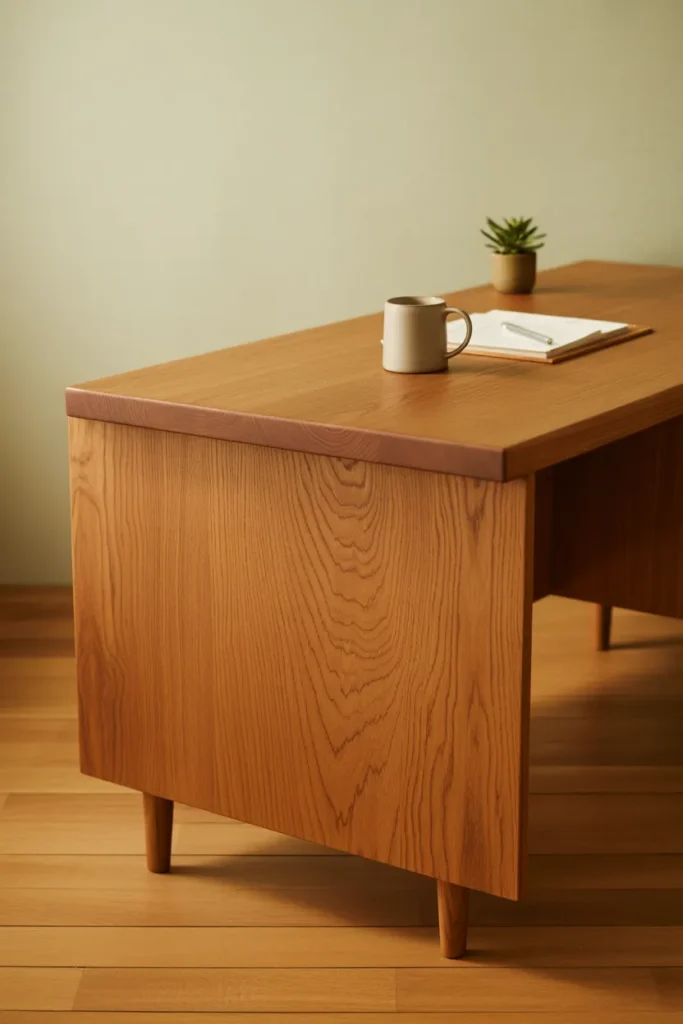
A wooden desk isn’t just furniture—it’s the foundation of your entire home office aesthetic, and choosing real wood makes an enormous difference in how the space feels. When sunlight hits natural grain and warm wood tones, something shifts in the room’s energy. That’s because natural materials like wood have psychological benefits that laminate or particle board simply can’t match. In my experience, working at a quality wooden desk feels fundamentally different from working at a generic office desk. The wood’s warmth, the visible grain, the slight imperfections that prove it’s real—these details create a space that feels human and grounded rather than corporate or temporary. A wooden desk anchors your inspiring home office aesthetic because it’s a statement that you’ve invested in your workspace and respect the work you do there.
I’ve noticed that wooden desks become more beautiful with time, developing patina and character as they age. Small scratches and marks tell the story of work completed; they add authenticity that new furniture can’t replicate. This is important because it means your desk investment grows more meaningful, not less, as years pass. The grain patterns in wood create natural visual interest that keeps the eye engaged without creating clutter. Light wood feels open and creative; darker wood feels grounded and professional; medium tones balance both qualities. Regardless of shade, real wood introduces organic variation that prevents spaces from feeling sterile. When you pair a natural wooden desk with warm lighting, neutral walls, and minimal clutter, you’ve created the psychological and visual foundation for focused, inspired work.
8. Soft Area Rug Anchor
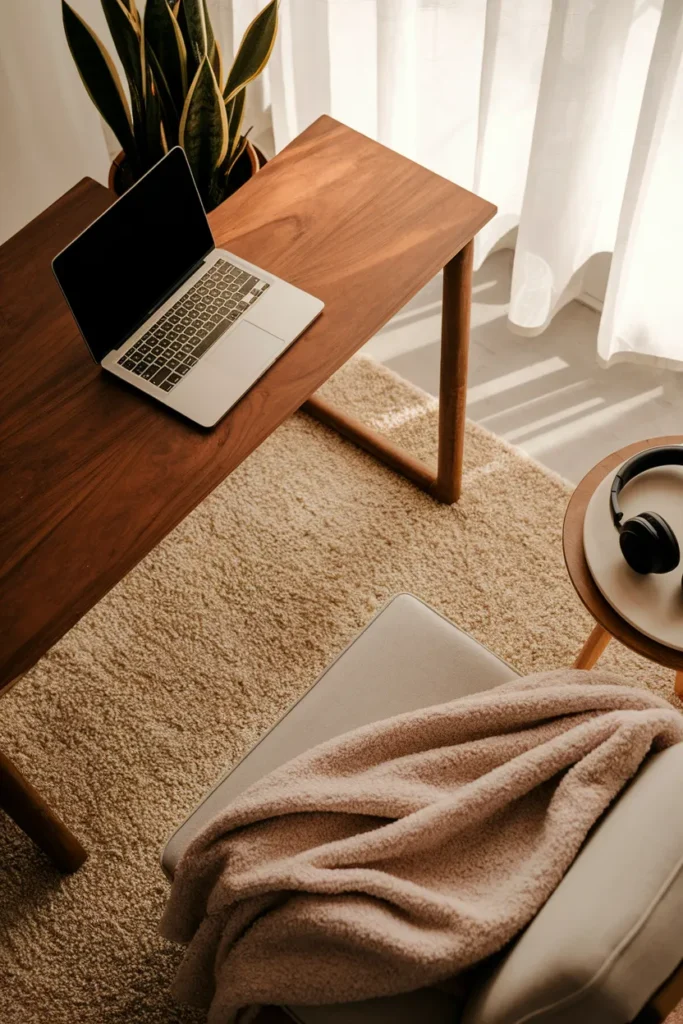
An area rug does something subtle but powerful: it tells your brain and body that this zone is your workspace, separate from the rest of your home. When you step onto a soft rug positioned under your desk and chair, you’re entering a defined territory that signals focus and intention. This is a key element in home office aesthetic design because it works psychologically and practically. The rug anchors your furniture, making the space feel intentionally arranged rather than random. Natural fiber rugs in cream, light gray, or warm beige add texture and warmth while remaining neutral enough to complement any color palette. In my experience, people who add a rug to their office report feeling more settled and focused, as if the space has become a real room rather than just a corner of another space.
I’ve seen rugs transform small office spaces by creating visual definition and acoustic softening simultaneously. Hard flooring reflects sound, creating echo and a sense of emptiness; a rug absorbs some sound, making the space feel more intimate and professional. The texture underfoot matters too—soft wool or jute blend rugs feel pleasant during long work sessions, grounding you physically as well as visually. Size is important: the rug should extend at least twelve inches beyond your desk and chair in all directions, creating a clear boundary. This doesn’t need to be expensive; a quality neutral rug from a home goods store works beautifully. What matters is choosing natural materials and warm, neutral tones that complement your inspiring home office aesthetic. The rug becomes the visual anchor that says: this space is curated, intentional, and designed for meaningful work.
9. Window Positioning Strategy
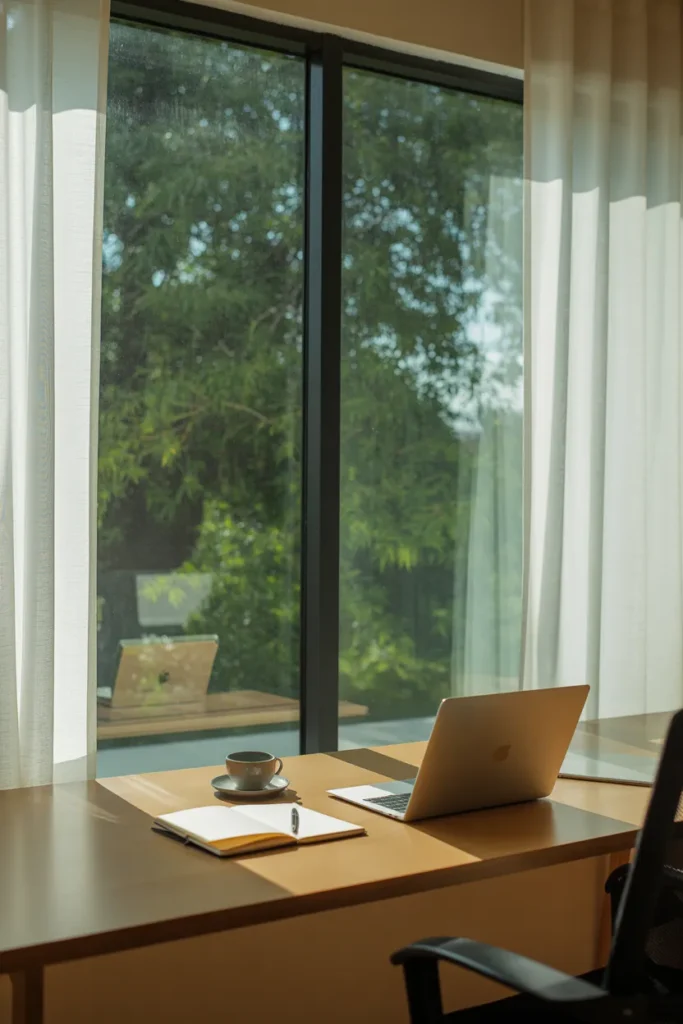
Where you position your desk relative to windows determines whether your office feels energizing or draining, and this decision affects your productivity more than most people realize. Natural light is transformative—it boosts mood, regulates circadian rhythms, and reduces eye strain compared to artificial light alone. The trick is positioning your desk perpendicular to the window rather than facing it directly, which prevents glare on your screen while allowing soft, diffused light to illuminate your workspace. In my experience, offices with good natural light access feel fundamentally different from interior offices without windows. People work longer without fatigue, feel more creative, and report better overall mood. This is why window positioning is central to inspiring home office aesthetic ideas that actually support your wellbeing, not just look nice. Your office should work with natural light, not against it.
I’ve noticed that the psychological benefit of being near a window extends beyond just better lighting. Having a view of trees, sky, or even a quiet street provides mental breaks during intense work. Your eyes need distance and nature; staring at screens exhausts them. A window view allows you to glance away every twenty minutes, letting your eyes refocus on distant, natural elements. This simple act reduces strain and refreshes focus. If you have multiple windows, position yourself to see outside without direct glare on your monitor. Minimal window treatments—or none at all—maximizes the light. Natural fabric sheers, if needed, diffuse harsh afternoon sun without blocking the view. The combination of natural light, the ability to see outdoors, and the psychological grounding of being near a window creates an office environment that supports both productivity and wellbeing.
10. Open Shelving for Reference Materials
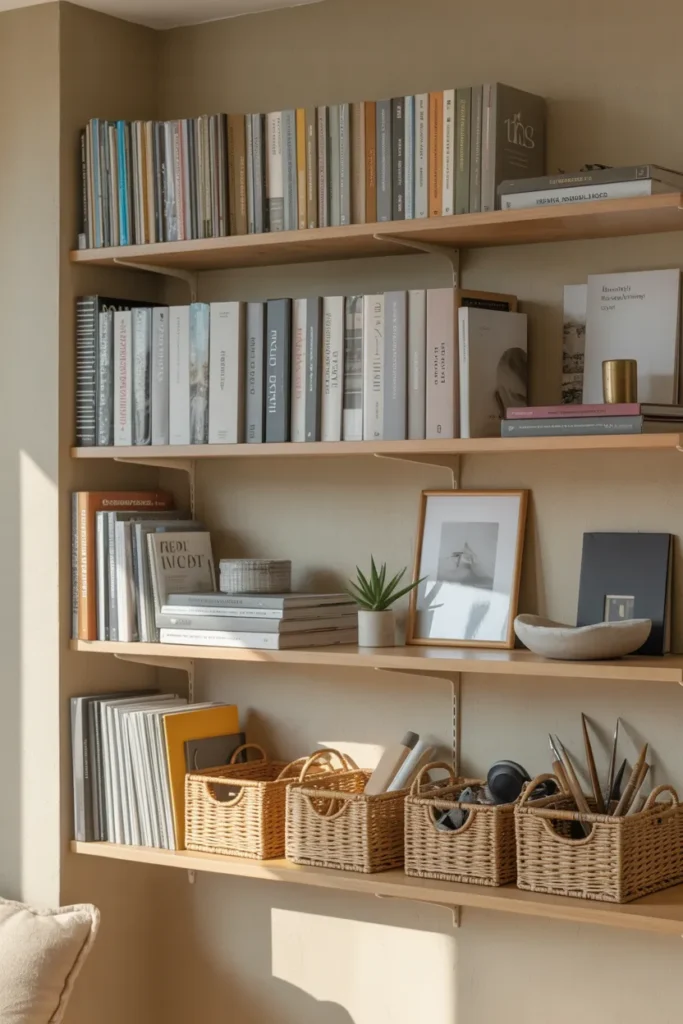
Open shelving serves a practical purpose—keeping your most-used resources visible and within reach—while contributing significantly to your office’s visual aesthetic. Instead of hiding everything behind cabinet doors, you curate a display of materials that matter to your work: reference books, design inspiration, writing guides, or industry publications. This approach works because it removes friction from your workday; you’re not hunting through closed storage for something you need. In my experience, offices with visible reference materials feel more creative and resourceful. The books themselves become part of the inspiring home office aesthetic, communicating that this is a space for learning and creation. When you arrange them thoughtfully—mixing spine-out books with a few meaningful objects, adding a small plant, leaving breathing room—the shelves become beautiful while remaining functional. This balance between beauty and utility is what separates inspiring workspaces from cluttered ones.
I’ve seen open shelving transform how people approach their work by making resources immediately visible. When your design inspiration books, writing references, or industry guides are on display, you’re more likely to consult them throughout your day, improving your work quality. The key to keeping open shelves from feeling chaotic is restraint and intentional arrangement. Group similar items together; leave space between clusters; vary heights and colors naturally without forcing it. Neutral-colored storage baskets on lower shelves can contain supplies and smaller items that would otherwise create visual noise. The styling matters enormously—this isn’t random storage; it’s curated display. A well-organized bookshelf communicates professionalism and expertise to anyone who sees your office, whether in person or on video calls. The combination of accessibility and intentional aesthetics makes open shelving an essential element in contemporary home office design.
11. Soft Ambient Lighting Layering
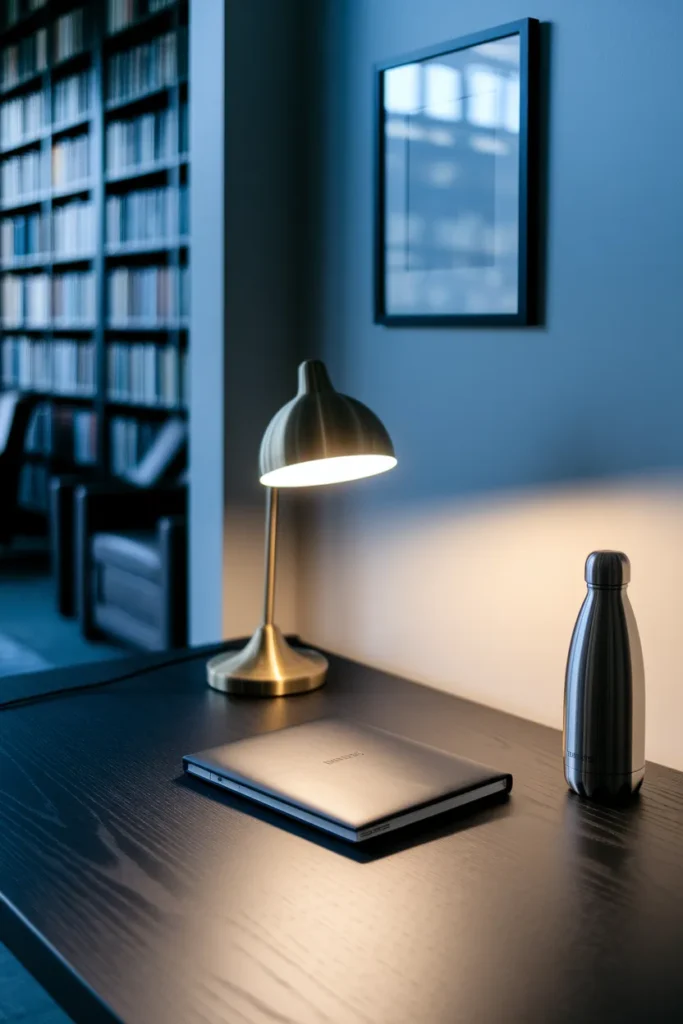
Lighting isn’t one-dimensional, and the best home offices use multiple light sources working together to create atmosphere, reduce strain, and support different work modes throughout the day. A single overhead light is never enough; instead, layer warm task lighting focused on your desk with softer ambient sources around the room. In my experience, this approach to lighting transforms how you feel during work sessions. Warm ambient light creates a welcoming, intimate atmosphere that makes your office feel like a sanctuary rather than a corporate cubicle. The key is choosing warm color temperature—around 2700K—which feels natural and doesn’t trigger the same blue-light effects as cool white light. When you combine focused task lighting with diffused ambient sources, you create depth and dimension that make the space feel larger and more intentional. This is a foundational element in inspiring home office aesthetic design that genuinely affects your wellbeing.
I’ve noticed that lighting quality dramatically impacts focus and mood during long work sessions, yet it’s often overlooked in office design. Dimmable fixtures are essential because your lighting needs change throughout the day and depending on the task. Bright light for detailed work or video calls; softer light for creative thinking or winding down at day’s end. Wall sconces flanking your desk create flattering light without glare; pendant lights or string lights add warmth and coziness to corners; a task lamp provides focused illumination where you need it most. The warm glow from multiple sources creates visual interest and psychological comfort that makes your workspace feel designed and thoughtful. This layering approach is more forgiving than relying on a single harsh overhead fixture. When people step into offices with properly layered warm lighting, they immediately sense the difference—the space feels more professional, more creative, and more inviting.
12. Personal Color Accent Pieces
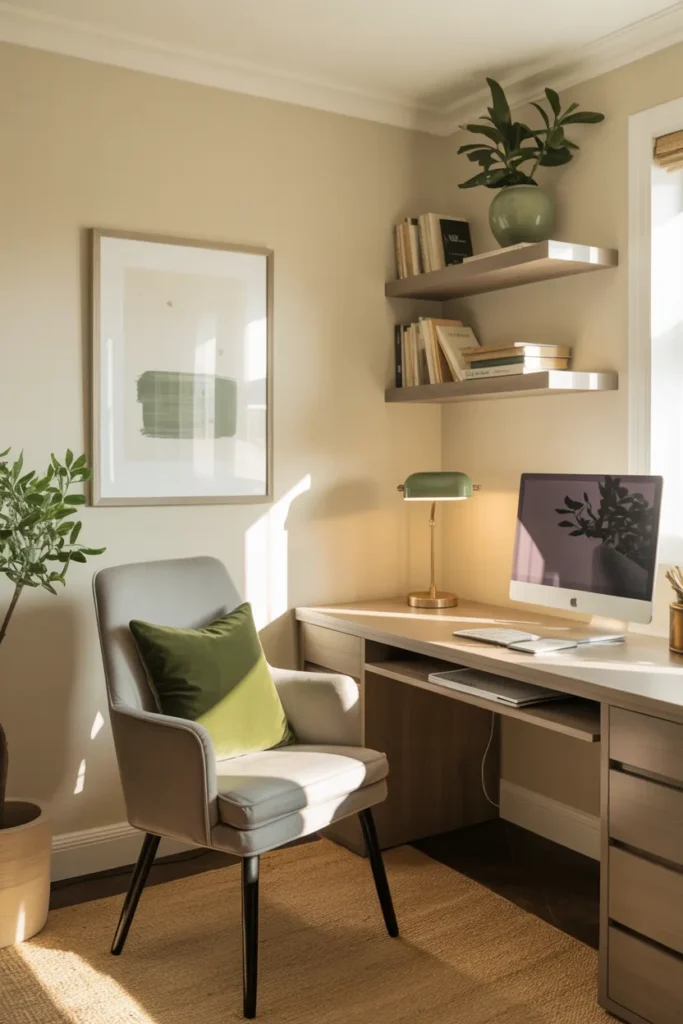
An inspiring home office aesthetic doesn’t mean sacrificing personality; it means introducing your colors thoughtfully rather than randomly. Personal color accents—a cushion in your favorite hue, a piece of artwork, a single decorative object—inject personality while respecting the calm foundation of your neutral palette. This approach works because it gives you creative expression without creating visual overwhelm. In my experience, offices that feel both professional and personal are the ones people actually enjoy spending time in. Choose one or two accent colors that resonate with you and limit them to 2–3 pieces throughout the space. This restraint creates visual harmony while allowing your personality to shine through. If you love deep teal, introduce it through a chair cushion and a small shelf object; if mustard energizes you, add it through artwork and a decorative pot. This strategic placement feels intentional rather than accidental, elevating your office beyond generic workspace into a curated personal environment.
I’ve seen how adding even small color accents transforms people’s emotional connection to their offices. Color affects mood and energy in measurable ways; surrounding yourself with colors you love improves daily experience and work satisfaction. The key is choosing colors that align with your work style: calming blues and greens for focus work, warm golds and terracottas for creative energy, soft dusty tones for balance. Limiting accent colors keeps the space sophisticated and prevents it from feeling chaotic or childish. This approach is also flexible; you can swap accent pieces seasonally or when your color preferences shift. The beauty of using neutral foundations with accent colors is that your office grows and evolves with you without requiring major overhauls. You’re investing in quality basics—neutral furniture, warm lighting, wood tones—and personalizing with smaller, changeable elements. This balance between timeless aesthetic and personal expression creates an office that feels both professional and authentically yours.
13. Cable Management & Hidden Storage
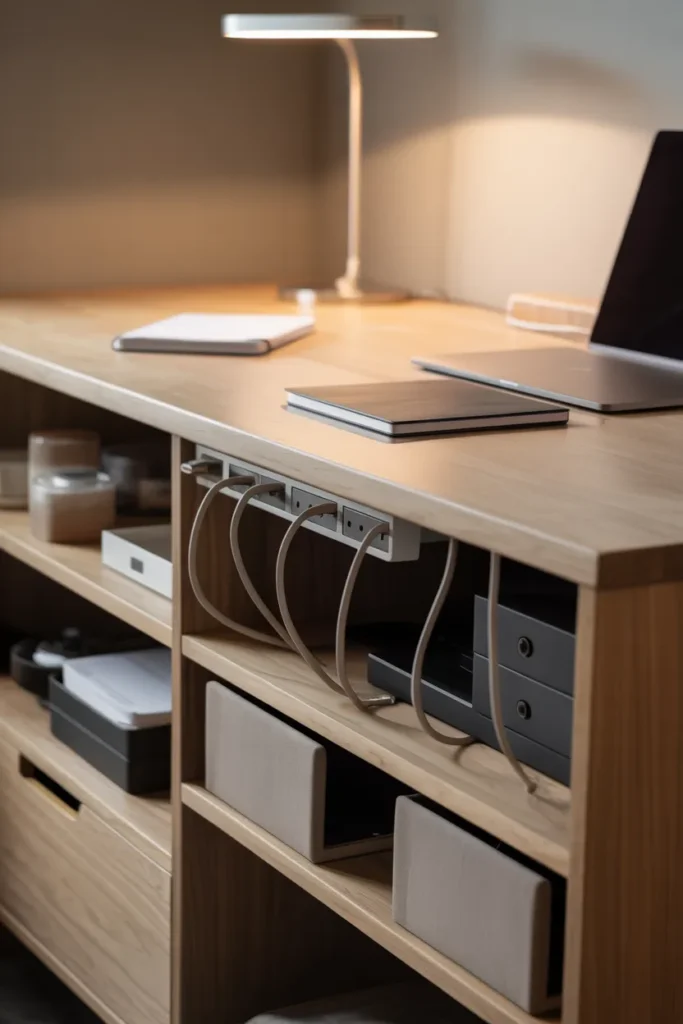
Visible cables and wires are visual noise that undermines even the most beautifully designed space. When you take time to manage cables—routing them behind desks, using cable clips or channels, organizing cords with labels—you transform a chaotic-looking workspace into one that feels intentional and professional. This might seem like a small detail, but it’s foundational to any inspiring home office aesthetic. In my experience, the difference between an office that feels calm and one that feels stressful often comes down to whether cables are visible or hidden. Beyond aesthetics, proper cable management prevents tangled wires, reduces the risk of tripping hazards, and keeps your equipment functioning properly. Hidden storage—drawers built into desks, closed shelving below open shelves, or discreet containers for supplies—keeps everything you need accessible while maintaining a clean visual environment. When your workspace looks organized and intentional, your mind feels more organized too.
I’ve noticed that people feel noticeably more focused and in control when their desk surface is completely clear of clutter, including cables. Integrated storage solutions and cable management aren’t luxuries; they’re essential infrastructure for a functional, beautiful office. The best approach is planning storage during setup: desk drawers for daily supplies, a small cabinet or shelving for backup items, cable channels or clips for cord organization. Label cables at both ends so you can identify them quickly if needed. Use neutral-colored storage solutions that blend with your desk and walls rather than creating visual interruption. The psychological effect is real—when you sit down to a clean, organized desk with no visible mess, you’re mentally prepared for focused work. Everything you might need is organized and accessible in seconds without being visible. This combination of hidden functionality and clean aesthetics is what separates truly inspiring offices from ones that look nice but feel chaotic underneath.
14. Vertical Wall Storage
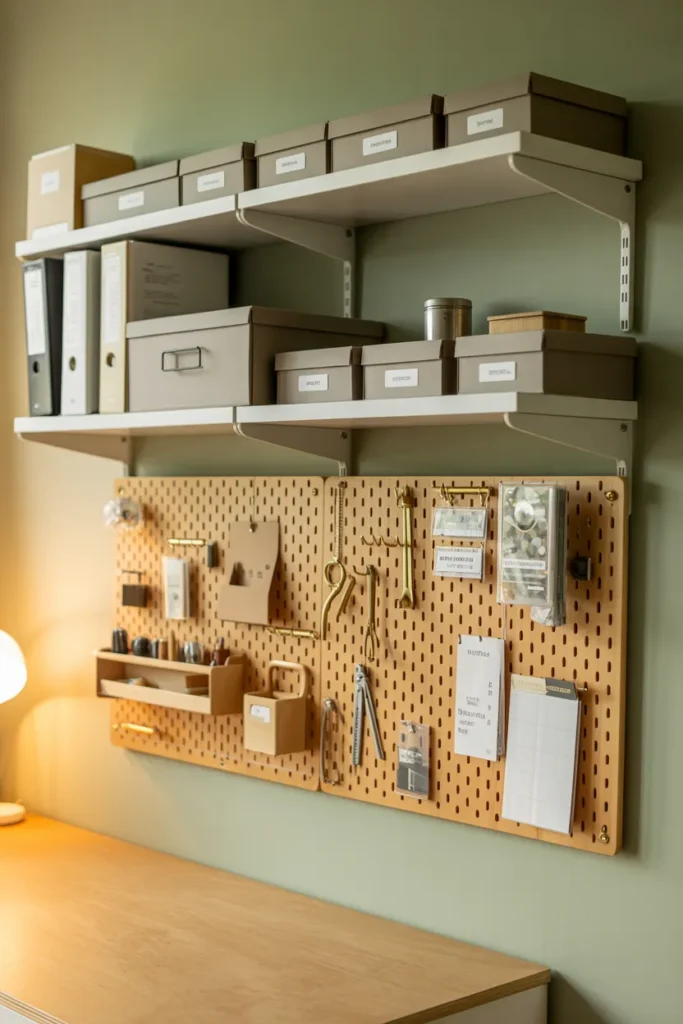
Vertical wall storage is a smart solution for keeping current projects and frequently used items visible and within reach without cluttering your desk surface. A pegboard, wall-mounted shelves, or even a stylish memo board system transforms blank wall space into functional, beautiful storage. This approach works particularly well in smaller offices where desk space is limited. In my experience, people with visible project organization feel more in control of their workload. When your current tasks, reference materials, and tools are displayed on a wall, you’re less likely to forget details or lose track of progress. The key is styling these displays so they look intentional rather than chaotic. Organized containers, consistent color schemes, and clear labeling turn functional storage into part of your inspiring home office aesthetic. When someone visits your office or joins a video call, organized vertical storage communicates that you’re detail-oriented and professional. It transforms walls from empty backgrounds into active, purposeful elements of your workspace.
I’ve seen vertical storage systems completely transform how people manage their workday, especially for creative professionals or those juggling multiple projects simultaneously. The visibility itself is valuable; when your tasks and materials are on display, you’re reminded of deadlines and projects naturally throughout the day. Pegboards work beautifully for hanging supplies and tools; floating shelves suit containers and reference books; memo boards or pin systems work for notes and visual inspiration. The styling matters as much as the functionality. Use containers in neutral tones, maintain consistent spacing, and resist the urge to overstuff. The goal is having a clear, visual map of your current work without creating visual chaos. This balance between visibility and organization is what makes vertical storage work. When properly designed, these wall systems become focal points that demonstrate thoughtful workspace design rather than appearing like cluttered storage walls. Your office communicates professionalism and intention through how you organize your visible spaces
15. Comfortable Ergonomic Seating
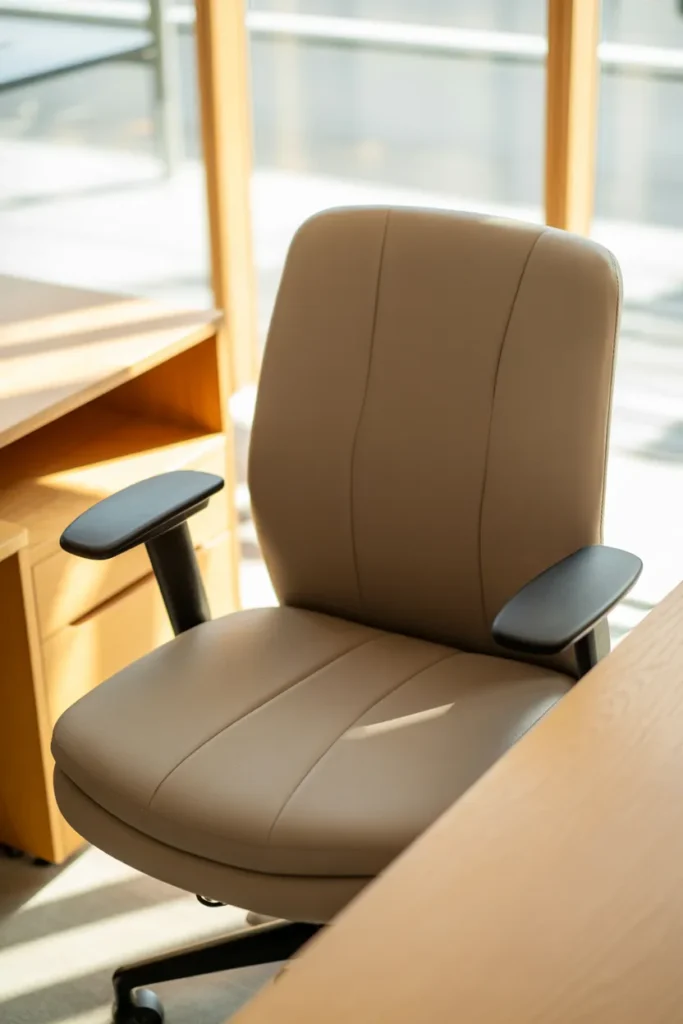
Your chair is arguably the single most important element in your home office, yet it’s often an afterthought. An uncomfortable chair leads to back pain, poor posture, and reduced focus—all things that undermine your ability to do good work. In my experience, investing in quality ergonomic seating transforms not just comfort but also your attitude toward your workspace. When you sit in a chair that properly supports your body, you naturally feel more capable and focused. A comfortable chair with good lumbar support, adjustable height, and supportive armrests prevents the physical strain that builds up during hours of desk work. This is crucial to creating an inspiring home office aesthetic that actually serves your wellbeing. The chair you choose communicates something about your workspace: a thoughtful, professional chair shows you’ve prioritized comfort and functionality; a mismatched, uncomfortable chair suggests your office is secondary. Choose neutral upholstery—cream, gray, or soft taupe—so your seating integrates with your office’s visual foundation.
I’ve noticed that people often skimp on seating to save money, then spend far more on decorative elements that don’t actually improve their daily experience. Reverse this priority: invest in quality seating that supports your body properly, then add aesthetic elements. Your body knows the difference between an ergonomic chair and a generic one within minutes of sitting down. Proper support means your back isn’t straining, your arms rest comfortably, and your feet rest flat on the floor or footrest. This physical comfort allows you to maintain focus for longer without distraction or pain. The best ergonomic chairs look intentional and professional while providing necessary support. Adjustable features—seat height, armrest position, recline—allow customization to your body. Over months and years of daily use, a quality chair proves its worth through comfort and durability. This is an investment in your health and productivity, not just an office purchase. A well-chosen chair becomes part of your inspiring home office aesthetic while genuinely supporting the work you do.
16. Inspiration Board or Gallery Wall
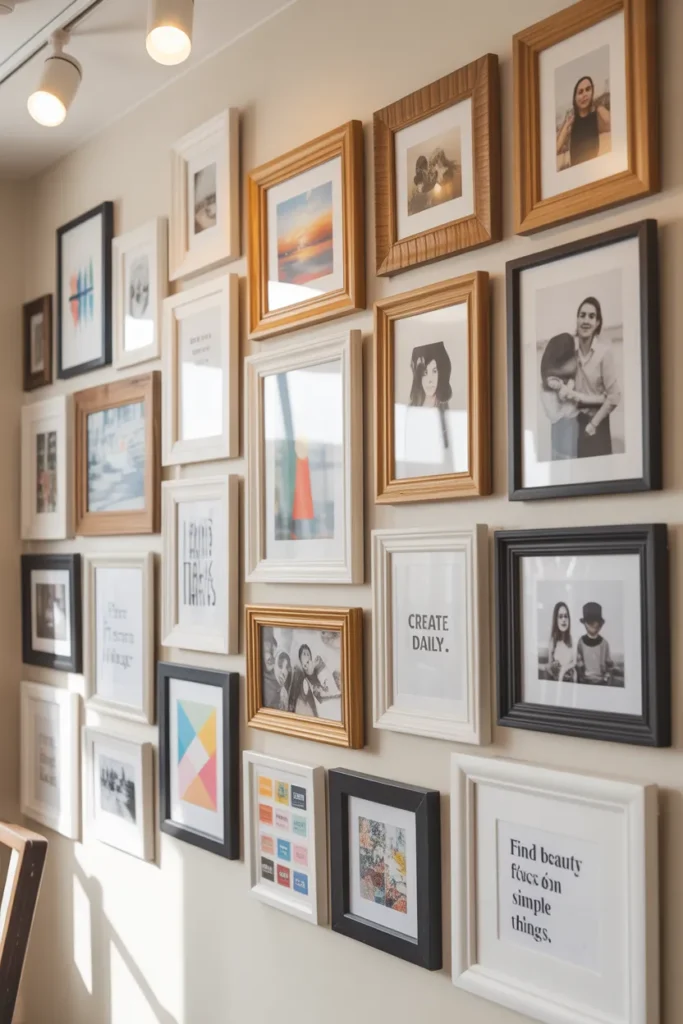
An inspiration board or gallery wall transforms a blank wall into a daily source of motivation, creativity, and visual interest. Rather than generic office decor, curate a display of pieces that genuinely inspire you: artwork that moves you, photographs that bring joy, typography with meaningful words, design inspiration for your projects. This approach works because you’re surrounding yourself with images and words that reinforce your values and goals. In my experience, people who create intentional gallery walls report feeling more creative and motivated in their offices. The pieces you choose become part of your inspiring home office aesthetic while also serving a psychological function. When you’re stuck on a problem or feeling unmotivated, glancing at your curated display reminds you why you do this work and what inspires you. The frames themselves matter; choose finishes that complement your office’s color palette—natural wood frames feel warm and organic, white frames feel clean and modern, matte black frames feel sophisticated and grounding. Arrange pieces intentionally, whether in a grid pattern, salon style, or asymmetrical balance.
I’ve seen how gallery walls function as both aesthetic focal points and psychological anchors in home offices. The curation process itself is valuable; choosing what to display forces you to articulate what matters to you and what inspires your work. Mix different sizes, colors, and subjects to create visual interest without chaos. Include personal photographs alongside artwork to remind yourself of people and moments that matter. Add typography or quotes that resonate with your work philosophy. The diversity of elements creates richness while the intentional arrangement keeps it feeling cohesive rather than cluttered. Lighting matters enormously; soft warm light highlighting your gallery wall creates depth and draws the eye naturally. This collection of framed pieces becomes part of your office’s identity, communicating to visitors—and to yourself—that this is a space for creative, meaningful work. Unlike mass-produced office decor, a personal gallery wall tells your story and sustains motivation through daily challenges and creative projects.
17. Finishing Touches: Texture & Layering
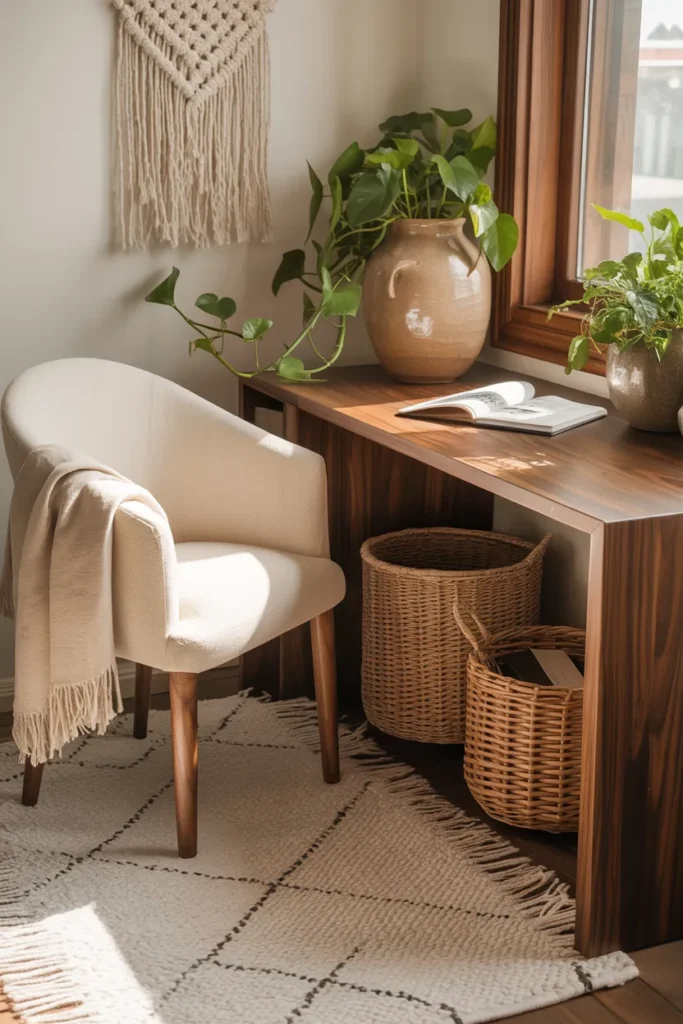
The final element that transforms a beautiful office into an inspiring space is layered texture—the subtle interplay of smooth wood, soft linens, woven fibers, and natural materials working together. Texture is what transforms a space from looking flat and sterile to feeling warm, intentional, and genuinely inviting. In my experience, offices that feel best to spend time in aren’t the ones with the most stuff; they’re the ones with intentional textural variety. A smooth wooden desk paired with a soft linen chair, a woven area rug, natural fiber storage baskets, and perhaps a ceramic object or textured wall element create richness that engages the eye and satisfies the need for tactile interest. This is what separates inspiring home office aesthetic ideas that actually work from those that look pretty in photos but feel cold in person. Layering textures within a neutral palette creates sophistication and warmth simultaneously. The materials you choose—natural wood, linen, wool, ceramic, woven fibers—communicate quality and intentionality. When everything is smooth and hard or too minimal, spaces feel institutional; when textures are thoughtfully varied, spaces feel human and livable.
I’ve noticed that the most satisfying offices are those where you want to spend time, and texture plays a crucial role in that feeling. A rough wooden desktop, soft chair cushion, smooth ceramic vase, woven basket, and natural fiber rug create a sensory experience that engages you beyond just visual appeal. This textural richness is especially important in minimalist or neutral spaces; it prevents them from feeling cold or boring. The key is balance: vary textures throughout the space so your eye and hand encounter different materials naturally, but maintain cohesion through a unified color palette. Natural materials age beautifully and develop character; they improve over time rather than looking worn. When you choose quality textiles, solid wood, and authentic materials, you’re creating an environment that sustains rather than disappoints you. The combination of all the elements—lighting, color, furniture, organization, and now texture—creates an office that supports your best work while genuinely feeling like a space designed with care and intention. This is what makes a home office not just functional but truly inspiring.
18. Desk Hutch or Overhead Storage
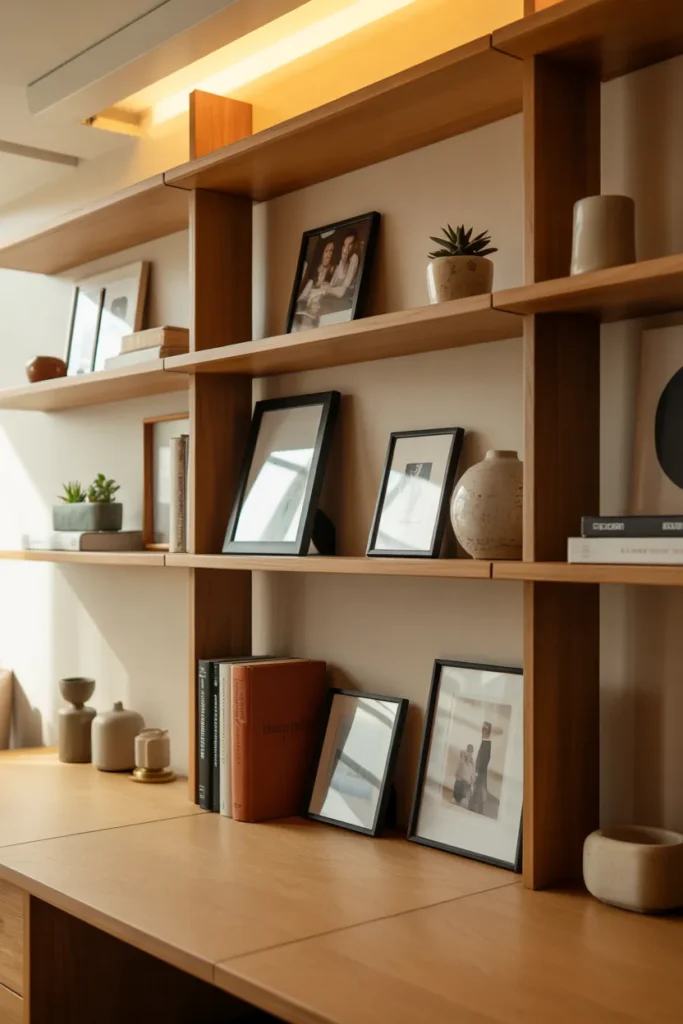
A desk hutch or overhead storage system is a game-changer for smaller offices or desks positioned in tight spaces. Instead of cluttering your work surface or adding separate shelving units that consume floor space, overhead storage keeps everything you need visible and accessible directly above your workspace. In my experience, people with hutch systems report feeling more organized and less stressed because supplies and reference materials are literally at eye level. This setup works beautifully in inspiring home office aesthetic designs because it adds vertical dimension and creates visual interest without making the space feel cramped. The hutch becomes a display area for organized items: small plants, meaningful photographs, reference books, and decorative objects arranged with breathing room between them. Natural wood hutches with warm lighting create an inviting focal point that transforms a simple desk into an intentional, curated workspace. This integration of form and function is what separates basic office setups from truly inspiring ones.
I’ve seen how overhead storage transforms people’s relationship with their desk and workspace organization. Everything you need is within reach without leaving your chair, yet nothing clutters your work surface. The key is styling the hutch intentionally—mix functional items with beautiful ones, maintain consistent spacing, and use the same color palette as the rest of your office. Small potted plants soften the look; framed items add personality; organized stationery or supplies look intentional rather than cluttered. Warm lighting from above or underneath the hutch emphasizes the displayed items and creates depth. This integrated approach to storage and display is especially valuable for creative professionals who need inspiration visible but clutter-free workspaces. A well-designed desk hutch becomes part of your office’s visual identity while solving practical storage challenges. The psychological benefit is real: when your tools and inspiration are organized above you rather than scattered around you, your mind feels more organized too.
19. Greenery Wall or Living Wall Element
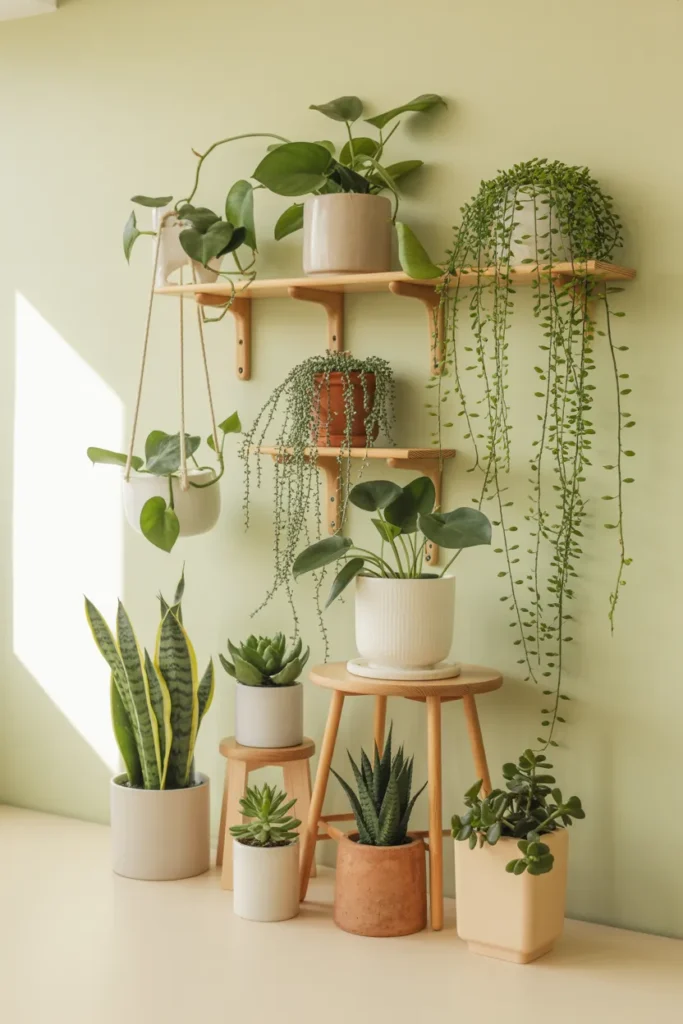
A living wall or greenery arrangement transforms your office into a biophilic space that actively improves your mental health and air quality while creating stunning visual impact. Instead of scattered individual plants, grouping multiple plants on one wall creates a cohesive focal point that feels intentional and lush. This approach works because humans respond positively to nature at a deep psychological level; surrounding yourself with living plants reduces stress, improves focus, and boosts creativity. In my experience, offices with significant greenery feel fundamentally different—calmer, more energized, and more inspiring—than those without. A living wall doesn’t need to cover the entire wall; even a section with three to five plants at varying heights creates the effect of being surrounded by nature. The inspiring home office aesthetic ideas that include greenery consistently outperform sterile, plant-free offices in terms of user satisfaction and productivity. Mix trailing plants like pothos with upright plants like monstera, add smaller succulents for variety, and arrange them at different heights to create visual movement and interest.
I’ve noticed that people gravitate toward workspaces with visible greenery because plants genuinely improve the working experience. The variety of plant shapes, sizes, and leaf textures creates visual richness that prevents spaces from feeling monotonous. Potted plants are easier to maintain than true living walls; they allow flexibility to rearrange or change plants seasonally. Warm natural light filtering through plant foliage creates moving shadows throughout the day, adding subtle animation to your space. The key is choosing plants that tolerate indoor office conditions and positioning them where you’ll see them naturally during your workday. Neutral-colored pots keep the focus on the foliage while maintaining your office’s color palette. This greenery investment pays dividends: improved air quality, reduced stress, increased creativity, and a workspace that genuinely invites you to sit down and do your best work. A living wall element elevates your office from functional to genuinely inspiring.
20. Acoustic Elements for Sound Control
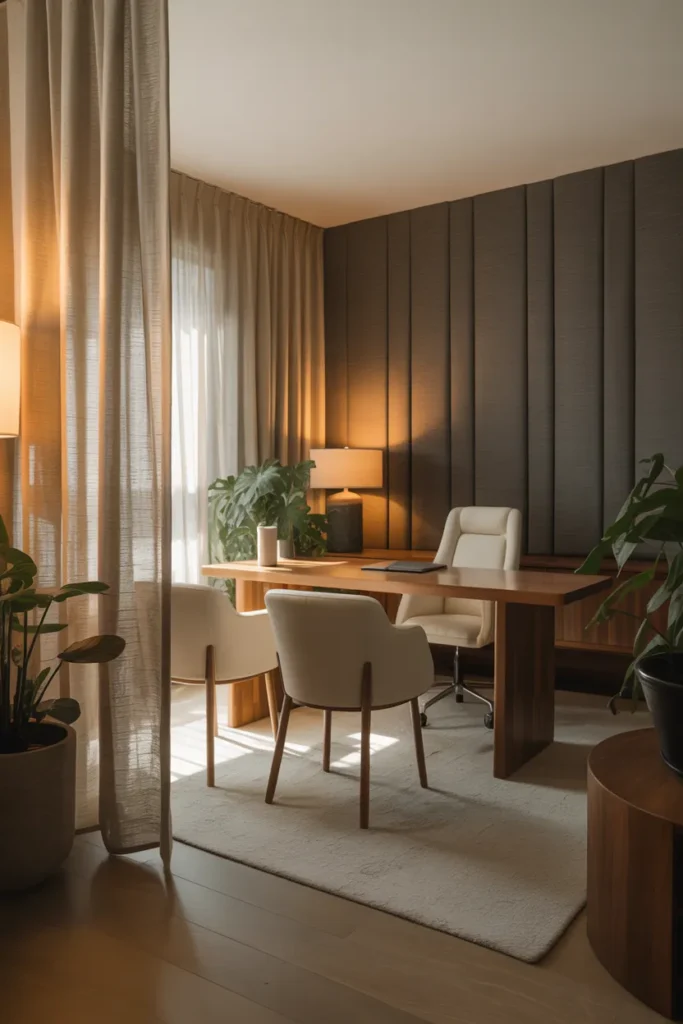
Sound control is an often-overlooked element in home office design, yet it directly affects your focus, your video call quality, and how professional your office sounds to colleagues and clients. Hard surfaces—wood floors, bare walls, large windows—reflect sound, creating echo and a sense of emptiness. Soft furnishings naturally absorb sound: area rugs, upholstered chairs, fabric curtains, and even plants reduce acoustic problems without requiring obvious acoustic panels. In my experience, offices with proper acoustic treatment feel quieter and more professional, allowing better focus and reducing the mental fatigue of working in a space with excessive echo or sound reflection. Acoustic considerations are crucial to inspiring home office aesthetic designs that actually function well. You can address sound through beautiful design choices: thick curtains that soften light and sound, upholstered chairs and sofas, rugs with substantial pile, and layered soft furnishings. If acoustic panels are necessary, choose ones in neutral fabrics that blend with your walls or consider fabric-wrapped panels that feel less institutional.
I’ve noticed that people often struggle with audio quality on video calls without realizing that acoustic treatment would solve the problem. Hard-voiced rooms create echo; soft rooms create warm, clear audio. The solution doesn’t require obvious acoustic treatment; it’s simply ensuring your office includes enough soft materials. Heavy curtains, multiple soft furnishings, layered rugs, and upholstered elements all contribute to better acoustics naturally. If you need additional sound absorption, modern acoustic panels come in fabric-wrapped options that look like art or soft wall elements rather than obvious sound treatment. Position them strategically—one on the wall behind you, perhaps one to the side—to control sound without overwhelming the design. This approach to acoustic design ensures your office sounds as professional as it looks. People on video calls hear clear audio without echo; you experience less auditory distraction; and focused work becomes easier. Sound is an invisible element of office design, yet it profoundly affects both function and how the space feels to occupy.
Conclusion
Creating a workspace you truly enjoy can make everyday tasks feel more inspiring, productive, and less stressful. These home office ideas are meant to help you design a space that feels both beautiful and functional, no matter the size of your room or your decorating style. I’ve seen how small changes like better organization, cozy textures, or thoughtful lighting can completely transform the mood of a workspace. Save your favorite ideas on Pinterest, try a few in your own home, and share this article with anyone looking to refresh their workspace. Your dream office setup might be just one simple update away.
One Comment