
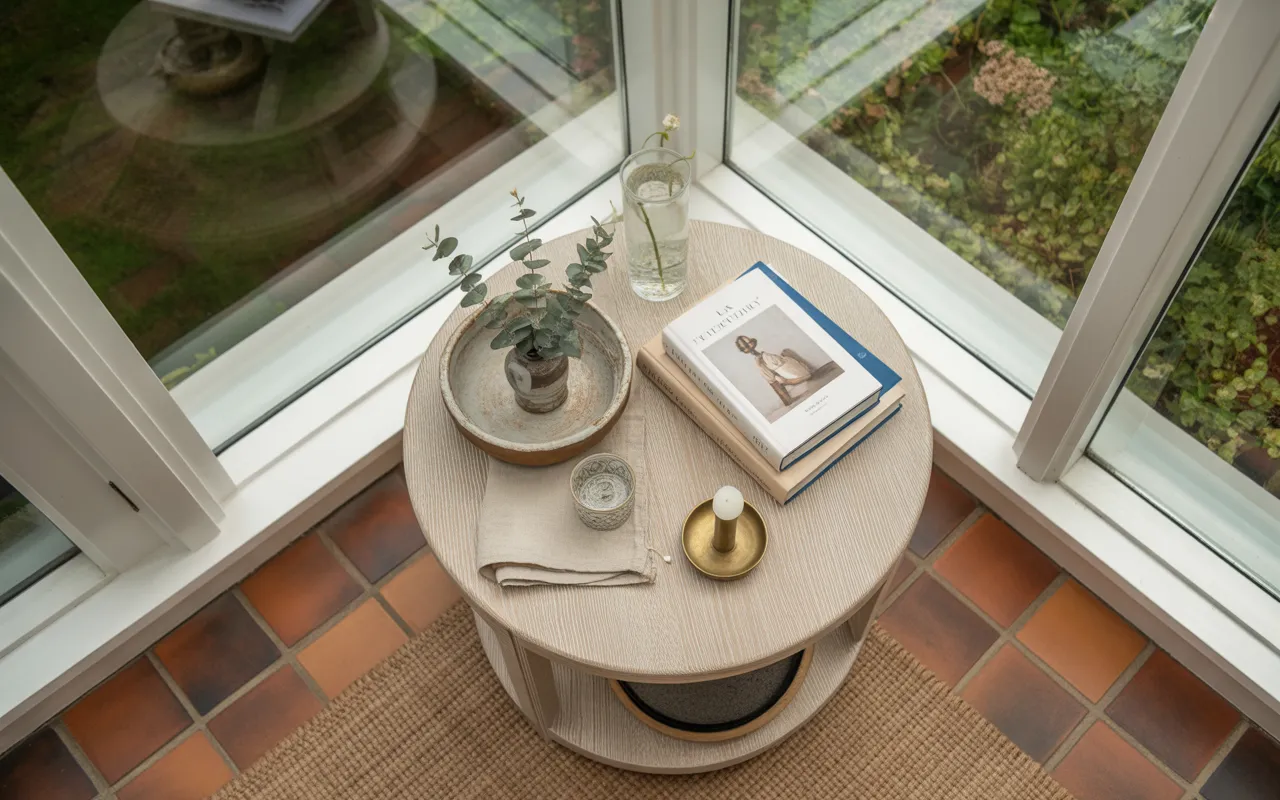
17 Conservatory Ideas for a Stylish and Serene Retreat
A conservatory is a transitional space—part indoor room, part outdoor escape—defined by glass ceilings and walls that immerse you in nature while protecting you from the elements. This article delivers 17 conservatory ideas that balance botanical energy with quiet comfort, transforming your glass room into a four-season sanctuary you’ll use daily.
Step inside and feel the shift: the air is cooler but not cold, filtered light pools on natural textures, and the sound of rain on glass becomes a meditation. A well-designed conservatory doesn’t compete with the garden—it harmonizes with it, offering stillness without sterility, greenery without grit. Here are 17 conservatory ideas worth saving—and stealing.
Why the Conservatory Style Works So Well
The modern conservatory draws from 19th-century Victorian orangeries and mid-century modernist sunrooms, creating a unique hybrid of architecture and landscape design. Unlike a standard sunroom, a true conservatory features more than 50% glass wall space and a glazed roof, blurring the line between shelter and exposure. This style prioritizes the quality of light over the quantity of furniture.
Core materials include natural oak or stained timber frames, lime-washed brick, matte black aluminum, and unglazed terracotta tiles. Colors lean into botanical tones: sage green, warm putty, faded terracotta, and soft charcoal. Textures are woven rattan, slubbed Belgian linen, and honed slate. Every surface is chosen to absorb rather than reflect light, creating gentle diffusion.
Pinterest searches for “conservatory ideas” rose 47% in 2024, driven by the post-pandemic desire for third spaces that aren’t home offices or media rooms. People are reclaiming glass rooms as healing zones—places to drink morning coffee, propagate plants, or read without screens. The trend pairs with “slow living” and “biophilic design,” two movements with no sign of fading.
Small spaces absolutely achieve this style, but you must prioritize the ceiling. In a compact conservatory, the visual weight stays low—slim-profile furniture, no bulky sofas, and transparent acrylic side tables. Skip curtains entirely; use roman shades mounted inside the frame. Your first move is always controlling glare and heat, not adding decor.
Style at a Glance
| Element | Core Trait 1 | Core Trait 2 |
|---|---|---|
| Philosophy | Liveable biophilia | Quiet transition |
| Materials | Oak, rattan, linen | Terracotta, slate |
| Color palette | Sage, putty, charcoal | Faded terracota |
1. Matte Black Frames
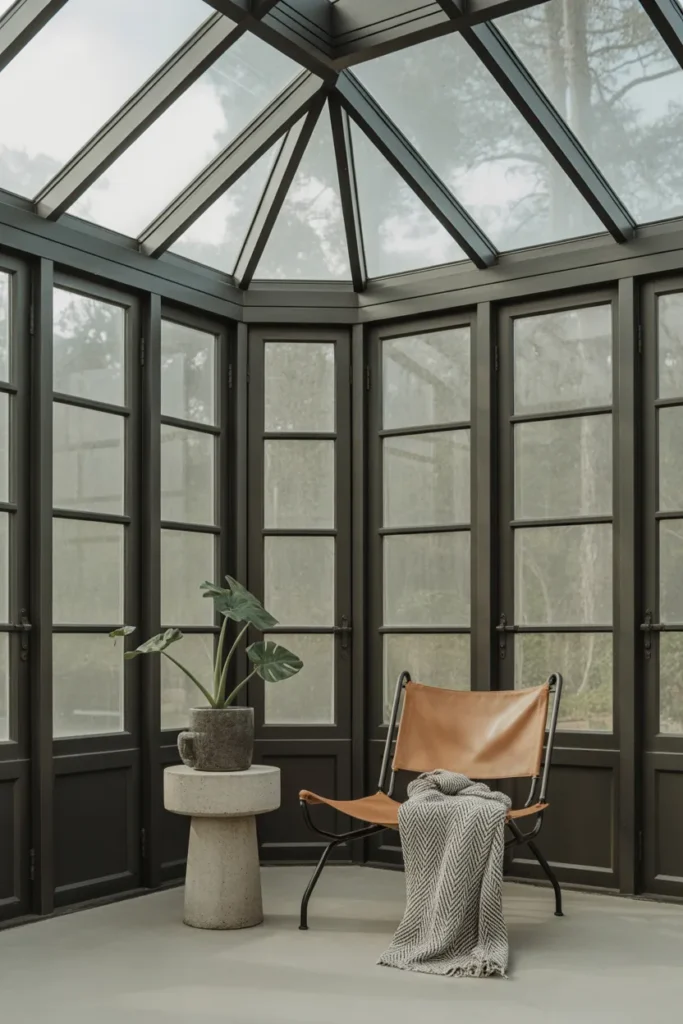
Vibe:Crisp, sheltering, architecturally calm.
Why it works: Black frames disappear visually, pushing your eye to the garden instead of the structure. The high contrast against white walls or pale brick creates sharp depth, while the slim profile lets 15% more light pass compared to traditional white uPVC frames.
How to get it: Paint existing aluminum frames with matte black exterior-grade metal paint (Rust-Oleum brand). Do not use glossy—it reflects light back inside. For new builds, specify powder-coated black steel with a 25mm sightline for the truest modern look.
Quick Win: Use black electrical tape to temporarily mock up frame lines on existing glass. Live with the pattern for 48 hours before committing to paint.
Shop The Look
- Matte black aluminum window frame paint (exterior grade)
- Black steel magazine rack floor standing
- Charcoal herringbone wool throw blanket
- Concrete round plant stand 12-inch
- Olive green ceramic watering can
2. Layered Sheer Curtains
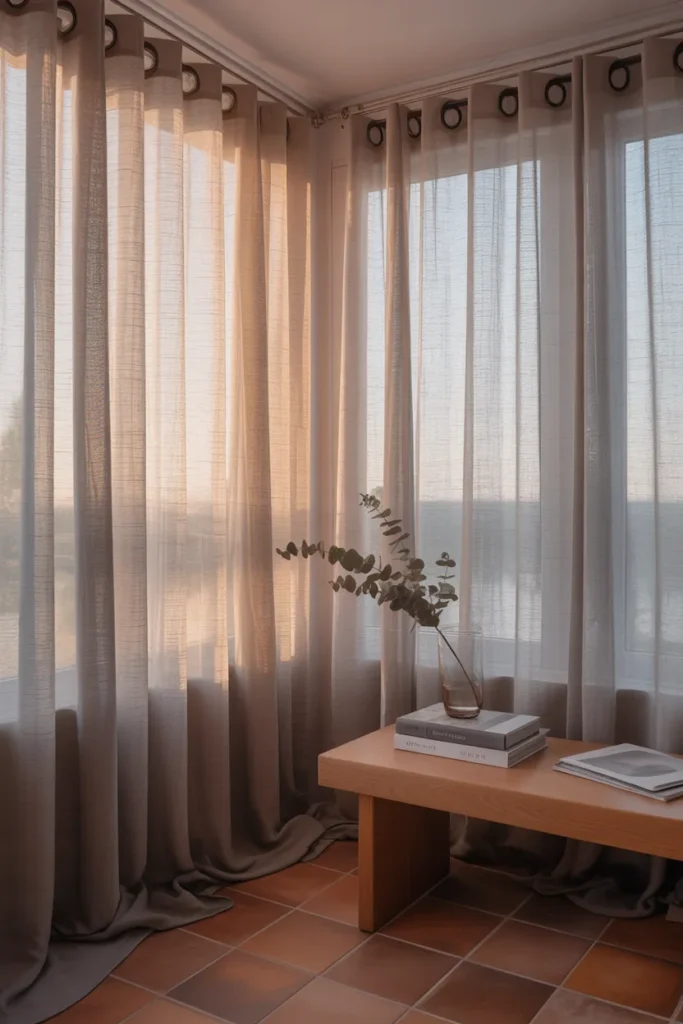
Vibe:Soft, diffused, whisper-light.
Why it works: Two layers of different sheer weights (one 50% opacity, one 80%) create depth without blocking light. The fabric reduces glare by 40% while maintaining a view, and the gentle movement adds organic texture to an otherwise hard glass-and-frame room.
How to get it: Install a ceiling-mounted curtain track that extends 12 inches past each window. Buy two ready-made sheer panels per window—one in natural white linen, one in unbleached cotton. Overlap them on the same track, heavier layer closest to the glass.
Shop The Look
- Ceiling-mounted curtain track white 120-inch
- Natural linen sheer curtain panel 50% opacity
- Unbleached cotton sheer curtain panel 80% opacity
- Low oak bench 40-inch console
- Dried eucalyptus bunch natural preserved
3. Concrete Block Side Table
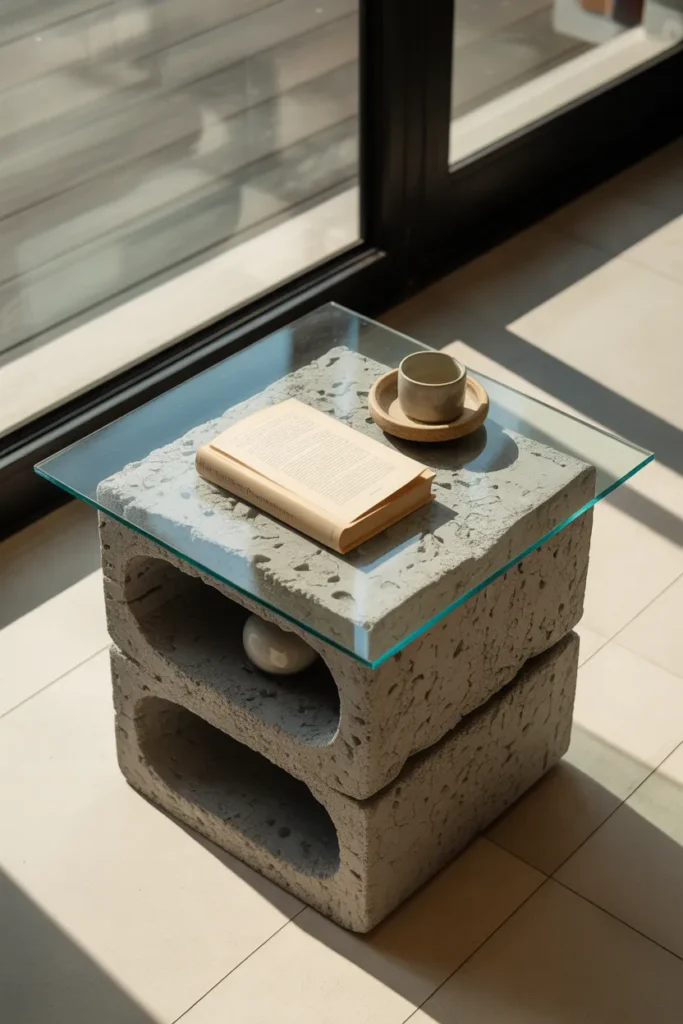
Vibe:Industrial, minimal, stable.
Why it works: Concrete’s thermal mass absorbs excess heat during sunny hours and releases it slowly, passively cooling the room. The material’s rough texture contrasts beautifully with the smooth glass above and the soft greenery outside. Two blocks cost under $10.
How to get it: Buy two 8x8x16-inch hollow concrete blocks from a hardware store ($3 each). Stack them with holes facing sideways. Top with a 16×16-inch piece of 1/2-inch tempered glass. No glue needed. Rinse blocks outside first to reduce dust.
Explore More About; 16 Barndominium Ideas for Modern Rustic Living
Shop The Look
- Hollow concrete block 8x8x16-inch
- Tempered glass square 16×16-inch
- Cork-bottomed coaster set of 4
- Concrete sealer matte finish small
- Microfiber cloth for glass cleaning
4. Pendulum Glass Pendant
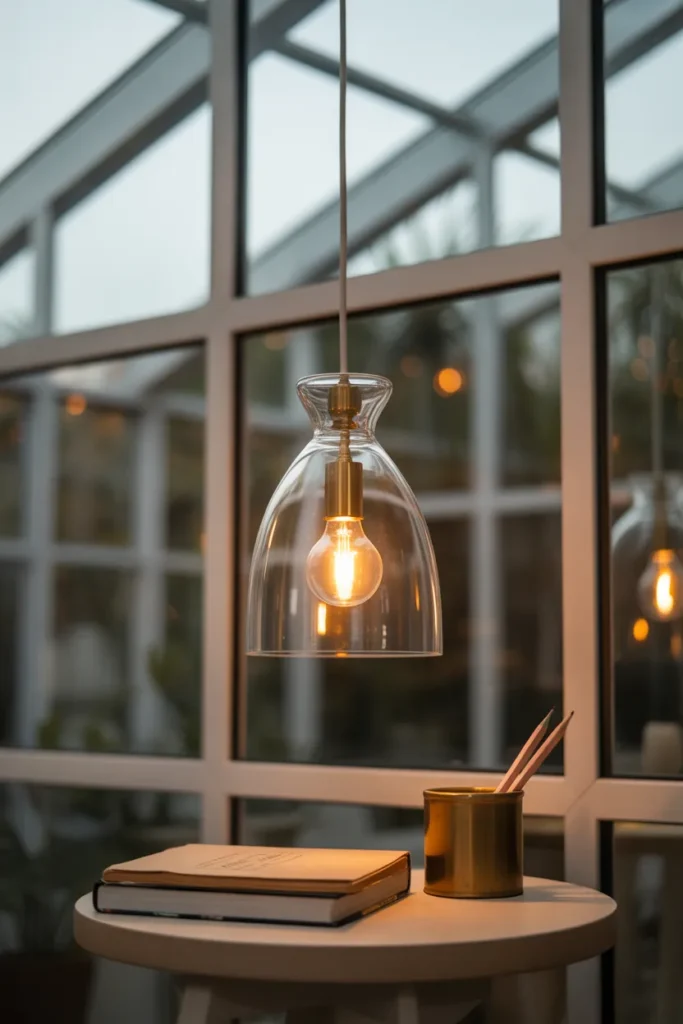
Vibe:Focused, low, intimate.
Why it works: A single low-hanging pendant creates a “light island” in a room that otherwise has even, diffuse daylight. The visible filament mimics candlelight after sunset, making the conservatory usable at night without harsh overhead spots.
How to get it: Hang the pendant so the bottom is 36 inches above the table surface. Use a clear glass shade and a 40-watt equivalent Edison bulb. Install a dimmer—full brightness destroys the mood. Hardwire only; plug-in cords look temporary.
Shop The Look
- Clear glass pendulum pendant light
- Edison bulb warm white 40w equivalent
- Brass ceiling canopy and socket set
- Dimmer switch for pendant light
- Brass pencil cup for side table
5. Limewashed Brick Wall
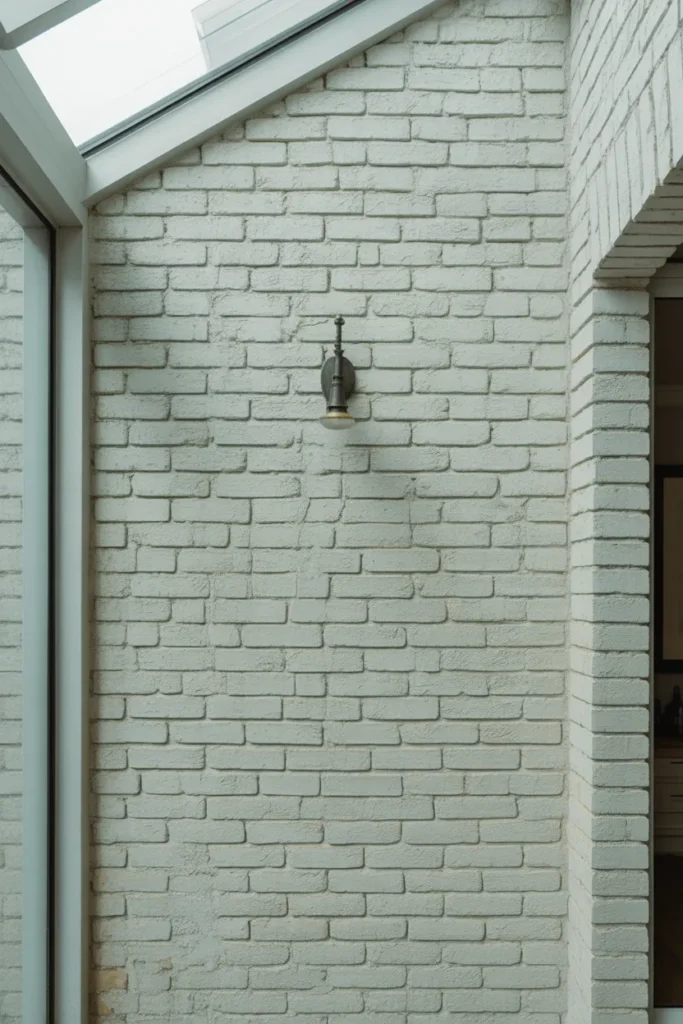
Vibe:Aged, breathable, textured.
Why it works: Limewash is alkaline and naturally mold-resistant—critical for humid conservatories. Unlike paint, it allows brick to breathe and release moisture, preventing spalling. The uneven coverage softens the hard edge between indoor brick and outdoor garden.
How to get it: Apply two coats of premixed limewash (not whitewash) using a wide masonry brush in figure-eight strokes. Dilute first coat 1:1 with water. Let each coat dry 24 hours. Do not use on painted brick—must be raw masonry.
Shop The Look
- Premixed limewash white 1 gallon
- Wide masonry brush 6-inch
- Black iron wall sconce candle style
- Drop cloth for limewash application
- Painter’s tape for glass edges
6. Stacked Log Sconce
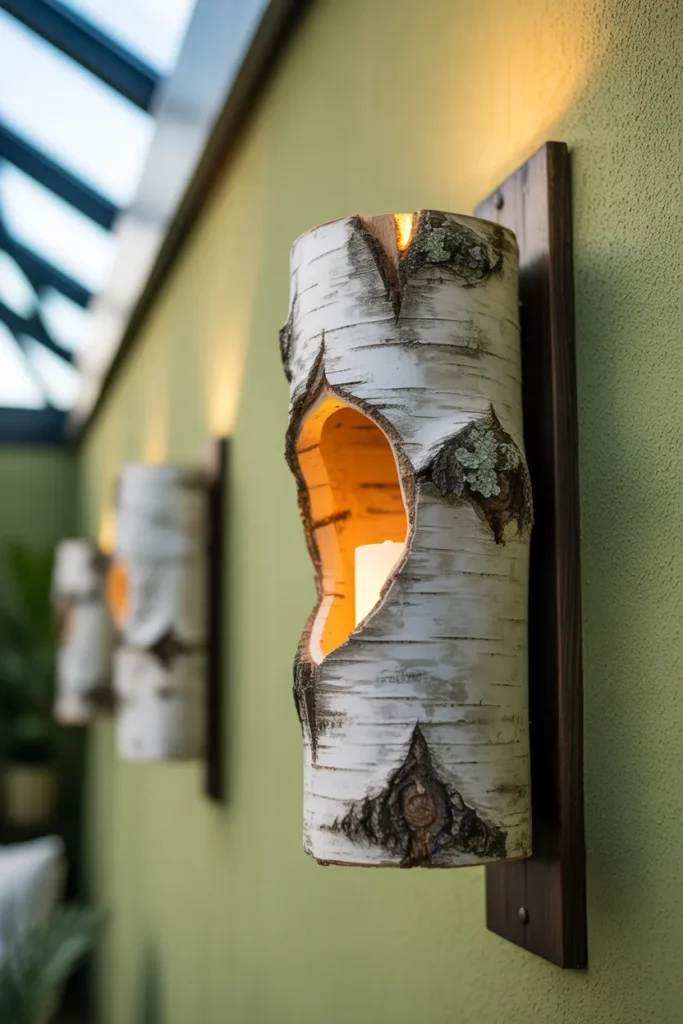
Vibe:Unexpected, rustic, glowing.
Why it works: A log sconce interrupts the formality of a glass room with organic surprise. The vertical bark lines echo window mullions, while the warm LED light counteracts the cool blue cast of north-facing conservatories. It works as art and light.
How to get it: Find a 10-inch diameter birch log. Drill a 6-inch hole in one end. Insert a battery-operated LED candle on a timer. Mount with pipe straps painted black. Never use real flame near dry bark.
Quick Win: Use a hollow ceramic log-shaped vessel instead of real wood for humidity-prone conservatories.
Shop The Look
- Battery-operated LED candle with timer
- Black iron pipe straps 2-inch
- Faux birch log hollow decor
- Adhesive wall hooks for mounting
- Warm amber LED replacement bulb
7. Mirror on Back Wall
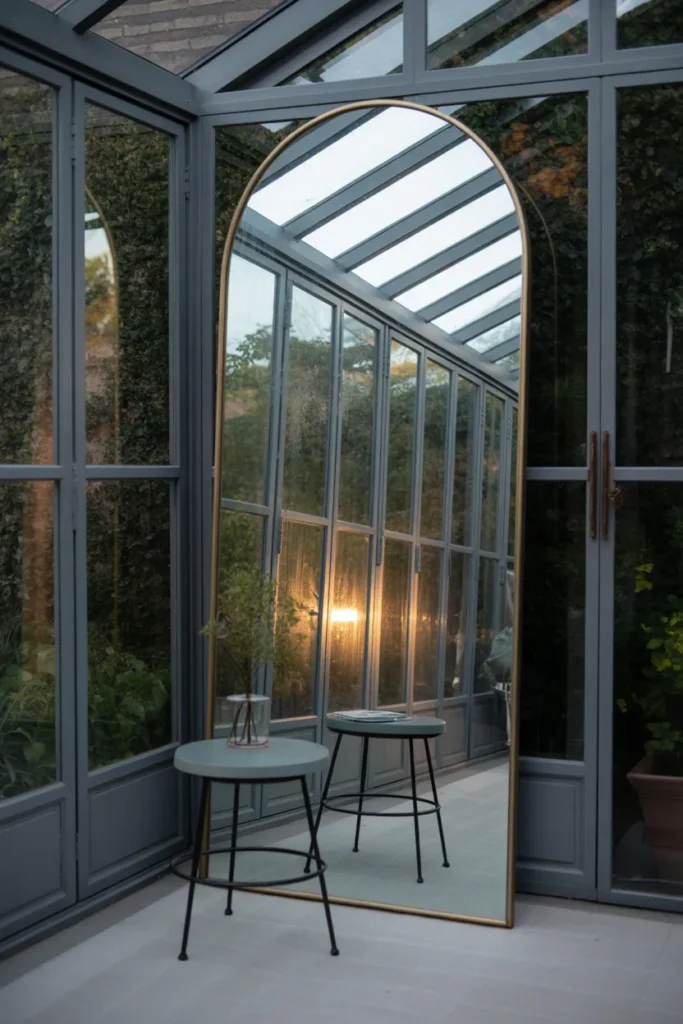
Vibe:Doubled, expansive, clever.
Why it works: Placed opposite the main glass wall, a mirror visually doubles the garden and floods the room with 40% more reflected light. The arched top softens the rectangle-heavy conservatory architecture, tricking the eye into seeing a window where none exists.
How to get it: Hang a mirror on the wall directly facing your largest glass panel. Angle it down 5 degrees to reflect floor plants, not sky. Never hang opposite a door—it will reflect the door frame and break the illusion.
Shop The Look
- Arched top wall mirror black frame
- Heavy-duty mirror hanging kit
- Small wooden stool 14-inch height
- Single ceramic planter white
- Anti-glare window film sample
8. Terracotta Tile Floor
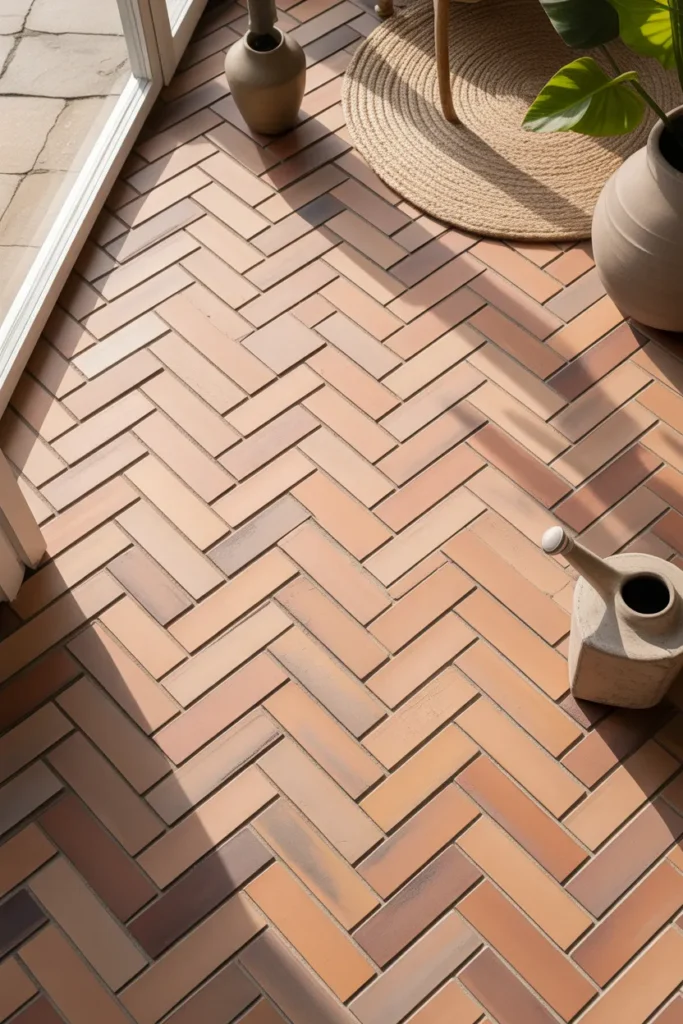
Vibe: Earthy, warm-footed, old-world.
Why it works: Unglazed terracotta absorbs midday heat and releases it slowly as temperatures drop, passively regulating your conservatory’s microclimate. Its natural porosity reduces glare by 60% compared to white stone, and the warm undertone flatters green plants instantly.
How to get it: Install 6×6-inch unglazed terracotta tiles with 3/8-inch sanded grout in “natural beige.” Seal with a penetrating stone sealer only—never a top-coat sealer, which creates glare. Expect a patina; that’s the feature, not a flaw.
Shop The Look
- Unglazed terracotta floor tile 6×6-inch case of 25
- Sanded grout natural beige 10lb
- Penetrating stone sealer spray
- Coiled jute rug 3×5-foot oval
- Clay watering can 2-liter
9. Single Statement Plant
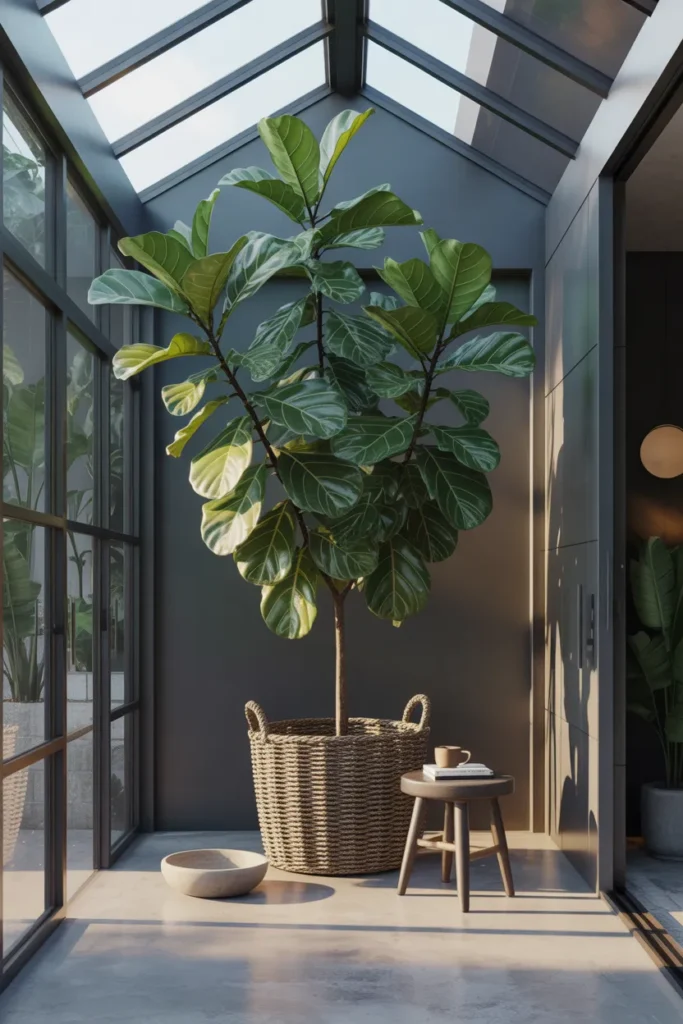
Vibe; Vertical, sculptural, breathing.
Why it works: One large plant creates more visual impact than fifteen small ones, using negative space as a design tool. The vertical line draws the eye upward to the glass ceiling, making the room feel taller, while the single focal point reduces visual clutter.
How to get it: Choose a plant that reaches at least 5 feet tall now. Place it in the corner opposite the main entry door—never centered. Rotate the pot 90 degrees every time you water to keep growth even toward the light source.
Quick Win: Buy a mature plant from Facebook Marketplace. People moving out of apartments sell 6-foot fiddle leaf figs for under $50.
Shop The Look
- Large woven seagrass basket 16-inch
- Fiddle leaf fig live plant 5-6 feet tall
- Plant caddy with wheels 14-inch
- Glazed ceramic saucer terracotta color
- Low oak stool 12-inch height
10. Slatted Wood Ceiling
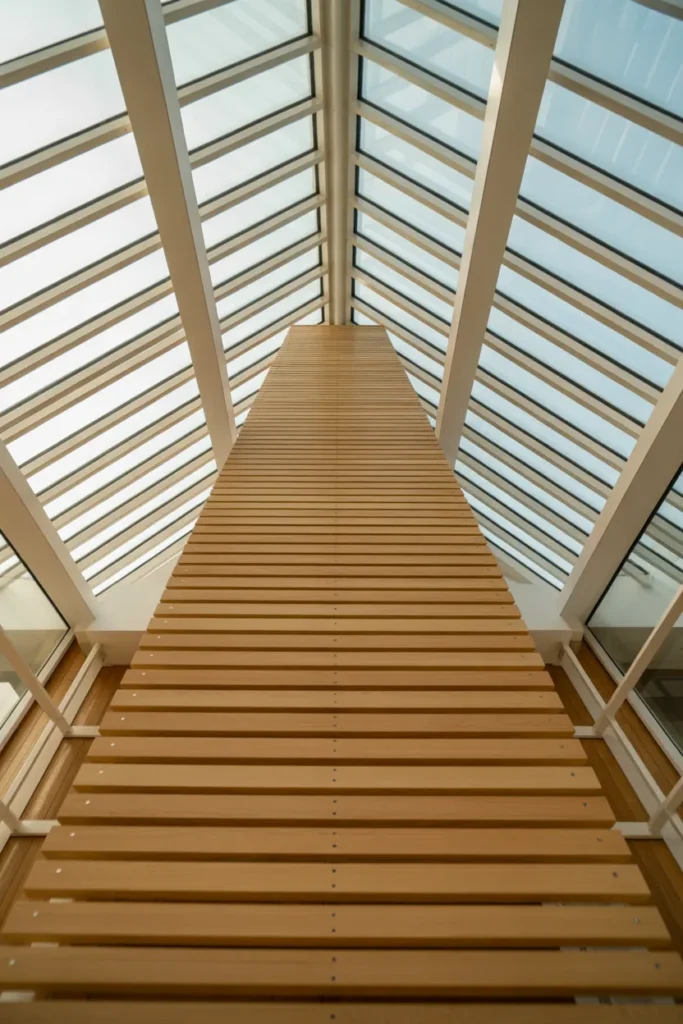
Vibe:Rhythmic, shaded, linear.
Why it works: Slats block 30% of harsh overhead sun while allowing soft diffused light to pass through. The wood adds warmth to the coldest glass box, and the linear pattern creates an optical lengthening effect—perfect for square or boxy conservatories.
How to get it: Attach 1×2-inch oak strips perpendicular to roof beams using 2-inch gaps. Space equally. Use cedar for humidity resistance or sealed oak for a lighter tone. Install only where the roof angle is less than 15 degrees—steep pitches need a pro.
Shop The Look
- Oak wood slats 1x2x96-inch pack of 10
- Ceiling mount clips for wood slats
- Clear matte wood sealer spray
- Laser level for spacing alignment
- Stainless steel screws short length
11. Wicker and Cane Layer
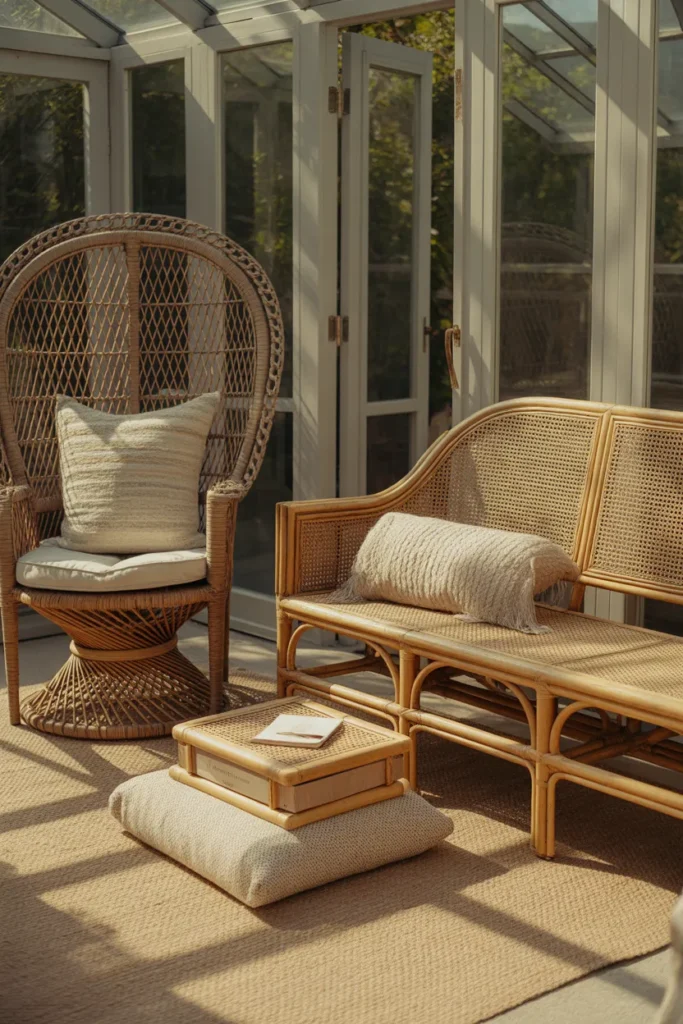
Vibe:Woven, breathable, nostalgic.
Why it works: Wicker and cane don’t absorb heat like upholstered furniture, staying cool even in direct sun. The open weave allows air circulation behind seated persons, preventing that “sticky” feeling common in glass rooms during summer afternoons.
How to get it: Mix two different weave scales—tight cane for seating surfaces and open wicker for chair backs. Never pair two identical weave sizes; contrast creates depth. Add one wool pillow per seat (synthetic fibers trap heat). Avoid dark cushions.
Shop The Look
- Peacock wicker chair indoor natural
- Cane-backed settee bench 48-inch
- Flat-woven wool pillow cover rust
- Rolled linen throw natural undyed
- Stacked rattan trays nesting set
12. Unfired Clay Accents

Vibe:Raw, tactile, unfinished.
Why it works: Unfired (bisqueware) clay absorbs humidity, helping regulate moisture levels in a glass room prone to condensation. The matte surface eliminates glare entirely, and the subtle texture variation catches light differently throughout the day without reflecting it.
How to get it: Buy bisqueware pottery online (search “unfired clay bowl” or “bisqueware vase”). Do not seal or glaze—leave porous. Place one piece per visible surface maximum. Three small objects on one table is the limit before it looks cluttered.
Quick Win: Take a local hand-building pottery class. One session yields three bisqueware pieces for under $40 total.
Shop The Look
- Unfired clay bowl bisqueware medium
- Raw terracotta bud vase unshealed
- Hand-sculpted clay object small
- Linen coaster set natural undyed
- Dried lotus pod decoration
13. Single Runner Rug
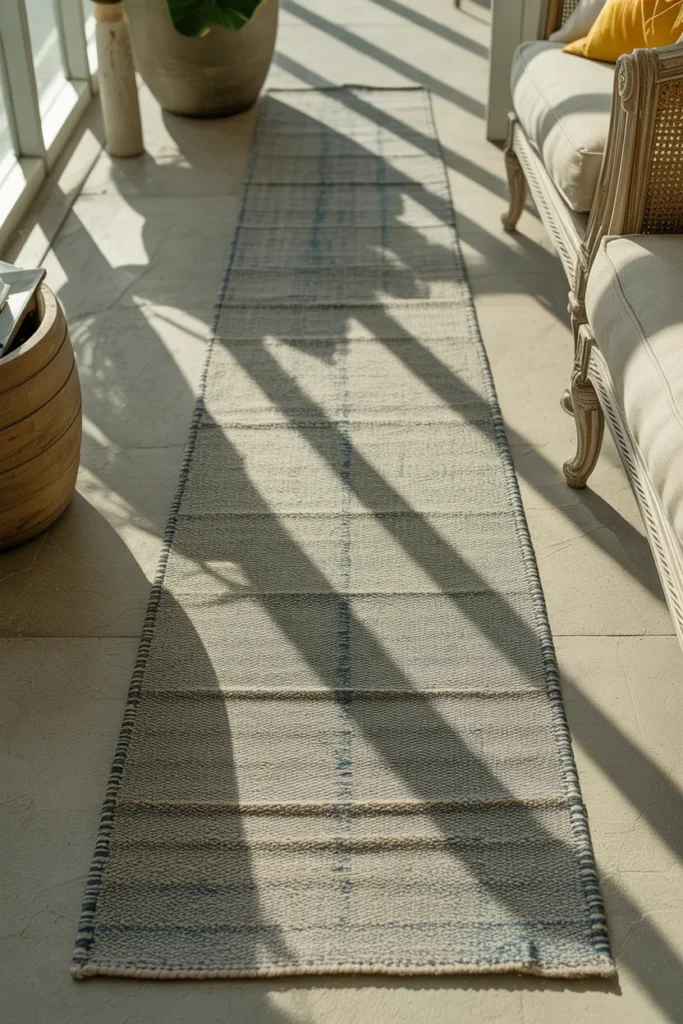
Vibe:Directed, walkable, grounding.
Why it works: A runner defines the traffic path without covering the entire floor, preserving the beauty of terracotta or stone underneath. Flat-weave has no pile to trap dirt or moisture, and the narrow width keeps sightlines open to the garden beyond.
How to get it: Measure the longest clear walking path in your conservatory. Buy a runner 6 inches narrower than that path’s width. Place it so the rug ends at least 12 inches before any wall or furniture—floating is critical for the open feel.
Shop The Look
14. Hung Air Plants Only
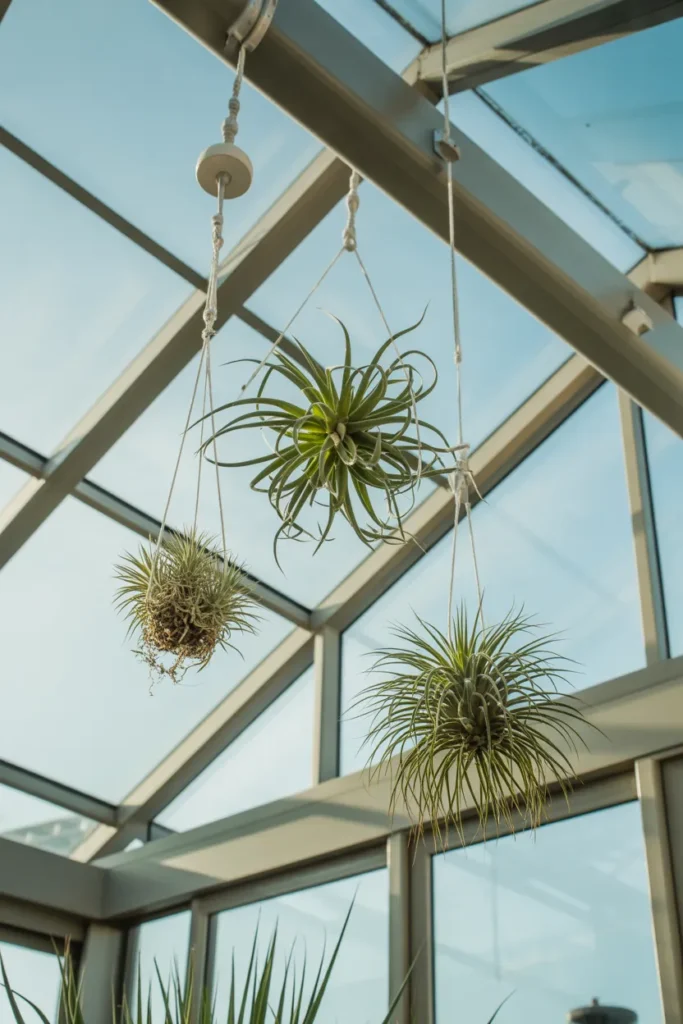
Vibe:Floating, zero-footprint, sculptural.
Why it works: Air plants need no soil, eliminating the visual weight of pots and saucers. Hung at varied heights, they occupy vertical space without blocking the garden view. Their minimal care needs (weekly misting) suit conservatories, which naturally provide humidity.
How to get it: Tie clear fishing line around each air plant’s base. Suspend from ceiling hooks at three different heights (12, 24, and 36-inch drops). Mist twice weekly. Group in odd numbers only—three, five, or seven.
Shop The Look
- Tillandsia air plants set of 5
- Clear fishing line 20lb test
- Small clear ceiling hooks adhesive
- Glass mister spray bottle fine mist
- Air plant fertilizer spray
15. Moss Wall Art
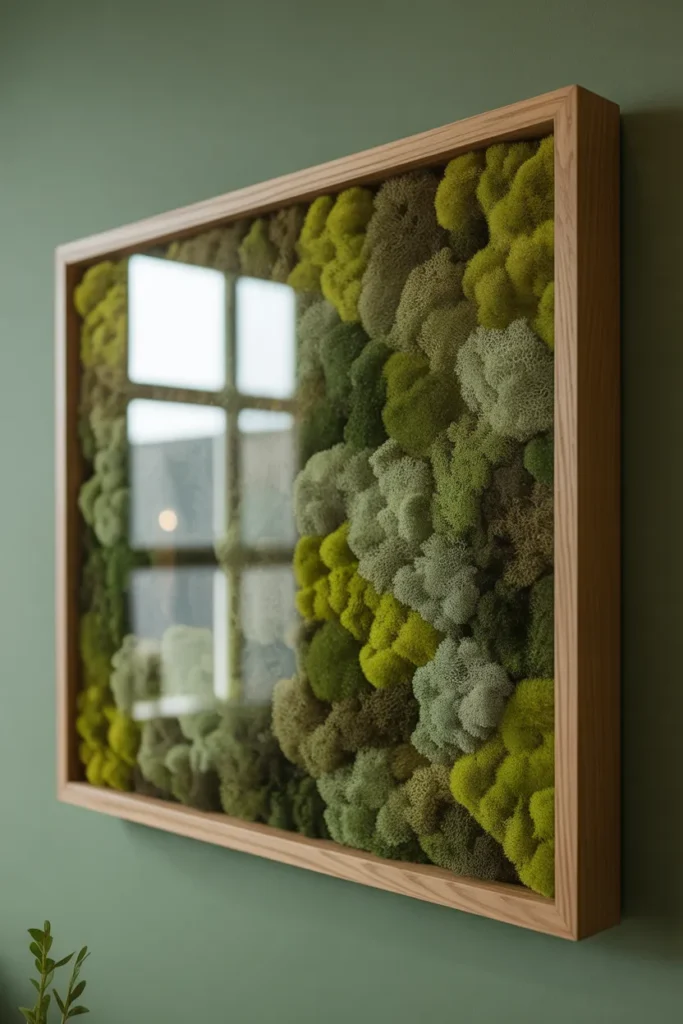
Vibe:Living, quiet, textured.
Why it works: Preserved moss requires zero water or light while adding biophilic texture to a wall that might lack direct sun. The shadowbox frame creates depth on a flat surface, and the organic shape contrasts with the conservatory’s hard, linear architecture.
How to get it: Buy a 24×36-inch shadowbox frame. Hot-glue preserved reindeer moss in a flowing curve from top-left to bottom-right. Leave 40% of the backing visible. Hang at eye level on your only solid wall. Never use real moss indoors.
Quick Win: Buy a ready-made preserved moss panel under $80 on Etsy. DIY costs about the same but takes 2 hours.
Shop The Look
- Preserved reindeer moss 1lb assorted greens
- Shadowbox frame 24×36-inch natural oak
- Low-temp hot glue gun and sticks
- Moss wall art kit complete set
- Anti-static spray for moss
16. Bleached Oak Furniture
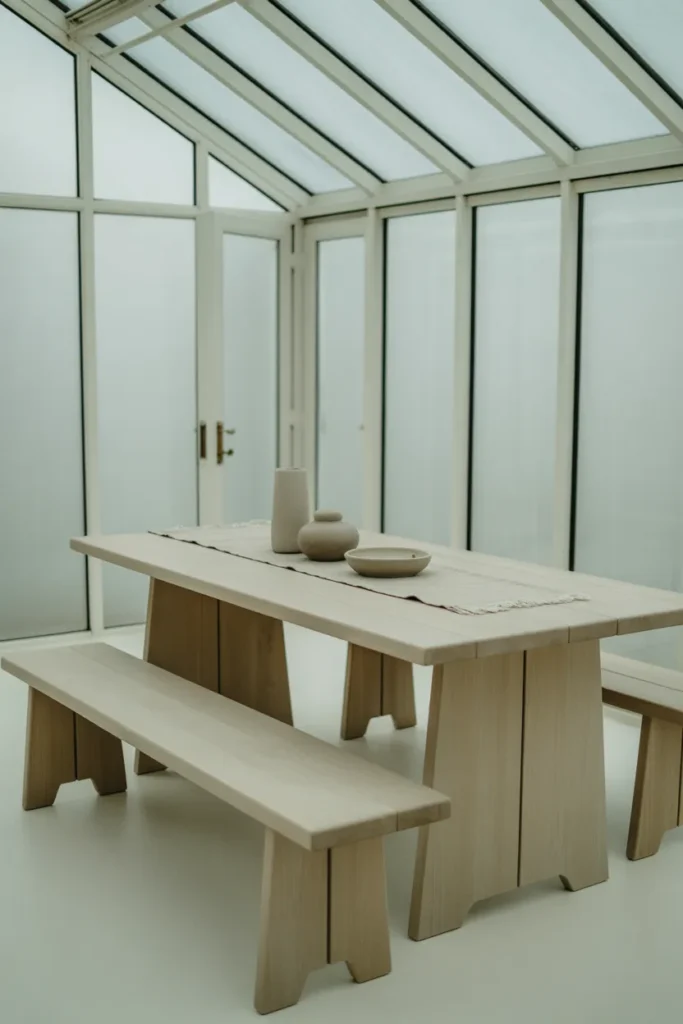
Vibe:Scandinavian, airy, pale.
Why it works: Bleached oak reflects 30% more light than natural oak, brightening a conservatory without adding artificial light. The pale wood disappears visually, letting the garden take center stage, while the matte finish eliminates glare that would bounce off lacquered tables.
How to get it: Apply two-part wood bleach (oxalic acid then hydrogen peroxide) to raw oak. Neutralize with baking soda solution. Seal with matte water-based polyurethane—never oil or wax, which yellow over time in direct sun. Test on a hidden area first.
Shop The Look
- Two-part wood bleach kit for oak
- Matte water-based polyurethane sealer
- Undyed linen table runner 72-inch
- Ceramic centerpiece bowl cream
- Oak dining table unfinished (to bleach)
17. Closed Terrarium Clusters
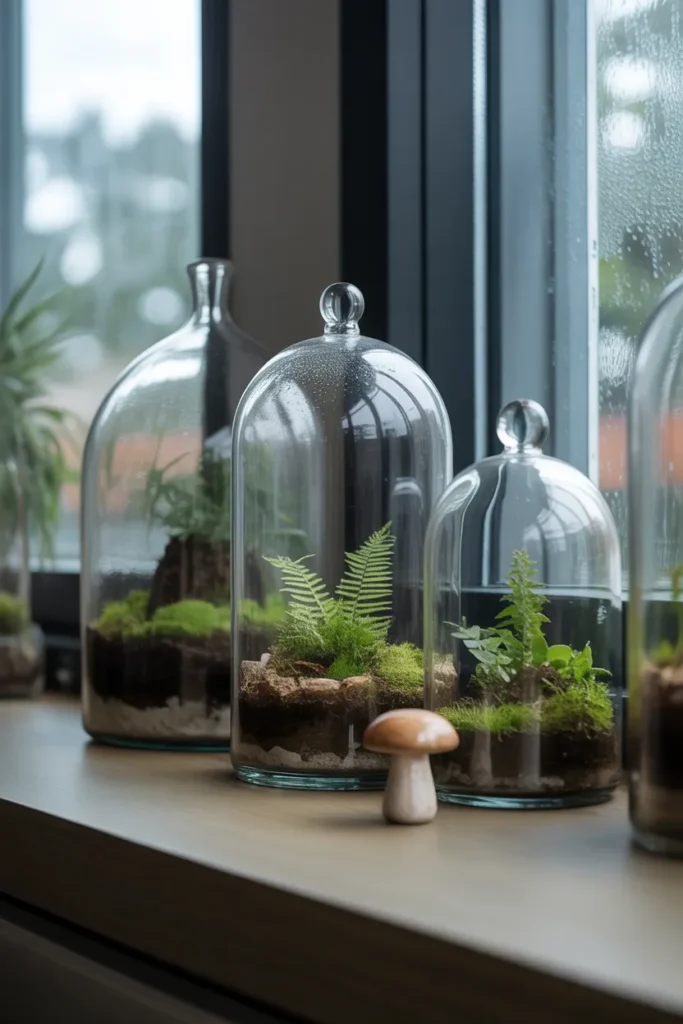
Vibe:Miniature, humid, self-contained.
Why it works: Closed terrariums create their own water cycle, requiring no watering for months. The condensation on glass adds a dew-kissed aesthetic that mimics the garden outdoors. Grouped in threes, they create a focal point without competing with the real plants outside.
How to get it: Layer gravel, activated charcoal, then potting soil in each glass vessel. Add dwarf ferns and moss. Seal completely. Place in bright indirect light only—never direct sun, which cooks the plants. Do not open for at least 6 months.
Shop The Look
- Glass apothecary jar with lid large
- Glass bell jar cloche medium
- Mini glass cloche terrarium small
- Activated charcoal for terrariums
- Dwarf fern and moss kit live
How to Start Your Conservatory Transformation
Start with light control, not decoration. Before buying a single plant or rug, install heat-control window film on south and west-facing glass panels. Choose a clear ceramic film (not tinted) that blocks 65% of UV heat while maintaining 90% visible light transmission. This single move makes every other decision possible—without it, your conservatory is unusable for six months of the year.
The most common mistake is pushing all furniture against the walls. Beginners think this maximizes floor space, but it actually creates a dead zone in the center and emphasizes the room’s glass-box shape. Instead, float furniture at least 18 inches from the walls, creating a “room within a room.” This single shift changes the conservatory from a hallway with plants to an actual living space.
Three budget items under $50 that create immediate impact: a heat-control window film kit ($28 for a 3-foot roll), a pack of battery-operated LED candles with a remote timer ($22 for six), and a single preserved moss panel ($35 for a 12×12-inch frame). Each delivers visual or thermal results in under an hour of installation time.
Realistically, a full conservatory transformation takes 6–8 weeks. Weekend one: window film and deep cleaning. Weekend two: floor treatment (either tile or a runner rug). Weekend three: furniture placement and one large plant. Weeks four through eight: layering lighting, textiles, and accessories. Budget $800–$1,500 for a starter 100-square-foot conservatory, or $3,000–$6,000 for a full room including a new floor and custom ceiling treatments.
Frequently Asked Questions About Conservatory Ideas
What is the difference between a conservatory and a sunroom?
A conservatory has a glass roof and more than 50% glass walls, originally designed for growing plants. A sunroom has a solid roof with large windows, built as general living space. For your home, the key difference is temperature: conservatories get hotter and colder and require more specialized window film or HVAC solutions.
What is the best flooring for a conservatory?
Unglazed terracotta or porcelain tiles that mimic natural stone are best because they don’t fade in direct sun and absorb temperature changes. Avoid hardwood (warping risk) and wall-to-wall carpet (mold risk). Expect to pay $5–$12 per square foot for tile installed, or $2–$4 per square foot for a flat-weave wool runner over existing concrete.
How much does a conservatory renovation cost?
A cosmetic makeover (flooring, furniture, lighting, plants) costs $1,500–$4,500 for a 150-square-foot space. A full renovation including new frames, glass, and HVAC runs $15,000–$35,000. The biggest variable is the roof: replacing old polycarbonate with double-glazed glass costs $8,000–$12,000 alone.
Can I use a conservatory in winter?
Yes, if you add underfloor heating or a small ceiling-mounted infrared heater. Standard baseboard heating loses heat through glass too quickly. For a budget solution, use a radiant floor mat under a wool runner rug ($200–$400) plus heavy thermal curtains on the north side only. Expect a 15-degree difference from the rest of the house.
Which plants survive best in a conservatory?
Jasmine, olive trees, citrus, and succulents thrive in the high light and temperature swings. Avoid ferns (need constant humidity) and orchids (hate drafts). The easiest starter plant is a Meyer lemon tree—it wants the same conditions you’re trying to create: bright light, cool nights, and consistent moisture.
Ready to Create Your Dream Conservatory Retreat?
You’ve seen 17 conservatory ideas spanning color, materials, lighting, furniture, and even tiny terrarium clusters—each one designed to solve a specific problem of the glass room. No one transforms a conservatory in a weekend, and that’s exactly the point: slow, thoughtful additions honor the space’s purpose as a retreat from speed itself. Today, walk into your conservatory and identify the single surface that catches harsh glare—then measure it for window film. Once the light softens, every plant, every textile, every bleached oak surface will feel less like decor and more like a conversation between your home and the garden outside. Save your three favorite conservatory ideas now—you’ll want to show a contractor that slatted ceiling photo when you’re ready to commit.
One Comment