
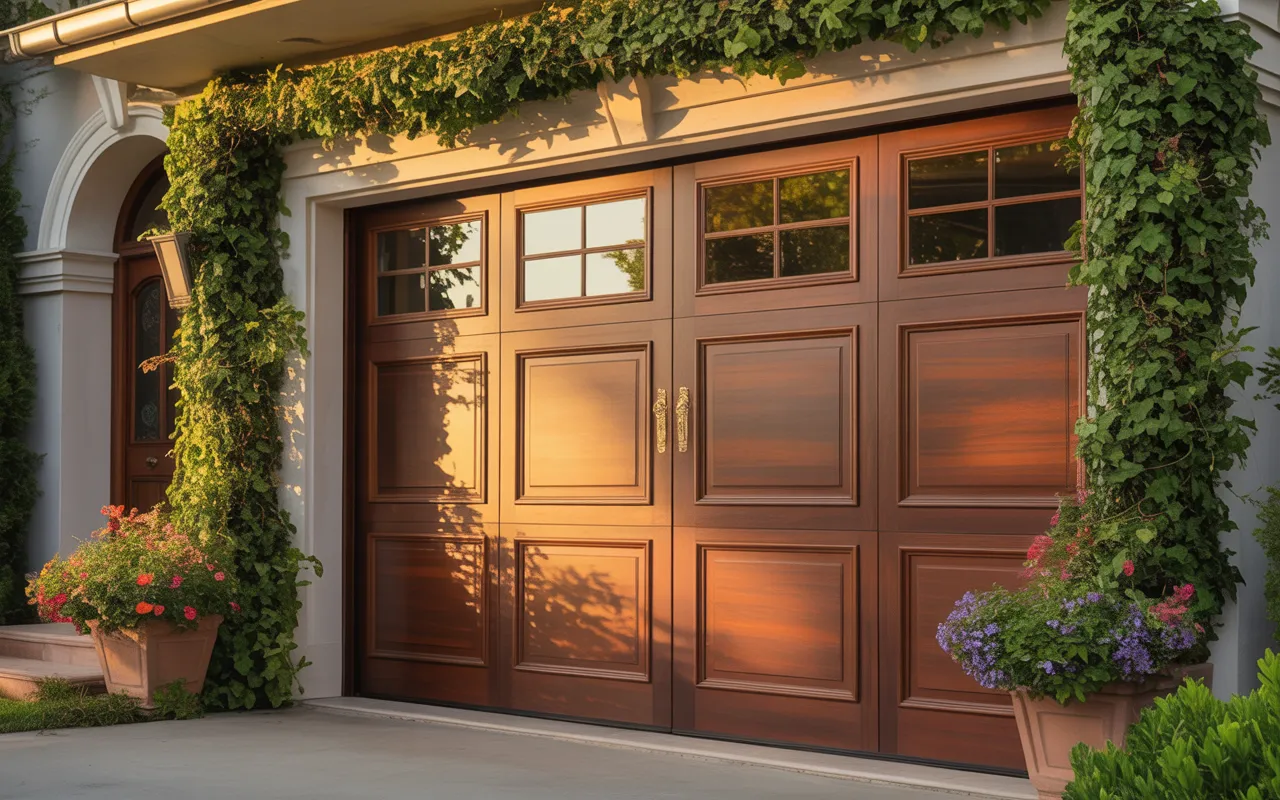
21 Game-Changing Garage Door Makeover Ideas
A garage door makeover is the single most impactful curb appeal upgrade you can make — it covers up to 40% of your home’s front-facing façade, and changing it (or transforming what you have) instantly reshapes your entire exterior aesthetic. This article gives you 21 concrete garage door makeover ideas spanning color, hardware, cladding, lighting, and landscaping — everything from a $30 weekend refresh to a full carriage-house transformation.
Imagine pulling up to a home where the garage door doesn’t just sit there — it anchors the whole composition. Where bold charcoal panels meet black iron hardware, or soft sage paint breathes life into a tired suburban façade. A garage door makeover turns the most overlooked surface into the design centerpiece. The curb appeal you’ve been chasing? It starts here.
Here are 21 ideas worth saving — and stealing.
Why a Garage Door Makeover Works So Well
The garage door makeover movement draws from architectural traditions that treat the home’s exterior as a cohesive composition — not a collection of unrelated surfaces. Carriage-house styling, in particular, originated in 19th-century New England where barn doors were designed to harmonize with the main dwelling. Modern versions of this approach borrow that sense of visual unity, applying it to contemporary suburban homes that desperately need an identity. The goal isn’t decoration for its own sake — it’s coherence.
The materials that define a high-impact garage door makeover include powder-coated steel, real cedar planking or cedar-look overlays, black wrought iron hardware (hinges, handles, and straps), matte exterior paint in Benjamin Moore’s “Iron Mountain” or Sherwin-Williams’ “Urbane Bronze,” and brushed aluminum or oil-rubbed bronze accents. Color palettes that consistently perform: warm charcoal with white trim, deep navy with natural wood, sage green with aged brass, and classic black with cream detailing.
| Element | Core Trait |
|---|---|
| Philosophy | Exterior coherence — the door anchors the whole façade composition |
| Key Materials | Powder-coated steel, cedar overlays, wrought iron hardware, matte exterior paint |
| Key Colors | Warm charcoal, deep navy, sage green, classic black, aged cream |
1. Charcoal Contrast Garage Door
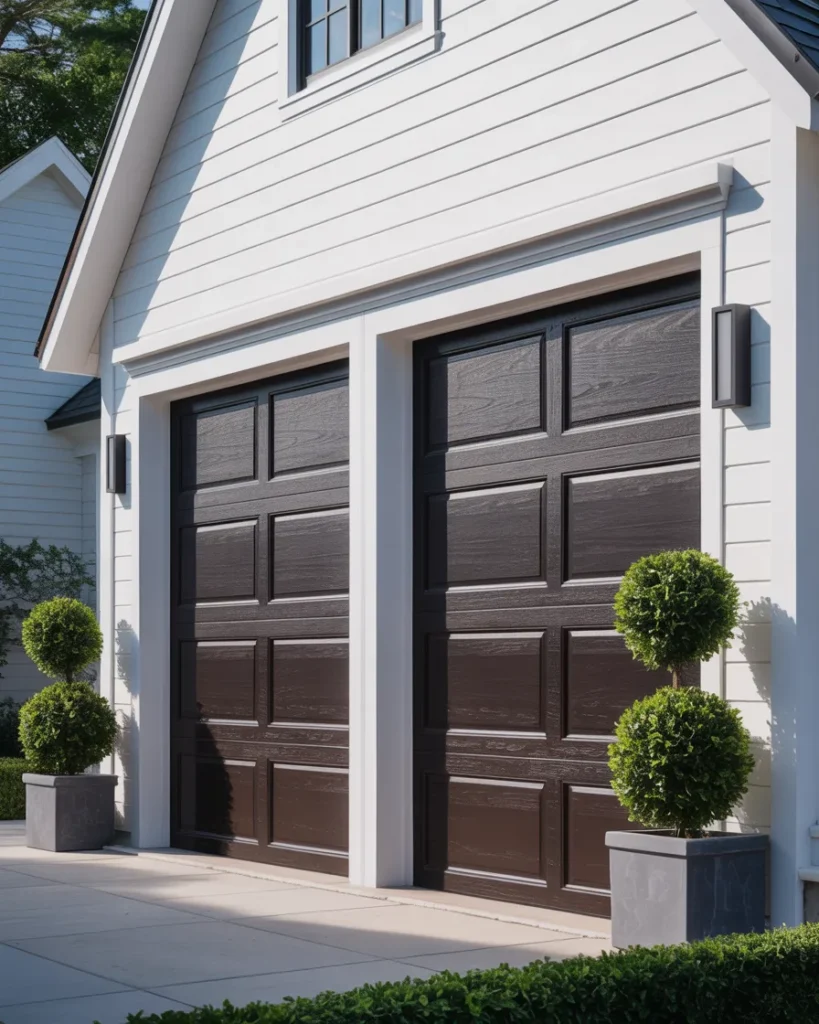
Vibe: Grounded — this is the look that makes a white suburban house feel like an architectural statement.
The charcoal-on-white contrast works because of simultaneous contrast — the eye reads the dark door as heavier and more solid than it is, anchoring a light-colored home visually. Warm charcoal (with brown undertones, not blue-gray) softens what could otherwise feel industrial. The flat matte finish is critical: gloss reads cheap on large exterior surfaces, while matte reads expensive and intentional.
Paint the door with Sherwin-Williams “Urbane Bronze” (SW 7048) — a warm, earthy charcoal that flatters almost every home style. Apply two coats of exterior satin (not gloss) with a short-nap foam roller for a factory-smooth finish.
A $12 can of black Rust-Oleum spray paint on your existing door handle and house numbers ties the whole look together before you even touch the door color.
2.Cedar Plank Overlay Garage Door
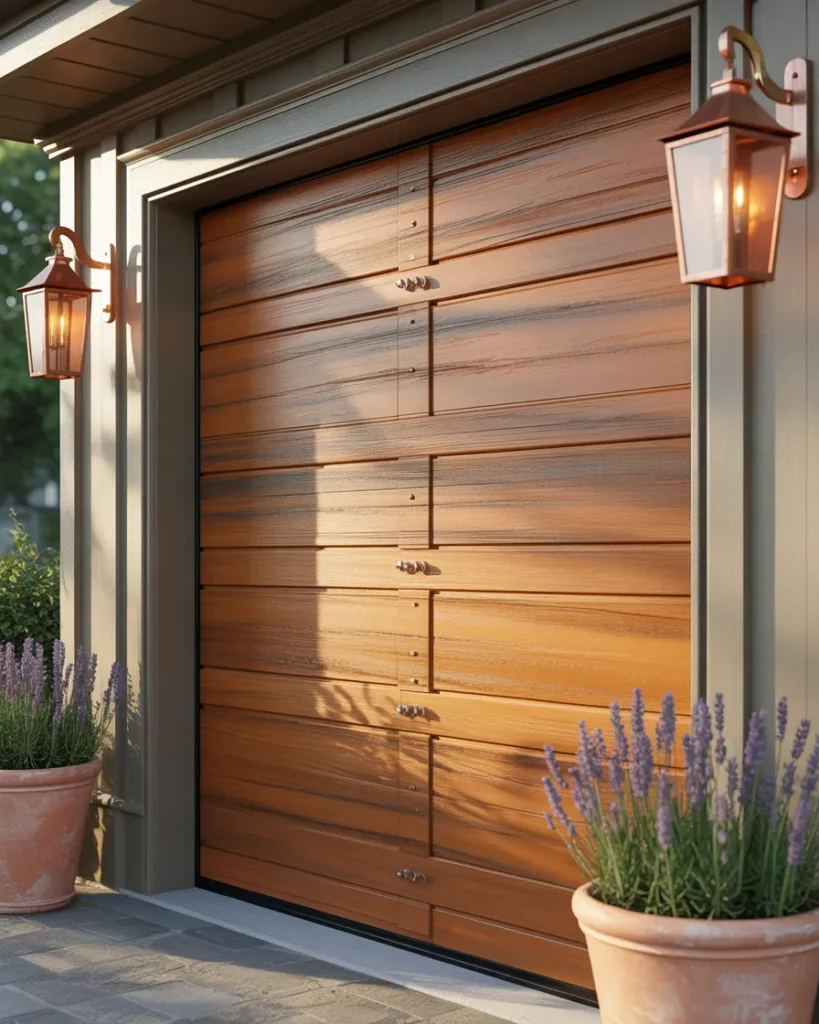
Vibe: Sun-warmed — this door makes a neighborhood of beige houses look like it found a soul.
Cedar overlays work on standard raised-panel steel doors because cedar is lightweight enough (roughly 23 lbs per cubic foot) not to stress the door’s torsion springs, yet dense enough to hold hardware and resist warping. The horizontal grain orientation creates visual width, making a single-car opening feel more substantial. The wood also ages gracefully — untreated cedar silvers beautifully, while oiled cedar holds its honey tone for years.
Use 1×4 kiln-dried cedar fence pickets (available at any home center for under $3 each), cut to width, and attach with construction adhesive plus stainless ring-shank nails. Seal with Penofin penetrating oil in “Cedar” to feed the grain and provide UV protection without a plasticky top coat.
3.Carriage-House Hardware Door
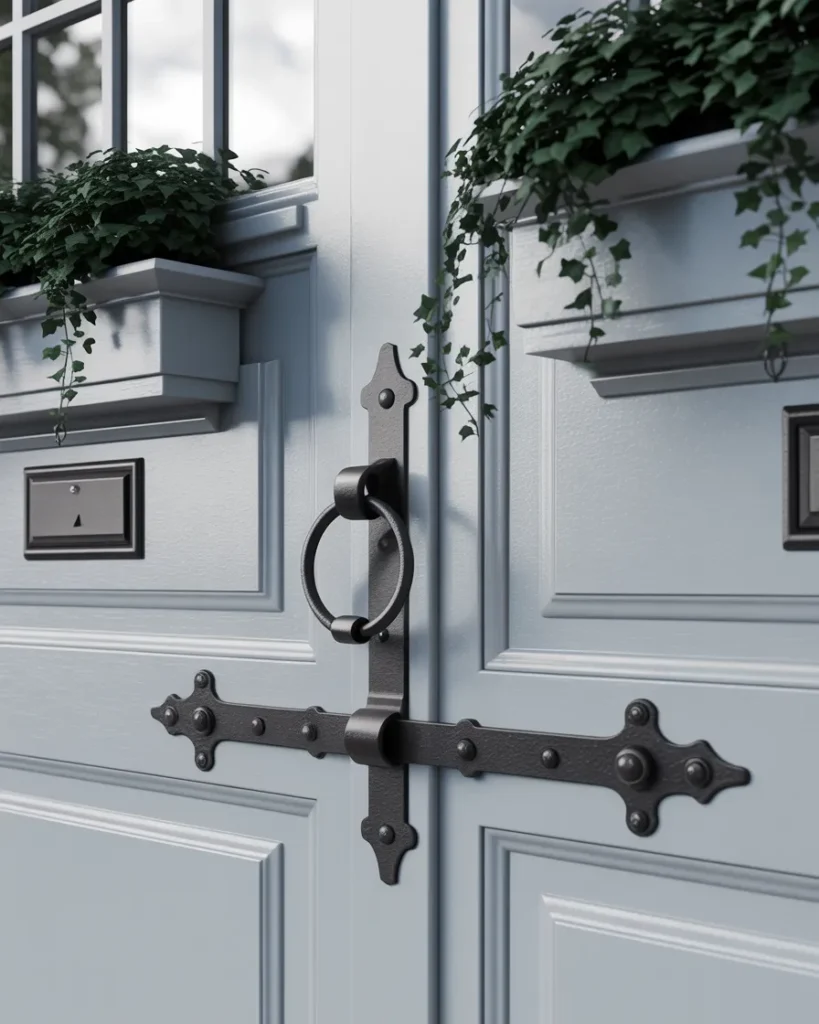
Vibe: Composed — like the door has always been there, and the house was built around it.
Decorative carriage hardware works through visual narrative — a flush, plain garage door has no story. Add strap hinges and a ring pull, and it reads as a portal with history and weight, even though it still operates with a button. The design principle at play is applied ornamentation: the hardware creates shadow lines and visual depth that flat surfaces can’t offer. Matte black is the only finish that reads as genuinely aged rather than costume-y.
Measure your door panels carefully before ordering — standard strap hinge sets come in 12″, 16″, and 18″ lengths. For a two-car door, choose 18″ straps placed at the upper third, midpoint, and lower third of each faux panel. Self-adhesive magnetic versions exist for renters; screw-mounted kits feel far more convincing.
A set of four decorative carriage hinges and one ring-pull handle runs $35–$65 on Amazon and takes under 30 minutes to install with a drill. It’s the fastest ROI of any garage door makeover project.
4. Flanking Sconce Garage Door
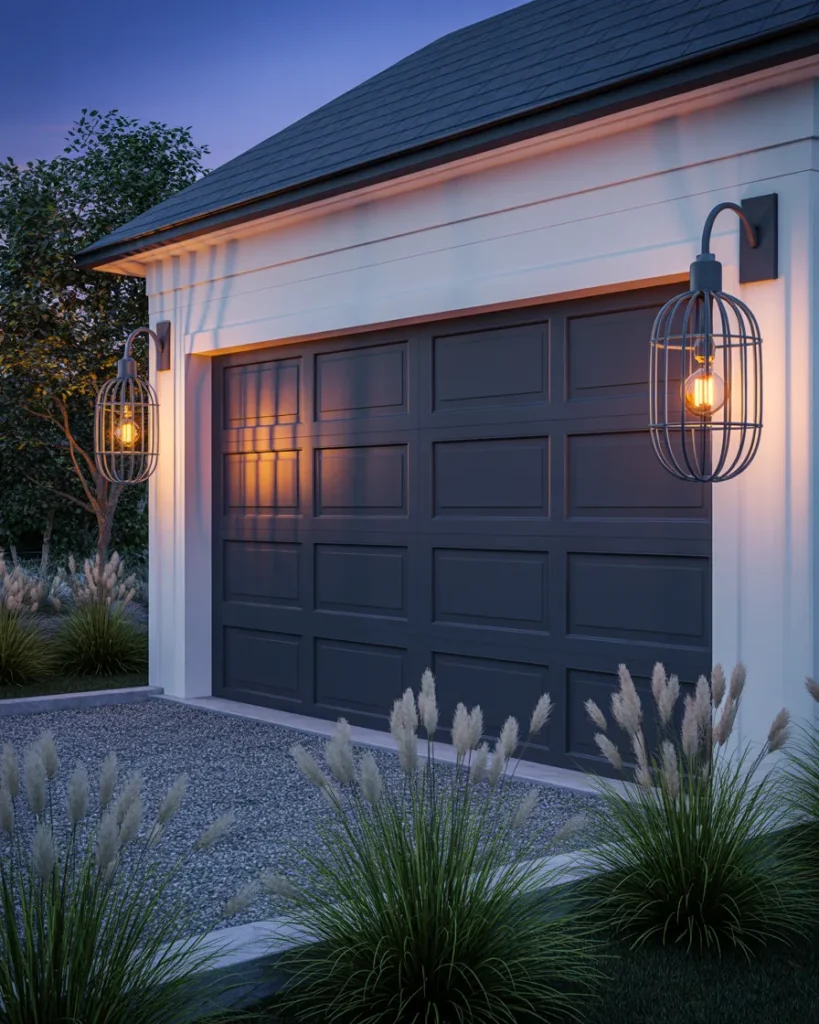
Vibe: Luminous — the door at night becomes something entirely different from the door in daylight.
Flanking sconces frame the garage opening using the same compositional logic as picture-frame molding: they tell the eye where to focus and give the door a sense of ceremony. Oversized fixtures (14″–18″ tall cages or lanterns) at garage scale prevent the sconces from reading as afterthoughts. The warm amber light from Edison-style bulbs (2700K) flatters virtually every door color, especially dark ones, by creating depth through side-lighting that emphasizes panel texture.
Mount sconces 6–8 inches outside the door frame surround and 7 feet off the ground for ideal light spread. Choose fixtures at least 14 inches tall for a two-car garage. Wire with GFCI-protected outdoor circuits; if hardwiring isn’t feasible, solar cage lanterns with warm-white LEDs are a convincing $40 alternative.
5. Sage Green Cottage Door
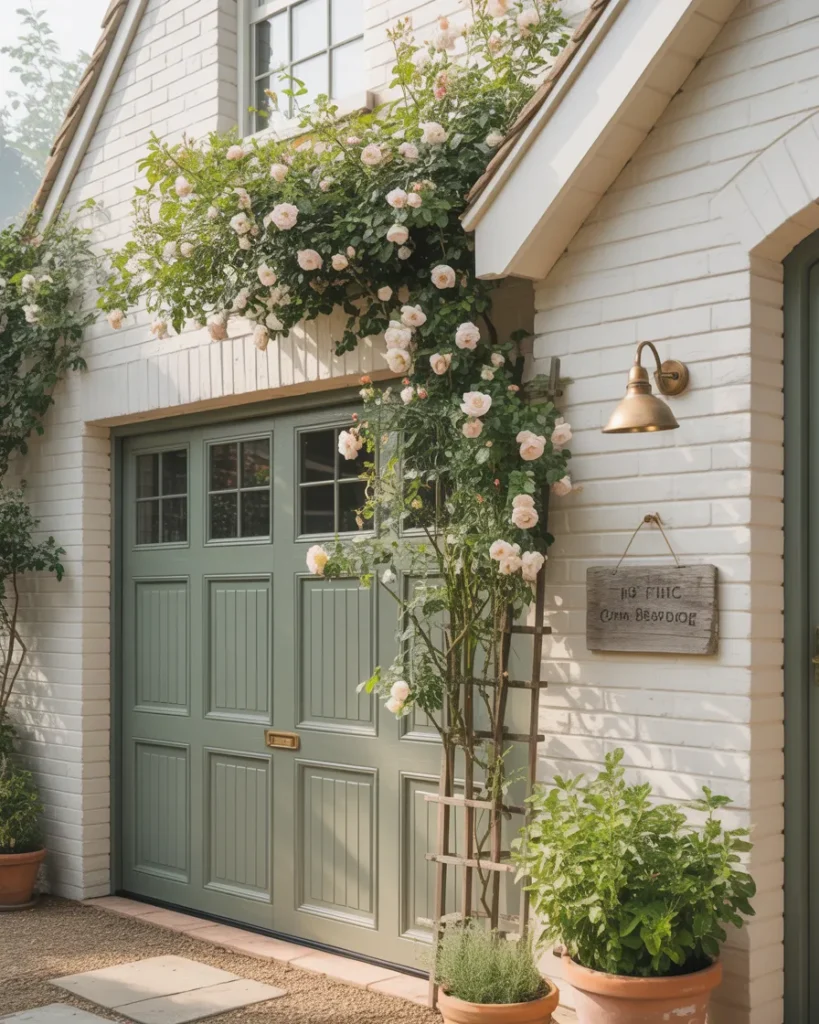
Vibe: Still — the kind of garage door that makes people slow down as they drive past.
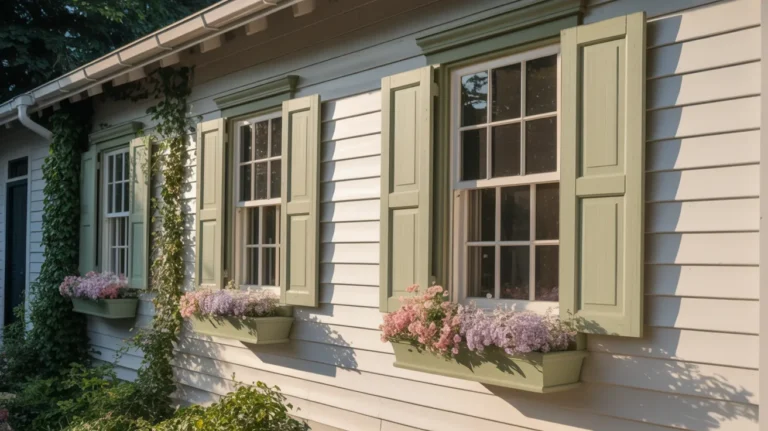
Dusty sage green (think Benjamin Moore “Vintage Jade” or Farrow & Ball “Mizzle”) is one of the rare colors that reads simultaneously fresh and aged — it has enough gray in it to feel grounded, enough green to feel alive. Against warm white brick or painted shiplap siding, it creates a low-contrast harmony that’s more sophisticated than bold contrast. The principle at play is tonal relationship: a door that’s 2–3 values darker than the siding reads as intentionally coordinated, not randomly chosen.
Sample at least three sage options before committing — sage undertones vary wildly. “Mizzle” pulls blue-gray; “Sage Brush” pulls warm yellow. For most homes, the warm green-gray sages (those with golden undertones) photograph better and flatter more brick and siding colors. Test a 12″×12″ sample on the actual door and observe at 10am and 4pm before deciding.
A $9 paint sample pot of Benjamin Moore “Vintage Jade” covers a 2×2 foot test patch on your door — photograph it at different times of day before buying a full gallon. Saves the cost of a $60 mistake.
6.Architectural Trim Molding Door
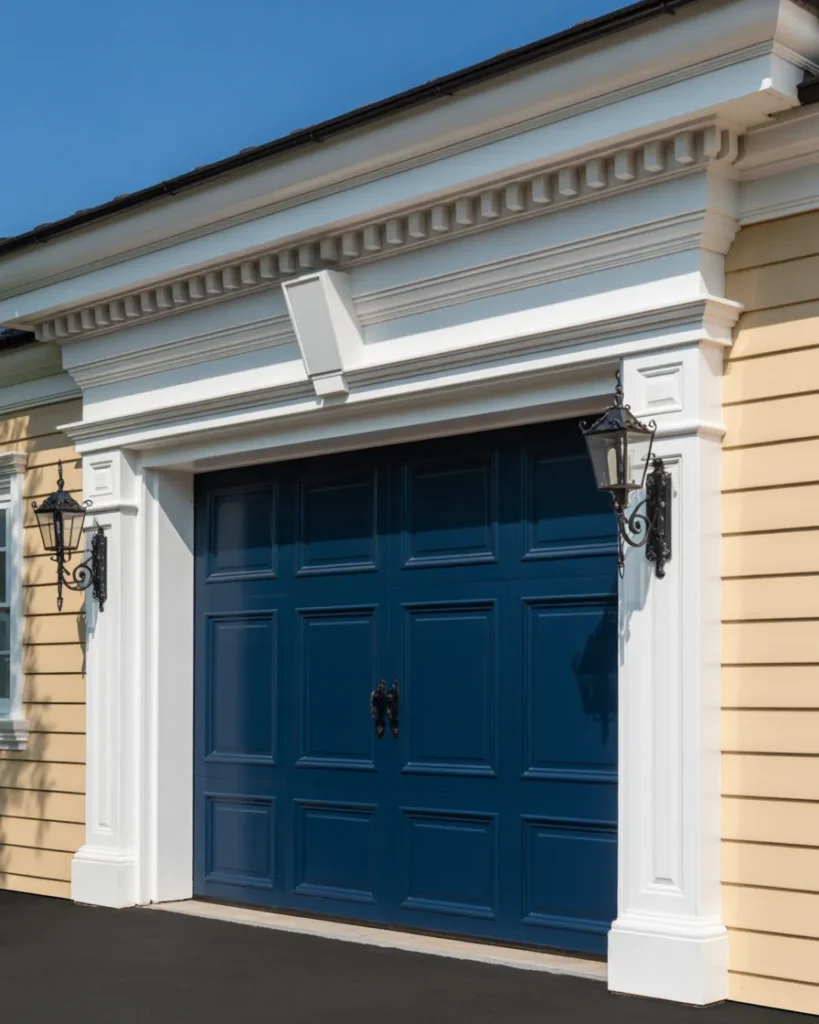
Vibe: Formal — the garage door stops looking installed and starts looking designed-in.
A built-up trim surround transforms the garage opening using the same architectural language as a classical doorway: vertical pilasters on each side create visual columns, a stepped header provides a cap, and an optional keystone accent at the center delivers the detail that tells the eye “this was intentional.” The design principle is called applied architecture — adding classical proportional elements to a flat surface so the opening reads as a composed feature rather than a hole punched in the wall. The shadow line between door and surround is critical; without a slight reveal gap, the trim and door read as one flat layer.
Build the surround from cellular PVC trim boards — rot-proof, paintable, and dimensionally stable in outdoor conditions. Use 1×6 boards for the pilaster faces, build up the header with stacked 1×4 and 1×6 pieces, and cap with a bed-and-crown molding profile. Secure to the wall framing with exterior-rated construction screws and fill all joints with paintable caulk before top-coating. The complete materials cost for a two-car opening runs $120–$180.
A pre-made PVC door surround header kit (available online for $45–$75) installs in under two hours with a miter saw and construction screws — no custom carpentry required. Paint it the same white as your window trim for an immediately cohesive look.
Explore More >> 25 Outdoor Patio Furniture Layout Ideas
7. Overhead Trellis-Frame Garage Door
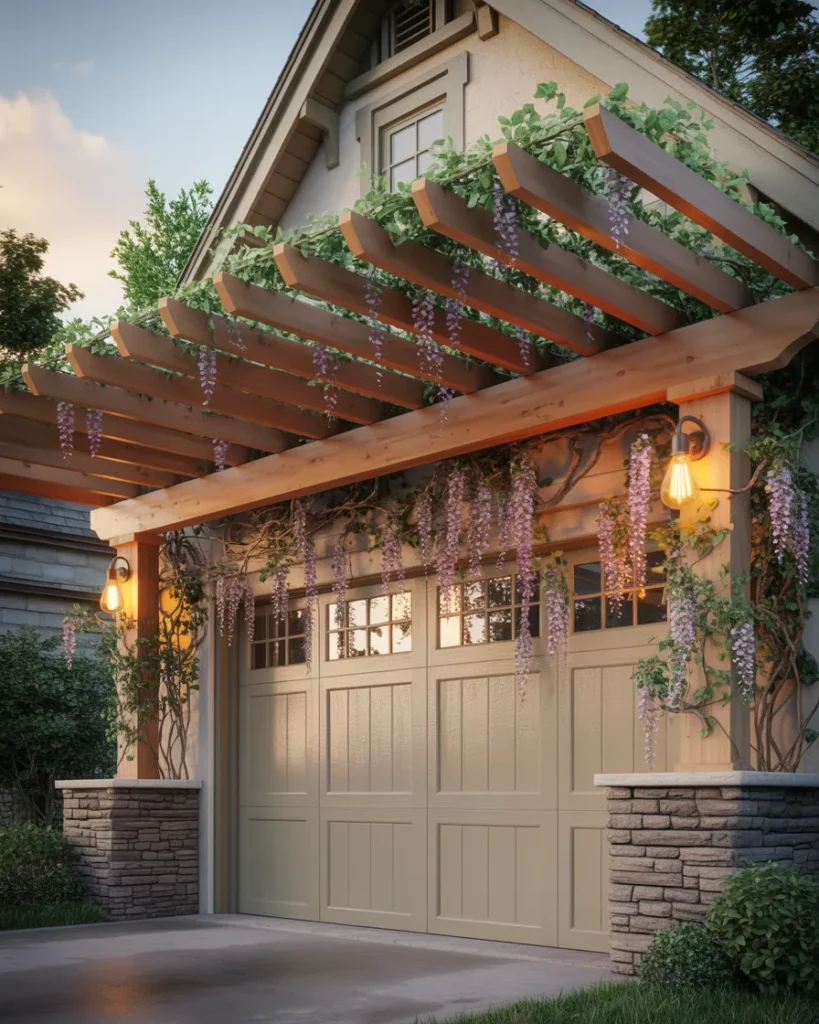
Vibe: Romantic — the garage becomes part of the garden, not separate from it.
A pergola or trellis frame built above and across the garage opening is the most transformative non-door garage door makeover possible — it changes the architectural character of the entire garage bay by adding depth, overhead structure, and eventually living material. The design principle is layered framing: the pergola creates a middle ground between the flat door and open sky, giving the eye a foreground element to read before it reaches the door surface. Pendant lights hung from the trellis structure provide dramatic downlighting that illuminates both the door and the driveway entry below.
Frame using 6×6 rough-cut cedar posts for the verticals and 2×6 cedar for the horizontals. Space horizontal slats at 12″ O.C. for adequate climbing plant support. Plant wisteria, climbing hydrangea, or climbing roses at each base post — within three seasons, the structure reads as integrated architecture, not an add-on.
8.Board-and-Batten Overlay Door
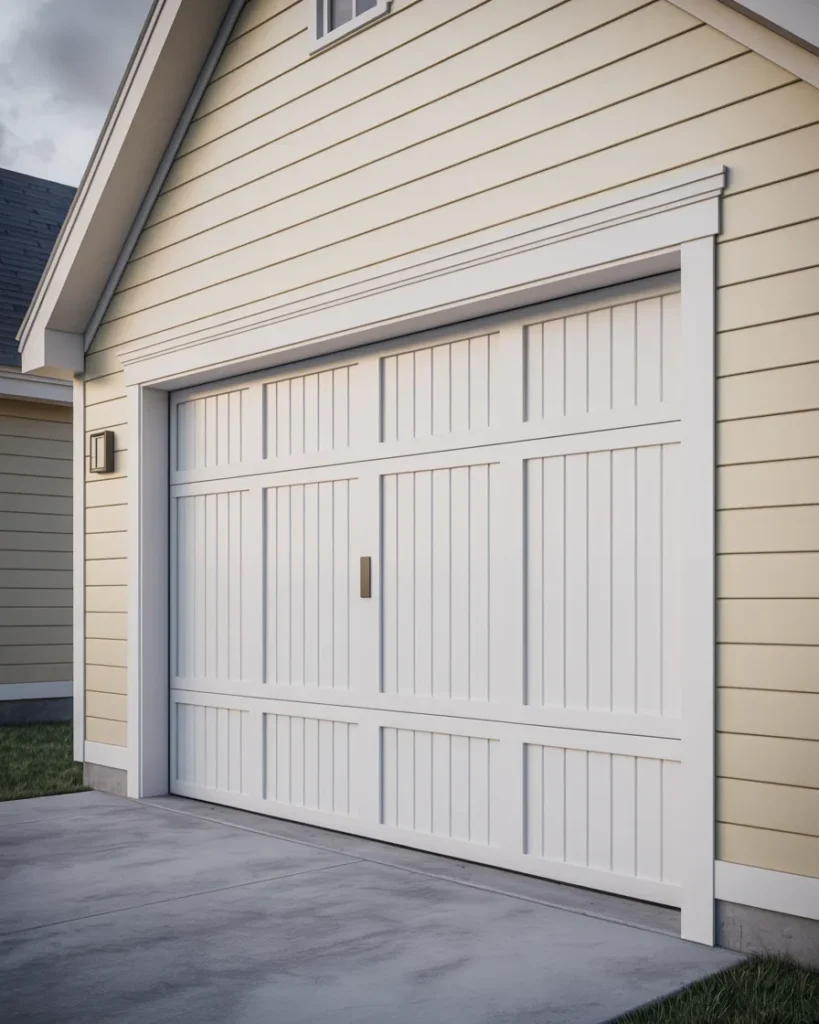
Vibe: Raw — a door that looks like it was designed from scratch, not bought from a catalog.
Board-and-batten overlay transforms the horizontal language of a standard raised-panel door into a vertical one, which has a powerful effect: vertical lines read as taller, more formal, and more traditionally architectural. This matters on ranch homes and split-levels where horizontal proportions can feel squat. The overlay creates actual three-dimensional depth through the raised batten strips — light rakes across the surface at low angles, creating visible shadow lines that give flat-panel doors genuine texture.
Use 1×4 cellular PVC trim boards (not wood — wood will expand with moisture and crack the adhesive bond) spaced evenly across the door width, with 1×2 batten strips centered over each joint. Secure with Gorilla Glue construction adhesive and stainless finish nails. Paint with two coats exterior acrylic — the PVC surface needs a bonding primer first.
9.Navy Blue Statement Garage Door
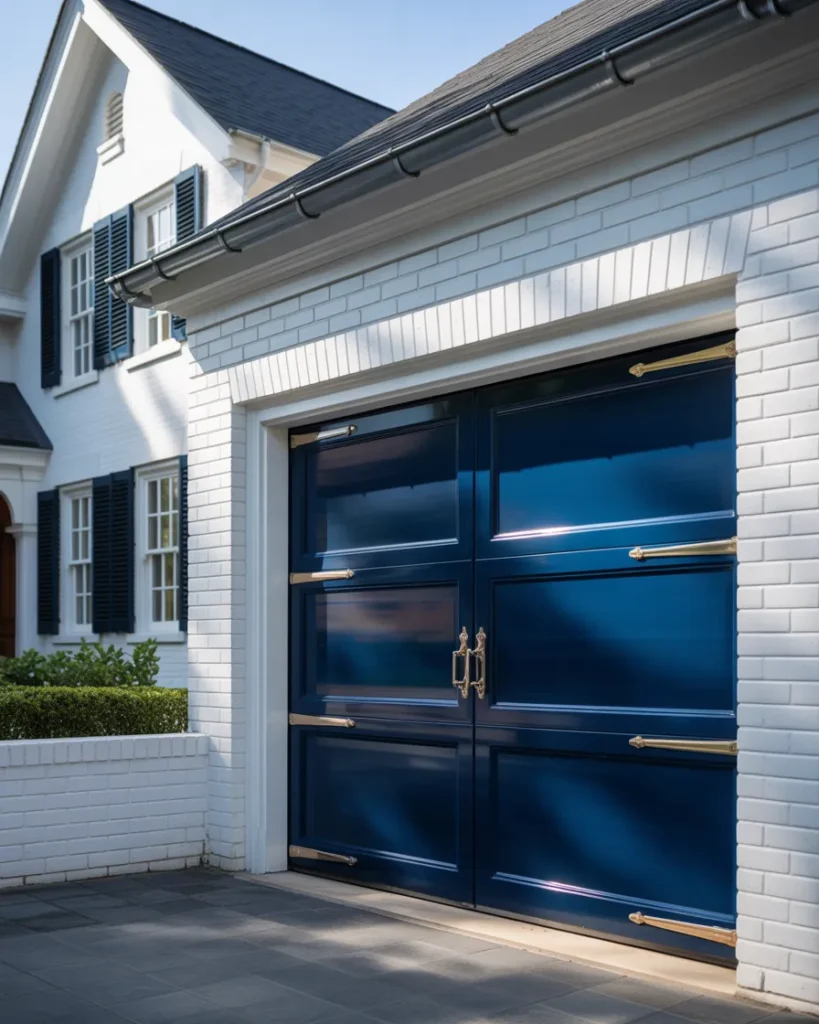
Vibe: Sharp — this is curb appeal with a spine.
Navy against white brick or white siding creates the highest-contrast version of the classic dark-door technique — but navy reads as warmer and more nuanced than black because it carries color. The design principle is chromatic grounding: a deep, saturated door color pulls the eye in and gives the home a visual anchor point that prevents the façade from reading as scattered. The key material consideration: navy doors show dust and water spots more readily than warm dark tones, so a semi-gloss finish (rather than flat) on the door panel surface is the correct choice for longevity.
Benjamin Moore “Hale Navy” (HC-154) is the benchmark for this look — a true navy with just enough green to prevent it from going purple. Apply in semi-gloss for easy cleaning and resistance to chalking in sun-exposed climates.
10. Full Steel Replacement Door
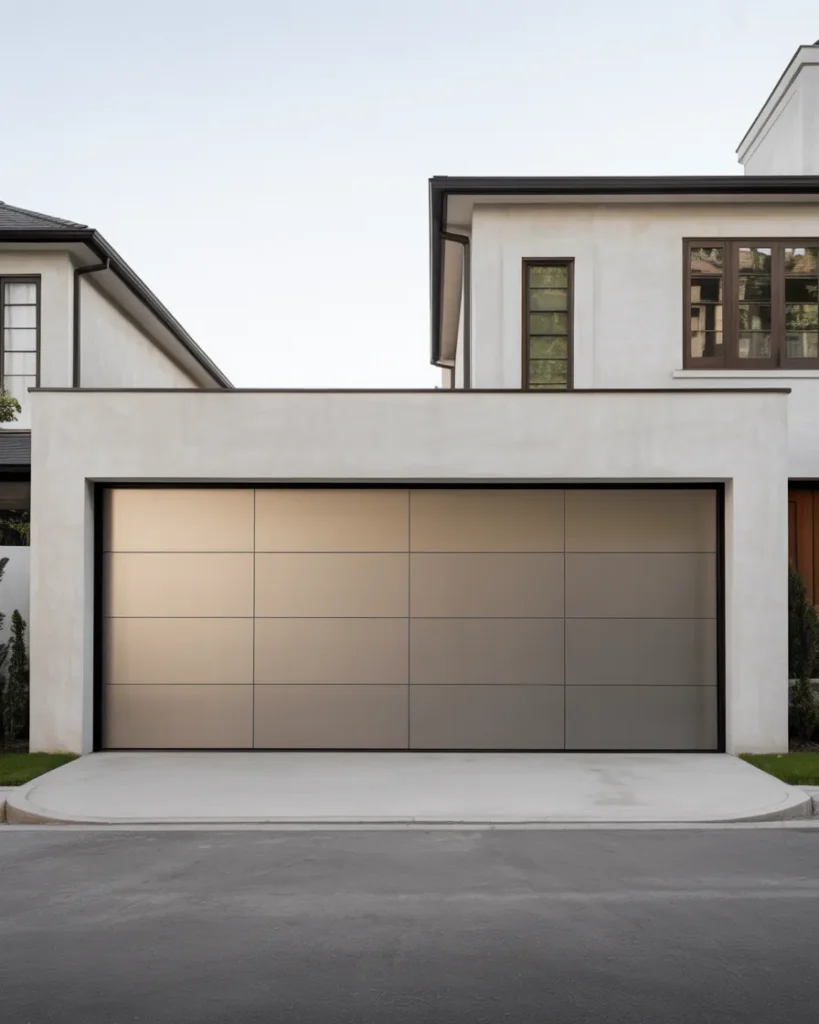
Vibe: Composed — the door does its job by disappearing into the architecture.
A full door replacement is the highest-investment garage door makeover, but it’s also the only way to achieve certain contemporary aesthetics — particularly the flush-panel or full-view aluminum looks that no overlay can replicate. Clopay’s Coachman and Avante collections, along with Wayne Dalton’s 9700 series, offer steel doors with genuine wood grain embossing that reads as real timber from street distance. The visual principle: flush panels with tight shadow lines between sections create a strong horizontal rhythm that’s the architectural opposite of traditional raised-panel fussiness.
When specifying a replacement, prioritize R-value if your garage is conditioned space (R-12 minimum for attached garages). The warm greige finish — Benjamin Moore’s “Pale Oak” translated into powder-coat — is the current sleeper hit of contemporary exterior design.
11.Single-Car Drama Garage Door
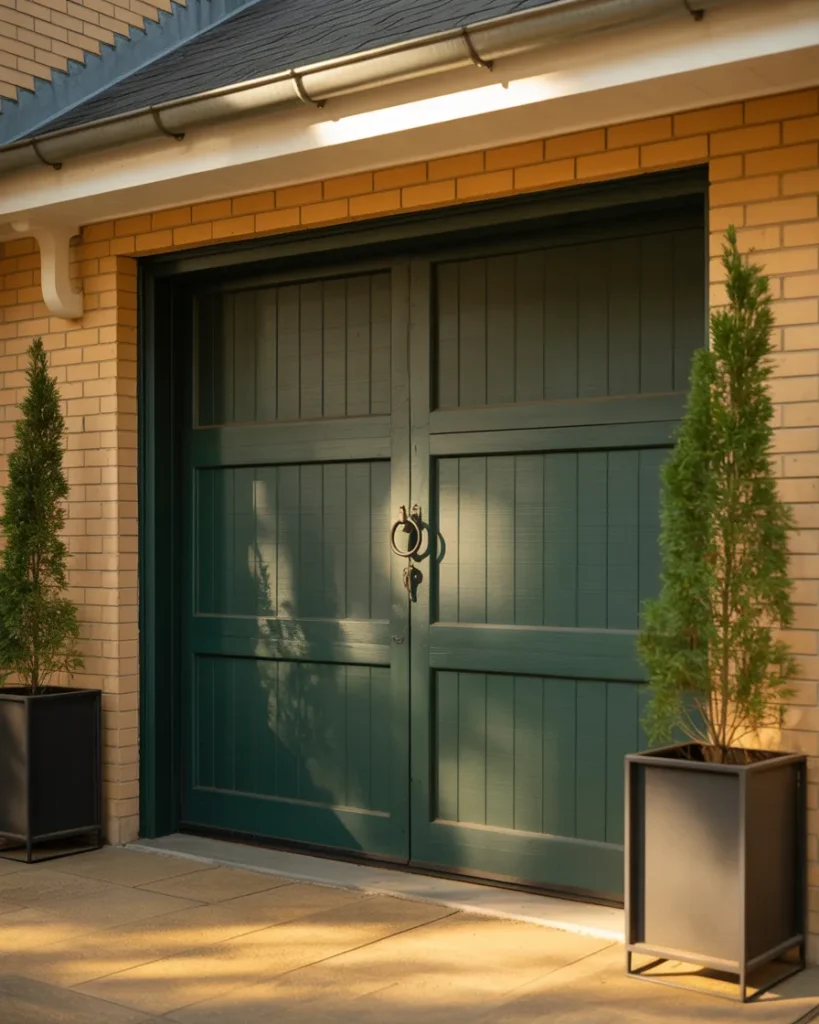
Vibe: Intentional — a single-car garage door that looks designed, not defaulted.
Small garage doors succeed through maximizing impact per square foot — every element must be chosen with a deliberate eye. Tall, narrow planters flanking the opening use verticality to visually stretch the opening; columnar plants (Sky Pencil Holly, columnar cedar) reinforce that upward movement. A single large centered ring pull on a single-car door reads as a confident design choice — the same hardware on a two-car door would look fussy and small. Scale up to match the canvas.
Tall, narrow iron planters (18″ diameter, 36″ tall) placed 12″ outside the door frame on either side create bilateral symmetry without taking up driveway space. Paint the door a deep saturated color that contrasts clearly with the home — on small garages, going timid with color just reads as missed opportunity.
Two columnar Sky Pencil Holly plants in black iron planters runs about $90 total at most garden centers. Instant architectural framing for a single-car opening, zero masonry work.
12.Driveway Uplighting Garage Dooor
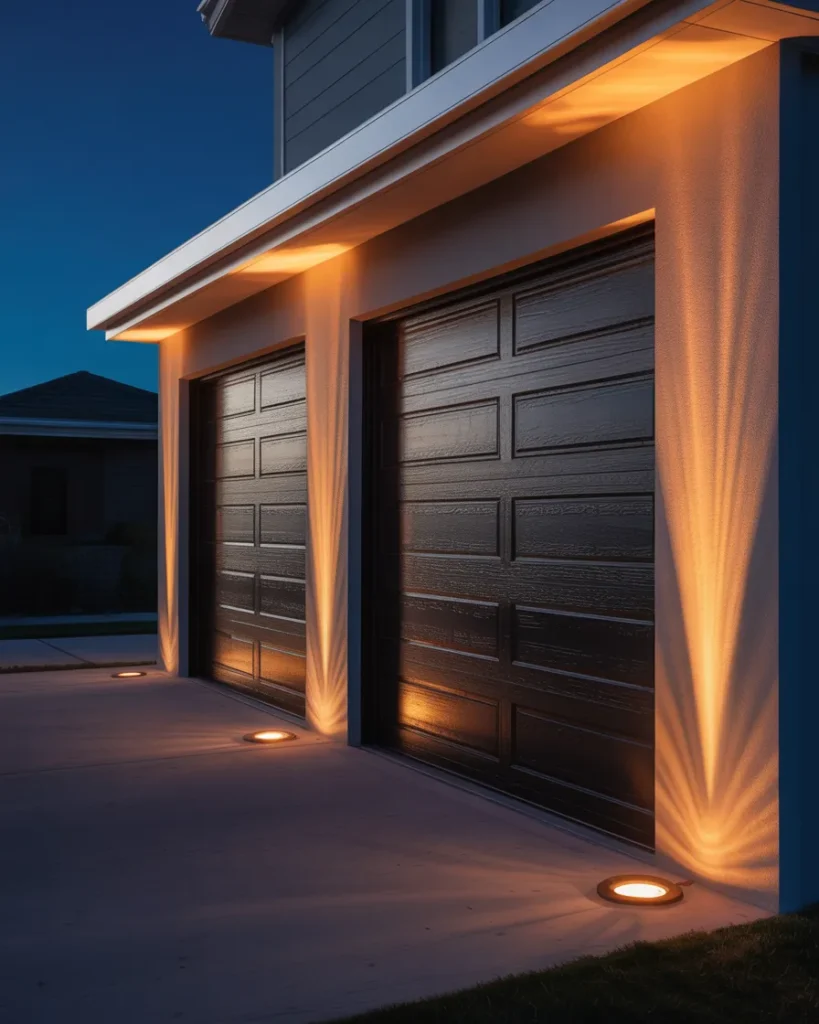
Vibe: Dramatic — your garage door at midnight looks like a stage set.
Uplighting uses raking light — light that grazes a surface at a low angle — to reveal texture that would otherwise disappear under flat frontal illumination. On a textured or paneled garage door, uplights placed 18–24 inches from the base and aimed straight up create tall shadow patterns that give the door genuine three-dimensionality at night. The principle is called chiaroscuro in architecture: the interplay of highlighted surfaces and deep shadows that creates apparent depth and drama on flat planes.
Install 12V low-voltage in-ground well lights (bronze or matte black finish) with 2700K warm white LEDs at 5W minimum. Aim directly upward at the door surface. Two lights symmetrically placed cover a two-car door evenly. Connect to a low-voltage transformer with an astronomical timer for fully automatic dusk-to-dawn operation.
13.Tonal Match Garage Door Makeover
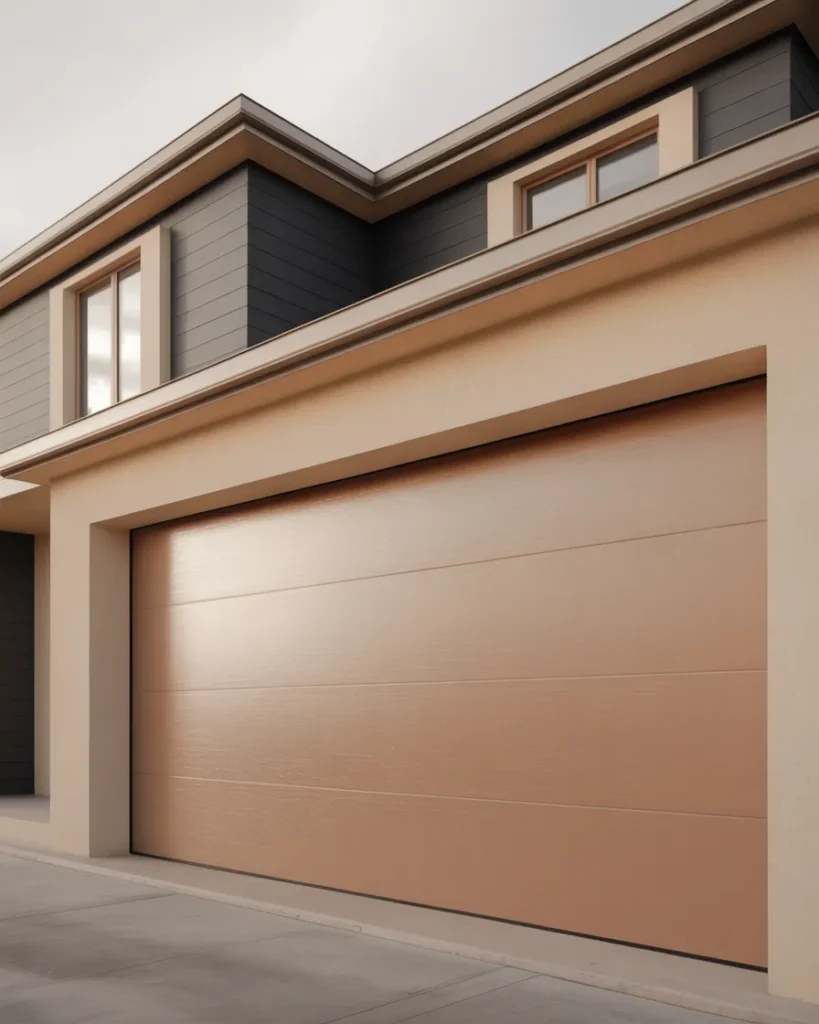
Vibe: Serene — the house reads as one resolved object, not a building with a door bolted onto it.
Tonal matching — painting the garage door the same color as the home’s primary exterior — is an advanced curb appeal strategy that works by de-emphasizing the door’s presence and making the entire façade read as an architectural unit. This runs counter to the instinct to contrast, but it’s extremely effective on contemporary and transitional homes where visual simplicity is the goal. The principle: when surfaces are tonal, the eye reads the home as a designed object; when surfaces contrast strongly, the eye reads parts separately.
Match to within one or two LRV (light reflectance value) points of your siding color — not an exact color match, but very close. A door that’s 5% darker than the wall color reads as intentionally grounded. Exact matches can make the door look like a mistake; the slight darkness creates a subtle frame-within-frame effect.
14.Faux-Timber Cross-Buck Garage Door
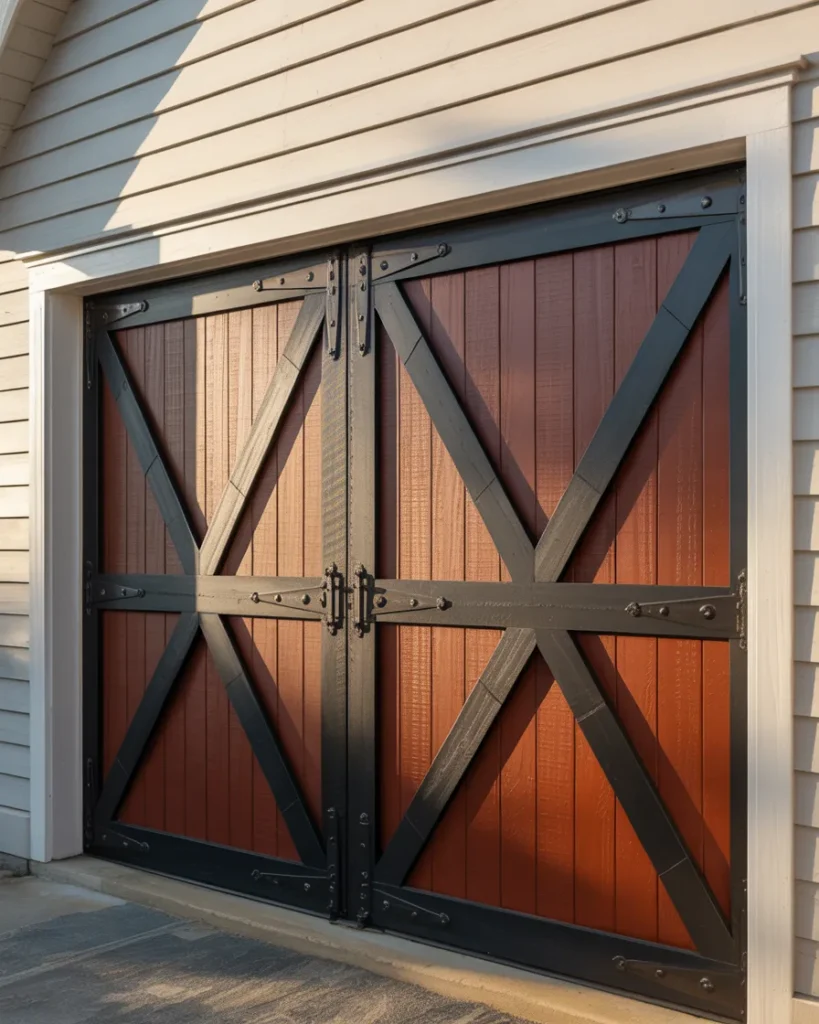
Vibe: Warm — this is the door that makes a subdivision house feel like it earned its address.
The cross-buck or X-brace pattern is a direct reference to traditional barn door construction, where diagonal bracing was structural. On a modern garage door, the same pattern becomes expressive rather than functional — but it works precisely because it tells a story of materiality and craft. The diagonal lines also do optical work: they redirect the eye from the dominant horizontal of standard panel lines, creating visual interest through directionality change. Dark-stained cedar against a barn-red or charcoal background maximizes the shadow-line contrast that makes the brace pattern readable from the street.
Cut 1×4 cedar boards at the correct miter angle — use a digital angle gauge to measure the door panel diagonals precisely before cutting. Attach with construction adhesive and decorative hex-head lag bolts at each corner intersection for an authentic look.
15.Faux Steel Industrial Garage Door
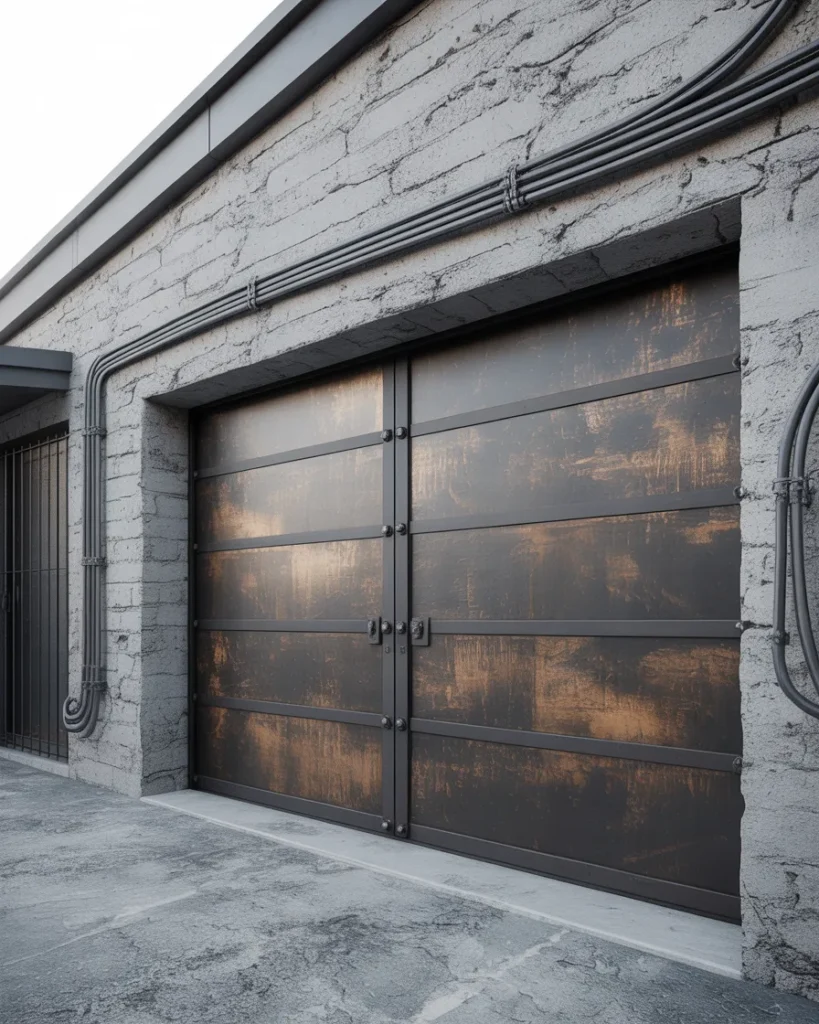
Vibe: Raw — the kind of garage door that belongs on a converted warehouse, even in suburbia.
A faux metallic iron finish achieves a visual weight and texture that flat paint can’t — the slight variation in sheen across the surface mimics the way real hammered steel reflects light differently at different angles. This effect works because the eye reads tonal variation within a surface as depth, triggering the same visual response as actual three-dimensional texture. The result is a door that looks heavier and more substantial than its substrate — important for lightweight aluminum doors that read as flimsy in standard colors.
Apply a base coat of dark charcoal flat latex, then work over it with Rust-Oleum Hammered Metal spray (available in flat black or dark bronze) using a sweeping side-to-side motion from 18″ away. The hammered formula creates micro-texture that catches light irregularly — exactly right for this look.
Rust-Oleum Hammered Metal spray in “Dark Bronze” costs $14 per can. Two cans cover a single-car door and deliver a convincingly industrial finish over any existing paint color.
16.Two-Tone Color Block Garage Door
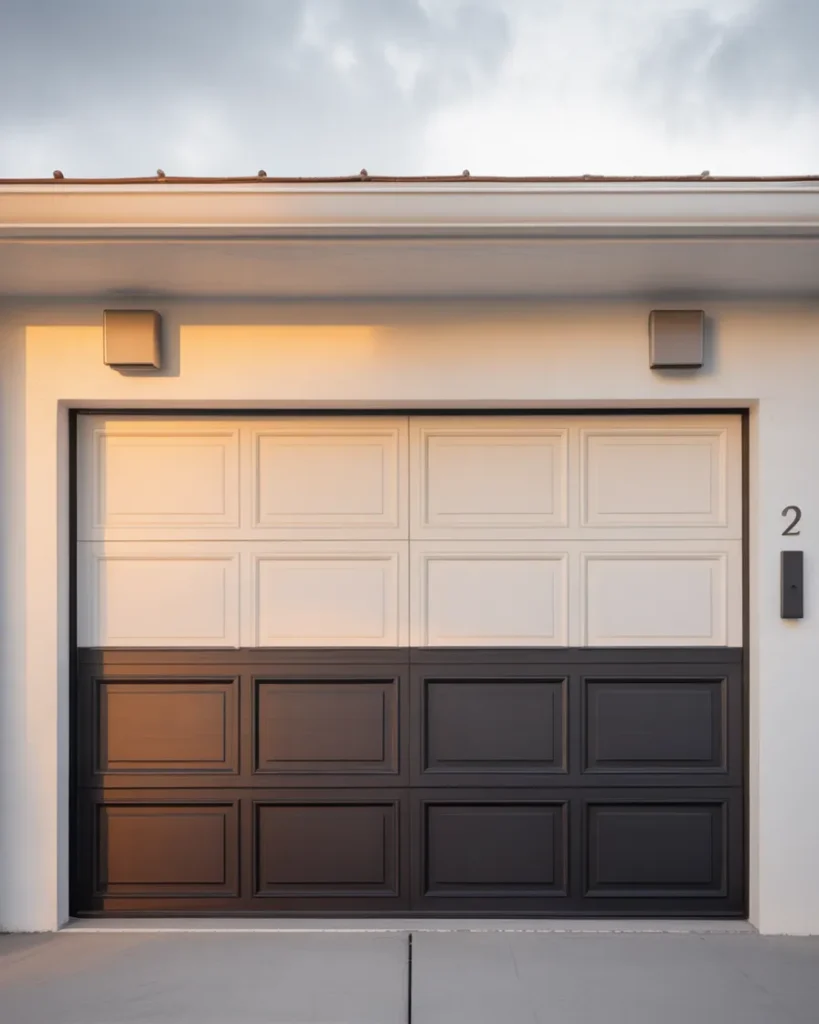
Vibe: Graphic — this door looks like a deliberate design decision, not a paint choice.
A two-tone horizontal color block treatment on a garage door borrows from graphic design and brand identity work, where a clean split between two values creates instant visual weight and modernity. The design principle is tonal anchoring: the dark lower half visually grounds the door (dark reads as heavier, closer to the earth), while the lighter upper half lifts toward the roofline, creating a sense of resolved proportion. The split works best at the natural mid-panel seam — the line doesn’t need to be created, it’s already there; the two-tone treatment simply makes it intentional.
Tape off the horizontal seam between panel rows with 3M ScotchBlue Sharp Lines tape — it has a micro-edge that prevents bleed on textured surfaces. Paint the lower half first, let it cure 24 hours, then tape and paint the upper half. Use the same paint sheen on both halves (flat matte reads most contemporary); mixing sheens creates an unresolved finish that reads as accidental rather than designed.
17.Magnetic Overlay Hardware Door
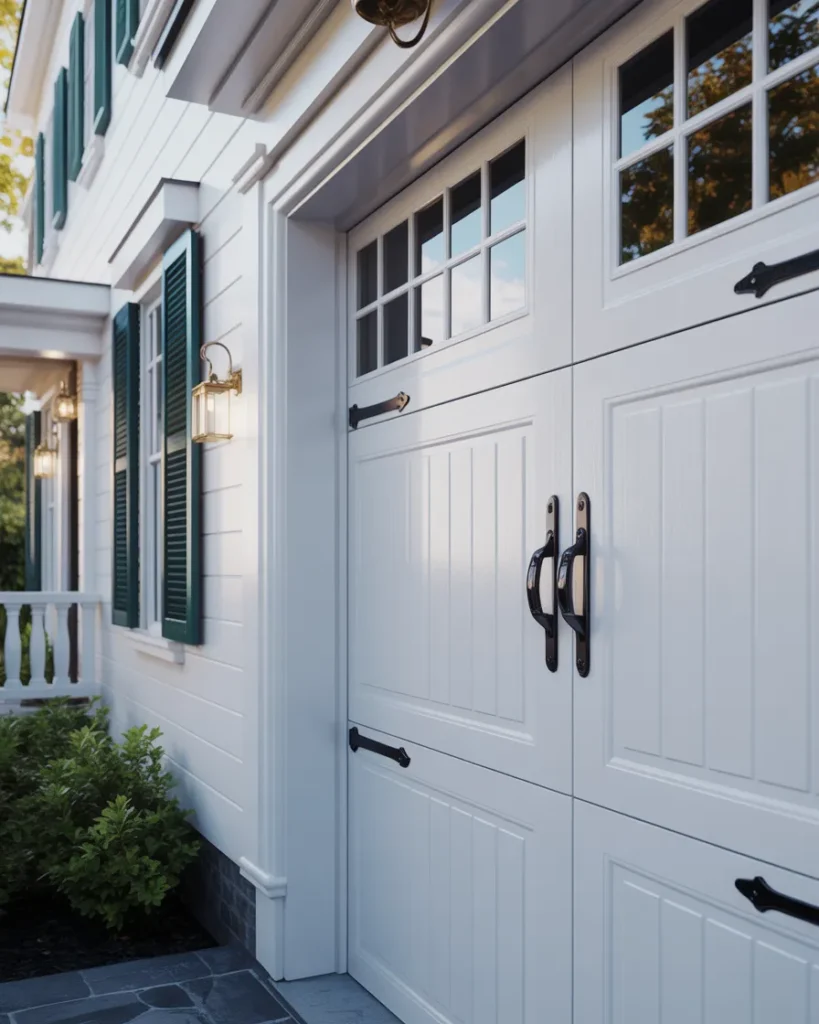
Vibe: Classic — the door looks like it always had this hardware, even though it was added on a Saturday.
Magnetic hardware kits use embedded rare-earth magnets to adhere to steel garage doors without a single drill hole — making them the only garage door makeover technique appropriate for renters, HOA-restricted properties, or anyone who wants reversibility. The visual effect is identical to screw-mounted hardware from six feet away. The design principle at play is frame-and-focal — symmetrically placed hinges and pulls draw the eye to the center of the door and divide it into compositional quadrants, adding visual order to what was previously just a flat surface.
Position the first hinge at 24″ from the bottom corner, the second at mid-panel height, and the third at 24″ from the top. Place pulls centered on the bottom panel’s vertical midline. This spacing mirrors real carriage-door hardware proportions and reads as proportionate from street distance.
18.Painted Brick Surround Garage Door
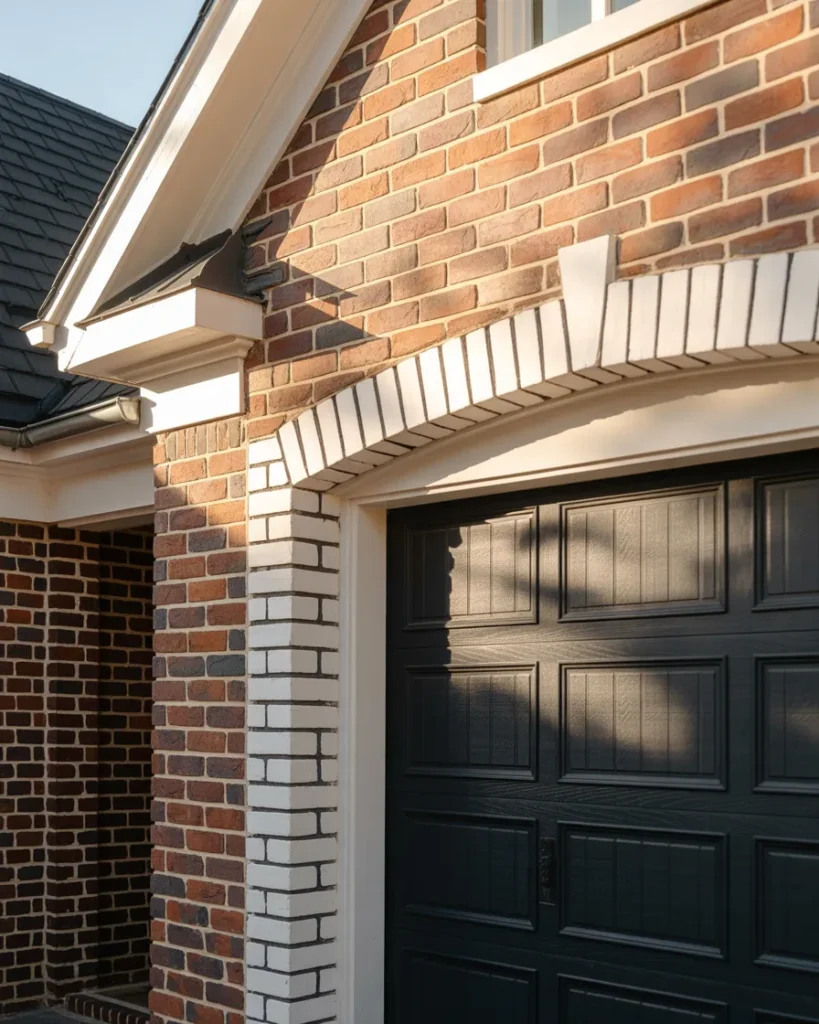
Vibe: Layered — the door is framed before you even add any hardware.
Painting only the brick surrounding the garage opening — leaving the rest of the home’s brick in its natural state — creates an organic architectural frame that no trim overlay can replicate. The painted brick becomes a soft, thick-looking surround that adds visual mass to the garage opening and creates contrast with the door color. This technique works particularly well on ranch and split-level brick homes where the garage door opening otherwise sits flush with the façade, without any architectural framing to give it definition.
Brush-apply a masonry primer (not standard drywall primer) to the brick surround, then top-coat with flat exterior latex in bright white. Maintain crisp edges at the transition between painted and unpainted brick using low-adhesion masking tape pulled while the paint is still slightly wet. The transition line becomes an interesting design detail, not a flaw.
19. Weekend-Budget Paint-Only Makeover
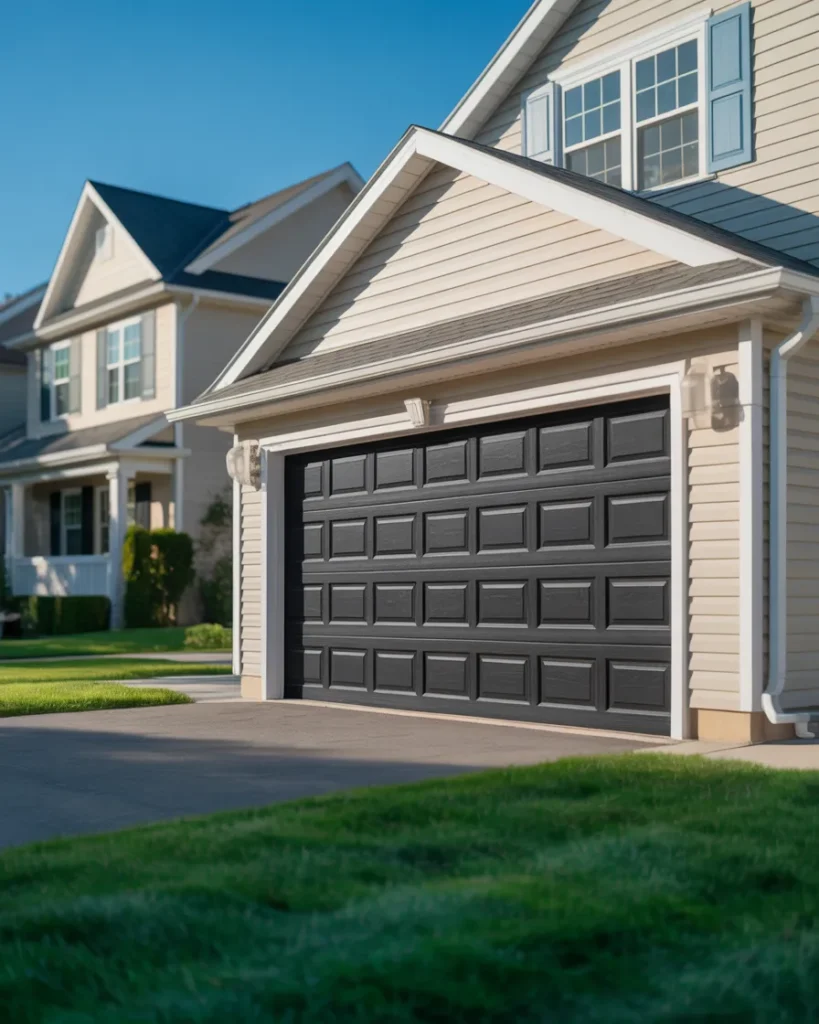
Vibe: Transformed — same door, same house, completely different first impression for under $40.
The most cost-effective garage door makeover is also one of the most impactful: repainting an existing door in a dramatically different color. The design principle is figure-ground reversal — switching from a light door on a light home (where the door disappears) to a dark door on a light home (where the door anchors the composition) rewires how the eye reads the entire façade. No other single change accomplishes more per dollar in exterior design. The material matters: exterior satin or semi-gloss acrylic holds up to weather cycles and UV exposure far better than standard interior or flat paint.
Sand the door lightly with 120-grit paper if the existing paint is chalky or glossy, clean with TSP substitute, and apply two coats of exterior satin. A 4″ foam roller gives a smoother finish than a brush on flat panel sections; use a 1.5″ angled brush for recessed edges and corners. Total materials cost: $35–$50.
A quart of exterior satin in any dark color covers a standard single-car door with room to spare and costs under $22. This is the highest-ROI project in all of exterior home improvement.
20.Architectural Address Display Door
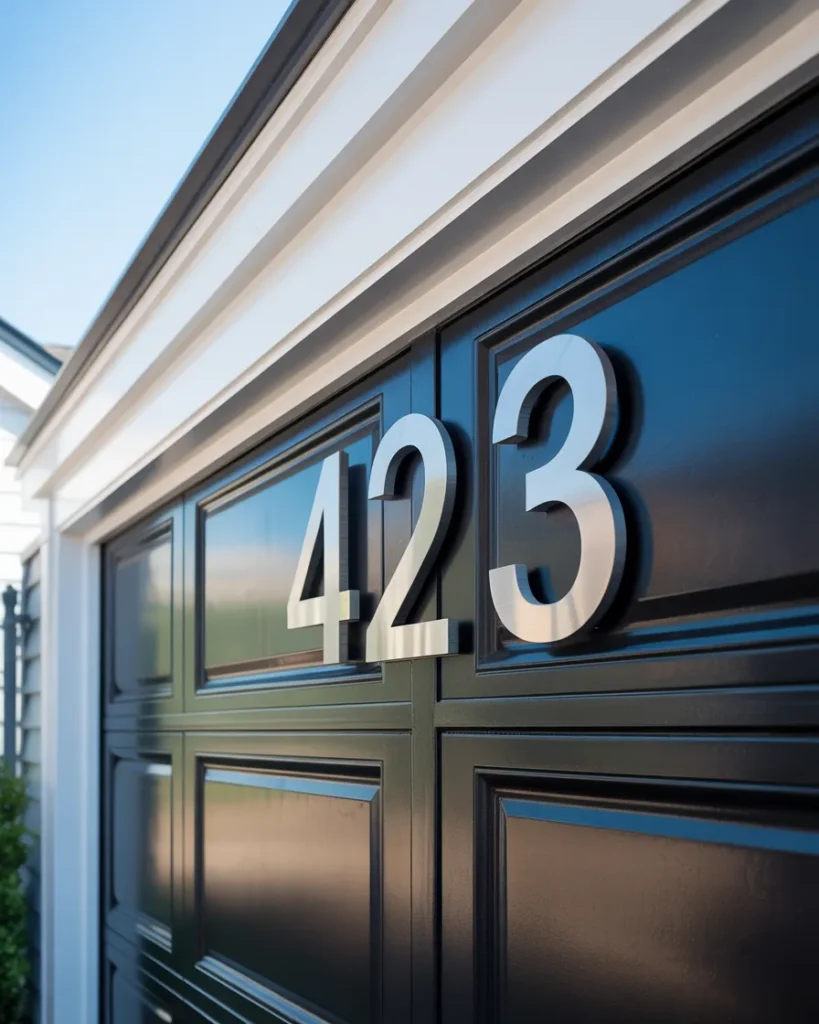
Vibe: Sharp — the house number becomes a design element, not an afterthought.
Oversized architectural address numbers mounted directly on the garage door create a graphic design moment that’s borrowed from commercial architecture — the practice of using large-scale typography as a compositional element. Numbers positioned on the upper third of the door (at eye level from the street) read clearly from 60+ feet away and create a focal point that gives the entire door a sense of purpose and identity. The contrast between polished or brushed metal numerals and a dark door surface is the critical relationship: maximum legibility, maximum visual weight.
Choose numerals at 6–8 inches tall for a two-car door — smaller than this and they disappear at street distance; larger and they become the only thing you see. Space letters at 1.5× their width for optically balanced kerning. Stainless steel resists rust and weathering better than aluminum in coastal or humid climates.
21. Windows-Added Garage Door
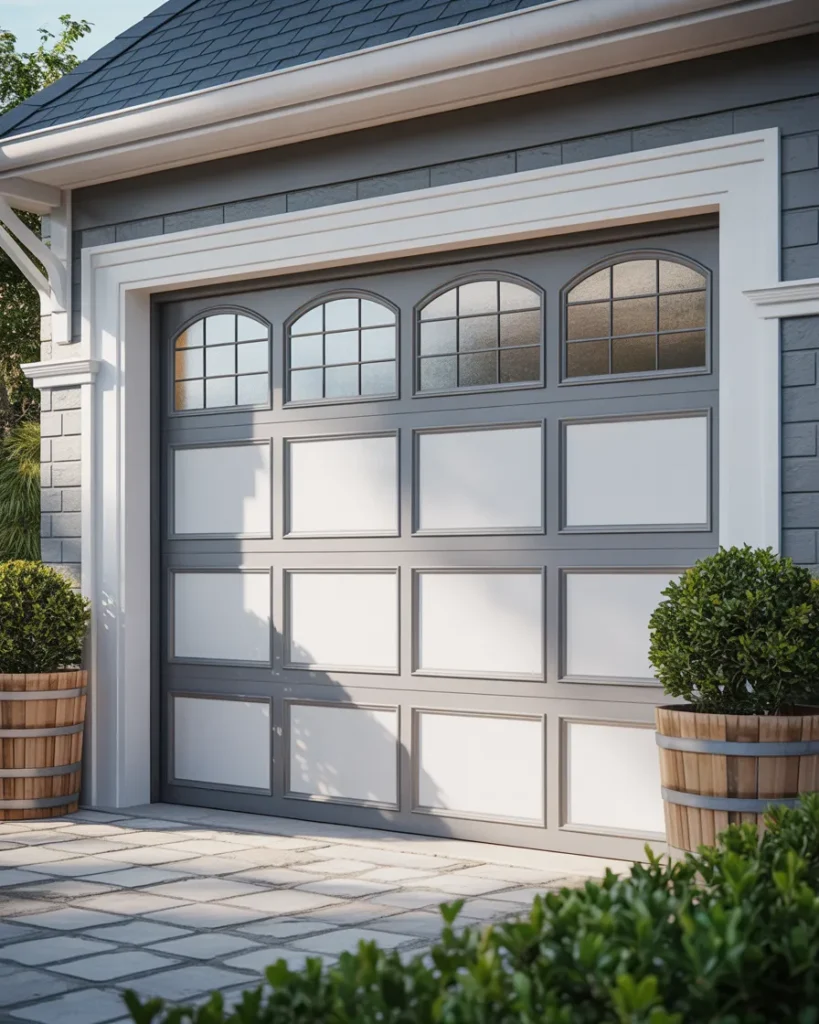
Vibe: Luminous — windows transform a solid garage door from a wall into an architectural feature.
Adding windows to a garage door introduces visual lightness through transparency and creates a horizontal rhythm across the top panels that mirrors traditional architectural proportions. The upper-third window placement echoes transom window logic: light enters near the top, visually lifting the door and connecting interior garage light to the exterior. Frosted or privacy glass is the correct choice — clear glass reveals the functional chaos of an average garage.
Most steel garage door manufacturers sell retrofit window insert kits — the panels pop out, you cut the opening per template, and the acrylic or glass insert snaps in. Clopay and Wayne Dalton both offer add-on window kits for their popular door models. Confirm your door’s panel depth before ordering; kits come in 2″ and 2.5″ depths.
Frequently Asked Questions About Garage Door Makeovers
What is a garage door makeover, and is it different from replacing the door?
A garage door makeover refers to transforming the look of your existing door — or the entire garage entry zone — through paint, applied materials, hardware, lighting, and landscaping, without necessarily replacing the door itself. Replacement is one path within a makeover, but most of the visual impact comes from surface and context changes. In fact, a well-executed paint-and-hardware makeover on an existing steel door is often indistinguishable from a new door at street distance — and costs 80–90% less.
What color should I paint my garage door for maximum curb appeal?
The highest-impact color shift is almost always going darker than your current door — a warm charcoal, deep navy, or flat black creates strong contrast with most home siding colors and gives the façade a visual anchor. Sherwin-Williams “Urbane Bronze” (SW 7048) and Benjamin Moore “Hale Navy” (HC-154) are the two colors that consistently perform across the widest range of home styles and exterior palettes. Avoid cool-gray tones unless your home’s undertone is also cool — the undertone mismatch is the most common reason a garage door makeover “doesn’t work.”
How much does a garage door makeover cost?
A paint-only garage door makeover costs $25–$60 in materials and a few hours of labor. Adding decorative carriage hardware brings the budget to $75–$130. A full weekend makeover including paint, hardware, sconce lighting, and planted pots typically runs $200–$500 DIY. A new door installation by a professional contractor ranges from $800 (standard steel, insulated) to $3,500+ for custom wood or full-view aluminum. Most homeowners see the greatest value in the middle — a repainted door with quality hardware and flanking sconces, completed for $300–$600.
Can I add windows to my existing garage door without replacing it?
Yes — most steel garage doors accept retrofit window insert kits that require cutting the panel to size per a manufacturer template, then snapping in an acrylic or tempered glass insert. Clopay, Wayne Dalton, and Amarr all sell add-on window kits for their popular door models. The process takes 2–3 hours per panel with basic tools. Frosted or textured acrylic inserts are the safest privacy-preserving option, running $25–$45 per panel. Confirm your door’s panel depth (2″ or 2.5″) before ordering — the kits are not interchangeable.
What decorative hardware works best for a carriage-house garage door makeover?
Matte black powder-coated iron is the most versatile and durable hardware finish for a carriage-house garage door makeover — it works with charcoal, white, navy, green, and red door colors and weathers without rusting. Choose 16″–18″ strap hinge lengths for a two-car door (12″ looks undersized and decorative in the wrong way). Magnetic hardware kits from brands like ULTRA-LIFT and Garage Door Décor attach without drilling and hold securely on steel doors for renters or reversible setups. Screw-mounted kits from national suppliers look more convincing and are preferred for permanent installations.
Ready to Transform Your Garage Door?
These 21 garage door makeover ideas span the full spectrum — from bold color contrasts and material overlays to thoughtful lighting, architectural hardware, and living plant frames — giving you a complete toolkit whether you’re working with $40 or $4,000. The most important thing to know is that transformation is rarely one big move: it’s a confident color choice, then the right hardware, then a pair of flanking sconces, compounding into a result that looks fully resolved. You don’t have to do it all at once. Start with the paint today — pick your dark tone, buy a sample quart, and test it on the door panel this weekend. Once you see how differently the house reads, you’ll know exactly which idea from this list to tackle next. A garage door makeover doesn’t just change a surface; it changes how your home feels to come home to every single evening. Save the ideas that match your home’s bones — the carriage hardware and cedar overlay and planted ribbons — and build toward the version of your house that’s been there all along, waiting to be seen
One Comment