
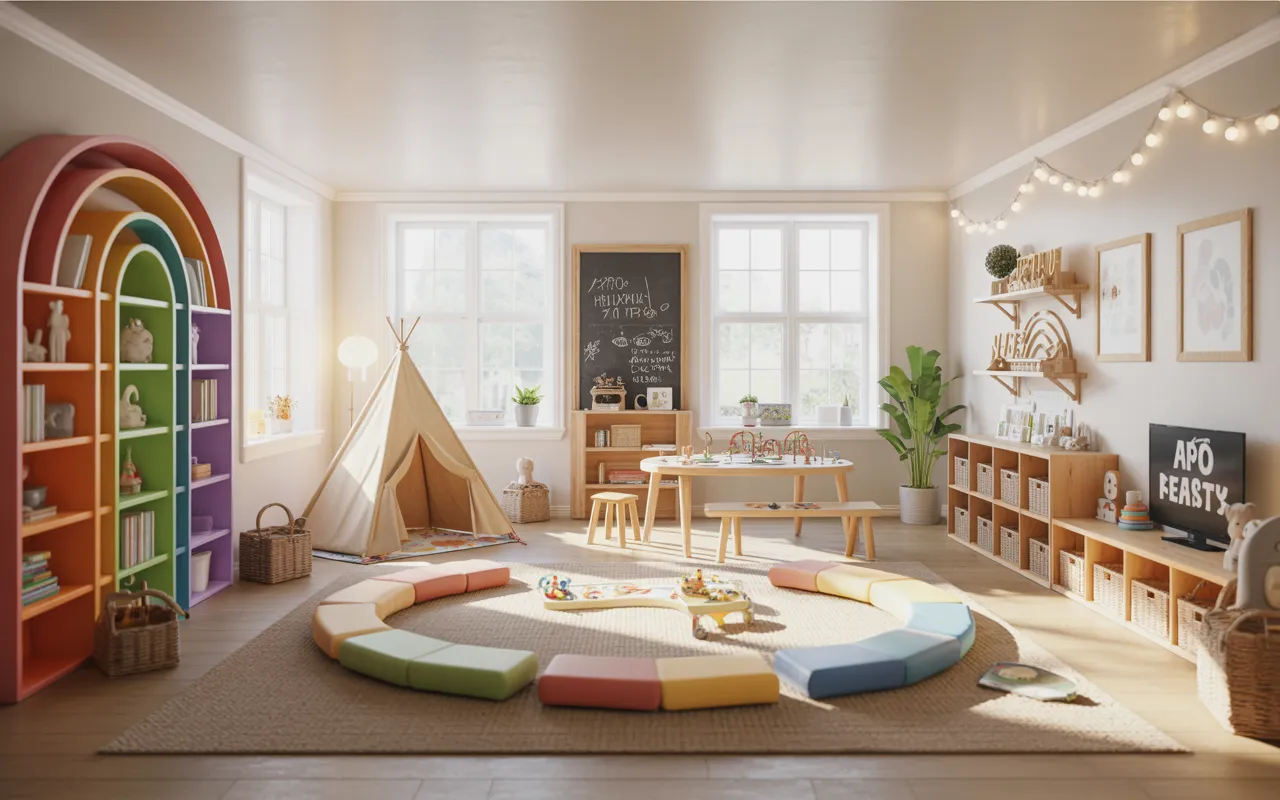
20 Genius Playroom Ideas for Happy Little Minds
A playroom is more than just a room with toys—it’s a carefully curated environment designed to foster imagination, independence, and joy. This article delivers exactly twenty breathtaking playroom ideas that blend genius-level organization with whimsical design to create spaces where little minds truly thrive.
The best playrooms feel like a warm embrace the moment you step inside. They hum with quiet possibility, their textures inviting tiny hands to explore and their colors sparking stories yet to be told. Sunlight pools on soft rugs where building blocks become castles, and tucked-away nooks promise secret adventures. Here are twenty ideas worth saving—and stealing.
Why Genius Playroom Design Works So Well
The concept of a dedicated play space has evolved far beyond simply containing toy chaos. Modern genius playroom design draws from educational philosophies like Montessori and Reggio Emilia, which emphasize child-led exploration and accessible, purposeful environments. Unlike traditional playrooms that prioritized storage over experience, today’s designs understand that every surface, color, and texture contributes to a child’s developmental journey.
Core materials in a genius playroom ideas lean heavily on natural, durable elements: unpainted birch plywood for shelving, 100% wool felt rugs in warm cream or dusty sage, and canvas storage bins in muted earth tones. The color palette favors calming backgrounds—think warm white, greige, or soft clay—with intentional pops of primary color in toys and accessories rather than overwhelming wall treatments. Brushed brass hardware and woven rattan accents add warmth without competing for attention.
Why is this style trending so powerfully now? The post-pandemic focus on home as sanctuary has parents rethinking every square foot. Pinterest searches for “playroom organization” and “Montessori playroom” have surged as families seek intentional spaces that support both independent play and family connection. Parents want rooms that work for real life—not magazine spreads—and genius playroom design delivers exactly that practicality.
Can small spaces achieve this style? Absolutely. The genius approach prioritizes vertical storage, multi-functional furniture, and thoughtful zoning over square footage. A 50-square-foot nook can become a magical reading hideaway with floating shelves, a floor cushion, and good task lighting. The key isn’t size—it’s intentionality.
Style at a Glance
| Element | Core Trait |
|---|---|
| Philosophy | Child-led, accessible, purposeful |
| Key Materials | Birch plywood, wool felt, canvas, rattan |
| Color Palette | Warm white, greige, soft clay, primary pops |
1. Rainbow Bookshelf Wall
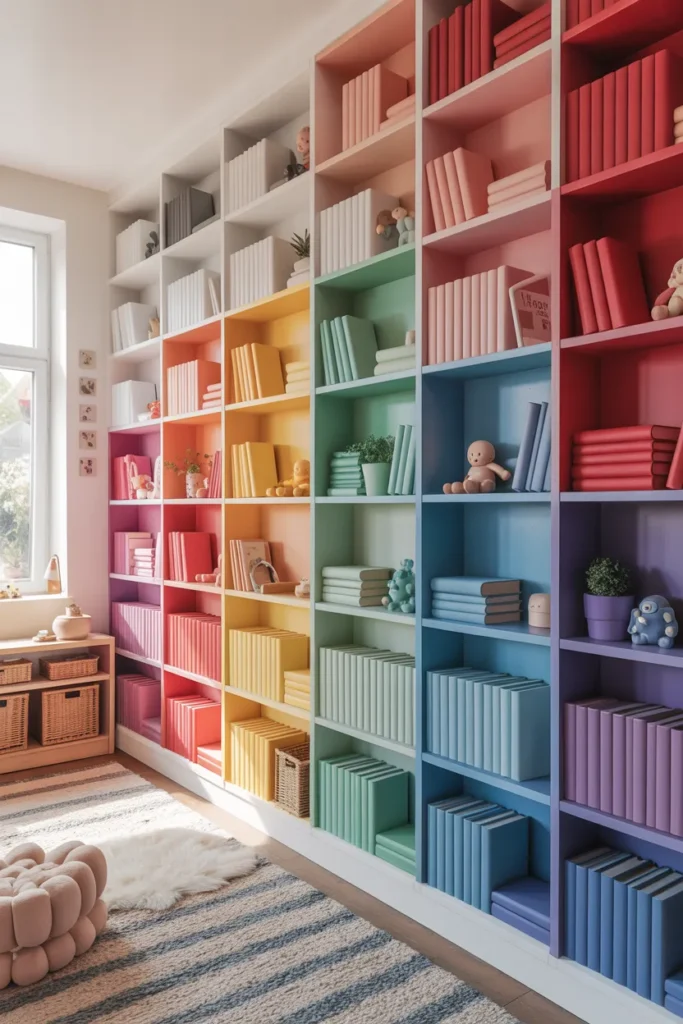
Vibe: Joyful and impeccably organized.
Why it works: The rainbow gradient creates visual order out of colorful chaos, turning book storage into an art installation. This approach leverages the psychology of color organization, making it easier for children to identify categories and participate in cleanup. The built-in nature maximizes vertical space while maintaining a clean sightline.
How to get it: Measure your wall and install floating shelves at varying heights—lower shelves for toddlers, higher for display. Paint each shelf section a different rainbow shade using non-toxic, low-VOC paint. Organize books by spine color and intersperse small toys or plants for visual breathing room.
💡 Quick Win: Use IKEA FLISAT wall shelves or Bekväm spice racks as affordable, child-height book ledges that show covers forward, enticing little readers.
Explore More About: 16 Back Porch Ideas for Small and Spacious Homes
| Shop the Look |
|---|
| Birch Floating Shelf Set Natural Wood |
| Rainbow Acrylic Paint Set Non-Toxic |
| Woven Storage Baskets Set of 3 |
| Children’s Book Bundle Classic Titles |
| Low-Pile Fuzzy Play Rug Cream |
2. Climbing Wall Corner
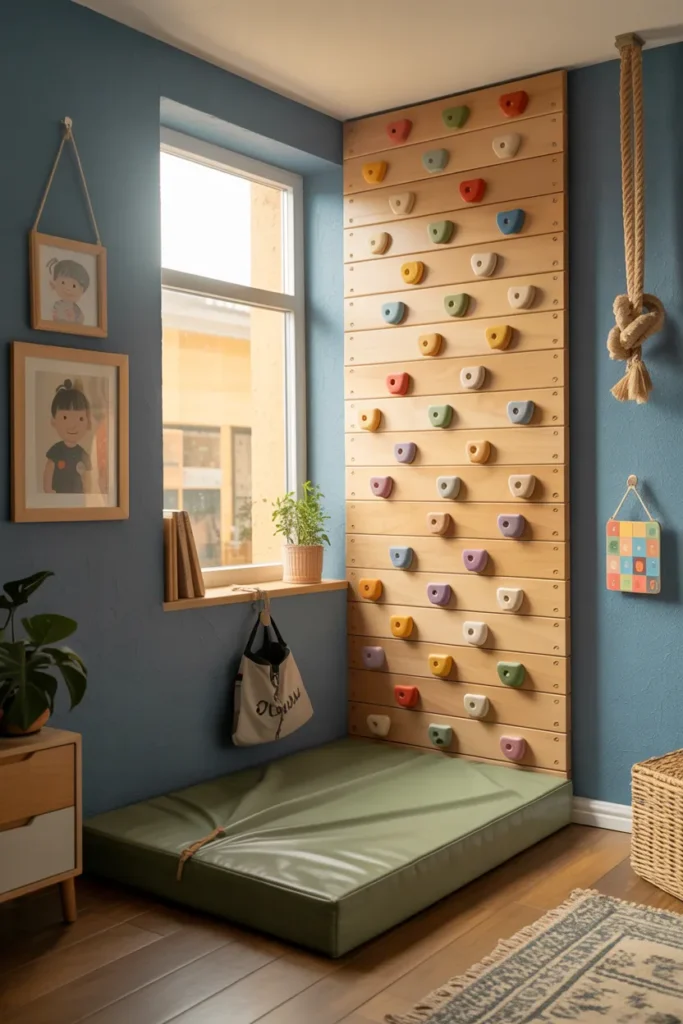
Vibe: Energetic and confidence-building.
Why it works: This active play element channels physical energy into skill-building, developing gross motor coordination and problem-solving. The vertical utilization means even small rooms can offer big physical challenges. The visual of colorful holds against a serene wall creates beautiful contrast—active element meets calm background.
How to get it: Choose a wall with adequate stud support and install a climbing wall panel or individual holds following manufacturer safety guidelines. Select holds in varying sizes and difficulty levels. Place a thick crash mat at least 4 inches below the entire climbing area, extending at least 3 feet from the wall.
| Shop the Look |
|---|
| Climbing Wall Hold Set Colorful |
| Crash Mat Gym-Grade Thick |
| Chalk Bag with Carabiner |
| Wall Panel Kit Complete |
| Non-Toxic Wall Paint Pale Blue |
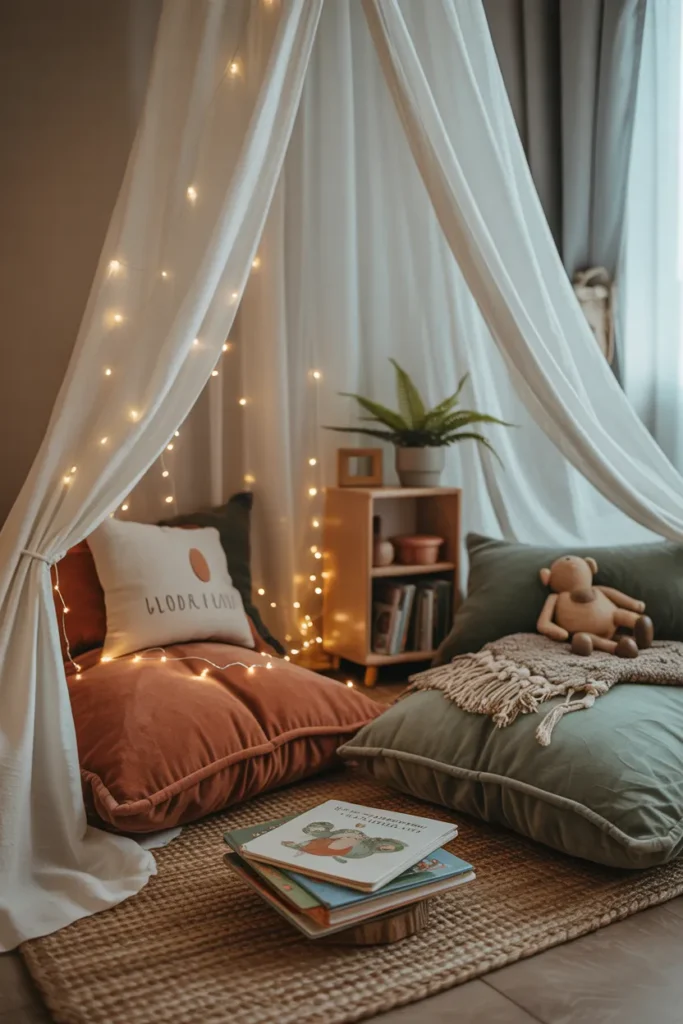
3. Canopy Reading Nook
Vibe: Snug and storybook-magical.
Why it works: This nook creates a defined “retreat” space that signals safety and calm. The canopy visually lowers the ceiling, making the space feel intimate and protected—the architectural equivalent of a hug. The soft textile layering invites touch and relaxes the nervous system.
How to get it: Mount a ceiling hook and drape sheer curtains or a lightweight canopy. Layer floor cushions in different sizes and textures. Add battery-operated fairy lights for warm glow. Keep a small basket or shelf of rotating books within arm’s reach.
💡 Quick Win: Use a tension rod in a corner to drape a single sheer panel—instant nook without ceiling hardware.
| Shop the Look |
|---|
| Sheer Ceiling Canopy Curtain Panel |
| Floor Cushion Set Earth Tones |
| Battery-Operated Fairy Lights Warm White |
| Wooden Book Display Shelf |
| Woven Jute Round Rug |
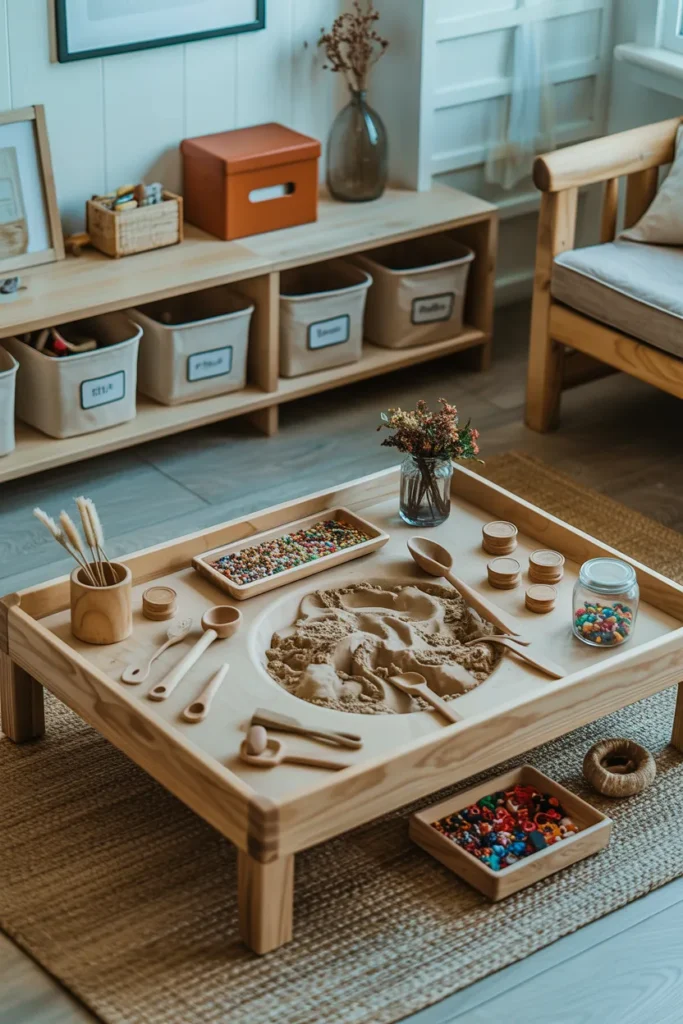
4. Sensory Play Table
Vibe: Calm and tactile-exploratory.
Why it works: Sensory play is critical for neural development, building pathways for problem-solving and fine motor control. The genius of a dedicated table is containment—mess stays in one defined area, and the low height invites independent exploration. The natural materials elevate the experience beyond plastic alternatives.
How to get it: Choose a low, sturdy table at child height. Use shallow trays or IKEA FLISAT bins for different sensory materials. Rotate contents weekly: kinetic sand, water beads, dried pasta, or cloud dough. Include simple tools like scoops, funnels, and small containers.
| Shop the Look |
|---|
| Wooden Sensory Table with Trays |
| Kinetic Sand 5lb Bag Natural |
| Sensory Play Tool Set Wooden |
| Glass Storage Jars with Lids |
| Canvas Storage Bins Set of 3 |
5. Dress-Up Wardrobe
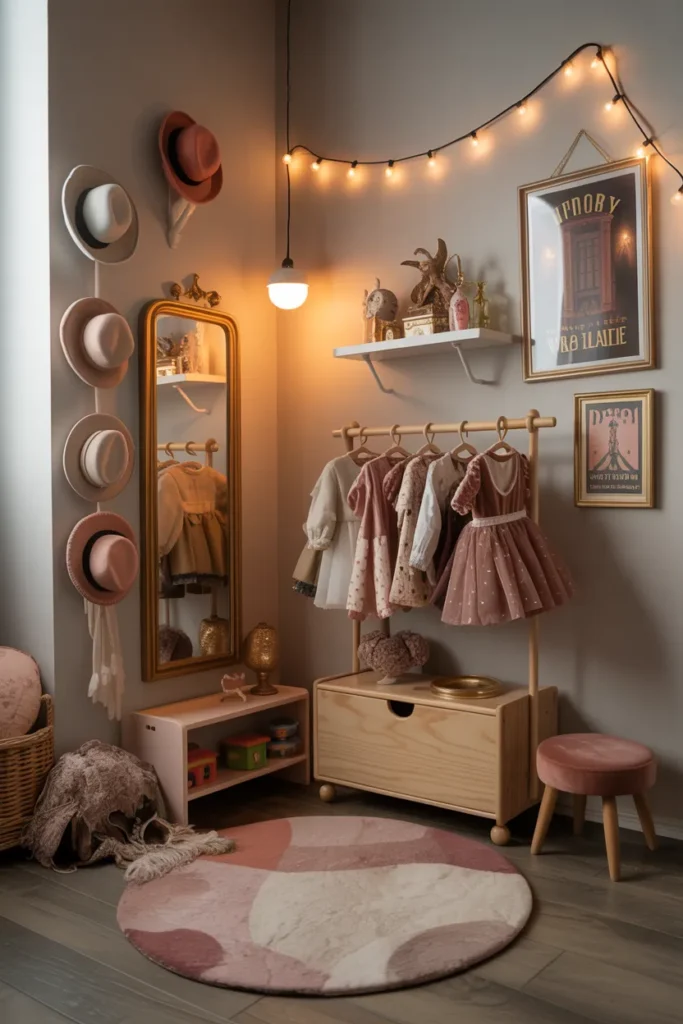
Vibe: Whimsical and confidence-building.
Why it works: A dedicated dress-up area signals that imaginative play is valued. The full-length mirror supports self-discovery and body awareness. The visual display of costumes makes them accessible and enticing, while the contained area keeps dress-up from spreading throughout the house.
How to get it: Install a child-height clothing rack or use wall hooks at varying heights. Include a shatterproof mirror at child’s eye level. Use clear shoe organizers on the back of the door for accessories. Add a small chest or baskets for quick costume changes.
💡 Quick Win: Hit thrift stores for vintage scarves, hats, and bags—character costumes without the character-brand price tag.
| Shop the Look |
|---|
| Child-Sized Clothing Rack Gold |
| Full-Length Mirror Acrylic Safe |
| Hanging Shoe Organizer Clear |
| Wooden Toy Storage Chest |
| Gold Wall Hooks Set of 5 |
6. Chalkboard Art Wall
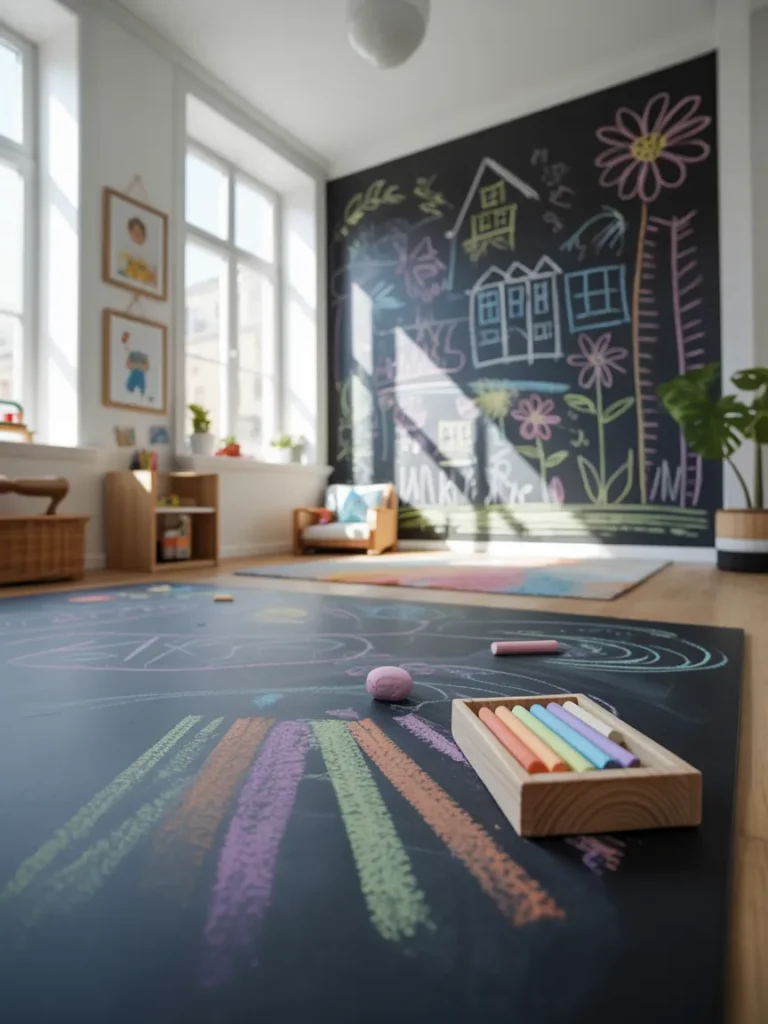
Vibe: Creative and endlessly changeable.
Why it works: This wall transforms daily, allowing children to express themselves without restriction. The large format encourages gross motor drawing, engaging the whole arm rather than just fingers. It’s also a brilliant communal space for family messages, game scoring, or practicing letters and numbers.
How to get it: Paint one wall with magnetic chalkboard paint using 2-3 coats. Add a wooden ledge for chalk storage. Use a damp microfiber cloth for daily cleaning and a chalkboard eraser for quick changes. Consider using colored chalk for variety.
| Shop the Look |
|---|
| Magnetic Chalkboard Paint Kit |
| Colored Chalk Set 24 Colors |
| Chalkboard Eraser and Holder |
| Wooden Storage Ledge Wall-Mounted |
| Microfiber Cleaning Cloth Set |
7. Modular Play Cushions
Vibe: Playful and endlessly adaptable.
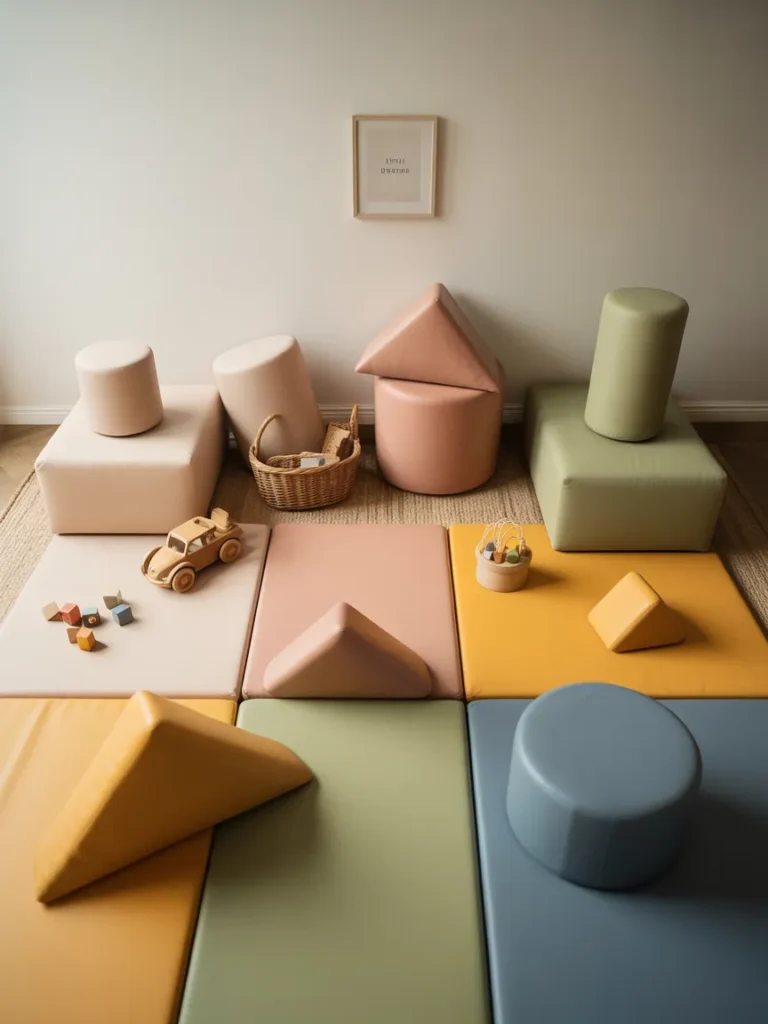
Why it works: These cushions redefine “furniture” as something children can manipulate and rearrange. They serve as seating, building blocks, obstacle course elements, or castle walls. The modular nature encourages spatial reasoning and collaborative play, while the softness ensures safety during active play.
How to get it: Choose a modular foam play set with various shapes. Start with a base set and add pieces over time. Store in a large basket or behind a low screen when not in use. Use on a non-slip rug to prevent sliding during active play.
| Shop the Look |
|---|
| Modular Foam Play Cushion Set |
| Non-Slip Rug Pad Gripper |
| Woven Storage Basket Large |
| Wooden Building Block Set |
| Canvas Toy Storage Bin |
8. Activity Table With Benches
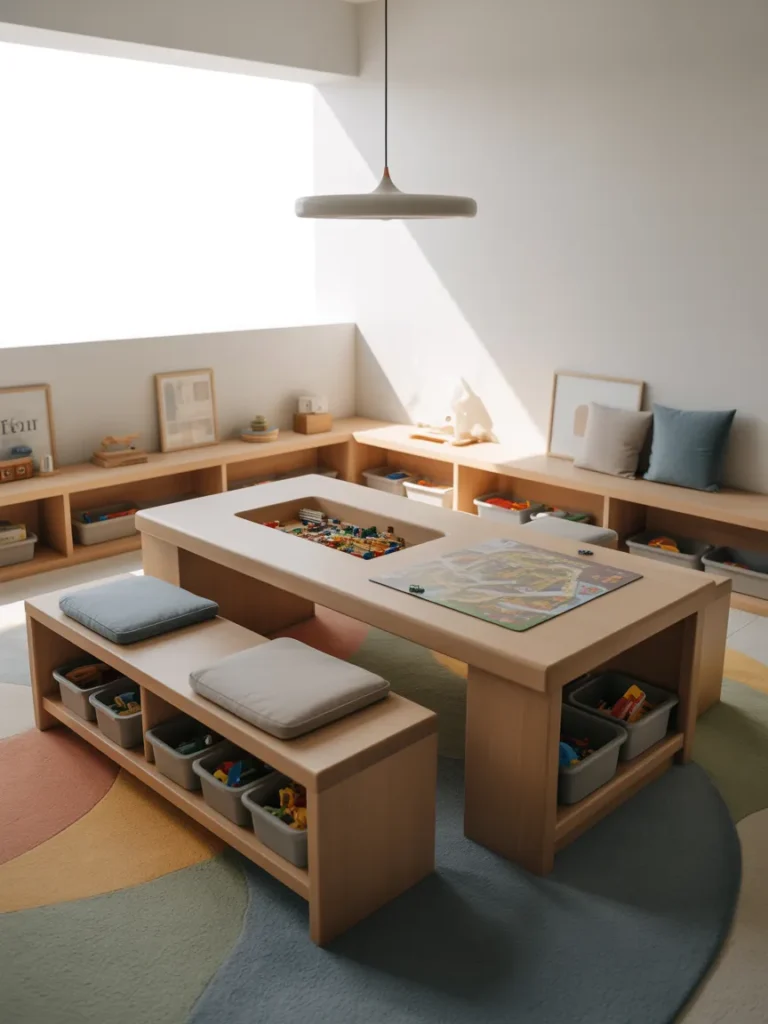
Vibe: Inviting and purpose-built for collaboration.
Why it works: A child-sized table signals that this space is truly theirs. The benches encourage parallel play and social skill development. Built-in storage below keeps activities accessible but contained, and the defined surface reduces the likelihood of projects migrating to other areas of the house.
How to get it: Choose a solid wood activity table with bench seating. Look for models with recessed areas for building and puzzles. Use clear bins on lower shelves so children can see their options. Add good task lighting above.
| Shop the Look |
|---|
| Wooden Activity Table with Benches |
| Clear Storage Bins with Lids |
| Task Pendant Light Adjustable |
| Non-Toxic Finish Table |
| Puzzle Mat Roll-Up Storage |
9. Gallery Wall Art Display
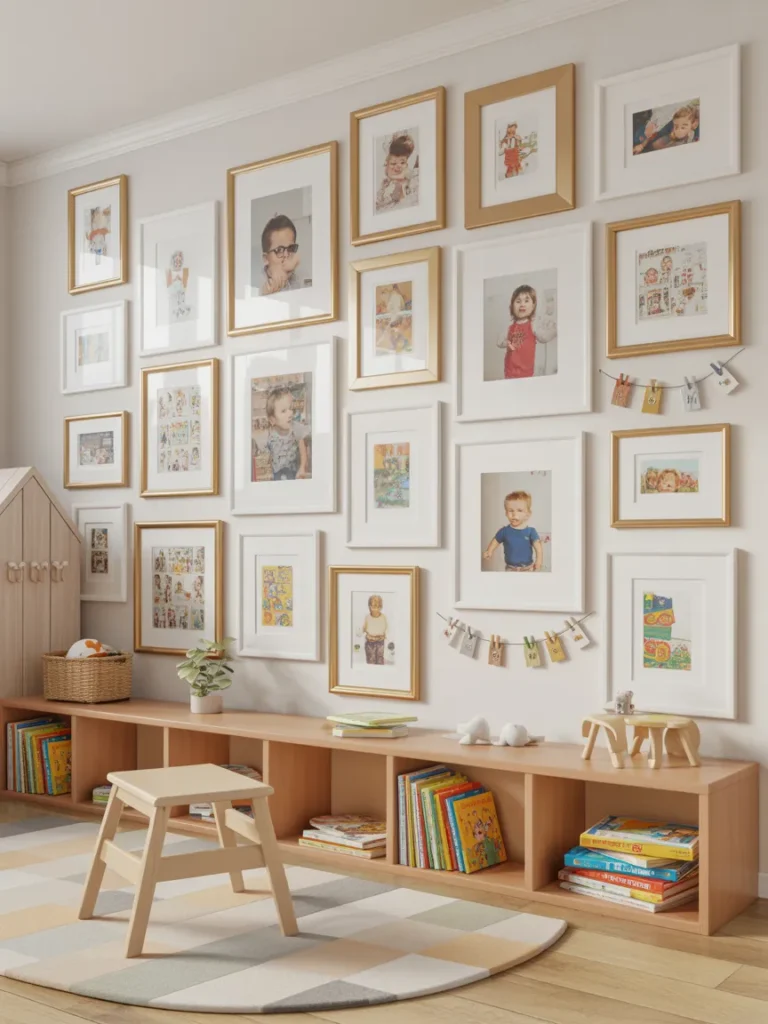
Vibe: Proud and deeply personal.
Why it works: Displaying children’s art validates their creative efforts and builds self-esteem. The rotating display encourages ongoing creation and gives children agency over their environment. A gallery wall also adds color and personality without requiring expensive art purchases.
How to get it: Install a picture ledge or a wire with clips at child height. Frame a selection of favorite pieces in thrifted or simple frames. Rotate new art weekly or monthly. Include a small step stool so children can manage their own gallery.
💡 Quick Win: Use washi tape to temporarily hang artwork directly on the wall—instant gallery without nail holes.
| Shop the Look |
|---|
| Picture Ledge Shelving White |
| Art Clip Wire Hanging System |
| Mix-and-Match Picture Frames Set |
| Child’s Step Stool Wooden |
| Artist Paper Roll Wall-Mounted |
10. Indoor Tent Hideaway
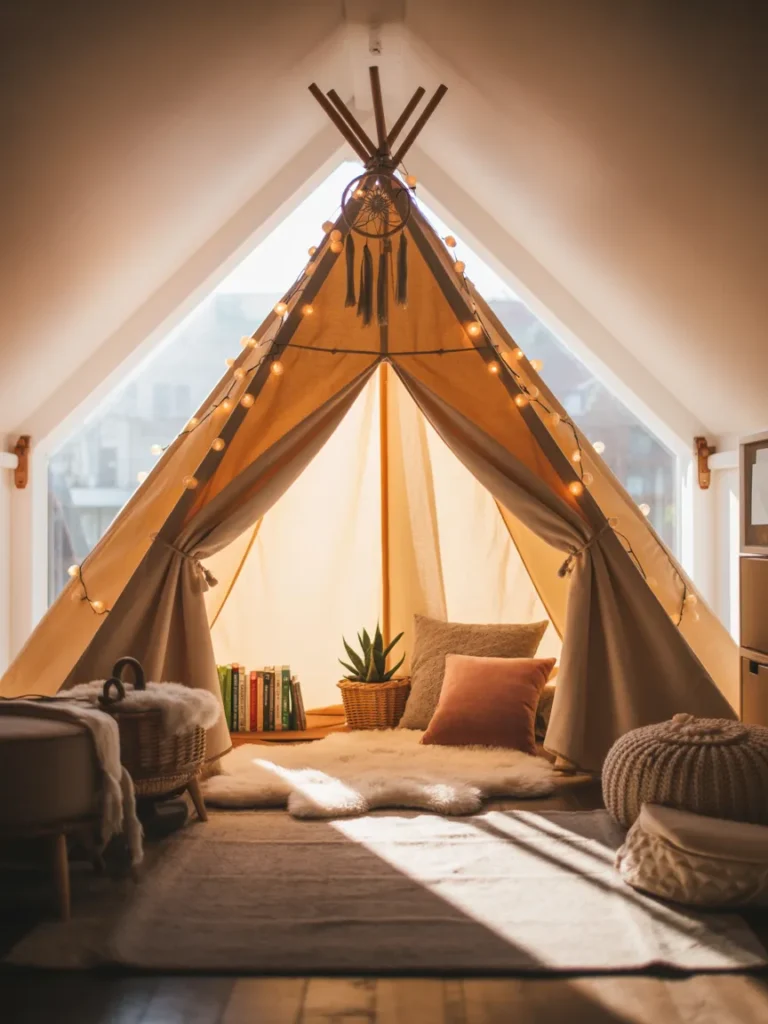
Vibe: Adventurous and magically secluded.
Why it works: A tent provides a sense of enclosure that children naturally crave—it’s their own private world. This small-scale architecture supports independent play and offers a retreat from overstimulation. The tent also teaches spatial boundaries; everything inside is “mine” while everything outside is shared.
How to get it: Choose a canvas teepee or bell tent as natural fabrics breathe better than synthetics. Fill with a sheepskin or soft rug, a few cushions, and a small basket of books or quiet toys. Add battery-operated fairy lights for ambiance. Place near a window for natural light.
| Shop the Look |
|---|
| Canvas Teepee Tent Natural |
| Sheepskin Rug Faux |
| Floor Cushion Set Boho |
| Battery-Operated Fairy Lights |
| Small Basket Woven Book Storage |
11. Music Corner With Instruments
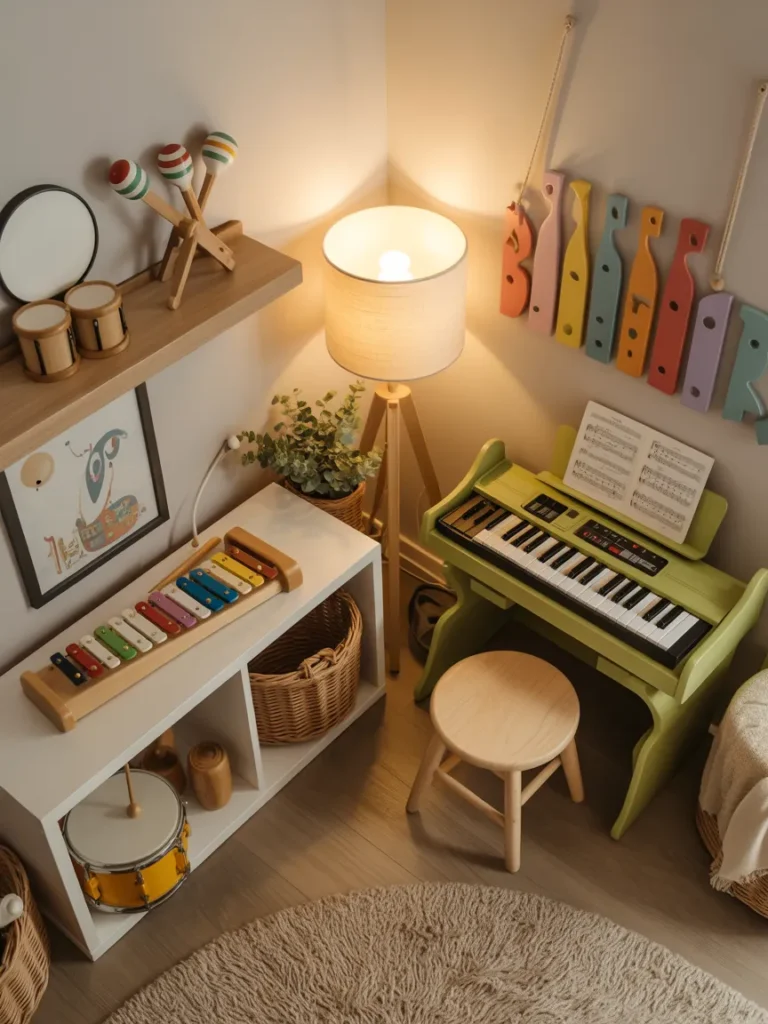
Vibe: Lively and rhythmically joyful.
Why it works: Music develops neural pathways for language, math, and emotional expression. A dedicated music corner makes instruments accessible and encourages spontaneous creation. The variety of instruments allows for exploration of different sounds, volumes, and playing techniques.
How to get it: Choose a small shelf or table at child height. Include a variety of instruments—percussion drums and shakers, melodic xylophones and glockenspiels, and wind instruments like recorders or harmonicas. Add a soft rug underneath to define the space and dampen sound slightly.
| Shop the Look |
|---|
| Child’s Xylophone Glockenspiel |
| Wooden Rhythm Instrument Set |
| Play Keyboard with Stand |
| Storage Basket for Instruments |
| Colorful Music Wall Art Print |
12. Toy Rotation Station
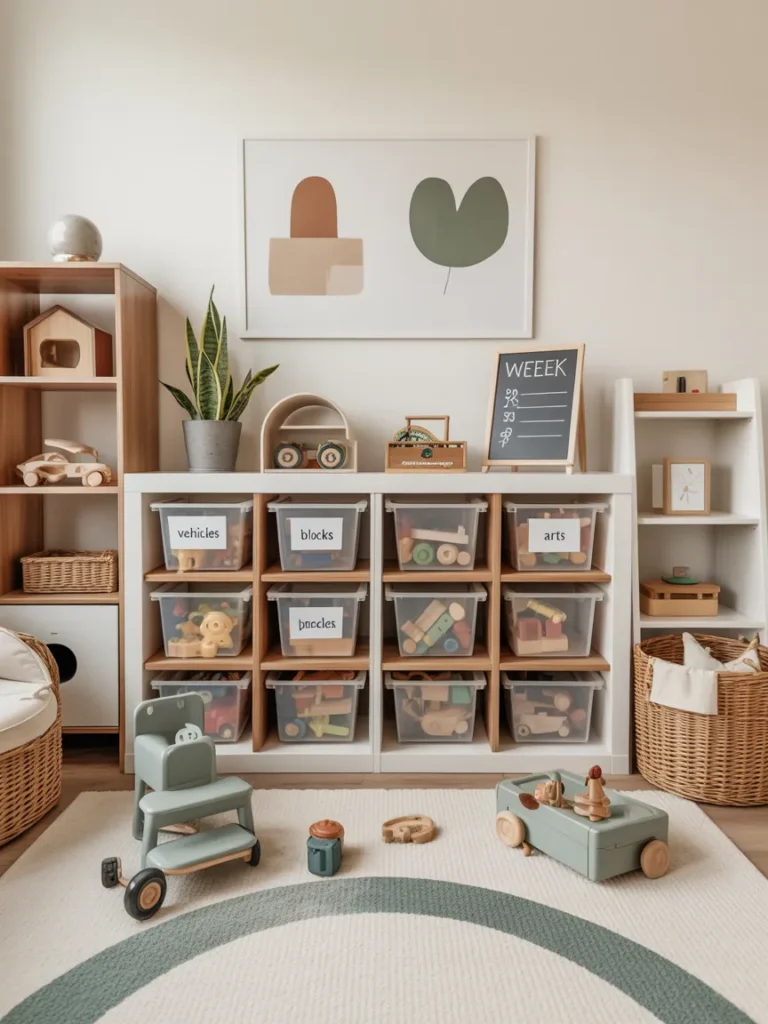
Vibe: Calm and intentionally uncluttered.
Why it works: Toy rotation is the genius hack that makes playrooms work. When children see only 20% of their toys, they engage more deeply and creatively with each item. The system reduces overwhelm, simplifies cleanup, and makes each “new” rotation feel like Christmas morning.
How to get it: Organize toys into 4-6 categories based on play type—building, pretend, puzzles, art, sensory, vehicles. Store 80% of toys out of sight. Each week, swap one category in and another out. Use clear bins with simple labels so children can participate in the system.
| Shop the Look |
|---|
| Clear Storage Bins with Lids |
| Low Shelving Unit Natural Wood |
| Label Holder Set for Bins |
| Chalkboard Weekly Theme Sign |
| Woven Storage Basket Large |
13. Under-Stairs Hideaway
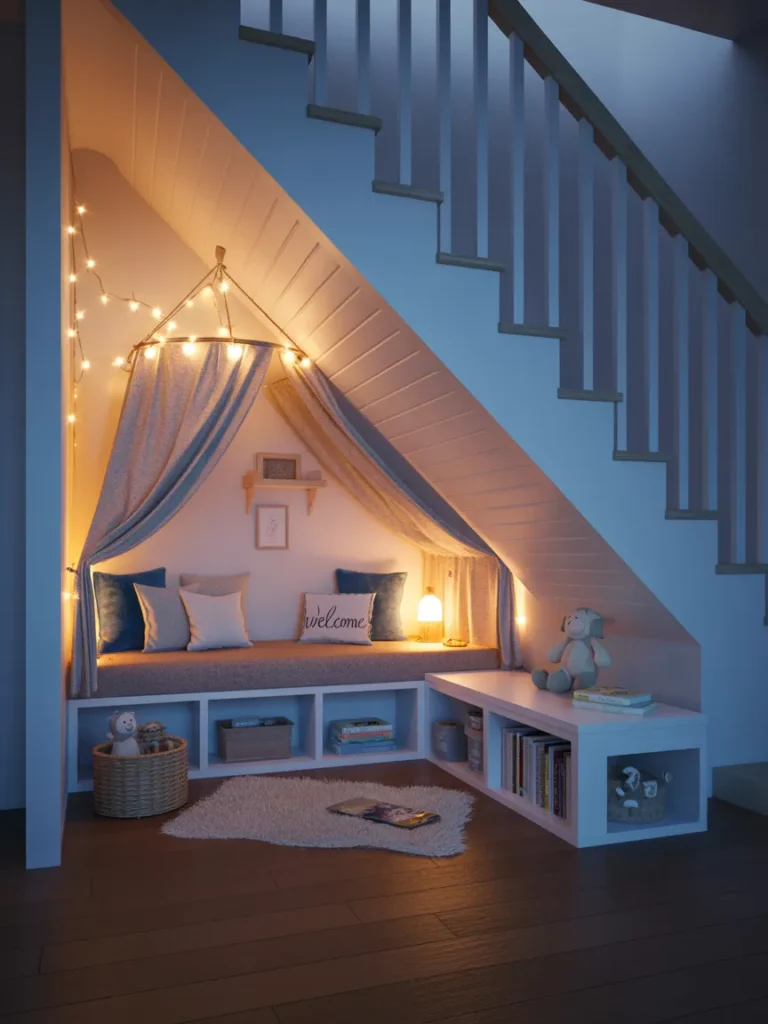
Vibe: Secret and snug-as-a-bug.
Why it works: Under-stairs spaces are the architectural equivalent of a child’s favorite hiding spot—they naturally feel secret and special. This zone makes use of otherwise dead square footage while providing a sense of enclosure that supports focus and calm.
How to get it: Measure your under-stairs space carefully. Install a custom or IKEA-hack bench with storage beneath. Add thick cushions and a few pillows. Use the sloping wall for a built-in book display. Add soft lighting with a small lamp or fairy lights.
💡 Quick Win: Use a tension rod and curtain panel to create a “door” that closes off the under-stairs nook—instant hideaway.
| Shop the Look |
|---|
| Storage Bench with Cushions |
| Tension Rod and Curtain Panel |
| Book Display Ledge for Sloped Wall |
| Battery-Operated Fairy Lights |
| Soft Floor Rug Sheepskin |
14. Puzzle and Game Shelf
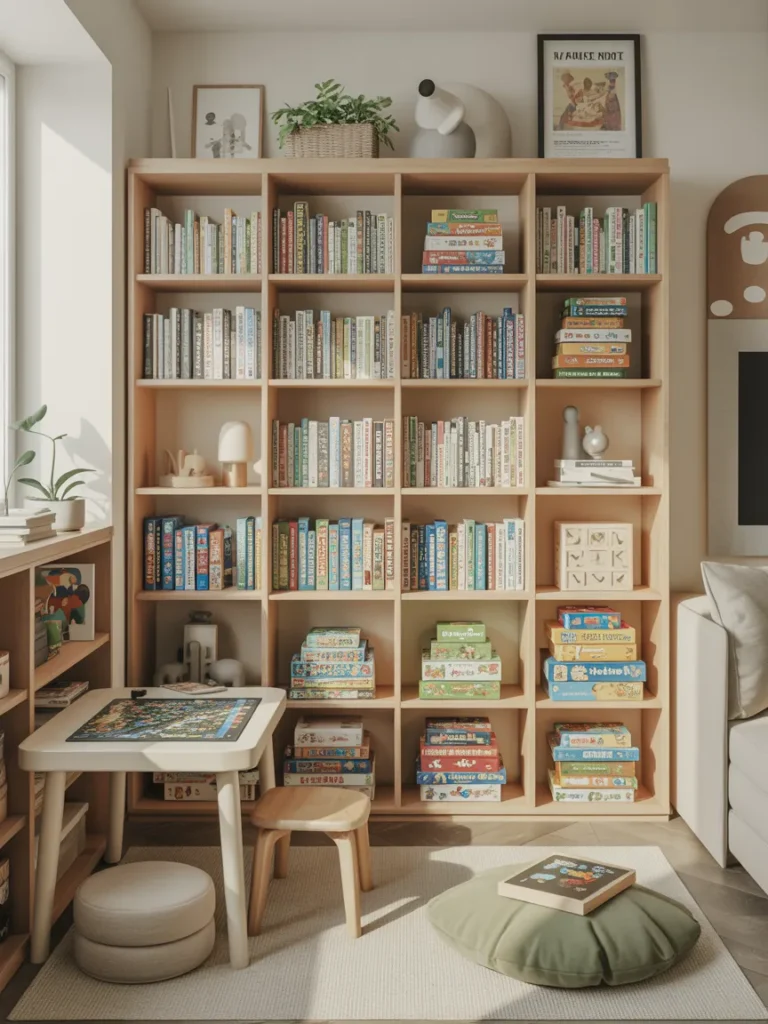
Vibe: Orderly and mentally engaging.
Why it works: When puzzles and games are displayed attractively, children choose them more often. Side-display makes puzzles easy to select and return. A dedicated table with a puzzle in progress signals that it’s okay to leave projects out for multiple sessions—reducing pressure and increasing completion rates.
How to get it: Install open shelving at child height. Display puzzles on their sides like books with the cover facing out. Stack games neatly with the top piece showing. Add a small table nearby for working puzzles. Keep a puzzle mat for easy storage of works-in-progress.
| Shop the Look |
|---|
| Open Shelving Unit Natural Wood |
| Puzzle Storage Mat Roll-Up |
| Floor Cushions Set of 2 |
| Wooden Jigsaw Puzzle Set |
| Vintage Game Wall Art Print |
15. Nature Discovery Zone
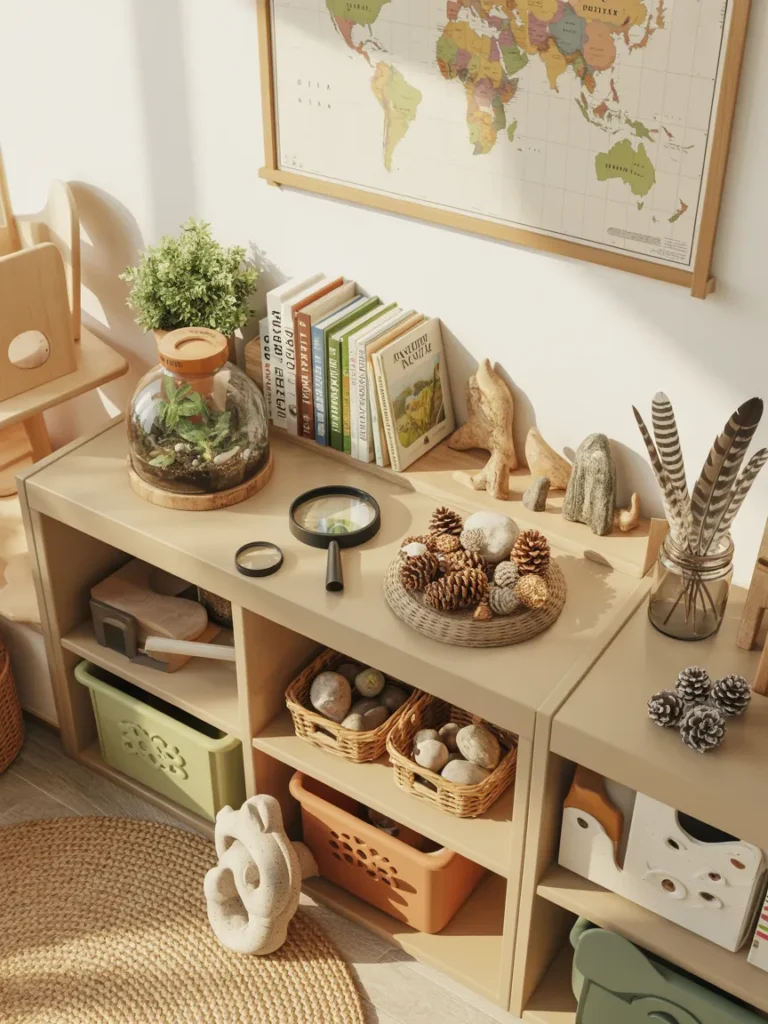
Vibe: Grounded and naturally curious.
Why it works: This zone fosters scientific thinking and environmental awareness. The tactile collection of natural objects appeals to the senses while building categorization and observation skills. A dedicated nature space also provides a calming alternative to high-energy play.
How to get it: Set up a low table with small baskets of natural objects—seashells, pinecones, smooth stones, feathers. Include a magnifying glass and a small terrarium. Add a simple world map and a few nature reference books. Use natural materials throughout for coherence.
| Shop the Look |
|---|
| Glass Terrarium with Lid |
| Magnifying Glass Set Kids |
| Natural Object Collection Basket |
| Kids’ Nature Book Bundle |
| Wooden World Map Wall Art |
16. Mini Gym and Yoga Area
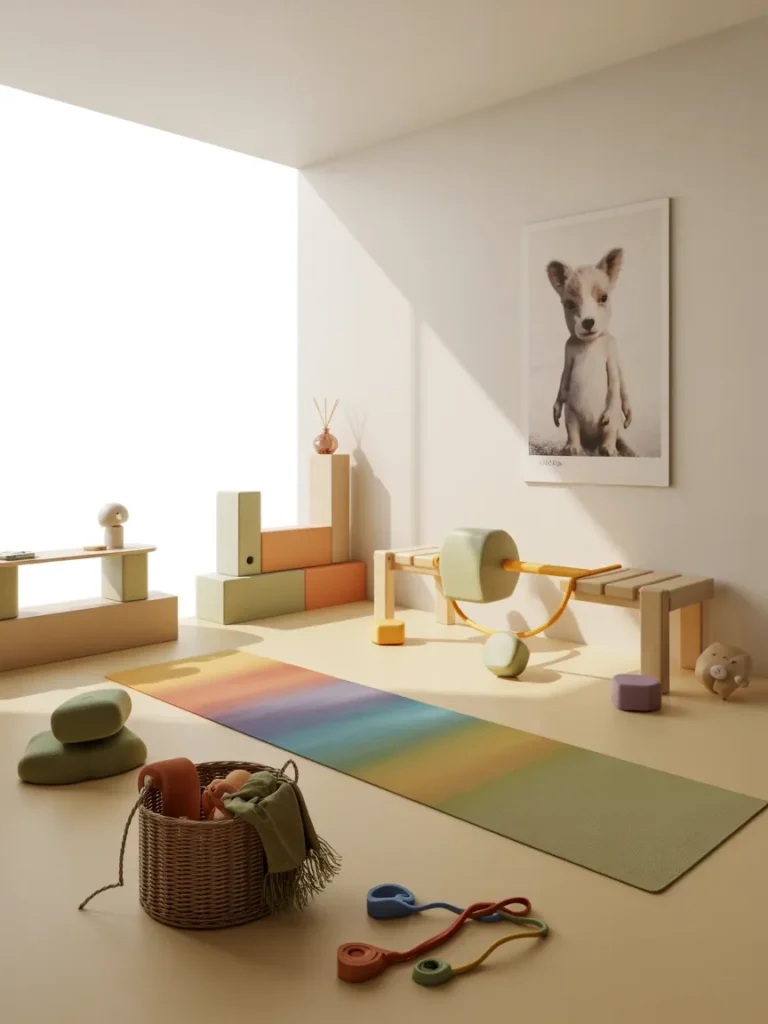
Vibe: Energetic yet centered.
Why it works: This dual-purpose zone supports both active movement and mindfulness. Physical activity is essential for regulation, while simple yoga and breathing exercises build emotional resilience. The visual of a defined movement space invites children to regulate their own energy levels.
How to get it: Designate a corner with a non-slip mat or foam tiles. Store a yoga mat, balance beam, foam blocks, and movement scarves nearby. Add simple instructional visuals—yoga pose cards or posters. Include a small basket of calming items like a breathing ball or fidget toys.
| Shop the Look |
|---|
| Kids’ Yoga Mat Colorful |
| Balance Beam Floor Foam |
| Yoga Pose Card Set Kids |
| Resistance Band Set |
| Interlocking Foam Floor Tiles |
17. Construction Zone With Loose Parts
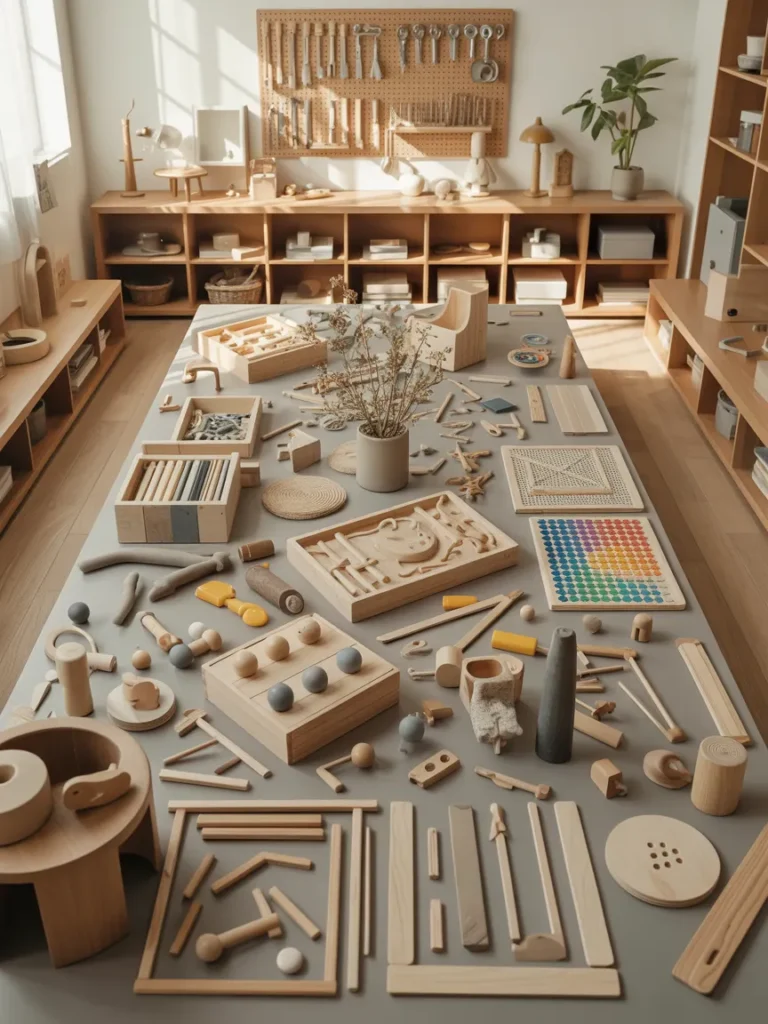
Vibe: Inventive and architecturally playful.
Why it works: Loose parts play—using open-ended materials without a predetermined outcome—is the gold standard for creative development. Unlike themed toys that have one purpose, these materials become anything a child imagines. This zone builds engineering thinking, problem-solving, and collaborative skills.
How to get it: Create a large mat or table surface. Stock with open-ended materials like wooden blocks, magnetic tiles, cardboard tubes, connectors, small figurines, and natural objects. Add a pegboard with tools like tweezers and small scoops. Rotate materials weekly to maintain interest.
| Shop the Look |
|---|
| Wooden Building Block Set |
| Magnetic Tile Construction Set |
| Loose Parts Play Collection |
| Felt Play Mat for Building |
| Pegboard Tool Organizer |
18. Creative Writing Nook
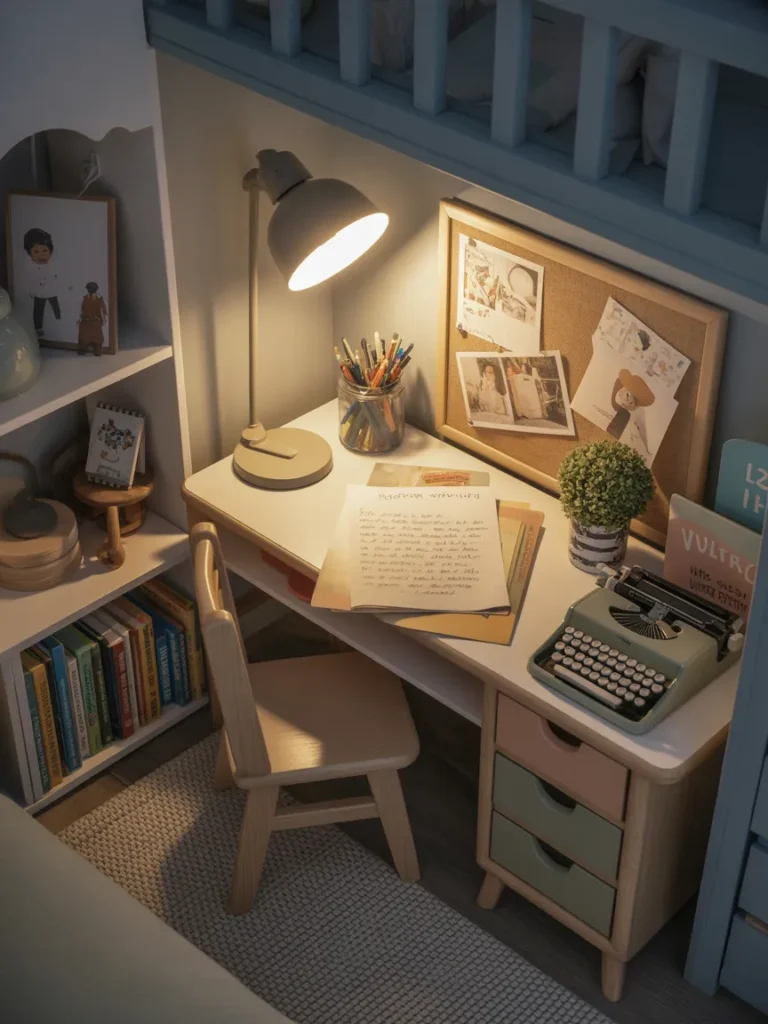
Vibe: Contemplative and storybook-author.
Why it works: A dedicated writing space signals that storytelling is valuable. The cozy, quiet atmosphere encourages focus and creative thinking. Having writing tools visible and accessible invites spontaneous expression, building literacy skills through joyful practice.
How to get it: Choose a small desk and comfortable chair at child height. Stock with a variety of writing tools—colored pens, pencils, markers. Add a vintage-style lamp for warm light. Include a bulletin board for story ideas and a small bookshelf of inspiring books. Add a typewriter for tactile fun.
💡 Quick Win: Place a simple “story jar” with writing prompts on the desk for days when inspiration needs a nudge.
| Shop the Look |
|---|
| Children’s Writing Desk Wooden |
| Vintage-Style Desk Lamp |
| Colored Pen Set 50 Colors |
| Bulletin Board and Pins |
| Story Prompt Jar with Cards |
19. Pegboard Craft Organizer
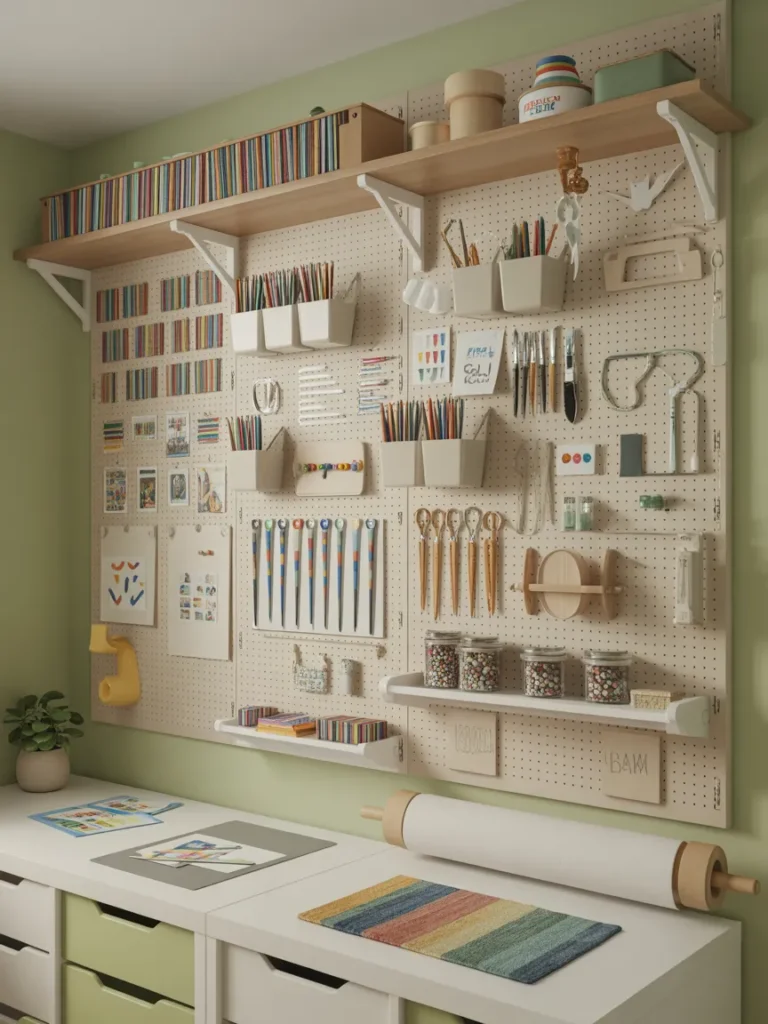
Vibe: Satisfyingly organized and creativity-ready.
Why it works: Pegboard organization makes craft supplies visible and accessible, dramatically increasing their use. The system teaches organization skills and makes cleanup manageable. Everything has a place, and the visual arrangement is inherently satisfying—functional art.
How to get it: Install a large pegboard on an empty wall. Use pegboard accessories—hooks, shelves, bins—to organize craft supplies by category. Add a dowel for craft paper rolls below. Include a small table or desk beneath for working. Use clear jars for small items like beads and buttons.
| Shop the Look |
|---|
| Pegboard with Mounting Kit |
| Pegboard Accessory Set Hooks |
| Clear Craft Storage Jars |
| Craft Paper Roll with Dowel |
| Kid-Safe Scissors and Glue Set |
20. Calm-Down Corner
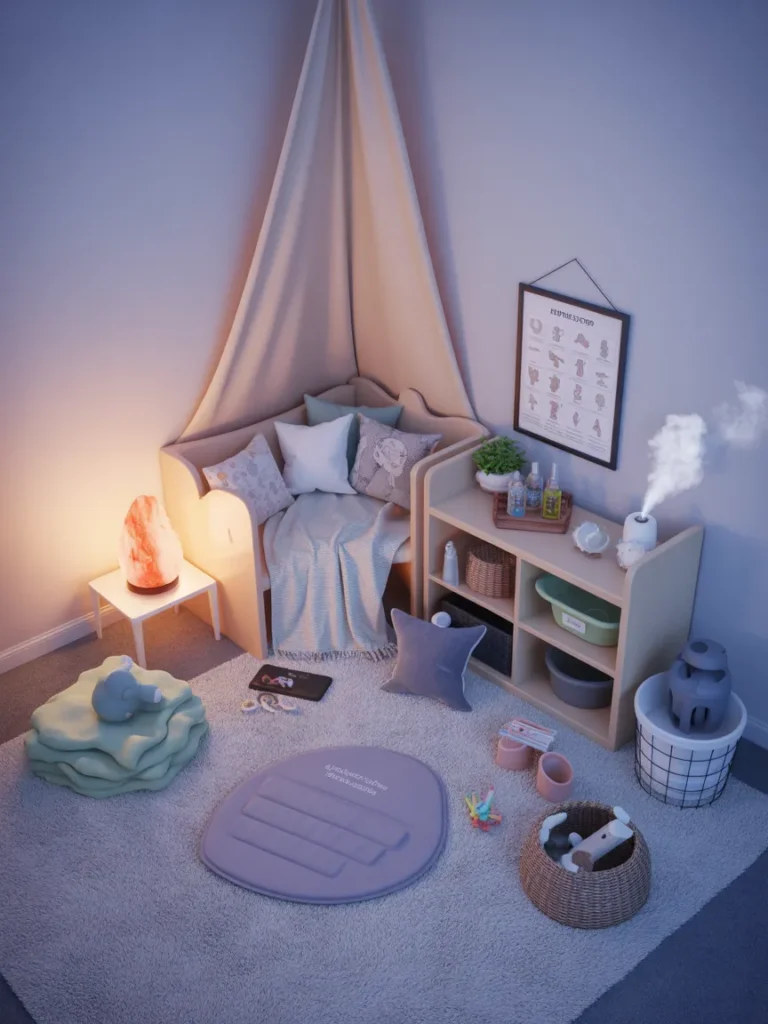
Vibe: Peaceful and emotionally restorative.
Why it works: A calm-down corner is essential for emotional regulation. This dedicated space teaches children to recognize overwhelm and practice self-soothing. The sensory elements—soft textiles, gentle light, tactile objects—support nervous system regulation. It’s not a punishment zone; it’s a tool for well-being.
How to get it: Choose a quiet corner away from high-traffic areas. Include soft seating like a cushion, bean bag, or small tent. Add calming sensory tools like a weighted lap pad, sensory bottles, and fidget toys. Post simple visual cues for calming strategies. Include soft lighting with a dimmable lamp or salt lamp.
| Shop the Look |
|---|
| Himalayan Salt Lamp Dimmable |
| Weighted Lap Pad Removable Cover |
| Sensory Bottle Set Calming |
| Fidget Toy Collection |
| Canvas Tent Mini Indoor |
How to Start Your Genius Playroom Transformation
The one first move: Paint one wall with magnetic chalkboard paint. This single change immediately signals “this is a special space” while providing a flexible creative surface that works for every age. It anchors the room visually and gives children immediate ownership through their own mark-making.
The most common mistake: Over-decorating with themed items before understanding how the space will actually be used. Parents often buy a complete “princess castle” or “race car” theme that feels restrictive within months. Instead, use neutral walls and furnishings, then layer in themed accessories that can be swapped as interests change—far more sustainable and cost-effective.
Budget entry points under $50:
- Canvas storage bins in warm neutrals for hiding toy chaos instantly
- Battery-operated fairy lights on a timer for instant magical ambiance
- A pack of colorful washi tape for creating temporary art galleries and labeling systems
Realistic expectations: A complete playroom transformation takes 2-4 weeks if you’re doing it yourself with painting, assembly, and organization. A starter version—one wall painted, basic storage, and a rug—is achievable in a single weekend. Budget for a full room ranges from $500 for IKEA-hack essentials to $3,000+ for custom built-ins and high-end materials. Most families spend $800-1,200 for a thoughtful, functional space.
Frequently Asked Questions About Genius Playroom Ideas
What is a genius playroom and how is it different from a regular playroom?
A genius playroom is designed with intentionality, prioritizing child accessibility, open-ended play, and smart organization over themed decor. It draws from educational philosophies like Montessori and Reggio Emilia, with low shelving, natural materials, and rotating toys. Unlike traditional playrooms that often prioritize adult aesthetics, genius playrooms put children’s developmental needs first while maintaining visual harmony.
What are the best colors for a playroom?
The most effective playroom palette uses warm neutrals—warm white, greige, soft clay—as a calming backdrop with intentional pops of primary colors in toys and accessories. This approach reduces visual overwhelm while allowing toys to be the colorful stars. For accent walls, consider muted versions of favorite colors like dusty sage, soft blue, or blush pink that feel soothing rather than overstimulating.
How much does it cost to create a genius playroom?
Expect to spend $500-1,500 for a basic transformation on a typical 10×12 room. This includes paint, a rug, a shelving unit, storage bins, a kid-sized table, and basic decorative elements. A high-end version with custom built-ins, a climbing wall, and premium furnishings can reach $3,000-5,000. The most budget-friendly approach focuses on paint, strategic storage, and rotating toys you already own.
Can a playroom and living room share the same space?
Absolutely. Use furniture that serves double duty—storage ottomans, coffee tables with toy bins inside, and a stylish playmat that rolls up when guests arrive. Create a “play zone” with a defined rug or low screen to visually separate the area. Use a consistent color palette so the play elements blend with your existing decor rather than fighting it.
What age is best to set up a playroom?
The ideal age to establish a dedicated play space is around 18-24 months, when children begin independent play and benefit from accessible, organized environments. However, playrooms can start earlier with floor-based sensory areas for infants and remain valuable through the elementary years. The key is designing the space to grow with the child, using adaptable furniture and rotating toys appropriate for each developmental stage.
Ready to Create Your Dream Genius Playroom?
From vibrant rainbow bookshelves to secret under-stairs hideaways, these twenty ideas span the full spectrum of what a genius playroom can be—color, organization, active play, calm corners, and everything in between. Remember, you don’t need to implement everything at once. The most successful playrooms evolve over time, responding to your child’s changing interests and needs.
Start with one small change today: clear one shelf and display toys with intention rather than abandon. That single shift in mindset—from storage to showcase—will ripple through every decision you make. When you design with purpose, you’re giving your child the gift of a space where imagination runs free and confidence grows. Now go ahead and pin your favorites—because the best playroom in the world is the one your family builds together.
One Comment