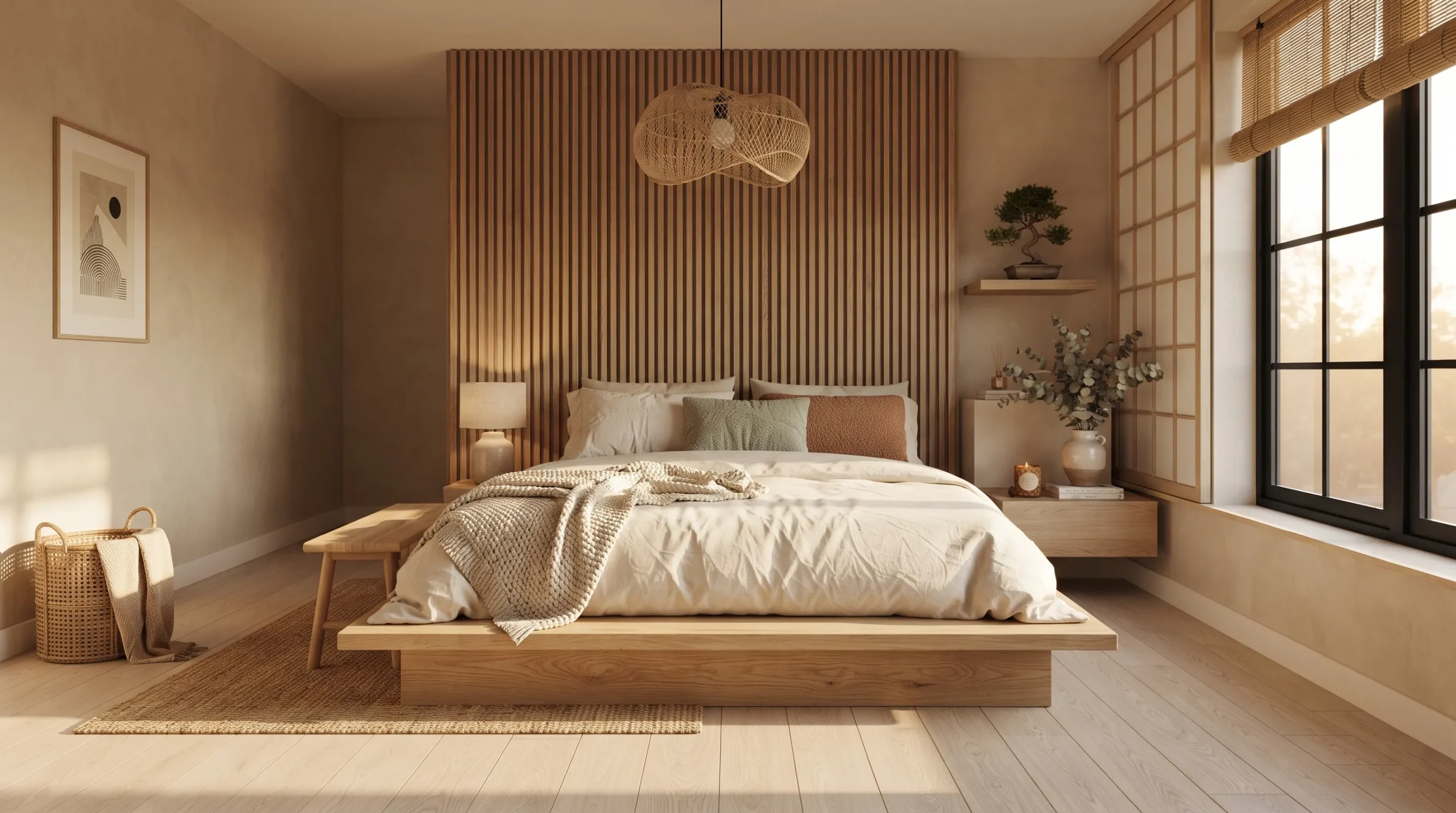
17 Minimal Japandi Bedrooms That Dominate
Japandi design is the quiet meeting point of Japanese minimalism and Scandinavian warmth, where clean lines soften into natural textures and every object earns its place. This article delivers seventeen Japandi bedroom ideas that prove restraint can feel remarkably luxurious, blending earthy materials with understated elegance for a space that feels both serene and sophisticated.
Step into a Japandi bedroom and the world outside seems to slow. Sunlight filters through natural fibers, casting gentle shadows across pale wood and handcrafted ceramics. The air feels still, the palette hushed, and every surface invites a deep, calming breath. This is a room that doesn’t demand attention but rewards it — a sanctuary built on balance, texture, and intentional living. Here are seventeen ideas worth saving — and stealing.
Why Japandi Style Works So Well
Japandi is more than a passing trend — it’s a design philosophy born from two rich cultural traditions. The style merges Japanese minimalism, with its focus on clean lines, negative space, and the wabi-sabi appreciation of imperfection, with the Scandinavian concept of hygge, which prioritizes warmth, comfort, and cozy togetherness. Together, they create a look that feels both structured and inviting, avoiding the coldness often associated with pure minimalism while remaining refreshingly uncluttered.
The Japandi palette is built on warm, grounding hues: creamy off-whites, soft beiges, warm greys, and muted earth tones like sage green and terracotta. Wood is the hero material — light oak, ash, and walnut appear in furniture, flooring, and architectural details. These are complemented by natural fibers like linen, wool, rattan, and bamboo, along with handcrafted ceramics and matte finishes that add depth without visual noise.
Japandi’s popularity has surged as we seek refuge from digital overload and fast-paced living. The style’s emphasis on natural materials, sustainability, and intentional living resonates with a post-pandemic desire for homes that feel like genuine sanctuaries. Searches for Japandi bedroom ideas and neutral aesthetics have steadily climbed as people crave spaces that promote genuine rest.
Yes — small spaces can absolutely achieve Japandi style. In fact, the style’s emphasis on low-profile furniture, negative space, and multi-functional pieces makes it ideal for compact bedrooms. Start with a low platform bed to create visual height, choose floating nightstands to free floor space, and keep surfaces intentionally clear to prevent the room from feeling cramped.
Style at a Glance
| Element | Core Trait 1 | Core Trait 2 |
|---|---|---|
| Philosophy | Wabi-sabi — beauty in imperfection | Hygge — warmth and comfort |
| Materials | Natural wood, linen, rattan | Ceramics, bamboo, stone |
| Color palette | Creamy whites, warm taupes, sage green | Muted terracotta, charcoal accents |
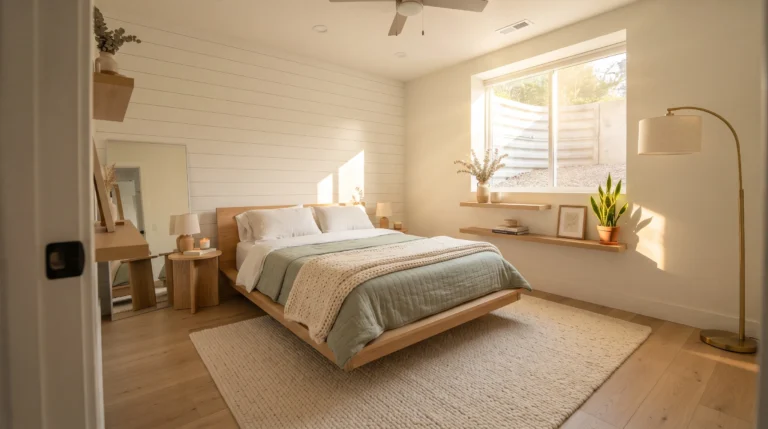
1. Low Platform Bed
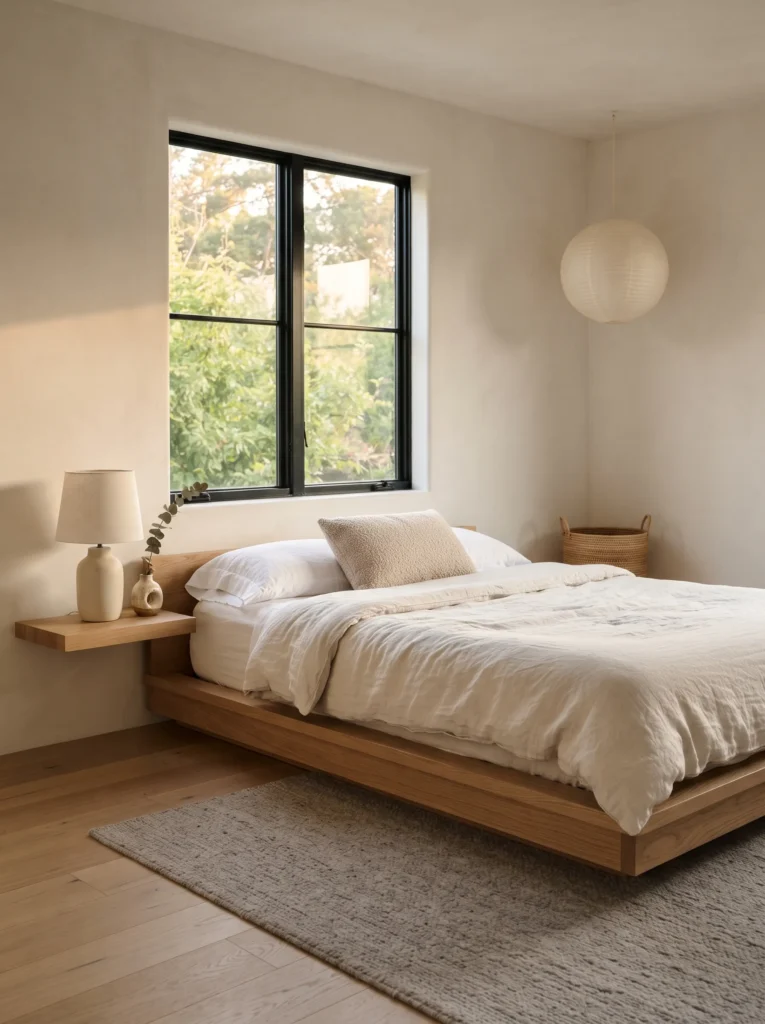
Vibe: Grounded and serene.
Why it works: A low platform bed anchors the room visually, creating a sense of stability and calm. By bringing the sleeping surface closer to the floor, the ceiling appears higher, making even compact bedrooms feel more spacious and airy. This principle of visual expansion is a cornerstone of Japanese interior design, fostering a restful, grounded atmosphere.
How to get it: Choose a simple wooden frame in light oak or warm walnut with clean, uninterrupted lines. Pair it with a thin, firm mattress and layer with linen sheets in an off-white or sand tone. Avoid bulky headboards that break the horizontal line — instead, consider a low upholstered panel or a simple wood slat wall behind the bed.
Shop The Look
- Low platform bed frame solid wood natural
- Organic cotton mattress firm support
- Linen sheet set stonewashed oatmeal
- Lightweight quilted blanket beige
- Low-profile upholstered headboard linen
2. Wood Slat Accent Wall
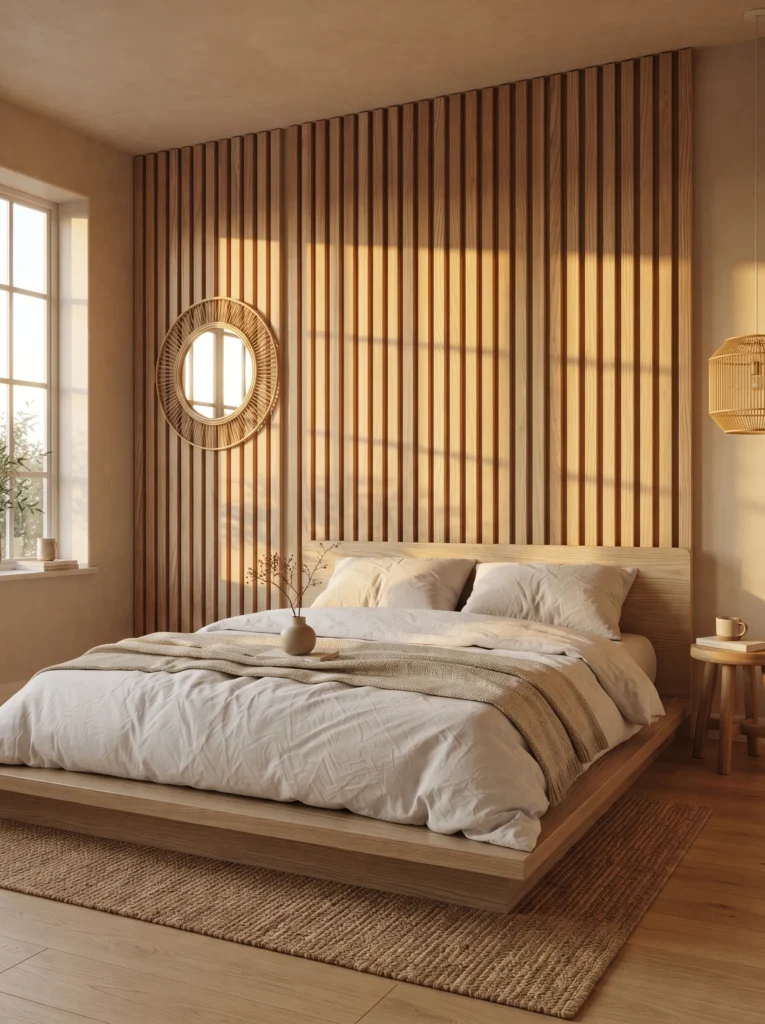
Vibe: Rhythmic and textural.
Why it works: Vertical wood slats add architectural interest and a sense of rhythm, creating a dynamic backdrop that replaces the need for a traditional headboard or busy artwork. The narrow gaps between slats cast subtle, ever-changing shadows, adding dimension and warmth without cluttering the visual field.
How to get it: Install vertical timber panels behind the bed in a light wood finish such as ash or white oak. Leave even spacing between each slat for a balanced, modern look. This feature wall draws the eye upward, emphasizing the room’s height and providing a stunning, organic focal point that feels both structured and natural.
Shop The Look
- Vertical wood slat wall panel kit oak
- Low platform bed frame light ash
- Linen duvet cover set sand
- Ceramic bedside table lamp matte
- Minimalist wall sconces warm light
3. Layered Neutral Textiles
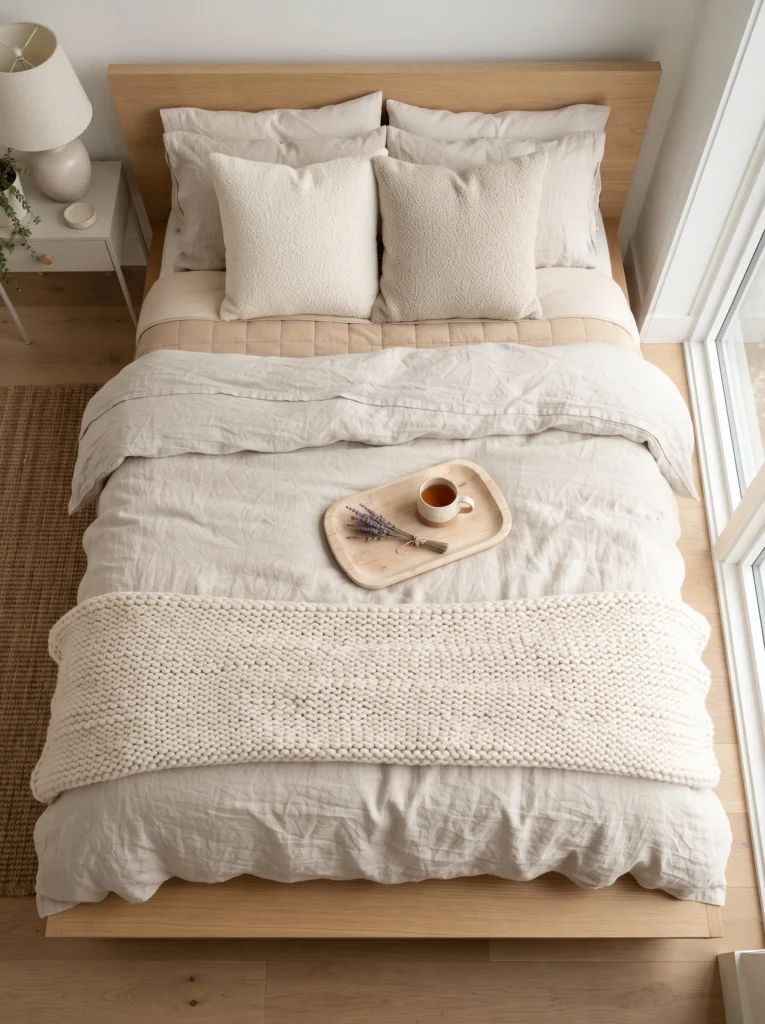
Vibe: Luxuriously tactile.
Why it works: In a restrained color palette, texture provides all the visual interest. Layering different fabrics — smooth linen, chunky wool, soft cotton — creates a sense of depth and comfort that feels deeply inviting. This approach aligns with the Scandinavian principle of hygge, making the bed the ultimate cozy retreat.
How to get it: Start with a solid, washed linen duvet cover in a warm neutral. Drape a chunky waffle-knit or wool throw blanket loosely across the foot of the bed. Add a mix of bouclé and nubby accent pillows in complementing shades of cream, beige, and warm grey. The key is an effortless, layered look that feels natural and lived-in, not overly styled.
Shop The Look
- Washed linen duvet cover oatmeal
- Chunky knit throw blanket cream
- Bouclé accent pillow set beige
- Woven cotton quilted bedspread
- Square linen pillow covers set
4. Woven Rattan Lighting
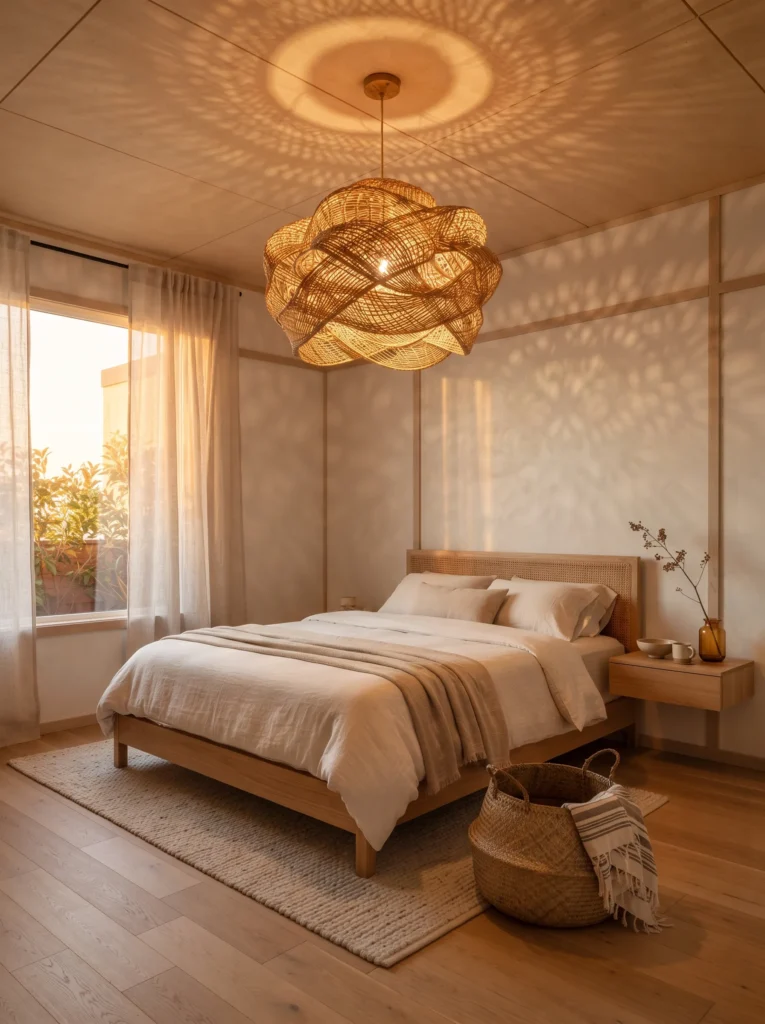
Vibe: Warm and artisanal.
Why it works: Rattan and bamboo lighting fixtures introduce organic texture and a handcrafted quality that softens the clean lines of Japandi furniture. When illuminated, the woven material creates beautiful, dappled light patterns that add warmth and intimacy to the room, perfectly capturing the wabi-sabi appreciation for natural, imperfect forms.
How to get it: Hang a sculptural rattan or bamboo pendant light as a focal point in the room. Alternatively, place a woven table lamp on a nightstand or a floor lamp in a corner for softer, ambient lighting. The natural honey tones of the material complement wood furniture beautifully and provide a textural contrast to smooth surfaces.
READ MORE ABOUT: 15 Moody Living Room Ideas with Bold Decor
Shop The Look
- Woven rattan pendant light natural
- Bamboo table lamp for bedside
- Rattan floor lamp boho modern
- Rice paper lantern string lights
- Wicker wall sconce set warm glow
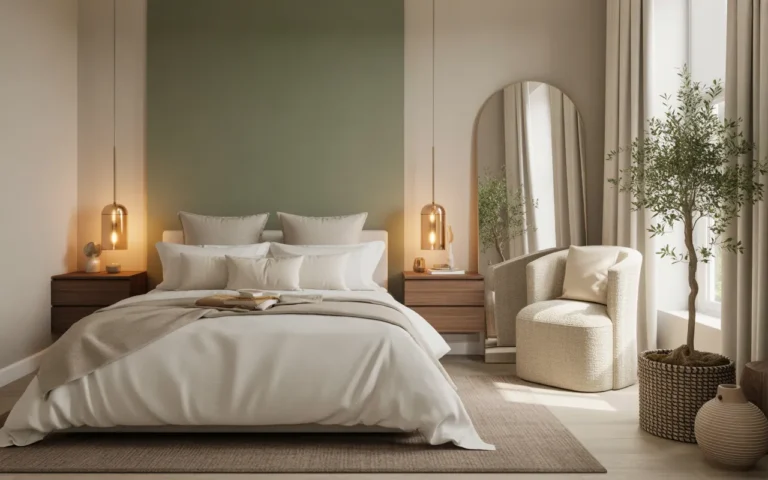
5. Sage Green Accent Wall
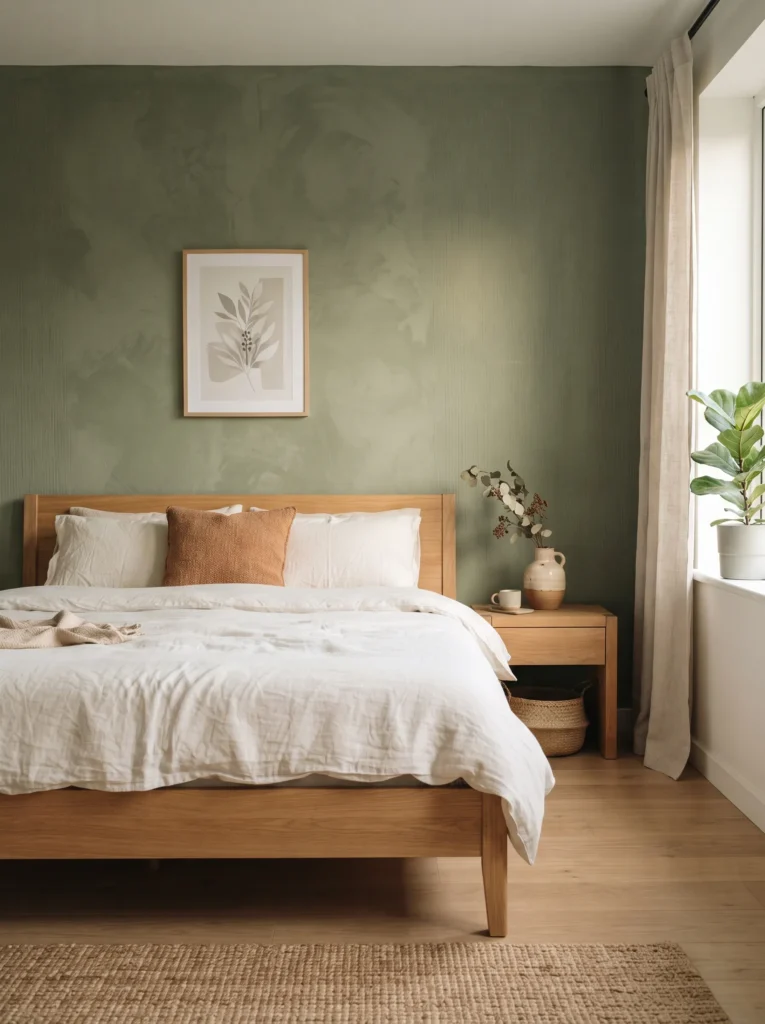
Vibe: Calming and biophilic.
Why it works: A muted sage green wall introduces a soft, biophilic element that connects the bedroom to nature without breaking the neutral scheme. This color has a scientifically proven calming effect on the nervous system, making it an ideal choice for a room dedicated to rest and rejuvenation.
How to get it: Paint just one wall — the one behind the bed — in a very pale sage or dusty olive tone. Use a limewash paint for added texture and depth. Pair the green wall with light wood furniture and cream or oatmeal textiles to create a sophisticated yet soothing palette that feels grounded and harmonious.
Shop The Look
- Sage green limewash wall paint
- Light oak platform bed frame
- Cream linen duvet cover set
- Natural jute area rug 8×10
- Dried eucalyptus stem in vase
6. Shoji Room Divider
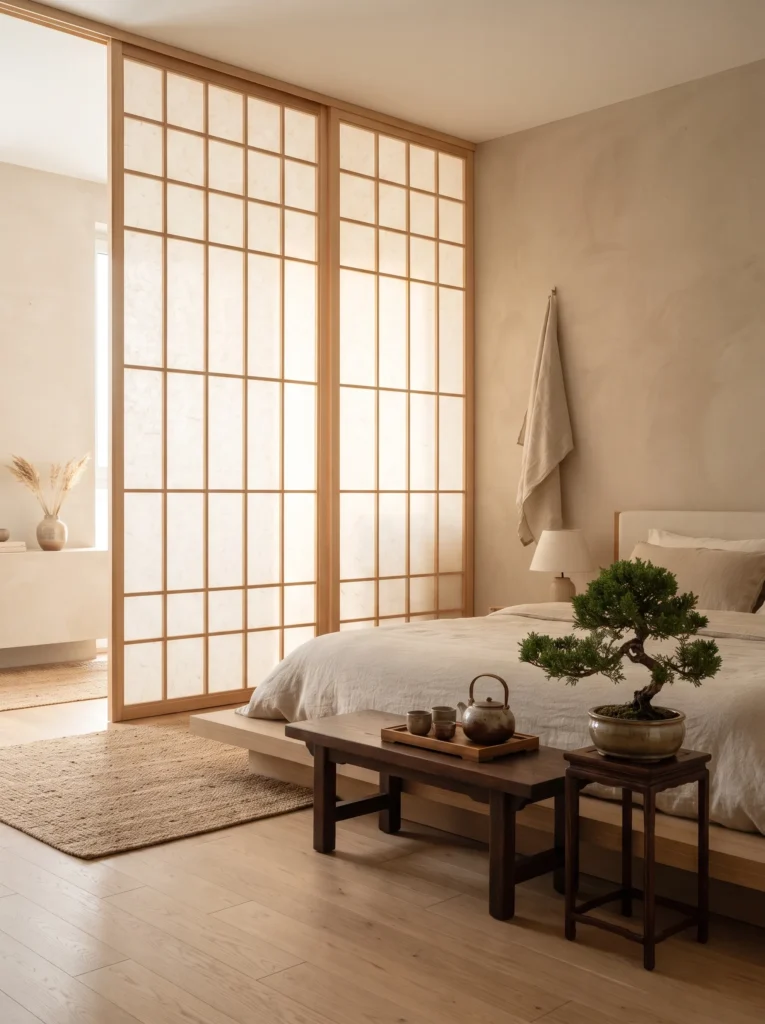
Vibe: Elegant and functional.
Why it works: A shoji screen is a traditional Japanese element that serves as a beautiful, functional room divider. Its translucent rice paper and light wood frame allow light to filter through while providing privacy, making it perfect for creating a dressing area or separating a home office nook within the bedroom.
How to get it: Choose a folding screen with a simple, geometric wooden grid and natural paper panels. Place it to shield a cluttered corner or to define a quiet meditation space. The lightweight, portable nature of the divider allows for flexible room layouts, adding a layer of architectural interest without permanent changes.
Shop The Look
- Shoji room divider folding screen
- Low wooden bench with storage
- Floor cushion set in natural cotton
- Ceramic table lamp soft glow
- Minimalist tatami floor mat
7. Black Metal Details
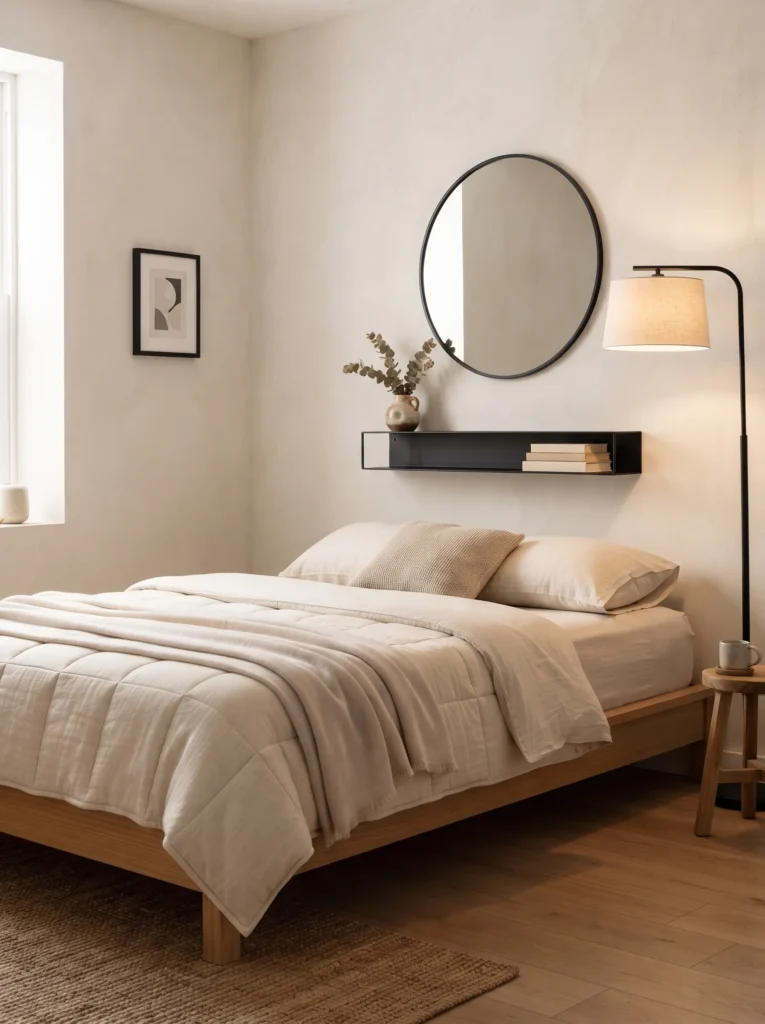
Vibe: Modern and grounded.
Why it works: While the Japandi palette is predominantly light and neutral, the strategic use of black metal adds sophistication and necessary visual weight. Thin black lines — in a lamp, mirror frame, or bed detail — provide sharp contrast and a modern edge, preventing the room from feeling washed out or flat.
How to get it: Choose a slim black metal floor lamp, a simple mirror frame, or a low-profile bed frame with black metal legs. This use of dark accents reflects the precision of Japanese design, offering a contemporary counterpoint to the warm wood and soft textiles, ensuring the space feels balanced and curated.
Shop The Look
- Black metal arc floor lamp
- Round wall mirror black frame
- Low platform bed with black legs
- Minimalist wall sconces matte black
- Black metal floating shelf
8. Curated Zen Nook
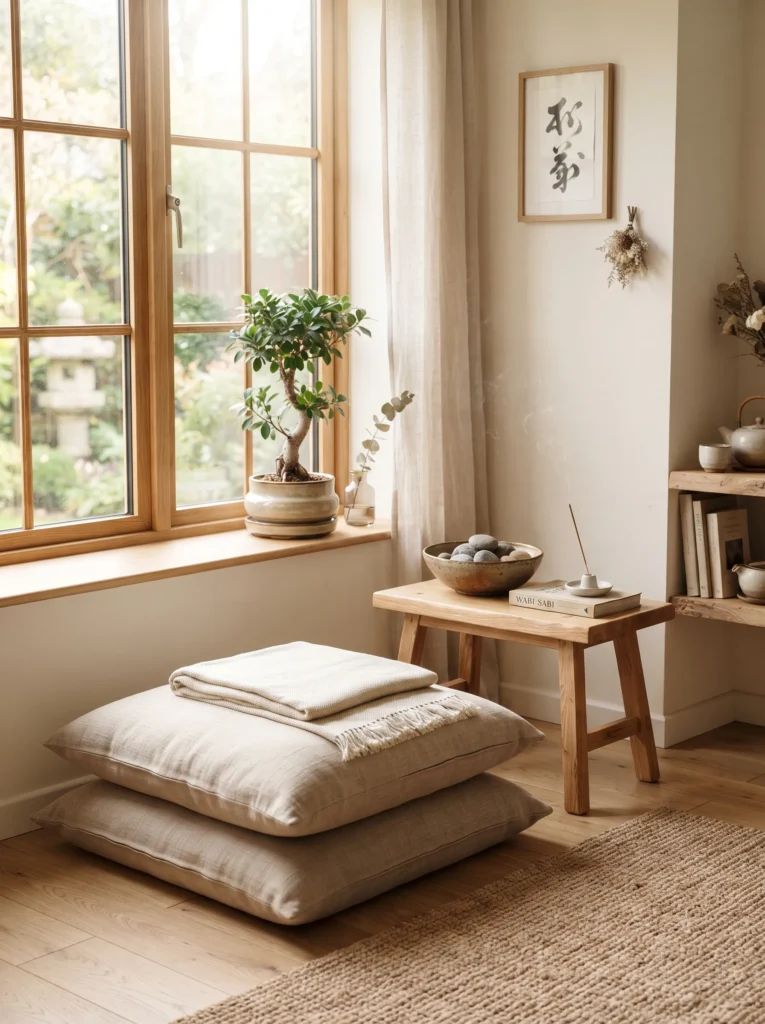
Vibe: Meditative and personal.
Why it works: Creating a small, designated space for quiet reflection reinforces the intentionality at the heart of Japandi design. This nook needn’t be large — a corner with a floor cushion, a small side table, and a natural element provides a daily ritual of stillness and mindfulness.
How to get it: Place a few floor cushions near a window or in a quiet corner. Add a simple wooden stool to hold a book or a cup of tea. Include a single indoor plant or a bowl of smooth stones to bring a grounding sense of nature into this personal space. This spot becomes a sanctuary for reading, meditating, or simply unwinding.
Shop The Look
- Large floor cushion set beige
- Low wooden side table natural
- Ceramic zen bowl with stones
- Indoor bonsai tree live plant
- Woven cotton throw blanket
9. Handmade Ceramics
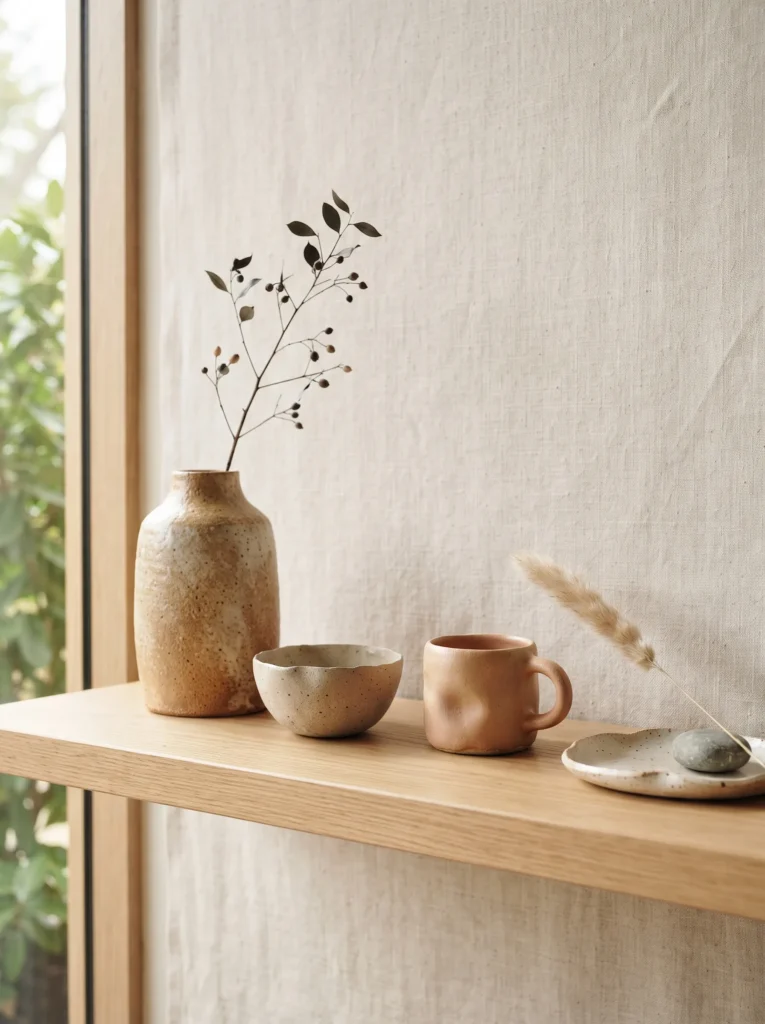
Vibe: Authentic and imperfect.
Why it works: Handmade ceramics perfectly embody the wabi-sabi philosophy of finding beauty in imperfection. A slightly asymmetrical vase, a rough-textured bowl, or a matte-glazed mug adds warmth, authenticity, and a human touch that mass-produced items cannot replicate.
How to get it: Display a few carefully chosen ceramic pieces on a nightstand, shelf, or floating ledge. Choose items in earthy or neutral tones with visible texture or subtle variations in color. Pair a simple ceramic vase with a single dried branch or a minimal floral arrangement for a display that feels intentional and serene.
Shop The Look
- Handmade ceramic vase matte glaze
- Stoneware decorative bowl textured
- Ceramic mug set artisan style
- Small bud vase organic shape
- Ceramic catchall tray neutral
10. Paper Lantern Pendant
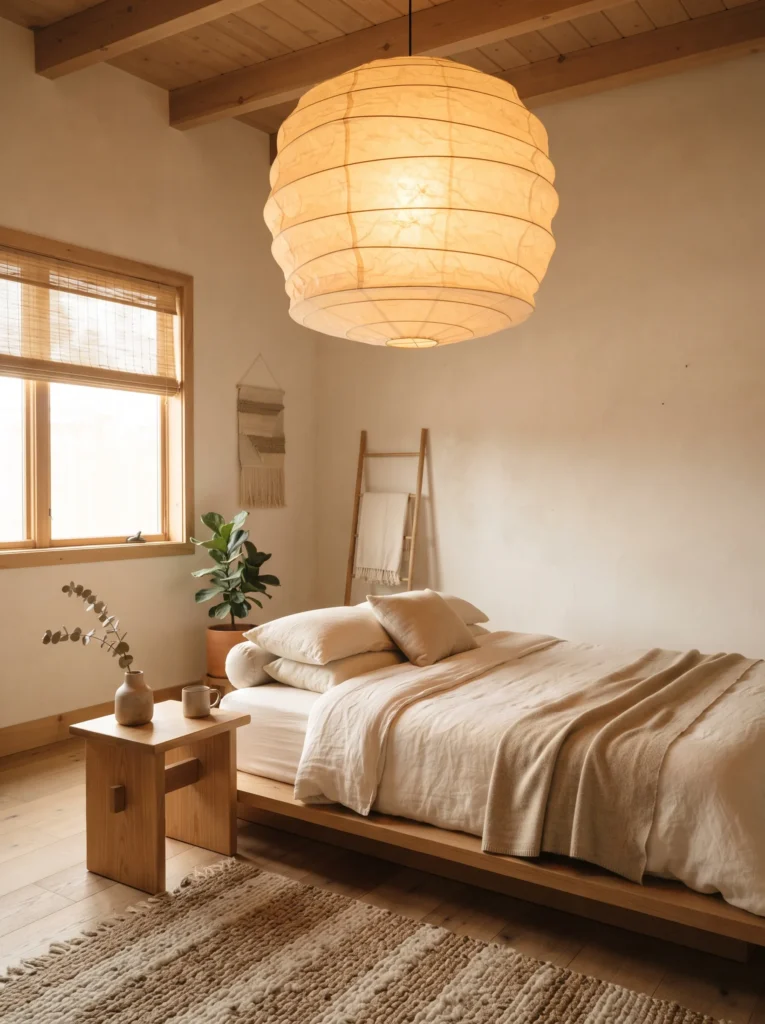
Vibe: Effortlessly luminous.
Why it works: A paper lantern is an iconic Japandi lighting piece that provides the soft, diffused glow essential for a relaxing atmosphere. The warm light that filters through the natural rice paper creates a cozy, intimate mood, wrapping the room in a feeling of gentle calm that is perfect for winding down.
How to get it: Hang a large, sculptural rice paper pendant from the ceiling as a statement piece. The organic shape and warm illumination mimic the quality of natural sunset light, casting no harsh shadows. This lighting choice introduces a fragile, delicate beauty that contrasts beautifully with the solid wood furniture and adds a layer of visual lightness to the room.
Shop The Look
- Large rice paper pendant light
- Bamboo table lamp natural
- Warm glow LED dimmer bulb
- Rattan wall sconce set
- Floor lamp with paper shade
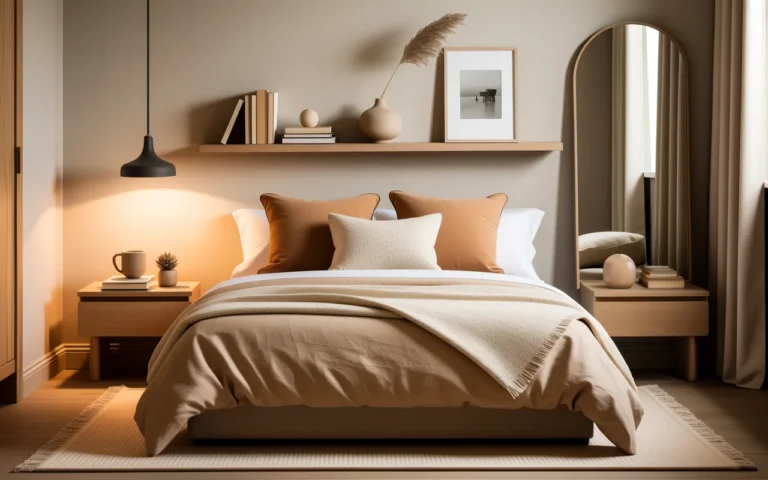
11. Muted Terracotta Accents
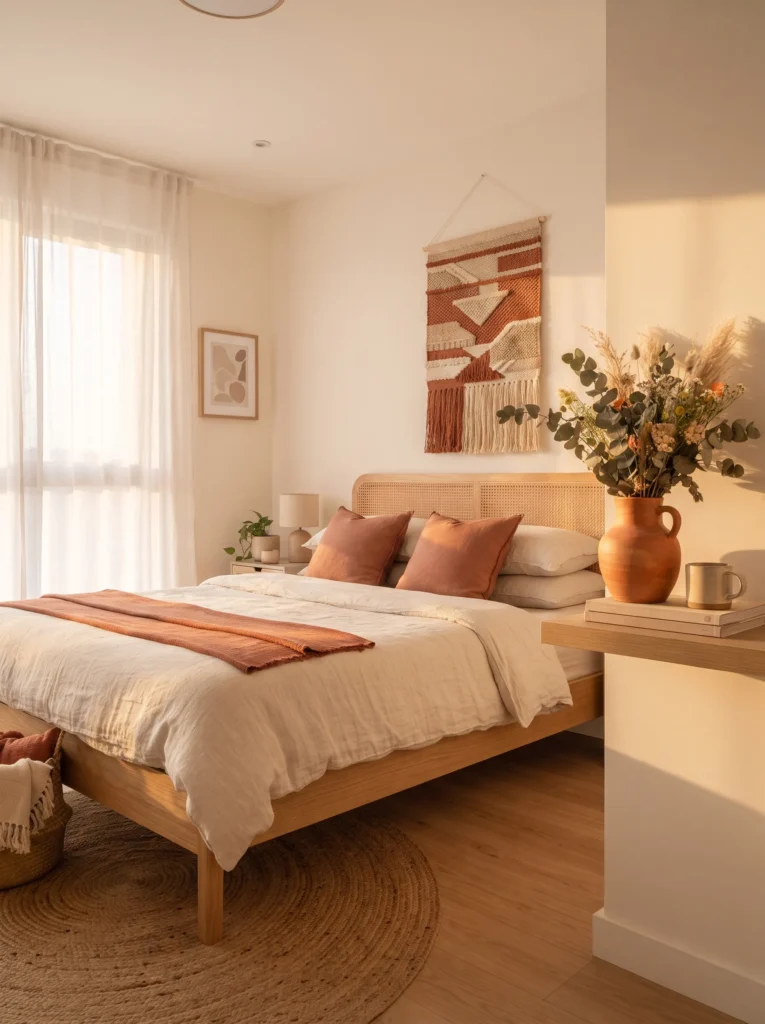
Vibe: Warm and earthy.
Why it works: For those who find an all-neutral palette too quiet, muted terracotta or clay tones introduce a subtle warmth without compromising the calm. This earthy hue adds a layer of grounded sophistication, bringing the feeling of sun-baked soil into the modern bedroom.
How to get it: Introduce terracotta through small, easily changeable accents. Swap standard throw pillows for ones in a dusty terracotta or burnt orange hue. Choose a textured ceramic vase or a woven wall hanging in these warm tones. Use it sparingly to keep the overall scheme peaceful and balanced.
Shop The Look
- Terracotta accent throw pillows
- Clay ceramic table vase
- Woven wall hanging terracotta
- Muted terracotta area rug
- Linen duvet cover warm clay
12. Concealed Storage Wardrobes
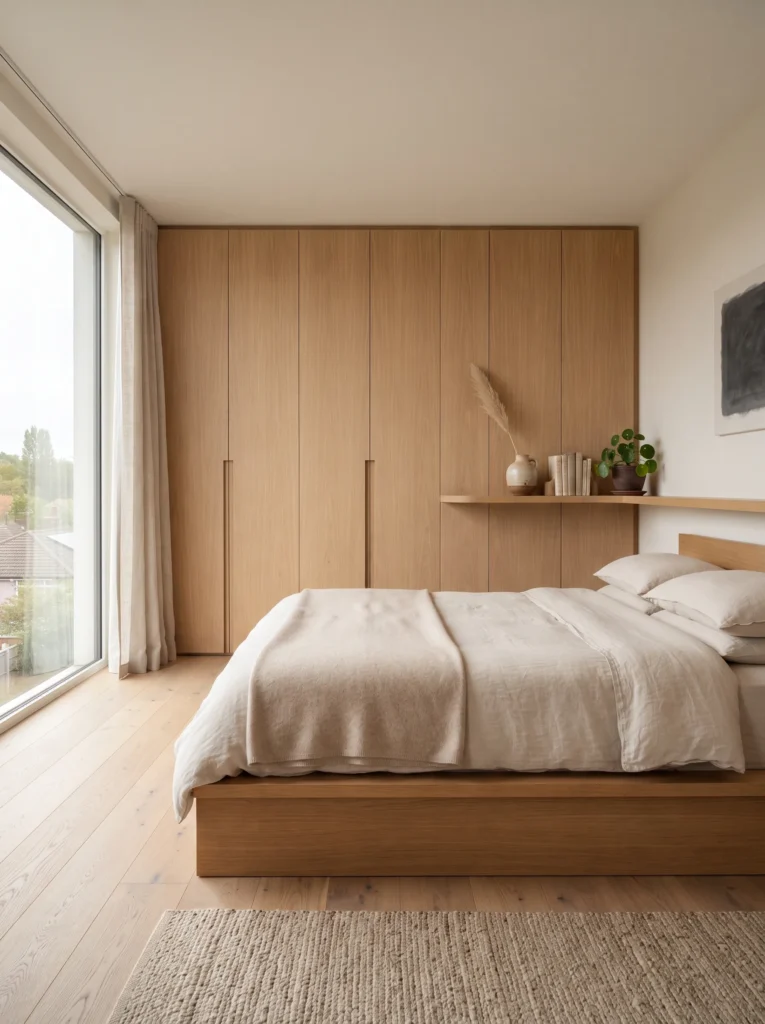
Vibe: Clutter-free and sleek.
Why it works: A clutter-free space is non-negotiable in Japandi design. Fit floor-to-ceiling wardrobes with sleek, handle-free frontals in a neutral shade to hide all visual noise. This creates a streamlined architectural look that allows the natural materials and intentional decor pieces to truly shine.
How to get it: Opt for built-in sliding wardrobes that maximize storage without taking up extra floor space. Choose a finish that matches your room’s aesthetic — light wood veneer for a natural look, or a matte neutral paint for a seamless wall effect. Inside, incorporate organizational systems to keep everything neatly tucked away.
Shop The Look
- Sliding door wardrobe kit white
- Bamboo drawer organizers set
- Storage baskets woven natural
- Wooden clothing hangers set
- Under-bed storage boxes with wheels
13. Floating Nightstands
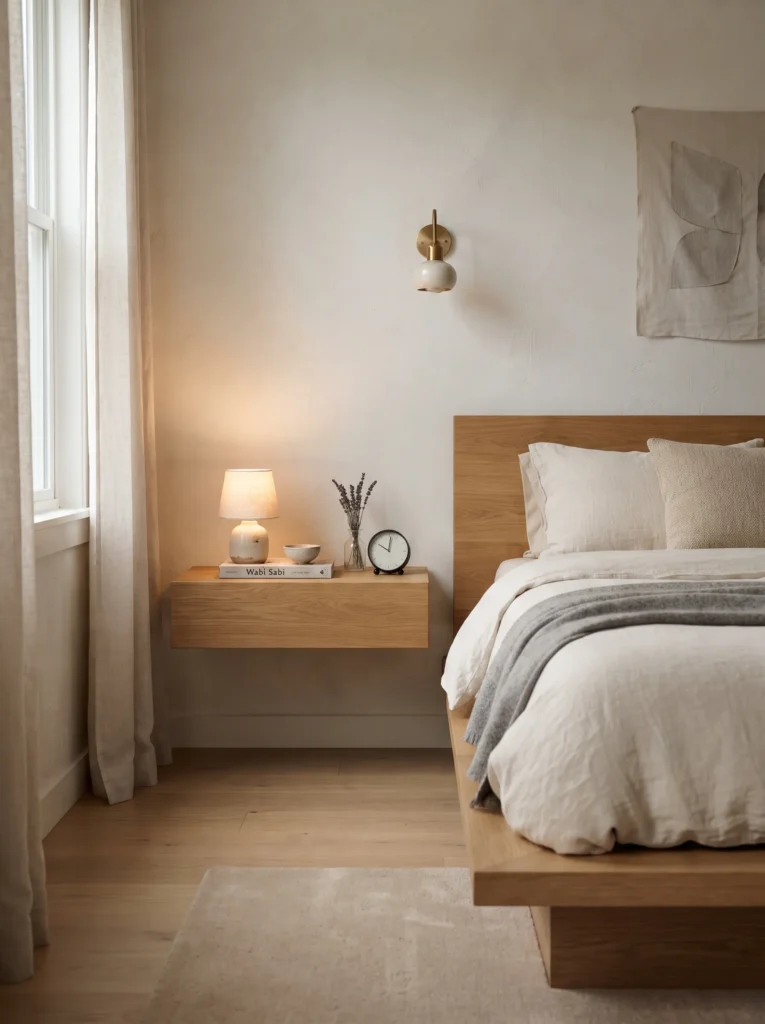
Vibe: Light and airy.
Why it works: In a small bedroom, every inch of floor space counts. Floating nightstands free up the floor, making the room feel more open and spacious. Their clean, horizontal line maintains the minimalist aesthetic while providing a functional surface for a book, lamp, or glass of water.
How to get it: Install simple wooden shelves or floating nightstands on the wall beside the bed. This minimalist storage solution is visually light and avoids the bulkiness of traditional bedside tables. Some designs come with built-in compartments for tucking away personal items, keeping surfaces pristine and clutter-free.
Shop The Look
- Floating wood shelf nightstand
- Wall-mounted lamp warm glow
- Ceramic catchall tray neutral
- Compact alarm clock wood
- Hardback book decorative stack
14. Indoor Bonsai Plant
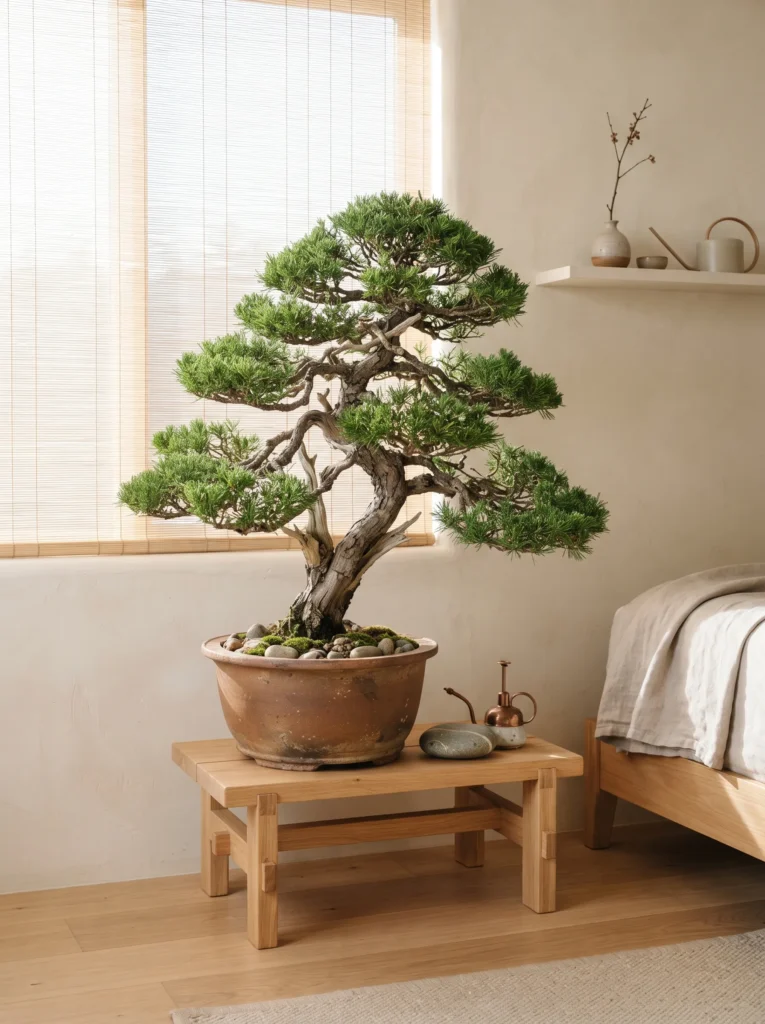
Vibe: Living and sculptural.
Why it works: An indoor bonsai tree is a powerful symbol of patience, care, and nature. This living sculpture provides a vibrant pop of green against a neutral backdrop, adding a refreshing, biophilic element that brings life and focus to the room. Caring for a bonsai adds a mindful ritual to your daily routine.
How to get it: Place a single bonsai tree on a low wooden dresser, a window sill, or a floating shelf where it can be the focal point. Choose a simple, unglazed ceramic pot in an earthy tone to keep the look minimalist. The bonsai’s sculptural form embodies the essence of wabi-sabi, making it a perfect addition to a Japandi space.
Shop The Look
- Live indoor bonsai tree
- Ceramic bonsai pot earth tone
- Bamboo plant stand minimal
- Watering can small metal
- Decorative pebbles natural
15. Natural Fiber Area Rug
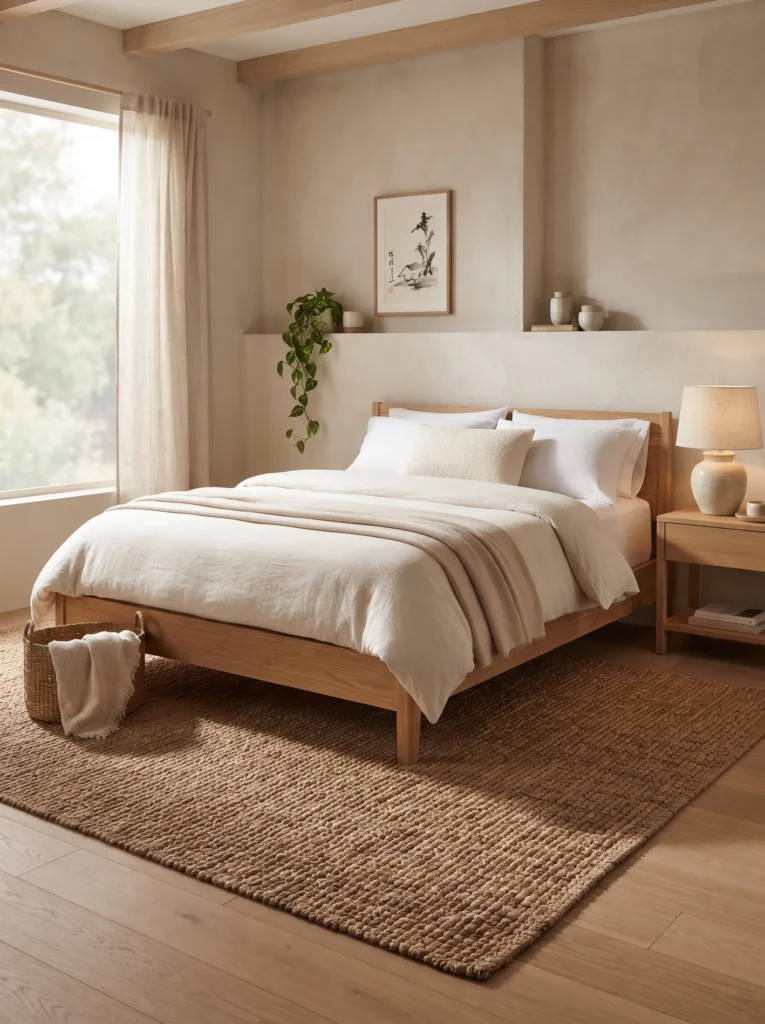
Vibe: Warm and textural.
Why it works: A natural fiber rug grounds the sleeping zone, adding warmth underfoot and absorbing sound to make the room feel quieter and more private. Jute, sisal, or wool rugs in neutral tones add visual interest and a feeling of coziness without overwhelming the space.
How to get it: Place a large jute or wool rug under the bed, extending about two feet on either side. Choose a solid, neutral tone or a subtle weave pattern that adds texture without competing with the other elements. The rough, organic texture of the rug provides a perfect contrast to smooth wood floors and soft linen bedding.
Shop The Look
- Large jute area rug 8×10
- Wool blend rug neutral beige
- Woven sisal runner texture
- Layered sheepskin rug accent
- Non-slip rug pad gripper
16. Asymmetric Art Arrangement
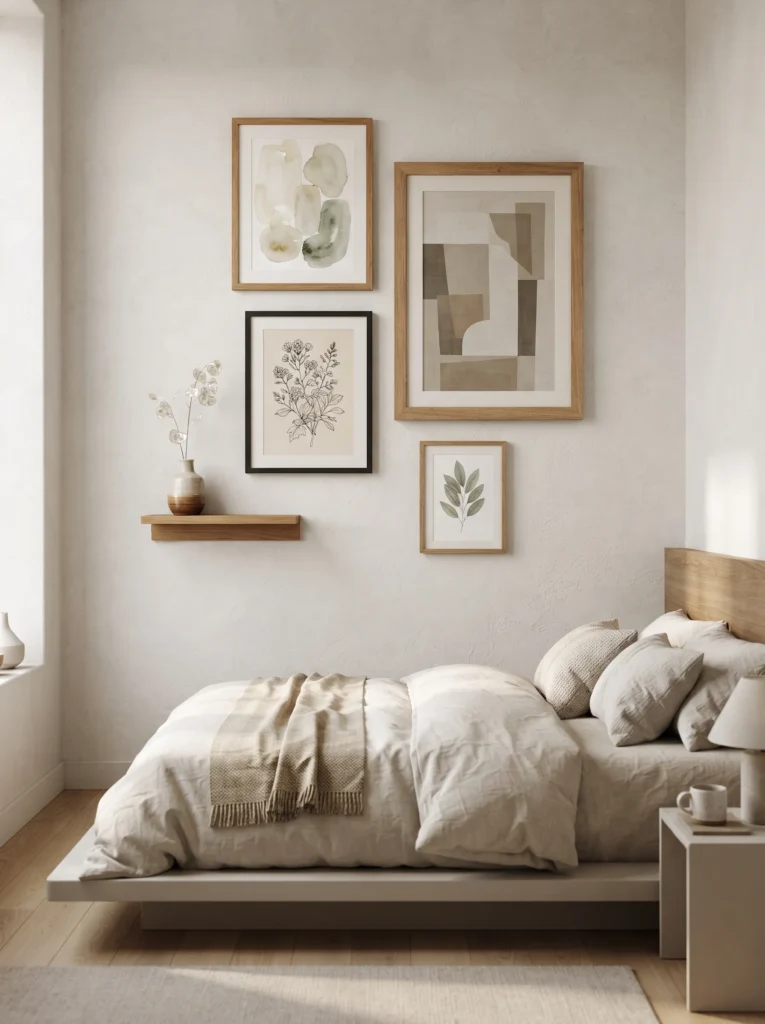
Vibe: Unconventional and balanced.
Why it works: While symmetry is often associated with calm, an asymmetric arrangement of wall art introduces a touch of dynamic energy and personal character. This approach celebrates the wabi-sabi principle of imbalance and imperfection, keeping the space from feeling too rigid or predictable.
How to get it: Instead of two matching frames, group three or four small pieces of art at eye level, hanging them off-center to create a curated, gallery-like feel. Choose artworks with muted palettes and simple subjects — abstract prints, nature-inspired sketches, or linen canvases. Maintain plenty of negative space around them to keep the look effortless.
Shop The Look
- Abstract art print set neutral
- Minimalist black frame set
- Linen canvas wall hanging
- Japanese ink wash art print
- Wooden clip frames natural
17. Minimalist Reading Corner
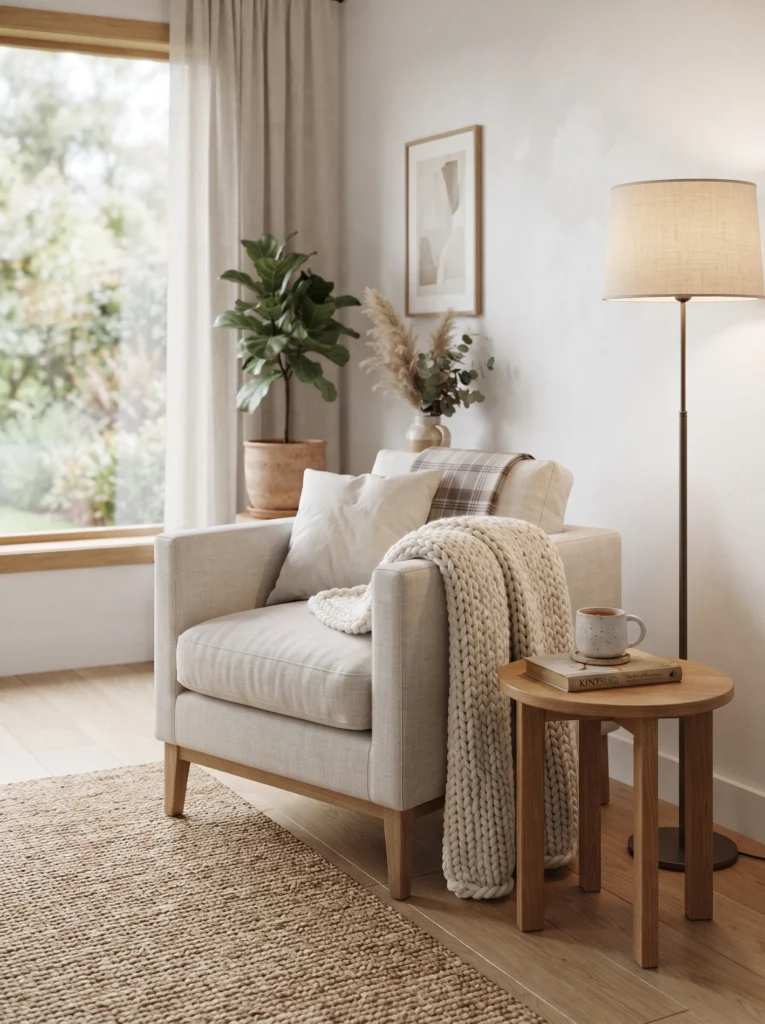
Vibe: Intimate and relaxing.
Why it works: A small reading corner makes the bedroom feel more personal and relaxing, offering a dedicated space for rest outside of the bed. It adds functionality and comfort to the room, creating a quiet retreat for morning coffee or evening reading.
How to get it: Place an upholstered armchair in a corner with a soft throw and a small side table. Add a warm light source, such as a floor lamp or wall sconce, to create a cozy, well-lit nook. This simple addition turns an unused corner into a favorite spot and adds another layer of intentional living to the space.
Shop The Look
- Upholstered accent chair linen
- Small wooden side table
- Soft throw blanket woven
- Arc floor lamp warm light
- Decorative throw pillow bouclé
How to Start Your Japandi Bedroom Transformation
Begin with the low platform bed — it is the foundational piece that sets the tone for the entire room. A simple wooden frame in a light, natural finish establishes the Japandi silhouette and sense of grounded calm. This central piece anchors the room’s orientation and color palette, making every other choice easier.
The most common mistake is choosing cool-toned neutrals. Blue-greys and stark whites can leave the room feeling sterile, not serene. Instead, seek out warm, creamy whites, oatmeal, and beige with yellow or brown undertones. This warmth is essential for creating the cozy, inviting atmosphere that defines Japandi.
You can start creating the look today with three budget items: a single stem of pampas grass or dried eucalyptus in a matte black ceramic vase, a set of stonewashed linen pillow covers in an earthy hue, and a small rattan tray to organize a nightstand. These pieces instantly add the texture and authentic feel of Japandi style.
A full transformation can take a weekend to a few months, depending on your ambition and budget. A starter version with a new bed, textiles, and lighting might run between $1,500-$3,000, while a complete room overhaul with custom joinery and high-end pieces could range from $5,000-$15,000.
Frequently Asked Questions About Japandi Bedrooms
What is the difference between Japandi and Scandinavian design?
Japandi is the fusion of Japanese minimalism and Scandinavian warmth. While Scandi design focuses on light, airy spaces and clean lines, Japandi incorporates the Japanese concepts of wabi-sabi and deeper, richer earth tones. The result is a style that is more grounded and layered than classic Scandinavian, with a greater emphasis on dark accents and organic textures.
What colors should I use in a Japandi bedroom?
Stick to a warm, neutral palette: creamy whites, oatmeal, warm beige, soft greige, and muted sage green. Accent with earthy tones like terracotta or charcoal. You can also add subtle contrast with dark walnut or matte black details.
Is Japandi style expensive to achieve?
Not necessarily. You can achieve the look on a budget by focusing on a few key principles: paint the walls a warm neutral, choose natural fiber textiles like linen and jute, and add handmade elements like ceramic pots. While high-end furniture exists, the style is more about intentionality than price.
Is Japandi style suitable for a small bedroom?
Yes, Japandi is perfect for small bedrooms because it prioritizes low-profile furniture, negative space, and smart, multi-functional solutions. A low platform bed, floating shelves, and wall-mounted lights can make a compact room feel significantly larger.
What wood is best for a Japandi bedroom?
Light oak, ash, and walnut are the classic choices. Light woods like oak and ash are excellent for a bright, modern feel, while walnut adds a richer, more dramatic note. Using a mix of wood tones can also add depth and visual interest to the space.
Ready to Create Your Dream Japandi Bedroom?
These seventeen ideas span materials, color, lighting, and layout, proving that a serene and luxurious bedroom is achievable at any scale. Remember, transforming your space is a journey — starting with just one thoughtful update is not only acceptable but is often the smartest approach. Today, choose one simple action, like swapping your bedding for a washed linen set in a warm neutral or clearing your nightstand to a single book and lamp. The true luxury of a Japandi bedroom lies in the profound stillness and restoration it will bring to your daily life, making every evening a retreat. Go ahead and save your favorite ideas to a Pinterest board — the path to your perfect sanctuary starts with a single, intentional choice.