
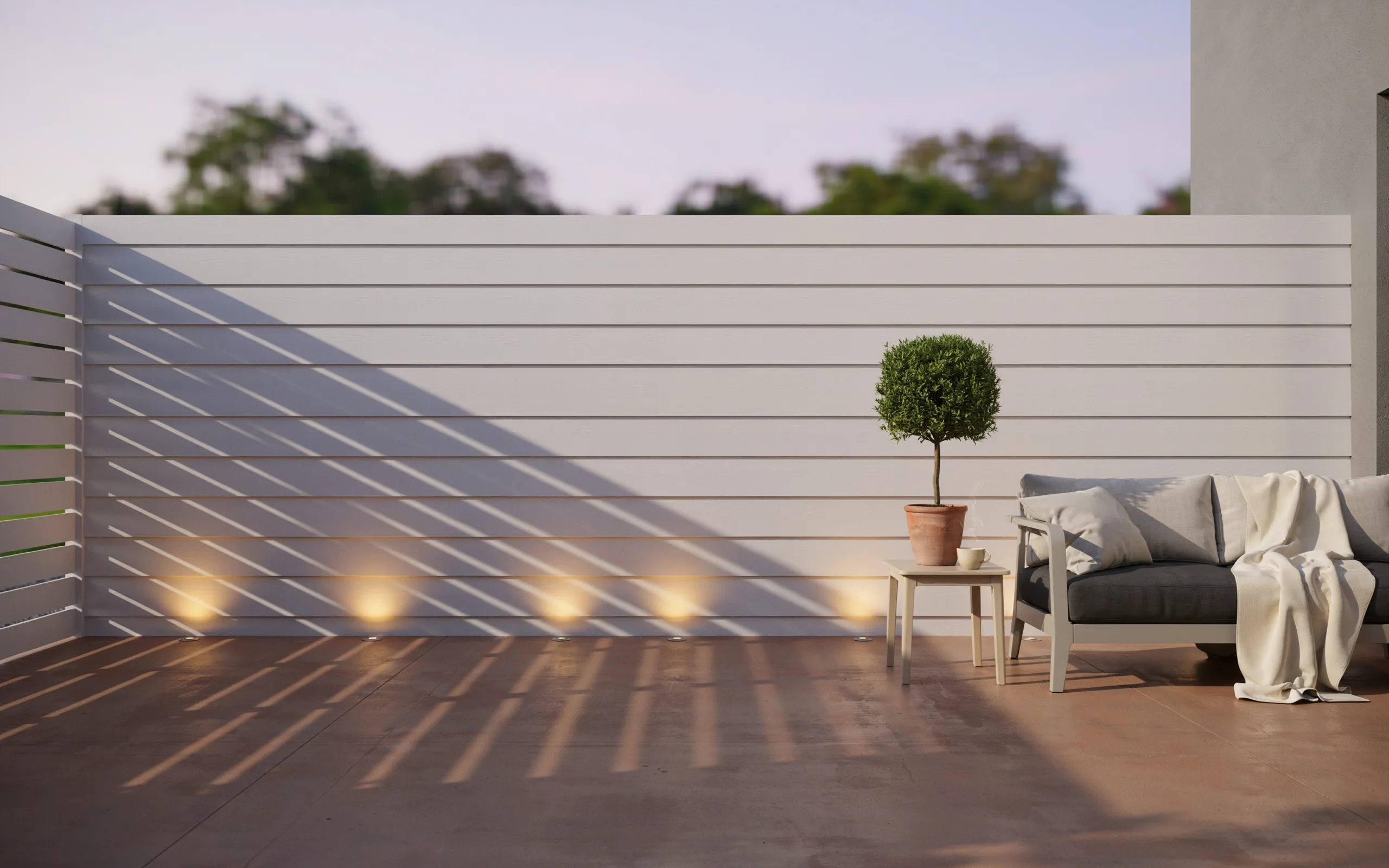
14 Privacy Wall Designs That Upgrade Any Outdoor Space
A privacy wall is an architectural element or decorative screen that shields outdoor areas from neighboring views while adding visual dimension, functionality, and personality to your space. This article delivers 14 ideas for privacy walls that transform how your outdoor space looks and feels.
Privacy walls are the quiet revolution happening in patios and gardens everywhere—they’re not just functional barriers, they’re statements. They frame your outdoor room with intentionality, create intimate zones, and add layers of texture and light. Whether you’re drawn to clean modern lines, natural materials, or sculptural drama, a well-designed privacy wall becomes the anchor that makes everything else click. Here are 14 ideas worth saving—and stealing.
Why Privacy Walls Work So Well
A privacy wall is a vertical structure or screen designed to block sightlines while adding aesthetic and functional value to outdoor spaces. Unlike traditional fencing, privacy walls embrace design—they’re rooted in landscape architecture, Japanese garden principles (shoji screens, bamboo), and contemporary architectural thinking. Modern privacy walls merge boundary-making with beauty, creating semi-permeable visual breaks that define space without fully enclosing it. They’ve evolved from purely functional barriers into design elements that anchor outdoor living.
Privacy walls thrive in warm whites, charcoal gray, warm taupe, and deep forest green—colors that ground the space without overwhelming it. Materials vary dramatically: horizontal slat wood (warm white oak, weathered cedar), metal screens (blackened steel, brushed bronze), composite materials, living green walls (climbing ivy, jasmine), and concrete. Textural options include shiplap finishes, slatted profiles, perforated metal, and interwoven bamboo. These materials interact with light differently—slats create shadow play at golden hour, metal screens catch morning sun, and greenery softens edges year-round.
Post-pandemic outdoor living transformed from nice-to-have to essential. As outdoor spaces became workspaces, dining rooms, and sanctuaries, people demanded both privacy and design intention. Simultaneously, the wellness movement elevated gardens and patios to mental-health territory—privacy walls aren’t just about neighbors, they’re about creating meditative zones. Social media and Pinterest searches for “backyard privacy” spiked 340% in three years. People now view their outdoor space as an extension of interior design, not an afterthought.
Yes, but strategy matters. Small spaces should prioritize slat walls with negative space and transparency—solid walls shrink perception further. Vertical privacy solutions (tall screens, tiered greenery) work better than horizontal sprawl. Light-colored materials (whitewashed wood, brushed metal) reflect light and expand visual depth. The key: use a privacy wall to define your compact space rather than confine it—one strategic wall creates an intimate zone within a larger yard, making the whole area feel intentional.
Style at a Glance
| Element | Core Trait 1 | Core Trait 2 |
|---|---|---|
| Philosophy | Visual boundary with design intention | Functional meets aesthetic |
| Materials | Wood slats, metal screens, living green | Composite, concrete, bamboo |
| Color palette | Warm white, charcoal, taupe, forest green | Warm naturals, cool grays |
1.Slat Screen, Modern White
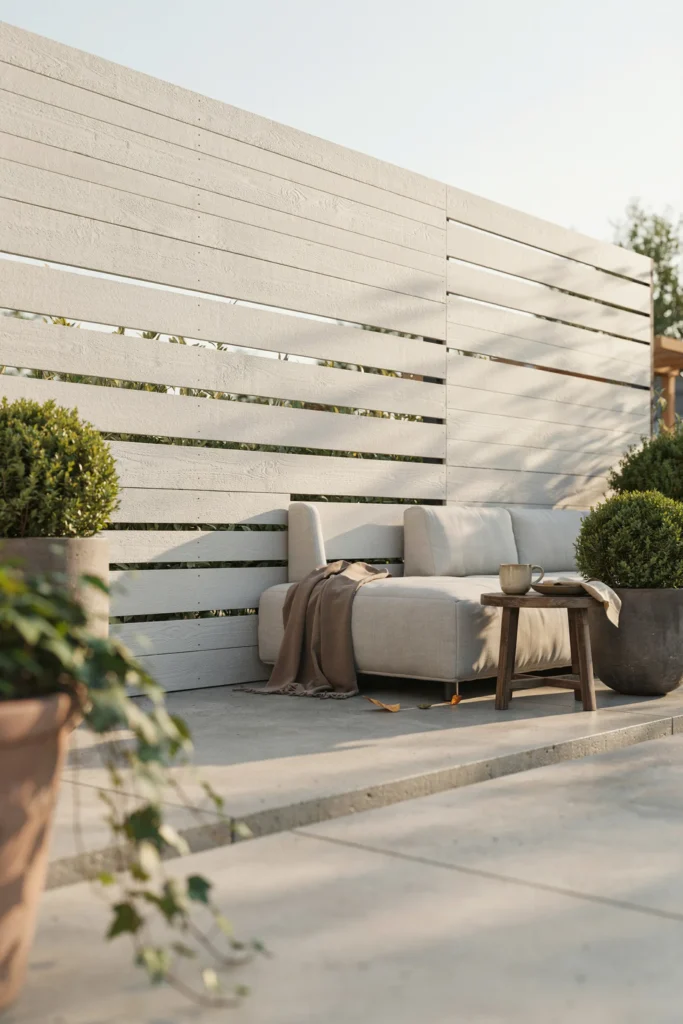
Vibe: Calm, serene, minimalist.
Why It Works: Horizontal slats are the foundational privacy design principle—they create visual rhythm, guide the eye laterally, and maintain sightlines upward toward sky and trees. Negative space (gaps between slats) prevents the wall from feeling fortress-like. White slats reflect light, preventing the structure from darkening adjacent patio zones. The shadow patterns cast by slats become dynamic decor that shifts throughout the day, adding visual texture without needing accessories.
How to Get It: Start with untreated or whitewashed cedar slats (2×6 boards work best). Space them 1-2 inches apart to balance privacy with transparency. Mount horizontally on pressure-treated posts (6×6 or composite) set in concrete. Finish with matte white exterior paint or weathered whitewash. If DIY feels risky, pre-fabricated composite horizontal screen systems like Trex or Tamko install faster and require zero maintenance, eliminating rot and finish worries.
💡 Quick Win: Pre-made horizontal slat fence panels (available at most big-box stores in 6×8 sections) install in a single afternoon with basic tools, giving you 80% of this aesthetic at fraction of custom cost.
Shop The Look
| Product | Style | Purpose |
|---|---|---|
| Whitewashed cedar horizontal slat panels 6×8 | Modern minimalist | Privacy structure |
| Pressure-treated 6×6 post system galvanized | Modern structural | Wall support frame |
| Concrete post anchors outdoor | Contemporary | Foundation stability |
| Light gray outdoor sectional sofa | Modern lounge | Seating integration |
| Potted white topiary spiral boxwood | Clean accent | Foreground softening |
2. Black Metal Perforated Screen
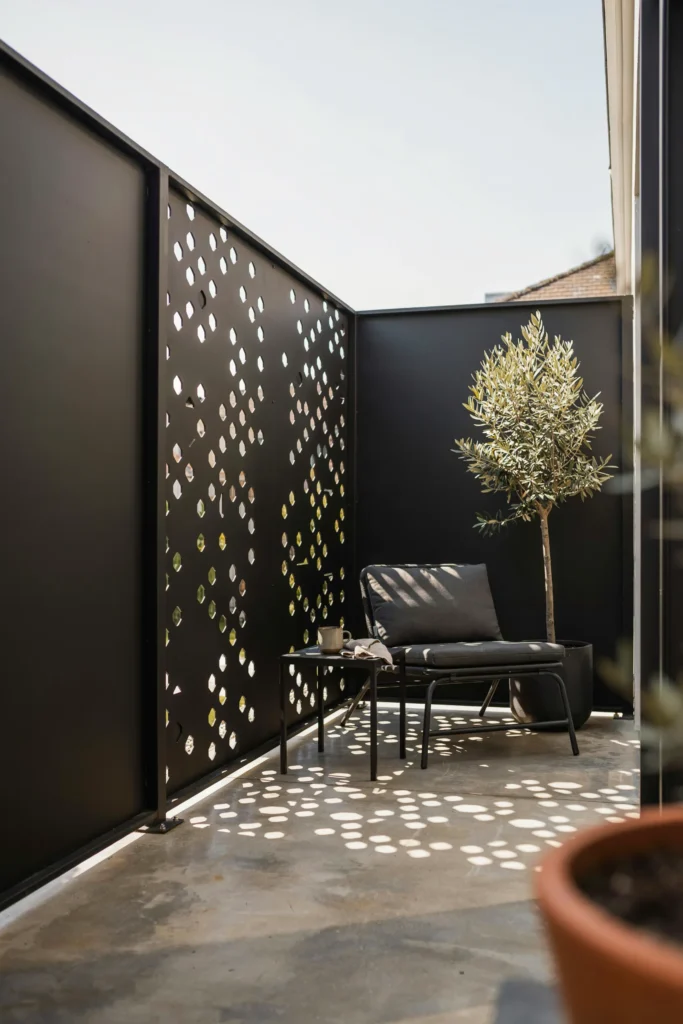
Vibe: Bold, architectural, light-filtered.
Why It Works: Perforated metal screens create visual intrigue through layering and light interplay—they’re inspired by Islamic latticework and contemporary architectural screening. The geometric cutouts reduce visual weight compared to solid barriers while maintaining privacy. Blackened steel absorbs morning light and reflects evening warmth, creating different moods at different times. The pattern itself becomes the decor—no additional wall styling needed, just clean geometry that photographs exceptionally well.
How to Get It: Source blackened steel perforated panels from architectural metal suppliers (UnionSteel, Metropolitan Crafts) or fabricators—custom geometric patterns cost more but deliver premium impact. Alternatively, use powder-coated aluminum geometric screens (lighter, rust-proof) from outdoor furniture brands. Mount panels flush to sturdy posts with hidden fasteners for seamless appearance. Geometric perforation requires professional installation; DIY welding isn’t recommended unless you’re experienced. The investment pays dividends—steel screens outlast wood by decades.
💡 Quick Win: Metal lattice screens with geometric patterns (aluminum versions cost $200-400 for 6×8 panels) from online retailers deliver 60% of this look with zero welding, easier installation, and lower upfront cost.
Shop The Look
| Product | Style | Purpose |
|---|---|---|
| Blackened steel geometric perforated panel 6×8 | Contemporary industrial | Privacy screening |
| Heavy-duty black metal post system | Industrial modern | Structural support |
| Concrete paver patio base | Contemporary | Foundation surface |
| Dark metal frame outdoor sofa | Industrial minimalist | Seating anchor |
| Sculptural containerized olive tree | Modern botanical | Focal softening accent |
3.Battens with Climbing Vines
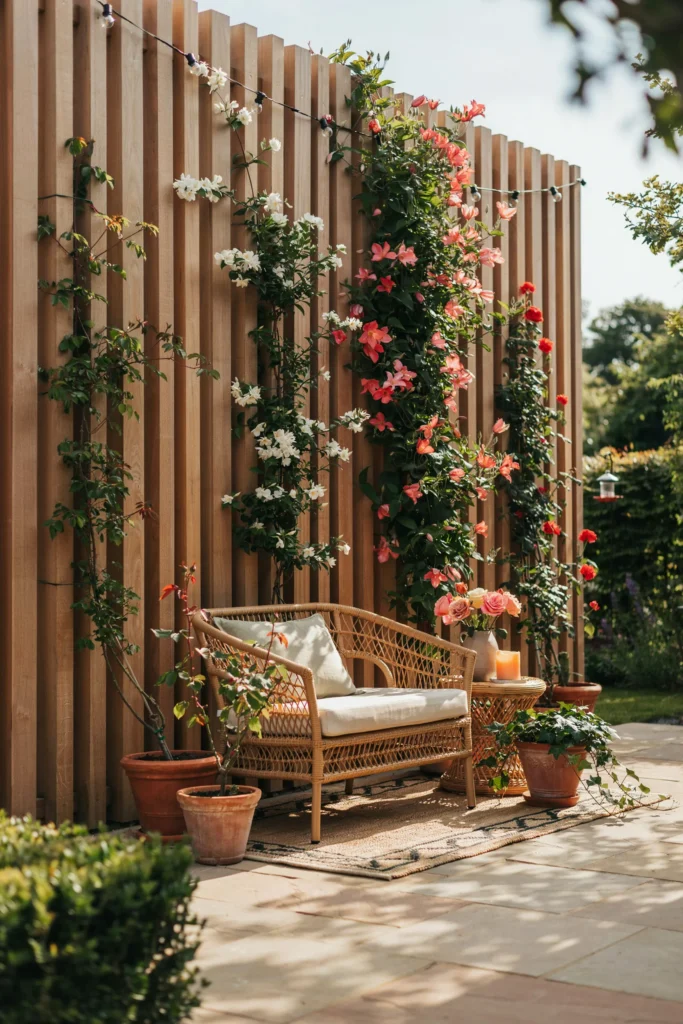
Vibe: Romantic, garden-dreamy, vine-lush.
Why It Works: Battens (thin vertical strips) create a refined framework that feels intentional rather than utilitarian. Combined with climbing vines, they create softness through contrast—hard architectural lines softened by organic growth. The partial vine coverage creates visual intrigue—you see through some areas, are blocked by others, creating depth and mystery. This hybrid approach is designer-approved because it balances structure with nature. The dreamy quality appeals psychologically to wellness and escape narratives.
EXPLORE ABOUT: 20 Cottagecore Dining Room Ideas That Feel Magical
How to Get It: Install vertical wood battens (2×2 or 2×3 untreated cedar) spaced 6 inches apart. Mount on sturdy frame posts. Plant fast-growing flowering vines at base (clematis, star jasmine, climbing roses). Install subtle trellising or wire guide system to direct vine growth horizontally across battens. Water consistently first year until vines establish. Pruning 2-3 times annually maintains coverage balance—avoid overwhelming the batten structure. Spring blooms provide seasonal freshness; many varieties flower multiple times yearly.
💡 Quick Win: Pre-made wooden batten panels with integrated trellis systems ($250-400 for 6×8) arrive ready-to-install—you only add plants and water, cutting DIY complexity dramatically.
Shop The Look
| Product | Style | Purpose |
|---|---|---|
| Wooden batten privacy screen vertical 6×8 | Wall structure | Privacy frame |
| Clematis flowering vine collection starter | Living cover | Vine growth |
| Metal trellis wire guide system | Growth support | Plant structure |
| Wicker outdoor furniture set | Romantic seating | Furniture anchor |
| Climbing plant potting soil | Growing medium | Plant base |
4. Living Green Wall, Vertical Ivy
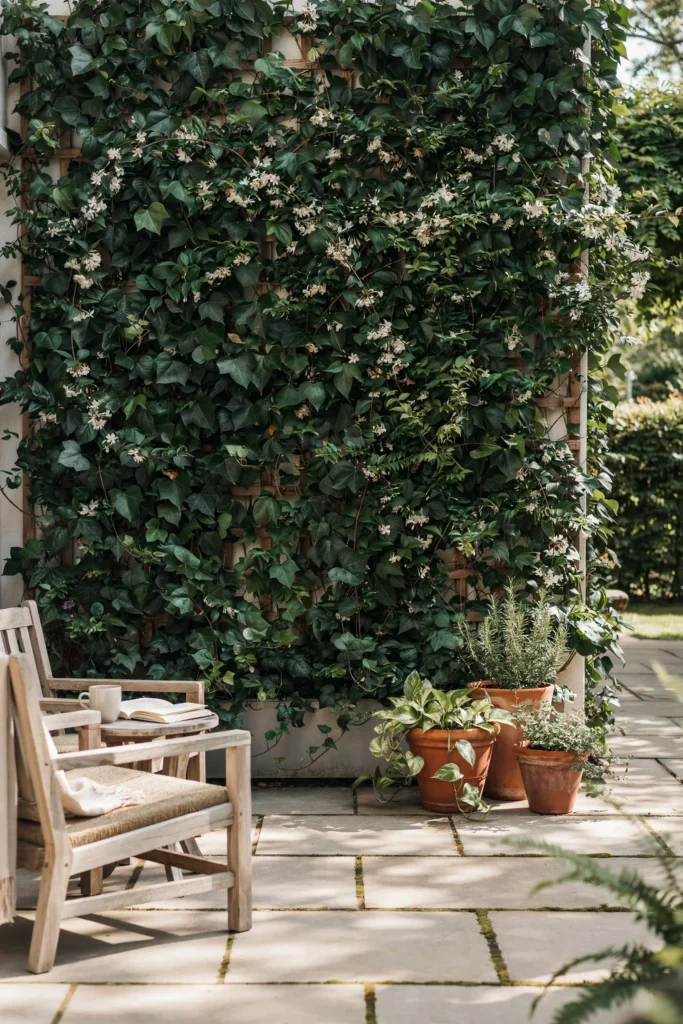
Vibe: Lush, alive, garden-secret.
Why It Works: Living walls solve privacy through nature itself, not construction—they’re inspired by vertical gardens and green architecture movements focused on urban cooling and biodiversity. Ivy naturally climbs and self-adheres, creating dense coverage that improves over seasons. The softness of foliage psychologically reads as welcoming rather than defensive. Green foliage reduces ambient temperature around the patio zone by 3-5°F, offers habitat for pollinators, and naturally dampens neighborhood noise better than rigid barriers.
How to Get It: Install a sturdy trellis or wire frame system (metal or wood) against your existing fence or posts. Choose fast-growing climbing varieties: Boston ivy (deciduous, red fall color), English ivy (evergreen, dense), star jasmine (fragrant, fast), clematis (flowering option). Plant at base in rich soil mixed with slow-release fertilizer. Water consistently first season; establish systems need less maintenance. Expect full coverage in 18-24 months. Prune annually to maintain shape and prevent overgrowth into roof or gutters.
💡 Quick Win: Buy mature, 3-year-old climbing ivy specimens (instead of small starter plants) from specialty nurseries—they reach half-coverage in one season, cutting your wait time dramatically.
Shop The Look
| Product | Style | Purpose |
|---|---|---|
| Heavy-duty metal trellis system 6×8 | Garden structure | Climbing frame |
| Mature climbing ivy Boston ivy | Living botanical | Green coverage |
| Garden soil with slow-release fertilizer | Foundation growing | Plant base |
| Wooden outdoor lounge chair teak | Rustic casual | Seating underneath |
| Terracotta planter containers 18-inch | Botanical accent | Base foreground |
5. Warm Taupe Slats, Soft Neutral
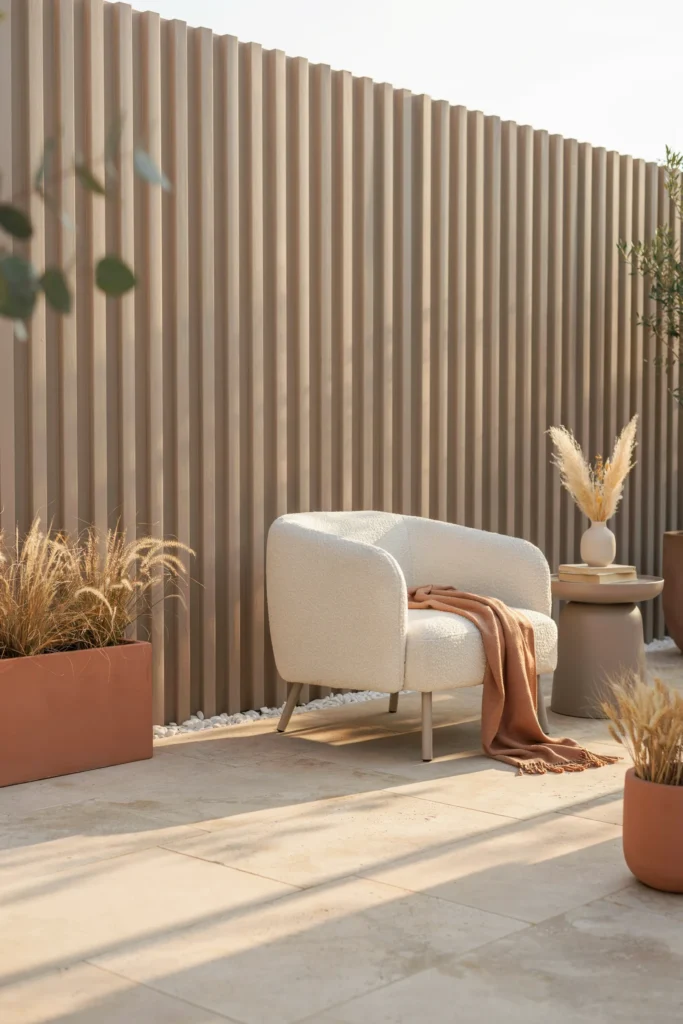
Vibe: Warm, inviting, soft-modern.
Why It Works: Warm taupe is the design sweet spot—it reads clean (not harsh gray) while feeling grounded and livable. Taupe privacy walls don’t demand attention; they recede visually, making adjacent furniture and plantings stand out. Vertical slats create height illusion, making compact yards feel airier. The warm undertone prevents the space from feeling cold or institutional. Taupe coordinates with almost every design style—from boho to Japandi to contemporary—making it versatile for future changes.
How to Get It: Choose composite slats in “warm taupe” or “greige” finish (brands like Trex, TimberTech, Polymex offer these exact tones). Composite eliminates wood rot, weather damage, and refinishing—just rinse annually. If using cedar, apply warm-toned stain (not paint) to show wood texture. Space vertically at 1-2 inches. Mount on treated posts using stainless steel hardware. The matte taupe finish resists showing dust and water spots better than gloss finishes, reducing visible maintenance.
💡 Quick Win: Pre-fabricated composite vertical slat panels in warm taupe colors ($300-500 for 6×8) install in one weekend, requiring no staining, sanding, or maintenance—just bolt and done.
Shop The Look
| Product | Style | Purpose |
|---|---|---|
| Composite vertical slat panels warm taupe 6×8 | Modern neutral | Privacy wall primary |
| Pressure-treated posts composite-wrapped | Durable structural | Support frame |
| Cream-colored outdoor sectional sofa | Soft contemporary | Seating anchor |
| Woven throw pillow in warm cream | Textile softening | Furniture accent |
| Dried pampas grass potted | Natural accent | Botanical foreground |
6. Two-Tone Slat Mix, Color Play
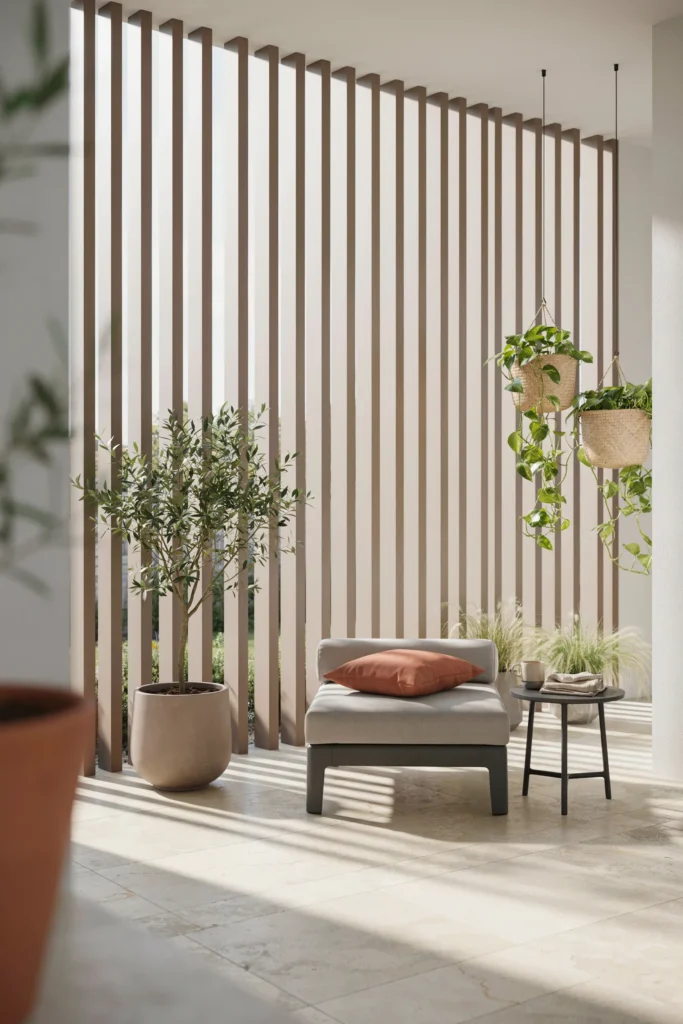
Vibe: Playful, textured, color-subtle.
Why It Works: Two-tone slat schemes combine modern playfulness with sophisticated restraint—the pattern moves beyond “simple fence” into intentional design. Alternating complementary neutrals (white + taupe, white + charcoal, gray + natural wood) create subtle visual rhythm without feeling childish. The pattern adds visual interest without sacrificing clean aesthetics. This approach works psychologically too—the human eye engages with repetitive patterns, making the space feel more dynamic and curated than single-tone walls.
How to Get It: Source two complementary slat finishes—think whitewashed cedar + warm taupe composite, or natural wood + painted charcoal. Plan your alternation pattern (every-other slat is simplest). Cut and stage slats before installation to ensure perfect alternation. Mount on evenly-spaced posts, alternating finishes as you work horizontally or vertically. Stagger joints if using multiple manufacturers—verify dimension compatibility before ordering 50+ slats. This approach requires precise planning but creates high-impact visual payoff.
💡 Quick Win: Alternate pre-stained and unpainted slats on an existing fence using exterior-grade wood stain or paint—instant pattern refresh without full reconstruction.
Shop The Look
| Product | Style | Purpose |
|---|---|---|
| Composite slats white vertical pack | Color component 1 | Wall primary |
| Composite slats warm taupe vertical pack | Color component 2 | Wall secondary |
| Aluminum composite posts silver | Structural support | Frame system |
| Modern hanging planter ceramic white | Accent bracket | Foreground softening |
| Potted ornamental grass specimen | Color complement | Botanical accent |
7. Corten Steel Rusted Screen
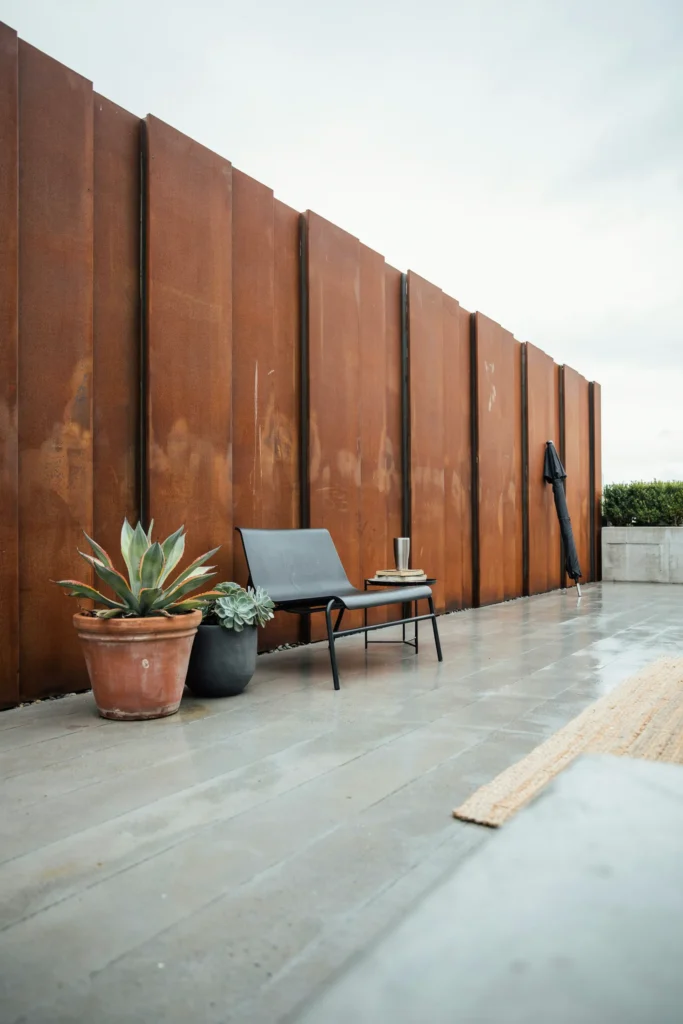
Vibe: Industrial, weathered, rust-warm.
Why It Works: Corten steel (weathering steel) creates sophistication through intentional deterioration—the rust patina is permanent, stopping rust progression and creating rich warm-brown finish. Unlike painted metal that chips or corrodes, Corten strengthens over time, making it sculptural and intentional. The material reads expensive and curated, not budget-conscious. It’s inspired by contemporary art installations and architectural design. Corten coordinates beautifully with concrete, minimalist furniture, and modern desert/industrial aesthetics.
How to Get It: Source Corten steel from architectural metal suppliers or industrial fabricators. It’s expensive ($50-80 per square foot) but lasts 50+ years with zero maintenance. Custom fabrication allows geometric or perforated patterns. If Corten exceeds budget, painted steel treated with rust-effect patina paint mimics the aesthetic (less durable, more affordable). Ensure proper drainage around Corten installation—surface water drainage prevents rust staining on adjacent surfaces. Professional installation is essential; Corten’s weight and installation complexity demand experience.
💡 Quick Win: Corten steel fence panels are now available pre-made from specialty outdoor retailers ($30-40 per linear foot)—more affordable than full-custom fabrication, faster installation than industrial welding.
Shop The Look
| Product | Style | Purpose |
|---|---|---|
| Corten steel privacy screen panel 6×8 | Industrial material | Wall primary |
| Industrial steel post frame system | Structural support | Frame assembly |
| Concrete paver outdoor flooring | Ground plane | Surface base |
| Industrial metal frame outdoor chair | Contemporary seating | Furniture anchor |
| Sculptural potted succulent agave | Modern botanical | Accent planting |
8. Louvered Panels, Adjustable Privacy
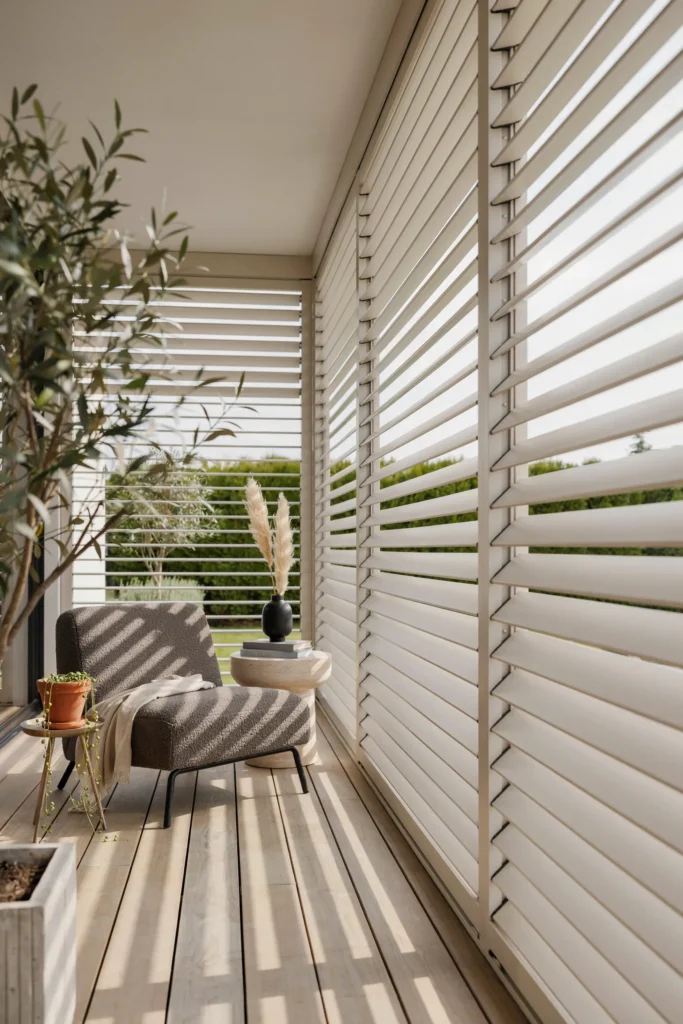
Vibe: Sophisticated, adjustable, light-control.
Why It Works: Louvered panels offer privacy flexibility—adjust angles to control light, sightlines, and shade throughout the day. The adjustability means you’re never stuck with a fixed design decision. Louvers create sophisticated shadow patterns that change dynamically. The mechanism feels high-tech and intentional, elevating the space beyond static privacy walls. Louvers work beautifully in Mediterranean, contemporary, and luxury minimalist aesthetics. The precision engineering communicates quality and thoughtfulness.
How to Get It: Source operable louvered panel systems from architectural hardware suppliers, high-end outdoor retailers, or custom fabricators. Most systems use aluminum or composite louvers on motorized or manual frames. Manual systems ($2,000-4,000 for 6×8) require hand-adjusting; motorized systems ($5,000-8,000) adjust via remote or app control. Installation requires structural engineering—weight and operating mechanism placement matter. Choose systems with ball-bearing hardware and sealed mechanisms to prevent weather damage and ensure long-term operation.
💡 Quick Win: Fixed louvered panels (non-adjustable angles) cost 40% less than operable systems ($900-1,500 for 6×8) and still deliver sophisticated aesthetic without mechanical complexity.
Shop The Look
| Product | Style | Purpose |
|---|---|---|
| Louvered privacy panel system 6×8 | Wall primary | Privacy structure |
| Aluminum frame structural support | Installation support | Mounting frame |
| Modern minimalist outdoor furniture | Contemporary seating | Furniture anchor |
| Potted sculptural plant specimen | Botanical accent | Foreground accent |
| Hidden landscape lighting kit | Ambient lighting | Evening enhancement |
9. Bamboo Screen Garden Aesthetic
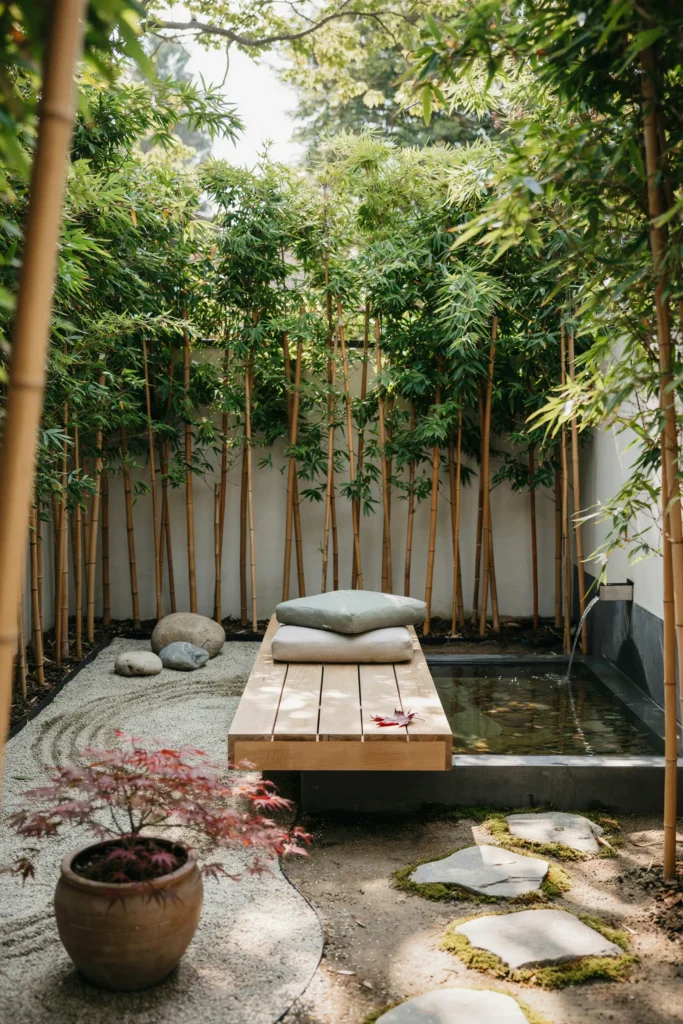
Vibe: Serene, zen, peaceful-meditative.
Why It Works: Bamboo embodies Eastern design philosophy—it’s sustainable, naturally beautiful, and psychologically calming. Living bamboo (or high-quality bamboo fencing) creates filtering rather than blocking, maintaining openness while ensuring privacy. Bamboo’s vertical energy guides the eye upward, expanding space perception. The subtle rustling sound (wind through leaves) adds ambient sensory dimension. Bamboo coordinates naturally with Japandi, meditation spaces, and wellness-focused outdoor living. The material feels intentional and culturally respectful when sourced responsibly.
How to Get It: Source either living bamboo (clumping varieties like Phyllostachys) or high-quality bamboo privacy fencing. Living bamboo requires containment (underground barriers) to prevent invasive spreading. Plant at 18-inch centers for dense coverage within 2-3 seasons. Water regularly first year; establish plants need less maintenance. Bamboo fencing (natural stalks lashed together or pre-made panels) installs immediately but lacks living quality. Choose sustainably-harvested bamboo certified by FSC or similar. Annual pruning maintains height and density; remove dead culms (stalks) to refresh appearance.
💡 Quick Win: Pre-made bamboo screen panels ($150-300 for 6×8) mount instantly without planting, watering, or years of growth—perfect for immediate zen aesthetic without long-term botanical commitment.
Shop The Look
| Product | Style | Purpose |
|---|---|---|
| Bamboo privacy screen fencing 6×8 | Wall primary | Privacy structure |
| Living clumping bamboo plants | Living growth | Natural coverage |
| Low wooden platform bench | Zen seating | Meditation anchor |
| Potted Japanese maple specimen | Botanical focal | Landscape accent |
| Water feature stone basin | Zen element | Sensory detail |
10. Natural Wood Cedar Wall
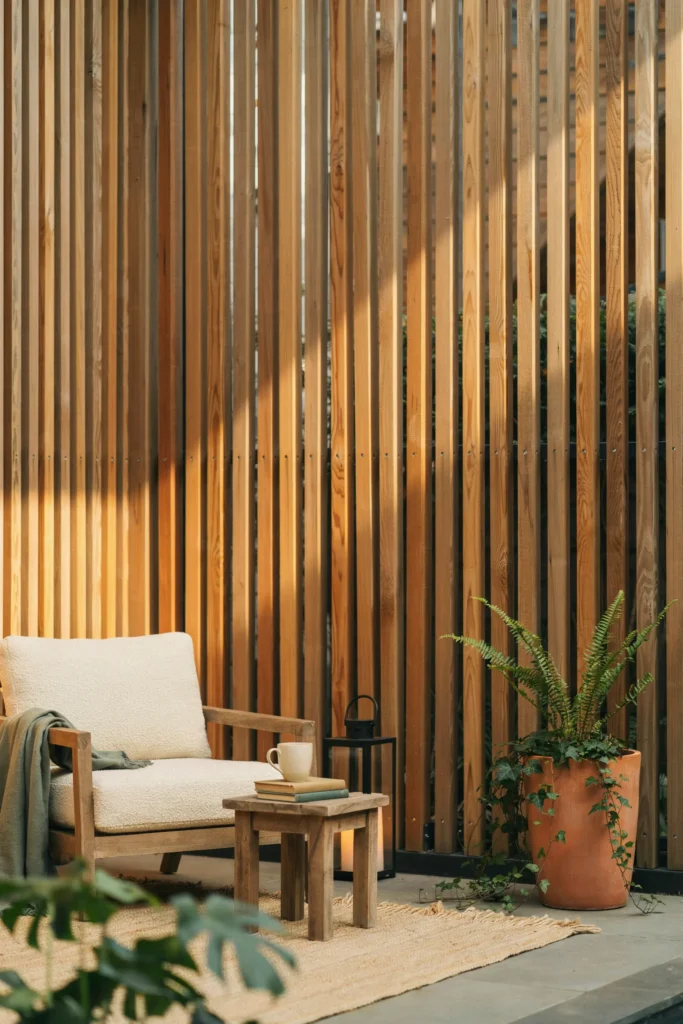
Vibe: Warm, organic, wood-textured.
Why It Works: Raw cedar embraces imperfection—natural grain variation, knots, and color shifts make the wall feel organic and alive, not manufactured. Cedar’s warm honey-gold tone coordinates naturally with skin tones and botanical plantings. The open grain texture catches light differently than painted surfaces, creating depth. Cedar is emotionally warm—studies show humans respond positively to visible natural wood, perceiving it as more trustworthy and less institutional than composite or metal alternatives.
How to Get It: Select untreated or lightly-stained cedar (vertical grain preferred for visual continuity). Apply clear, water-based finish (not paint) to protect from weather while preserving grain visibility. Plan for natural weathering—cedar weathers gracefully to silvery gray over 3-5 years if left unfinished, creating patina character. Space slats 1-2 inches apart for privacy while showing sky. Cedar requires annual inspection for rot (especially at post bases) and occasional sanding of weathered surfaces to maintain intended appearance.
💡 Quick Win: Pre-fabricated vertical cedar screen panels from garden centers ($200-350 for 6×8) install quickly and arrive pressure-treated, eliminating first-year rot risk—perfect for cedar lovers who want low maintenance.
Shop The Look
| Product | Style | Purpose |
|---|---|---|
| Raw cedar vertical slat fence boards | Wall primary | Privacy structure |
| Clear water-based wood sealer | Protective finish | Wood preservation |
| Untreated cedar posts 6×6 | Structural frame | Post system |
| Wooden outdoor lounge chair teak | Rustic seating | Furniture anchor |
| Woven basket plant holder | Warm accent | Foreground styling |
11. Composite Horizontal + Vertical Mixed
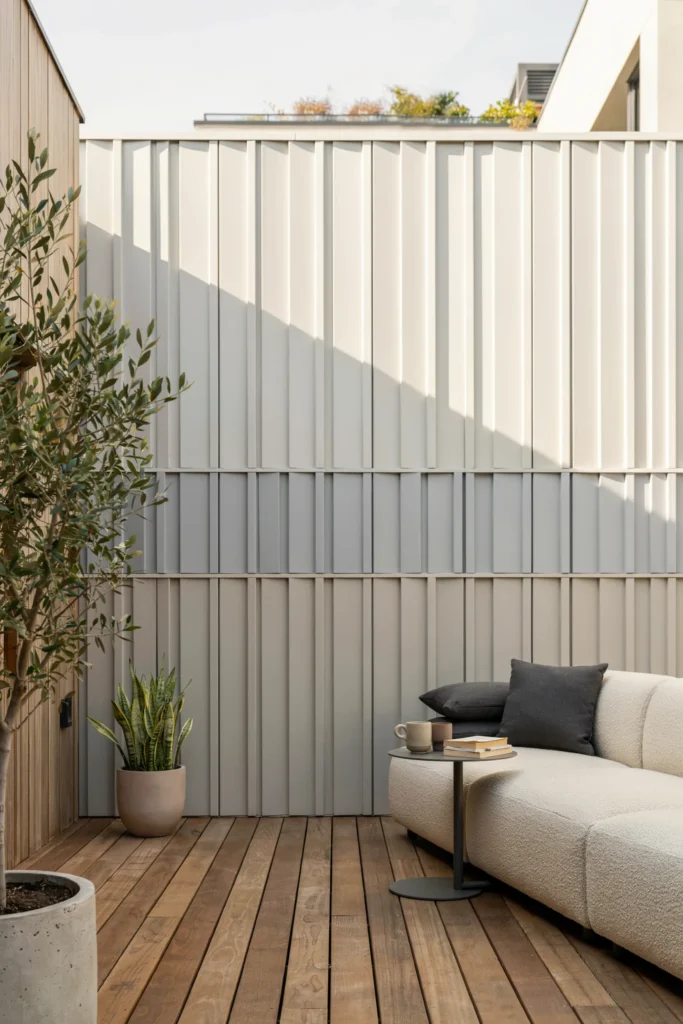
Vibe: Modern, textured, rhythm-dynamic.
Why It Works: Mixed-direction slats create dynamic visual tension—horizontal feels calm, vertical feels energetic, mixing them balances both qualities. The changing direction breaks visual monotony while maintaining clean aesthetic. Geometric patterns engage the eye without needing color variation or additional decor. This approach is inspired by contemporary architectural facades and mid-century design movements. The pattern works in photographs, creating strong compositional lines that make the space feel intentional and curated.
How to Get It: Plan your mixed-slat pattern on graph paper first—visualize the geometric rhythm before ordering materials. Use composite slats (dimensional consistency matters more than wood). Mount horizontal slats in one section, vertical in adjacent area. Stagger joints at intersection points for seamless appearance. Ensure posts are perfectly plumb—mixed directions amplify any structural imperfection. Pre-fabricated mixed-pattern composite panels are available but custom installations offer better creativity and proportion to your specific wall dimensions.
💡 Quick Win: Sketch your desired mixed-pattern on existing fence sections with chalk—visualize before committing to full installation, testing whether rhythm feels balanced.
Shop The Look
| Product | Style | Purpose |
|---|---|---|
| Composite slat mixed pattern panels | Wall primary | Privacy structure |
| Composite posts structural support | Frame support | Structural frame |
| Modern concrete outdoor seating | Contemporary furniture | Seating anchor |
| Architectural potted plant agave | Modern botanical | Accent plantings |
| Minimal side table concrete | Contemporary accent | Surface function |
12. Stone Veneer Wall
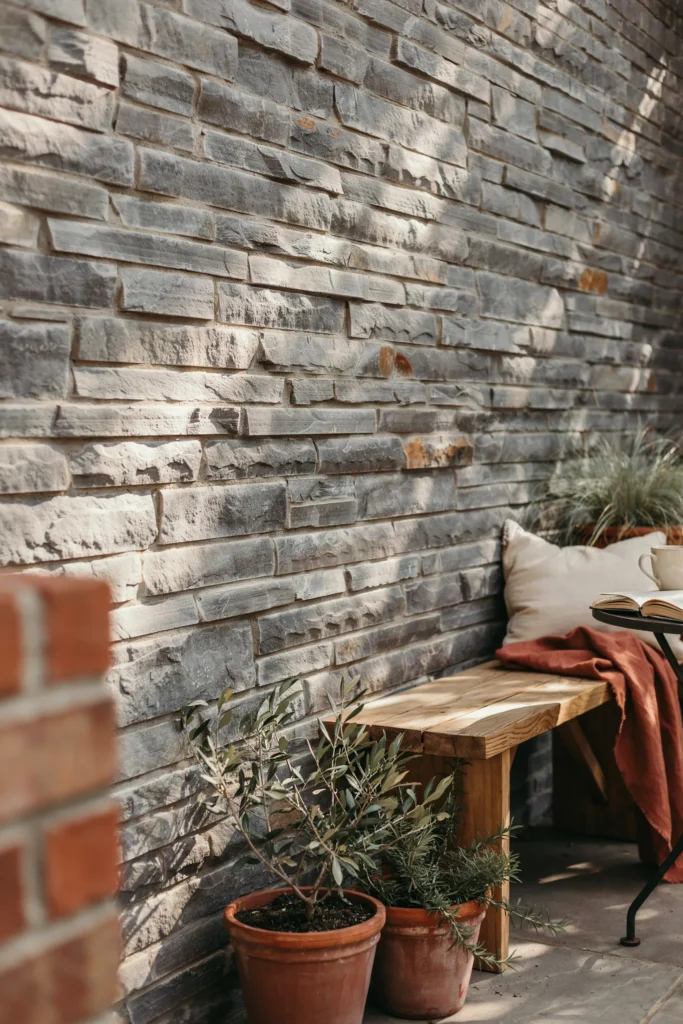
Vibe: Grounded, textured, stone-warm.
Why It Works: Stone veneer introduces weight, permanence, and organic texture that wood and metal cannot match. Warm gray stone (not cold gray) reads sophisticated and grounded without feeling cold or fortress-like. Stone is naturally beautiful—minimal additional decor needed. The material’s mass creates psychological security while its texture engages the eye. Stone coordinates beautifully with natural plantings and warm wood furnishings. Stone veneer feels intentional and expensive, elevating the entire patio aesthetic.
How to Get It: Source stone veneer in warm gray tones from masonry suppliers or landscape stone retailers. Stacked slate effect, tumbled limestone, or engineered stone panels all work. Install over rigid substrate (concrete, sturdy wood frame) using stone adhesive or mortar. Professional installation is essential—improper substrate preparation causes failure. Veneer thickness varies (2-4 inches); thinner veneer is lighter, easier to install but reads less substantial. Budget includes substrate, adhesive, mortar, grout, sealing—expect $80-150 per square foot installed.
💡 Quick Win: Pre-fabricated stone veneer panels (lightweight engineered stone) mount like large tiles with construction adhesive, installing faster and cheaper than traditional stone masonry.
Shop The Look
| Product | Style | Purpose |
|---|---|---|
| Stone veneer panels warm gray stacked | Wall primary | Privacy structure |
| Stone adhesive construction grade | Installation material | Mounting system |
| Rustic wooden outdoor bench | Furniture anchor | Seating integration |
| Potted terracotta plants warm tones | Botanical accent | Foreground softening |
| Warm linen outdoor cushions | Textile comfort | Furniture softening |
13. Frosted Glass Panel
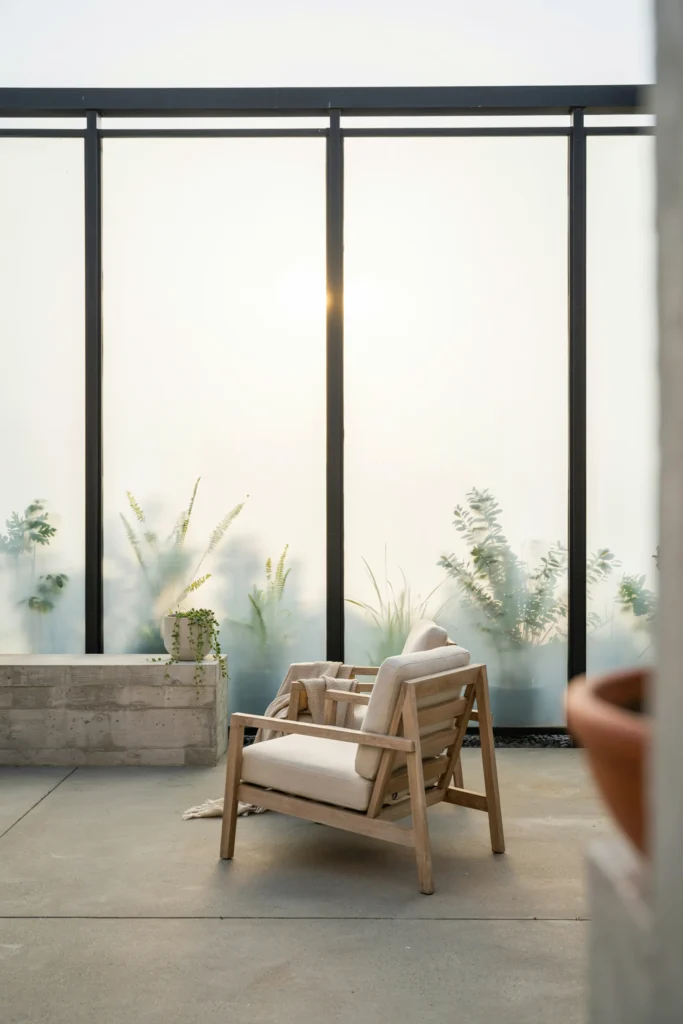
Vibe: Luminous, serene, light-diffused.
Why It Works: Frosted glass solves the privacy paradox—it hides details while allowing light and silhouettes to pass through, preventing the harsh “fortress” feeling of opaque barriers. The diffused light quality is psychologically calming, creating soft ambient glow even at midday. Frosted glass reflects light differently throughout the day, making it dynamic. Glass is hygienic, requires minimal maintenance, and communicates luxury and intentionality—especially useful in compact urban yards where psychological openness matters.
How to Get It: Source tempered frosted glass panels (tempered = safety standard for outdoor use) from commercial glazing suppliers or specialty outdoor retailers. Standard frosted finish obscures details within 6 feet; deeper frosting ensures privacy. Mount in aluminum or stainless steel frames (powder-coated black or silver). Frameless installation requires professional engineering—edge-mounted glass panels without visible frame cost premium but photograph exceptionally well. Tempered glass is unbreakable, shatter-resistant, and thermally neutral, making it ideal for hot climates.
💡 Quick Win: Frosted glass film applied to existing clear glass panels ($15-30 per square foot) creates frosted effect instantly without full panel replacement—reversible if you change design direction.
Shop The Look
| Product | Style | Purpose |
|---|---|---|
| Tempered frosted glass panel 6×8 | Modern material | Privacy screen |
| Aluminum frame system silver | Structural support | Frame system |
| Minimalist concrete outdoor stool | Modern seating | Furniture accent |
| Potted fern specimen | Soft botanical | Foreground planting |
| Black metal minimal outdoor chair | Contemporary furniture | Seating anchor |
14.Charcoal Slatted Wall
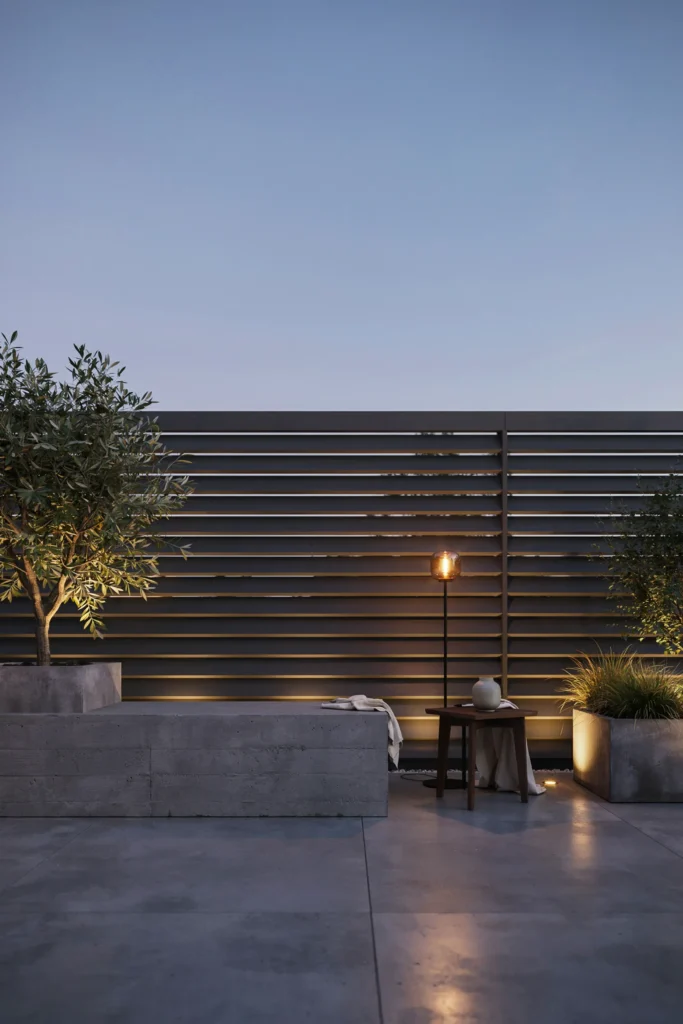
Vibe: Moody, sophisticated, drama-lit.
Why It Works: Charcoal privacy walls create visual contrast against lighter patio zones, anchoring the space with weight and intention. Unlike warm taupe, charcoal reads bold without being harsh—it’s design-forward. The darker finish absorbs heat (reducing glare) while creating dramatic shadow interplay throughout the day. Charcoal reads luxe in evening light when landscape lighting is introduced. It photographs exceptionally well on social media, making the space feel more curated and intentional than neutral tones.
How to Get It: Select cedar, composite, or hardwood slats in true charcoal or “weathered gray” finish. Cedar naturally weathers gray over 3-5 years but starts brown—stain with charcoal wood stain for immediate impact. Composite charcoal options from Trex or Tamko eliminate staining entirely. Match landscape lighting to your design: warm amber uplighting softens the charcoal, cool spotlighting creates drama. Professional lighting installation (engineer-grade fixtures, hardwired) costs more but transforms the wall into an evening focal point.
💡 Quick Win: Paint existing wood fence or lattice walls with charcoal exterior fence paint ($30-50 per gallon) in one weekend—instant drama without full reconstruction.
Shop The Look
| Product | Style | Purpose |
|---|---|---|
| Charcoal composite slat panels horizontal 6×8 | Contemporary dramatic | Privacy wall |
| Warm amber LED landscape uplighting kit | Accent lighting | Evening drama |
| Concrete modern bench low-profile | Minimalist seating | Ground-level sitting |
| Sculptural ceramic planter tall charcoal | Art accent | Focal accent |
| Specimen shrub in sculptural planter | Botanical minimalism | Plant focal point |
How to Start Your Privacy Wall Transformation
The One First Move: Measure + Decide Location
Your first action is specific—measure your space and decide which wall anchors your privacy need. Are you blocking a neighbor’s direct sightline? Screening a utility area? Creating an intimate seating zone? This single decision determines everything: wall height (typically 4-6 feet), length, material choice, and budget. A wall that addresses the core problem (not aesthetic fantasy) feels grounded and worth the investment. Measure twice, photograph angles from sitting-eye-level, and determine whether you need a full perimeter wall or one strategic section.
The Most Common Mistake: Wrong Material for Your Climate
The mistake: choosing cedar privacy walls in humid, high-rainfall climates without planning for rot. Cedar is beautiful but requires maintenance in moisture-heavy environments. In coastal zones, salt air degrades untreated wood. In dry climates, wood shrinks and cracks, splitting beautiful grain patterns. In arid regions, natural wood works beautifully. The fix: match material to climate. Humid environments = composite or metal. Salt air = powder-coated steel or aluminum. Rainy temperate zones = composite or stone. Your material choice determines 10 years of success or constant frustration.
Budget Entry Points: Three Specific Items Under $50 Each
Get started immediately with these three items: (1) A single pre-made bamboo or woven willow privacy panel section ($25-40)—test the concept on one small wall before committing to full installation. (2) A horizontal cedar slat privacy screen panel (6×8 feet, $35-45)—position against existing fence to visualize the look before installing permanently. (3) Climbing vine specimens + potting soil ($40-50 total)—start training vines on whatever structure exists, planting the living wall even if permanent structure isn’t built yet.
Realistic Expectations: Timeline and Budget
A starter privacy wall (one 6-foot-tall, 8-foot-long section) ranges $400-1,200 installed, depending on material: bamboo/basic wood on the low end, stone/louvered systems on the high end. DIY installation (if you’re handy) cuts labor costs 40-50%. Timeline: basic wood walls install in 1-2 weekends; stone/metal requires 2-4 weeks for foundation, curing, professional installation. A full-perimeter privacy wall (30+ linear feet) costs $3,000-8,000 installed. Expect living green walls to reach full coverage in 18-24 months. Budget for post-installation plantings ($200-500) to soften the wall visually.
Ready to Create Your Dream Privacy Wall Patio?
These 14 privacy wall ideas prove that functional barriers can become design statements—from soft green living walls to dramatic charcoal slats to zen bamboo screens, your wall becomes the patio’s anchor. Starting with one strategic section teaches you what works in your light, space, and style before committing to full installation. Choose one idea that genuinely excites you (not the “safest” option), and commit to that specific direction—your confidence will show in how the space feels.
Your finished privacy wall will reshape how you experience your outdoor space. Privacy walls don’t just block views; they create containment, intention, and the psychological safety that makes outdoor living feel like a true room extension rather than exposed yard. Today, take one concrete action: measure your space, identify your primary sightline to block, and photograph your patio from seated eye-level—these three steps clarify which of these 14 designs actually solve your specific problem. Then save your top three favorite ideas to revisit when you’re ready to invest. The best privacy wall is the one that makes you actually want to spend time outside.
One Comment