
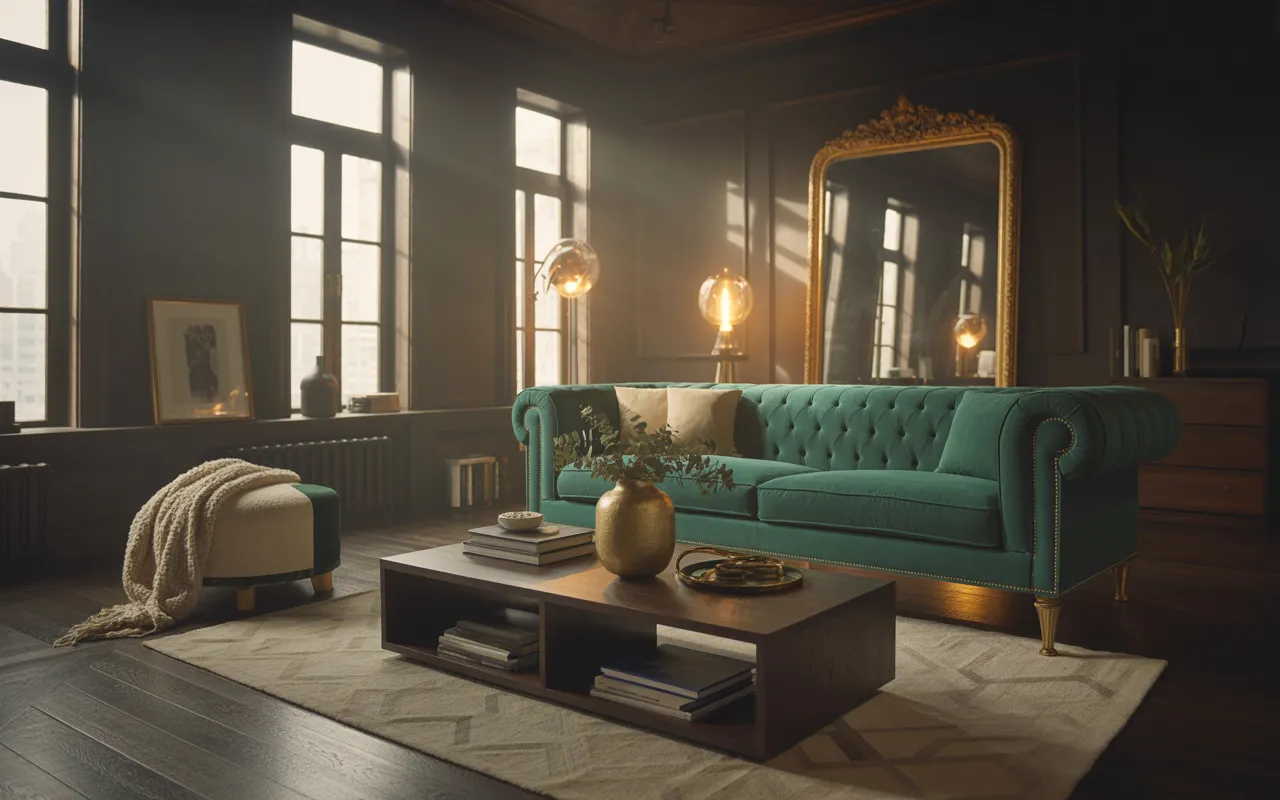
15 Moody Living Room Ideas with Bold Decor
Moody living rooms embrace deep, saturated colors and dramatic contrasts to create spaces that feel intimate and enveloping. This article delivers fifteen bold decor ideas that transform ordinary rooms into atmospheric retreats with serious design impact.
There’s something undeniably alluring about a room that wraps you in shadow and depth. The shift from bright, airy spaces to moody interiors represents a cultural craving for sanctuary—places where we can retreat from the constant stimulation of modern life. Think velvet moss-green sofas, walls the color of espresso, brass catching candlelight, and rooms that feel like they’re exhaling. Here are fifteen ideas worth saving—and stealing.
Why Moody Living Room ideas Work So Well
Moody design traces its roots to 19th-century Victorian interiors and the dramatic chiaroscuro of Baroque painting, where light and shadow became storytelling tools. Unlike minimalist or Scandinavian styles that prioritize brightness, moody rooms intentionally embrace darkness as a design element. This aesthetic gained mainstream traction through dark academia and the resurgence of maximalism, offering a counterpoint to the sterile, all-white interiors that dominated the past decade.
The material palette centers on velvets, woods, and metals with substantial weight. Think charcoal walls, olive-green upholstery, oil-rubbed bronze fixtures, and mahogany case goods. These materials absorb light rather than reflect it, creating that signature enveloping quality. Rich jewel tones like aubergine, emerald, and navy serve as foundational colors, while brass and gold provide necessary warmth.
We’re seeing a collective shift away from performative brightness toward spaces that prioritize emotional comfort. Pinterest reports a 340% increase in searches for “dark interiors,” driven by post-pandemic nesting and the desire for spaces that feel like escapes rather than showrooms. The trend reflects a deeper cultural need for respite—rooms that don’t demand performance but offer genuine restoration.
Small spaces can absolutely achieve this look—in fact, they often excel at it. The key is prioritizing one dark accent wall rather than painting all four, and using mirrors strategically to prevent the space from feeling closed in. Good lighting becomes even more critical: layered sources at different heights prevent flatness. Small rooms should lean into the coziness rather than fighting it with oversized furniture or overly light colors that can feel washed out.
Style at a Glance
| Element | Core Trait |
|---|---|
| Philosophy | Enveloping sanctuary |
| Key Materials | Velvet, dark wood, brass, leather |
| Key Colors | Charcoal, emerald, aubergine, navy, espresso |
1. Midnight Blue Cocoon
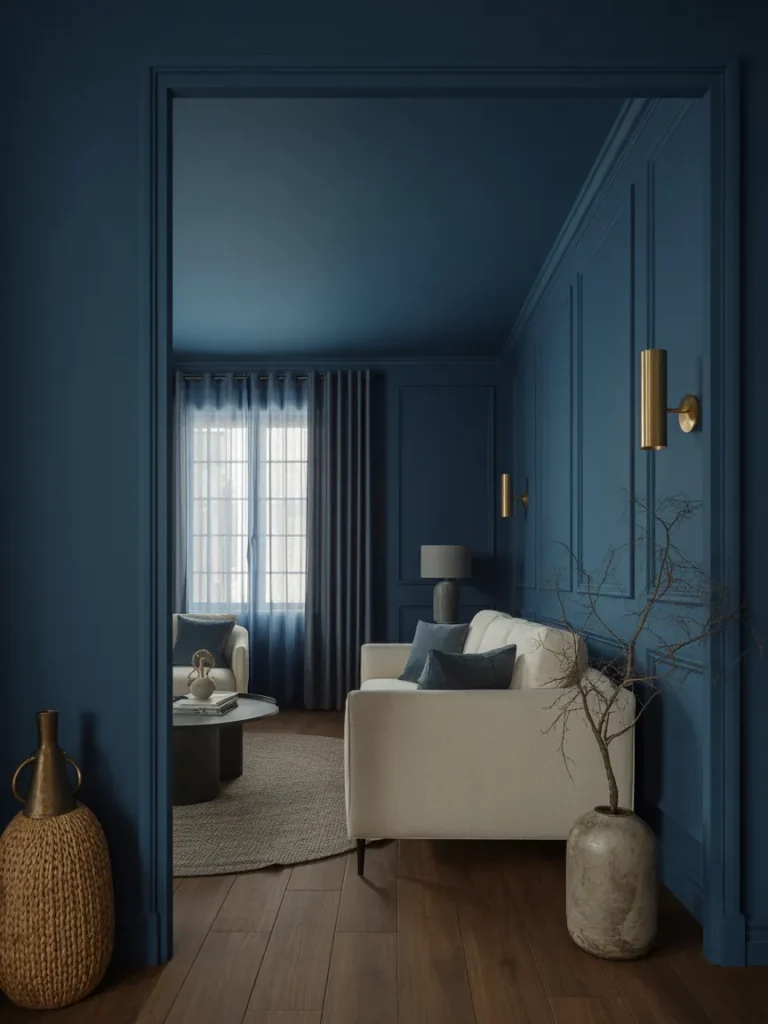
Vibe: Hushed and grounded
Why it works: The contrast between deep navy walls and cream upholstery creates visual tension while maintaining balance. Dark walls recede visually, making the space feel larger than it actually is.
How to get it: Paint walls in Benjamin Moore’s Hale Navy or Farrow & Ball’s Hague Blue. Layer in cream textiles and brass accents to keep the room from feeling like a cave.
Quick Win: Add a single brass floor lamp to instantly warm up a dark space.
Shop The Look
| Product | Description |
|---|---|
| Navy velvet accent chair | Modern armchair with walnut legs |
| Cream linen sofa | Slipcovered 3-seater with feather cushions |
| Brass arched floor lamp | Mid-century modern with marble base |
| Dark oak coffee table | Live-edge with black metal legs |
| Woven wool throw blanket | Cream herringbone weave |
2. Emerald Green Velvet
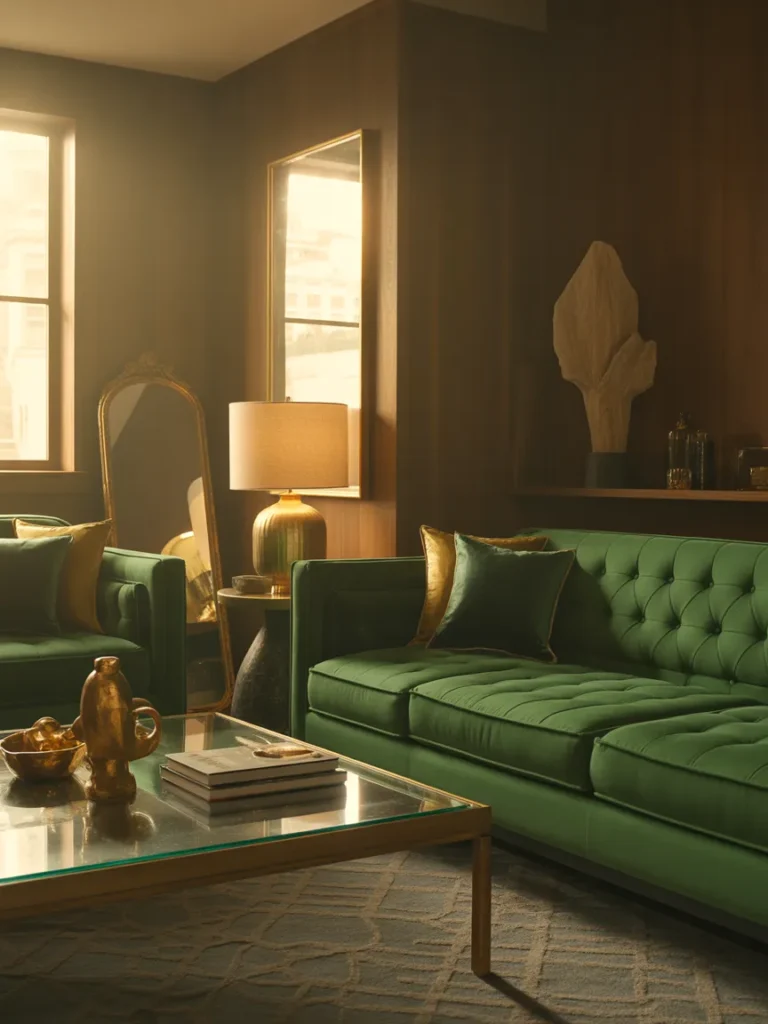
Vibe: Lush and regal
Why it works: Velvet’s light-absorbing qualities create depth, while the jewel tone adds warmth and sophistication. The combination reads as luxurious without being cold.
How to get it: Invest in a velvet sofa in a deep green or sapphire shade. Pair with warm metallic accents—gold works beautifully—and choose a rug with some pattern to anchor the space.
Shop The Look
| Product | Description |
|---|---|
| Emerald velvet sofa | Tufted 3-seater with gold legs |
| Gold floor mirror | Arched frame, 72-inch tall |
| Geometric wool rug | Persian-inspired in cream and charcoal |
| Brass table lamp | Ceramic base with linen shade |
| Dark walnut side table | Mid-century round with shelf |
3. Charcoal Textured Walls
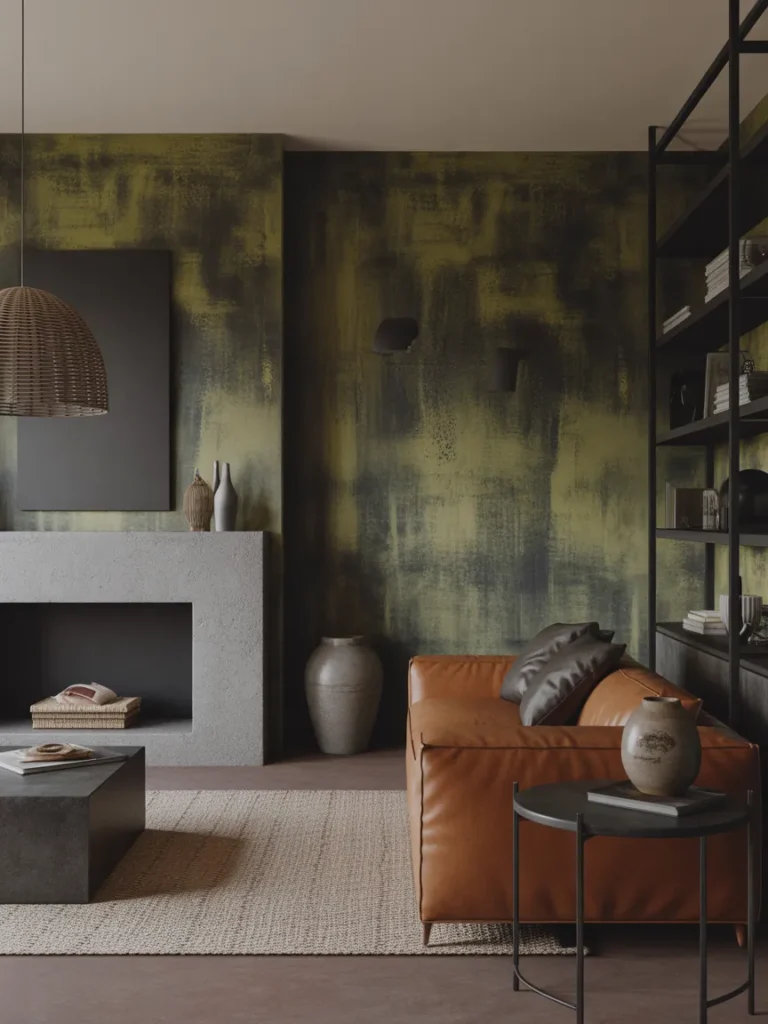
Vibe: Raw and substantial
Why it works: Texture prevents dark walls from feeling flat. Limewash absorbs and reflects light differently than flat paint, creating subtle movement across the surface.
How to get it: Apply limewash or Roman clay in a warm charcoal tone rather than flat black. These materials bring depth and tactile quality to walls that paint alone cannot achieve.
Quick Win: Paint an accent wall with limewash—it’s forgiving to apply and creates instant drama.
Shop The Look
| Product | Description |
|---|---|
| Limewash paint kit | Charcoal tone, matte finish |
| Cognac leather sectional | Deep seating with track arms |
| Concrete coffee table | Round with metal base |
| Black steel pendant light | Industrial cage design |
| Ceramic vase | Hand-thrown in warm taupe |
4. Brass and Black Contrast
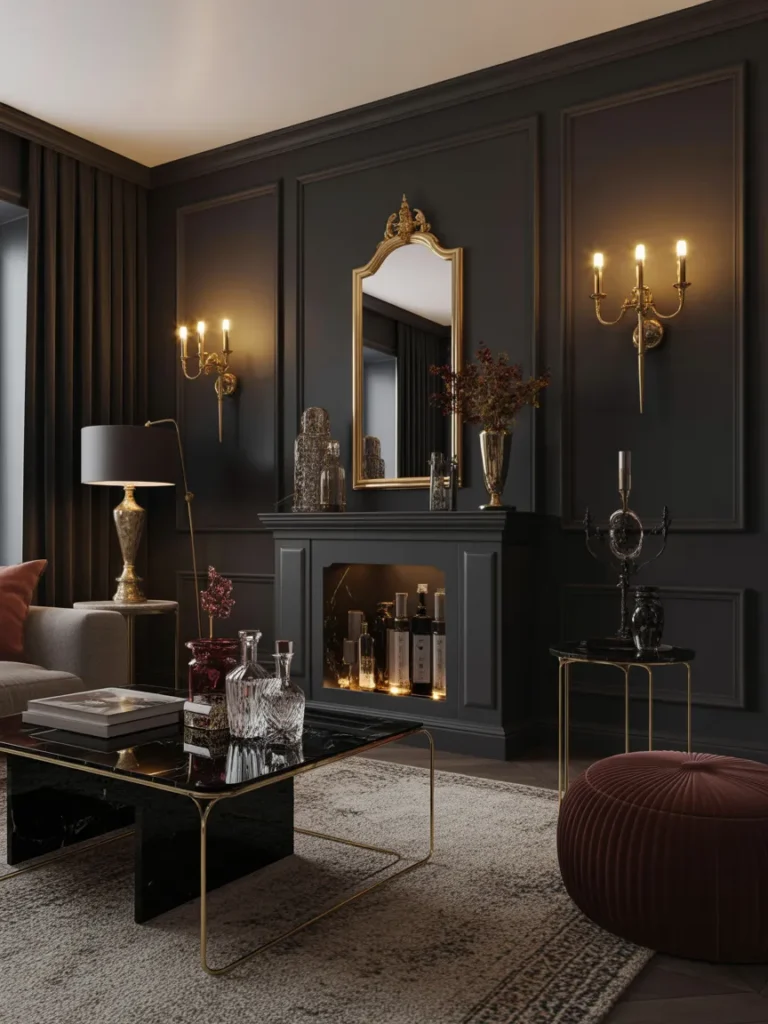
Vibe: Dramatic and poised
Why it works: The high contrast between matte black and polished brass creates visual electricity. Brass acts as a warm counterpoint, preventing black from feeling oppressive.
How to get it: Use matte black paint on a single focal wall. Add brass lighting fixtures and hardware, keeping the metal finish consistent throughout for cohesion.
Shop The Look
| Product | Description |
|---|---|
| Black matte paint | Low-sheen, washable finish |
| Brass wall sconces | Pair, vintage-inspired backplate |
| Ornate gold mirror | Rectangle, beveled glass |
| Black marble coffee table | Round with gold base |
| Burgundy velvet pouf | Round, tufted top |
5. Terracotta Warmth
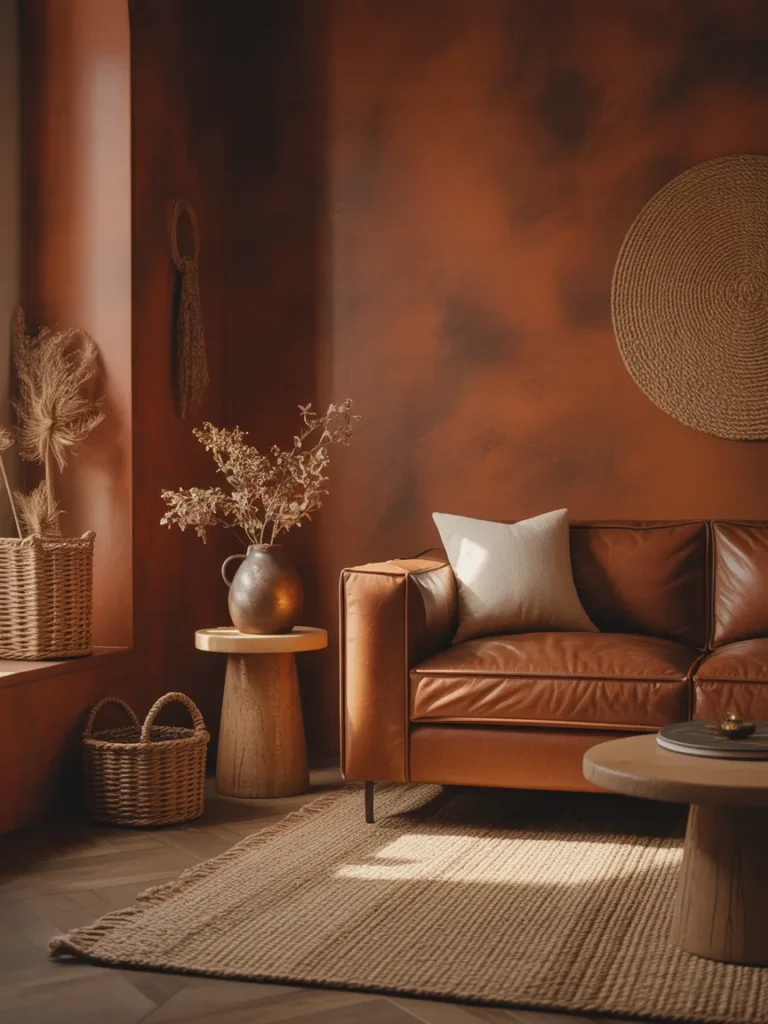
Vibe: Sun-baked and comforting
Why it works: Terracotta brings the warmth of natural earth pigments into interior spaces. It’s a moody color that still feels approachable and grounded.
How to get it: Use a warm terracotta paint with brick undertones—Farrow & Ball’s Red Earth works beautifully. Pair with cognac leather and natural textures like jute or linen.
EXPLORE MORE ABOUT: 15 Breathtaking Bathroom Tiles Ideas for Modern Bathrooms
Quick Win: Paint just the fireplace surround or one wall in terracotta to test the color before committing.
Shop The Look
| Product | Description |
|---|---|
| Terracotta wall paint | Matte finish, warm earth tone |
| Cognac leather sofa | Mid-century with wood legs |
| Jute area rug | 8×10, handwoven natural |
| Wood side table | Turned legs, carved detail |
| Ceramic jug vase | Hand-thrown terracotta |
6. Plaid Layer
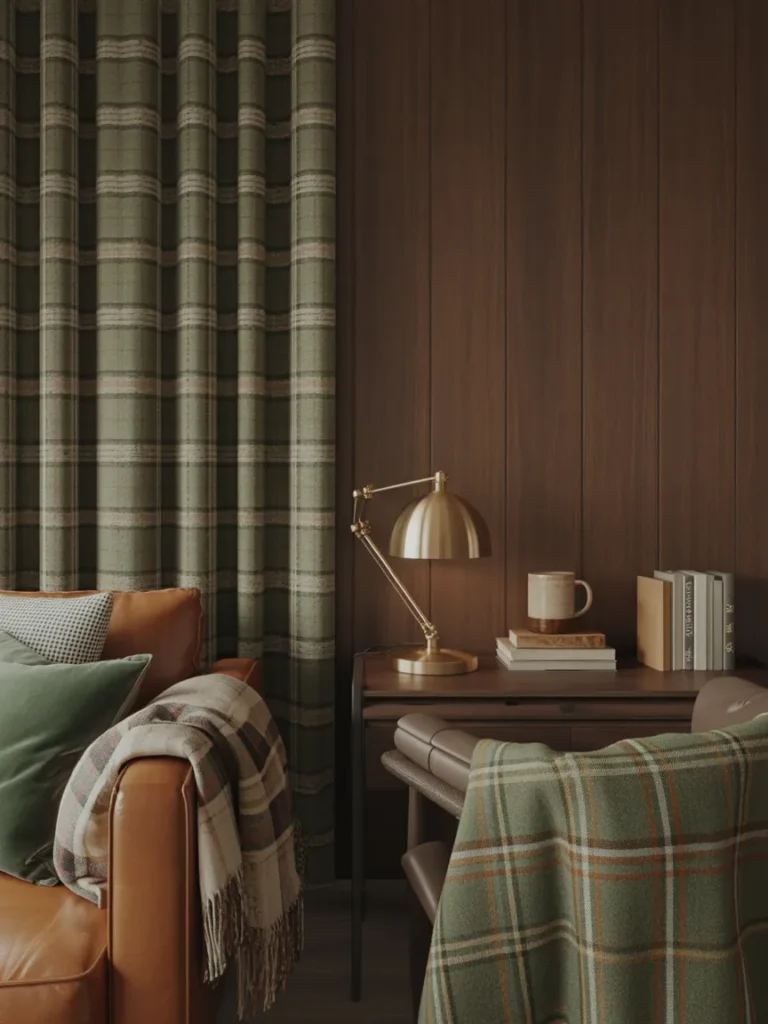
Vibe: Wrapped and cozy
Why it works: Traditional patterns feel fresh when surrounded by dark walls. The plaid introduces visual interest and texture while reinforcing the room’s cozy identity.
How to get it: Layer a plaid wool throw over a leather armchair. Consider dark wood furniture or paneling to establish the moody foundation.
Shop The Look
| Product | Description |
|---|---|
| Plaid wool throw | Forest green and cream weave |
| Leather wingback chair | Cognac with brass nails |
| Dark wood paneling | Faux wood wall panels |
| Brass desk lamp | Banker’s style with green shade |
| Rust velvet pillow | Square, knife-edge |
7. Asymmetrical Lighting
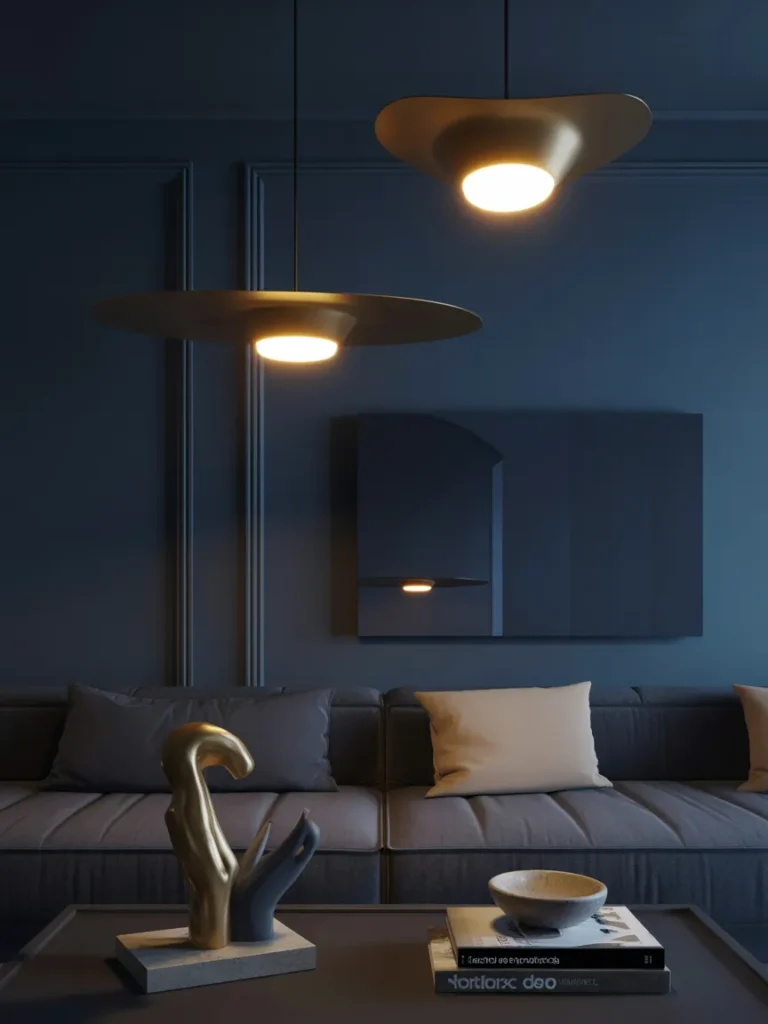
Vibe: Sculptural and dynamic
Why it works: Asymmetrical lighting draws the eye upward and creates visual interest without relying on art or furniture. It’s a ceiling-level design statement.
How to get it: Hang two pendant lights at different heights on either side of a seating area. Choose fixtures with sculptural quality rather than purely functional shapes.
Quick Win: Replacing a single overhead fixture with two pendants at different heights instantly creates drama.
Shop The Look
| Product | Description |
|---|---|
| Navy wall paint | Eggshell finish |
| Brass pendant light | Cone shape, adjustable chain |
| Glass pendant light | Globe, clear with brass cap |
| Modern sectional | Charcoal performance fabric |
| Sculptural ceramic vase | Hand-thrown on wood base |
8. Woven Texture
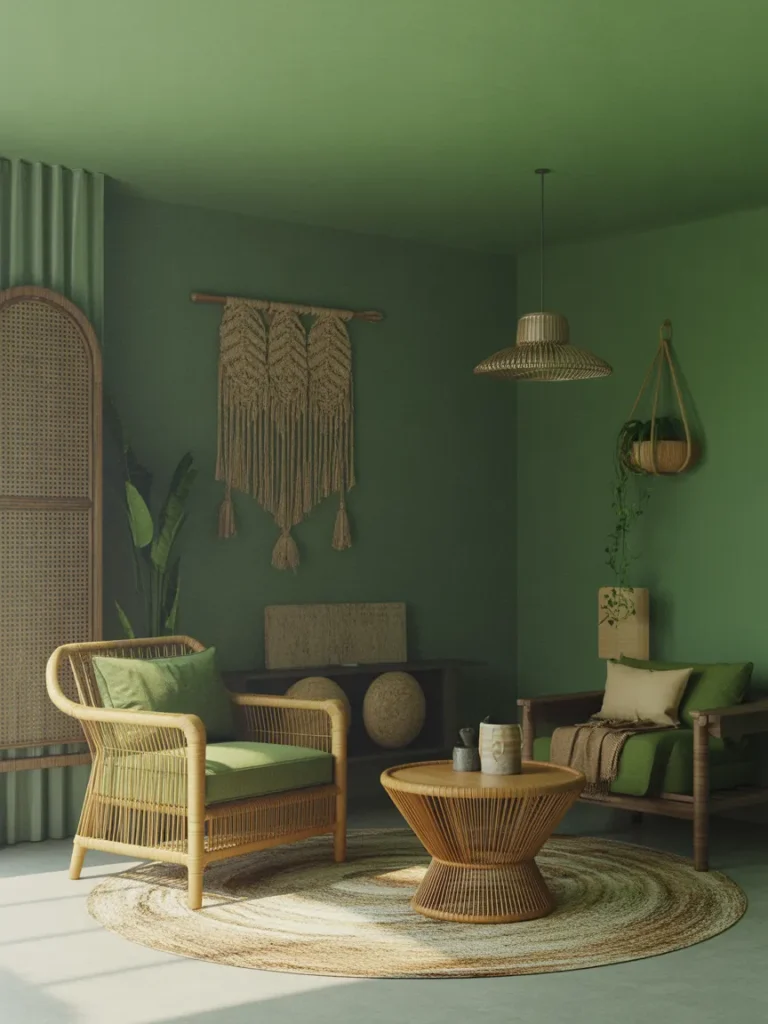
Vibe: Organic and tactile
Why it works: Natural materials like rattan and jute provide essential warmth and texture in dark rooms. They create balance and prevent the space from feeling too heavy.
How to get it: Incorporate a large woven wall piece or mirror frame. Choose rattan furniture pieces that allow light to pass through, maintaining openness while adding texture.
Shop The Look
| Product | Description |
|---|---|
| Forest green paint | Matte, deep pigment |
| Woven wall hanging | Large circular design |
| Rattan armchair | Peacock style with cushion |
| Macrame plant hanger | Cotton, holds 6-inch pot |
| Brass side table | Round, hairpin legs |
9. Gallery Wall Drama
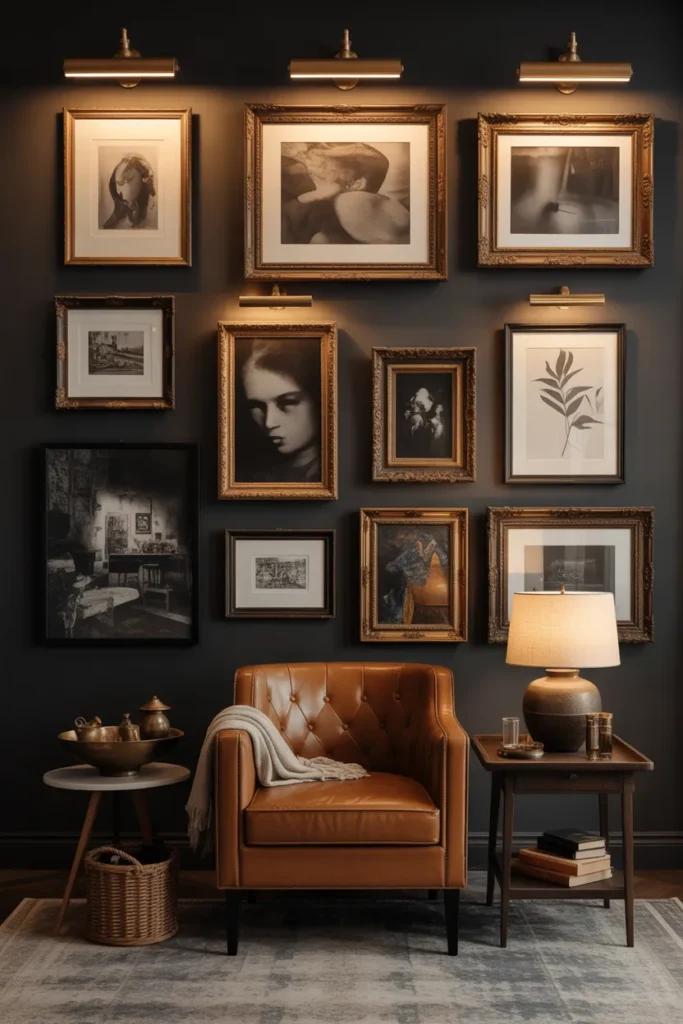
Vibe: Curated and intellectual
Why it works: A gallery wall draws attention upward and creates a focal point that anchors the room. Dark art against dark walls reads as mysterious rather than overwhelming.
How to get it: Collect black and white photography, botanical prints, or abstract art in various sizes. Frame them in gold or dark wood and group them tightly.
Quick Win: Shop thrift stores for mismatched gold frames—they’ll look intentional when grouped together.
Shop The Look
| Product | Description |
|---|---|
| Deep gray paint | Matte, warm undertone |
| Gallery frame set | Assorted gold and dark wood |
| Picture lights | Brass, plug-in style |
| Leather armchair | Dark brown, tufted back |
| Ceramic table lamp | Matte black with linen shade |
10. Floor-to-Ceiling Drapes
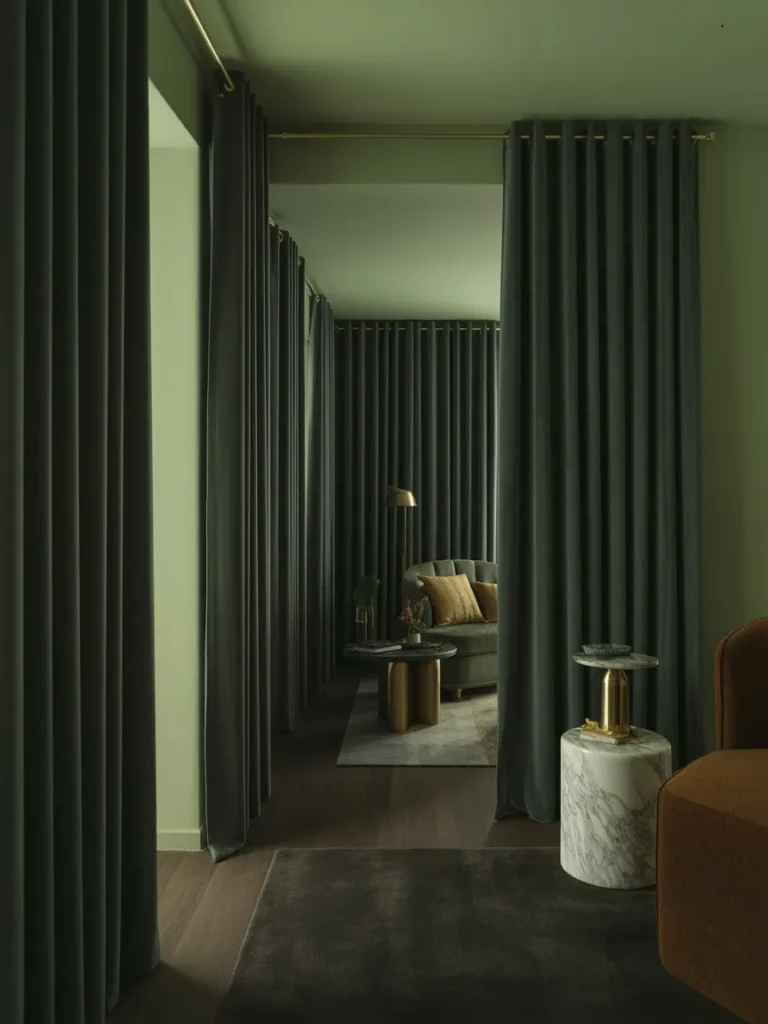
Vibe: Grand and theatrical
Why it works: Floor-to-ceiling drapes create verticality and draw the eye upward, making the room feel larger. The dark fabric provides an anchor against lighter walls.
How to get it: Install curtain rods 4-6 inches above the window frame. Choose velvet drapes in a dark color that puddles slightly on the floor.
Shop The Look
| Product | Description |
|---|---|
| Emerald velvet drapes | Floor-to-ceiling, grommet top |
| Gold curtain rod | 1-inch diameter, finial ends |
| Cream wall paint | Warm off-white, eggshell |
| Dark walnut coffee table | Rectangular, carved detail |
| Gold brass floor lamp | Arc design, marble base |
11. Black Accent Furniture
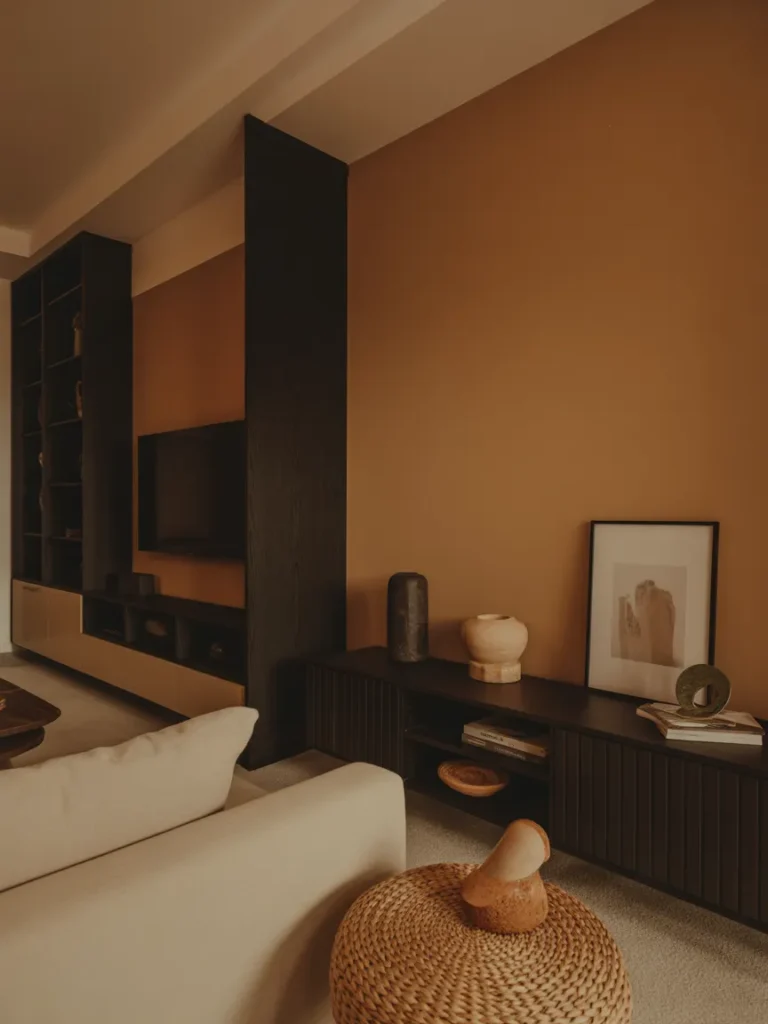
Vibe: Grounded and stable
Why it works: Black furniture pieces act as visual anchors in a space. They ground the room while allowing other elements to breathe and feel lighter.
How to get it: Choose one substantial black furniture piece, like a media console or bookshelf. Warm up the walls with terracotta or warm beige to balance the dark tone.
Quick Win: Paint an existing piece of furniture black for instant moody impact without a full remodel.
Shop The Look
| Product | Description |
|---|---|
| Black media console | Mid-century with hairpin legs |
| Terracotta wall paint | Eggshell finish, warm earth |
| Cream sectional | Scatterback with wood legs |
| Brass table lamp | Articulated arm design |
| Woven storage basket | Seagrass, lid included |
12. Dark Green Paneled Wall
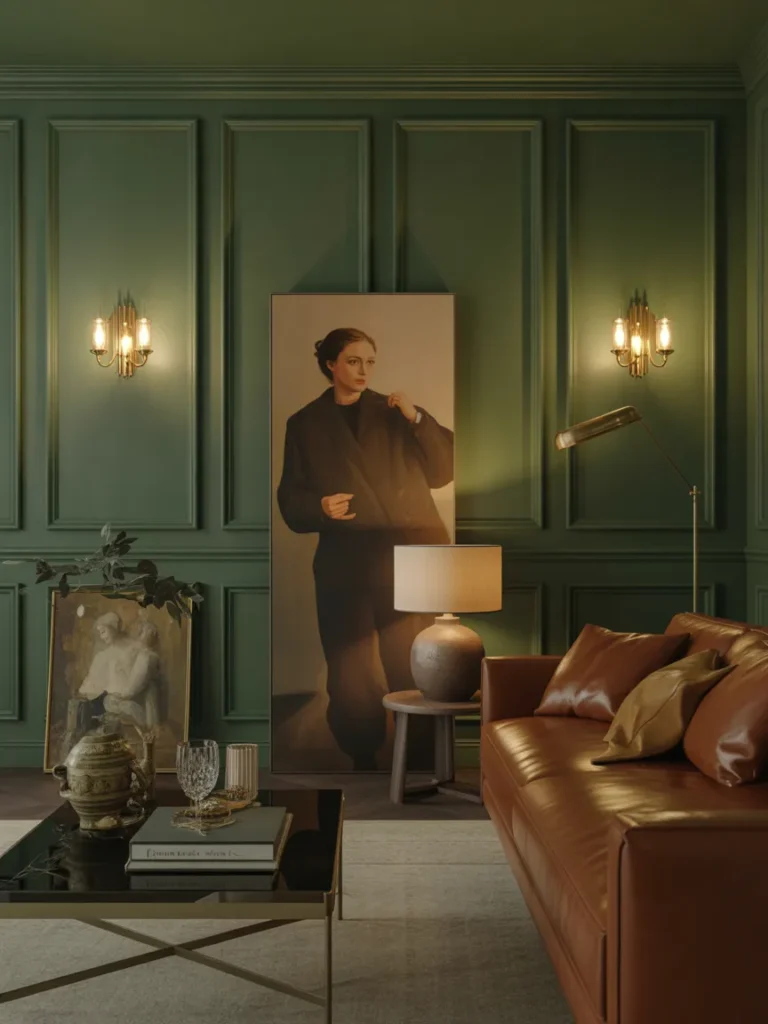
Vibe: Stately and serene
Why it works: Paneled walls add architectural interest and texture that flat paint alone cannot achieve. The vertical lines draw the eye upward, making the room feel taller.
How to get it: Install vertical tongue-and-groove paneling on one wall. Paint in a deep green like Benjamin Moore’s Essex Green. Add brass sconces at eye level.
Shop The Look
| Product | Description |
|---|---|
| Wall paneling kit | Tongue and groove, pre-primed |
| Dark green paint | Matte, for paneling |
| Brass wall sconces | Pair, backplate mount |
| Cognac leather sofa | Deep seating, track arms |
| Ceramic table lamp | Green and brass combination |
13. Ambient Floor Lighting
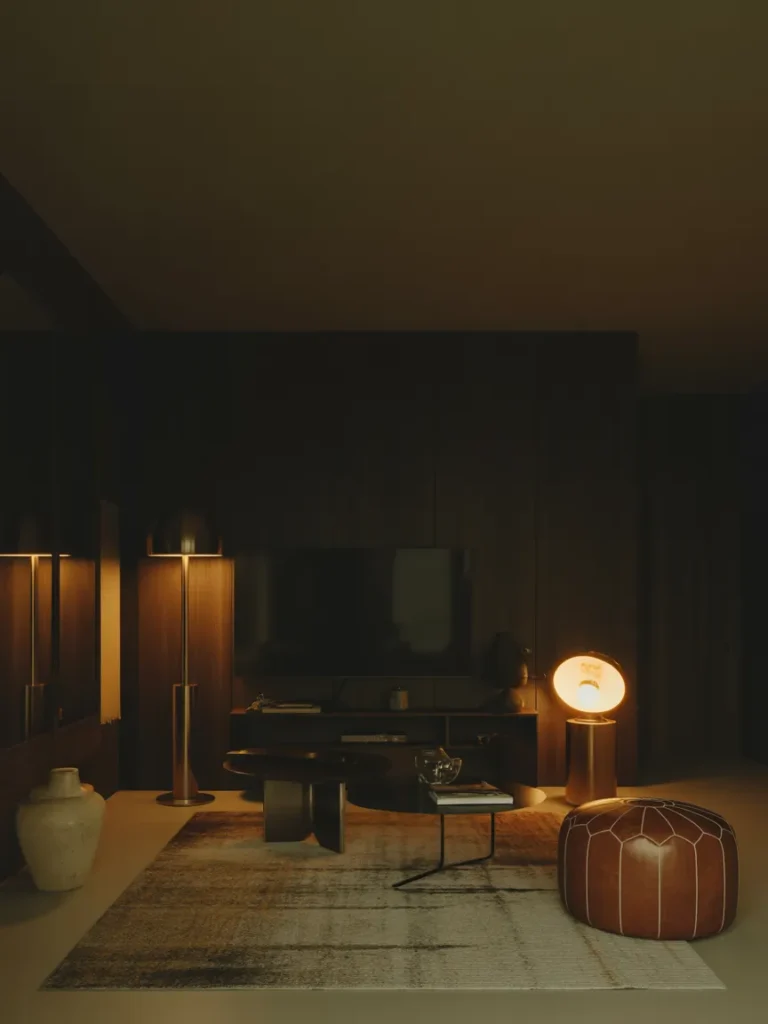
Vibe: Intimate and atmospheric
Why it works: Floor-level lighting casts shadows upward, creating dramatic volume in the room. It’s a technique that adds instant mood without requiring structural changes.
How to get it: Place floor lamps that cast light upward or add plug-in sconces at a lower height. Combine with table lamps at traditional height for layered lighting.
Quick Win: Add a paper floor lamp with a warm bulb—it creates soft, diffused light instantly.
Shop The Look
| Product | Description |
|---|---|
| Charcoal wall paint | Matte finish |
| Floor uplight lamp | Paper shade, wood base |
| Low leather pouf | Round, tufted top |
| Textured wool rug | Hand-knotted, geometric |
| Ceramic floor vase | Tall, matte finish |
14. Warm Wood Layering
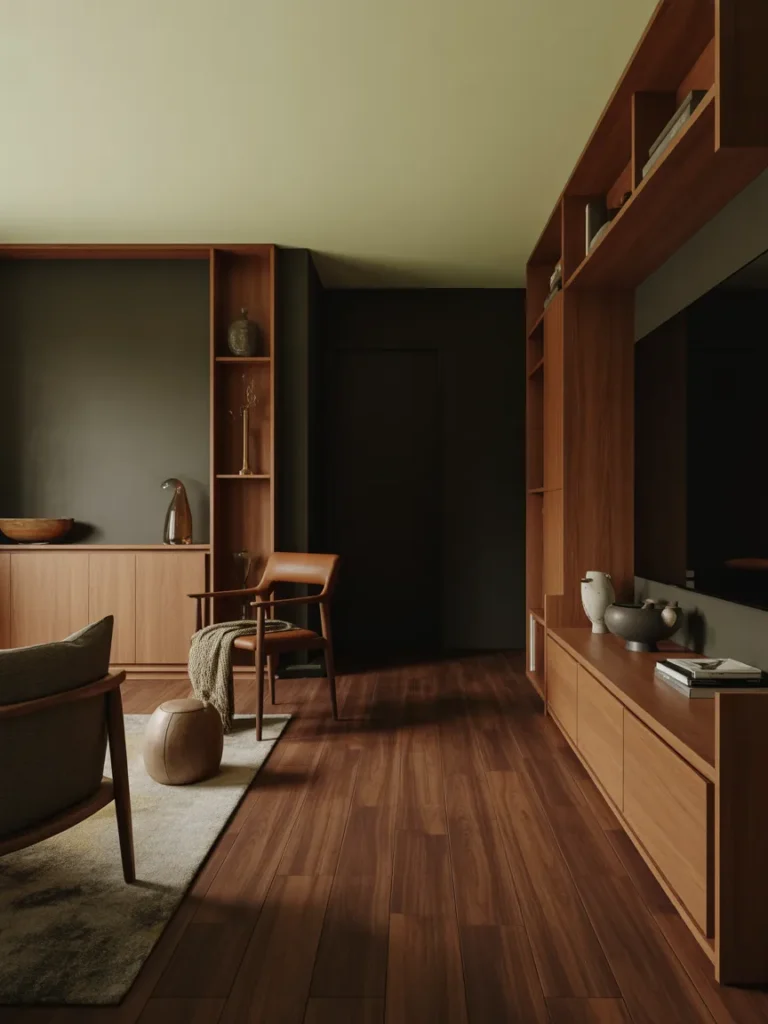
Vibe: Organic and layered
Why it works: Layering different wood tones creates depth and prevents the room from feeling one-note. The contrast between dark and light woods adds visual movement.
How to get it: Mix at least two distinct wood tones—dark walnut floors with lighter oak furniture. Keep the finish consistent within each tone for cohesion.
Shop The Look
| Product | Description |
|---|---|
| Charcoal paint | Matte, warm undertone |
| Walnut coffee table | Round, turned base |
| Oak bookshelf | Ladder style, open back |
| Leather armchair | Cognac, mid-century design |
| Wool throw blanket | Cream, chunky knit |
15. Deep Burgundy Statement
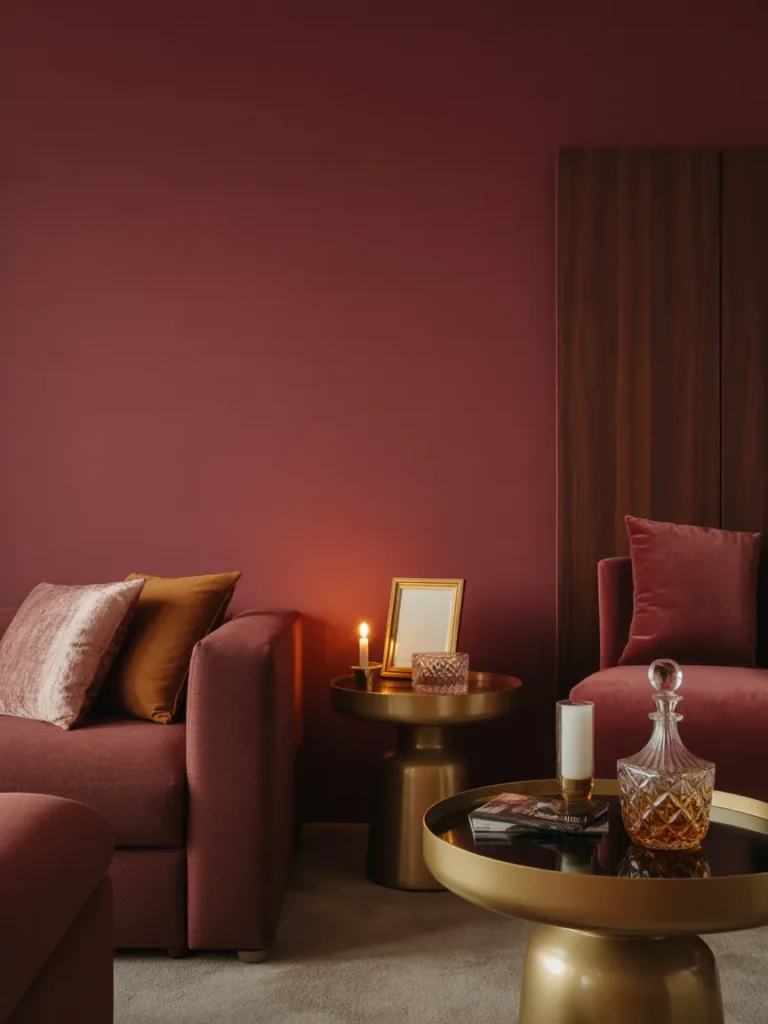
Vibe: Bold and luxurious
Why it works: Burgundy is a moody color with warmth and depth. It feels grown-up and sophisticated while still being approachable, especially when paired with gold accents.
How to get it: Paint one wall in a rich burgundy like Benjamin Moore’s Pomegranate. Use gold frames and brass accessories to create contrast and warmth.
Quick Win: Layer burgundy through velvet pillows and throws before committing to painting an entire wall.
Shop The Look
| Product | Description |
|---|---|
| Burgundy wall paint | Eggshell finish |
| Gold side table | Nesting set of two |
| Velvet accent chair | Burgundy, turned wood legs |
| Gold-framed art | Abstract print, glass front |
| Cut crystal decanter | Diamond pattern, stopper |
How to Start Your Moody Living Room Transformation
The single best first move for a moody living room is choosing your wall color before you do anything else. Paint is the foundation of this style, setting the tone for every other decision. A shade like Farrow & Ball’s Hague Blue or Benjamin Moore’s Chelsea Gray provides the depth that makes the style work. This one choice instantly signals your direction, making all subsequent furniture and decor decisions easier. Without this foundation, you’ll struggle to achieve the cohesion that defines successful moody spaces.
The most common mistake beginners make with moody decor is choosing the wrong paint undertone. Paint colors that look dark in the store can read completely differently on your walls—some turn purple, others go muddy brown. Test swatches on all four walls at different times of day before committing. Place swatches against your existing flooring and furniture to ensure the undertones complement rather than clash. If a color feels too heavy when applied to all walls, try it on just one wall first.
For budget-friendly entry points, focus on three under-fifty items that create instant impact. A single velvet throw pillow in emerald or burgundy injects rich color immediately. A brass tray for your coffee table adds warmth and a touch of glamour for under thirty dollars. A single dried eucalyptus bundle or pampas grass stem in a ceramic vase brings natural texture that softens dark spaces. These small additions test the moody waters without the commitment of paint or furniture.
A full moody living room transformation typically takes three to six months, with a realistic budget range of $1,500 to $8,000 depending on paint quality, furniture, and lighting. A starter version with an accent wall, new textiles, and lighting changes can be achieved in two weekends for under $500. The full transformation—including new furniture, wall treatments, window treatments, and multiple lighting sources—requires more time, planning, and investment. Start with paint and lighting, then layer in furniture and accessories as your vision crystallizes.
Frequently Asked Questions About Moody Living Rooms
What exactly defines a moody living room style?
A moody living room is defined by its embrace of dark, saturated colors and dramatic contrast. The style uses deep shades like charcoal, navy, emerald, and burgundy as foundational colors, combined with rich textures like velvet, leather, and dark wood. It’s not about being dark and dreary but creating atmosphere through intentional shadow and light play. Key elements include layered lighting, substantial furniture pieces, and careful use of metallics to add warmth.
Can a moody living room be bright enough to live in comfortably?
Yes, and the key lies in lighting strategy. A well-designed moody room uses three levels of light: ambient (overhead), task (reading lamps), and accent (art lights, sconces). Warm bulbs in the 2700-3000K range are essential. Using mirrors strategically helps bounce available light around the room, and choosing the right paint finish—eggshell or satin rather than flat—helps light reflect while maintaining the moody feel.
What’s a realistic budget for a moody living room makeover?
A moody living room makeover ranges from $500 for a beginner version to $8,000 or more for a full transformation. The starter budget covers an accent wall with premium paint, three new lighting pieces, and a few textural accessories. A mid-range budget around $3,000 includes a new sofa or significant furniture piece, upgraded window treatments, and multiple lighting sources. The highest budget covers custom wall treatments, designer furniture, and professional installation.
How do I make a moody living room work with existing light furniture?
Moody rooms pair beautifully with light furniture—in fact, the contrast is what makes the style work. If you already have a cream or beige sofa, use it as your anchor. Add dark walls, a charcoal rug, and brass accessories, and your existing pieces will read as intentional contrast rather than mismatched. Dark art and lighting will complete the transformation while your furniture remains perfectly at home.
Is a moody living room suitable for families with children?
Absolutely, with some practical adjustments. Choose performance fabrics like Crypton or Sunbrella for upholstery, and opt for darker, forgiving colors like charcoal or navy that hide everyday wear. Use washable velvet or leather instead of delicate silks. Wall paints in eggshell or satin finish can be wiped clean, and dark colors actually show less dirt over time than lighter shades. The cozy, grounded nature of moody spaces often makes them feel more welcoming for family life.
Ready to Create Your Dream Moody Living Room?
You’ve explored everything from midnight blue cocoons to deep burgundy statements—fifteen distinct approaches to moody living room design that span color, texture, lighting, and furniture. The beauty of this style is that it rewards incremental progress, so don’t feel pressured to transform everything at once. Start today by identifying your favorite shade from the ideas above and purchasing a sample pot to test on your wall. In a few weeks, you’ll be sitting in a room that feels like it exhales—a space that wraps you in its embrace and asks nothing of you but presence. Pin your top favorites and share them with your design community; the moody movement is about connection, and your sanctuary deserves to be celebrated.
2 Comments