
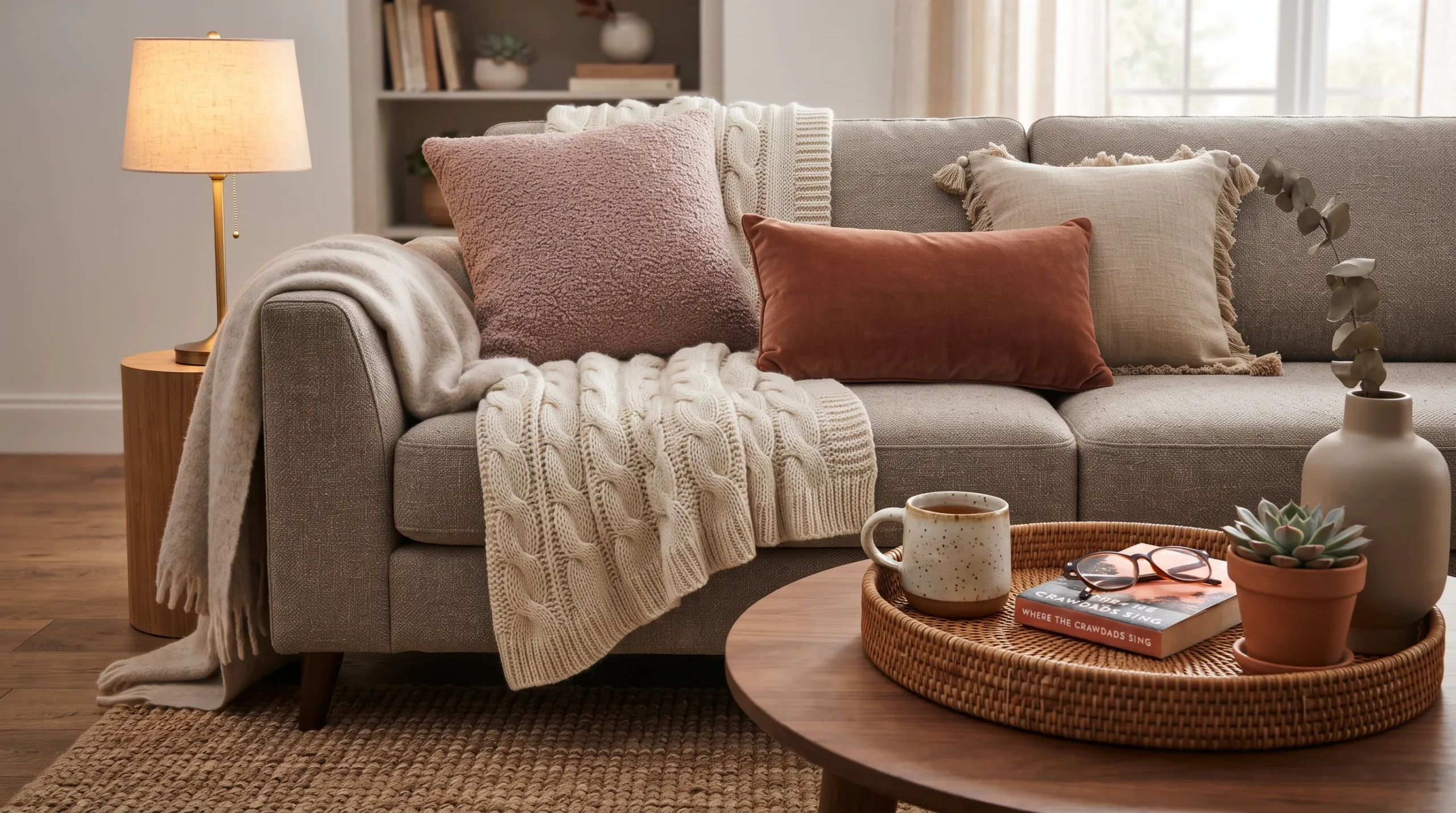
16 Family Room Design Ideas for Everyday Comfort
A family room is the casual, lived-in heart of a home—less formal than a living room and built for daily connection rather than special occasions. This article delivers 16 family room design ideas that balance beauty with real life, from cozy seating to smart storage, so you can create a space where everyone actually wants to gather.
There’s something deeply reassuring about a room that asks nothing of you. No stiff posture, no worrying about spills, no careful arrangements that mustn’t be disturbed. Just soft light pooling on a well-worn sofa, the quiet hum of togetherness, and surfaces that welcome a cup of tea and a pile of books alike. Whether your family room is a dedicated space or a corner of an open-plan layout, these ideas are about making it work—hard—without sacrificing an inch of soul. Here are 16 ideas worth saving—and stealing.
Why Family Room Design Ideas Work So Well
A family room isn’t just another seating area; it’s the gravitational center of a home. Unlike the formal living room—which often prioritizes aesthetic perfection over practicality—the family room emerged in the mid-20th century as a response to changing family dynamics, offering a relaxed space for everyday activities like homework, movie nights, and unstructured downtime. It’s designed to be used, not just admired.
The core materials and colors that define a successful family room lean into durability and warmth. Think performance fabrics in heathered greys, creamy off-whites, or dusty sage that disguise everyday wear. Natural wood tones—from pale oak to rich walnut—ground the space, while textural elements like chunky knit throws, jute rugs, and woven storage baskets add visual richness without fragility. The palette is forgiving: warm greige, soft navy, and earthy terracotta create a backdrop that feels both current and timeless.
Why is this approach trending now? In an era of post-pandemic nesting, homeowners are prioritizing spaces that serve multiple purposes without feeling chaotic. Pinterest searches for “family room storage ideas” and “kid-friendly living room” have surged as people realize that a beautiful room can—and should—handle board games, blanket forts, and the occasional spilled snack. Sustainability also plays a role: choosing durable, classic pieces means less replacement waste over time.
Small spaces can absolutely achieve this style, with a few smart pivots. Prioritize a compact, low-profile sofa that doesn’t overwhelm the floor plan, and use vertical storage like floor-to-ceiling shelves to maximize every inch. The key is resisting the urge to over-furnish—in a smaller room, negative space is your ally, making the room feel larger and more intentional.
Style at a Glance
| Philosophy | Casual comfort, family connection, durability over perfection |
| Key Materials | Performance upholstery, natural wood, jute, leather, stone |
| Color Palette | Warm greige, soft navy, dusty sage, creamy white, terracotta |
1. Cocooning Color Drench
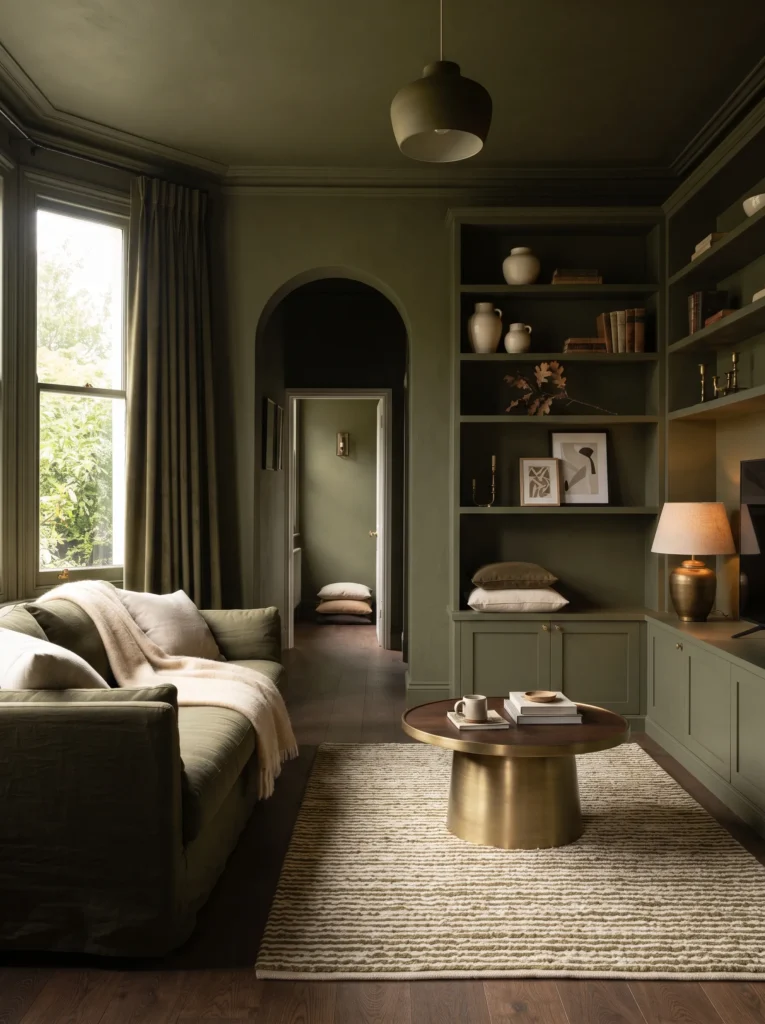
Vibe: Intimate and wrapped.
Why it works: Monochromatic color drenching blurs the edges of a room, making it feel larger and more enveloping. This designer trick works especially well in family rooms because it creates a cozy, den-like atmosphere that encourages relaxation and signals that the space is a retreat from the world, not a stage for it.
How to get it: Pick one deep, earthy color—think Farrow & Ball’s “Card Room Green” or a warm charcoal—and commit to painting walls, ceiling, trim, and even the inside of bookcases. The effect is immediate and dramatic. Balance with cream or beige textiles and warm wood accents to prevent the room from feeling too dark or heavy.
💡 Quick Win: Test your color with a peel-and-stick sample from a brand like Samplize before painting—this lets you see how the shade shifts in your room’s natural light without committing to a full gallon.
Shop The Look: 20 Genius Playroom Ideas for Happy Little Minds
Shop The Look
- Velvet twill blackout curtain panels in deep olive
- Cream bouclé throw blanket textured
- Brushed brass floor lamp with linen shade
- Stack of coffee table books neutral tones
- Ceramic bud vase matte finish organic shape
2. Layered Textures on the Sofa
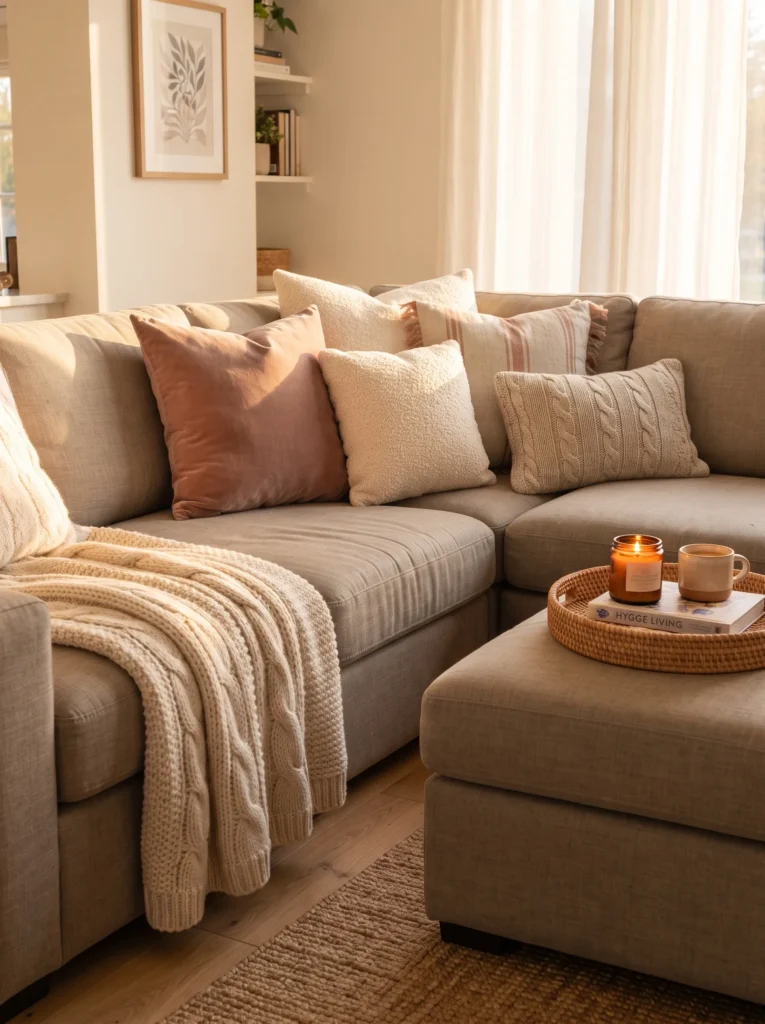
Vibe: Soft and tactile.
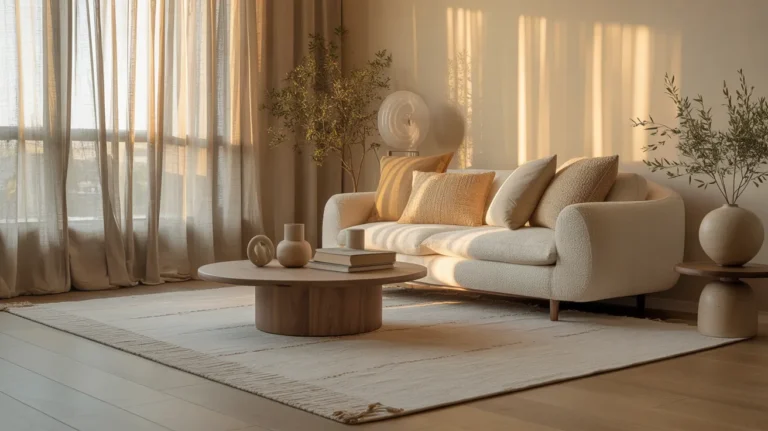
Why it works: A sofa covered in a single fabric can feel flat. Layering textures—bouclé, velvet, linen, chunky knit—creates visual depth and invites touch, which is exactly what a room meant for lounging should do. This approach makes even a budget sofa feel custom and high-end.
How to get it: Start with a neutral-toned sofa in a durable performance fabric. Then, add pillows in at least three different textures: one bouclé for softness, one velvet for richness, and one linen for casual ease. Drape a chunky knit or faux fur throw over one arm or the back corner for an instantly cozy look.
Shop The Look
- Performance fabric sectional sofa warm greige
- Bouclé square throw pillow cream
- Velvet lumbar pillow dusty rose
- Chunky cable-knit throw blanket oat
- Fringed linen accent pillow natural
3. Scaled-Up Storage Ottoman
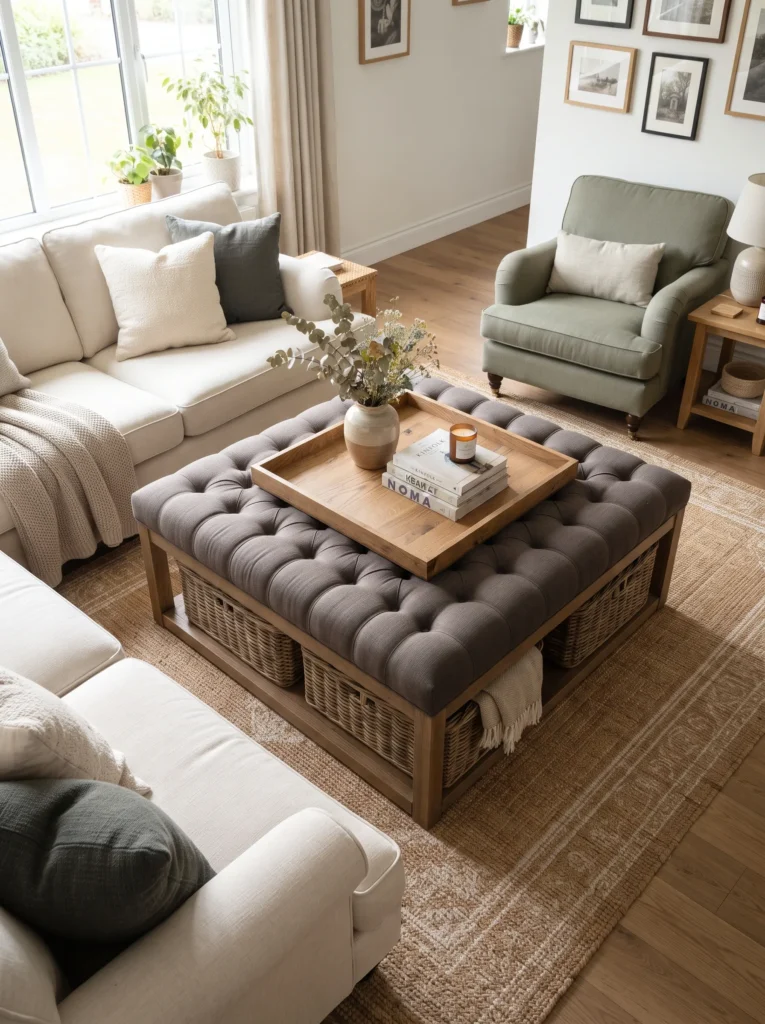
Vibe: Grounded and functional.
Why it works: An oversized ottoman serves triple duty: it’s a coffee table when topped with a tray, extra seating when guests arrive, and hidden storage for blankets, toys, or games. Scaling it up intentionally makes a room feel more sumptuous and grounded, especially in smaller spaces where every piece needs to earn its square footage.
How to get it: Choose an ottoman that’s at least 40 inches wide and upholstered in a durable fabric or leather that can withstand feet and spills. Add a large wooden or lacquered tray to create a stable surface for drinks and decor, and fill the interior with items you want to keep close but out of sight.
💡 Quick Win: Use a storage ottoman to stash board games or throw blankets that would otherwise clutter the room—this one piece can transform a messy space into an organized one in seconds.
Shop The Look
- Oversized storage ottoman tufted charcoal
- Large wooden serving tray with handles
- Decorative coffee table books neutral
- Ceramic vase organic shape sage green
- Woven storage baskets set of three
4. The Gallery Wall of Family Moments
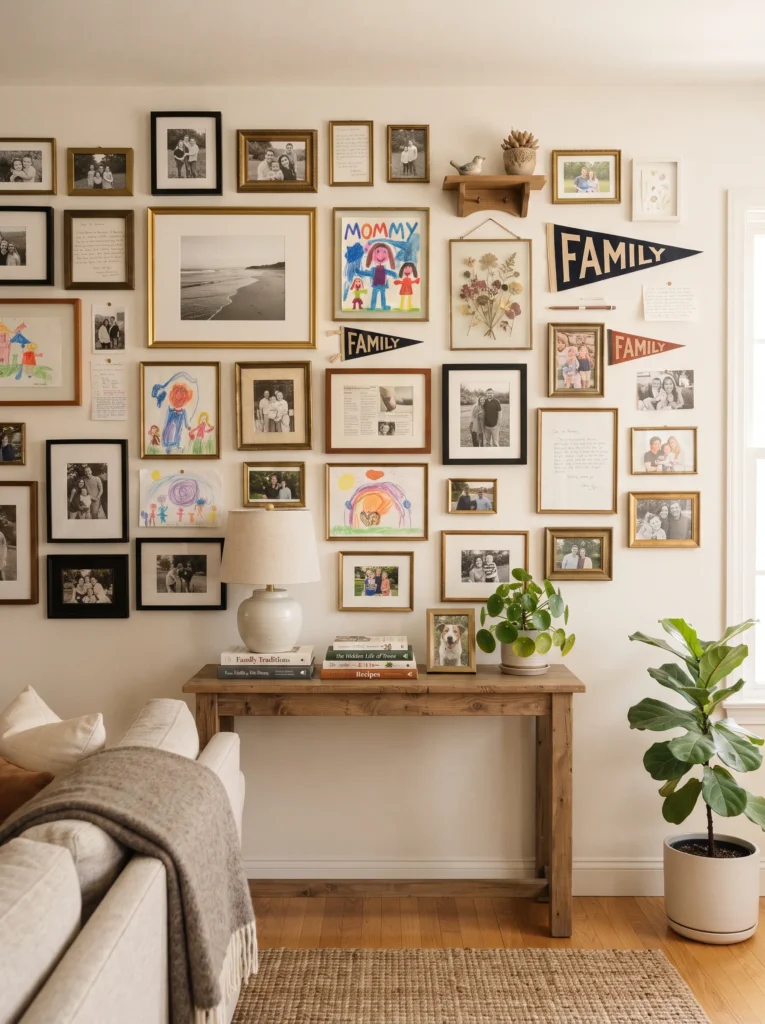
Vibe: Personal and nostalgic.
Why it works: A family room should tell your family’s story—not in a staged way, but through the objects and images that matter to you. A gallery wall of photos and children’s artwork makes the space feel uniquely yours and sparks conversation and reminiscing, which is the whole point of a gathering space.
How to get it: Collect frames in a mix of finishes—gold, black, wood—and sizes, keeping the overall arrangement within a consistent shape (a rectangle works well). Lay the frames out on the floor first to perfect the arrangement before hammering any nails. Include at least one piece of child-made art for an authentic, unfiltered touch.
Shop The Look
- Assorted picture frames gold and black
- Set of floating shelves for display
- Small ceramic trinket dish
- Table lamp with linen shade warm glow
- Console table narrow wood finish
5. Statement Ceiling with Wallpaper
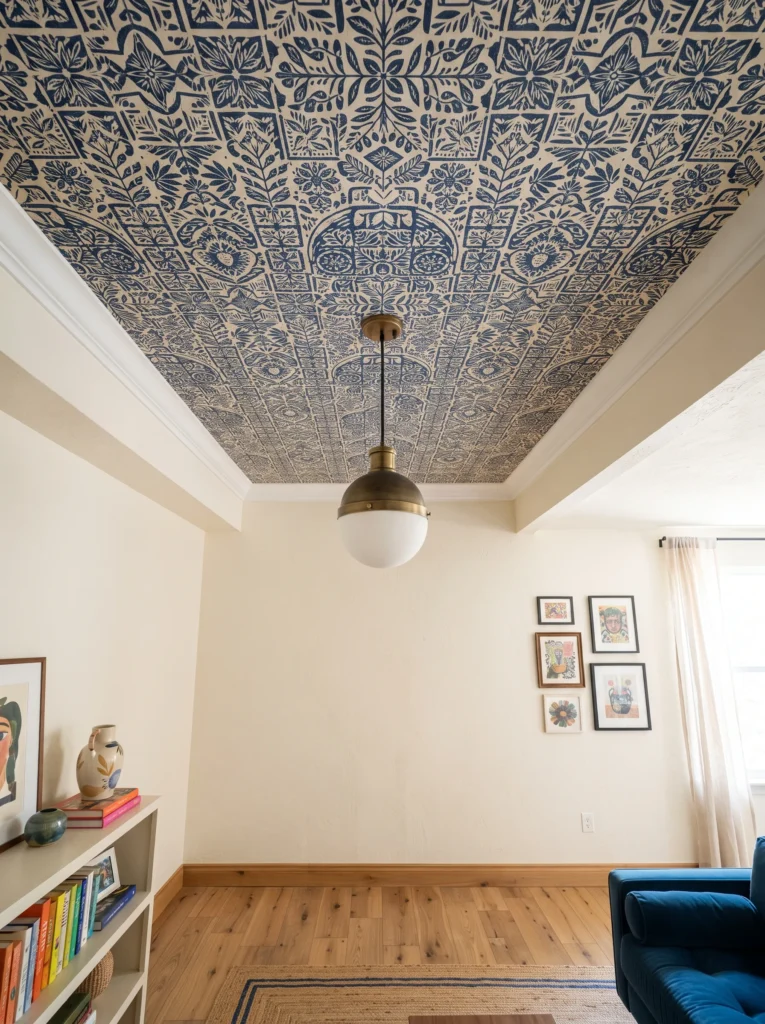
Vibe: Playful and surprising.
Why it works: The ceiling is the most underutilized surface in interior design. Adding wallpaper to it draws the eye upward, making the room feel taller and more intentional. In a family room, this unexpected detail signals that the space is for joy and experimentation, not just function.
How to get it: Choose a wallpaper with a soft, fabric-like quality or a playful pattern that you love—think geometrics, botanicals, or even a whimsical print. Keep the walls in a solid, coordinating color to let the ceiling be the star. This is a project best left to a professional installer for a seamless finish.
💡 Quick Win: If full wallpaper feels too bold, use a peel-and-stick wallpaper in a smaller pattern on just the ceiling of a reading nook or corner to add a pop of personality without overwhelming the room.
Shop The Light
- Peel-and-stick wallpaper patterned
- Simple modern flush mount ceiling light
- Paint coordinating wall color
- Crown molding trim white
- Small step stool for installation
6. Cinema-Style Sectional for Maximum Lounging
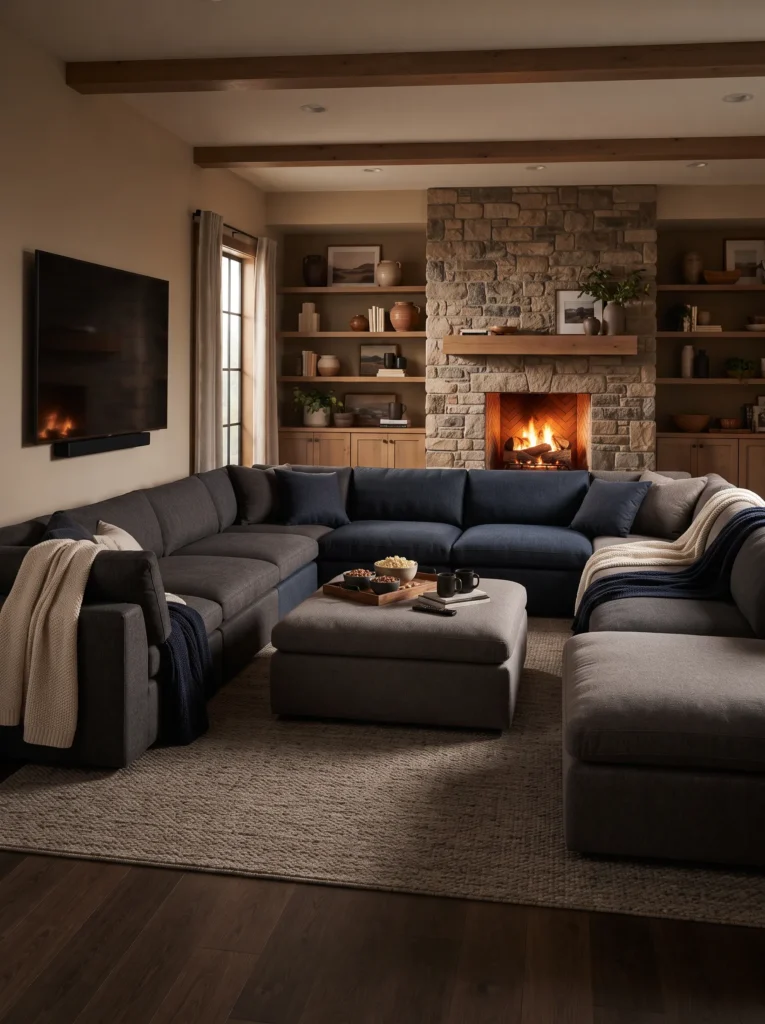
Vibe: Relaxed and cinematic.
Why it works: A family room needs seating that can handle everyone—and then some. An extra-deep, plush sectional invites sprawling, lounging, and staying awhile, which is essential for movie nights and lazy weekends. This kind of seating physically encourages relaxation.
How to get it: Look for a sectional with seat depths of at least 24 inches and a chaise or ottoman extension that can be moved to either side. Opt for performance fabric that resists stains and wear, and choose a style with clean lines that won’t feel dated in a few years. Neutral colors like warm charcoal or soft navy work best for longevity.
Shop The Look
- Extra-deep sectional sofa performance fabric
- Large rectangular ottoman with storage
- Plush throw blanket set of two
- Decorative throw pillows mix of textures
- Wooden serving tray for ottoman
7. Built-In Wall Storage Unit
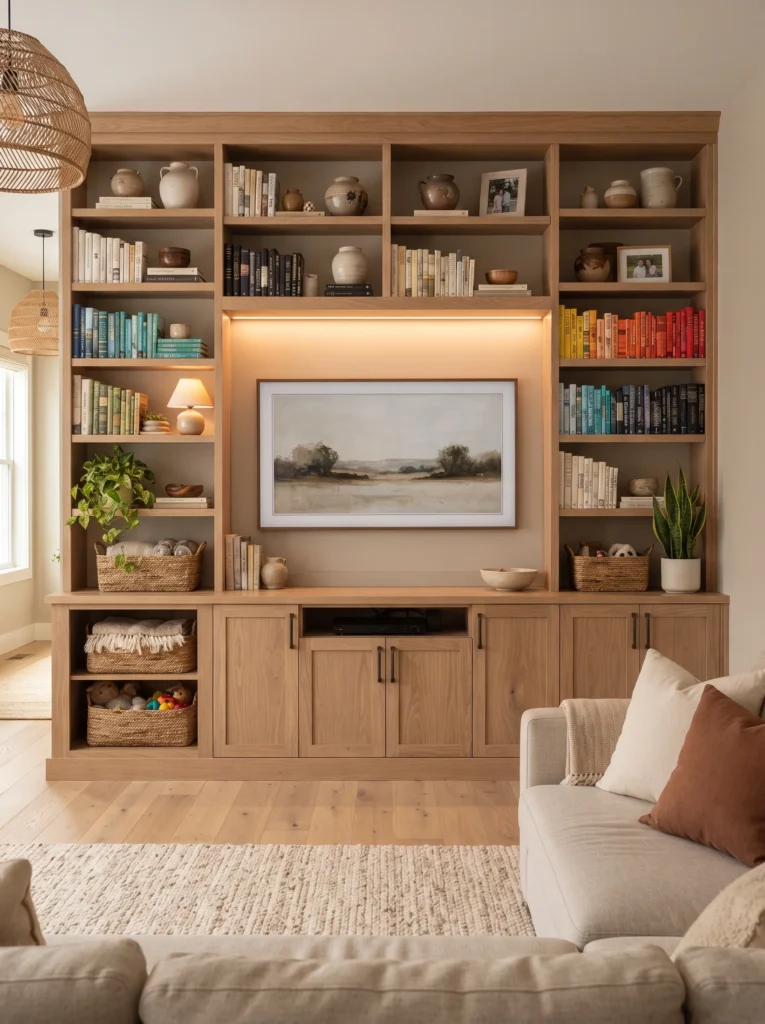
Vibe: Organized and grounded.
Why it works: Clutter is the enemy of a peaceful family room. Built-in shelving and cabinetry provide a designated place for everything—books, toys, games, electronics—reducing visual chaos and making the room feel calmer. It also uses vertical space efficiently, which is crucial in rooms where floor space is limited.
How to get it: Work with a carpenter or use IKEA hack techniques to create a wall of floor-to-ceiling storage. Include a mix of open shelves for display and closed cabinets for hiding less attractive items. If your TV is the focal point, design the unit to frame it perfectly, with symmetrical shelving on either side.
💡 Quick Win: If custom built-ins aren’t in the budget, use a combination of tall bookshelves and a media console placed side by side to create a similar effect. Paint them all the same color for a unified look.
Shop The Look
- Tall bookshelf with adjustable shelves
- Media console with cabinet doors
- Woven storage baskets with lids
- LED strip lighting kit for shelves
- Decorative bookends pair
8. Family-Friendly Round Coffee Table
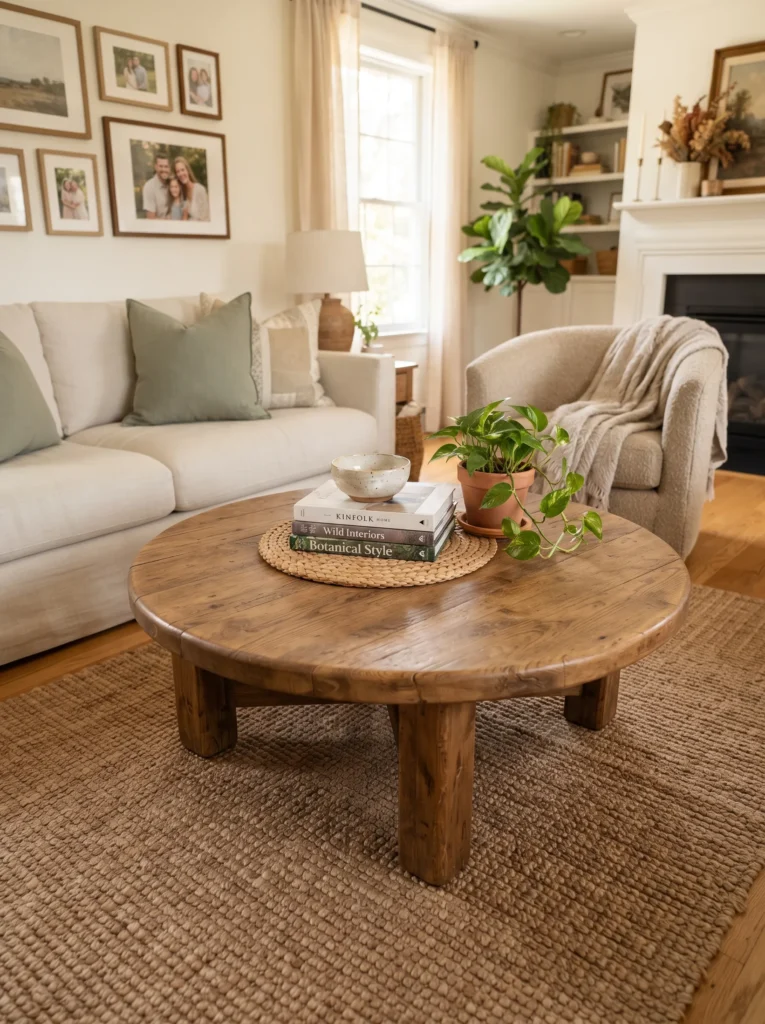
Vibe: Safe and communal.
Why it works: Round coffee tables are inherently safer for families with young children—no sharp corners to bump into. They also encourage better flow around the seating area and feel more communal, as everyone can easily reach the center from any angle.
How to get it: Look for a solid wood table with a diameter between 36 and 48 inches, depending on your sofa size. Ensure it’s low enough to be in proportion with your seating (within 4 inches of the seat height). Style it with a tray to corral smaller items and a few books or a small plant to add personality.
Shop The Look
- Round solid wood coffee table natural
- Ceramic bowl for decorative storage
- Large coffee table book
- Small trailing indoor plant
- Woven placemat set of two
9. Cozy Reading Nook in a Corner
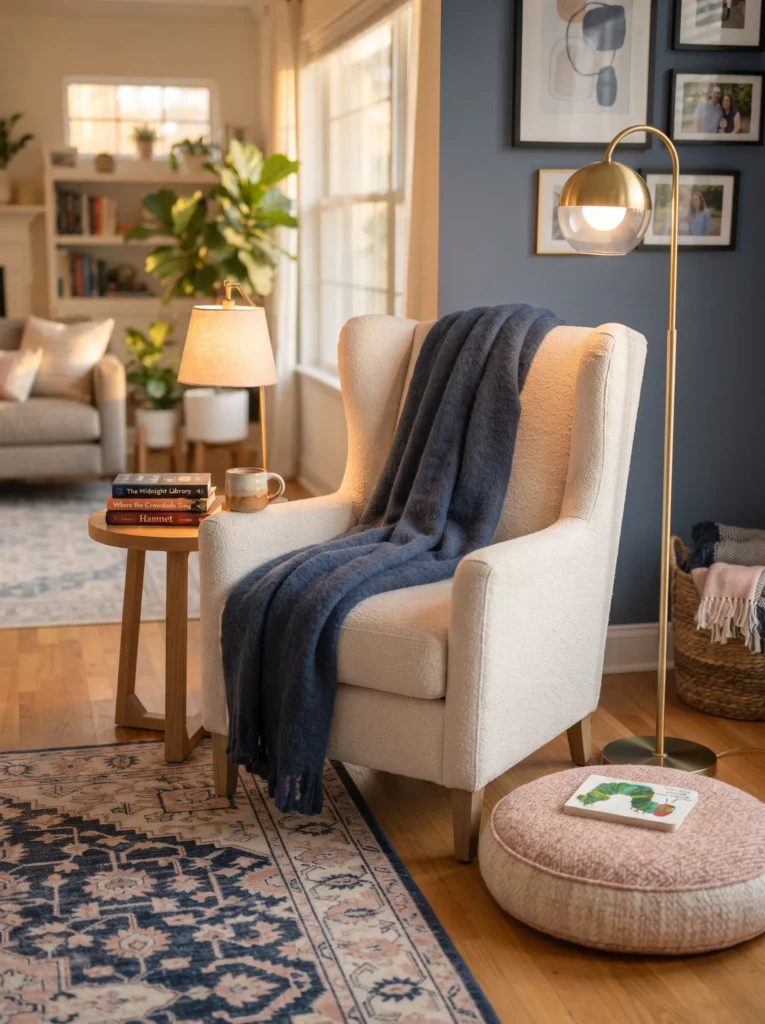
Vibe: Quiet and still.
Why it works: A family room is often a hub of activity, but everyone needs a quiet corner to retreat to. Carving out a small reading nook with a comfortable chair, good lighting, and a spot for books signals that this room supports both togetherness and solitude.
How to get it: Find a corner that’s out of the main traffic flow. Add a comfortable chair (swivel chairs are great because they can turn toward the room or away), a small side table, and a task lamp. Keep a throw blanket and a basket of books nearby to make it inviting. This small zone can be a sanctuary within the larger space.
💡 Quick Win: A floor cushion placed next to the chair creates a cozy spot for a child to sit and read or play alongside you, making the nook family-friendly without sacrificing its adult appeal.
Shop The Look
- Comfortable swivel accent chair
- Small round side table wood
- Task lamp with adjustable arm
- Soft throw blanket cream
- Storage basket for books
10. Mixed Materials for Visual Interest
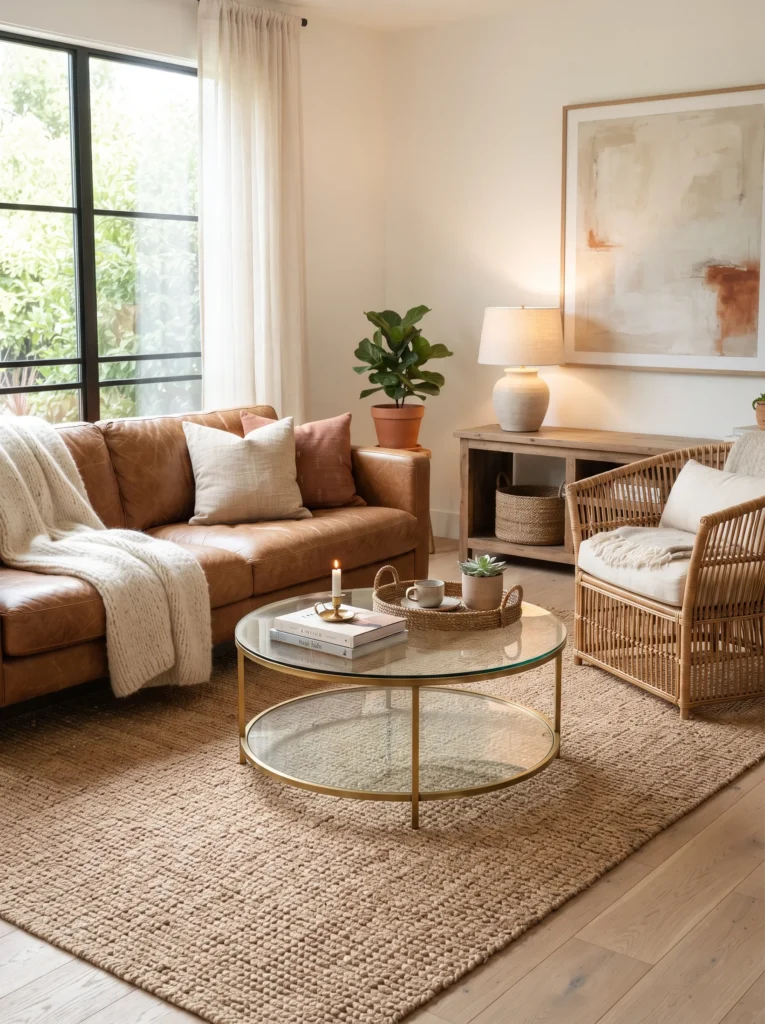
Vibe: Layered and textural.
Why it works: A family room that relies on just one material can feel flat and one-dimensional. Mixing materials—leather, rattan, wood, glass, metal—creates visual depth and a sense of collected, intentional design. This approach makes the room feel richer and more interesting over time, as it can accommodate pieces from different eras and sources.
How to get it: Start with two major materials (like a leather sofa and a jute rug), then add smaller pieces in contrasting materials (a rattan accent chair, a glass coffee table). The key is balancing the heavy (wood, leather) with the light (glass, rattan) and the warm (brass, wood) with the cool (glass, stone) for a harmonious mix.
Shop The Look
- Cognac leather sofa
- Rattan accent armchair
- Glass coffee table with metal base
- Natural jute area rug
- Brass candle holder set
11. Durable Performance Fabrics
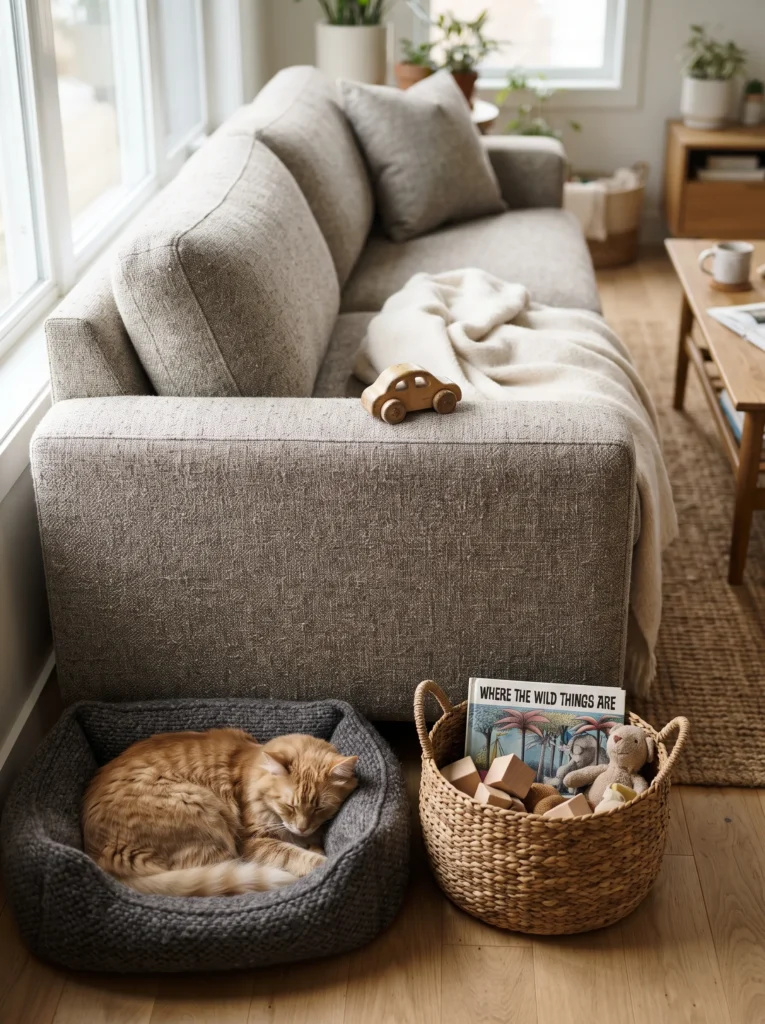
Vibe: Practical and loved.
Why it works: The best family room in the world is useless if you’re constantly stressed about spills. Performance fabrics—often made from olefin, solution-dyed acrylic, or tightly woven synthetics—resist stains, repel moisture, and stand up to daily wear from kids and pets. This is the backbone of any truly functional family room.
How to get it: When shopping, look for upholstery labeled “performance,” “stain-resistant,” or “family-friendly.” Brands like Crypton, Sunbrella, and Revolution offer beautiful fabrics that clean easily. Test any fabric by rubbing a damp cloth on a sample to see how it absorbs or repels liquid before buying.
💡 Quick Win: Treat any new sofa with a fabric protector like Scotchgard or Guard-A-Child before bringing it into the house. This adds an extra layer of defense against everyday messes.
Shop The Look
- Performance fabric sofa warm grey
- Plush pet bed
- Woven toy storage basket
- Fabric protector spray
- Stain-resistant throw blanket
12. Flexible Seating with Ottomans and Poufs
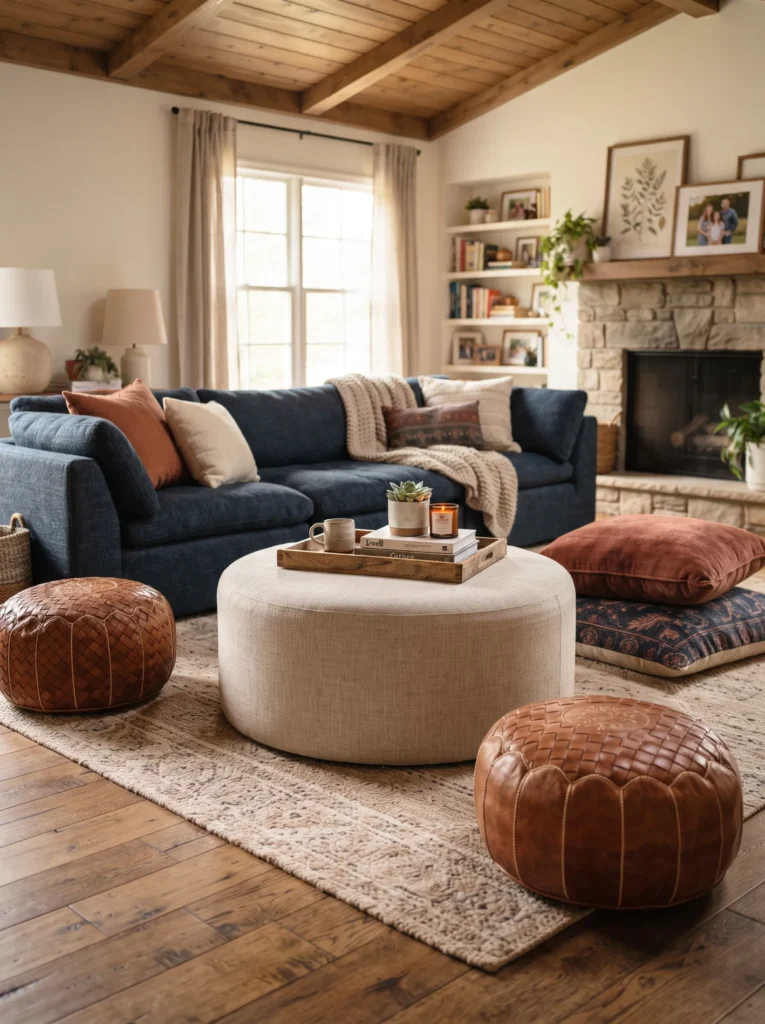
Vibe: Casual and adaptable.
Why it works: Not every seat in a family room needs to be a permanent, heavy chair. Ottomans, poufs, and floor cushions add flexible seating that can be moved around easily for different activities—game night, movie night, play time, or extra seating for guests.
How to get it: Choose a large storage ottoman as the coffee table and conversation anchor. Then, add 2-3 lightweight poufs or beanbags in coordinating colors that can be pulled out when needed and tucked away when not. This approach is especially great for families with young children or frequent visitors.
Shop The Look
- Storage ottoman with tray top
- Woven leather pouf set of two
- Floor cushions set of four
- Natural jute area rug
- Wooden serving tray
13. Warm Wood Accents Throughout
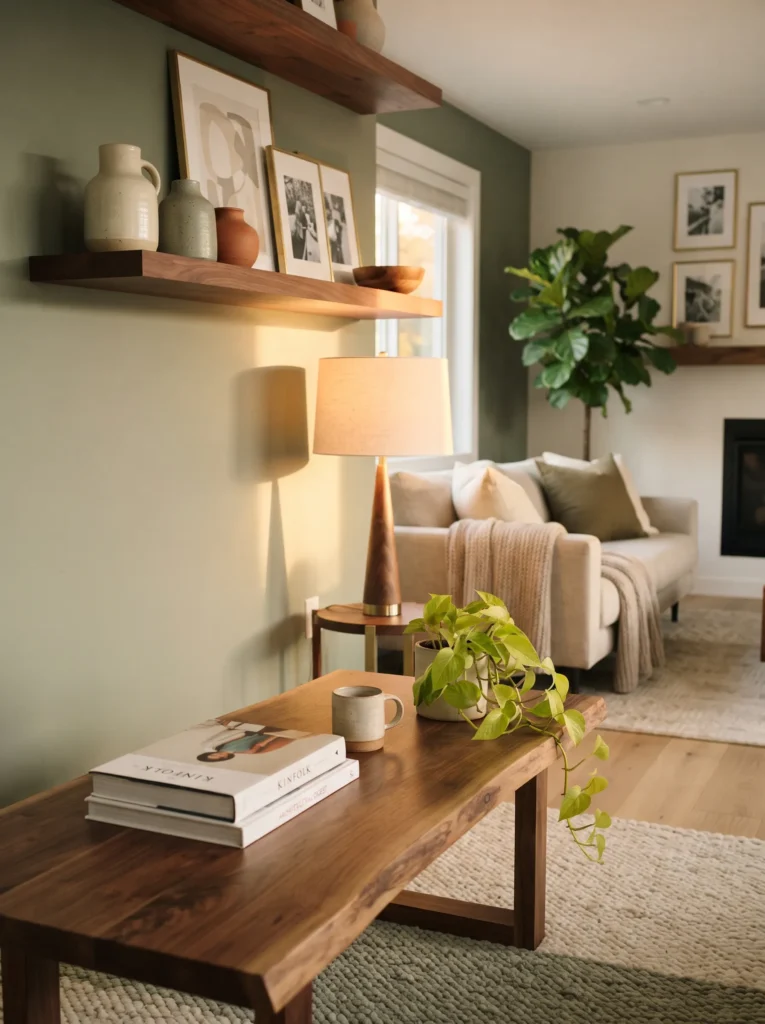
Vibe: Warm and earthy.
Why it works: Wood brings warmth, texture, and a sense of organic grounding to any room. In a family room, it also ages beautifully—developing character and patina over time—rather than looking worn out. Repeating wood tones across different pieces (coffee table, shelves, frames, lamp base) creates visual rhythm and cohesion.
How to get it: Mix wood species and tones throughout the room: a walnut coffee table, oak floating shelves, a teak lamp base. The key is consistency in undertone—avoid mixing cool grey-toned woods with warm reddish woods. Aim for three to four wood pieces that are visually connected across the space.
💡 Quick Win: A set of wooden picture frames or a simple wooden bowl on the coffee table can instantly add warmth to a room that feels too neutral or cool, without needing a big furniture investment.
Shop The Look
- Walnut coffee table with storage
- Floating shelves set of two oak
- Wooden lamp base mid-century
- Set of wooden picture frames
- Wooden serving bowl natural
14. Zone Definition with an Area Rug
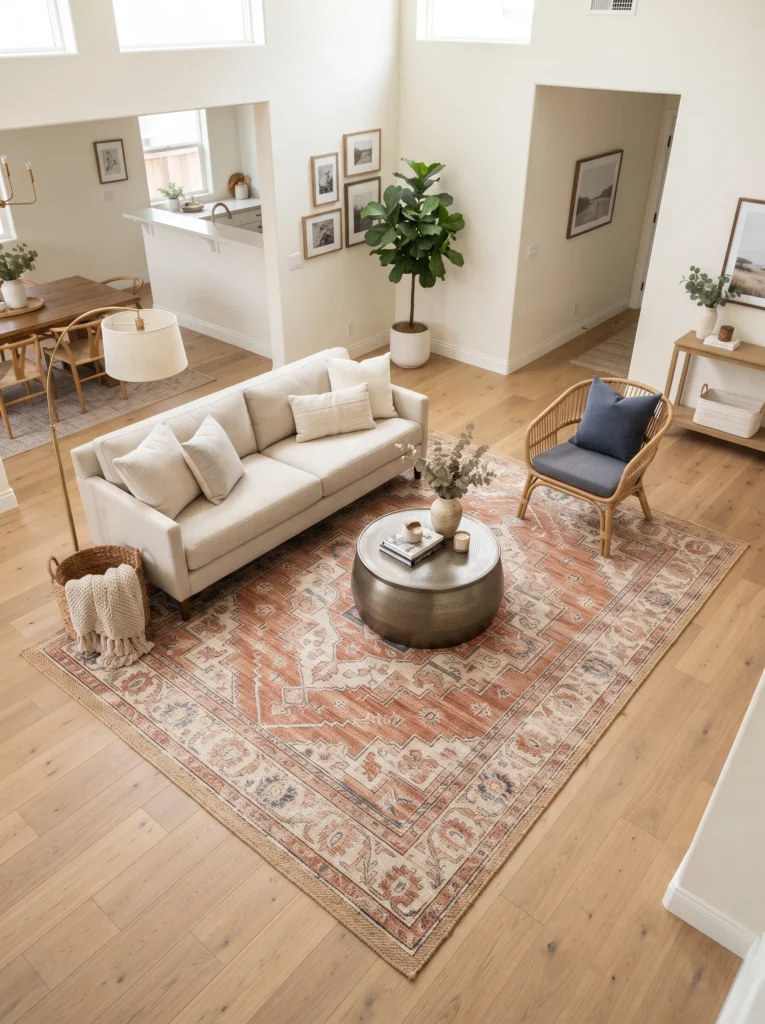
Vibe: Grounded and structured.
Why it works: In an open-plan home, an area rug acts as a visual anchor, defining the seating area and creating a sense of intimacy within a larger space. It also adds warmth, sound absorption, and a hit of pattern or color.
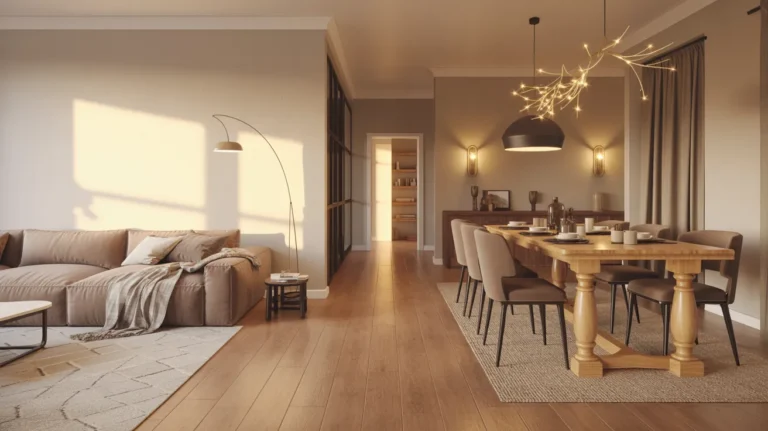
How to get it: Choose a rug large enough that at least the front legs of all your seating (sofa, chairs) sit comfortably on it—this visually unites the furniture. In a 16×16 room, a 9×12 rug is ideal. Opt for a pattern that hides everyday wear (specks, crumbs) and choose a low-pile or flatweave construction that’s easy to vacuum and won’t trap dirt.
Shop The Look
- Large patterned area rug 9×12
- Rug pad non-slip
- Sofa in coordinating neutral
- Accent chair warm wood
- Floor lamp for ambient light
15. Compact Built-In Desk for a Work Zone
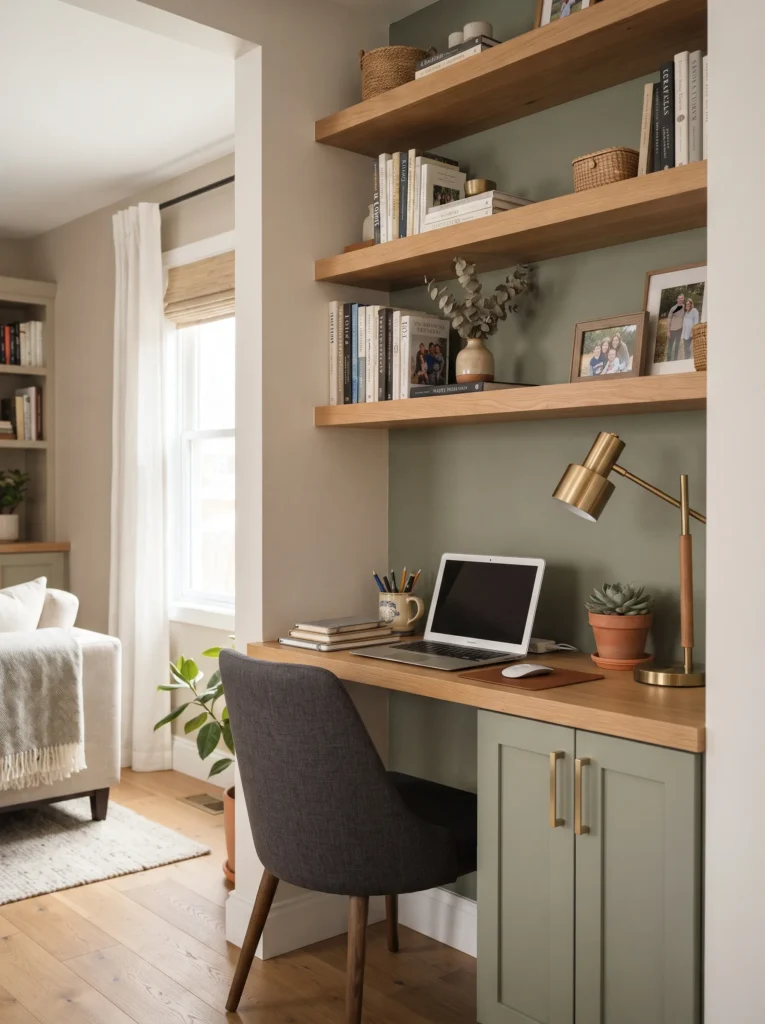
Vibe: Efficient and organized.
Why it works: Many family rooms double as home offices or homework stations. A dedicated, compact desk area keeps work and study materials contained and organized, preventing them from spreading across the entire room. This is a smart solution for multi-function family spaces.
How to get it: Use a corner or an unused wall to install a narrow desk (36-48 inches wide) with a shelf above and a small cabinet below. Choose a finish that matches your existing wood tones, and add a comfortable but compact chair that can slide completely under the desk when not in use. Good task lighting is essential.
💡 Quick Win: A wall-mounted drop-leaf desk takes up almost no space when folded down, making it perfect for homes where a permanent desk isn’t feasible.
Shop The Look
- Wall-mounted drop-leaf desk
- Compact desk chair with wheels
- Task lamp with adjustable arm
- Floating shelf for display
- Desk organizer set
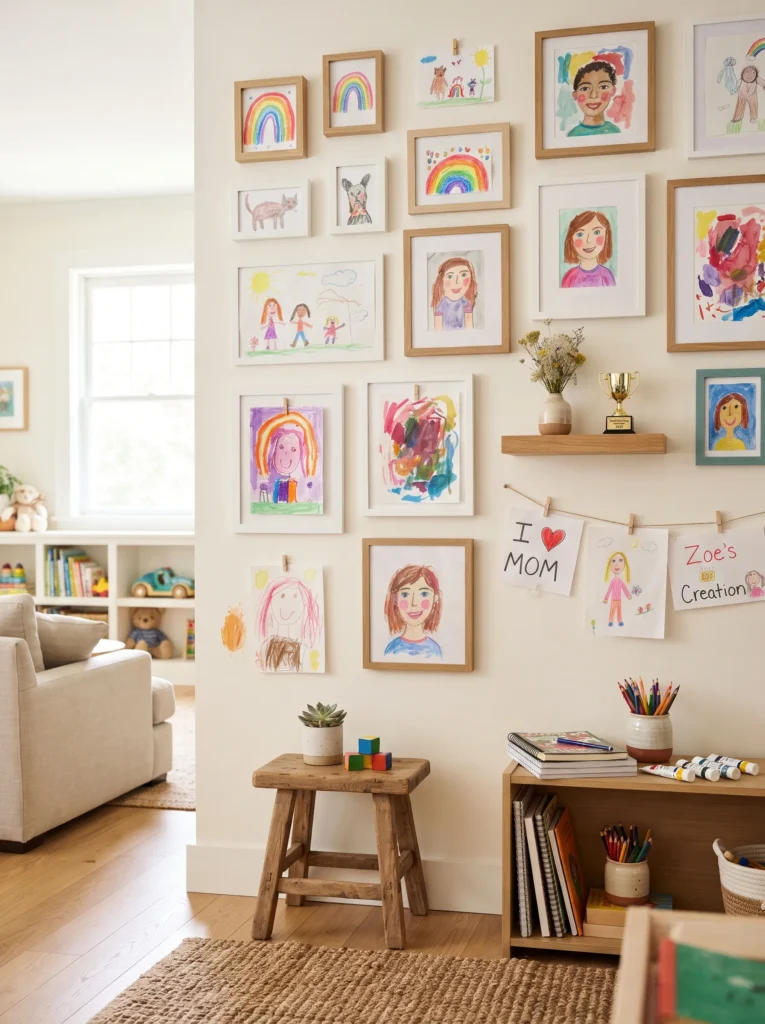
16. Kid’s Art Gallery Wall
Vibe: Joyful and personal.
Why it works: Nothing makes a family room feel more authentic than celebrating your children’s creativity. A dedicated gallery for kid-made art turns their creations into genuine decor that sparks conversation, builds confidence, and brings personality to the room in a way that store-bought art never could.
How to get it: Use a mix of frames (inexpensive ones from IKEA or thrift stores work great) and rotate art regularly. Alternatively, install a simple wire or clip system that makes swapping pieces easy. Place the artwork at a height where both adults and children can appreciate it. This is a low-cost, high-impact way to make the space uniquely yours.
Shop The Look
- Set of picture frames various sizes
- Art clip hanging system wire
- Small floating shelf for display
- Art supply storage caddy
- Child’s stool for viewing
How to Start Your Family Room Transformation
The one first move that anchors everything else is choosing your sofa first—specifically, a performance fabric sectional or sofa in a forgiving neutral like warm greige or soft navy. This is the largest, most expensive piece, and it dictates the room’s scale, color direction, and seating capacity. Everything else—rug size, coffee table shape, accent chair placement—flows from this decision.
The most common mistake is underestimating the importance of negative space. Beginners often overfill their family room with furniture, thinking “more seating” equals “more comfort.” In reality, cramped rooms feel stressful, not cozy. Leave at least 30-36 inches of walking path between major pieces, and resist the urge to push furniture against every wall. Floating furniture away from walls can actually make a room feel larger and more intentional.
Budget entry points under $50: A single stem of pampas grass in a matte ceramic bud vase (~$25) adds organic texture; a set of woven storage baskets (~$35) instantly corrals clutter; a warm-toned throw pillow in bouclé or velvet (~$30) layers cozy texture onto any sofa.
Realistic expectations: A full transformation—new sofa, rug, coffee table, lighting, and storage—typically takes 4-6 weeks of sourcing and 3-6 months of budget-friendly gradual shopping, with a starter budget of $1,500-$3,000 for a basic sofa, rug, and coffee table, and $5,000-$10,000 for a full room redo. A weekend can easily refresh accessories, rearrange furniture, and add new textiles; larger pieces require patience and planning.
Frequently Asked Questions About Family Room Design
What is the difference between a family room and a living room?
A family room is casual and designed for daily use by the whole household—think movie nights, homework, and lounging. A living room is traditionally more formal, reserved for entertaining guests and special occasions. In modern homes, these lines often blur, but the family room always prioritizes comfort and durability over formality.
What are the best paint colors for a family room?
Warm neutrals like Sherwin-Williams “Agreeable Gray” (greige), Benjamin Moore “Revere Pewter” (warm greige), and Farrow & Ball “Skimming Stone” (warm white) are popular choices because they’re forgiving of everyday wear and coordinate easily with any furniture. Deeper hues like navy or forest green can also work for a cozier vibe.
How much does it cost to furnish a family room?
A basic starter family room (sofa, rug, coffee table, lamp, accessories) can be furnished for $1,500-$3,000 using budget-friendly retailers. A mid-range full room redo (sectional, accent chairs, storage, lighting, art, textiles) typically ranges from $5,000-$10,000. High-end custom pieces can exceed $20,000.
Can I use a family room for both TV and conversation?
Yes—arrange your seating around the TV for movie nights, but include a swivel chair or two that can easily turn toward the center of the room for conversation. A coffee table and side tables also anchor the arrangement so the TV doesn’t dominate the space completely.
What are the best flooring options for a family room?
Hardwood or luxury vinyl plank flooring is most durable and easy to clean, especially when layered with an area rug for warmth. Carpet is cozy but harder to maintain; if you choose it, opt for stain-resistant, low-pile options. The key is selecting a material that can withstand daily wear from kids and pets.
Ready to Create Your Dream Family Room?
From color drenching to flexible seating, these 16 family room design ideas span color, materials, layout, and storage—so you can pick and choose what fits your space and your life. Your family room doesn’t have to be “perfect” all at once; the best rooms evolve gradually, with pieces gathered over time. Today, you can start by rearranging your furniture to improve flow or by adding one textured throw pillow that makes you smile. The goal is a space that feels like your family—lived-in, loved, and ready for whatever the day brings. Save your favorite ideas and start with whichever one brings you the most joy—your family room is waiting.
One Comment