
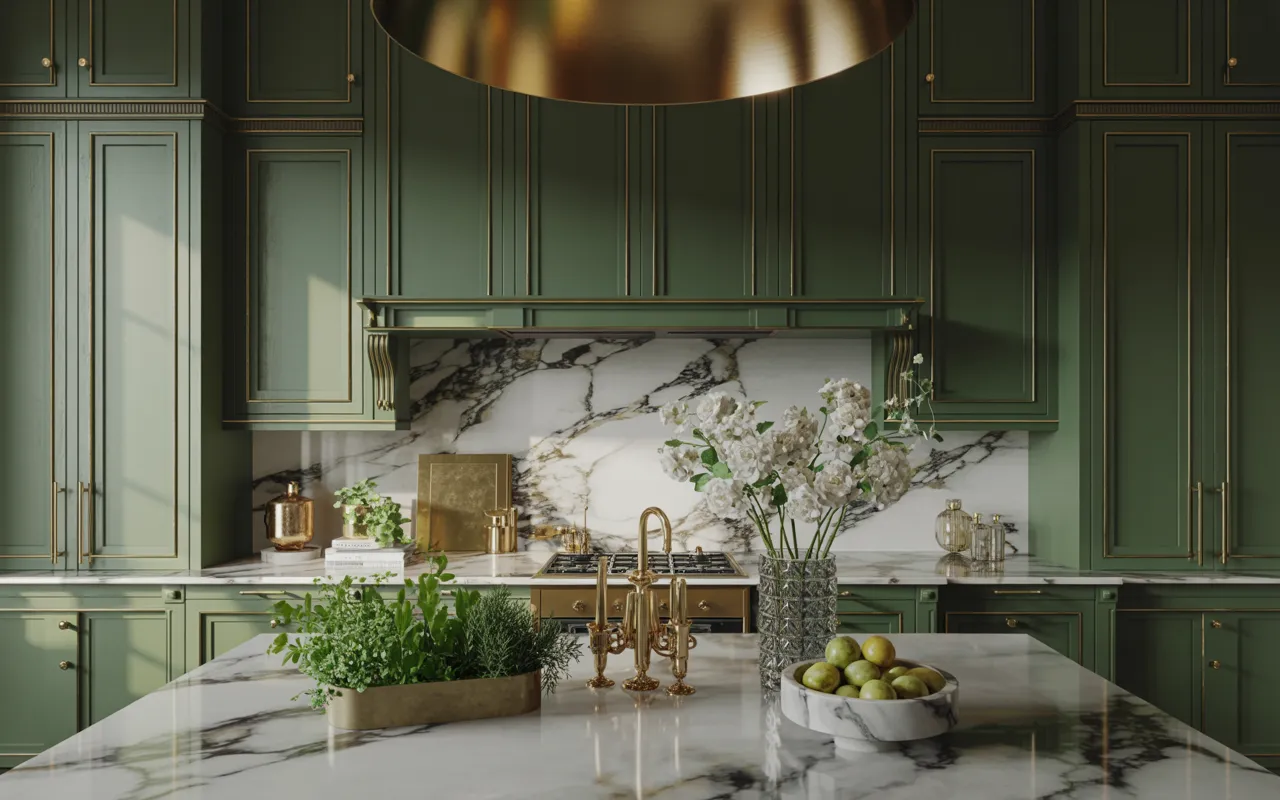
18 Gorgeous Green Kitchen Designs for Modern Homes
Green kitchen designs have evolved from a bold trend into a timeless design choice that brings warmth, character, and a deep connection to nature into the heart of the home. From soft sage cabinets to dramatic forest green islands, this article delivers eighteen distinct ways to incorporate this versatile hue into your kitchen. A green kitchen feels like a breath of fresh air—calm yet full of life, grounded yet refreshingly vibrant. It transforms morning coffee routines into moments of quiet appreciation and turns evening meal prep into something almost meditative. Here are eighteen ideas worth saving—and stealing.
Why Green Kitchen Designs Work So Well
Green kitchen designs have moved from trend to timeless status, and the shift makes perfect sense. After years of all-white kitchens dominating the design conversation, homeowners and designers are craving spaces with personality, depth, and a connection to the natural world. Green sits perfectly at the intersection of calm and character—it soothes without fading into the background. Designers now see green as something of a new neutral, a color that grounds a space while still allowing other elements to shine.
The versatility of green kitchen designs stems from the astonishing range of shades available, each with its own mood. Sage and celadon bring a fresh, airy quality to a room, while olive and moss green feel earthy and grounded. At the darker end, forest green and emerald introduce drama and sophistication, reminiscent of stately English country homes. The color pairs effortlessly with materials found in every kitchen: the warmth of butcher block, the cool elegance of marble, the precision of brass hardware. This natural affinity makes green kitchen designs uniquely adaptable to nearly any architectural style.
Beyond aesthetics, green kitchen designs are surging because they answer a cultural craving for calm. Post-pandemic, homes have become sanctuaries, and the kitchen—once purely functional—has evolved into a gathering space where people linger. Green, with its associations of balance, renewal, and harmony, makes this hardest-working room feel simultaneously invigorated and serene. It invites slow mornings and long dinners, offering a visual respite from the chaos of daily life. This emotional resonance makes green kitchen designs feel less like a passing trend and more like a meaningful design choice.
Small spaces need not shy away from green kitchen designs. The key lies in selecting the right shade and using it strategically. Lighter tones like mint or sage on upper cabinets and walls can visually expand a compact kitchen, while darker shades used on a single element, like a peninsula or lower cabinets, add depth without closing the room in. Pairing green with reflective surfaces, such as glossy tile or glass-front cabinets, helps bounce light around, ensuring even a modest galley kitchen feels open and full of life.
Style at a Glance
| Element | Core Trait 1 | Core Trait 2 |
|---|---|---|
| Philosophy | Balance & Vitality | Timeless Adaptability |
| Key Materials | Natural Wood, Stone, Brass | Matte or Gloss Lacquer, Ceramic Tile |
| Color Palette | Sage, Olive, Forest Green, Emerald | Warm White, Cream, Natural Oak |
1. Misted Fen Calm
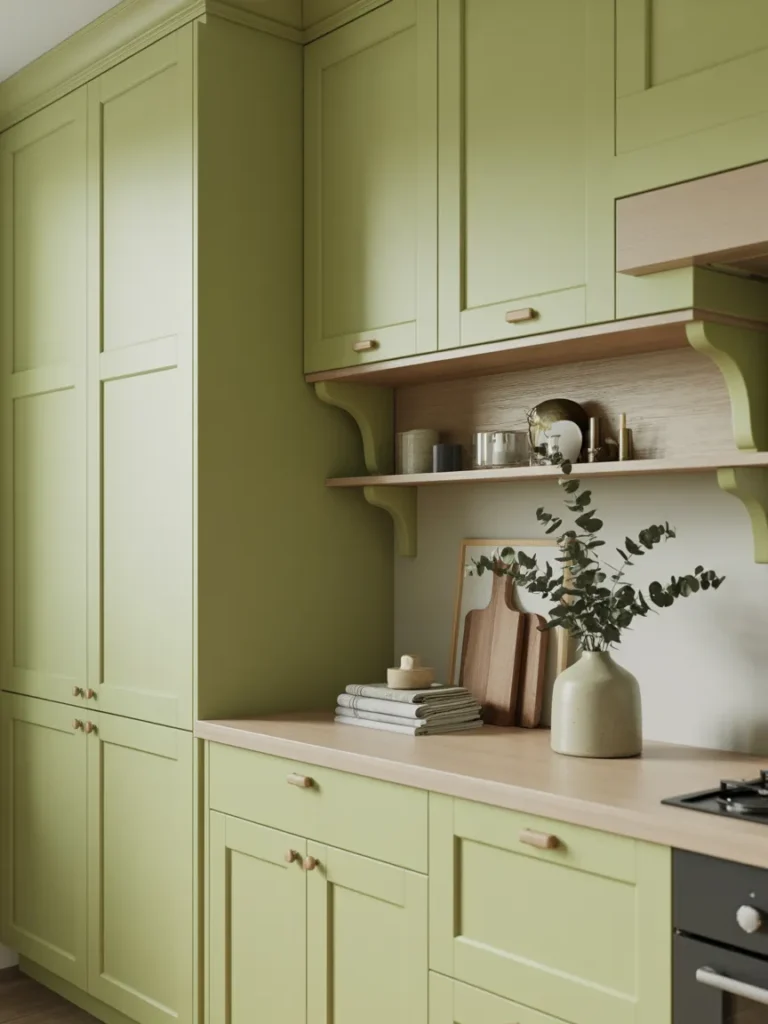
Vibe: Hushed and sun-warmed.
Why it works: Pale greens like sage and celadon are so soft they act almost as a neutral, providing a calming backdrop that doesn’t compete with other design elements. This gentle shade pairs beautifully with natural wood and warm metals, creating a kitchen that feels both fresh and timeless without relying on stark contrast.
How to get it: Choose a muted sage green paint for your shaker-style cabinets. Pair it with creamy white walls and countertops to maintain an airy feel. Introduce warmth with open oak shelving and brushed brass hardware. This combination creates a classic foundation that will remain stylish for years.
Quick Win: Swap out your cabinet hardware for unlacquered brass pulls. As they age, they’ll develop a beautiful patina that adds instant character and warmth to your new green cabinets.
FIND MORE ABOUT: 16 Family Room Design Ideas for Everyday Comfort
| Shop The Look |
|---|
| Sage Green Shaker Cabinet Paint |
| Brushed Brass Cabinet Pulls |
| Creamy White Quartz Countertop |
| Light Oak Open Shelving |
| Dried Eucalyptus in Ceramic Vase |
2. Regal Forest Elegance
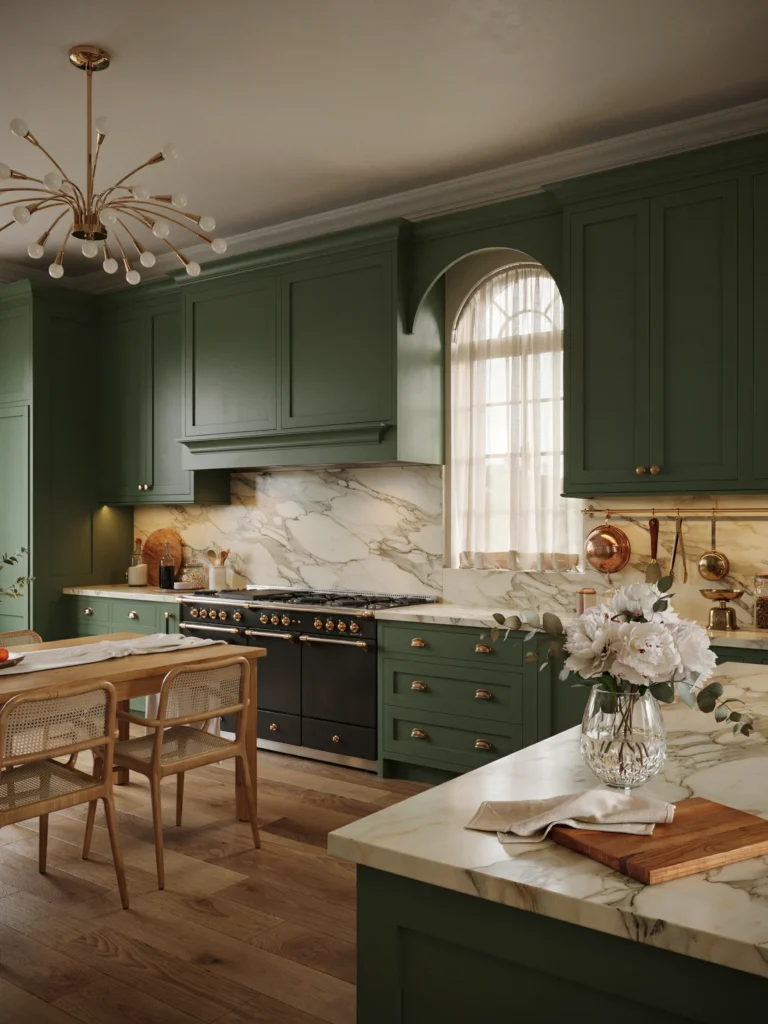
Vibe: Deeply grounded.
Why it works: Deep forest greens bring a sense of grandeur and sophistication that’s reminiscent of stately homes. This shade offers rich color without the visual shock of a brighter hue, making a powerful yet refined statement that’s especially effective in larger spaces or as a dramatic anchor in an open-plan layout.
How to get it: Paint your perimeter cabinets in a dark, moody forest green. To prevent the room from feeling too heavy, extend a white marble backsplash all the way up the wall, and introduce lighter elements like cream walls and warm metallic lighting. This contrast keeps the space elegant rather than cavernous.
Quick Win: Use a glossy or eggshell finish on your dark green cabinets. The sheen will reflect light, making the kitchen feel brighter and more expansive, a technique particularly effective on wood surfaces like cabinetry.
| Shop The Look |
|---|
| Forest Green Cabinet Paint |
| White Marble Backsplash Tile |
| Brass Cabinet Hardware |
| Statement Chandelier |
| Clear Glass Vase |
3. Olive Earth Warmth
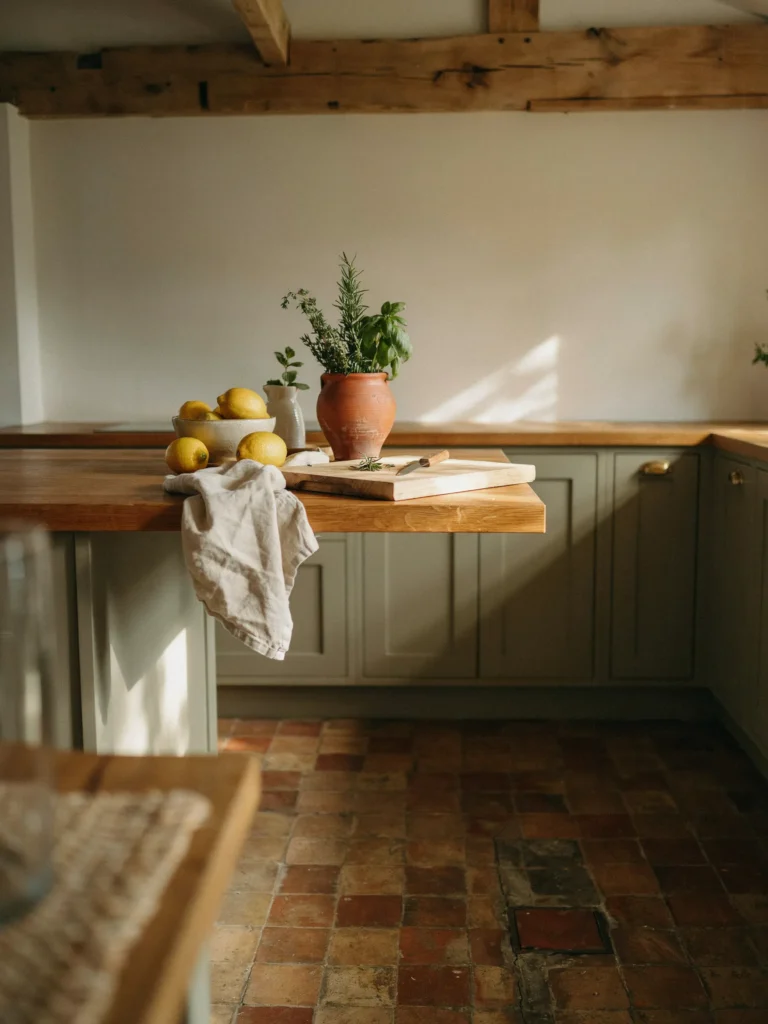
Vibe: Sun-baked and raw.
Why it works: Olive green has yellow and brown undertones that give it an earthy, historic feel. It pairs seamlessly with terracotta and timber, creating a warm, cohesive look that feels both rustic and refined. This combination is perfect for kitchens that want to feel lived-in and welcoming.
How to get it: Choose a muted olive green for your kitchen island and lower cabinets. Balance the earthiness of the green with a natural stone or wooden worktop. Introduce terracotta elements through floor tiles or decorative pottery, and keep accessories like wooden bowls and clay pots in a similar earthy palette.
| Shop The Look |
|---|
| Olive Green Cabinet Paint |
| Terracotta Floor Tiles |
| Butcher Block Countertop |
| Clay Herb Pot |
| Stoneware Mixing Bowls |
4. Silvery Sage Light
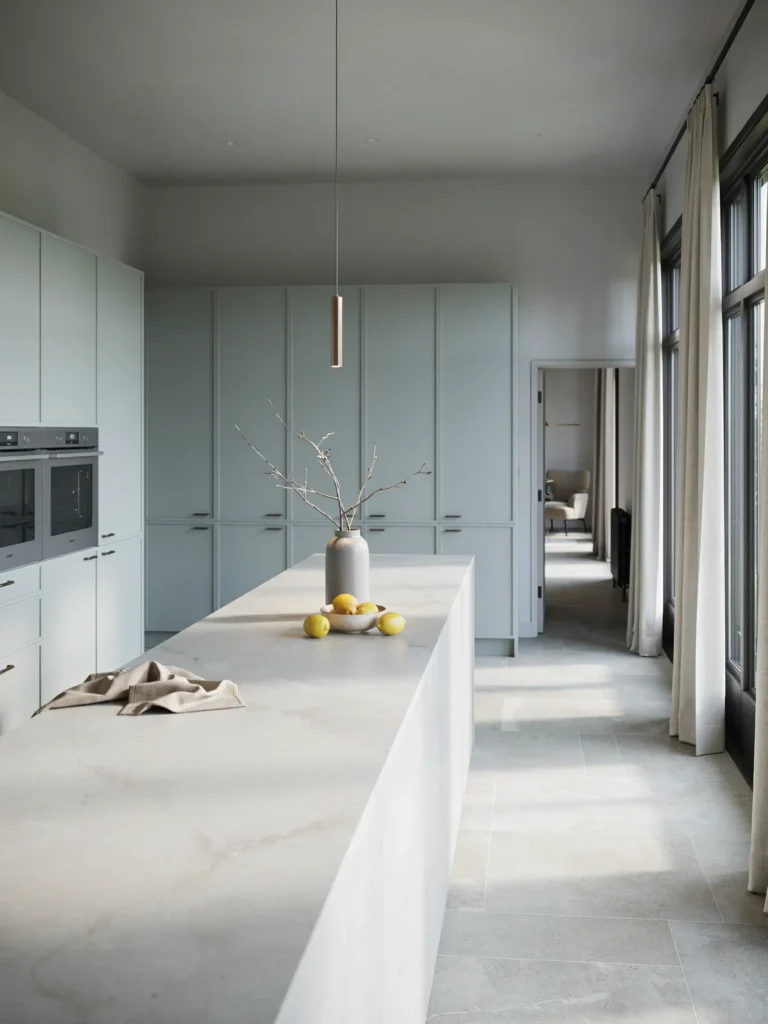
Vibe: Crisp and still.
Why it works: This version of green leans into its cool grey undertones, pulling it away from a botanical feel and into a more contemporary and architectural aesthetic. The coolness is reinforced by pairing it with pale stone and grey elements, creating a clean, sharp look that’s exceptionally calming and well-suited to modern minimalist homes.
How to get it: Select a sage green with a distinctly grey, rather than yellow, undertone. Pair it with cool grey walls and pale stone flooring to reinforce the crisp, contemporary feel. Keep hardware simple and minimal—brushed nickel or matte black—to maintain the clean lines.
| Shop The Look |
|---|
| Silvery Sage Cabinet Paint |
| Pale Stone Floor Tiles |
| Cool Grey Wall Paint |
| Brushed Nickel Bar Pulls |
| Minimalist Pendant Light |
5. Two-Tone Harmony
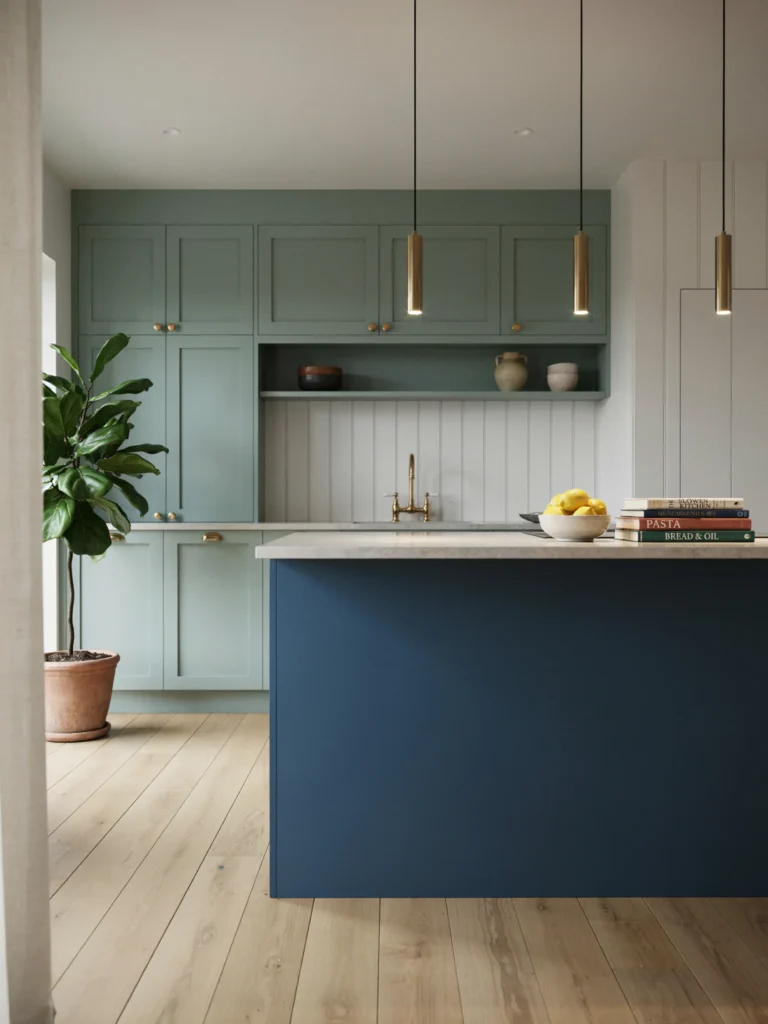
Vibe: Anchored and vibrant.
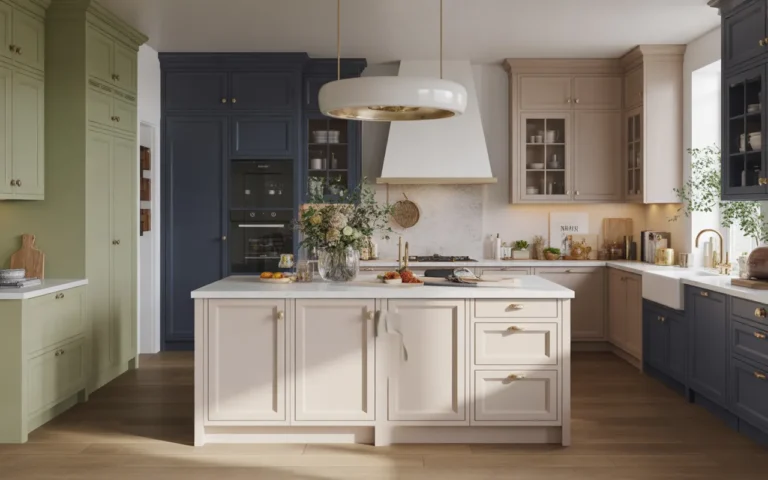
Why it works: A two-tone approach uses colour blocking to create visual interest and define zones within a space. A deep, grounding colour on a central island anchors the room, allowing brighter or lighter green cabinetry around the perimeter to pop without overwhelming the space.
How to get it: Paint your central kitchen island in a deep, inky blue, and the surrounding perimeter cabinets in a lighter green. Use white panelling and pale timber to add lightness. Brass hardware helps tie the two colors together, adding warmth that bridges the gap between the contrasting tones.
| Shop The Look |
|---|
| Deep Blue Island Paint |
| Lighter Green Cabinet Paint |
| Brass Cabinet Pulls |
| Pale Timber Flooring |
| White Wall Panelling |
6. Layered Green Depth
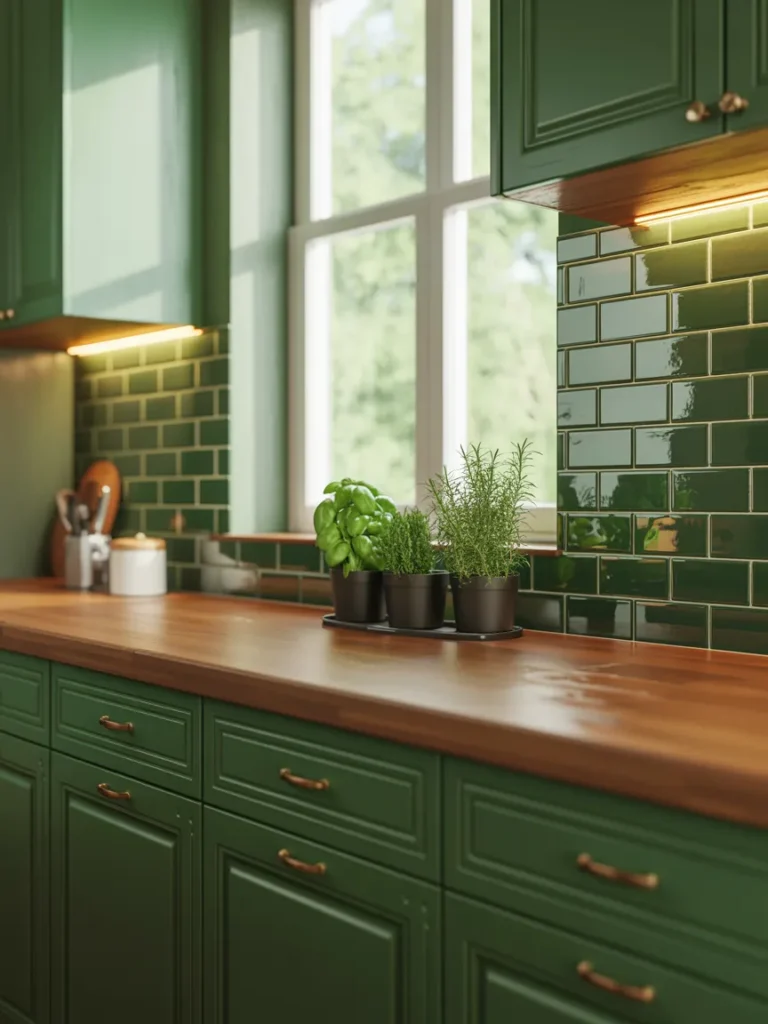
Vibe: Luxuriously layered.
Why it works: Using multiple shades of green in one kitchen creates a rich, harmonious feel when the tones are carefully judged. Darker cabinets anchor the room, while a lighter shade on the walls keeps the space feeling bright, with a third tone, like glossy tiles, acting as a beautiful mediator between the two.
How to get it: Select three distinct shades of green: a dark green for your base cabinets, a fresher, minty green for the walls, and a glossy green tile for the backsplash. The variation in tone and finish will create depth and visual interest. Keep all other elements, like the countertop and hardware, neutral.
| Shop The Look |
|---|
| Dark Green Base Cabinet Paint |
| Minty Green Wall Paint |
| Glossy Green Subway Tile |
| Neutral Quartz Countertop |
| Fresh Herbs in Pot |
7. Architectural Frame Green
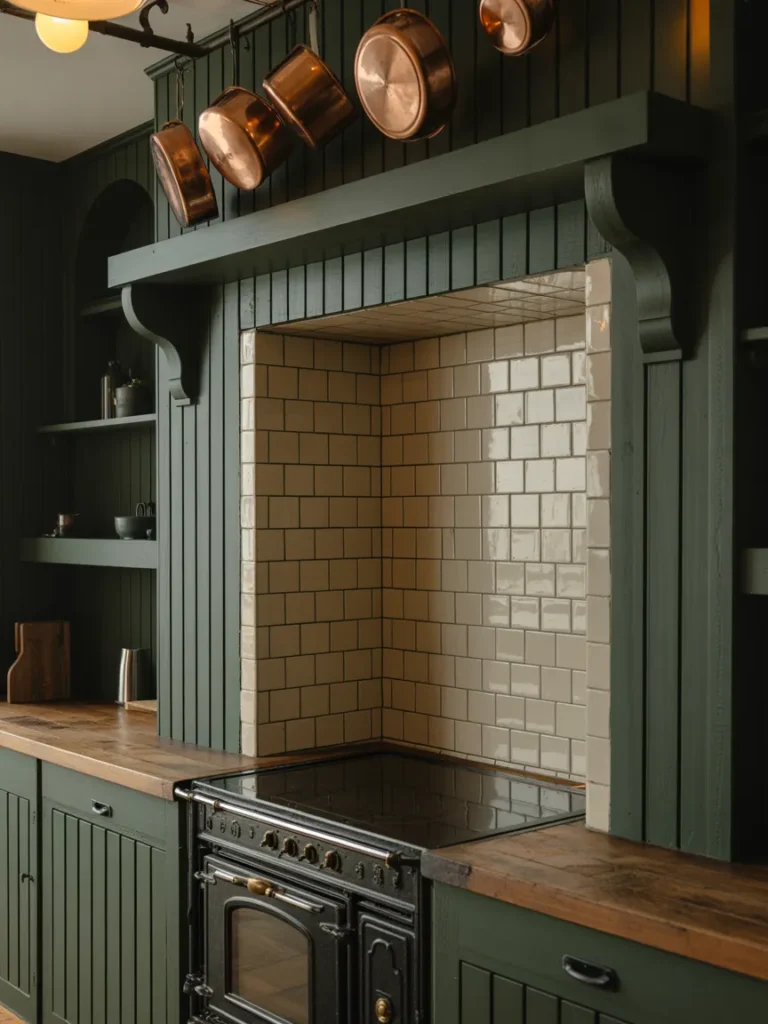
Vibe: Characterful and intentional.
Why it works: Instead of using green as a surface colour, this technique treats it as an architectural element to frame a specific feature. This approach draws the eye to a focal point, such as a traditional stove or a tiled alcove, adding structure and interest without overwhelming the space.
How to get it: Paint the panels on either side of a kitchen feature, like a range cooker or a tiled recess, in a dark, muted green. The green should be dark enough to sharpen the white tiles, but muted to avoid a harsh contrast. This frames the feature beautifully, making it the undisputed focal point of the room.
| Shop The Look |
|---|
| Muted Green Paint for Panels |
| White Subway Tile |
| Wall-mounted Pot Rack |
| Copper Pots Set |
| Traditional Range Cooker |
8. Pop of Green Island
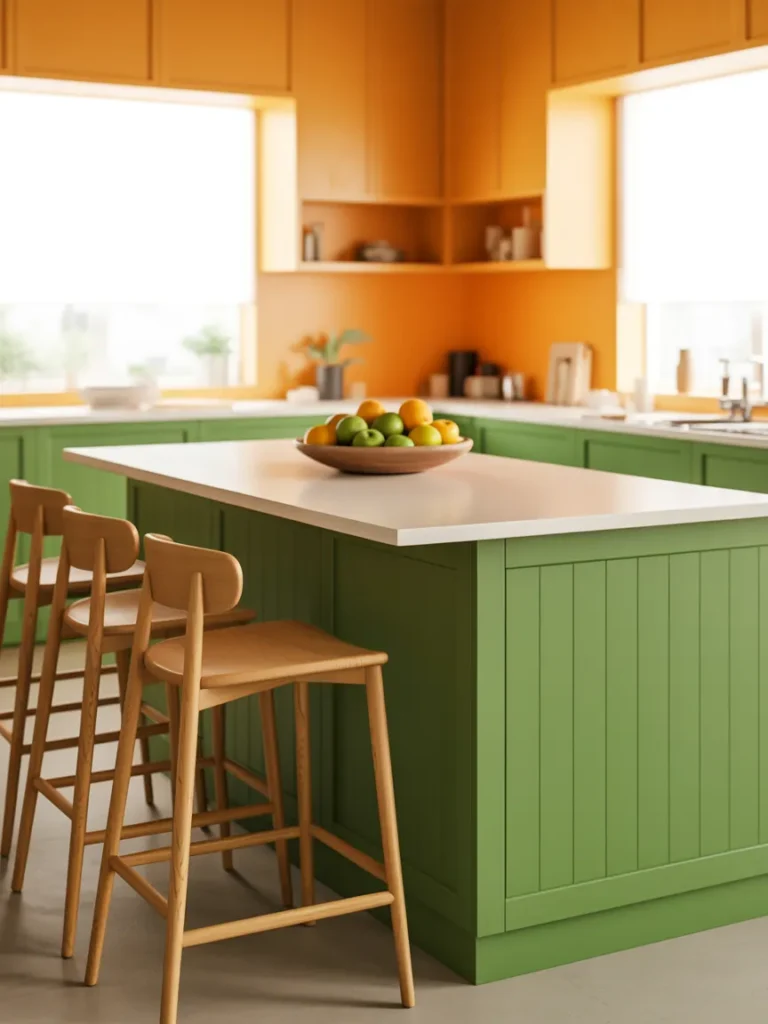
Vibe: Energetically anchored.
Why it works: Confining a bold colour to the island creates a stabilising centre point in an otherwise busy or vibrant kitchen. A mid-tone, slightly earthy green acts as an anchor, absorbing energy from brighter elements like zesty orange walls and allowing the overall scheme to remain cohesive.
How to get it: Paint your kitchen island in a mid-tone, earthy green. If you have bright walls, this will ground the space. Pair it with natural wood accents, like bar stools, to keep the look organic and prevent the green from feeling isolated or jarring.
| Shop The Look |
|---|
| Mid-tone Green Island Paint |
| Wooden Breakfast Bar Stools |
| Clear Glass Pendant Lights |
| Large Wooden Chopping Board |
| Earthenware Fruit Bowl |
9. Pastel Green Neutral
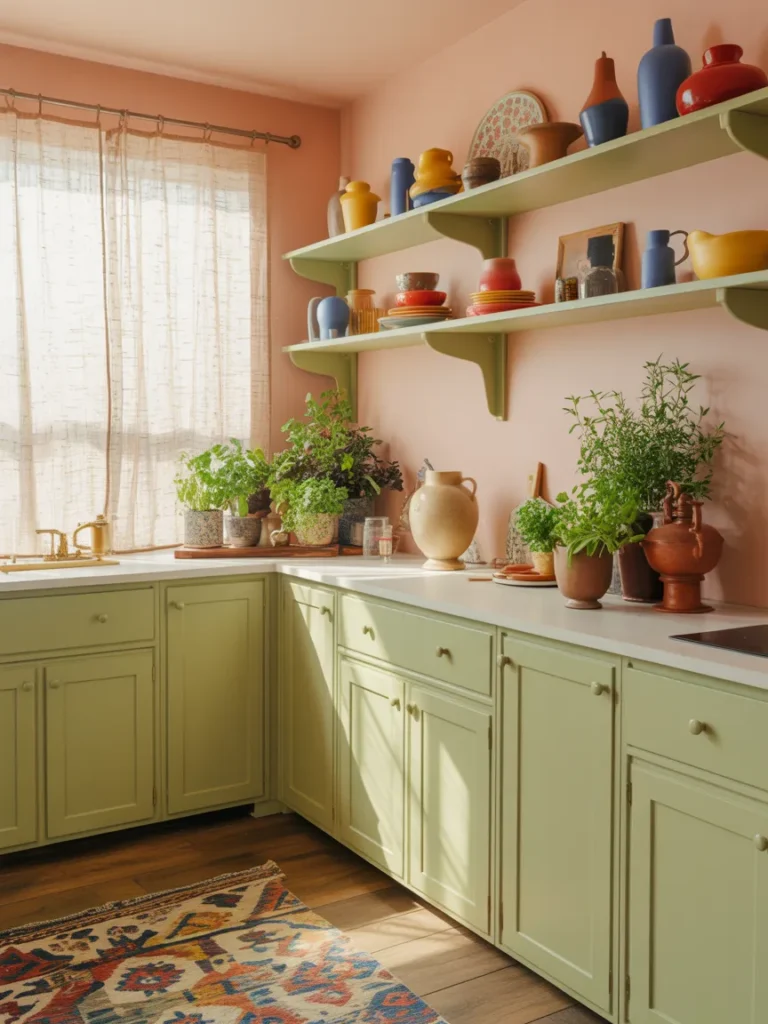
Vibe: Playfully soft.
Why it works: Pale pastel green can act almost as a neutral, providing a soft, chalky backdrop that allows other colours to sing. When paired with warm pink walls, it creates a gentle, vintage-inspired atmosphere that’s both creative and surprisingly versatile, allowing for a mix of vibrant accents.
How to get it: Paint your kitchen cabinets and woodwork in a pale pastel green. Pair this with warm pink walls for a soft, feminine base. Embrace the eclectic by adding vibrant accessories like a patterned rug, colourful ceramics, and unique art pieces. This approach treats the green as a canvas for personal expression.
| Shop The Look |
|---|
| Pastel Green Cabinet Paint |
| Warm Pink Wall Paint |
| Patterned Vintage Rug |
| Colourful Ceramic Vases |
| Mismatched Art Prints |
10. Cool Green & Grey
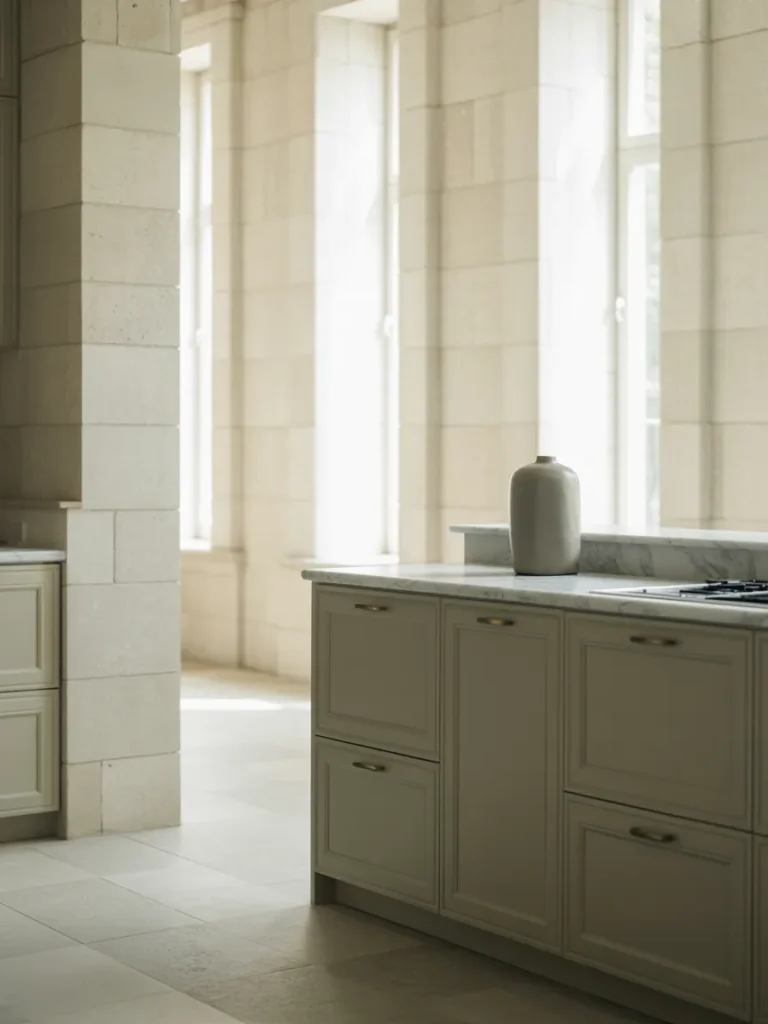
Vibe: Architecturally sharp.
Why it works: A green with a distinct grey undertone feels less botanical and more architectural. This coolness is reinforced by pale stone flooring and walls, which sharpen the green rather than warming it. The result is a crisp, contemporary kitchen with a sophisticated, almost minimalist feel.
How to get it: Choose a green paint that is noticeably cool, with a grey undertone. Pair it with pale stone floors and walls. Use hardware that is muted enough to sit quietly without drawing attention, such as a brushed nickel or a very muted brass. This creates a calm, unified look.
| Shop The Look |
|---|
| Cool Grey-Green Cabinet Paint |
| Pale Stone Floor Tiles |
| Muted Brass Hardware |
| Simple Grey Ceramic Vase |
| Stone Wall Paint |
11. Confident Apple Green
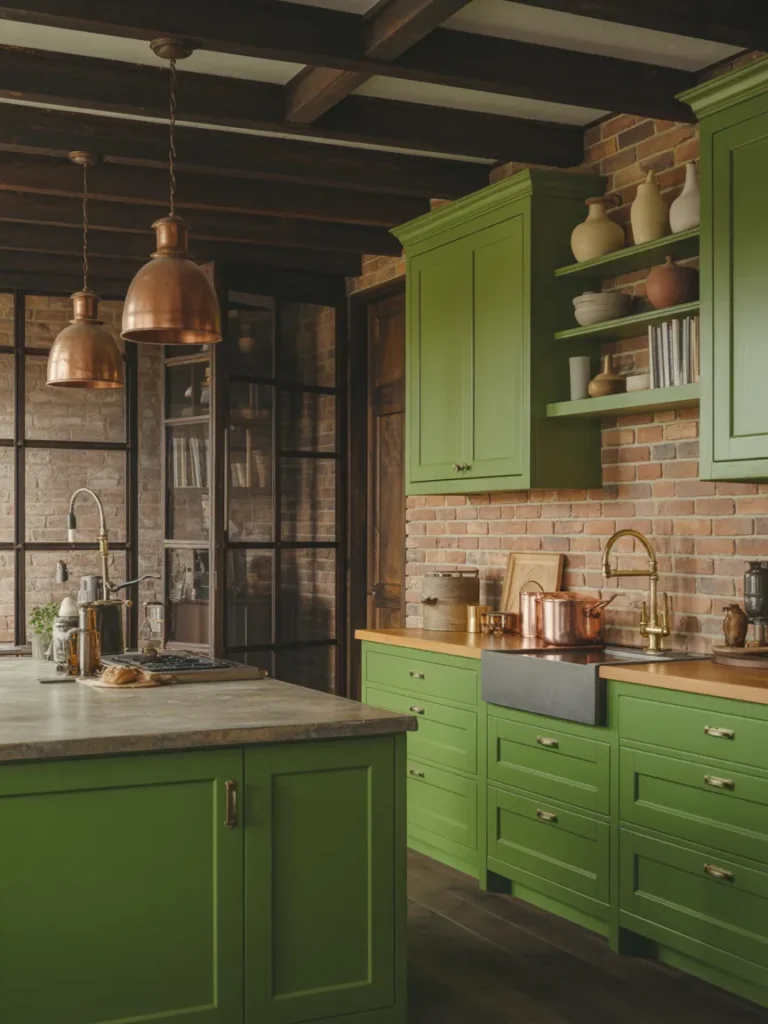
Vibe: Confidently crisp.
Why it works: A sharp, zesty apple green provides crisp definition to kitchen joinery that could otherwise get lost against a busy backdrop of dark beams, worn brickwork, and mixed metals. This confident base colour unifies the space and makes the cabinetry a strong visual element.
How to get it: In a kitchen filled with a mix of materials and textures, choose a sharp apple green for your cabinetry. The crisp colour will stand out against elements like dark beams, copper, and brass, giving the joinery definition and acting as a confident anchor for the eclectic arrangement.
| Shop The Look |
|---|
| Apple Green Cabinet Paint |
| Exposed Brick Wall Effect |
| Copper Mixer Tap |
| Assorted Copper & Brass Pots |
| Eclectic Ceramic Dishware |
12. Drenched Green Pantry
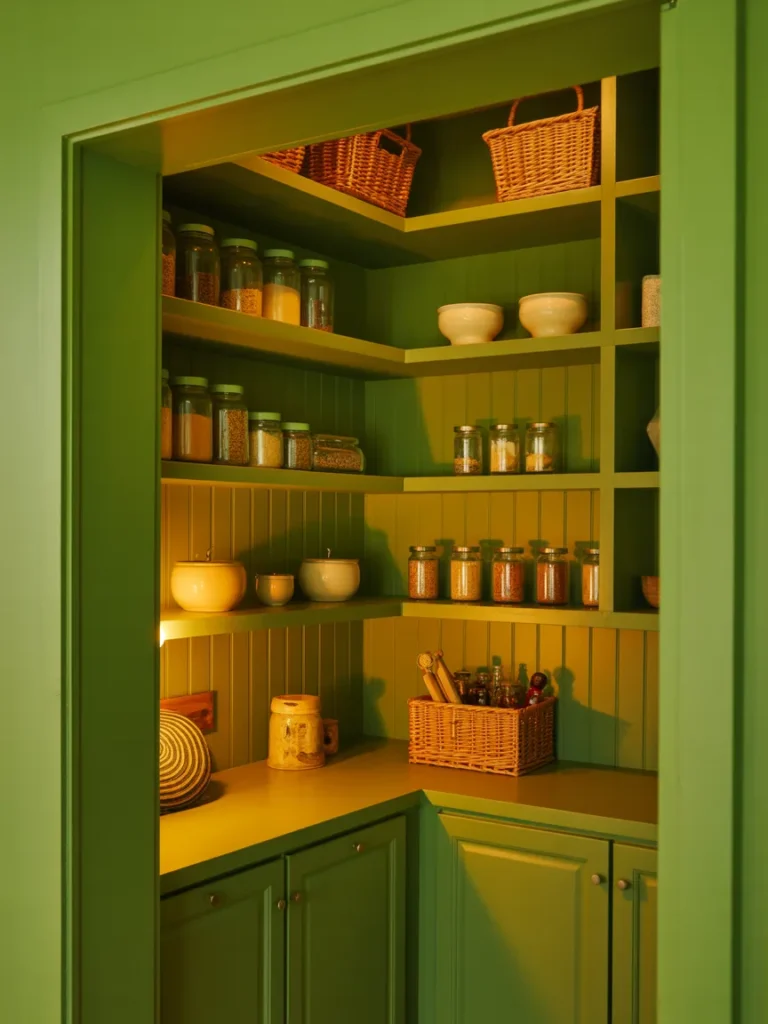
Vibe: Envelopingly cheerful.
Why it works: Colour drenching—using the same color on walls, trim, and cabinetry—creates an immersive, sophisticated look. This technique works beautifully in a pantry or kitchen nook, making the small space feel intentional and cocoon-like rather than cramped.
How to get it: Pick a cheerful yet subdued shade of green and use it on every surface in your pantry: the walls, the cabinetry, and the trim. This creates a seamless, enveloping look. Use warm wood shelves and cream accessories to add contrast and texture without breaking the color’s power.
| Shop The Look |
|---|
| Subdued Green Paint |
| Clear Glass Storage Jars |
| Woven Baskets |
| Warm Wood Shelving |
| Cream Ceramic Canisters |
13. Bold Olive Nook
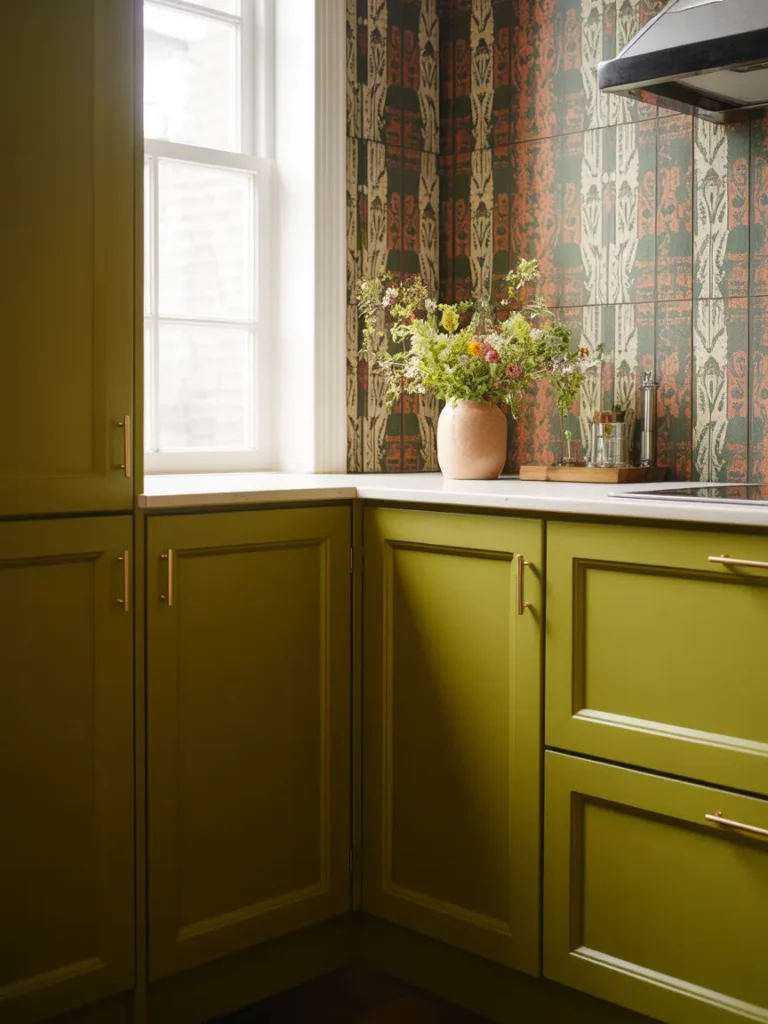
Vibe: Small and mighty.
Why it works: Small spaces are perfect for bold color choices. A punchy olive green on cabinets in a pokey corner is a testament that compact kitchens can take a big statement. Pairing it with an equally intriguing wallpaper above adds personality and makes the nook a feature, rather than an afterthought.
How to get it: Don’t be afraid to go bold in a small kitchen. Paint your compact cabinets in a vibrant, punchy olive green. Above the cabinets, use an intriguing wallpaper to add depth and character. Keep the rest of the space simple to let the green and pattern shine.
| Shop The Look |
|---|
| Punchy Olive Green Paint |
| Intriguing Wallpaper |
| Small Vase for Flowers |
| Minimalist Pendant Light |
| Compact Bar Stool |
14. Smoked Green Mountain Style
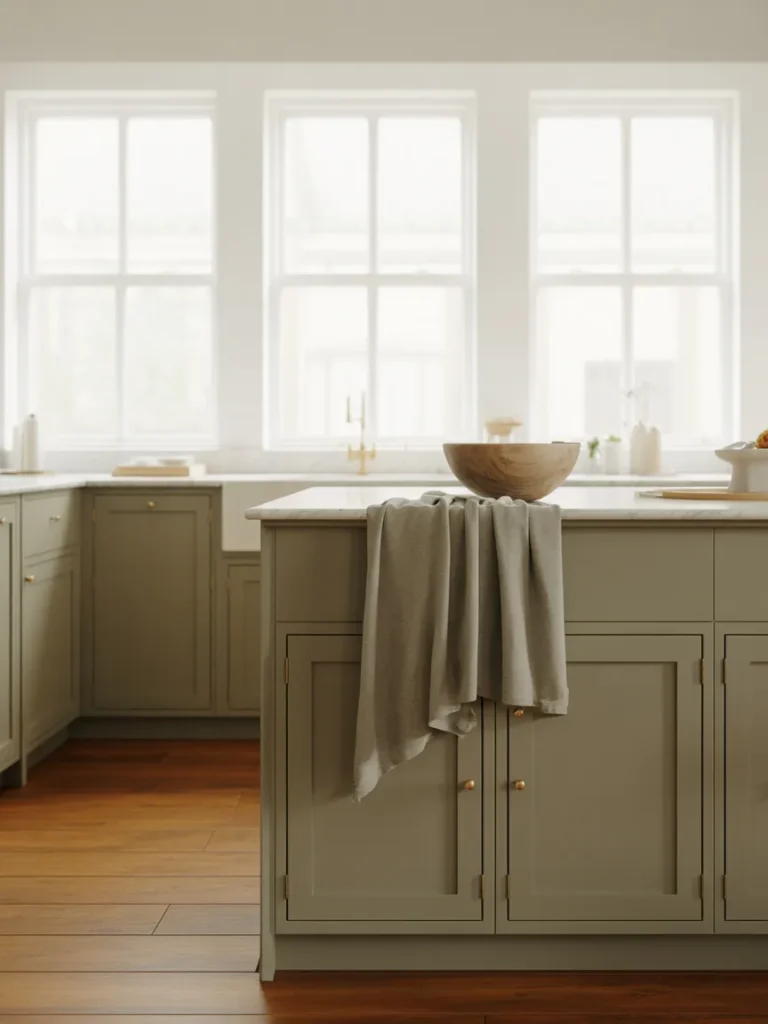
Vibe: Mountain-air calm.
Why it works: While a “cabin kitchen” may bring to mind dark woods, this approach uses a calming, smokey green to keep the space light and airy while still reflecting a mountain aesthetic. The green provides a subtle nod to nature without the heaviness of traditional rustic decor.
How to get it: Choose a calming, smokey green paint for your cabinetry. Paint the rest of the room in a subtle grey to reinforce the light, airy feel. Use warm wood flooring and simple, natural textures in your accessories, like a wooden bowl or a linen runner, to keep the space grounded.
| Shop The Look |
|---|
| Smokey Green Cabinet Paint |
| Subtle Grey Wall Paint |
| Warm Wood Flooring |
| Linen Table Runner |
| Simple Wooden Bowl |
15. Warm Forest Green
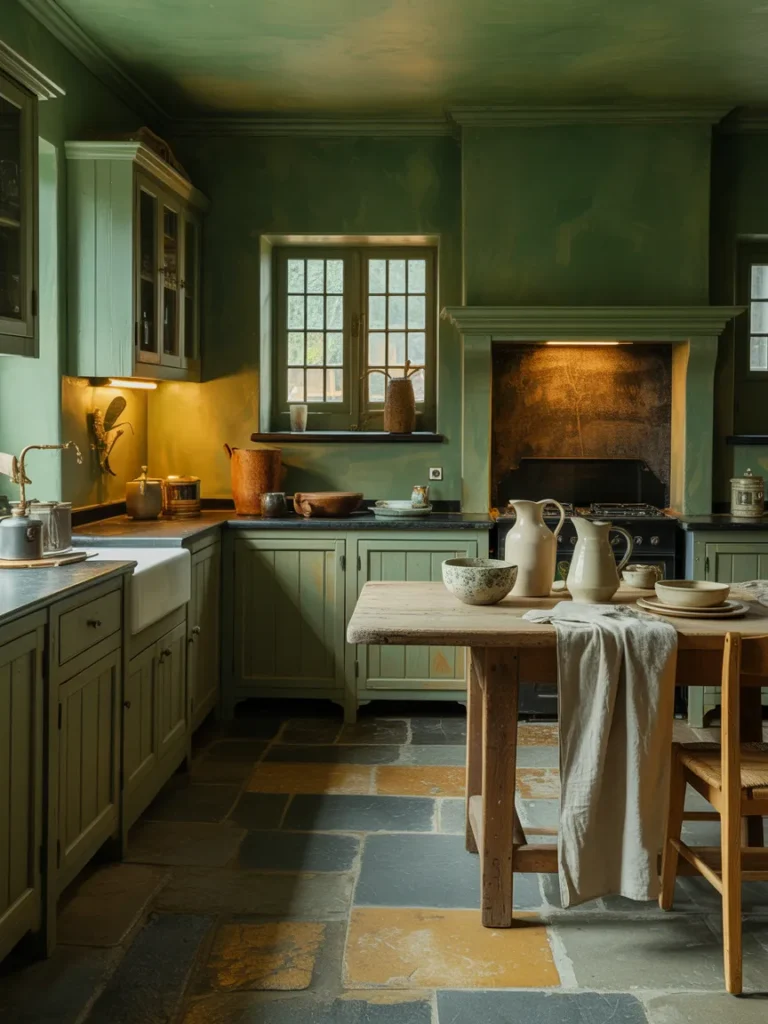
Vibe: Quintessentially warm.
Why it works: A moody forest green with just a hint of mossy brown warms up cool stone floors and a worn farmhouse table. This quintessential British country kitchen look relies on the green to add depth and soul to a space that could otherwise feel cold or stark.
How to get it: Opt for a forest green with mossy brown undertones for your cabinetry. Pair it with natural, rustic elements like a stone floor and a worn farmhouse-style table. This combination creates a warm, inviting atmosphere that feels both historic and grounded.
| Shop The Look |
|---|
| Warm Forest Green Paint |
| Stone Effect Floor Tiles |
| Farmhouse Dining Table |
| Cream Ceramic Dinnerware |
| Woven Placemats |
16. Rich Emerald & Marble
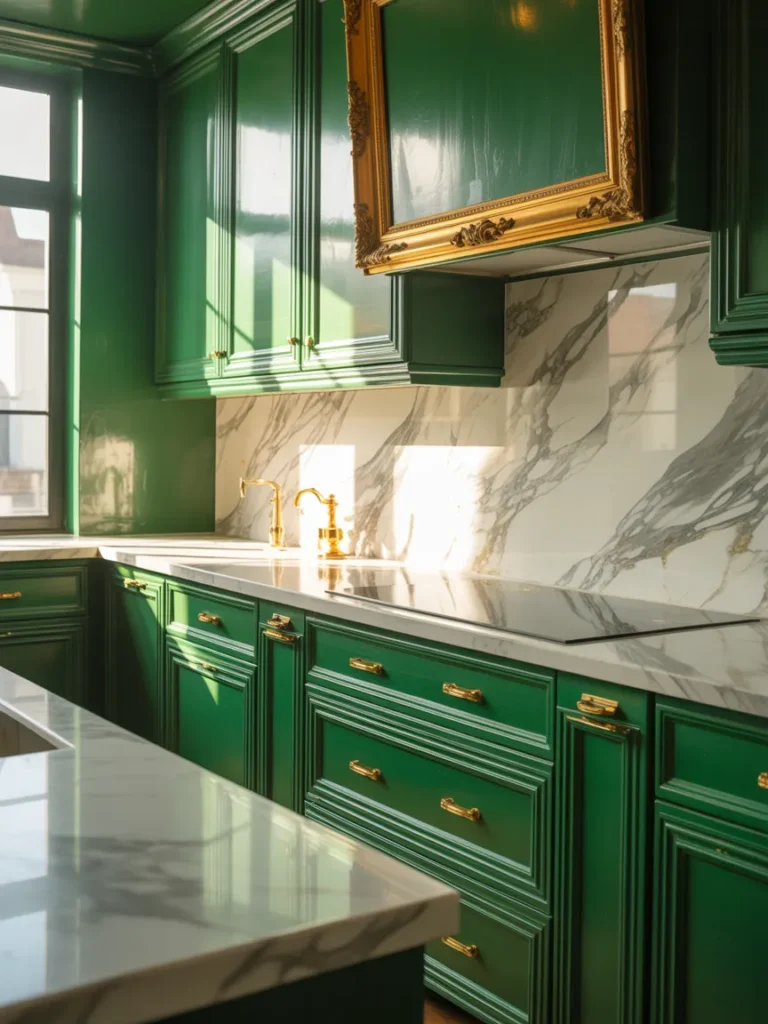
Vibe: Opulent and jewel-like.
Why it works: The combination of rich emerald green and white marble is inherently luxurious. Extending the marble backsplash up the wall mitigates the heaviness of the rich green, preventing it from becoming imposing while still allowing the colour to make a grand statement.
How to get it: Choose a rich, vibrant emerald green for your cabinetry. For the backsplash, use white marble and carry it all the way up the wall to the upper cabinets to create a seamless, high-impact look. Finish with polished gold hardware for a truly opulent feel.
| Shop The Look |
|---|
| Emerald Green Cabinet Paint |
| White Marble Backsplash Tile |
| Polished Gold Cabinet Pulls |
| Gold-framed Wall Art |
| Marble-look Countertop |
17. Two-Tone Wood & Green
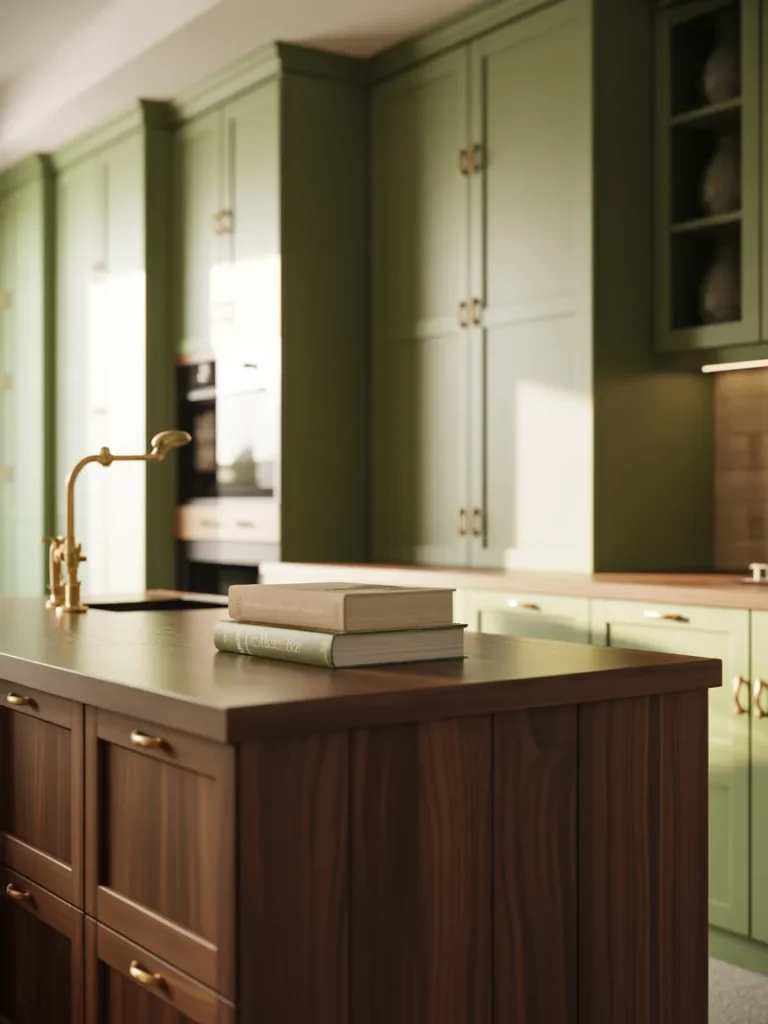
Vibe: Naturally sophisticated.
Why it works: Combining green cabinetry with rich timber elements brings a sense of harmony and natural sophistication to a kitchen. While sage green is a popular choice, pairing it with dark walnut or smoked oak creates a stunning contrast that elevates the entire space. This combination feels both modern and timeless.
How to get it: Paint your perimeter cabinets in a soft sage green. Choose a dark walnut or smoked oak for your kitchen island and any open shelving. This contrast creates a beautiful balance. Finish with warm brass hardware to tie the two elements together elegantly.
| Shop The Look |
|---|
| Sage Green Cabinet Paint |
| Dark Walnut Island Finish |
| Brass Cabinet Hardware |
| Natural Timber Bar Stools |
| Decorative Book Set |
18. Zesty Lime Accents
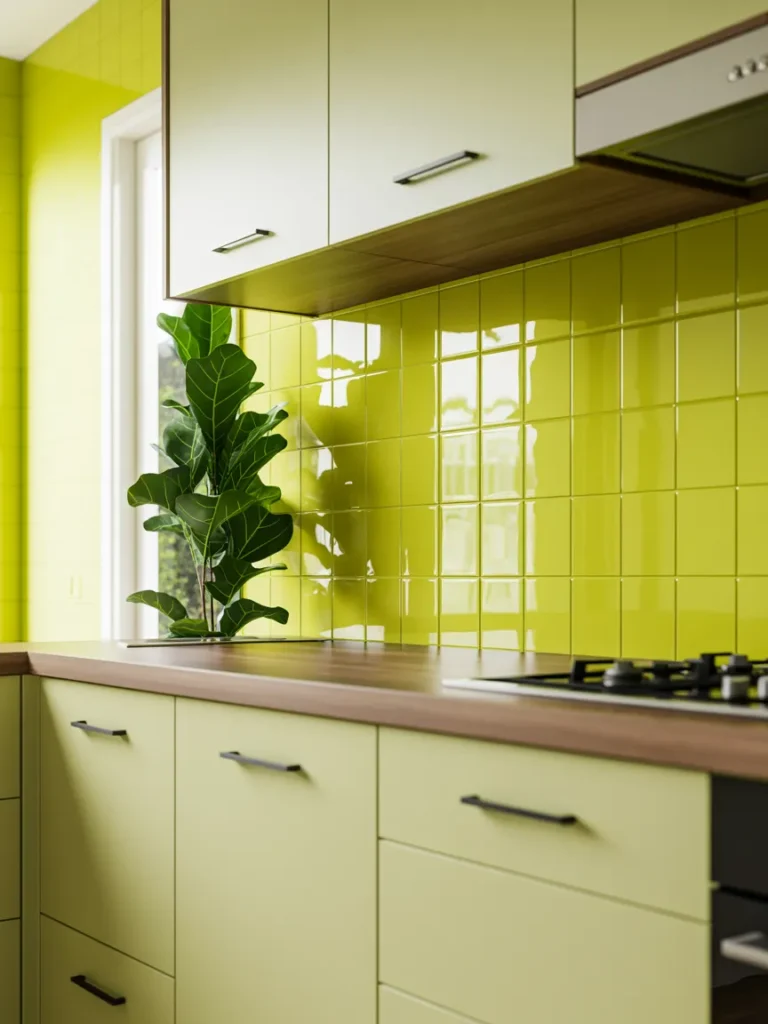
Vibe: Vibrantly lively.
Why it works: For those who love the idea of green but prefer a more neutral foundation, the ‘pop of green’ approach is a perfect solution. A zesty lime green splashback or vibrant accents on a neutral base add personality and energy without the commitment of painting all the cabinets.
How to get it: Keep your kitchen base and cabinets neutral in color and material. Introduce your green in a highly visible, easy-to-change element like a glass or glossy tile backsplash in a zesty lime shade. This creates a focal point and adds a burst of life.
| Shop The Look |
|---|
| Neutral White Cabinet Paint |
| Lime Green Splashback Tile |
| Matte Black Cabinet Pulls |
| Tall Potted Plant |
| Glass Canisters |
How to Start Your Green Kitchen Transformation
The single most effective first move for a green kitchen transformation is to choose your hero cabinet colour before anything else. This specific shade, whether it’s a soft sage or a moody forest green, will anchor the entire design. Everything from your countertops to your hardware must complement this foundational hue, so picking it first ensures a cohesive result. Don’t even look at tiles or worktops until you have your green paint sample in hand and have seen it in your specific light.
The most common mistake beginners make with green kitchen designs is ignoring the undertone. A sage green with a yellow base paired with cool grey countertops will clash, making the kitchen feel dull and uncoordinated. Always test your chosen green against other materials in your kitchen, especially your countertop and stone. If you have a warm-toned stone, opt for a green with warm or neutral undertones, like olive or sage. For a cooler stone, a green with a blue or grey base will harmonize perfectly.
For an instant style impact on a budget, focus on three specific items. A single stem of pampas grass in a matte black ceramic bud vase adds an instant organic sculptural element. Swap your cabinet hardware for unlacquered brass knobs to bring warmth and character that develops over time. Finally, a large, textured jute rug placed beneath a dining table or in front of the island anchors the space and introduces natural texture.
A full green kitchen renovation is a significant undertaking. A complete cabinet repaint or replacement will take one to two weeks, while a full-scale remodel can take several months. A starter version, focusing only on painting existing cabinets, changing hardware, and adding accessories, can be achieved in a long weekend. Budget realistically: a DIY cabinet paint job with quality materials might cost a few hundred dollars, while a professional respray can cost a few thousand, and a full bespoke kitchen with new green cabinetry will start in the tens of thousands.
Frequently Asked Questions About Green Kitchen Designs
Is green a good color for kitchen cabinets?
Yes, green is an excellent color for kitchen cabinets because it feels natural, warm, and surprisingly versatile. Muted shades like sage and olive are especially adaptable, acting almost as a neutral that can complement a wide range of design styles, from modern farmhouse to sleek contemporary.
What shade of green is best for kitchens?
The best shade depends on your desired atmosphere, but sage and muted olive are consistently top performers. Sage green creates a calm, fresh feel, while olive green brings an earthy, warm character that pairs well with natural materials. For a dramatic statement, rich forest green and emerald are timeless and elegant choices.
Do green kitchens go out of style?
While all trends have a lifecycle, green kitchen designs have proven to be remarkably resilient. Unlike stark colour fads, green is rooted in nature and has a long history in interior design. Its versatility and ability to pair with so many materials make it a timeless choice that ages well compared to bolder, more transient trends.
What colors go well with green kitchen cabinets?
Green pairs beautifully with a wide range of colors. For a classic look, combine it with warm whites, creams, and natural timbers. For a more sophisticated feel, pair it with darker woods like walnut, and for a touch of luxury, add brass or gold hardware. Earthy tones like terracotta and stone also harmonize wonderfully with green.
Are green kitchens popular in 2026?
Green kitchens continue to be a dominant trend in 2026 and show no signs of slowing down. Designers note that green has become a go-to palette, offering a welcome reprieve from all-white schemes. Brands are also taking notice, with high-end appliance manufacturers releasing exclusive green hues, cementing the trend’s popularity.
Can a small kitchen have green cabinets?
Absolutely. Lighter greens, like mint or sage, can make a small kitchen feel bigger and brighter by bouncing light around. Even darker greens can be used effectively in a small space, either on lower cabinets or on a single element like an island, to add depth without overwhelming the room.
Ready to Create Your Dream Green Kitchen?
From calming sage to moody forest, these eighteen green kitchen designs prove that this versatile hue is more than just a trend—it’s a timeless way to infuse personality and warmth into the heart of your home. Transforming your kitchen is a journey, and starting with just one element—be it a painted island, new hardware, or a vibrant splashback—is the most sustainable way to make a meaningful change. Today, you can begin by ordering a few paint samples of your favorite green shades and seeing how they look in your kitchen’s unique light. A green kitchen is about more than just a color; it’s about creating a space that feels connected to nature, calm yet invigorating, and authentically yours. Save these ideas to your Pinterest boards and let the vision of your dream green kitchen begin to take shape.
One Comment