18 Minimalist Luxury Living Room Makeover Ideas
Minimalist luxury living room design pairs clean architectural lines with rich, tactile materials to create spaces that feel both serene and indulgent. This article gives you eighteen distinct ways to achieve that balance—each idea carefully crafted to transform your space without overwhelming it.
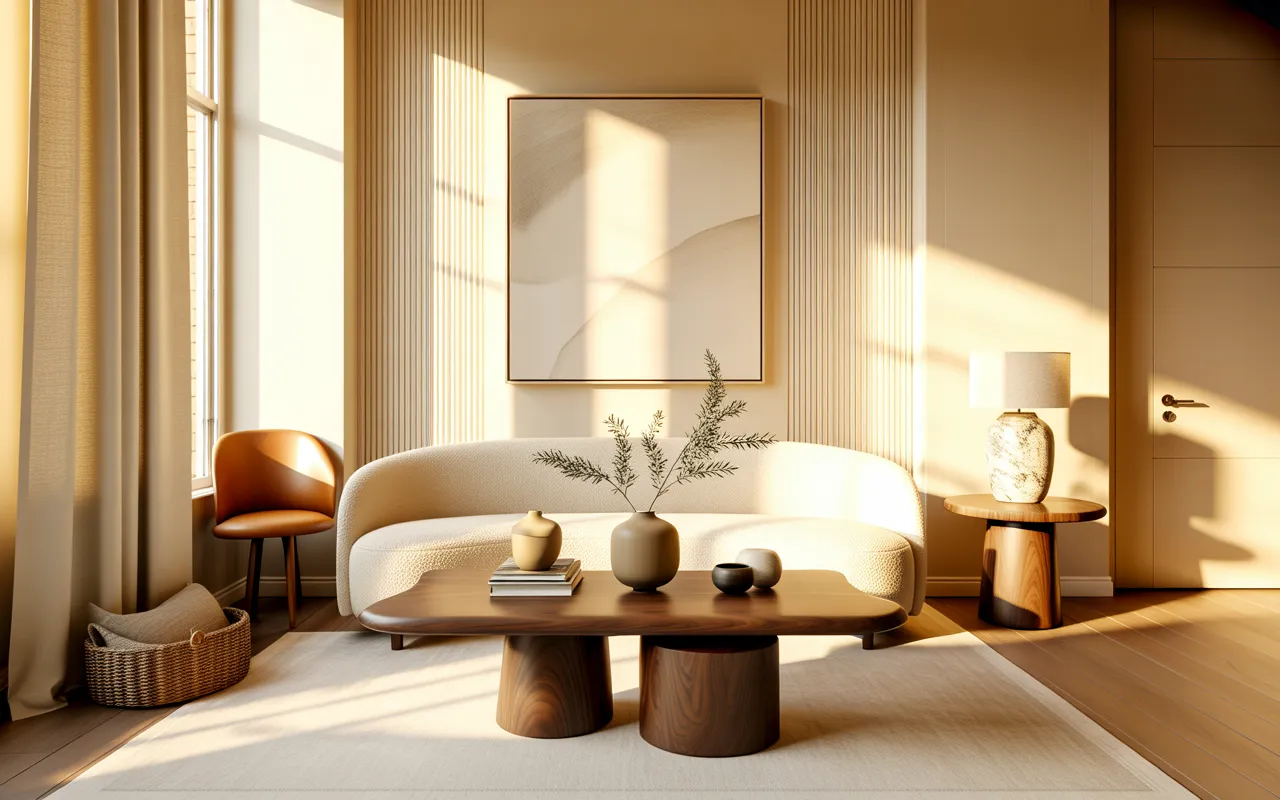
The light falls differently in a minimalist luxury living room. It catches the edge of a marble console, warms the weave of a wool rug, and traces the honest grain of a white oak floor. There is no visual noise here—only intentional pauses that let you breathe. The palette stays restrained, but the textures sing. A cashmere throw, a sculptural ceramic vase, a single monumental piece of art—each element earns its place through quality and quiet confidence. This is not about austerity. It is about curation. It is about living with fewer things, but better things. Here are eighteen ideas worth saving—and stealing.
Why Minimalist Luxury Living Room Design Works So Well
Minimalist luxury emerged from the intersection of mid-century modernism and Japanese wabi-sabi philosophy, refined through contemporary architecture’s obsession with volume and light. Unlike stark minimalism that reads as cold or institutional, this approach layers warmth through material honesty—unfinished oak, brushed brass, natural linen—creating spaces that feel both architectural and deeply human. It is minimalism that remembers that people live here.
The core materials and colors define this look with precision. Base palettes rely on warm whites like Benjamin Moore’s White Dove, rich charcoals, and earthy greiges that shift with the light. Accent tones appear sparingly—aged brass, olive green, deep terracotta—always matte, never glossy. Textures drive the sensory experience: nubby bouclé, smooth travertine, fluted walnut, raw silk. Every surface invites touch. Every finish has intention.
This style is trending now because our homes have become sanctuaries, not showrooms. Post-pandemic, we crave spaces that calm rather than stimulate. Pinterest searches for “warm minimalism” and “organic modern” have surged 200% in the past year as people reject the clutter of maximalism and the coldness of industrial design. We want refuge. Minimalist luxury delivers that—without sacrificing sophistication.
Small spaces can absolutely achieve this look. The key is scale and negative space—prioritize one substantial piece (a generous sectional or a large-scale artwork) and edit everything else ruthlessly. Light-colored walls and strategic mirrors amplify square footage. In a compact room, the “luxury” comes from the quality of materials, not the quantity of objects. A single handblown glass vase on a marble side table reads more opulent than five mediocre accessories.
Style at a Glance
| Element | Core Trait 1 | Core Trait 2 |
|---|---|---|
| Philosophy | Intentional curation | Warmth through texture |
| Key Materials | White oak, travertine, bouclé | Brushed brass, linen, handblown glass |
| Color Palette | Warm white, greige, charcoal | Olive, terracotta, aged brass |
1. Sculptural Coffee Table
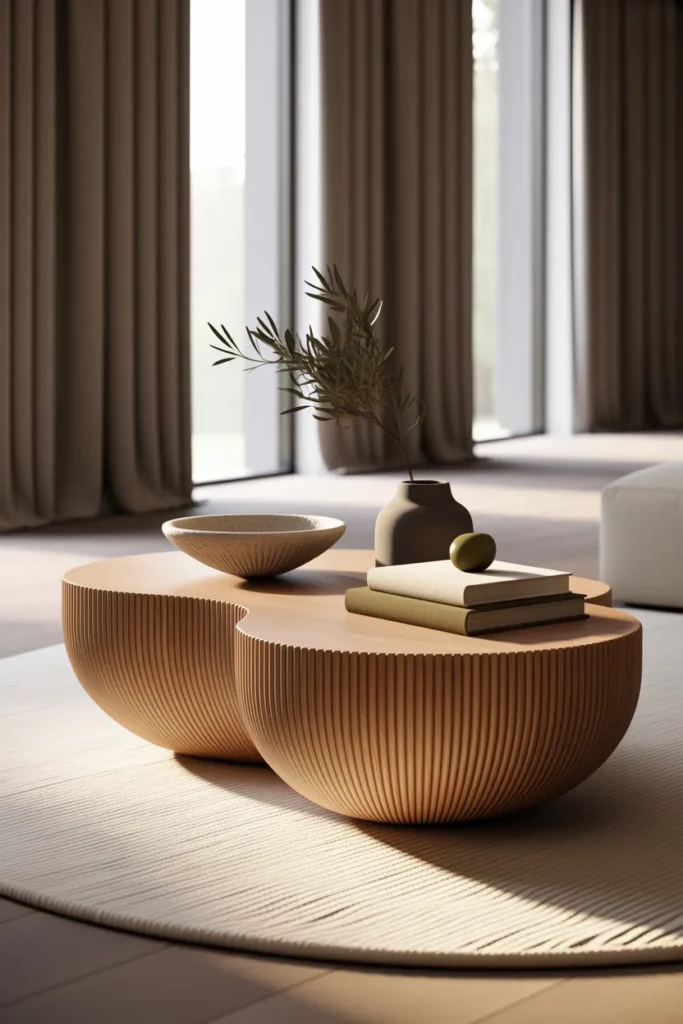
Vibe: sculptural, warm, grounded
Why it works: The organic silhouette of a sculptural coffee table introduces softness against the room’s straight architectural lines. Fluted oak adds tactile dimension while the asymmetrical shape creates visual interest without clutter—a perfect focal point that anchors the seating area without competing.
How to get it: Replace your rectangular coffee table with an organic-shaped piece in white oak or walnut. Look for live-edge, free-form, or fluted designs that feel handcrafted. Style with just one sculptural object—a ceramic bowl or a single book—leaving negative space to let the table itself shine.
💡 Quick Win: Place a single large-format art book open to a neutral spread on your coffee table. Instant styling with zero clutter.
2. Floor-To-Ceiling Drapes
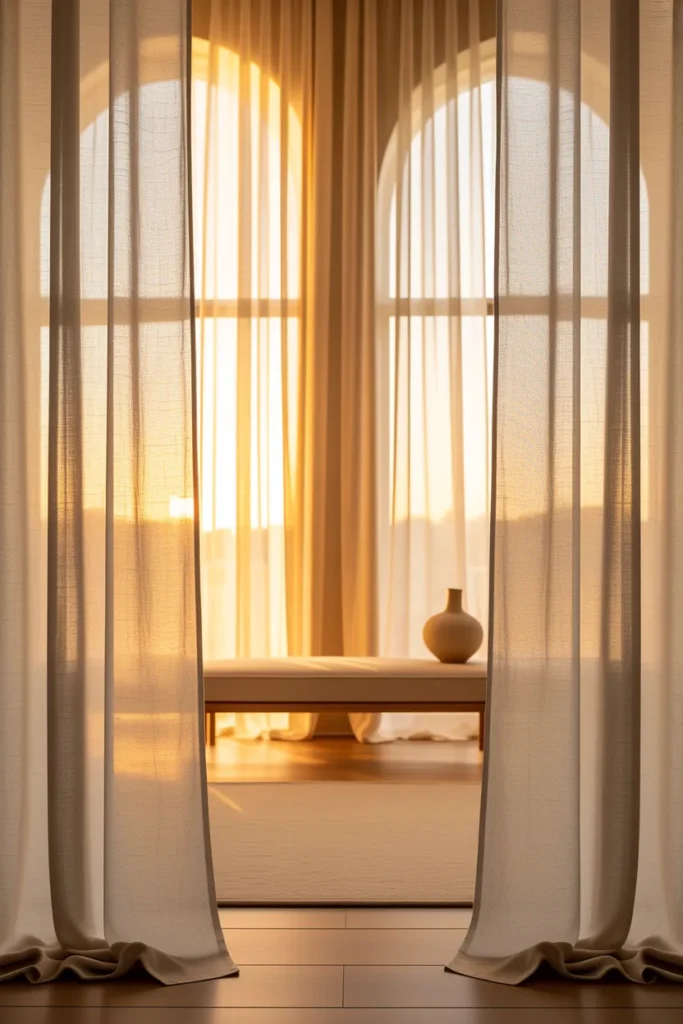
Vibe: airy, luminous, calm
Why it works: Floor-to-ceiling drapes draw the eye upward, making ceilings appear taller and windows grander. The soft linen fabric diffuses harsh light while adding warmth and texture that balances hard surfaces like wood floors and stone walls.
How to get it: Mount your curtain rod at least four inches above the window frame and extend it eight inches past each side. Choose linen or cotton-linen blend panels in a warm ivory or sand tone. Let them just kiss the floor—no puddling for a cleaner minimalist look.
💡 Quick Win: Double your panels for fullness—each window should have at least two times the width in fabric for that luxuriously soft gathered look.
3. Statement Artwork Monochrome
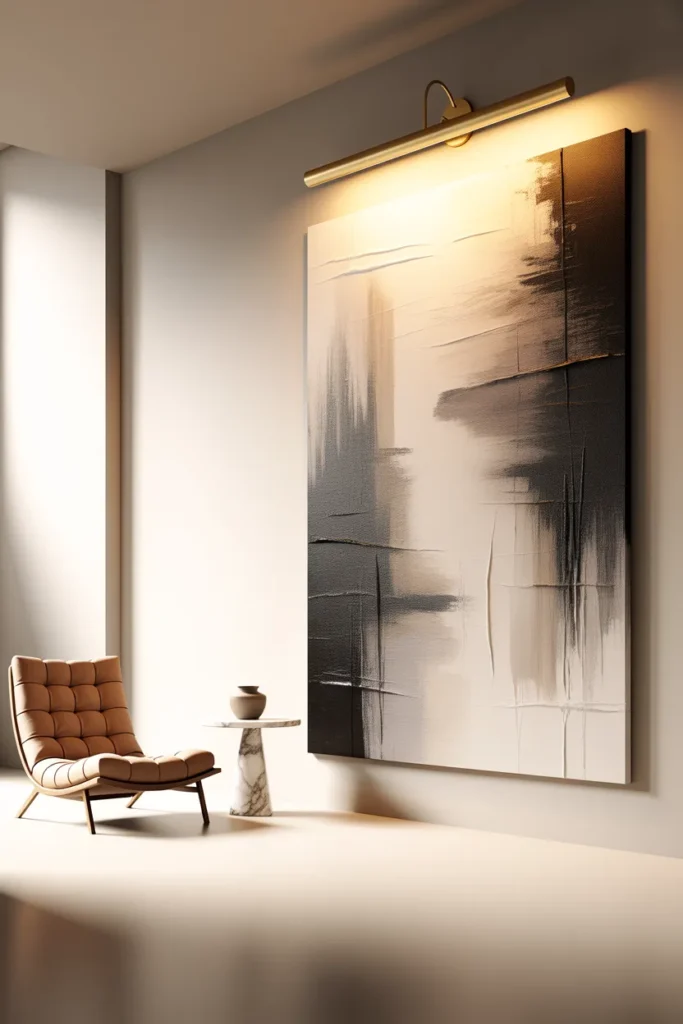
Vibe: contemplative, quiet, resolved
READ MORE ABOUT: 17 Front Door Colors to Instantly Boost Curb Appeal
Why it works: One large-scale artwork creates an instant focal point without the visual chaos of a gallery wall. Monochrome abstracts provide depth through texture and brushwork while keeping the palette restrained—adding sophistication without introducing competing colors.
How to get it: Choose one oversized canvas at least two-thirds the width of your sofa. Look for pieces with dimensional texture—thick brushstrokes or mixed media—to keep the eye engaged. Hang at eye level with the center 57 inches from the floor.
4. Marble Accent Surfaces
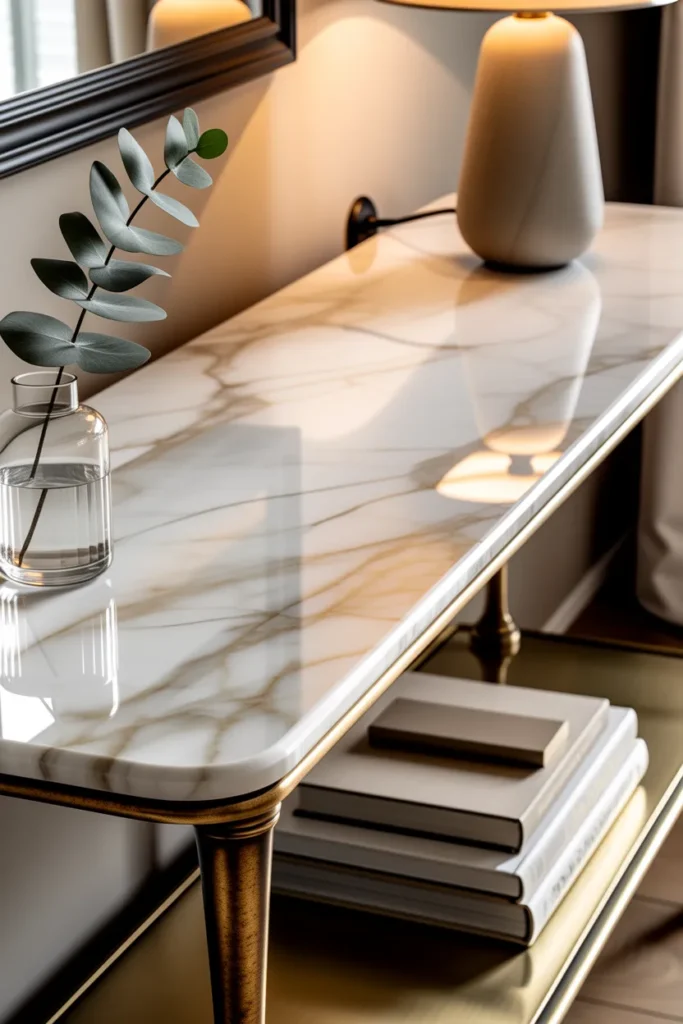
Vibe: refined, elegant, timeless
Why it works: Marble introduces a sense of permanence and heritage that instantly elevates a room. The natural veining provides subtle visual interest while the honed finish keeps it from feeling cold or ostentatious—it’s luxury that doesn’t shout.
How to get it: Start with one marble piece—a coffee table, console, or side table. Choose honed rather than polished for a softer, more contemporary feel. Pair with warm wood or brass to prevent the stone from feeling sterile.
5. Bouclé Lounge Chair
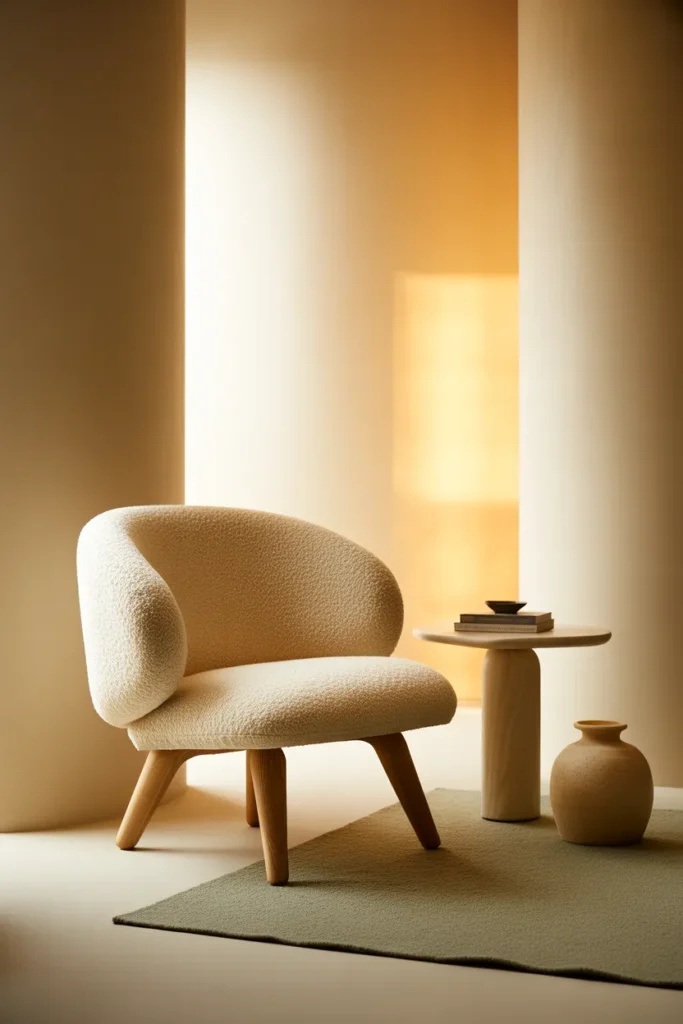
Vibe: cozy, tactile, inviting
Why it works: Bouclé fabric provides extraordinary texture and warmth while remaining visually quiet. The nubby surface absorbs light rather than reflecting it, making the chair feel soft and approachable—an essential counterpoint to harder materials like marble or metal.
How to get it: Place your bouclé chair near a window or reading corner. Keep the silhouette sculptural and rounded to maintain visual softness. Style with a small side table at arm’s reach—perfect for a cup of tea and a book.
💡 Quick Win: Can’t commit to a full bouclé chair? Start with bouclé throw pillows to test the texture before investing in larger pieces.
6. Wall Paneling Fluted
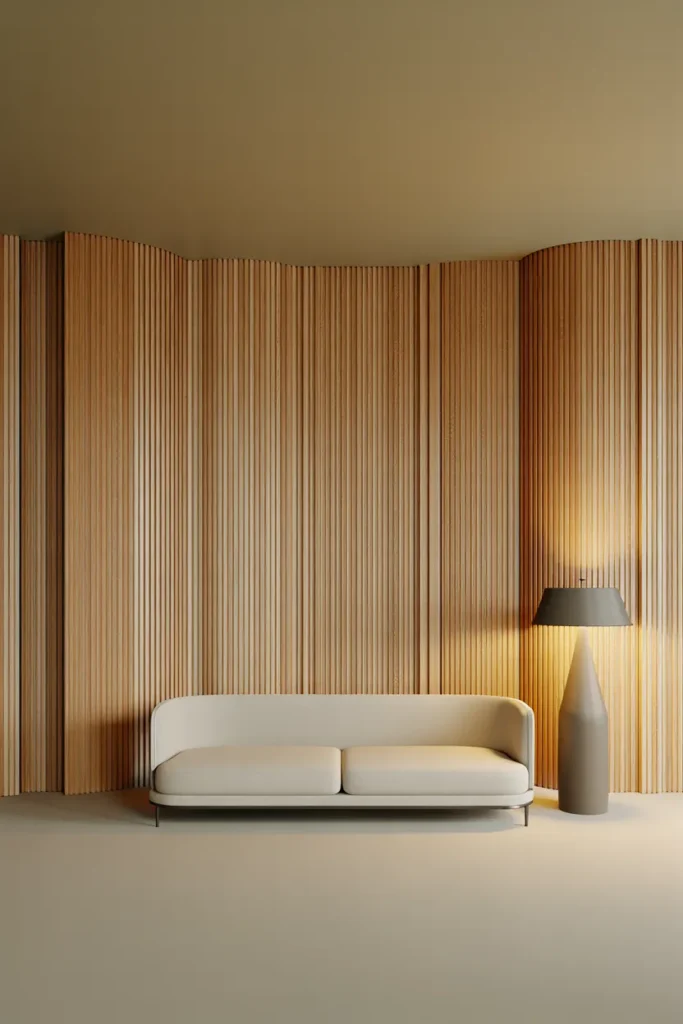
Vibe: architectural, calm, textured
Why it works: Fluted paneling introduces rhythm and texture without color or pattern. The vertical lines draw the eye upward while adding acoustic softening to the space. It’s architectural interest that feels permanent and intentional.
How to get it: Install fluted MDF or wood panels on one focal wall—behind the sofa or the television. Paint or stain in a warm neutral that coordinates with your existing millwork. Keep the rest of the room’s surfaces smooth to let the texture shine.
7. Monochrome Color Palette
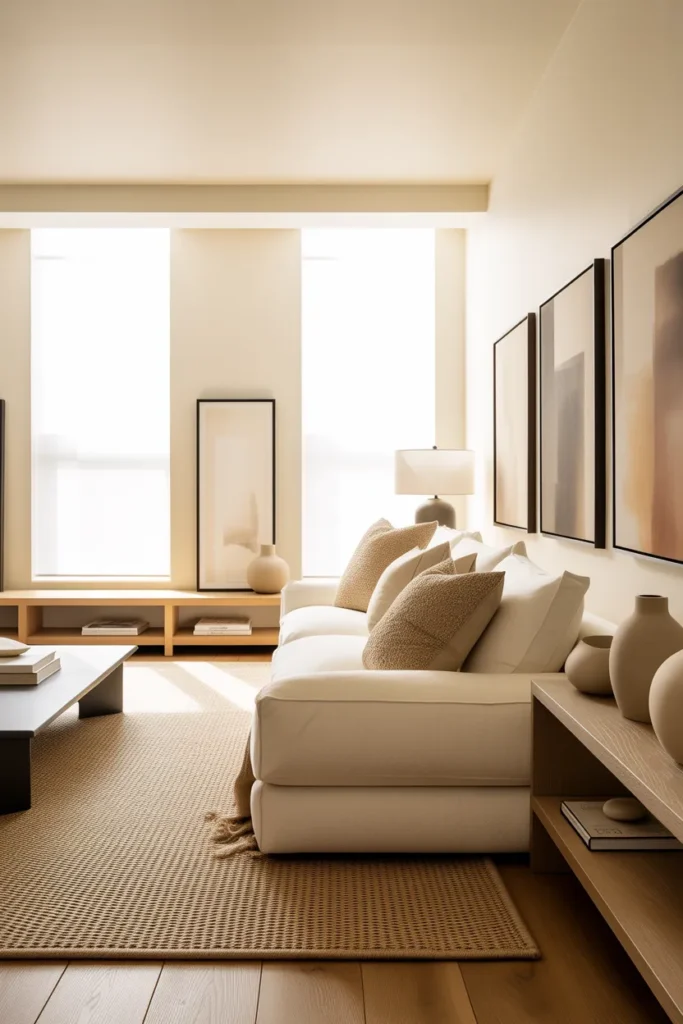
Vibe: serene, spacious, cohesive
Why it works: A monochrome palette creates visual calm and makes rooms feel larger. Without competing colors, the eye rests on texture and form instead—allowing your carefully curated materials to become the color, not paint or pattern.
How to get it: Choose one neutral base—warm white walls. Layer in shades two tones lighter and two tones darker across furniture, textiles, and accessories. Use wood tones in oak or walnut for warmth. Add one subtle accent color sparingly if desired.
8. Natural Light Maximization
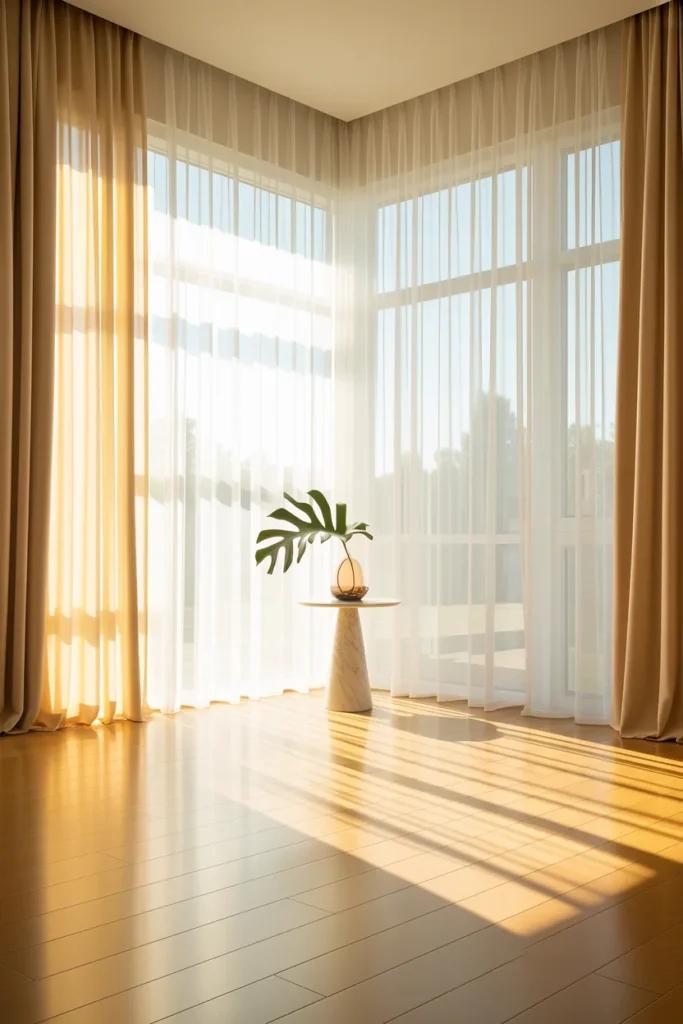
Vibe: luminous, expansive, energizing
Why it works: Natural light is the most luxurious material in any room. Minimal window coverings maximize daylight, while reflective surfaces—light floors, white walls, glossy artwork—amplify it. The result is a space that feels open, healthy, and ever-changing as light moves.
How to get it: Remove heavy drapes and replace with sheer linen panels. Place mirrors opposite windows to bounce light deeper into the room. Keep window sills clear. Paint trim and walls in high-light reflective whites with an LRV of 80 or higher.
💡 Quick Win: A floor lamp with an uplight shade bounces light off the ceiling, instantly brightening a dim corner without adding fixtures.
9. Leather Accent Seating
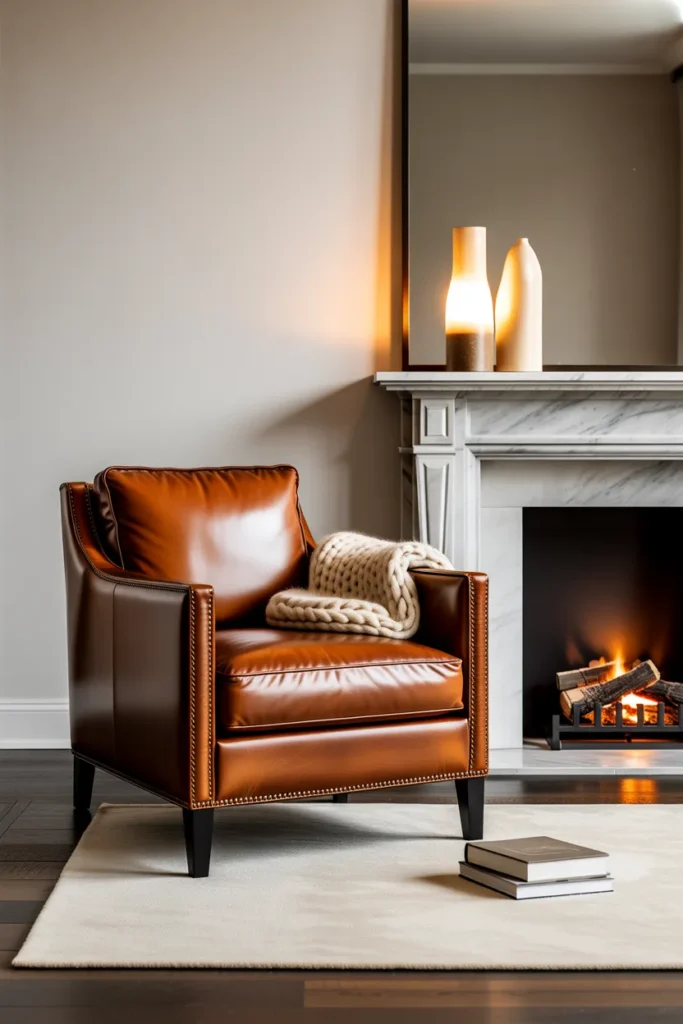
Vibe: sophisticated, warm, aged
Why it works: Leather develops character over time, becoming richer and more beautiful with use. Cognac and warm brown tones add vital warmth to neutral palettes while the material’s clean lines maintain the minimalist aesthetic.
How to get it: Select one leather piece—a single armchair or ottoman—in a warm brown tone. Look for aniline or semi-aniline leather that shows natural grain. Style with a wool or cashmere throw in ivory for textural contrast.
10. Wood Slat Ceiling
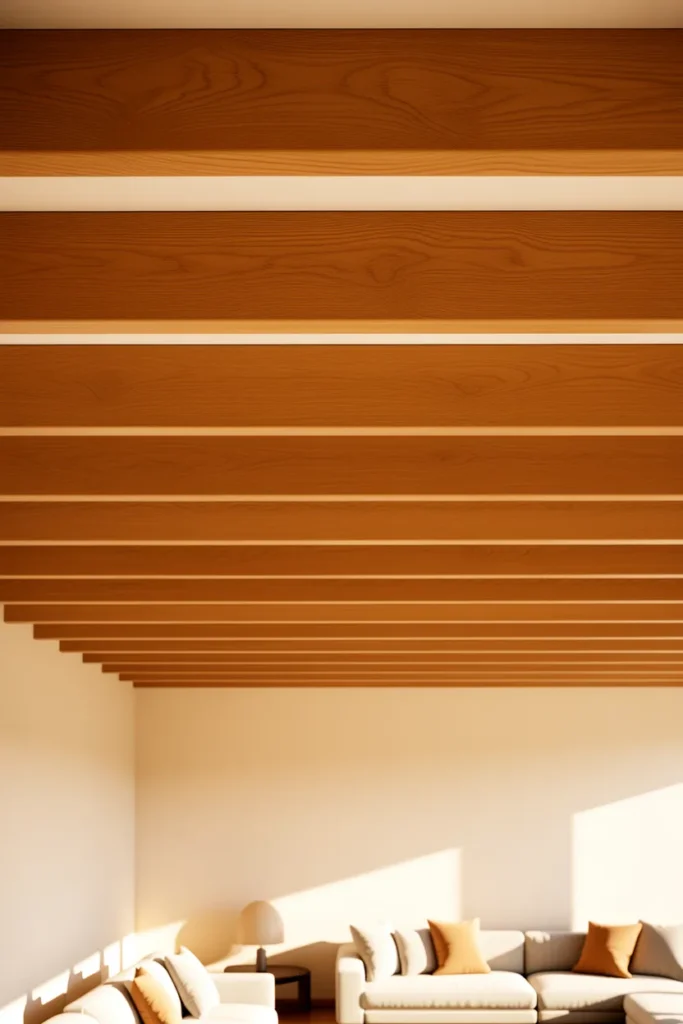
Vibe: warm, grounded, enveloping
Why it works: Wood slat ceilings draw the eye upward while adding warmth and acoustic softening. The linear rhythm creates visual expansion—rooms feel both taller and cozier simultaneously. It’s architectural luxury that transforms the entire room.
How to get it: Install wood slats across the entire ceiling or in a defined zone like the seating area. Use light oak for a Scandinavian feel or walnut for more drama. Leave at least half-inch gaps between slats to maintain visual lightness.
11. Built-In Bookshelves
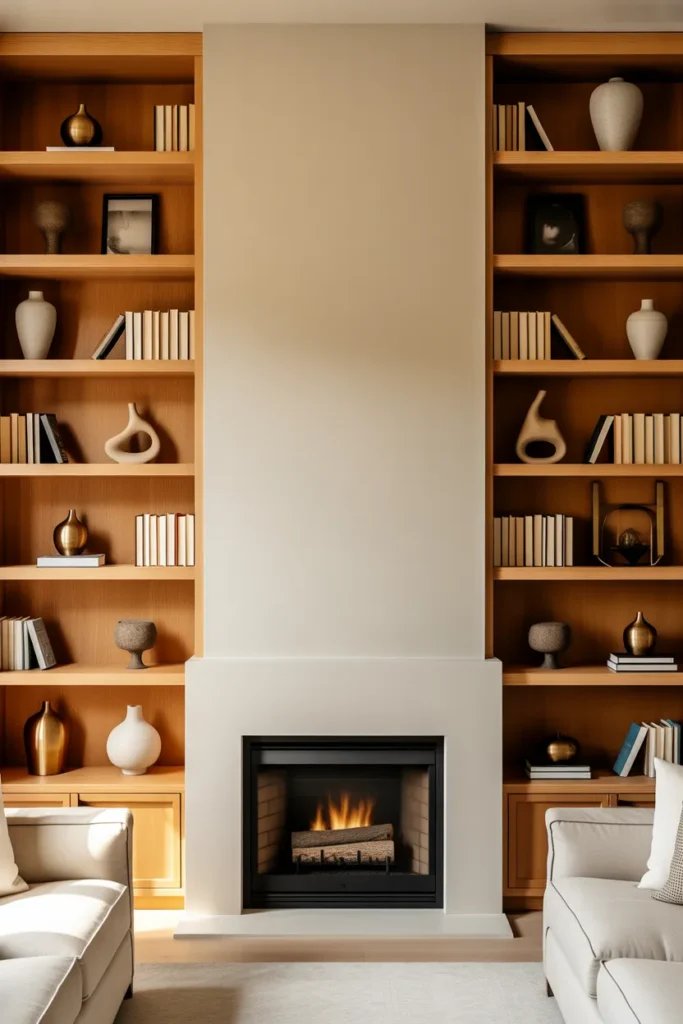
Vibe: curated, intellectual, calm
Why it works: Built-ins provide storage without visual clutter and add architectural interest through repetition. The symmetry creates a sense of order and permanence while offering display space for curated objects that add personality.
How to get it: Custom shelving flanking a fireplace or television provides instant focal symmetry. Style each shelf with 60% books and 40% objects—vases, ceramics, framed art. Leave visible negative space on every shelf.
💡 Quick Win: Arrange books by color for an instant designer look—rainbow order or all white spines creates immediate visual cohesion.
12. Statement Floor Lamp
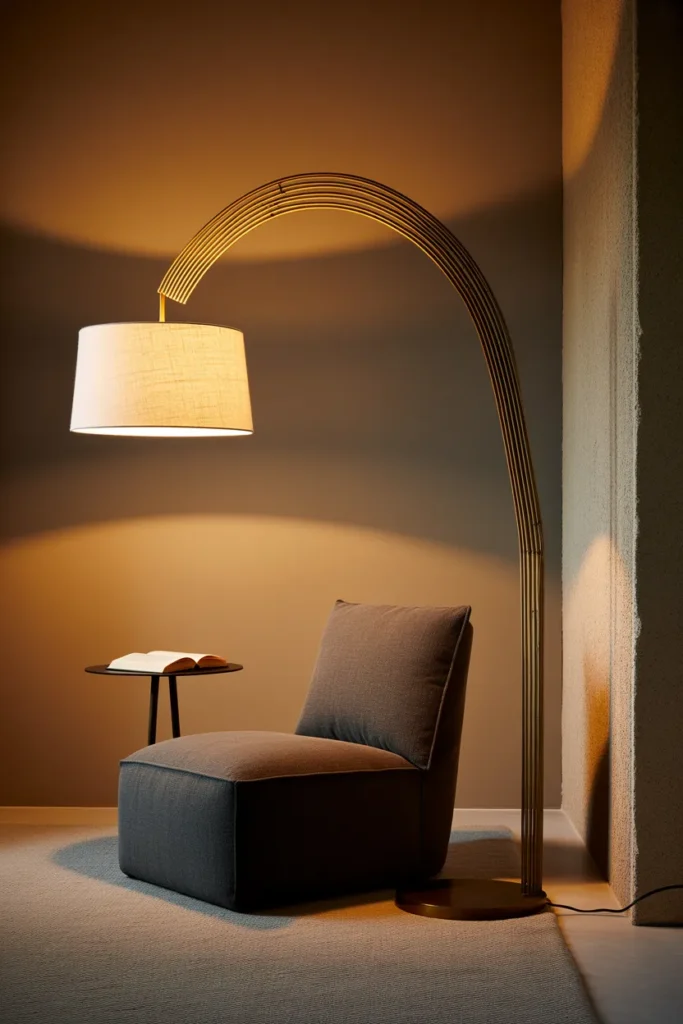
Vibe: dramatic, intimate, sculptural
Why it works: A statement floor lamp functions as both art and utility. The sculptural form draws the eye while the directed light creates intimate pools of warmth—lighting becomes decoration and atmosphere simultaneously.
How to get it: Choose one dramatic floor lamp—arc, tripod, or articulating arm. Place it over a reading chair or at the edge of a sofa. Use a warm 2700K bulb. Let the lamp’s form be your statement; keep surrounding accessories minimal.
13. Greenery With Sculptural Plant
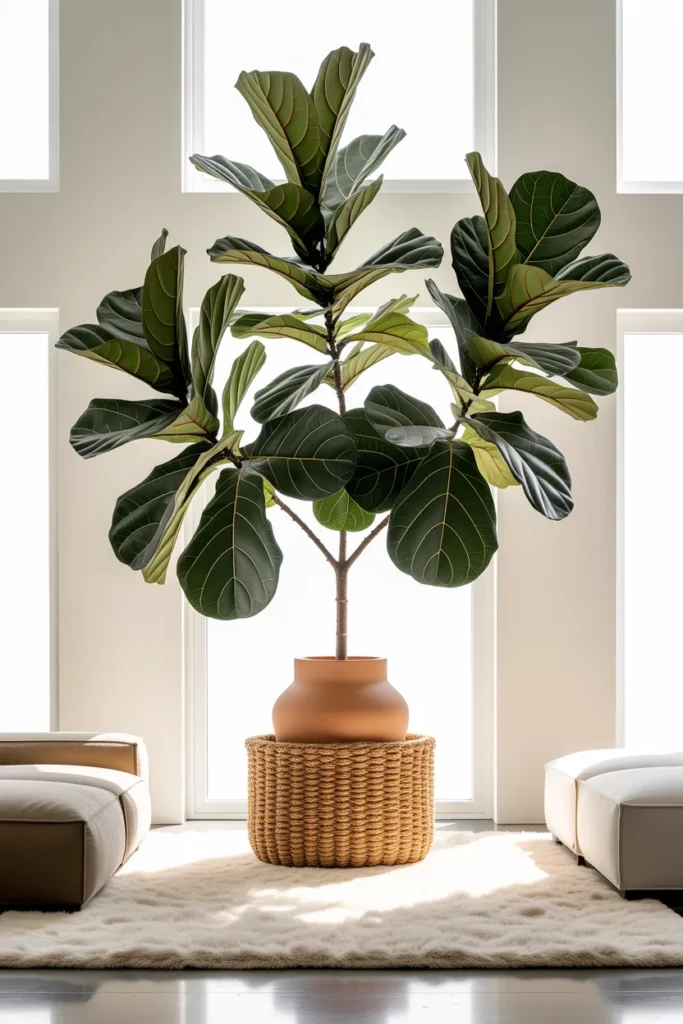
Vibe: organic, airy, alive
Why it works: A sculptural plant introduces life, color, and organic form. The height draws the eye up while the natural materials soften hard architectural lines. It’s living sculpture that changes with the light and seasons.
How to get it: Choose one statement plant—fiddle leaf fig, bird of paradise, or olive tree. Use a substantial woven basket or terracotta pot. Place where it has room to grow. Keep the area around it minimal to let the plant shine.
14. Layered Textures Throw
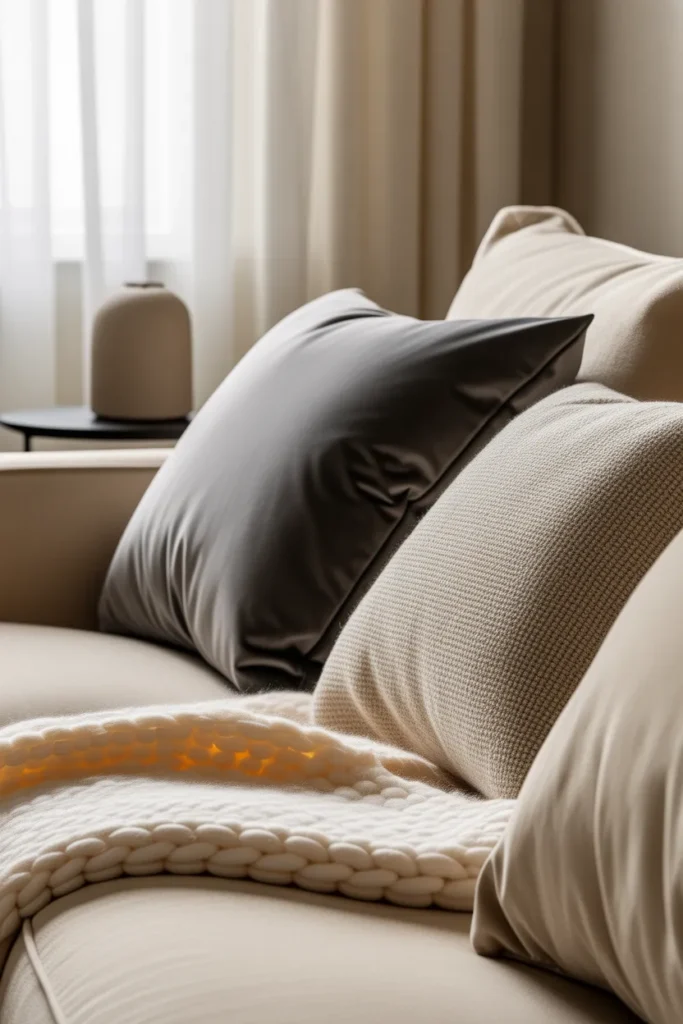
Vibe: cozy, layered, inviting
Why it works: Texture layering creates richness without color. Each different texture catches light differently—bouclé absorbs, velvet reflects, linen diffuses—creating visual interest that shifts throughout the day.
How to get it: Start with your sofa in a neutral tone. Add one chunky knit throw, one velvet pillow, one bouclé pillow, and one linen pillow. Stick to one color family. Vary the sizes—large square, lumbar, small square—for dimension.
💡 Quick Win: A single textured throw draped over the arm of your sofa instantly creates a lived-in, luxurious feel in under five seconds.
15. Minimalist Media Console
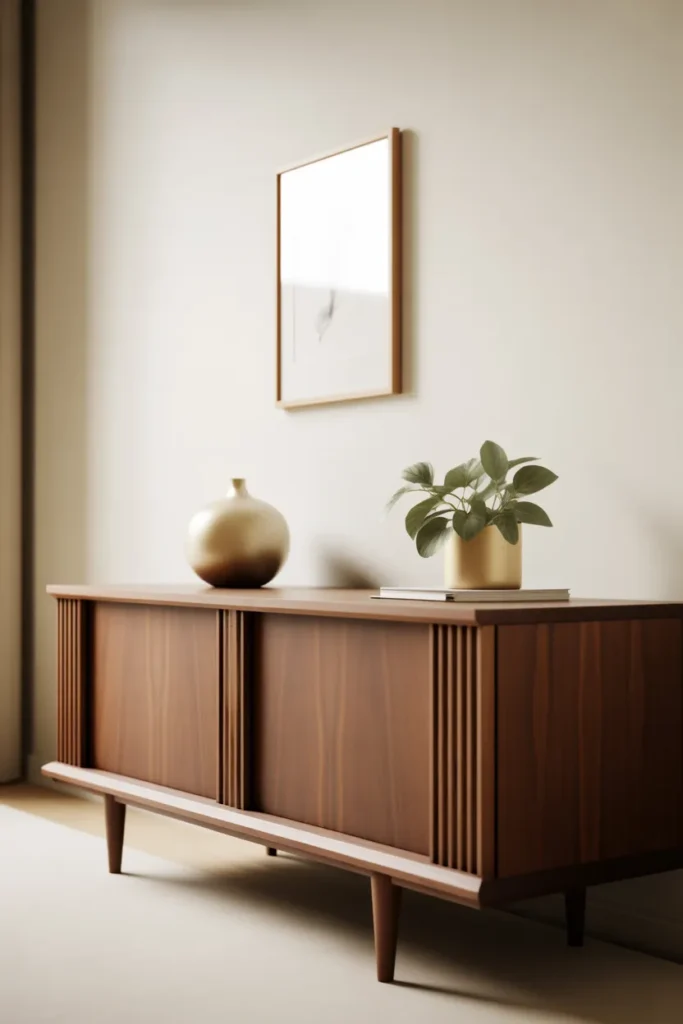
Vibe: clean, resolved, anchored
Why it works: A low media console grounds the room while providing essential storage. Fluted or textured fronts add visual interest that prevents the piece from reading as a simple box. The horizontal orientation creates a visual anchor for your seating arrangement.
How to get it: Choose a console at least twice the width of your television and under 30 inches tall. Look for fluted, slatted, or textured surfaces. Style the top with one large object and one smaller group—never more than three items.
16. Minimalist Luxury Color Accent
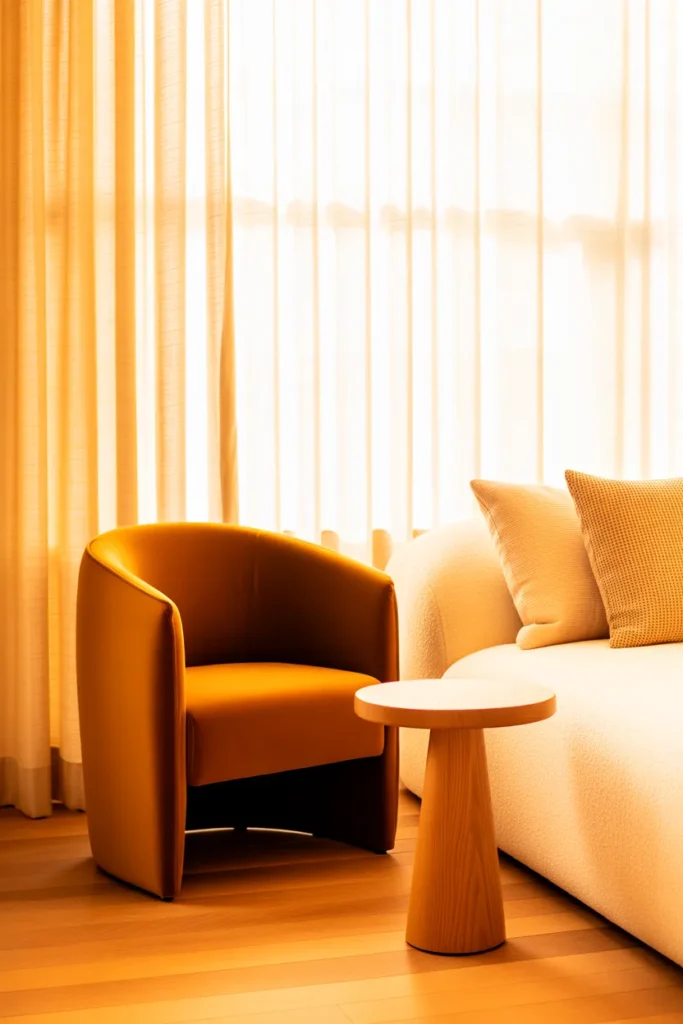
Vibe: warm, surprising, focused
Why it works: A single accent color draws attention and adds warmth while maintaining the overall minimalist restraint. The surprise of one vibrant piece—ochre, olive, or terracotta—prevents the room from feeling flat or predictable.
How to get it: Choose one accent color and use it on only one piece—a chair, artwork, or large vase. Keep everything else in your neutral palette. The result is focused color that feels intentional rather than chaotic.
17. Open Concept Zoning
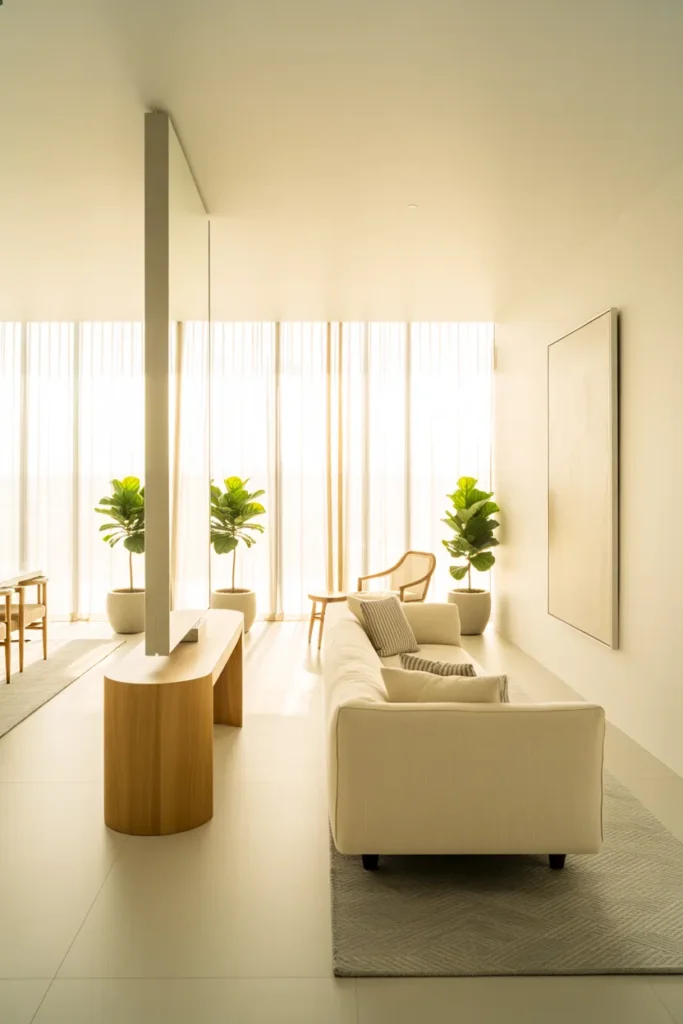
Vibe: organized, connected, spacious
Why it works: In open concept spaces, zoning creates distinct functional areas without walls. Furniture placement, rugs, and lighting define each zone while maintaining visual flow—the space feels connected but purposeful.
How to get it: Position your sofa to face into the room, defining the seating zone. Use an area rug underneath to anchor it. Behind the sofa, place a console table to separate the living area from the dining zone. Keep pathways clear.
💡 Quick Win: A large area rug under your seating group instantly defines the space—choose one at least 8×10 feet for standard living rooms.
18. Travertine Table Lamp
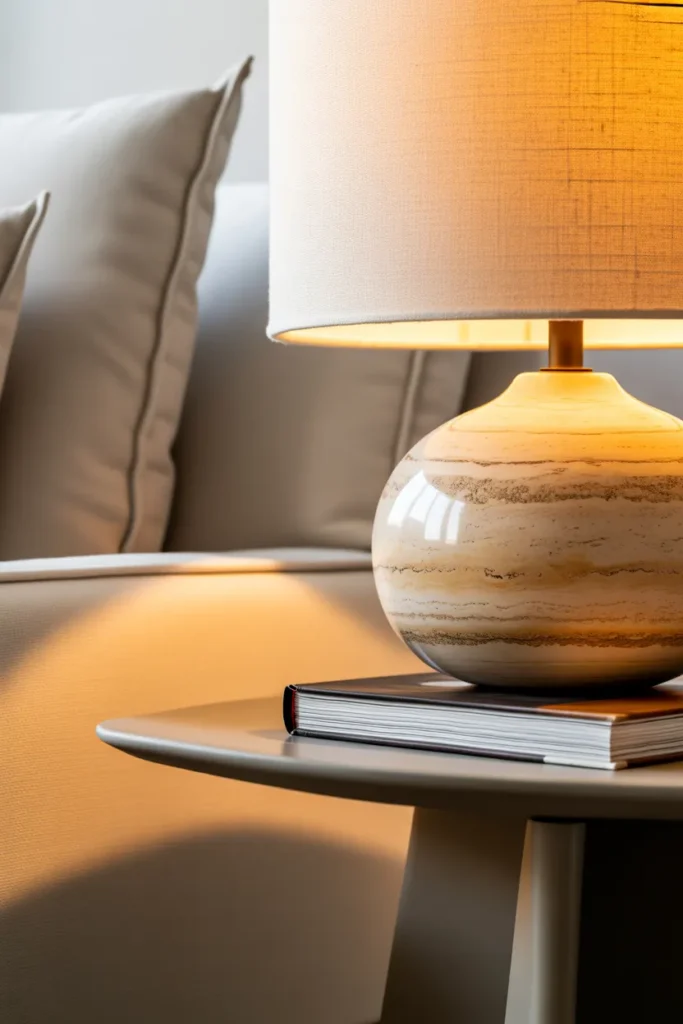
Vibe: warm, earthy, refined
Why it works: Travertine brings ancient, tactile material into modern spaces. The natural veining provides subtle visual interest while the honed surface feels soft and luxurious—a stone that reads as warm rather than cold.
How to get it: Choose one travertine lamp for a side table or console. Pair with a cream linen shade. The stone’s natural variation means every lamp is unique—that’s the beauty of natural materials in a minimalist space.
How to Start Your Minimalist Luxury Living Room Transformation
The one first move that anchors everything: Paint your walls Benjamin Moore’s White Dove. This specific warm white has an LRV of 85.36—bright enough to maximize natural light but warm enough to prevent coldness. It creates the canvas that makes every subsequent material choice sing. Once the walls are right, everything else will fall into place because you’ve established the foundational tone.
The most common mistake beginners make: Introducing too many wood tones. Mixing cherry, oak, walnut, and teak creates visual chaos in an otherwise calm palette. Your minimalist luxury living room should feature one primary wood species throughout—white oak is the safest, most versatile choice. Use it for flooring, furniture, and trim. If you must introduce a secondary species, keep it to one accent piece only.
Budget entry points under fifty dollars: A single branch of dried eucalyptus in a matte ceramic bud vase. A set of three linen-wrapped notebooks stacked on your coffee table. A brass candle holder that catches the light. Each of these small investments delivers immediate aesthetic payoff without requiring significant financial commitment.
Realistic expectations for timing and budget: A full-room transformation typically takes two to three months—paint and lighting can be done in a weekend, but sourcing the right furniture pieces takes time. Expect to invest $1,500–$3,000 for a starter version focusing on paint, lighting, and accessories. A complete designer-level room with custom furniture and architectural elements runs $8,000–$15,000. Start with the paint, then layer in pieces as you find the right ones.
Frequently Asked Questions About Minimalist Luxury Living Room Design
What exactly defines minimalist luxury living room design?
Minimalist luxury combines clean architectural lines with high-quality natural materials and a restrained color palette. The focus is on intentional curation—fewer pieces of exceptional quality rather than many mediocre objects. The luxury comes from material integrity and thoughtful design, not opulent ornamentation.
What colors work best for a minimalist luxury living room?
Warm whites like Benjamin Moore White Dove, greige tones, soft charcoals, and natural wood hues form the foundation. Accent colors appear sparingly—aged brass, olive green, or terracotta blush—always in matte finishes. The key is a monochromatic base that lets texture and form become the visual interest.
How much does a minimalist luxury living room makeover cost?
A starter transformation with paint, lighting, and key accessories costs $1,500–$3,000. A full designer-level room with custom furniture, built-ins, and architectural elements ranges $8,000–$15,000. The investment reflects the quality of materials—luxury is in the integrity of what you buy, not how much you buy.
Can minimalist luxury work in a small apartment or townhome?
Absolutely. In smaller spaces, negative space becomes even more important. Choose one substantial piece—a generous sofa or large-scale artwork—and keep everything else minimal. Light walls and strategic mirrors amplify the feeling of space. The luxury comes from material quality, not square footage.
How do I keep my minimalist luxury living room from feeling cold?
Layer textures generously—bouclé, velvet, linen, wool—to warm the space. Choose warm neutrals over cool greys. Incorporate natural materials like wood, stone, and leather. Add soft lighting with warm bulbs. Remember that minimalism without texture reads as sterile; texture is the warmth that makes it luxurious.
Ready to Create Your Dream Minimalist Luxury Living Room?
These eighteen ideas span the full spectrum of what makes minimalist luxury work—from material choices and architectural details to lighting strategies and furniture selection. Whether you start with paint or a single sculptural piece, what matters is the intentionality behind each decision. Transformation doesn’t require doing everything at once. Today, you can choose one idea that resonates and take that single step—paint a wall, add a textured throw, or clear a surface to create negative space. The philosophy at the heart of minimalist luxury is this: living with intention creates room for what truly matters. When you walk into your space, you won’t just see beautiful things—you will feel the calm, the clarity, and the quiet luxury of a room that knows exactly what it is. Save your favorite ideas and start your journey toward the living room you deserve.